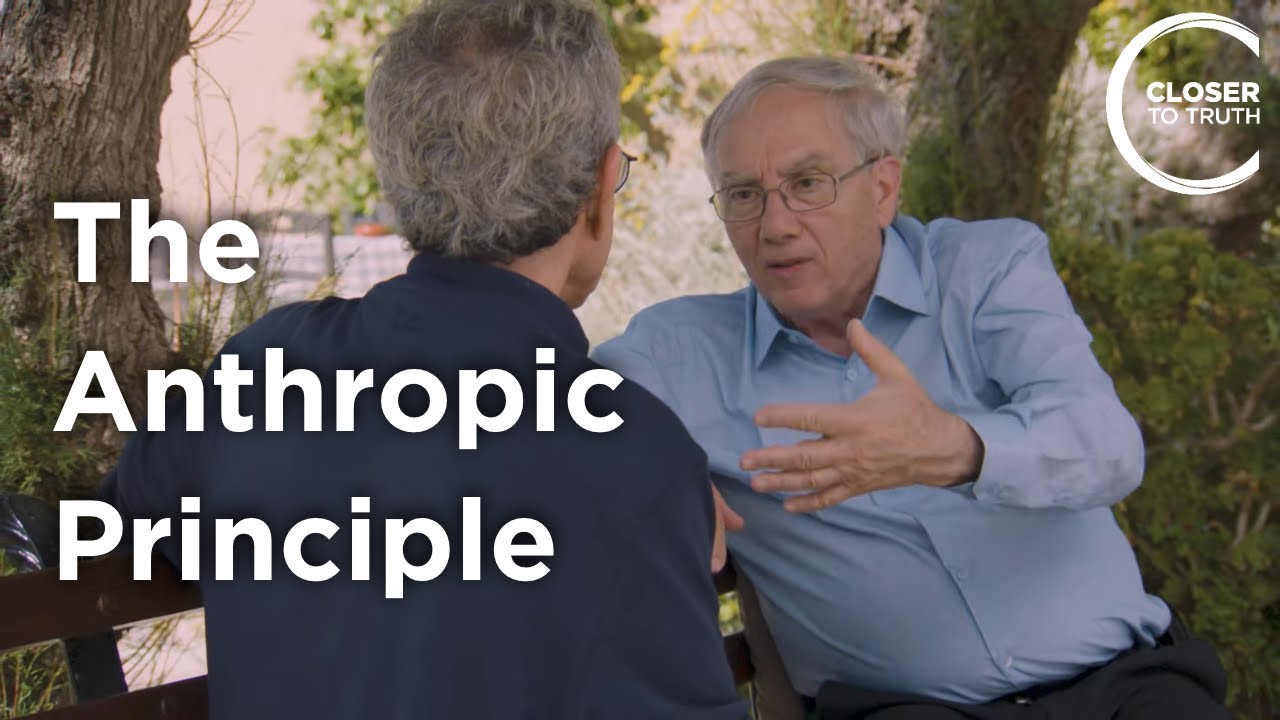
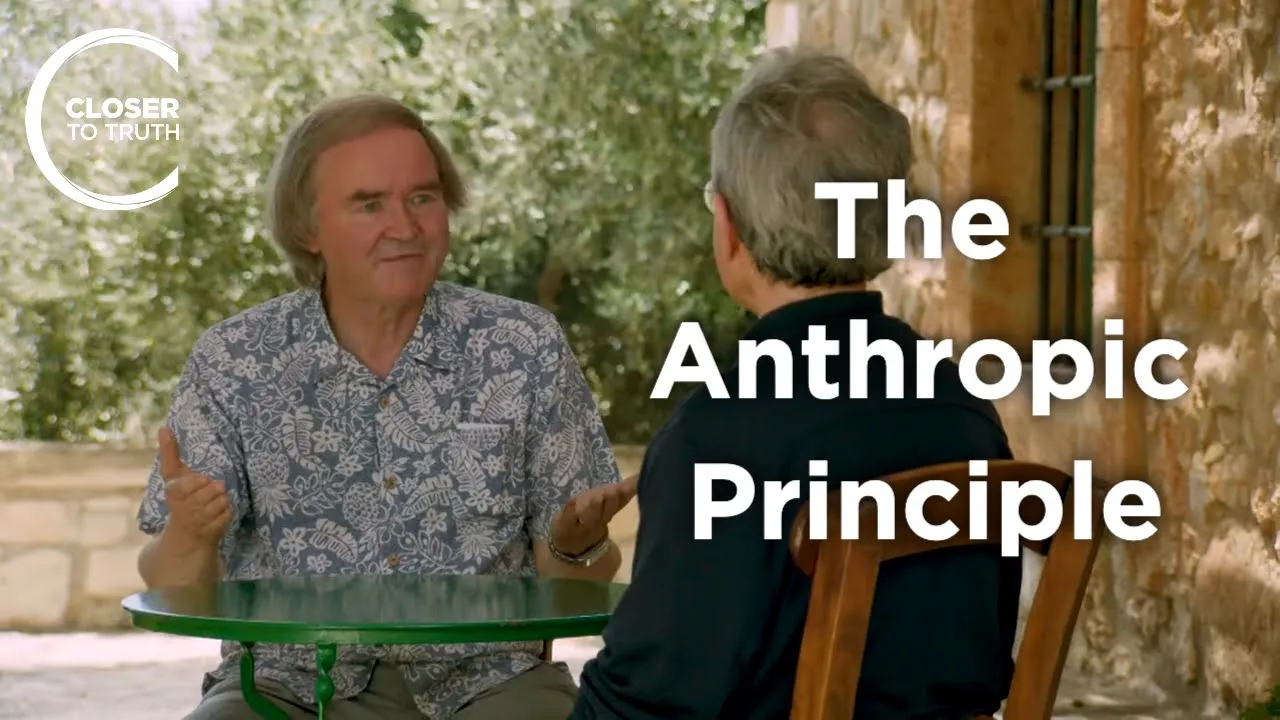
Bernard the so-called anthropic principle has been a source of uh interest and controversy uh in the physics cosmology community and has been expropriated by many people outside of it philosophers even people with theological dispositions uh in ways that are perhaps um uh not uh not consistent with the original objective uh you were there almost from the beginning when the anthropic principle was sort of coin by Brandon Carter uh give give me the history of of of the anthropic principle and in particular explain how it works how it should work and how it needs to work
well first of all one has to make a clear distinction between what what is called the weak anthropic principle and the strong anthropic principle now the weak anthropic principle merely says that given the the laws of physics and the values of the physical constants there is a selection effect on when and where observers must exist which just comes from Pure logic and so for example we know we have to exist close to we have to live close to a a star we know we have to live at a special time in the history of the
universe and so that's an example of the weak anthropic principle which I would say is is really completely uncontroversial it just is a logical necessity now much more controversial was the strong anthropic principle which as Carter defined it was the fact that there are relationships between the physical constants themselves which are required for us to be here or at least for some sort of Observer to be present and what Carter did and myself and Martin Reese did in our later paper we collected together all the large number of these unexplained coincidences between the consant of
nature which weren't explained by conventional physics but seemed to be necessary for the existence of observers now the way that he defined the strong anthropic principle and the way that myself and Martin Reese defined it was simply in those terms the values of the constants are required it's a the strong anthropic principle is a constraint on the constants of physics such that observers can be present later on the term was used in a different way in the in the famous Barrow and tipler book in 1986 it was defined more in terms of the condition that
that that the Universe must be such that life can a different concept of must so a different concept of must it introduced a sort of teleological aspect and I think that's what caused some confusion in the literature because after that people again started using the the term in in different ways so there is I would say quite a lot of ambiguity in in what were means by the term strong anthropic principle and I I think that's a Pity I think it would have been more straightforward if if it had only been used in the sense
that Carter had originally used the term the the term anthropic itself though was which means anthropos the Greek word for man was I think also very unfortunate because it's really nothing to do with the presence of human beings in particular it's it's maybe to do with the existence of life or the existence of complexity but I don't think it's anything to do with individual people I mean you know humans in particular so on both sides of that question how uh has the anthropic principle been used uh properly within physics and cosmology and how do you
believe it was has been used inappropriately outside of it well this really goes back to the question of what is your interpretation of of the of these anthropic fine tunings if you believe that the anthropic you see that there's essentially three types of interpretation of the anthropy principle one interpretation is is the Multiverse interpretation which simply says that there are lots and lots of universes with different values of the constants and we just happen to be in the one which one of the ones which allows life to arise but there are more philosophical interpretations and
the second interpretation for example is the one that was that comes out of quantum mechanics the idea that maybe Consciousness collapses the way function of the universe and I think it was wheeler who first suggested well maybe you have the big bang and the universe evolves into Consciousness to brains which then reflect back on the Big Bang and you sort of get a close circuit and the universe comes into existence and the idea was that in some sense the Consciousness itself was bringing the universe into existence well most physicists also regarded that as as as
far too metaphysical it's based on the idea of Consciousness collapses a wave function which is self-c controversial but the third explanation of course is goes even beyond that and says well the reason the universe is fine-tuned is because there is a fine tuna which some people might want to call God and so you have this idea that maybe there is like a parameters there's a parameter space where all the physical constants exist and in some sense God had to use a PIN to choose the values which would allow life to eventually arise now obviously that's
a the ological explanation and physicists were very unhappy with that but depending on which explanation you favor of course tends to depend on which of the interpretations of the an strong anthropic principle you have and those people who want to adopt a theological interpretation of the fine tunings they obviously tend to have in mind a version of the strong anthropic principle which is more teleological in nature whereas the people who want to interpret the fine tunings in terms of the Multiverse they don't have to have any teleology at all and they just have to have
the concept there is this space of other universes