E e e good afternoon and thank you for standing by welcome to ENT Co fourth quarter of 2024 earnings conference call today's speakers are Joan Vitter minen ENT Global CEO Alexander Rio Brazil CEO Santiago stelle senior vice president and CFO please be advised that today's conference is being recorded and a replay will be available at the Company's IR website at this time all participants are in listen only mode after the prepared remarks there will be a question and answer session for this session we ask you to write down your question via the Q&A icon on
your screen your will then be announced and you will be able to ask your question live at that point a request to activate your microphone will appear on your screen if you do not want to open your Microphone live please type no microphone at the end of your question in this case our operator will read your question out loud please note that there is an interpretation button on your screen where you can choose the language you want to hear English or Portuguese throughout this conference call we will be presenting non-ifrs financial information these are important
Financial measures for the company but are not Financial measures as defined by IFRS reconciliations of the company's non-ifrs financial information to the IFRS financial information are available in entn Co earnings release and earnings presentation appendix today's discussion might include forward-looking statements which are not guarantees of future performance please refer to the forward-looking statements disclosure in the company's earnings release and earnings presentation now I would like to yield The floor to Mr Jan VOR men sir the floor is yours thank you operator hello everyone thanks for joining our fourth quarter earnings call this is a very
special earnings call for me let me tell you why this year alone we delivered more profits than in our entire history combined I will repeat 2024 net income was more than all prior years combined I believe that this is a proof of the success of our business model which we designed back in 2016 when we launched the first digital Bank in Brazil it also gives me a strong confidence that we are in the right path following my remarks shanji and Santi will cover their operational and financial results for the quarter and year our business model
has the beauty of combining growth and profitability resulting in a positive Network effects each new cycle reinforce the power of the platform creating a virtual Cycle this is how it works our Complete product offering combined with a best-in-class ux help us attract and engage clients the more clients we have the more efficient we become our lowcost structure allow us to price our products competitively operating in a capital efficient manner together with strong share in Services we increase profitability and Roe and this growing profitability enable us to keep Innovating as this cycle repeats itself the platform
becomes stronger and stronger jumping into 2024 let me Prov provide a few highlights of the year on the credit front we made significant progress with our 100% digital payroll offering which now accounts for more than 50% of the new underwritings we also continued scaling our Consumer Finance 2.0 portfolio and aim to increase the penetration rate within our current clients regarding Products Forum launched in Q3 2024 now has millions and millions of users who share investment tips news and stay updated on inter products our Commerce platform had an outstanding year in which we were able to
crack the code on combining Commerce with Finance loop our loyalty program is expanding its options for earning and redeeming points and has surpassed 11 Million clients now let me take a moment to discuss our Global expansion by the end of 2024 we reached 3.9 million clients using our Global account this success comes from our attractive value proposition our glob account make it very easy to invest travel send money internationally and more we also expanded our offerings with the Highlight being the launch of our dollar Credit cards last December 2024 was also a year of welcoming
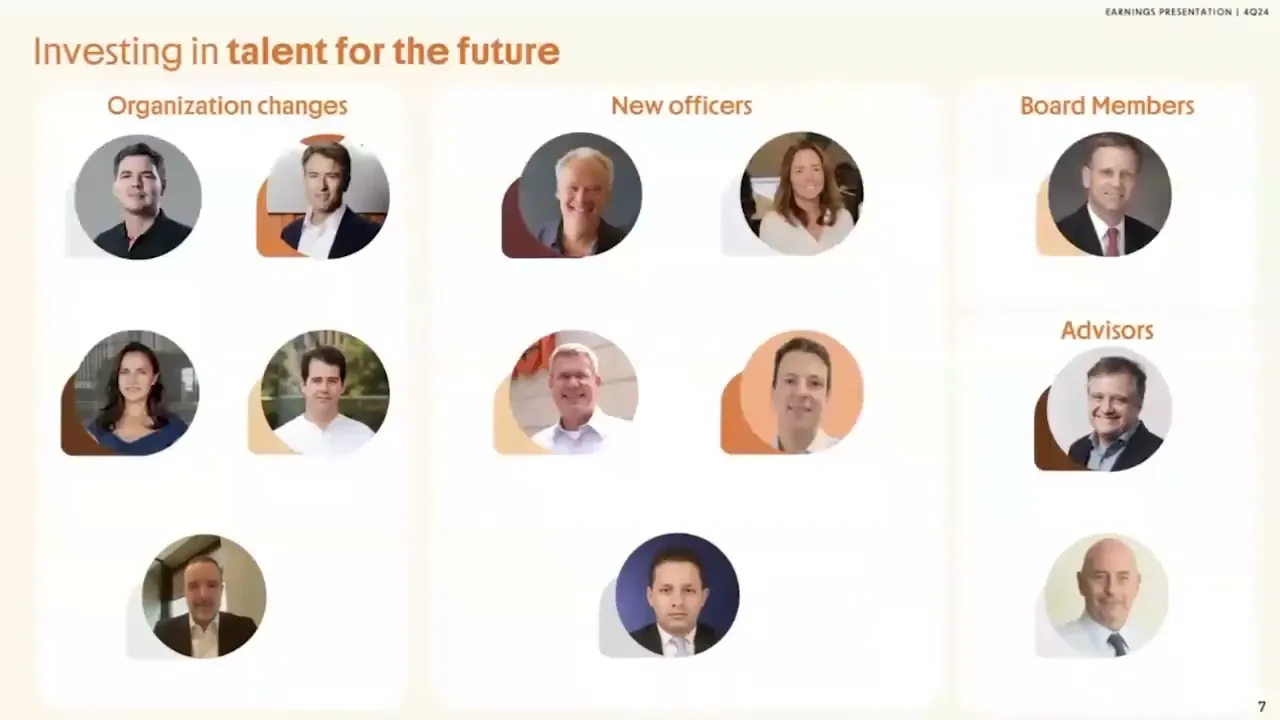
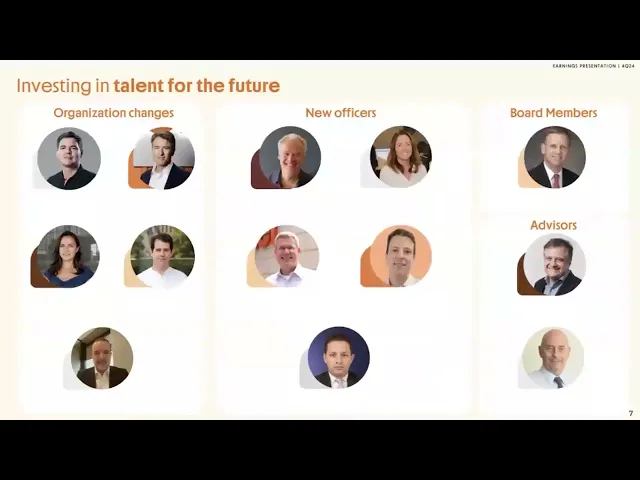
new talents to our team enhancing our skills and capabilities jandro and Marcelo dantas joined the finance team Monica Sakari and Fernando Bakin came on board on the Business site our newest hire Maron Ru joined as our Global head of legal shanji was promoted to Brazil coo in the middle of the year and also half Of Victoria stepped in as the new IR officer Gish menis who held the C CTO rool since the launch of our digital Bank became our CIO last December he's now our Chief Information officer clav K expanded his responsibilities and now manages
the real estate portfolio fgts and payroll loans on the board side we added Jim malen former Morgan Stanley senior Banker additionally on the advisory side Nia Kiku former McKinzie head of Brazil Is helping us as a senior advisor to this executive team while Fernando farari advised us on Treasury and in Alm to conclude we successfully executed the second year of our 6330 plan which is key to continue growing and innovating our platform now I like to hand it over to shanji who will provide more details on the business side shanji please go ahead thank you
Jo hello everyone and thank you for joining us today I'll go Through an update of our seven business verticals we together build our super app platform as Jan said on the virtual cycle we have created a powerful Network effect with clients actively using our account credit Investments Insurance Marketplace and Global Services all tied together by loop our loyalty program this engagement across our financial super app enables us to effectively cross sell our products and continuously increase our market share attracting Customers is a key priority for us and we're proud to finish one more year adding
more than 4 million clients while boosting activation we finished 2024 with over 36 million clients achieving a 57% activation rate throughout the year we successfully welcomed more than 1 million new active clients each quarter our business clients grew by 21% year-over-year reaching a total of 2.2 million they show high engagement and increased oura Levels now moving to the next slide let's take a deeper look into our verticals in banking tpv has increased by 45% year-over-year reaching 1.5 trillion R run rate in 4 q24 transactions made through piics totaled 1.1 one trillion R for the year
in the fourth quarter in gained an additional 14 basis points in pak's market share reaching 8.3% our mix between credit and debit volumes continues to improve with credit Card transaction growth surpassing debit card transaction growth leading to higher interchange revenues tpv levels across cohorts is in steadily increasing with newer clients transacting more and faster than other clients on the credit front we want to highlight the Consumer Finance 2.0 portfolio which includes PS financing buy now pay later and overdraft we started to scale this portfolio this year and now it stands at almost 700 Million High
a 38% growth quarter over quarter we're seeing consistent performance performance from this products from a credit quality perspect perspective eliminating the need to slow down our underwriting while we remain cautious in our risk appetite we found opportunities to underwrite card limits as our credit models continue to evolve allowing us to better understand our clients speaking of client Behavior Another Innovation this year was the launch of our credit Hub as called clean where clients can follow a stepbystep journey to earn their credit card limits with us the steps involve actions like bringing their salary direct deposits
to enter paying bills before the due date and more we allocate small limits as clients complete these steps and by the end of the journey we have enough data to provide them with the appropriate Credit card limit moving to Investments on the next slide we see that Au increased by 54% on a yearly basis with active clients growing to over 6.8 million for the second consecutive quarter we had record growth in AU one highlight of this quarter is that we achieved 20% market share in the number of investors of chisor jetto which is Brazil treasury
Direct on the next page I'll talk about insurance the Performance of this vertical was remarkable in 2024 the charts on the left hand side showed the significant growth and penetration we can achieve with the right targeting quality products hyper personalization and contextualized Journeys we reached over 5 million active contracts with more than 5 million units sold in 24 achieving a 32% growth in the year we rais the bar with the introduction of fgts life Insurance and S two low tickets but recurrent products that offered that we offered within uh existing product Journeys this strategy involves
zero marginal cost to attract clients taking full advantage of our integrated platform shifting to our Marketplace we had an exciting year with a 79% year year-over-year growth in net revenues 42% growth year-over-year in gmv that reached five nearly five billion R and all that done across more than six Million active clients in the fourth quarter 7% of our G on us gmv was generated through buy now pay later reinforcing our cross- selling opportunities this unique combination enables us to Leverage our fee revenues while also generating interest income from higher margin unsecured credit operations in the
next page we highlight our Global expansion continuous growth we reached 3.9 million clients which is 19% of our active Base the deposits balance increased by 52% in one year within this vertical we typically serve higher income Brazilians who typically travel and save money in the US we continue evolving on the product offering by replicating the Brazilian products into the US account recently we launched our dollar denominated credit card points for our US dollar debit card purchases and new investment products on the next page we talk about loop our seventh vertical we Finished 202 for with
over 11 million clients and continue to evolve in ways for people to earn and burn points clients can now redeem points for extra cash back on purchases in our Marketplace transfer points among family and friends redeem points for paks insurance and more clients who engage consistently with Loop are among those uh that are most Act within our platform in the next slide we talk about market share and show some of the evolution That we've been able to deliver in a few of of our products peak's market share which reached 8.3% continues to be a benchmark
we use to set the ambition of market share potential for the other products we are excited with the evolution both in banking and in non-banking products three highlights are FX transactions the balance of our home equity portfolio and our fgts loans Product that are strategic for engagement and profitability we are confident in our capacity to continue expanding share and we'll see part of why on the next slide I finished the busy section showing how much room we have to grow we're operating in markets with enormous stems and have having a large client base facilitates access
to a good part of this market and it explains why our share is Moving so fast strategies like hyper personalization for activating and retaining clients have optimized our sales efficiency we're confident that our continuous product Evolution improved client service and enhanced overall value proposition are key to to sustain our pos positive Trends now I would like to pass the word to Santi who will take us through the financial section thank you shande and hello everyone let's jump into our Financial performance starting with the loans this was another year focused on optimizing our Capital allocation into
our loan book our loans reach 41 billion High a 33% year-over-year growth with fgts and home equity being the highlights by growing above 50% each both these products have the highest Roes and have been crucial in improving our portfolio mix and expanding our n in credit cards with our past 11.8 billion hiis with a 10% quarter quarter and 25% year-on-year growth showcasing our progress and appetite in the non-collateralized credit under writing personal loans mainly payroll is starting to grow with digital underw writing being the main driver in terms of relative growth we can see here
that we outpace the market growth in most of our products fgts home equity and real estate we are approximately twice as fast as the market gaining significant market share Credit cards also grew nearly twice as the market all while improving our asset quality metrics meanwhile personal is reaccelerating despite the runoff of the required portfolio and thanks to the success of our digital payroll in terms of asset quality we continue improving for the third consecutive quarter with npls from 15 to 90 days standing at 3.4% and npls greater than 90 days decreasing 30 BBS to 4.2%
the credit card npls when analyzed Across cohorts continue to show strong performance validating the progress made in their underwriting models and collection processes npl formation reduced to 1.2% as the older weaker portfolios are decreasing representation in the mix while our stronger underwriting portfolios are gaining representation in the mix we can see the evolution of our cost of risk metric which decreased to 5.0% and presented a very stable Trend throughout The year furthermore our coverage ratio increased from 130% to 136 this increase is due to the Improvement in the npls as seen in the prior page
with this picture on the asset qu front we're starting 2025 even stronger than what we started 2024 a year ago on this page we can see the evolution of our funding franchise which is one of the key strengths of our business model we concluded 2024 with Over 55 billion high in funding growing 10% quarter on quarter and 27% year on year in terms of mix we continue to have around onethird of our funding in transactional deposit which is the main driver of our loan funding cost our active clients had on average 2,000 high in deposits
a record level that highlights the primity relationship with us the attractive funding mix shown on the prior page enables us to have the lowest cost of funding in the banking Industry in Brazil in the fourth quarter of this year it stood at 64% of CDI in line with the prior Quarters here we present our Top Line which ended 2024 with over 10 billion high in total gross revenues and 6.4 billion high in total net revenues this year nii and Fe net fees GRE significantly increasing 37% and 31% respectively on a quarterly basis the performance was
also very strong with growth and net revenues growing 10% our distribution platform allows us to continue performing strong on the fee side which accounts to 32% of our net revenues on the credit front higher nii growth highlights our ongoing repricing strategies as well as our focus on higher Roe products as already mentioned with higher engagement we achieved a record monthly arpac of 33.6 this quarter marking an 11% growth compared to last year hyper personaliz ation and targeting marketing is Becoming a driving force behind the increasing monetization of our clients we also reach a record margin
per active client of 20.6 K as we continue to increase the gap between our CTS and our arpac we believe this demonstrates our ability to effectively monetize our customer base while capturing economies of scale in cost as you all mentioned while explained on the virtu cycle let's now Deep dive into our net margins both are n 1.0 which means Including in the denominator the non-interest acral of credit cards and the name 2.0 which excludes these non-interest receivables are showing an upward positive trend increasing significantly when compared to a year ago this is the validation we
think of our marginal Roe strategy implemented since the beginning of last year we have been successful on increasing Revenue in a faster Pace while maintaining expenses under control during the fourth quarter As a result our efficiency ratio improved and now stands at 50.1% worth mentioning that we continue working on the integration of interpac which will be an attractive driving driver of operating leverage by both improving the cost base while increasing Revenue through cross- selling to conclude we can clearly see here our journey towards increasing profitability we have three our net income this year reaching 973
million he and an 11.7% Roe on an annual basis quarterly our consistency is impressive in our view reaching nearly 300 million he of net income closing the year with strong momentum that enables us to start 2025 in a position of strength now joa will step again to share his closing remarks thank you all thank you very much San to conclude 2024 is a year to celebrate our Revolution discipline and consistence Not just the results what a year as you know 2025 has already begun and we're starting it with strong momentum we are leveraging on technology
and Innovation reaching new levels of market share in Brazil also focused on operational Leverage reinforcing our strong asset quallet metrics and executing our Global expansion plan I would like to thank all our our employees for the amazing 2024 We achieved together thank you all operator you can open the Q&A session now thank you very much we will now begin the question and answer session once again for this Q&A session we ask you to write down your question via the Q&A icon at the bottom of your screen your name will then be announced and you will
be able to ask your question live at this point a request to activate your microphone will appear on your screen if you prefer not To open your microphone live please write down no microphone at the end of your question and our operator will read your question out loud our first question comes from Mr Mario pieri from Bank of America America sir we're now opening the audio so you can ask your question live hey good morning uh everybody congratulations uh on the results we thought was quite good it shows right the the benefits of all of
your Initiatives uh over the past year so it's it's really uh really a good job you guys have been doing let let me ask you uh Jan a question looking forward right like uh we we we've been listening to the incumbent Banks talking about a much more cautious outlook for 2025 given the high rate environment in Brazil uh everybody now is guiding for long growth of about 6 to 8% a best so I wanted to hear from you your perspective on your ability to continue to grow your Loan book near the 30% level and also
how do you expect your net interest margin to behave in this uh Rising rate environments I know in the past it was uh negative for you but I think you have been making changes to your s liability management strategy so if you can update us on what to expect on margins and what do you think about long growth in 25 that'll be great thank you Mar speaking H thank you for the compliments on their earnings uh and Going straight to the point uh for those who have been listening to our earnings call for a while
and that knows the company for a longer period of time uh you all know that we have been taking a very cautious approach about credit and right since the beginning of the of the bank um we have been doing that since 1994 um we also designed India to be uh uh a very established a very Diversified Credit portfol Olio platform or Bank we wanted to be everything but a monol liner with that design in place and with this approach we have always been able to navigate the ups and downs of the macro mostly in Brazil
that said Mario uh we never had a very Spike growth on credit and right when the market was booming but we don't foresee uh a reduce on our growth when the market is not that strong also just to remember not only we're not a monol liner but most of our credit portfolio Has a very good level of collateralization and last we have a very good cost of funding that can help us to price the products and to cherry pick the best clients we need to remember that uh unfortunately or fortunately we don't have 15 20%
market share in most of the credit portfolios that we operate we have close to 1% % 1.5% we have a big dras ball Market it's still to grow in a 25 30% is uh throughout the years even with some Challeng on the micro okay and S will cover now the impact on the names hi Mario thank you for the question so um on the N environment um or in the context of an environment of rising rates as you know we have been working on being very disciplined on deploying capital in a strong Roe or marginal
Roe level and in addition to that we have been working to take away volatility in of our financials by hedging the originations of the loans That we originate with more than one year of duration since the beginning of 2023 as a consequence of doing that mainly on the fixed rate long and on the inflation um we are now marginally positive two CDI movements in the context of of increasing interest rates would have a slightly positive result in terms of of nii so basically what we have been trying to do is to not be volatile or
not have additional volatility as a consequence of that so If we isolate the movement of interest rates that is playing out what we have is the Roe of the new loans are coming in stronger than the backbook we have an impact of loan mix that is positive as a concept consquence of having the higher Roe products gaining representation if you see now in our loan book fgts plus home equity is nearly 20% of the loan book and then in addition to that we have the newer and secure credit lines PX financing and and buy now
pay later Which are slowly but steadily growing and those also add an improvement into the into the overall ni so all of that together we expect to continue to have the trend that we had last year of around 20 BBS on average of growth in the in the N per quarter is not linear no it doesn't happen every quarter but if you see the memes that we had last year from the beginning of 2023 to the end of 2024 that was the the average growth per quarter if we on top of that Consider the cost
of risk what we have call the risk adjusted name which is what we care the most about is an even stronger impact as a consequence of having been able to do a a good job in maintaining asset quality very strong so all of that to say we don't expect a change in the trend of the increasing nams that we had in 2024 coming into 2025 independently of the macro or or rate environment that we're seeing very clear so so to summarize you Comfortable long growth 25 to 30% and and further n expansion in 25 right
that's correct we are thank you very much thanks Mar the next question comes from Mr Tito labarta from Goldman Sachs Mr labarta we're now opening the audio so you can ask your question live please go ahead sir hi good morning thanks for the call and taking my question uh as well um a couple questions if I can I guess first On just expenses and efficiency uh we did see a slight Improvement in efficiency in the order but you know expense growth still a little bit elevated you know if you look at efficiency I know you
had interpack this year so it throws off the numbers a little bit but how should we think about expense growth in 2025 and continued improvements in efficiency to get to that 30% longer term Target just you know how much could we potentially see In in 25 or what's the incremental Improvement we could see from here and then just a question on on your Capital base I mean you paid a small dividend quartier one ratio is down to 15.2 I know you have exess Capital at the holding so maybe that compensates it just to understand how
you thinking about capital what's the right Capital ratio in Brazil and how do you think about the excess Capital at the holding or how should we think about that thank You hi Tito this is Shan speaking thank you for our question uh I'll start with like a 30,000 ft View and then Sun we Deep dive on the on the expenses and uh first point I'd like to highlight is that we're super committed to bringing our efficiency ratio to the 30% ballpark as per the 633 plan so uh we are on Pace we improved in 2024
if we compare to the end of 2023 and will keep improving we we did see this spike in the third quarter Followed by an inflection in terms of cost to income in the fourth quarter and what we're going to keep doing is working disciplined on the cost reduction initiatives we have all that institutionalized now and we're deploying in 2025 new strategies to have companywide engagement in bringing these numbers towards like the 2027 targets uh and for example we're deploying a cost to income in each one of the areas whether it's a p&l area or whether
it's A it's a cost center so that we keep things in the right direction as we navigate through the [Music] quarters I Santo here complimenting um Shand so on the fourth quarter what what we had also was um a higher than average volume being processed in the app which is typically in the fourth quarters and that increased the expenses of data processing and third party services And we were able to keep a very tight leash on the advertising and marketing which perform very well and then on personal expenses as we had um the the the
different teams meeting their goals we had more provisioning of variable expenses that that hit that quarter but we do think that we have the expenses under control as um as Alexandra said we're measuring absolutely everything on a high frequency basis and going to 2025 the the overall expense growth will Be a fun function of the revenue growth no so what we're solving for is an increase in the Roe and and we have variability or or flexibility to adjust the expense base depending on the overall level of Revenue in order to be able to deliver the
the bottom line that we expect to deliver and finally on the 60330 the metric where we are ahead the most is this metric of the of the efficiency ratio we were able to keep expense fully flat in in year one so we Actually run ahead of that in year one year two which was 2024 the most um the most significant Improvement was on the N for 2025 we expect it to be a combination of both to deliver the growing profitability okay thanks and just on the capital with the how do you think about the capital
ratio in Brazil and the excess Capital at the holding okay CH speaking here regarding capital on Brazil abroad And also I think you mention dividend so first of all this has been a top priority priority for me for a while how we allocate the best possible way our Equity not only at the hold level but Al also in Brazil we have designed the the the hold code structure to optimize that and that's the reason why we are paying jotp ioc every month to have most of our equity on the at the whole level regarding Brazil
the city one at at 15% should be would have been 170 bips Higher if we deduct the Market to Market on our ntnb position so that said we'll be pretty much flat uh quir over quir at the end of the day Cho we want to leverage more our our bank operation Brazil as much as we can with discipline bring the best return for our shareholders we want to keep the deploying our Capital not on on liquidity not buying uh uh uh uh treasury bonds we want to put on the fgts on the payroll loan so
that's what We have been doing uh recently so I'm very very optimistic about the returns that this this deploy of capital will bring us such as the 15 20% R uh most likely at the end of 2025 on dividends uh we do pay dividends as you mentioned we paid dividends actually today announced uh 1.5 1.8 dividend yield which for the shareholder is still not a good one but we're working to get our dividend yield as big as possible this is the most relevant thing for our Shareholder uh but on the other hand we are Growth
Company we're still deploying most of our earnings to keep innovating grow in the portfolio and expand our operations so this is how we see the the the the capital location at inter uh today and it's a thing that we are always evaluating what's the best uh allocation for for our shareholders great thanks you all uh appreciate that the next question comes from Mr Gustavo Schroden from City Mr schodin we're now opening the audio for you so you can ask your question live please go ahead sir yes um good afternoon and thanks for the call and
congrats on the results um my my first question is regarding um still a follow up on N um I'd like to to understand um you show it that your loan to deposit ratio is at a 75% so um if we compare with the average of the especially the incumbent Banks or Large Banks it you still have room to increase this leverage so what you think about this uh low po ratio in in 2025 and 2026 should we believe that um there is some some um increase in this to depos ra to the same level of
incent Banks and uh my second question is regarding asset quality um um another good quarter in terms of um NLS and asset quor indicators cost of risk around the 5 51% what should we expect for 2025 in terms of um U cost to cost Of risk thank you I here thank you for for the question so on N um it's hard to predict the loan to deposit ratio but what we have been able to see is that the on the deposit side we continue to surprise ourselves on the on the upside both in terms of
the growth rate as well as in terms of the mix now we' we've been challenged that how long we could keep the mix and as a con the mix the the low cost funding as percentage of CDI and as The years go by we are able to keep it so what we see is that the clients continue to choose inter primarily because of the transactional essence of the super app which is reflected on on them having their core deposits at inter and another proxy of that that we we mention a lot to investors is the
market share of paks no which is high and increasing this quarter increase to 8.3% so all this to say that we would imagine the loans deposit ratio to stay Roughly at at this level potentially going to something closer to 80% we did like a to see the grow the growth in the deposits per active client reaching the 2,000 high this this quarter and and as that continues to happen together with the Roe driven marginal allocation of capital we would expect the N to continue trending in the same Trend that it had in 2024 as I
mentioned in a prior question in terms of asset quality we have a few pieces Playing out on the one hand we continue to to allocate in certain products that that tend to take the delinquency levels to a better levels like for example fgts home equity and and real estate but we are taking marginal risk on the unsecure lines which are risk risk acreative but they do increase the the cost of risk so we will see which of th those two impacts prevails but overall we don't see a major change in neither Direction up or down
in the cost of risk of five To 5.2% that we've seen in 2024 okay great thank you very much the next question comes from Mr Yuri Fernandez from JP Morgan Mr Fernandez we're now opening the audio so you can ask your question live please go ahead sir thank for the opportunity of asking questions and hi Alexandri Santi I have one more detailed here on tax on revenues um it was a little bit higher this quarter on on this and for sure you had higher revenues but the ratio was Higher and when we look it's the
order inside the the tax on Revenue so if you can explain what drove this if this is sustainable or not like just for for for us and the shareholders to understand the line of tax on revenues um and if I if I may ask a second question here is on fees it has been a good quarter for fees uh interchange and commissions they are doing fine Banking and credit commission so if you can provide some caller on what to expect for fees in 2025 I would also appreciate and finally just a follow up on Tios
on dividends uh Joan do you really think uh paying dividends is that important for for investors because you are a the way I see at least is a growth company uh you we is moving up and and that's good but should not be able should not be better to keep uh the dividends inside of inter even the growth you have thank you so on taxes Yuri thank you for the question there so what what led to the Increase in the Pisco F this quarter were two factors one the natural growth in in revenues in addition
to that we paid ioc or J like this in Portuguese in this quarter in a number close to 160 million hiis which creates Pisco fins which is approximately 70% of what we paid in the entire year we had a a bigger payment in that quarter that as a consequence led to a higher um ioc which we think will normalize to Prior quarters in the Starting this first quarter of 2025 we take the second one yudi thank you for the question so on fee income uh we we saw nice results in 2024 and as per all
the work we've been doing hyper personalization and launching products uh that are in the context of our client needs and we see 2025 as a year to keep this trend so we're diving more into all this hyper personalized experiences uh getting better and better on the choices that we make on products And where to sell each product in the journeys that we already have in the app we saw that uh through grew the results of uh the marketplace which grew a lot in gmv and revenue and we had also impressive results in the in the
insurance fronts so we see similar Trends in 2025 and uh we'll keep working to push the to push the limits that we can there y Jan speaking here so going back to the dividends topic uh it's fun Because I have two hats here controlling shareholder and CEO of the company so on one side uh I would like to say that the essence of a company is to reward all the shareholders for the capital that they have invested in that company so we we tend to pay I would love to pay the the highest dividend yield
on the market we know that as you mentioned we are still a growth story and therefore myself with the head of the CEO of the company we try to bring the payout ratio Down uh as long as you can keep continue building organic Capital so above the the threshold that we believe the the cost of of of the capital in Brazil whatever so let's put this 13 15% ratio we will be able to to increase that that payout throughout the time I like to say that we are designed inia to be in a sense a
not satellite platform we do have our credit portfolio that's grow as we mentioned 25% each but Connecting to your questions uh regarding fees we're very proud of having 30% of the revenues uh h on the fee side so as long as we can generate fresh Equity New Capital we can have the the the the fee income kicking in we will be able to to keep paying uh dividends uh on this this 20 25% is pattern without sacrificing the growth and The Innovation at IND so that's how I try to to balance and to do the
right Arbitrage uh generating long-term value For other shareholders of in and not only shortterm value for for any type of shareholder no thank you Jo it is clear I ask this because I think you mention like you was super important and the 20 25 payout you you historically pay I don't think it sacrific growth right being being blank honest honest with you but when you said like dividend yeld is something super important I was a little bit concerned that you could do a higher payout or something like this and it Seems not to be the
case so just confirm this and as you said I guess your Roe will move up over time and that's fine and you can pay more dividends in the future but just trying to make sure like the 20 25 is somewhat the sof guidance you see for for the payout and thank you for the clarity here okay thank you the next question comes from Mr Erico from bradesco BBI Mr Erico we're now opening the audio so you can ask your Question live hii thanks for the opportunity of asking questions I have two on my side as
well my first one is regard is a followup on your NX expansion of 20 bips per quarter as you mentioned for 2025 I just want to see your expectations maybe on the breakdown of this mix uh first what you see for how much would be for funding if you see any pressure for your cost of funding as a percentage of CDI potential increasing Because of competition then uh the second still on this topic how much your treasury uh results could be uh could grow in 2025 if you see on the fourth quarter it already increased
around 300 million uh Reise so if we just Analyze This fourth quarter it would be around 30 40 40% growth so just want you understand if that would be one of the main drivers for expansion as well uh and then my second question is is specifically on Credit cards there was a strong growth in this quarter around 25% year on year but I just want to explore a bit on your breakdown between transactor and non-trans actor portfolio I think it was the third quarter that we saw maybe a slight decrease in the share of the
of of the uh uh earning yield portfolio in the in the in the mix I guess that there's a bit of seasonality here in the fourth quarter maybe because of more Debs but just want you get your sense uh As you're growing in Consumer Finance portfolio I thought maybe this mix would be increasing in the total share of your credit cards so just want you get your sense on this trend and how how we can expect this line to evolve going forward thank you thank you ER I will take the first one s here and
and Shand will take the second one on on credit cards so what we're assuming on on the N Evolution or or the continuation let's say of the Trend that we've experienced in 2024 it's the combination of of of three factors as I mentioned one is the mix will continue to get richer as if you if you see rural or AG business and smmes which are thinner margin products grow significantly less and um in the case of fgts home equity and and real estate associated with inflation grew significantly more so the mix is playing out a
very strong role on the other hand we continue to scale up with the Consumer Finance products and those um are starting on a lower base but are beginning to to yield nice Returns the average rate both in the by now pay later and on the PX financing is around 6% per month so it's a very attractive level and very attractive to pay the cost of race that comes associated with it and in terms of the funding cost H we are modeling that we will continue in the mid-60s and we will see how the mix affects
this but we don't expect to Deviate too much to something around the mid-60s as percentage of CDI the factor that we didn't talk before that I add here is that we already have around four billion hiis of the treasury liquidity investing in what we call the structure nodes that are tax exempt and these yield around 85% of CDI so in the name um it appears penalized in a way because the benefit of those not are in the effective tax rate below but we did add in the press release and you can Probably see that on
on on page 14 we have around 30 BBS of additional Nim that comes from the tax adjustment of those nodes so the impact on the N is further there and into 2025 we expect to continue growing that H portfolio of structure notes as the balance sheet grows no proportionate to the growth of the balance sheet and that's a another thing that that we is playing a key role in the evolution of the en I'll pass it to Shand toover The crit cards Point hi Eric so I'll start maybe uh compliment a little bit on the
cost of funding so one one thing that we developed that's super nice is like we have a good mix of transactional deposits and then the CDs and the lcis and within this transaction deposits we're talking about 20 million people with very small balances and when they want to invest when they want the yields we have the most complete platform to Serve them with lowc cost products high cost products as per their decision and this has been like a secret to keep our cost of funding down and we're we're we're uh we went through a few
cycles of high interest rates and different competitive Landscapes and we've been able to keep this cost of funding low in this 60% uh little bit more level moving to the credit cards the shape of the portfolio didn't change so we finished 2024 with 80% being Transactors uh about five close to 5% in PX financing and the remaining in the mix between revolving and installments uh more skilled towards revolving which is where a lot of the opportunity sits right between this this mix in PX financing revolving and installments we are focused on minimizing the revolving which
includes the delinquent and moving customers towards the installments we've been implementing a different solutions so For example uh in September end of September we implemented an interest rate differential so that's more favorable to customers to go into installments instead of going to uh revolving and we have to remember that typically from revolving to uh delinquent is a fast is faster than from installments to delinquent so that's kind of what we're doing we want to change this shape of the portfolio a little bit increasing the interest Earning part uh so that that would reduce a little
bit from the 80 in in uh transactors to say 708 maybe 75 throughout 2025 thank thanks Eric thank you just one quick followup if I may on sent this uh answer so maybe for going forward as you guys expand the the portfolio uh as you as as you mentioned essentially that maybe we can could still see some addition of structured notes at 85% of CDI which Benefits you with the with the taxation later can can we can we say that the percentage of yield as a percentage of CDI could decrease on the Securities for 2025
because of this effect maybe you're going to capture on tax on better taxes but uh on the securi portfolio we could see maybe a slight decrease as a percentage of CDI no because the growth in the structur nodes should be proportional to the growth of balance sheet so we expect The the yield on the on the loan portfolio on the Investment Portfolio to remain relatively stable would it had some catch up on on some Investments that we could use to increase the yield and we have the weight of the nmbs that that are approximately 3.8
billion that is decreasing because the Investment Portfolio size is increasing so when you put all that together we expect it to remain roughly at the same level that we had in this fourth quarter Eric perfect Very clear thank you guys the next question comes from Mr Pedro leuk from ITA BBA Mr leuk we're now opening the audio so you can ask your question live please go ahead sir thank you everyone uh first question on credit cards still a bit we saw interest income on them uh falling this quarter despite what you mentioned is a stable
mix of transactors and not if you can elaborate a little bit on that if if it's a strategy of lowering rates uh and And if you're seeing it sensitivity of volumes picking up in regards to that and that's the first question no and then second just a quick quick um technical one there was a gains of capital or others of 39 million disc quar just making sure that what it was was related to interp and if it was cash or not thank you hi luk this is Shan speaking thank you for your question so how
kind of complete the answer of uh Eric so as I Mentioned 80% of the portfolio is on transactors the 20% is mixed is like 25% Pi financing uh and uh 50% revolving in delinquent and 5% and 25% in installments and so what what what we need to do which is our main mission and opportunity to improve the the the p&l of the credit cards is to increase this interest earning portfolio reducing the amount of clients that are delinquent and moving more of them to installments As I mentioned in end of September I believe we implemented
the an interest rate differential which was mainly driven to like reduce the interest rate on the installment part piece of the portfolio what's the short-term effect that we expected to have by doing this change we push people into a lower yield product still super high rate we're talking like we we move it from 14 .9 to 11.9 but a lower rate so it was expected to have a period where we would see Smaller revenues this was by by Design but we expect that as we have more more customers that are uh not in delinquency we're
going to increase these revenues through time that's the strategy uh and then there is a super large list of things like collection prod products collection policies and different things that we're doing in the end of the day to help customers uh get out of the hardships that they may be going through in terms of of their financial lives Thank you and look on the capital G question yes it is related to the interpac acquisition We performed a purchase price allocation study which was finalized in the fourth quarter and as a consequence of that we we
booked 30 million heis of recognition in the fourth quarter that is the one you're mentioning thank you the next question comes from Miss Niha agala from HSBC Miss agala we're now opening the audio so you can ask your question live please go ahead ma'am hi uh thank thank you so much for taking my question uh sorry if I'm making you repeat any of the things but two quick questions first on the Consumer Finance portfolio uh how is the asset quality evolving versus your expectations and what kind of growth should we expect for 2025 for this
particular portfolio and my second Question is on private payroll we seeing some changes in this particular domain is this an area of interest for in and could we see growth coming uh as it becomes easier to operate in the Market thank you so much hi ni speaking here thank thanks for the question I'm going to do the first and Shi will do the second one uh so Consumer Finance I have been sharing with the market with our shareholders and with most of the market uh how Excited we are here at in to I would say
reinvent the Consumer Finance in Brazil so we have this consumer 2.0 to 2.0 approach as we say uh we we coin this this this this this term actually uh and it's working uh well it's work working really really well here ni so we have the B now so we combine the success of the gmv in our shopping in our Commerce platform with our capabilities of unting credit to our consumers uh as of today the delinquents For this portfolio is lower than the linqu of the credit card guys that are using our credit card on the
streets um for that product we have a very good take rate from the merchants that reward us for being the one uh uh giving credit to to to to their clients uh we have also a very good down payment up front around 20 to 25% of the price of the product or the service so this is something that we're doing under the Rader but we're very excited with with This product and and I believe that we are the one uh ahead uh because we have this combination of Commerce and and and finance here at India
so we have a very positive trends for 2025 as well but again always underwriting and checking the The Collection checking the delinquents to make sure that we're not doing anything wrong on PX Finance also we have been seen uh good prints in terms of the Linqu also better than the credit cards uh as as we evolve ni we see that more and more we're trying to bring the the the the the credit underwriting for Consumer Finance inside our ecosystem getting all the data that we capture from our shopping from our paks and bring them to
to our ecosystem in order to improve so we have a positive view for this this this uh uh this type of of credit underw writing H at the of the day having the Best risk reward equation that's what we look at the end of the day the best risk reward equation for our portfolio so we are very positive on this two to to to on these two two be two products and and and and and very excited with the Consumer Finance 2.0 approach and SH now you covered the other question thank you very much uh
Joe just quickly on that any any Targets that you can share with us that you might have in mind yeah ni actually uh for Q 7% of our gmv Was uh purchased through our by now pay later we don't know if it's going to go up to 10 15 20 25 actually we have a a working group at inter really really focus on that to make sure that the delinquents that we see today will will will Perce that we're not looking on a on a on a on a that you're not too too optimistic about
that but we really think that that we are cracking the code on this consumer fining so uh hard to give a Guidance uh but again so far good delance and good reward very good reward good take rates from the industry the industry needs to reward us the bank for our ability to provide credit so this combination has been performing very well this is a concept that we envision I'd say maybe three or four years ago and again inter approach is always step by step step by step underwriting collecting and learning but I'm very optimistic about
this this this Product hi Niha thank you for our question and uh quickly filling in on J's point on the Consumer Finance 2.0 we're excited about what we did in 2024 and one of the things that we've been focusing both on credit cards and on the consumer f 2.0 is on driving the outcome of delinquency if we can drive the outcome we feel more comfortable in growing and we're seeing that so every time we see uh early early stage delinquency we've been able to adjust Policies adjust models and drive the outcome on the next reading
and that makes us comfortable uh to keep with a steady growth in the portfolio moving to the to the pay loan to the private payroll loans we see that a super promising new addressable Market uh we're estimating a market between 100 and 200 billion to begin with uh the precedent that we set on the fgts loans being able to do like more than 500,000 Contracts a month without a single human intervention uh is strong to believe that that we can be a a very competitive player uh we're GNA be ready on day one so whenever
this product is there we're going to be there on the very first day something that we didn't do on the fgts by the way so uh we're going to start on day one and finally there is still a lot of information missing so that we can give more color so as time progresses and uh the government unveils the Details I'm sure we're going to be talking more and be able to better estimate what's the impact of that in our business thank you thank you very clear thank you so much aandre uh just quickly on the
gmv for the marketplace despite strong seasonality in the we did not see a big pickup in the gmv any reason for that so sorry ni could you repeat because you were breaking a little bit on the marketplace Business typically fourth quarter has strong seasonality we did not see a big pickup in the gmv for the marketplace in fourth quarter sequentially is there any specific reason for that yeah actually had a big spike on 4q which agree is a very good seasonality for it and when you look year over year we grew almost 40% on the
gmv for the for the marketplace and also more and more were starting to develop new uh H H Service offerings not only H Goods uh offerings there so we believe that combine goods and service we can keep growing the the gmv uh on this 40% each 50% each year over year so very excited with the success of the in shopping initiative that started five years ago okay perfect thank you so much Jo and team very helpful thank you very much this concludes our question and answer session I would like to turn the floor back over
to Mr Jan VOR Menan for His closing remarks again everyone thanks for taking the time to listen for Earnest call we're beginning 2025 on our end everyone excited energized focused on delivering I would say a very strong year for inter as we did in 2024 thank you very much see you soon bye-bye this conference is now concluded enter IR area is at your disposal to answer any additional questions thank you for Attending today's presentation have a nice day




![300 TRENDING TEMU Finds You Can’t Miss! [2025 Compilation]](https://img.youtube.com/vi/nTcjBaldwVU/maxresdefault.jpg)