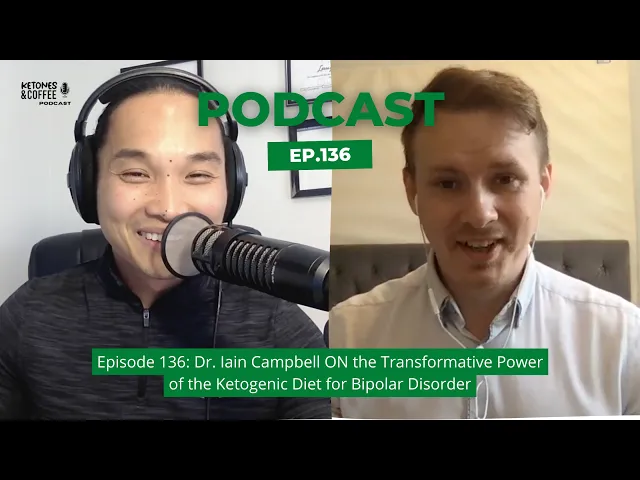
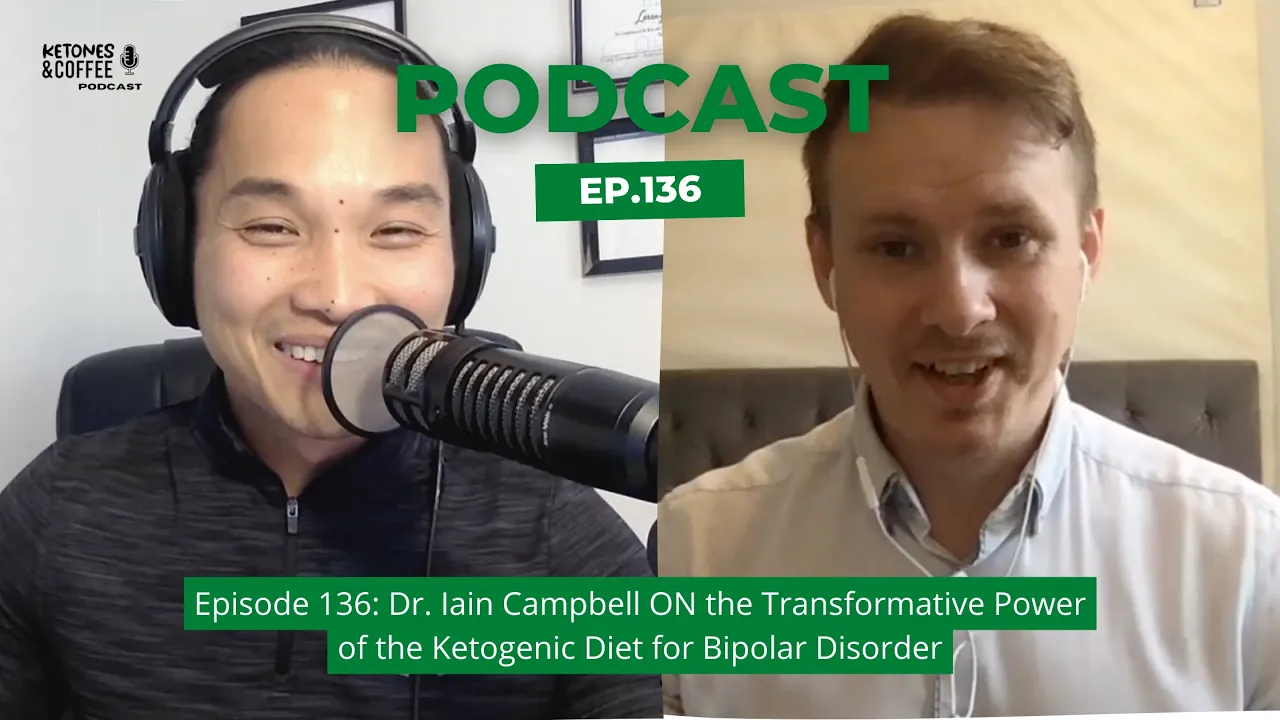
I'm so excited for this we have a very special guest on our podcast today we got Dr Ian Campbell a leading expert in metabolic Psychiatry and the bazooki research fellow at the University of Edinburgh Dr Campbell holds a PhD in global health and is a principal investigator on a groundbreaking pilot trial exploring the benefits of a ketogenic diet for bipolar disorder with over seven years of personal experience utilizing ketogenic metabolic therapy for bipolar disorder Dr Campbell brings a unique perspective as he understands both the challenges and the transformative potential of this therapeutic approach he also
co-hosts a podcast called bipolar cast where he shares his own experience with bipolar in hopes to help transform the way we publicly talk and think about serious mental illnesses Dr Ian Campbell welcome to the show and great to be here thank you of me man this is going to be an amazing conversation I could tell already Dr Ian is here with us today he has a wealth of knowledge for about metabolic Psychiatry thank you yeah I'm a great fan of the podcast I always see on YouTube and my friend Zoltan Sanai he's also a collaborate
with a certain scientific work and it was a guest and he was very excited to share about the podcast and I'm glad to be on yes Dr zoltanzarne is a wealth of knowledge as well with the topics that we talked about and it was a great conversation if you guys want to check that out you can I believe it's episode 122. I believe so mailbox Psychiatry you might be hearing a lot about metabolic Psychiatry the past few months here on this show and it's quite new to me and new to us and Dr Ian here
is here today not only to talk about that but also about his own experience with his own mental health struggles and how he was able to reduce his own symptoms through the ketogenic diet let's let's do this before anything else though your personal experience with with bipolar disorder is fascinating and tell us a little bit about that journey and how did you find yourself in that field of metabolic Psychiatry too yeah so when I was growing up suffered from a mental health difficulties and they started off as kind of what I now recognize this episode's
depression and it's the way I describe it is funny actually I was thinking about this just today because I was at the beach with my family and one of the first times I recognized it was like going to the beach in Scotland with my family and I could see that everyone was having fun and interacting and enjoying this beautiful sunny day and I thought like why like there's I don't feel the same way I know that all this is good and I can see logically this is a great day and we should all be having
fun but I just felt like I was behind a glass wall that I couldn't connect to that experience and I wondered why that was and it's very frustrating as a young person to experience that and then as time went on these kind of depressions became much worse for me and I noticed at the same time that during High School this was being accompanied by like severe metabolic dysfunction so my my way of like trying to engage with this when I was younger was to I didn't understand why I had such a different experience of life
to everyone I knew I was going through like a very severe depressions where I couldn't leave the house and I couldn't function and I had suicidal thinking and then I would go through these like highs where I'd be very productive and like creative and I couldn't understand you know I just sort of assumed that everyone must be like this in some way that but they all kind of hit it and eventually I realized this wasn't normal and I started going to doctors and trying to understand what was happening and my way actually at the time
of engaging was it was through music I like I liked writing music about my experience because it was a way to kind of describe like this unusual experience of life when you can't describe it through words so I used a lot of I became actually a songwriter for Universal Music I was actually the age of 21 I was signed by the president of Universal Music here in England so someone called darkest beasts and he gave me the shot to become a record producer and that was my first career was producing records at Universal Music and
I worked for a film composer and I did Orchestra and I use music as a way of trying to understand this illness first at a certain point I I realized that this was becoming so severe bipolars Progressive and it becomes worse over time I realized that I wasn't going to survive this and I realized this whilst I was working for a film composer called Harry Grayson Williams he's a sort of like like a Hollywood film composer and he was working on string scores and I loved working as his assistant but I also was going to
these like extremely severe depressions where I couldn't function and I would be catatonically depressed which is where you actually can't move or leave the house or like you know it's really a kind of impressions of a different magnitude than what is often described as depression it's like it's bipolar it's really severe it feels like it feels uncomfortable to be alive for weeks on end and that's why people unfortunately commit suicide because the physical aspect of the condition is so strong the the the physical Sensations the lack of energy the rushing suicidal thinking is extremely intense
during bipolar depression and so I realized that I really needed to do something and I started trying everything possible I was taking different medications I was trying different types of exercise like extreme exercise like meditation I was reading philosophy I was I was trying from every different perspective to do something about this because for me I wanted to have I had a wife and I wanted to have a family and I really felt like if I'm gonna be able to you know I'm not I'm just not gonna be able to do this like I'm not
gonna be able to have kids if I if I can't figure this out So eventually I just tried so many things and and nothing worked for me and I kind of got to a point of frustration where I felt like I just there's nothing I can do about this and I remember starting like a Google doc on my computer and it just said I just titled it with the word fight because I was like I just don't know what to do but I need to like do something to fight this when I started writing down
lots and lots of ideas in this Google doc and one of them was just that I should try and lose weight I was like 50 or 60 pounds overweight and when my symptoms were you know very bad when I was young I was also putting on a lot of weight gain as people can do with bipolar disorder and so I just decided that I would try to get healthy as physically as physically healthy as possible and lose as much weight as I could and I googled online and I found the Atkins diet and I just
saw that a lot of people were losing weight through this so I thought okay I'm gonna be super depressed for the rest of my life but at least I'm not going to be like you know hugely overweight and depressed I can try and like get myself like physically healthy so so I started doing this Atkins diet and I had no idea I was doing it very strictly it was very like close to ketogenic diet the way I was doing it and yeah within a few days of strictly going on this Atkins diet I felt a
massive shift in how my brain was working I was sitting on the bus one day going to work and I remember thinking like I've never felt like this before this my thinking is very clear and I'm like and I'm not like you know it's very hard to understand what was happening at the time but I realized I mean to describe it it was almost like I'd been living on this like looking at this black and white TV set my whole life and then suddenly I was seeing everything in color and it was it was sort
of high definition and I thought like but it wasn't like you know it wasn't like when you get hypomania when you go high but it was just calm and I was thinking clearly about things and there were situations in my life that I thought were completely hopeless you know with all sorts of aspects in my life that I was looking at I was saying it's not so bad like this is actually you know we can do things here this can be fit and I thought I never think like this this is not my natural mode
of thinking at all so I started asking what was happening and I couldn't quite figure out the time but as a few weeks went on doing this diet I realized oh it's really the diet that if it's the only thing that I've changed and I was saying to my family like and they were noticing that I was different and I was saying like I think it's something to do with this diet that I'm on so I started looking into what Atkins diet does and it puts you into this state of ketosis where you're burning fat
and then I realized that this is a therapy for epilepsy so the medications we used to treat bipolar are the same medications we use to treat epilepsy and I thought how interesting the ketogenic diet is a therapy for epilepsy and were treated by epilepsy medications so that was what really got my interest going and I started doing a more strict like medical epilepsy form of ketogenic diet and this led to even further Improvement which was to the point where I was then able to function just essentially I wouldn't even say like a normal person but
even more than I was when I was younger when I wasn't unwell yeah and so I thought I'm going to study this for the rest of my life like I thought I would have this for the rest of my life and it would get worse and worse and worse and I would you know go down unfortunately I've lost family members to Suicide this mental health runs in my family and it was really a surprise to me that I could be well and function and so I went at the time I went back to working in
the music industry because this was my career and actually you won't believe this but I became the music producer for a game called Grand Theft Auto I worked for a company called Rockstar Games Yes and I worked up from becoming a music engineer there to become the music producer for Red Dead Redemption and Grand Theft Auto and I worked on Red Dead Redemption 2 which is and this was like an incredibly complicated project with a lot of work and I was able to manage it completely fine I was able to perform at a very high
level in this company I thought this is really unusual for me to be able to sustain function for this long and so I also at the same time use that to largely self-fund a PhD which was in where I was looking at how to involve the public in research I couldn't get any funding for keto projects I applied to the NIH I applied to all the traditional funders and there was just there was no interest in this field at the time it was like completely new to everyone and they were like there's no pilot studies
so I was like how do we get a pilot study done you know like how do we start um making this a field and So eventually I got a team together and we'd gone through several field Grant applications for this and I just sort of in desperation put out this this is after about five years of researching this and trying to get interest in it so I put this 45 minute video on YouTube where I just summarized everything that I learned about this all the research that I'd done everything that I could find and I
thought like at least if this like maybe if I can't do this right now maybe someone in the future is going to watch this video and they'll pick this up and they'll try and like do something with it or maybe something will happen like and I just put everything and I even put ideas in there that are now papers that I've written years later that I just gave away for free because I was like I just want people to do something with this and like help other people to find what I find and but it
so happened that Chris Palmer find it on Twitter and someone had tweeted it and he tweeted it to Jan bazuki who is the leader of the bizuki group and her and her husband have this philanthropic Foundation where they fund really Innovative and like groundbreaking research in different areas of Science and Technology and so forth and so they got in touch and they said this is what happened to our son our son Matt biziki had this he had like severe bipolar disorder you can hear interviews on YouTube about this where they describe in detail going through
years of hospitalizations and a very severe episodes and and going through loads and loads and loads of different like healthcare providers to try to fix this and in the end they ended up working with Chris Palmer on a ketogenic diet and different dietitians Denise Potter and he got better based on this ketogenic diet so they said let's do a pilot study and that is the very long story of how we arrived at the pilot study so yeah it's really patience coming forward saying this has really helped me I want to understand the science behind this
so apologies quite a long explanation for that no that's that's a massive shift in your life and it it's incredible by the way and that's the power of sharing our story right how far it came to to now you are helping a lot of people you know understand their own condition and and really you know trying to reverse that condition right like like what you did and it literally saved your life right yeah yeah yeah I mean what were you trying to accomplish there you know when when you start the journey like when you started
to drink what were you trying to accomplish with the like the scientific Journey or the journey to getting better myself or when you have that massive shift how were you reasoning with yourself and it must have been such a an eye-opening moment for you and how were you making sense of it the way I was describe it is like and this is the only way I couldn't really describe it is there's allegory by Plato in like his book I think it's in the Republic and he describes that people were living in this cave and they
could only see Dark Shadows and reflections of things and they weren't able to see what the real world was like and I'm very sorry my daughter has just run through him and the he described that it's you know like they weren't even observing the real world they were seeing shadows and reflections of things and it wasn't they weren't perceiving the world as it was and being in a Bipolar brain is really compromised in so many ways and you can look at that from an inflammatory perspective or glucose metabolism perspective or all kinds of scientific ways
of describing how the brain is not functioning normally but what it feels like as a person is that you're looking at this black and white TV screen that's very small and fuzzy and you're not seeing the full resolution of the world and the full color of the world and how you're supposed to experience it so when I felt that one of the things I noticed sitting on this bus when I was going into wine I recognize is going to ketosis for the first time was that I was looking out the window at nature like at
trees and I felt these kind of like ripples of positive emotion looking at nature and I thought this is something that I used to feel when I was a kid I remember that I used to experience this and I hadn't experienced that for years in any significant way this like pleasure looking at nature and enjoying simple things about the day and so with bipolar you often try to use like hyper stimulus like very loud music and people turn to alcohol and all sorts of things to try and just to try and fuel something because life
is so dimmed and just to feel such enjoyment of looking at the window looking like a just simply a nature or having a conversation or you know these things were not you couldn't feel or experience them when you're unwell with bipolar and so to experience these Simple Pleasures of life was quite remarkable to me and I started to over many weeks realize that I been living in a sort of like this almost like this cave looking at the Shadows on the wall versus looking at the real world as it is and how people normally experience
it so Plato's allegory of the cave is how I typically describe it and another way of thinking of it would just be like looking at this black and white TV screen everything's fuzzy and faded and you can't really get a sense for what the world's actually like and then suddenly you have this full color widescreen TV when I was in ketosis and it really is that dramatic a shift and one of the things that convinced me about it was I was going into ketosis through doing this Atkins approach and becoming more and more strict with
it moving towards the classical ketogenic diet but one of the times I really knew that it was ketosis was I started taking MCT all you know these mctl supplements and Juice ketosis and I was taking this the C8 one which kind of generates the most ketones and I would I would be in um I was still coming in and out of ketosis and learning what was happening and when I was out of ketosis I could be in like this severe depression and I would take mcto like two or three tablespoons of it and I would
shift it would within 30 45 minutes I would feel myself start to lift out of that depression I thought this is really it's almost like I've been given a dial on this depression that I can turn up and down a little bit and I'd never had any control over this symptoms in any meaningful way so to have a sort of like even any level of control over the symptoms the 3M CTO was quite fascinating to me and my wife would say like you seem different like you seem much brighter you're more alert you're like you
seem less you know depressed and like you see more I would focus when you're taking mctl so this was what really clicked for me was like oh my goodness this is about Ketone levels and I started measuring levels and then yeah and then from there on I was going into much stricter ketogenic diet so does that mean you are not able to metabolize glucose like when you're just taking MCT oil like that so there's so there's really good evidence in bipolar that the brain is not metabolizing glucose in a normal way and this is through
like Mrs brain Imaging it's through metabolomics and one of the kind of primary markers of this is it increased lactate in the blood of people with bipolaride in the brain and this indicates that the like as of course you know the glycolysis pathways are running in overdrive because Normal energy production is being disrupted and this is present in the cerebral spinal fluid that people with bipolar indicating this is happening in the brain and it's present in the serum which in the case is happening in the body and there's also you know you there's a number
of different ways you can look at it but mitochondrial dysfunction is a central research theme for the past 50 years in bipolar disorder and there's a fantastic review of this by Kato and Kim a mitochondrial dysfunction in bipolar disorder where they lay out the kind of case for this so it's really clear that there's something wrong with the way energy is being generated in the body and bipolar but but this isn't like a new scientific observation this goes back to Emil crippling he was one of the very first people to categorize bipolar as a separate
illness and he was writing over 100 years ago that the the character he was observing patients in hospitals and he was looking at what is the difference between all the different kinds of mental patients and he was the first one to kind of categorize them properly and he said that the the characteristic feature of bipolar is this intense energy during Mania that they're able to work all night and they have endless energy to to perform tasks and he said the the cons his exact quote was the conspicuous lack of energy and by the the lack
of energy in bipolar is very especially conspicuous because he was noticing they couldn't even get out of their bed they couldn't move they couldn't perform basic functions so he saw this very much as a disorder of energy in the body and he and he wrote about this very early on and this was followed by Jean fowry who wrote about he wrote a paper called La fully circular which is about secular energy dysregulation and he was saying how there's a secular pattern to the activity and energy in people with bipolar so going right back from the
earliest clinical observations right up to the modern day science with mitochondrial dysfunction energy dysregulation has been a core feature of this condition and yet almost none of the treatments we give for it currently are focused primarily on energy regulation in the body so basically the lack of energy disregulates all the cell to cell communication uh because they're not getting enough energy when you're not in ketosis yes so I think that if you look at the mechanisms of action of lithium for example I have a paper on this called lithium and Insulin signaling and if you
line up all the kind of major targets lithium that like if for instance pharmaceutical research is focused on the last like 67 years they're actually very intertwined with energy metabolism mechanisms so the gsk3 and the phosphatidylonos it's all cycle all these mechanisms that lithium acts on are to do with energy regulation glucose metabolism in the body and I think that the my personal View and I think it's well attested too in the science is that there's a problem with how energy is regulated in the body and the brain and bipolar so that it goes very
very low to a point where the person can't function and it also goes very very high to whether and that can result in either the person being very high functioning or it can result in them becoming a manic or psychotic or ending up in hospital so there's a kind of spectrum of energy that the brain can attend to and and when it's in the very very low States it can't function when it's in the very high States it's somewhere it tends to always be negative but there's a spectrum where people have you know periods of
productivity and creativity but then if they go too high they become mannequin they go into hospitals so I I do see it to some degree as a spectrum of energy that the bipolar people Span in a much wider way than than a normal person and that can be extremely destructive to their life because the analogy is like imagine if you're on a normal Motorway and everyone else is driving a normal car and you have this car that's a bit banged up and it's like never the you know the main engines never quite working properly but
it does have these rocket boosters on the back and they just randomly switch on and you'd be like you know it's to drive on a normal Highway with that kind of a car would be almost impossible because you're half the time you're not really running properly and you're holding people up and then the next minute you're firing in all cylinders and then you're going 100 miles an hour and those kind of cars are great for certain kinds of races but they're not great for like just normal everyday life and so you can't find people with
bipolar that are very like high functioning and I've met many of them and they're quite remarkable people but they've got themselves on a lane that really works for them but for most people trying to drive on the normal highway it's disastrous and they end up in hospital and it's very devastating for them I had my own experience with major depression and let me know if you know what this sounds like to you when about six or seven years ago I experienced a severe panic attack one night and I was you know on a always on
a low fat diet and you know extremely toxic environment at my workplace so I'm at this stress State all the time and one night I experienced this severe panic attack and then it would be followed by you know I couldn't sleep for three nights and then major depression kicks in I was just I couldn't get out of the house you know this irrational fear of just random things and that went on for three years until I you know found the ketogenic diet but it was something that's very unusual for me never happened before I was
never depressed before but something happened to me that you know turned on that depression and I couldn't get out of the house like you said it was a character's place of my life and then after that I would have those moments too that I am depressed so I I know what you're talking about I feel it when you talk about that and with the panic attack did you get those did you get the ones where you know your whole body is kind of shaking and like did it come out of nowhere or did anything trigger
yeah yeah to come out of nowhere those are horrible yeah I mean like I think people when they hear panic attack like they assume it means you're very anxious or something but you know like as you know like real panic attacks are like your whole body is just completely out of control like you've lost control of your physiology in it it's quite it's very scary did you and did you get multiple ones or did you just have the one I just had the one and then yeah it would follow by just extreme fear yeah for
the next three days I couldn't sleep and then after that you know they they were putting me on a sleeping pill but I didn't take it so I learned to you know meditate and how to you know calm myself down and turn off the sympathetic nervous system and so I did that you know was able to sleep but the depression I couldn't get out of the house I was you know I I could barely get get to work right I only work and then I would sleep in my parents bedroom that's how scared I was
like um yeah I don't I didn't know what what happened to me but when I you know the ketogenic diet when I started it for weight loss too actually lost the weight but we talked about how that you know the brain turned on right my brain turned on and I couldn't make sense of it and so I went online I went on the internet and then there's not a lot of passive things about keto so I reached out to people on social media and that's what got me started with you know interviewing people yeah also
it was through the experience of the panic attack and the depression that made you look into this in the first place yeah that was oh yes absolutely the Depression was lift major pressure lifted and Angie came back and it became really clear to me that there was something going on and it was the ketogenic diet that's so interesting it's it's funny because it's interesting it came through you know through mental health as well because obviously it was developed as a treatment for epilepsy which is a brain based disorder and you know there's like 13 randomized
controlled trials showing that it stops seizures and epilepsy is really well attested to as a neurological intervention but nobody generally sees it as having an effect on the brain primarily is for like I find it like you for weight loss were you quite surprised that it had this mental health benefit I didn't know anything about keto for mental health benefit at the time I was I just knew that my cousin did it and lost 100 pounds on it and the reason why I didn't I'm I'm so glad that I didn't go online because I probably
wouldn't follow through because of you know all the stuff that's really negative online but yeah you know I was glad that I I started it and lost the weight but the energy that I gained depression lifted and anxiety I was so amazed by it and actually when I was when I was a boy my mom told me that I had seizures once or twice when I was a kid but but that was it what are some of the important things that you have learned from your research so far about how the ketogenic diet can help
people with bipolar disorder so the so the first thing is that this is a condition that was developed this is a treatment that was developed for epilepsy and it has 13 randomized control trials for epilepsy showing that it reduces seizures substantially in people with epilepsy and it's not available in almost every hospital in the UK for kids with epilepsy and many of the hospitals in America developed deliver this as a treatment for epilepsy so it obviously it has this profound effect on the brain but bipolar and epilepsy share the same anti-convulsant medications so the same
kinds of medications we use to treat epilepsy are the same kinds of medications we use to treat bipolar so the question is is this just a coincidence that we use these same medications for epilepsy and bipolar and ketosis is now a treatment for epilepsy that's showing efficacy and bipolar you know what is there something going on here I would say yes and now what we're saying is lots and lots of patients coming forward to talk about their experience and so I did this quite early on Matt bizuki has been one of the first people to
openly share his experience with this Chris Palmer's patients Georgia Eads been treating people for 20 years for this and and her patients have come forward and Shivani City at Stanford has been doing a trial with patients at Stanford University and we've also been doing a trial at Edinburgh with 20 patients with bipolar disorder going through ketogenic diet going through brain Imaging going through metabolomics going through questionnaires daily Ketone testing glucose testing mood testing so we're really now like moving into the early stages of pilot trials and research with this which is very exciting and so
we'll be publishing the results of our pilot trial of a ketogenic diet for bipolar disorder and very shortly probably within the next couple of months and we've we've already published a pre-pin of our feasibility which is just showing the kind of basic findings and then we'll show our like main outcomes or like a more interesting psychiatric outcomes in the second paper so what I can share so far and I wish I could share with you all of it because it's very exciting and we presented the results for the first time at ispd which is the
biggest conference for bipolar disorder in Chicago just a couple of weeks ago so myself Shivani from Stanford and Georgia he presented alongside each other the findings from our studies and it was really remarkably well received it was people were really excited by this and they thought wow this is something really new we've never seen this before and it opens up lots of potential avenues for investigating bipolar disorder so what I can share is that this therapy does now have real evidence for it and I wish I could share our actual findings but I can tell
you that what Georgia shared was her retrospective analysis of inpatients from hospital in France and she showed with over 30 patients with serious mental illness that their scores for their psychiatric symptoms were coming down very substantially on a ketogenic diet and not only that but their physical health was also substantially improving so both their mental health symptoms and their physical health symptoms were improving drastically and this was a study she did with Dr danan from France who carried this out in his hospital so Georgia was presenting this isbd and so I've been working on this
study with Professor Harry Campbell and Professor Danny Smith Edinburgh where we've done very very detailed testing of people with bipolar disorder looking at them doing this diet seeing is it safe Is it feasible is it effective and the results we have published so far which I can share are that people will stick to this diet so people are very worried about well you know even if this works like gangbusters will people with bipolar disorder want to even do it it's a very strict diet and we showed we took Ketone levels every single day the study
and we showed that over 91 of the readings were showing patients in ketosis so basically they were sticking to the diet over you know over 91 of the time in the best way that we can measure which is fantastic but we also find very very interesting findings in how this affects their mood and their anxiety their psychiatric symptoms but also a lot of traditional measures that we use to as biomarkers and bipolar disorder which we'll be publishing in our next paper which which I think are very exciting and very and should be very interesting for
any scientist that is interested in bipolar disorder because these are these findings indicate mechanisms that are shared between epilepsy and bipolar disorder and I think that's very fascinating and I've already published some of my thoughts about the theory behind this new paper called metabolic overdrive hyperglycolysis and glutamanolysis in bipolar Mania is a preprint that I've just put out and I think it starts to paint some of the picture of why there's is this link between these treatments between epilepsy and bipolar and this is a really interesting development in bipolar research in my mind it's one
of the most interesting developments to happen in bipolar research because we're now starting to see what is this there's a shared pathophysiology with epilepsy the shared treatments with epilepsy and now we're starting to see some of the underlying mechanisms I think becoming elucidated through this search so I think the next 10 years of research in ketogenic diet will show up the patient experiences are reporting but I think it'll also reveal underlying mechanisms about the condition that we've never understood before and that's a very exciting time for Science and a very exciting time for treatment I've
also will be publishing very shortly alongside this paper a questionnaire study that I've been doing we're now over 90 people with bipolar disorder have come forward to share their experience on a ketogenic diet and again I think the results are quite remarkable in terms of the effects being described how long they're lasting for and the nature of these effects and if you want to get a sense for this I have a podcast where I interview people with these conditions and we'd love to have you on the podcast sometime actually if you if you would it's
called bipolar cast and we just interview patients that are doing ketogenic diet that would be fantastic and we just asked about their experience and so you can hear over 20 hours of patients and clinicians talking about their experience with ketogenic diet for bipolar disorder so this is something that patients are talking about is something we're having pilot studies and science done for and it's something that ultimately I think Will Reveal underlying mechanisms about the condition I have a feeling that you love your job [Laughter] you wouldn't find a more driven researcher I I just honestly
like I can remember times where you know I just was non-functional like not able to live life and it's so frustrating when you're a person who wants to like just contribute to the world and and so especially when you realize that you know this there's things you'll never be able to do like have a family or like yes have a it's embarrassing you know to be in that situation I've been there and I've been like in all kinds of like really really you know I've been there's been times of my life it's life-changing it is
100 there's times when I've not been able to stop thinking Suicidal Thoughts like for for weeks and end and now I'm living a functional life and so all I want to do is like I wake up every morning and I say to myself I first of all think like what am I gonna do for my family today and then I think how am I gonna like help someone that's like me when I was that age like when I was was like 15 and I had no idea what was going on like this thing was consuming
my life this illness and leading me down a road that was very dark and I didn't have any clue about it and I think like oh get it like what I would have given it for someone to come along and just show me something about this that I could understand just to tell me anything about it that made any sense because I didn't I I love Psychiatry and I love psychiatrist and I appreciate them so much but I didn't get that advice when I was that age and I really did it and so that's what
motivates me to try and show the people about this yeah there's a lot of people out there that you know I don't know if you know Carrie Brown for years right she she was put on medications after medications and it seems like the medication is just making the condition worse and worse and then one one time she was given a anti-seizure medication and it worked for her and then she got connected with Dr Ted Naaman and that's how she she started a ketogenic diet which is pretty fascinating a lot of people are suffering like that
that's given medications that really doesn't work for them and then it seems like people they are just throwing medications at them which is really you know I can feel sympathy for those people and you know you're what you're doing is I'm just happy for sufferers because what you're doing is Really Gonna Change a lot of people's lives man thank you I mean I think with bipolar what people need is like I just want to be useful because there's been so much things that have unfortunately not been useful to people with bipole there's been vast amounts
of money put into developing treatments that are and the suicide rate is still 25 to 60 percent with the attempted suicide rate is 25 to 60 with bipolar at the moment so any condition where you have a quarter to almost two-thirds of people wanting to kill themselves that that to me is not a successful this is not being successfully treated and it's and the thing that's amazing about ketogenic diet is that it's an adjunct we're using it in our pilot trials in a junk to traditional medications so people can stay on all the medications they
are on that are helping them but they can do this ketogenic diet alongside and and they and and that's something that's really powerful because it allows people to make their own decisions of like what's working for them and I think that this is a really great aspect of Keto is it can be used alongside all the things that are currently happening so I I think this gives people the option it's like try it and then you know you can you don't have to come off all your medications or do something drastic and we actually advise
you should do this extremely carefully with your psychiatrist with a dietitian and never do it on your own but you can try it with that support and find out for yourself if this works for you I don't think it with epilepsy it doesn't work for everyone and I think it'll be the same with bipolar it'll work but for the people it does work for it can work very very powerfully and so we need to understand what this is and how we can enhance the benefit of it for people and to maximize the benefit of it
for people so but yeah it's really the the treatments essentially manage the Mania feeds very well if you go into Hospital in an episode they can bring you down from it quite reliably but the long kind of as you've experienced like the major depression there's very little medications that can do anything for the the severe long depression except for lithium and some people can be very helpful but really this the depression is the thing that's the hardest thing for a lot of people is is managing that and ketosis specifically helps with the depressive side of
it through restoring energy metabolism what can we do to push this further you know you guys are doing it already but what do you think we can do to help people understand and talk more openly about the men about mental health and how should you know I'm pushing your message here but for people who are listening how can they help right so I think there's two sides to and one is we need to we need to have solid evidence that proves that this works because when you go to any psychiatrist the first thing they'll say
to you is where are the trials where is the evidence this works how can I because they're putting their reputation on the line if they recommend this as a as a psychiatrist and so why are they going to take a risk on anything less than something that's very substantial like that's had randomized controlled trials that has substantial evidence behind it they're not going to recommend this and some are fantastic and they will if they really think it will work we'll give it a shot and make it work and we've heard unless it worked on them
yes exactly well and that's how it often happens like Chris Palmer tried key to himself Georgia Eid had experience within ketosis all the great psychiatrists have done this early on I think shibani said to use you know tried doing the diet herself I I find it myself like I think that the people who do deliver this are people who've known that it works for themselves and so so we need that very but for people who haven't had that experience we need this very robust evidence and this will inform all the kind of organizations that recommend
care for bipolar disorder and mental health but but that alone is is half the battle and the other half is then getting patients to demand this and to ask for it because you can you do need that substantial evidence to open the door in the first place but then you also need patience to ask for it and for insurance companies to support it and for the healthcare system to deliver it so those two have to be the one two punch and epilepsy had a very strong randomized controlled trial they had 13 randomized control trials and
and this has led to tens of thousands of people without epilepsy having their lives transformed to especially their young children who would have lived whole lives with epilepsy with very severe epilepsy being in complete remission because of these randomized controlled trials but then it's also very under prescribed you know there's many more people who could benefit from this and so there needs to be a much stronger patient movement but with metabolic Psychiatry we have the opportunity at this time to advance both of those at the same time which will be the strongest possible combination so
I'm I'm very hopeful for the future of this because it's moving quickly at the moment and we have support but we need we need them to move in tandem is is the the very strong evidence and the patient demand you know I had Dr Anna Andreas on my show and she talked about how we shouldn't call keto a diet because it's therapy for epilepsy and it should be therapy and maybe that's what's stopping people from understanding this is how can a diet you know stop bipolar right yeah it totally is and it's like I was
saying this at the ispd conference a couple weeks ago I was like this is like it's like a state of human physiology is is like being around for hundreds of thousands of years like anytime someone fasted you know I never ancestors fasted they would have been in ketosis it's not like some new diet we just invented that's like oh wow look at this one this new fad diet it's like this is a state of human physiology that's part of you know our evolutionary biology and our and you know our makeup it's not like it's just
funny how people think we invented ketosis you know I just had an idea I'm gonna stop I'm gonna stop talking about this as a diet this is a therapeutic approach for mental illness mental health right for brain health he said you know Dr Anna said it's not mental health it should we should talk about it as brain health right yeah it's neurology it is and and the mechanisms are very powerful in the brain and so absolutely Anna's an amazing scientist I have so much respect for it and and she was is one of the pioneers
of mitochondria research and bipolar disorders so the energy thing is so essential to her work and that you know it's really exciting to see what they'll discover with this mitochondrial research over the next 10 years I'm just excited for this I'm just excited for metabolic Psychiatry and I'm excited for you guys you know there's you guys are going to help a lot of people and you know it's kudos to you guys and whatever I can do to push that message I will absolutely and thank you for sharing your own experience with the mental health and
ketosis because it's it's really it's just amazing how many people I speak to that came to initially through the mental health thing you know realizing there's maybe they approached it for weight loss but like it was the mental health things that made them stay so I found it really fascinating and maybe you know we'll find out this is particularly effective in the brain I think I think we will we would love to learn more about that well we will be remiss if I didn't ask you this question what advice would you give to someone with
bipolar disorder who wants to feel better and just take care of their overall health right now I think you have to decide that that you're gonna get better like I think there has to be a decision point because it's so brutal you know you really have to like at a certain point decide with the one percent energy you're like the half a percent or a quarter of a percent energy you have you have to commit internally to to recovering from this and you have to say I'm I'm absolutely committed and there's no way I'm not
blocking off all the options and I'm burning my bridges and I am going to recover from this because that then leads you to use the very small amount of energy you have in the right ways towards prioritizing your recovery and I think that you know it might feel impossible or like it's absolutely you're in the worst I've definitely been there where it feels completely hopeless like there's no way that you're gonna make it and and that's absolutely not the case your brain is in a state of you know is there's inflammation in your brain it's
not processing energy in the best way and when you get it working the right way you'll see that this is not the way your life is going to turn out but you need to commit to that step of getting there and think that I would just encourage people that treatments are going to get drastically better over the next 10 to 20 years from mental health we're really making progress in lots of different areas of research that I think are going to change the way we treat these conditions so hang in there and use your family
for support and try to you know try to find a psychiatrist that would support you if you want to try ketosis as a therapy like I have or like many other people with bipolar are using find the psychiatrist who will support you in it find a dietitian who will work with you don't do it on your own because this is a serious like you were saying learns like a serious metabolic therapy is not just a diet it really changes the metabolism in your brain and so I would say work with people who can support you
in it and and have hope because I think that we really are making progress in this film and we're going to link all the support down in the description box below guys if you are going through something we'll share that link to you and Dr Ian Campbell here is a wealth of knowledge you do have your own blog right as well I have the main place you can find me is on Twitter I tweet regularly Ian Campbell PhD and on bipolar cast on YouTube if you type bipolarcast and I interview people with a friend Matt
bazuki looking at bipolar disorder and ketogenic diets and metabolic therapies awesome we'll link everything down in the description box below guys get on it Dr Ian Campbell thank you so much for coming on and sharing your story it's really helpful for a lot of people here and let me know kudos to you to you guys for pushing that message and you know just really have a lot of respect for you guys thank you so much it was an honor to be on the show thank you for having me thank you Dr Ian bye-bye thank you