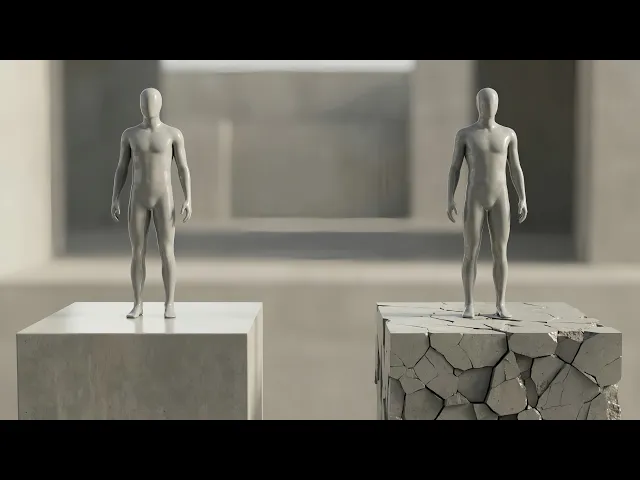
Every city tells the same story. Progress everywhere. Ownership almost nowhere.
Most people don't earn money. They rent their hours to survive. Salaries rise slowly, but expenses rise relentlessly.
The ceiling is intentional. The system does indeed savers. It needs consumers who never pause.
Debt converts future freedom into present comfort. Quietly, legally. Risk builds wealth, but only for those who can afford to wait.
The system keeps running because most people never stop running inside it. We're told wealth is earned, but first it must be owned. In modern economies, money doesn't circulate, it concentrates.
A small group controls land, companies, stocks, and intellectual property. Most people own none of it. They only access it temporarily.
Ownership compounds quietly, even when its owners do nothing. Labor does not compound. It resets every morning.
This difference decides who builds wealth and who never does. A salary feels stable, predictable, and safe. Something people build entire lives around.
But behind that stability sits a ceiling most people never see until they hit it. Wages rise slowly and cautiously, while the cost of living accelerates without restraint. Rent, health care, and education move faster than paychecks ever can.
The salary was never designed to create wealth. It exists to maintain productivity, keeping workers efficient, dependent, and replaceable. That difference decides who stays working inside the system and whoever escapes it.
Most people don't lose money because they earn too little to survive. They lose it because nearly everything they earn is immediately spent. Consumption stopped being a habit and slowly became a form of identity.
Success is measured by what's visible, not by what's actually owned. Money enters accounts briefly, then exits almost without resistance. Nothing accumulates over time.
It only keeps moving through the system. Wealth requires restraint. The system quietly rewards constant display.
Debt is presented as flexibility, convenience, and modern financial freedom. But every payment quietly takes a small piece of your future time. Debt doesn't just cost money.
It converts time into obligation. Once it becomes normal, choice disappears without any force being applied. Work stops being about progress and becomes constant.
financial maintenance. Survival replaces strategy when obligations leave no room to think long-term. And maintenance, no matter how disciplined, never builds real wealth.
We're told wealth comes from taking risks and making bold decisions. But risk is not something everyone can afford equally. For some people, failure is inconvenient, temporary, and recoverable.
For others, a single failure causes permanent financial damage. When survival is uncertain, long-term thinking collapses completely. Wealth quietly favors those who can afford to wait.
Most people can't. The system was never designed for everyone to become wealthy in the first place. It only requires most people to keep functioning reliably inside it.
Day after day, promotions slowly replace real progress, while upgrades quietly replace actual ownership. Hope becomes the fuel that keeps people moving forward without stopping to question. Belief keeps the machine running smoothly, silently, and almost completely unnoticed.
Most people will never be rich in the system. Not because they failed or lacked effort or discipline, but because the system itself was never built for them to win.