hello and thank you for for joining the the private credit uh panel discussion we're going to kick off with a uh focus on the competitive landscape and some of the the market dynamics playing out in the the the space but before we do that let's ground ourselves in the the Strategies employed by the managers here so I'll ask if each of you to to hit us with three things what segment are you in where do you play in the capital structure and would you describe your strategy as more core or opportunistic uh hello everybody Rick
Miller private uh credit at TCW uh we have uh three strategies uh we focus all of those strategies in the core Middle Market so think 15 million of eida On The Low End 75 to 100 million on the upper end but it's all core midal Market it's not creeping into the BSL or or other uh areas uh we have a premium spread product it's our core strategy that think of 6650 spread or higher this more opportunistic it's our specialty lending uh vehicle we have a stress distress vehicle we call it a rescue vehicle which is
providing liquidity to liquidity challenged borrowers which there are more and more of in our market and recently just a little bit under a year ago we signed a joint venture arrangement with PNC Bank uh to provide uh loans cash flow loans to their primarily to their their clientele so three very somewhat differentiated strategies in the core midal Market okay uh Ken canel I'm president CEO of Churchill Asset Management we manage roughly $50 billion in committed Capital uh split equally between traditional senior lending and uh junior Capital which includes uh both equity co-investments and fund commitments
we focus um exclusively on the core and upper middle Market uh so really um uh staying within that you know that that range and we've done that historically uh we do move up and down the balance sheet uh so we have senior lending products we have Junior Capital we have Equity co-investments we have a secondaries business um and we focus exclusively on companies that are owned or controlled by private Equity good morning I'm Tim low I'm the CEO and CIO of willow tree we are a middle Market core lender to for the most part sponsor
back companies we manage about 6 billion of assets under management we tend to focus on the core Middle Market occasionally doing some lower Middle Market and in those situations we'll provide Junior Capital to unlock both equity and sub debt financing for businesses that don't have that access to Capital it's one of our Alpha creators within our strategies pleased to be here on today's panel um excited to dive into the competitive landscape and uh I'm Steve cimer I'm head of private credit for Lord Abbott uh we are 95y old private asset management firm uh we are
focused on uh core Middle Market lending like a lot of members of the panel here we do Play Down in lower Middle Market uh as well um we're part of a $50 billion doll leverage Finance business um but we're we're not a we're primarily a core strategy not an opportunistic strategy okay very good we've certainly seen a changing landscape in corporate private credit with a tremendous amount of growth over the the the last several years a lot of new entrance into the the space and we've seen the the large firms getting even larger and the
emergence of this theme which is large cap direct lending with that as a market context um we'd like to to hear from you how does that affect your positioning in the market and the supply and demand for capital in the the segment where you're participating and uh Tim if you could kick us off there sure I think there are a couple of themes that are underpinning the competitive landscape in the core in particularly lower Middle Market you know we've all seen that inflows are tremendous there's a lot of new entrance um but I think when
you peel it back 90% of the dollars are going to the top five or 10 managers and so the the core and the lower midal Market is in my mind not getting more competitive I think secondly there's been quite a bit of m&a that's happened in the last two years when you think about twinbrook and treine and varagon and mggg um all changing hands and you know that tends to bring some disruption to those businesses on the other side you're seeing the largest managers with all the capital being raised moving up and out of the
core metal Market you don't see the Apollos and the Aries and the interes as much in a 20 to $30 million Eid business certainly you don't see them at all in a $110 million Eid do business in terms of competing for that financing so I think in this market even though m& volumes are low and issuance is low and spreads are tightening we actually think the competitive landscape of the last three or four years has improved dramatically to our benefit as lenders Rick what would you add to that well I think uh you've heard in
our introductions some of the concentration of our the core metal Market is really focused on serving the private Equity borrower um and I I think the number is somewhere on the order of 80 or 85% of the the capital is is doing that uh which leaves a lot of white space or a lot of untouched areas uh for those lenders uh that are are focused on kind of maybe owner indifferent uh whether it be non-sponsor or selected sponsor transactions so I think a lot of the the the I would agree with the comment of the
concentration going to I don't know maybe it's 10 12 managers who are getting bigger and bigger uh you get as a as an investor you're going to get more and more of kind of a go to market process right they all have the page in their deck that has the 100 sponsor logos that say this is our district you know this is our origination Channel um and I think as a as an investor do you need five of those do you need six of those I think it's it's it's an opportunity to kind of look
outside of that that story into other areas whether it be lower Middle Market non-sponsor owner indifferent premium spread strategies more distressed or opportunistic strategies so a lot of this I think probably is tied to the evolution and the maturation of the market it's now 12 13 years old so it's it's an adolescent it's it's kind of you know you really don't know what direction you're going to go into but it's not the same strategy that may have been very very effective over the last 10 12 years fair enough uh Ken anything to add to that
no I think um you know what we've seen certainly over the last year is has been you know quite an evolution right you know we had several years where there there really was no broadly syndicated loan market right so you saw some of the largest direct lenders move up move up to fill that need um obviously the SE coo market and the liquid markets came roaring back in the first quarter um and and that market was largely driven by refinancing activity I think 90% or so of the large cap BSL Market is really refi and
direct lenders continue to control the vast majority of of the of the New Deal activity so I think in that sense you know direct lending private credit and and the liquid markets you know are very much coexisting right and particularly as you get larger companies are looking at both markets in terms of in terms of solution but I think at the end of the day the speed the certainty um the confidentiality that we can provide you know is an inherent advantage that I think makes direct lending um you know stand out I I will say
as we've evolved through the P you know the past several years there's no question the largest managers are attracting more Capital they're demonstrating performance and and through obviously an environment where interest rates are 400 basis points higher so I think as as managers validate their performance they raise more Capital gives them more scale and the ability to compete in in in the core midal market and some cases even larger upper midle Market deals so I definitely think it's a case of a more consolidating market and I also think that for newer entrance today um they're
going to be largely consigned to the smaller deals so we think that the core Middle Market companies with you know 25 to100 million in ebda are kind of The Sweet Spot if you will where companies are big enough to have scale but not so large as to have graduated into the Covenant light lots of Leverage lower price Dynamic so you know I think it all it all bodess well for private credit okay very good Steve Let's uh drill into to some of the Dynamics in the the market and Es and flows across the the private
credit markets and the BSL Market the capital markets and with this new theme that that's playing out where the Partnerships are being formed between Banks and private credit managers as Banks move to this originate to distribute model what would you expect for 2025 in terms of the market dynamics and where we're going to see the the most activity sure well first I'd say you know the and Ken touched on some of this but the interaction between the liquid loan market and the private Market it continues to converge um I think this really started in Earnest
uh with the onset of covid up until covid um I would say you know pretty much all the major players were were Middle Market lenders and with Co you had uh two things happen uh around the same time you had a few of the largest platforms get big enough to write a billion dollar loan to a single borrower so by definition that's a borrower that can access the capital markets if it chooses to uh but then with covid you had those Capital markets dislocate and now that private Capital became kind of the game in town
and that you know at the same time there's a lot of proof of returns uh for private lending direct lending through crisis so you had a lot of capital formation a dislocated capital Market um and a lot of the largest players kind of moving in Earnest into that space and now now when you look at it I think you can in somewhat I think you're you're hearing this from the stage there's kind of I mean there's multiple ecosystems within direct lending but for these purposes maybe there's two major ones there's you know direct lending where
you're a private solution to a company that has a choice it's the the upper Market or you're a private solution to a company that doesn't have access to the capital markets and those two things behave differently uh when we and so of course the interaction with BSL and direct lending has to do with that upper end of the market I think you'll continue to see the pendulum swing so with covid pendulum swung very far One Direction you saw a huge amount of large uh borrowers uh issuing the private Market as call protections you know come
off since covid and the capital markets are of course quite vibrant now you've seen that pendulum swing back um now where I think it is uh with rates kind of you know stabilizing where they are Capital Market is still vibrant I think that what you're going to see now is more osyra in issuers deciding whether to issue a public or in a liquid format or a private format um you know Ken mentioned a couple of these but your private solution you don't need a rating you don't need to go on a marketing Road Show You
Can Be You Can Have confidentiality so if it's a take private transaction you can be much more customized solution for borrower who's got a complex capital structure those are all advantages that I think throughout you know markets will can win um at the same time the liquid markets are cheaper and uh and and you're going to get out to a wider investor base so I think in 2025 I wouldn't expect a big swing one way or the other I think you'll see more of these idiosyncratic choices uh between the two markets but I do think
um another aspect of this is the documentation a lot gets talked about with covenants um but I think another related topic is is what's referred to as lender on lend violence uh which is you know really what we mean by that is uh you know lenders who came into a borrower at the same level find themselves all of a sudden not at the same level in times of stress so it's a it's a it's not just a company that has bad performance it's an unexpected outcome with respect to the seniority of your loan and the
more liquid loan documents permit that type of uh kind of side transaction and and the core Middle Market documents generally don't or I would say more than don't even contemplate It generally so I think that you'll continue to see you know those differences what for for 2025 I think be more sycratic okay Jo very good thank you well let's move on and and talk about the the macro a bit and focus on credit performance and different views being expressed in different parts of the the market and by different people around uh credit quality and certainly
we've got a a strong economy but not all companies not all sectors are experiencing that equally and um so let's focus on where credit is today what your expectations is for for credit performance of existing assets and then what's the the Outlook as you think about the uncertainty in the market the rates the the policy the the tariffs all the the factors that create the the uncertainty today and how you're thinking about portfolio construction for for this year and maybe uh Ken maybe you can kick off on that one sure well look I think the
big surprise or certainly um the big learning uh from the last several years is that direct lenders uh certainly the large scaled um relationship lenders with strong track records and a long history really proved out the asset class right uh you know interest rates are up 400 basis points there was a lot of speculation around could these companies really handle you know going from 7% to 11% what would that do to balance sheets would these companies be impaired and I think for the firms that have followed a conservative Focus highly Diversified approach to investing and
generally focused on higher quality businesses the reality is that portfolios are in actually very good shape you know KB dld I think for 2024 is forecasting a default rate of around two and a half two 2.75% still very you know very very reasonable uh to historical standards um if you look at our portfolio for example Le you know we're we're sitting with a default rate of of onet of 1% and I would bet that a number of the you know more successful direct lenders would have similar numbers so I think credit quality has been good
um the the Dynamics today um absolutely favor managers that have scale that can deliver large scale solutions that have relationships uh and and fundamentally um you know have kept their focus on a more conservative profile so current state of affairs I think quite good um deal activity if you look across the past year has picked up quarter over quarter uh we actually had a record year of investment activity last year we invested over 13 billion in in over 400 deals and we think 2025 is going to be even better so um yes there's a lot
of noise around tariffs and you know and and I I I tend to be a doubter that those actually will materialize so I think the the the the Outlook of of rates being somewhat higher for longer um the the fact that portfolios have been able to withstand the the the higher for longer environment portends very well for yields for investors but also an environment where you know companies have shown their ability to to to handle it so direct lending I think and private credit should have a very good year in 2025 and we're expecting uh
you know to be to to be quite active so you know I'm quite optimistic about the environment today yeah I would agree I would say that there's there's a couple of things that have happened over the last 20 years or so that I've been investing and the folks in this panel have been investing in private credit and I think one thing that doesn't get talked about enough is that private equities become very expensive and the reason why people choose direct lending over to broadly syndicated loan Market is they constantly need capital and those markets open
and close whereas if you're a lender with capital you can always provide that solution and so the duration of risk in 2002 2004 uh when this asset class was starting was generally tied to them as an in product where you would look back at a company's performance three years after closing and you determine whether or not they made their budget today it's every 3 to six months in every sector that a company is calling this panel back for more capital and so that means that you're able to reerrr risk whether that's risk related to the
company macro tariff interest rates rising and make adust Ms I think that's a really important thing for the asset class in my mind it's gotten so much easier to deploy behind borrowers and when we first started doing this this was maybe an industrial rollup or healthc care rollup where you see consolidation and a you know a Synergy model now it's everything if you're paying 20 times for a software business an a andd business an HVAC business you're going to have to buy that multiple down and the only place you can come for that capital is
to a direct lender broadly indicated loans cannot be structured with delayed draw term loans and so that's why you're seeing 3 billion 4 billion 5 billion financings get done we're the only source of that dry powder so I think all of Ken's comments around you know the economy working and defaults remaining low I think they're valid I think they're going to see you're going to see a few sectors uh which we have seen start to experience exaggerated defaults and I would pinpoint uh technology related Lending recurring Revenue loans you can look at public BDC data
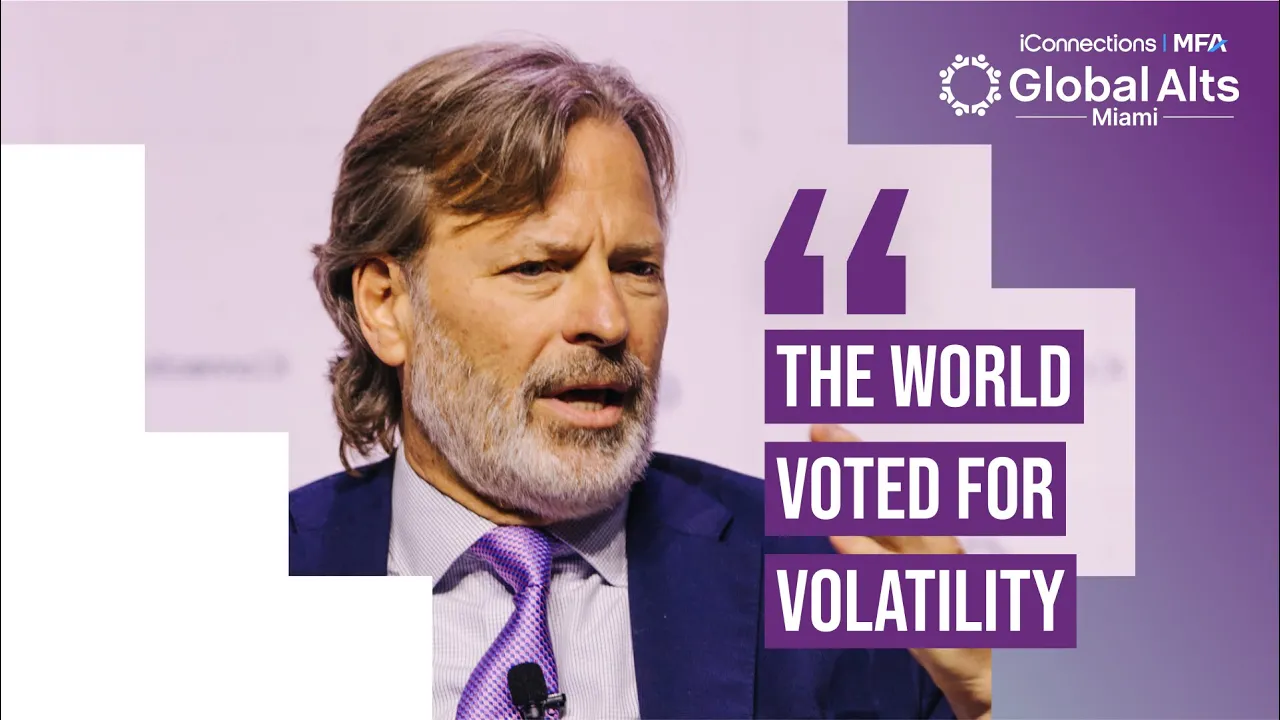
and there are several that are at 40% uh pick those funds are not going to make their dividends so I think that's not something we do I think that's not a market we thought made sense in terms of spread versus earnings uh but the managers that have maintained discipline as this asset class has grown are the ones that are going to continue to show strong performance Rick what are your views on on credit and expectations well I I I think first of all maybe starting at the top in macro uh the world voted for volatility
okay there was an enor amount of Elections around public democracies around the globe and the incumbent lost almost uniformly and so people voted for change good or bad they voted for volatility so I think there's going to be surprises uh when you look at the credit markets both public and private today you can argue that the markets are mispricing risk you've got uh record high record tight spreads in IG record tight spreads sprs in high yield uh spreads have come in in in private credit over the last year uh so you you the market is
certainly pricing for little error little margin of of of error and you take now back you know you kind of winow that down into the what we do every day uh as a private credit manager direct lending manager you have one objective avoid principal loss and if we're successful at that you can generate attractive risk adjusted returns for your investors if you don't do that you're probably looking for a job and so you the the the idea of of mirroring that volatility with that objective I think some of the some of the themes here I
would Echo you know consistent uh risk mitigation and consistent discipline around the way you lend but I think maybe more importantly some of the the attributes that have not been as appreciated over the last 10 or 12 years in this in the private credit Market which has you know the private credit Market has really grown up in this incredible benign investment climate zero interest rates we're not allowed to have recessions no defaults and so we're all you know Geniuses you know you can just ask us but if you kind of you know look at today
you know more normal environment where you have much higher rates you have economic uncertainty and volatility I think the traits of a of a lender that knows restructuring knows bankruptcy experience is capable of owning and operating when necessary all skills required to avoid principal loss are going to be things that I think characteristics that you know investors are going to value in their managers because it doesn't matter how you get there you just can't have those losses and in order to make you know avoid those losses you've got to make some difficult decisions you've got
to you've got to be confrontational at times with your borrower and I think you're going to see a dispersion for the maybe the first time in the young asset class life between managers who have that experience have that expertise that knowledge and those who don't fair enough let's switch gears and and focus focus on the the right side of the the balance sheet and uh Steve maybe you could um lead us in a a discussion here about how private credit managers in the corporate space are financing their portfolios um certainly the banks are feeling a
little bit more frontf footed because they're not going to be under the the regulatory pressure that they thought maybe they they would be but I understand some of them are getting full on some of the the names in the the the space but also what what are you seeing like the the private Clos the insurance Capital regular Bank financing what what's happening in the the right side of the balance sheet there so I'd say uh financing of private credit is very healthy right now and maybe I'll you know your previous question to me had to
do with the banks overall relationship with this market and I think this is a great time to weave that answer in as well where you know if you went back to the great financial crisis before the great financial crisis or maybe just the history of direct lending in general it's very Bank driven Banks were the providers of the lot of capital that we provide today if you go back 20 30 years and starting with the GFC they started to get regulated out of it basically the the risk Capital they have to hold against it uh
makes it uneconomic for them if they're just holding the loans itself um what that's turned into is the banks like the risk quite a bit but they're really have moved to a second loss position in financing what we do and uh that is very vibrant um if you look at how private credit is levered it's actually quite conservative um it's on average for a leverage so a lot of what will'll manage may not even be levered meaning the fund um but if it is levered it's usually targeting a one toone leverage ratio and you're talking
about senior secured loans if you compare that to let's say Banks and Clos other kind of pools of senior credit risk that are levered you know Banks today are levered about 10 11 to1 as our Clos back in the GFC they were levered banks are levered almost 30 to one and um so from that perspective you've got term financing at a modest leverage that's kind of matching underlying term of private lending that's had a very stable history so the financing of the product um on a risk adjusted return basis has proven to be quite attractive
so I think the banks are leaning in uh pretty pretty notably um and if you're managing a private fund that's really the leverage you're looking at generally is kind of Bank financing uh you also mentioned uh Clos maybe we'll talk about a few other ways the the strategy gets financed if you're a BDC uh you're an actual operating corporate finance company and you have the ability to issue some other instruments so you can issue a corporate revolver that also comes from the banks uh they don't like that as much because it's not funded uh but
they'll do it for the relationship if there's other um you know kind of deeper economic ties which usually there are with these firms so being a BDC allows you to Corp revolver also allows you to get rated yourself and BDC can often get rated Triple B and issue its own unsecured bonds and so now you're not even taking up bank balance sheet in fact that's a that's a fee experience for them where they Place those bonds uh to insurance companies funds other kind of rating sensitive investors and that market has grown from you know 10
15 billion to almost 100 billion that that's and it used to be maybe 25 investors in for that product now I'd say there's investors for that product you know I I would mention another point on on the financing side that I think is quite interesting you know if you went back 5 10 years ago pretty much all of the funds that were being raised were term funds threeyear four-year investment period which made it a little bit harder to finance right so you'd have to ramp into the financing and then just when you had the leverage
in place the funds started to run off I think a big Trend in the industry which we' we've seen is a move toward Perpetual vehicles and by having a perpetual structure you can raise long-term financing you know within that structure so you're seeing more utilization of Clos more utilization of term financing 11 10 year paper 10e paper and and so I think that's healthy as well because what you find is those portfolios get larger and larger and more Diversified right so in a Perpetual fund you could have two three 400 borrowers in that vehicle and
raise capital and a more Diversified uh uh profile so I I think that lends itself to utilization in as well and I think the the private credit clo Market is is also very vibrant um where a lot of historic clo investors have found a lot of relative value in the space you can get a AAA rated piece of paper for depending on the market you're in you know somewhere between 30 and 60 basis points wider of a broadly syndicated uh clo AAA and again the performance has been terrific for for decades so I think the
financing is is is uh is is quite vibrant for the space and and maybe you're see so many more providers of that Leverage come in it's it's probably as good as it's ever been and you've got to you know ju suppose that with the you know kind of capital being raised for for fund managers like ourselves okay hopefully that that gives everybody a sense for some of the Dynamics and the competitive landscape that are playing out to today in the private credit space look into the the views on credit performance and what to expect there
and what's happening in the financing market so thank you so much for all your observations and insight right [Applause]