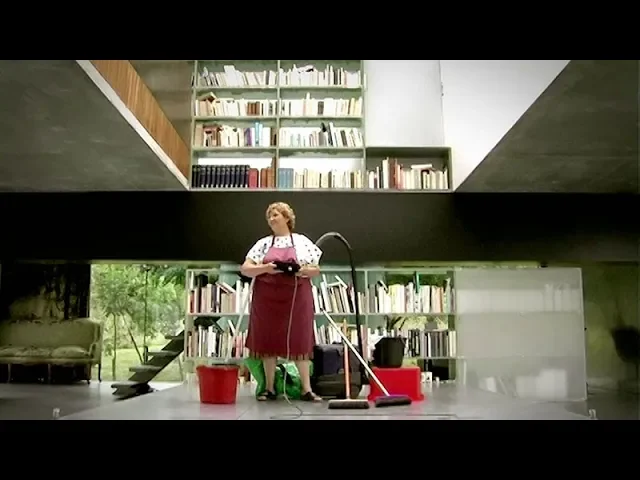
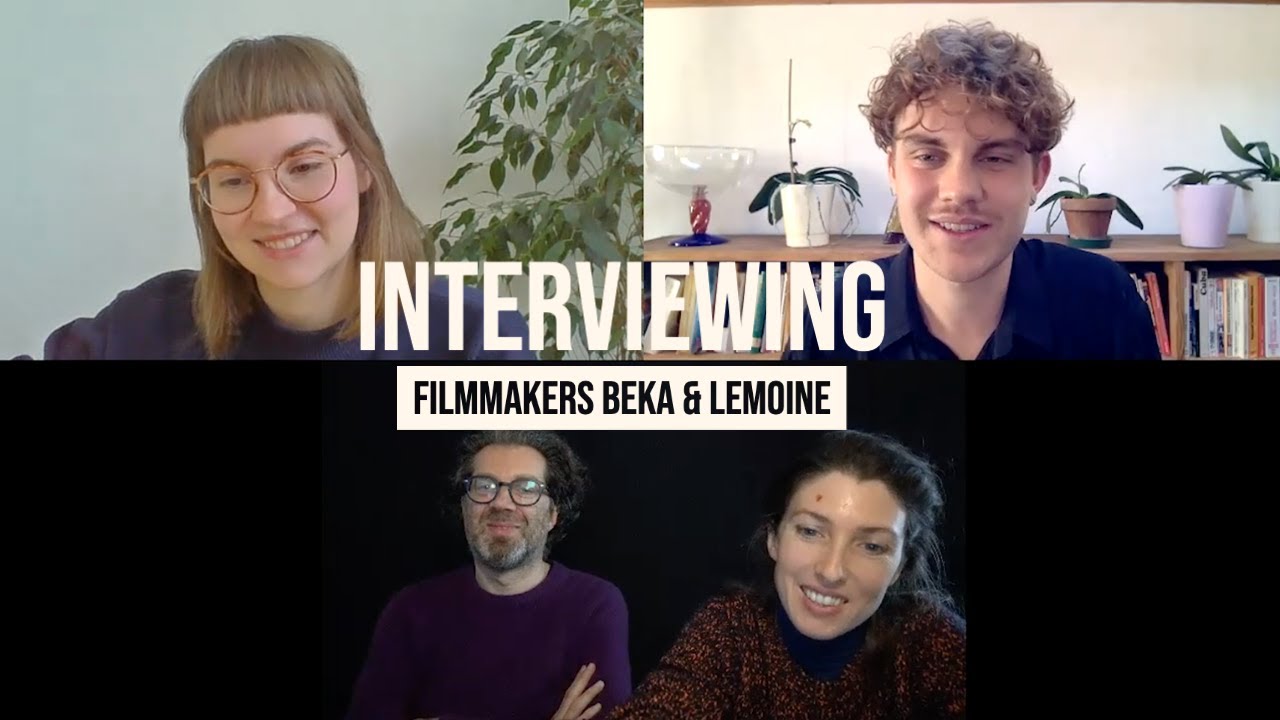
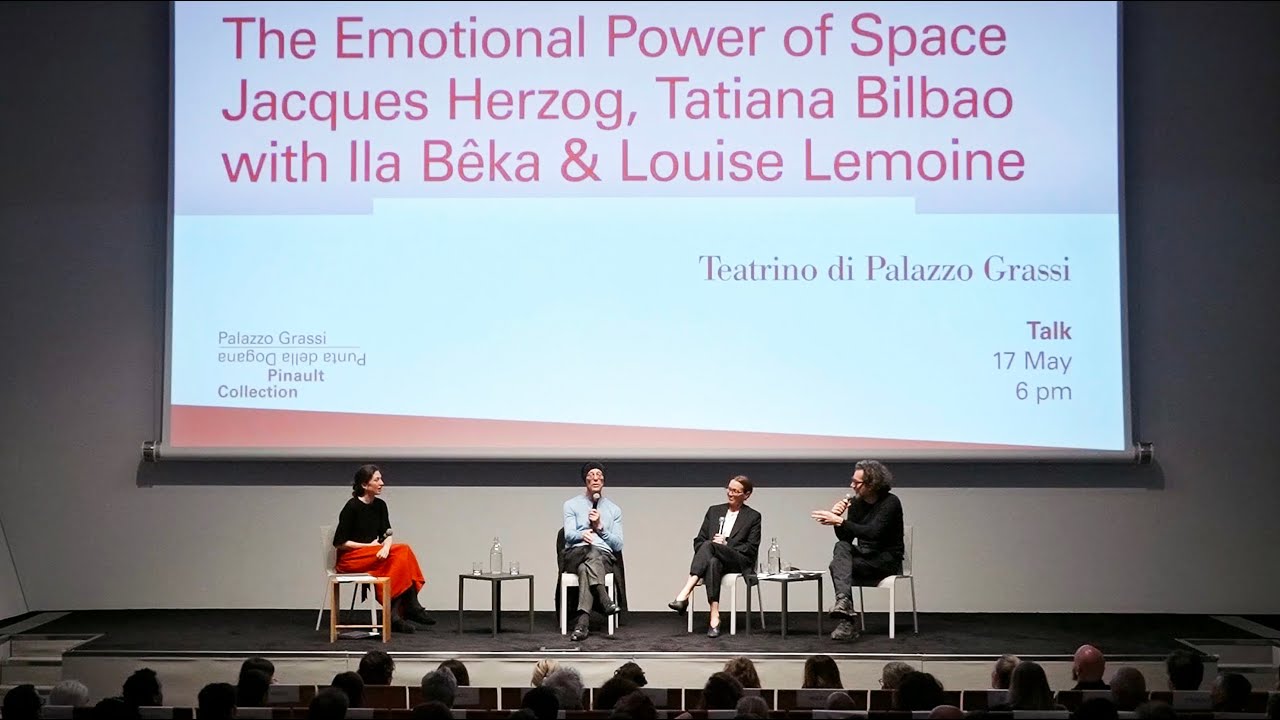
When we made Almost 10 years ago It was a film that we made, Louise and I—we work together We made this film because we were talking about what kind of images we always have about architecture. So, in a sense: what kind of representation is given about the architecture? And we were talking, trying to understand why, in the sense, we always see pictures and films that doesn't have a relation with the reality of what architecture is in general.
And about also the emotion that architecture can give you. But you don't see this normally in the representation Normally, in this, you see just promotion about a building because I think these kinds of images are produced by, In a way, from the owners, or from the magazine, or from the architects that made the building. So, the message is often the same: "This building is fantastic", "This project is beautiful, and everything is fine", "Everything is great.
" That will create, that has a relation with the real life is something that—this is designed in a way So the people that design the building, they think just about the object But this is crazy because I have studied architecture. You spend a lot of time during the school, in your architectural studies to think about how the people could use this place that you are going to make. But at the end, when the building is finished, the only image that you see is the empty space, like you say.
Empty space, beautiful light, everything prepared and we think it's beautiful. So we just wanted to add a new kind of representation to all of this. And the first one was just a kind of experimentation for us to just say: "Okay, let's make a little list of things that we want, we would like to see in the film about the [relationship to] space and how people live in the space.
" And so we needed to put inside this film these kinds of things. So it was, at the beginning, was "we want to see people. " because of why we don't see— we never see people inside.
You can see people in the architectural representation, but they always like silhouette, you know, like shadows, they don't—so we said, "we want to talk with the people that stay inside. " And another thing was, we wanted to see the the dirt, the dirtiness, you know, because—and the chaos that you have normally in the space. So we wanted to see what is happening in architecture with the real life?
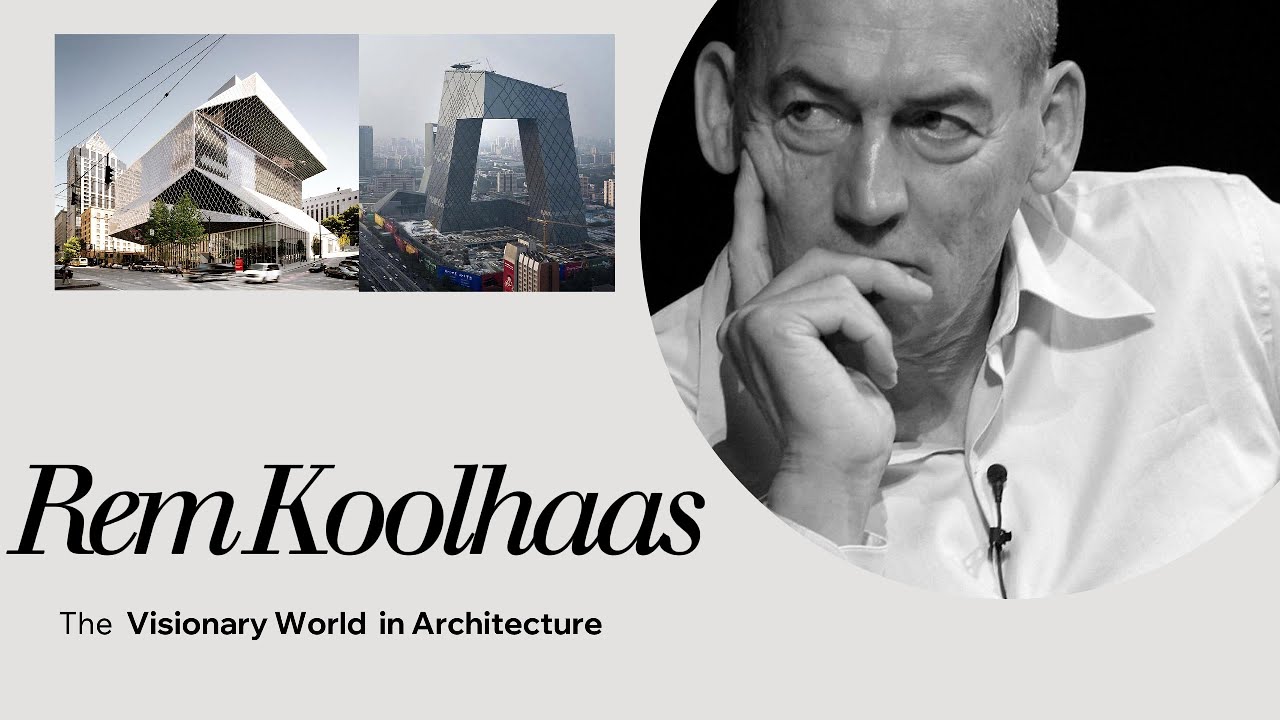
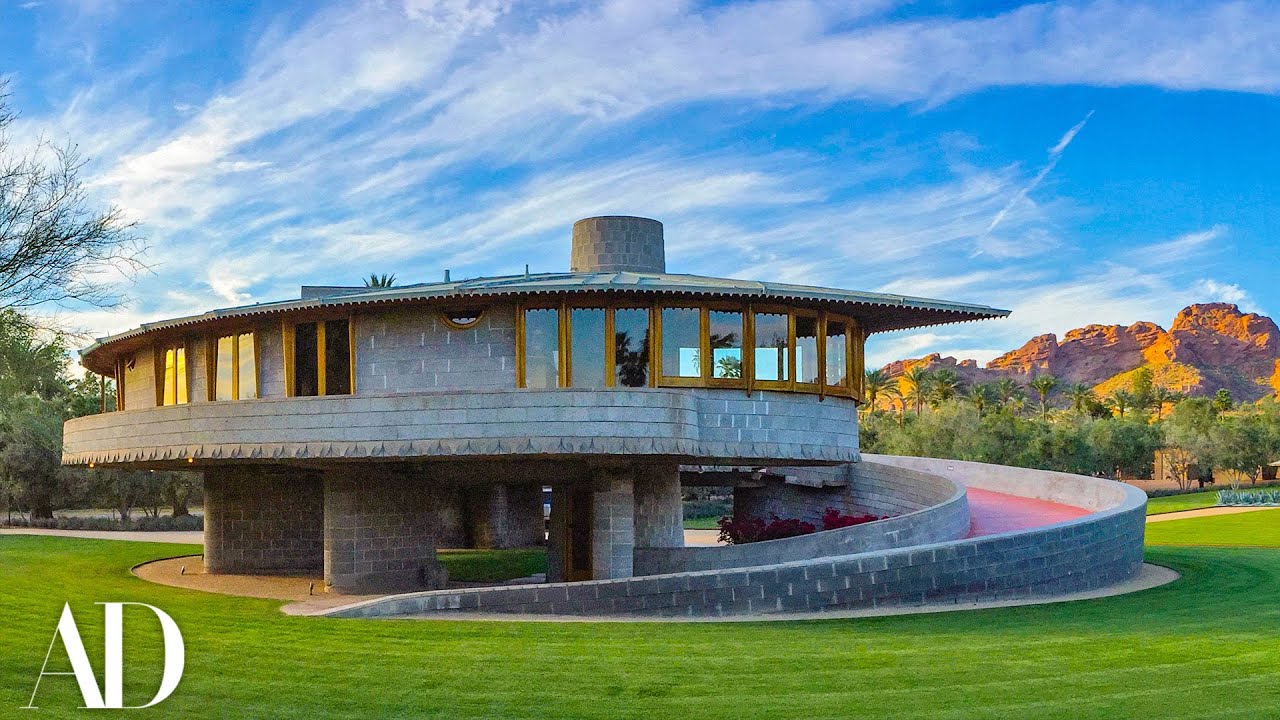
so everything You know, the dress there, everything, a lot of objects everywhere. As we we had this great opportunity to make this film in this house by Rem Koolhaas, we knew that the inside was this fantastic woman, that is, Guadalupe Acedo. She was the housekeeper.
So she was spending all the time cleaning this house And so we felt that it was maybe a good idea to follow her just to avoid the voice of the owner, of the architects, of all this kind of elite, of people that normally speak about architecture. And So we stay with her for two weeks. Spent the time just following her.
We thought that the movement inside in this case, in the house, but in architecture is very important to understand how the architecture is working. So we just follow her. And another thing that was very important for us, that is still important for all the films we made after that, is that we wanted—we didn't want to create a sort of film you normally see at the end of the film, you have understood everything about the architecture.
So, you know where you go inside, you know where you go, how do you know how this wall is working—you normally even in a book, you understand everything: you have plans; you have all the information to understand very well the building. So you don't need to go there because you say, "Okay, fantastic. " And there's a lot of film in France at this time that was produced by Arte—this is a television that it was they were made like this.
So everything, the absolute view of the architecture. So we wanted to create something completely unbalanced to create a film that at the end on the film, you are completely You Don't know how the building is working. So you just have an experience of this space, but you didn't understand very well So maybe you want to go there to visit or, in a sense, we just wanted to cut the image in little fragments to just to make disorder and in this fragments.
So you don't see the whole image. You just watch little fragments. So you have to recreate yourself in your mind the image of the house, but also the spaces.
So you have— So we cut the film in 25 little chapters, fragments. And cutting in this way the film, it creates a sort of a new space, in the way, out of the film. So I think, if you watch this film, you are able, or you are obliged more than able—you are obliged to recreate the space yourself.
We are very interested in the little details or little place, spaces where you normally don't watch, and Because it's like this window, if I show you the window, Everything is there, you look at but there's a lot of things that [are] out of the window. But if I show you in my film this window, you just see this and you think that everything is there. But see, if I just take some meters behind, I show you everything you see.
You know that there's other things. So we wanted to make this just cutting the film in more fragments and we still do it. We still do this.
We don't want to create a block, a film like a unique block and that is from the beginning at the end "We explain to you. " We don't have things to explain. We don't have an idea, we don't have a truth to explain.
This came from, for me and is also for her, I think this is coming from my studies in architecture where I was really not happy with listening to conferences by architects. They came at the University in Venice and they just Explained to all our—all of us little students asking, "what is the truth? " And they say, "you have to do this, you have to do this.
I made this like this and make this like this. " So all the architects were lecturing, making conference in the school. They were all genius, you know, all genius and so you are a little student and you say, "I may [be] a genius one day like you.
" So this is something that I didn't like from the beginning. So I don't like this kind of representation, let's say, the truth. And so we wanted just to propose another way to talk about the architecture and the freedom of speech was very important because for the maybe first time, we gave the the voice to someone that know very well this space, the architecture, the house.
But she knows in the sense that she knows very well how it works, the space works because she has to clean; she lived this space everyday. She was inside everyday so she knew everything about this place. But she hasn't the culture, or the experience of the architectural history, everything.
So her way of speaking—and we know we wanted this. We wanted to talk about this: how to feel an emotion about a space. it's sure that if you give the voice to an expert to explain how it works, this building, and you understand everything, but this already exists.
You can find everything about this house. There's a lot of beautiful pictures. There's a lot of— Everything has been done about this.
But for us it was important, this was very important to create, for the first time, as a sort of liberation about the emotion of the space. And the emotional space became with the other film at the top of this list because now we are very interested about this. How an architecture—now we are working about big spaces like the cities but it's the same—how a space can create, can change your behavior, in the sense, also can change your life?
But how the space can also give you emotion. When you enter in the place, some places that you—it is not a beautiful view, it's not just a light sort of thing. It's a sort of proportion also.
There's a lot of things that some architects know very well how to control and to create with this sort of ingredients. But they create some places what you feel very very, very not good, but you feel some very strong emotions there. It's something very interesting for us as you know, because you know that this film and the other film is very important for us to follow [children,] but not only [children] but also animals and also to observe plants.
How plants are growing in a buildings. So everything that is not controlled, out of control— control in a sense of culture. If you know a lot of things about architecture, you have a sort of filter, an unconscious filter that you just watch with, but the kids, they don't know how—they don't know this.
So they just feel the space and then, in this case, in this fragment, in this chapter, it was fantastic to see how the kids go freely everywhere. And they used the building, and you understand very well how the building is working, you now? If the building is okay or not, and how they feel.
And the point of view of the kids is completely—if I remember some places in my childhood, I went some 20 years later, and the place is not the same. It's completely different. We forget this, always.
But the kids, they see things completely [differently]. We are looking for all this kind of way of looking and experiencing the architecture that is completely, something that you normally don't see. And why we want to do this?
Because we think that, in a sense, we need to be more free— free of speech, free of thinking, free of feeling about the space. And we need, also, a sort of culture about space. We need to teach, to the children, to the kids at school, what is architecture, what is space before anything.
What is an emotion related to a space? What is the emotion you can have related to your bedroom If you are a kid? We try with our daughter and we try to tell, "This is your space you have.
Are you good? Is it good for you? Yeah, what do you want to change?
Do you want to sleep? In two meters, a light? Or what—" It's something that maybe if a kid understand that his place—this bedroom—he can change this bedroom to be better, to feel better maybe one day, he just go out of the bedroom and change the salon, the living room; he starts to change the living room maybe a little bit more, and after that he goes out, he just tries to change a little bit more outside.
Maybe, like this, we can change also our city because I don't think our city is the best way to live together. We are making a new project now, it's called "Homo Urbanus. " We are filming the streets, you know, a lot of cities around the world.
And We could plan, we could create a better city. Before, we are now stuck in some city. This is not the best way to live together.
There's another way to live in the city. This is not so good, you know. Making this film, we understand that a lot of cities are renovating their architecture.
All the architecture became always the same, all around the world. There's no identity. There's a loss of our identity.
So the city has become the same city. If you are in Gangnam in Seoul, you can feel, you can think that you are in Los Angeles or other thing, other city. That's always the same.
So I think that we need to think about this kind of things. Maybe, I don't know if it's possible, maybe if you teach this thing to kids, one day we can change a little bit. But this is how I hope, I don't know.
But we continue to make film because, for us, it's fun. So we put a lot of humor in the film. But, in the sense, that was the beginning and this still is now.
There's a way to talk in architectural film I feel that you have to understand and to say things very seriously because—I understand, because behind, there's a lot of money that someone has put in money. So there's a lot of interest about this. But we don't belong to this kind of film.
So we could be a little bit more free. And so, I think we need a lot of humor in this kind of representation. So we wanted to use film music, but like a character.
Like a new character. Like an image and between image and music, the film and music, there's a new relation that creates something else. We said, "Well, we are going, maybe, too far.
" Because we've made a film about noise music. Noise music and architecture. "Oof.
I don't know if this could work. " But because noise music—because Moriyama san, the owner of the house, by Ryue Nishizawa in Tokyo, he loves noise music. So we also met thanks to this kind of music because I love [it] too.
but putting this music, beautiful fantastic music, I said, "Wow, maybe people don't like this and maybe they go around, they go away, and they go out. " But at the end it's a—the beginning of the film is quite strange, I think. But you feel that there's something interesting because this man is, this lovely man is an incredible man, and he has an incredible life in this place.
This is a very strange place, also. It's a beautiful house, completely split into ten white cubes, and just to say the most important thing is that he sleeps in his bedroom, it's just one of this cube, and the bathroom is another cube that is five meters away from the bedroom. And in the bedroom, he sleeps on the floor without anything.
So, he's quite a different man. Very, very interesting man. And so Looking [at] how he lives, at the end, I think, at the end of the film—when we made some screening about this film, at the end, there's always silence.
All the audience is silent, just thinking about, "Wow. What kind of life he has! is it like this?
"—"Yeah. "— "This is—wow. There's a way I can live completely differently.
There's some people that live completely in another way like me. I have to reconsider my life I have to think about how I'm living. " There something— there's some people who say yes, but he has a very, sort of, luxurious life because he has a very known, very, very famous house, and things like this.
In a way Yes, but you can live, also, with another house in the same way as he lives. It's not—I think it's the kind of mentality that's completely different. It's not thanks to the house.
It's thanks to the mentality he has. You can have another one that is living there. It's not the same life.
He has completely—he's the man that is interesting. And this is interesting is the relation with the between the man and the house. This house is like the house of a snail, you know?
It's so important between them. And this, we were so happy to make this film because we were looking for, for a long time, for this. We were looking for, to understand, to find someone that has a really strong relationship with with the space where he's living in.
And he's like this. It's incredible. He couldn't live outside and another place because this is his place and he knows very well.
Just for an example, he reads a lot of books. Someone who listens to a lot of music and watch— He has an incredible culture by about films, of all the films of all the country in the world. But he reads a lot of books during the day.
And during—I was there during the summer. It was very hot and I stayed with him for a week, and he was reading a lot of different books. And every time, I saw him in a place and another place, and another place in the house.
So he changed the place every time. And I noticed that every time it was a different book. It wasn't the same book.
So I just asked him—asking him in a difficult way to communicate because he doesn't speak very well English and I don't speak Japanese. So we tried to understand, to communicate. And I just asked, "What are you doing in all this different place?
" He told me that he chose a place in the house related to the book he is reading. So he just tried to understand the emotion of the book and relate to the emotion of the book with the emotion of the place he chooses in the house. So there's a scene in the film when he touches just the tree—the tree is just outside the window like this he said, "You see the trees, the sky, the wind.
" It's something poetic. It is an extremely poetic relationship with the space. And it's what we are trying to show in the film.
We are interested in this. To show even in the film that we are making about the cities to underline the little moment, poetic moment that you have everywhere. Yeah, you have everywhere, always, little poetic moment.
We just collect this moment to create a filmic collection of poetic moment just to understand how— to make an observation that you normally can't do because you have a lot of things to do. You can't stay for half an hour just looking at the sea because you have to go to school, to work. So we take time to observe.
And we are in the city. We understand a lot about the behavior of human being with the space we created for ourselves. In the sense, we are interested in [that] everything is not—is out of control.
Not only in architecture, but in a very wider sense. Everything is not controlled. Everything is going out of control.
We are fascinated by this. We work a lot about— we started with a film about a cleaning lady. So the cleaning is very important for us because it's a symbol of control.
Cleaning is controlling. When you clean you say you control, you want to control, you are fighting against death. You clean, you clean, you clean.
You say I don't wanna die, I don't wanna die, I don't wanna die. And we spend a lot of time, we, human beings, to clean. We clean every day.
In Japan, it is crazy. They clean all the time. They clean, they clean and we clean.
We have a—when you have a building When you think about a new building, you have to think about people that are cleaning the building. It goes together. It goes together, you know?
Watching people cleaning is watching how this fight— We have to fight to be—this is something that we can— We try to control, but at the end we just lose the control. That's the way life. We lose control.
And so every failure is, for us, is very interesting because the failure is the sort of door to go inside to find everything inside. Everything you don't show. We all say that we are working behind the image so that you have an image But you have a lot of things behind the image.
But always, they put [the] house in front of this image. Everybody try to put the house in front of the image. But in the image there's some failures.
And if you find the failures, maybe you can go inside. And when you go inside you'll find some beautiful things. Even [more] beautiful than the image itself.
We try to create perfect buildings. We try to create monuments that stay— That will live for eternity, no? We have, many times, created the pyramids and all the Great Wall in China.
Something that is— using the stones, because we want to give traces about the eternity or because we know we are going to die, no? We know that soon, we will not be here. So let's try to construct, to build something that will be here more than us.
And so— It's like cleaning, you say. It's really similar. That's like, cleaning is a fantastic symbol.
You can understand a lot of things about architecture with cleaning.