the A320 is already one of the most popular commercial aircraft of all time not to mention airbus's best seller but Airbus has just announced that it wants a replacement to the successful single Isle aircraft within the next decade you heard that right Airbus wants an A320 successor by the mid 2030s and with all that's being promised it looks like every Airline would want it too here's why the single Isle Market is undoubtedly the most important in commercial Aviation and accounts for the majority of the profits raked in by both Airbus and Boeing while Airbus and
Boe are by far the top two aircraft makers Airbus has slowly begun to pull away in the past few years thanks in huge part to the success of its narrow body aircraft such as the A320 the groundbreaking A320 first introduced four decades ago is the aircraft that truly brought Airbus into prominence it was airbus's response to the Boeing 717 and 737 single Isle dominance it ended up however eclipsing the 737 with its advanced technology and has become the backbone of many airlines fleets when the A320 was unveiled in 1984 its cockpit made others look primitive
in comparison it came with a highly automated ergonomic glass cockpit with flight envelope protection the aircraft also introduced many firsts like the fly by wire technology and carbon brakes which improved handling characteristics and reduced pilot workload by providing precise control other plane makers like Boeing and McDonald Douglas were left stunned at how outdated their majorly analog cockpit Concepts looked in comparison but it wasn't just the cockpit which the A320 had drastically modernized at the time the Boeing 737 held the title of the most popular narrow body aircraft but the A320 modern perks helped it to
begin reversing the trend in its favor let's examine how the Boeing 737 is renowned for its powerful takeoff performance due to its robust pratton Whitney jt8d low bypass turbofan engines which allow it to achieve higher maximum speeds and quicker acceleration during takeoff the A320 on the other hand offers excellent maneuverability and enhanced stability and control which allows Airlines to operate in airports with shorter routes and provides passengers with a smoother flying experience while both aircraft do look similar in size there are a lot of differences both within and externally a noticeable and important difference is
the width of the cabins where the A320 is 7 in wider than the 737 this doesn't look like a lot but just ask anyone who's flown on both planes and they'll tell you that passenger Comfort is better on the A320 because of the extra space space but again this could vary depending on cabin configuration also compared to the Boeing 737 the a320s armed door opening mechanism is superior it's also reportedly easier to stack and load bags onto the plane while the Boeing 737 generally requires lower maintenance costs the A320 offers lower per seat operating costs
although the extent could vary depending on specific Airline practice es fuel prices and flight conditions the most popular variants of the original 737 and A320 are the 737800 and a320-200 respectively and when compared the A320 has a slightly higher range of 3,78 nautical miles compared to the 2,930 nautical miles of the 737 the 737 does however come with a higher Max Capac capacity 198 against 190 as well as a slightly higher Cruise speed of Max 0.785 compared to the Mac 0.78 speed of the A320 but the a320s improved Comfort Control and maneuverability was enough for
the tide to swing in airbus's favor despite the success of the A320 family Airbus decided that the aircraft could do even more so it decided to incorporate new engines and cabin features as well as advanced aerodynamics onto the existing airframe of the A320 the result the A320 Neo family unveiled in 2010 which offered an over 15% Improvement in fuel savings as well as reduced noise and carbon emissions when compared to the previous A320 models over the subsequent years Airbus introduced more variants of the A320 Neo family which included the a321 long range which offered more
range and allowed airlines operate transatlantic routes plus the a321 extra long range which further extended the range Improvement and allowed Airlines to connect even more distant routes than they ever could with a narrow body even after Boeing's nearly two decade Head Start the A320 has been produced almost as many times as the Boeing 737 in fact the A320 Family actually has more total orders than the 737 which is essentially the most successful commercial aircraft family of all time furthermore the announcement and introduction of the A320 Neo program in the 2010s also forced Boeing to rush
the development of a 737 Max program and while the A320 Neo program has so far seen tremendous success we all know how the 737 Max program has panned out but now Airbus is on the move again you see Airbus CEO Gom FY recently revealed at a February 2024 annual earnings conference in too that Airbus is engaged in two distinct but intertwined projects these are for the development of the 100 CA 1000m range hydrogen powered aircraft called the zeroe plus a short to medium range A320 successor which will reportedly make use of sustainable aviation fuel back
in June 2023 a bus had revealed that it expected both aircraft to take to the skies by the mid to late 2030s and revealed that major research was being carried out towards achieving that release time frame even though it admitted at the time that there was no distinct aircraft program however at the 2024 February earnings conference Airbus CEO gave quite a remarkable update he revealed that the hydrogen powered aircraft basically had the selection of its propulsion systems as the final major stumbling block and that there are plans for its official launch between 2027 and 2028
however the CEO also acknowledged that the successor to the A320 will have an extended development period given that it will be based on a new platform and the current time frame set for the aircraft's entry into service is the second half of the next decade the original Boeing 737 airframe is over 70 years old and that of the Airbus A320 around 40 years old so with all the modifications and re-engining done on their respective airframe so far it's clear to see that they cannot be further stretched or modified any improvements to each aircraft may require
a clean sheet design fari has stated that the new Airbus aircraft is currently undergoing testing focusing on wings with a larger span and other adaptable characteristics in flight they are also reportedly testing the propulsion systems the design of a new A320 aircraft would depend on the engine selection and airbuses exploring its options they are reportedly considering engines such as CFM International's rise open rotor engines the A320 successor Airbus said would be able to deliver a fuel burn reduction of 25 to 30% and also be capable of running on 100% sustainable aviation fuel it will also
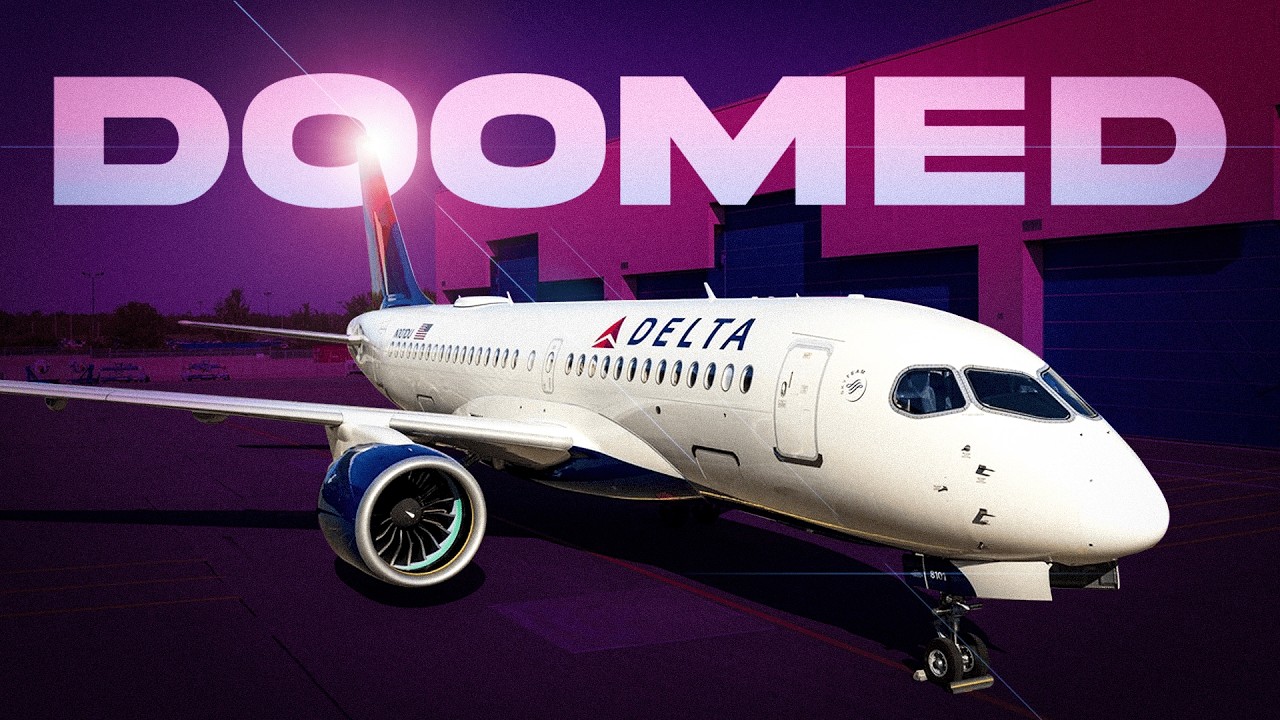
consist of models whose seating capacity will vary between 140 and 240 people for now not much else is known about the capabilities of the A320 successor but Airbus is positive that it would make its debut in the mid to late 2030s however Airbus might not need to develop a clean sheet successor to the A320 indeed it might already have the A320 replacement in its Palms because one of its already existing aircraft families could potentially play this role perfectly the aircraft in the question is the a220 specifically the development of a stretched a220 500 variant Airbus
has revealed future plans to complete the a220 family with a larger third variant which would be called the a225 200 not only that CEO fory has also signaled that this new variant would offer a different engine option the two existing variants of the a220 the 100 and the 200 are powered exclusively by Pratt and Whitney PW 1500g but this third variant could be powered by some of the Next Generation engine Technologies which are currently being developed like the Rolls-Royce ultrafan or maybe the CFM rise open rotor engine the A2 2500 may also gain new composite
Wings to take full advantage of the new engines while providing improved aerodynamics the a220 is already a very fuele efficient and comparatively eco-friendly aircraft with awesome performance so the addition of Next Generation engines and new composite Wings would take it far ahead of the competition the size of the A2 2500 isn't defined but it could come with around 170 seats potentially more and a range of around 3,500 nautical miles which would make it a tough match for even the A320 Neo especially with its potentially far superior fuel efficent efficiency also almost 95% of the a220
orders in airbus's backlog are for the 300 variant which suggests that people would be more willing to switch to a bigger aircraft than smaller one additionally it shouldn't be too difficult for Airbus to develop a stretched A2 2500 that's because Bombadier had already explored plans for a stretched version of the ceries aircraft called the cs500 before the planes ended up becoming the a22 20 series following airbus's acquisition of the program so blueprints for an a220 500 might already be available to Airbus now the final question to ask is what are the prospects for a stretched
a220 even though Airbus is saying that it is exploring the use of a new platform for the A320 replacement the aviation industry moves fast and a stretched a220 looks like the best bet if it intends to get an A320 successor in the skies as soon as possible there have been suggestions that the stretched a220 variant would be called the a221 rather than the A2 2500 but it is expected that the end goal Remains the Same in that it would be an aircraft capable of replacing the A320 however the development of a stretched a220 variant wouldn't
be straightforward and Airbus may need to acquire a higher stake or even completely buy out the program from Bombadier to be able able to develop its desired aircraft with all the prospective advancements to a larger a220 aircraft the new plane could be competing against some of airbus's own recent upgrades to the A320 like the a321 LR and XLR but if it does come down to the necessity of a future proofed airframe then the development of an A2 2500 to succeed the A320 program is certainly a great option if Airbus is able to develop its A320
successor within the next decade or so it could further revolutionize single Isle travel and completely solidify its dominance in the narrow body market and with its main single Isle competition the 737 Max currently facing a whole host of problems every Airline may have to beg for what would be the A320 successor but what do you think could Airbus actually release a successor to the A320 within the next decade please let us know your thoughts about the entire plan in the comments below until next time take care