So Joanna monrif is a Senor lecturer at University College London and a consultant psychiatrist she's known for her controversial work on the nature of psychiatric drug treatment suggesting that psychiatric drugs like other psycho psychoactive substances create rather than reverse abnormal brain States and she has written on the history and politics of psychiatry and the pharmaceutical industry she is a Co-chairperson of the critical Psychiatry Network which has campaigned against increasing influence of the pharmaceutical industry and the extension of psychiatric coercion she is the author of The Myth of the chemical cure a straight talk in introduction
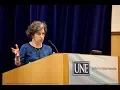
to psychiatric drugs and she has a new book coming out soon at the end of the year called the bous pills a and which is a critical History of anti psychotic drugs please help me in welcoming Dr [Applause] monrif okay thank you very much shoir for inviting me it's really a great honor to be here and and to be part of this this program this really inspiring program which is taking the university out to The Wider Community something that I'm going to go back and and try and emulate in some way um back at home
in London um and thank you all for coming and struggling through the snow I guess you're more used to it than me but uh quite quite um considerable amount of it out there still um so right just let me get the uh things going right so that's that's the book that that most of this talks going to be based on although I'm going to um give you some updates and and bring in some material that I've been looking at for my new book as well Well um and what I wanted to say really this is
a global Humanities program what this is going to be a talk that's quite a bit of it is about scientific subjects but what I hope to show you and to demonstrate through this talk is how important it is to take a step back from what are presented as scientific facts because only when we examine the social and political forces behind them behind what what is presented as science do we Sometimes realize how how what is what are presented as scientific facts are in fact shaped by social and and political factors and what I think this
illustrates is one of the thesis of Michelle Fuko the French philosopher who claimed that knowledge is power and power is knowledge so knowledge is um knowledge legitim legitimizes powerful groups and Powerful groups are able to establish what is taken as taken for granted as Knowledge and he in fact used psychiatric knowledge and psychiatric power to illustrate this thesis so first of all let's just think about the current situation that we live in in respect to drugs that are prescribed for mental health problems so what I'm going to be talking about mainly here are drugs like
anti-depressants antipsychotics benzo deapen drugs like um Valium Librium Xanax Um drugs that are called mood stabilizers like um uh lithium and uh depal valproate and I I got all the data out on prescriptions for these different sorts of classes of drugs recently because I knew that there hadd been a massive increase in prescribing of anti-depressants but what I didn't know was whether people had just shifted onto anti-depressants from something else or whether there'd been an overall increase Anyway it turns out that overall there has been an increase because although um although prescriptions for hypnotics and
anlytics that's drugs like the benzidines haven't changed haven't changed very much the the prescriptions of anti-depressants and other things have gone up considerably so they that increase hasn't been compensated for by a decrease in anything else and this increased consumption of these medications has been Associated very Strongly with a message that what they are doing is rectifying and underlying chemical imbalance and this is a message that's been promoted particularly by the pharmaceutical industry I like this picture because it represents the balance you see the woman in the very balanced position uh and these um statements
taken from the Geodon website are very typical of statements that are made about all sorts of psychiatric Medications at the moment the idea that they balance brain chemicals which are imbalanced in mental disorders of certain types so what that sort of idea epitomizes is the mainstream view the mainstream understanding of what psychiatric drugs do which I've called in order to try and understand both the mainstream View and how we might think differently about what psychiatric drugs do I've formulated these different ideas into Models so I've called this mainstream view the disease centered model of drug
action and this is the idea as I said that these drugs are working by correcting and underlying abnormality and it's an idea that's borrowed from general medicine where most drugs are also understood to act in that way so but it doesn't necessarily mean that the drug is targeting the cause of the disorder so for example insulin in diabetes might be a drug that You think of as working in this way it's not it's not um treating the cause of diabetes but by replacing the deficient insulin Supply it's helping to normalize it's helping to rectify the
underlying abnormality helping to normalize the body so the other way that we can think about what psychiatric drugs might be doing is what I've call the drug- centered model and I've called it this to emphasize that these drugs are drugs that is substances that alter the way That the body functions and what I'm suggesting in this model is that far from working by normalizing the body these drugs are working by creating an abnormal or altered state and because they are a special sort of drug called psychoactive drugs that is they work on the brain and
therefore they alter feelings thoughts emotions and behavior the Altered States they create Interact with the symptoms or problems that we call mental disorders and sometimes these these Altered States may be useful in someone who is suffering from a deep depression or an intense psychotic state but it's not that anything's been normalized it's that the altered state the drugs create may be preferable to the the mental experiences that they're having at the time so an example of this way of thinking about drugs that's maybe not too controversial Is the idea that alcohol is useful for social
anxiety disorder which was something I was taught when I was training um just in case you think that I'm just um just bringing that in um so the idea was not that alcohol corrected a chemical imbalance or obviously that it that it replaced an alcohol deficiency the idea was that the the characteristics of alcohol intoxication which we're all familiar with include being becoming Socially less inhibited which can be useful for someone who is particularly who who finds social situations difficult another example which I think helps clarify the difference is the effect of opiate painkillers so
things like morphine so morphine and opiates in general have a direct action on pain pathways on the um neurological fibers that conduct pain they slow down the conduction in those fibers and to that extent they have a disease centered Model A disease centered action but they also are psychoactive substances that create an altered state that typically is characterized by a state of emotional indifference or emotional Detachment so people who have taken opiates for pain often say that they still have some pain but they don't care about it as much and that is a that aspect
of their effects is a drug centered effect so what am I pointing that there we are So just to recap then so what this alternative model is suggesting is that psychiatric drugs are psychoactive substances and this is sometimes forgotten so that's this is just why I'm putting this this slide up um there is no fundamental difference between them and other psychoactive substances the ones we're familiar with of course are the substances that are used recreationally the difference might be that most psychiatric drugs produce States that are not particularly pleasant but that doesn't mean that they're
they're fundamentally different in any way they still like all drugs alter the body and like all psychoactive drugs because they work on the brain they they produce altered mental States as well and like all drugs they produce tolerance that is the effects that they have initially don't necessarily last because the body adapts to their Presence and for the same reasons you get withdrawal symptoms when they're stopped and like other psychiatric drugs like other psychoactive substances the like other psychoactive substances the state that they produce means that people are not necessarily very good at judging how
they're how they're functioning when they're under the influence of the drug what someone called Peter Brean an American psychiatrist has called a process of Spell binding we're familiar with that with alcohol for example aren't we that we're not necessarily very good judges of of what we can do when we're intoxicated with alcohol which is why there are drink driving laws of course okay so that's just an introduction really to different ways of thinking about psychiatric drugs and now I want to just go into the history of these ways of thinking and show you how we
got To the position today where where the mainstream view where most people accept a disease centered model and have forgotten really that um that drug that psychiatric medications could be understood differently so at the beginning of the 20th century most psychiatric treatment took place in asylums like like this this Victor typical Victorian asylum in outside London and there was very little Emphasis on treatment because basically it was it was thought that there wasn't very much you could do for people who entered an asylum with um uh with Insanity as it probably would have been called
at that time as far as treatment was concerned it was normally thought of to be non-specific consisting of fresh air a healthy environment putting people to work when they were able to there was a little bit of experimentation with physical therapies There was a brief fashion for for surgery because it was an idea that maybe Madness was caused by chronic infection so there was a fashion for removing people's teeth and sometimes other parts of them but there was nothing in widespread use that was actually thought of as a specific treatment plenty of drugs were used
throughout the first half of the 20th century mostly sedative drugs like the barbiturates but from the 1930s stimul Drugs like amphetamines and benzidine started to be introduced and they were generally understood to work according to that implicitly because there was very little discussion about them very little interest in them but implicitly they were understood to work according to that drug- centered model so stimulants were thought to maybe pep you up a bit if you were a bit depressed make you look a little bit more sazzy and sedatives like the Barbiturates were thought to help you
sleep or to relax you if you were highly anxious but as I said there was really there was really very little official or academic interest in in drug drugs or in treatment of any sort but this this started to change with the introduction of a series of physical treatment procedures starting in the 1920s with the introduction of malarial therapy for syphilis so a lot of people in these Asylums at that time would have had chronic neurological syphilis and there was an idea that if you gave them malaria the high temperatures that the malaria caused would
kill off the organism that caused the syphilis it was obviously very you know quite a dangerous treatment and to this day there's no real consensus as to whether it did any good or not but it did start to change The atmosphere in psychiatric institutions because the staff there started to feel that there was something that they could do something properly medical that they could could do from the 1930s onwards a range of procedures were introduced for for people with diagnoses like schizophrenia and manic depression starting with something called insulin coma therapy in the 30s which
was introduced as a treatment for Schizophrenia and consisted of giving people large doses of insulin putting them into a coma for SE which was lasted several hours and then giving them an injection of glucose to wake them up out of the coma also a very dangerous procedure as you might um expect with a death rate of about 5 to 10% and then of course there was eect um this is from Homeland which I've been enjoying and Um ECT again was introduced for the treatment of schizophrenia but gradually it became to be Associated more with the
treatment of depression and manic depression now the important thing about these two sorts of treatment is that they came to be seen as specific treatments for schizophrenia and manic depression respectively insulin coma therapy was described a few years after it had faded out of use really as the decisive step from a purely symptomatic To a Curative therapy of the psychoses no one knew how it worked there were various speculations but it was nevertheless felt to work by acting on the underlying problem that was causing the symptoms of schizophrenia and similarly with ECT which is obviously
still in use no one knew or knows how it works there have been various theories Through the Ages but nevertheless there was a consensus emerged in the 1950s that somehow it was Having a specific effect on the underlying pathology that was causing severe depression or manic depression so the reason I'm dwelling on this is that in the 1950s therefore which was the time when all of the modern sorts of drugs that we now have in use in the mental health services were introduced Psychiatry already thought it had two specific treatments insulin coma therapy for schizophrenia
and ECT for depression or manic Depression and those were the two conditions that structured psychiatric um knowledge and and diagnosis for most of the 20th century so the first drug the first modern drug that was introduced is the usually thought of as the first of the antis psychotic class of drugs called chor promazine here it's known as Thorazine um its brand name it was quickly widely adopted throughout institutions in Europe and Here it was introduced here by Smith Klein French with a massive marketing campaign the CEO of the company went on National Television to announce
the arrival of this miracle drug that would change the nature of the care of the mentally ill but this is a this is um the two French psychiatrists who who first used it in France but it was first understood to work according to that drug centered Model it was not seen initially as a specific treatment it was thought to induce a particularly useful and novel altered state um and so people like Pierre denica particularly and Jean deay described in detail the characteristics of the altered state that It produced and so their writings contain a lot
of descriptions like this of the sorts of effects these drugs had on the people that they on the patients that they gave Them to so they particularly picked out the emotional indifference that they seem to cause and the reduced responsiveness the reduction in initiative and motivation that people seem to show and as they notice they mentioned here as well a reduction in mental preoccupation which was useful if someone was mentally preoccupied with abnormal or distressing experiences Pierre denica went further and he suggested that what these drugs Were doing was replacing the symptoms that someone had
the psychotic symptoms uh in the case of psychosis with a new disease or a new neurological syndrome and the new neurological syndrome was something rather like Parkinson's disease these drugs effectively cause Parkinson's disease if you put them up high enough and what he was saying is before you get to the very obvious signs of of physical Parkinson's disease you're getting mild signs of Parkinson's Disease which is slowing up mentally and physically which is what's useful that's what we want that's what we're trying to achieve and other people went along with that view it was a
widely held view in the 1950s but over the course of the 1950s in 60s that view transformed and these drugs started to be seen as specific treatments for the condition of schizophrenia so textbooks start to talk about them doing more than tranquilizing Penetrating closer to the site of the mechanism of the Disease by 1960 and by the mid 60s a big um clinical trial of these drugs declares that which which finds them more effective than a placebo than a dummy tablet declares that they should be regarded as anti schizophrenic and we shouldn't we shouldn't think
of them as tranquilizers anymore you can see this transformation if you look at advertisements of the time so early advertisements emphasize the Tranquilizing properties of these drugs they also emphasize how they can be useful in many different situations so they were widely marketed for agitated behavior in the elderly they were widely marketed for childhood behavior problems there's even one there's even one advert that more or less says um this drug could be useful for all the family you know you need to give it to your children because they're badly behaved your elderly relatives and You're
going to be so stressed out with all these badly behaved children and relatives that you're going to need some too by 1970 this is an advert for the same drug as the um as the first advertisment I showed you by 1970 note it's been adver it's being advertised as striking Pro ly at Target symptoms which are described as these disorders of thought affect behavior and perception I.E psychotic type symptoms and it's being described as an antis psychotic so It's starting to be portrayed as a specific um as a as a drug that can Target the
underlying disorder there's a very similar process occurs with anti-depressants the first drugs that were thought of as anti-depressants were actually similar they were drugs that were used to treat TB and were similar to stimulants they were they had similar effects to amphetamines and the first articles about them make that quite clear they Describe how they could make people psychotic and very agitated and prevent them sleeping but then they start to be described as anti-depressant they start to be portrayed as as specifically attacking mood or depressive symptoms and they start to be distinguished from stimulants which
by the that time were gaining a bad name because they'd started to be used um recre ation Al so there was a a need to distinguish Prescrib drugs from them so what happens basically is over the course of the 1950s and early 60s there is this fundamental change in understanding of what drugs are doing so prior to the 1950s as I said drugs are mainly understood according to that drug centered model as far as anyone bothers to try and classify them they're just classified into sedatives and stimulants according to the sorts of effects the drugs
induced After the 1950s they come to be classified and named according to the disease or disorder they're thought to treat and the important point is that this transformation is not based on a lot of research or a lot of evidence that demonstrates that this is how the drugs worked it's not even based on any analysis or discussion it just happens and when the disease centered model becomes established people forget that There was any other way to think about psychiatric medications and the and the best way of seeing that is how the psychoactive effects of psychiatric
medications have just faded out of the literature entirely it is almost impossible to find any articles that describe the sort of altered state that you get with drugs like proac or cakil the new antipsychotics or Zyprexa and almost impossible for me to Get anything published on those effects there there is just this can't be inter interesting sort of reaction okay so how are we doing for time um so I'm not going to spend a lot of time on this but I in my book I go into quite a lot of detail about the deconstructing the
evidence that might support the disease centered model of drug action and the most important thing I think to realize here is that the majority of Evidence on psychiatric drugs and whether they're effective or not consists of placebo control trials comparisons of the drug with an inert substance those comparisons cannot possibly demonstrate that the drug is doing anything to the underlying disorder because of course there's going to be a difference if you give someone something that makes them feel different both physically and mentally that's a completely different experience than Just taking a sugar tablet or a
chalk tablet so they they don't do anything to explain how drugs are working of course the sort of of of of evidence would be if we knew if we had good evidence for what the what the mechanisms were underlying various mental disorders and then you could work out from the mechanism how the drug might be acting on it as is the case in many not all but many medical conditions the trouble is of course we Don't know this for any medical disorders there are hypotheses which appear um as if they might justify the action of
drugs in a disease centered manner but they are just hypotheses in the case of the dopamine hypothesis of schizophrenia one of the the best known of these hypotheses the hypothesis was first thought of because people observed that one of the main effects of the early antipsychotics like haloperidol was to Block dopamine receptors to reduce dopamine um activity and therefore because the because it was already believed that halap was having a disease specific effect people therefore concluded oh well if this is what halip parador is doing therefore the disease must be the opposite the disease must
be overactivity of of dopamine and that's exactly how the dopamine theory of schizophrenia was first first came About there really isn't any independent evidence for it and there's even less evidence for the serotonin or mono amian theory of depression which you've probably heard of and it's now widely acknowledged by experts that there really is no evidence that there are any serotonin abnormalities in people with depression even though that idea was so widely promoted um in the '90s particularly when the ssris were being marketed um I'll skip over that the Other evidence that might support a
disease centered model of drug action is if drugs that are thought to have disease specific effects are shown to be convincingly Superior to drugs that are not thought to have disease specific effects but it actually turns it actually turns out to be quite difficult to find any evidence of this sort at all so there are quite a lot of other of Trials of other sedative drugs that shows them to have reasonably similar Effects to drugs that are antipsychotics there were two early studies that compared antipsychotics and barbiturates and did find the antipsychotics to be superior
but um remember I said that John deay and Pier dener who were interested in describing the effects of the early antipsychotics they were particularly interested in distinguishing them from barbituates What they were saying is that these drugs produce a different state from barbituates which is more useful because they don't simply send someone to sleep so the sedative action of antis psychotics and other other sedatives is not necessarily equivalent but in any case there's quite a lot of evidence that benzo de aines well there's many studies that don't really clearly distinguish antipsychotics from Benzidines um lithium
or opium even lots of studies show that drugs that are not conventionally thought of as anti-depressants have effects that are equivalent to antidepressants in in trials that compare them to Placebo or compare them to other anti-depressants okay skip over that so I'm just I'm just briefly going to try and flesh out what it would mean to take a drug- centered approach to the use of psychiatric drugs and then then to have A think about um how we've got to the situation we're in the first thing we need to know is we need to think of
these substances as drugs and we need much much more information about all the effects that they have both in the short and the long term and shockingly we really don't have very good information on this for any class of psychiatric drugs and then we need to work out whether the effects the drug produces are useful in any Individual's particular situation are they useful are they sustained if we're thinking of giving the drug long term and of course crucially do they outweigh the disadvantages that are inherent in taking a substance that alters the way that the
body works and I think that there are some circumstances in which the use of some drugs can be can be useful so for example these are further comments on the sort of state that antis psychotics Produce similar to the the the observations that delay and denica made people who've taken these drugs describe a feeling of physical and mental stagnant a feeling of being emotionally suppressed um and although these although these effects sound very unpleasant people also describe how these effects can be useful in suppressing um intrusive and preoccupying psychotic experiences like delusions and Hallucinations but
they're not selective they're not simply suppressing the The psychosis they're suppressing everything so I think this quote sums it up really well from someone who was on halip paradol who said although they felt very well she felt as if she had nothing to talk about and couldn't remember what she used to find interesting but she was very much in contact with reality and that was for her in that situation an advantage Pierre Dena commented that What he felt these drugs did was they just people just lost interest in their delusions and that's that's why they
were helpful so for people with psychosis I think the the effects that antis psychotic drugs induce can be useful in an if someone's in an acute State they can help reduce the intensity of psychotic symptoms and reduced behavioral disturbance but there are many Considerations especially with their long-term use which means that which may outweigh the benefits that they can bring in that situation and it's also important to point out that many people recover from psychosis in fact most people recover from psychosis anyway without drug treatment although some people will go on to have further episodes
what about anti-depressants well as I said it's it's actually very Difficult to find any description of the psychoactive effects of anti-depressants but but taking descriptions from people who've taken them they seem to fall into they seem to have two sorts of contrasting effects um the modern anti-depressants anyway the ssris and and various other more recently marketed anti-depressants they seem to induce a state of lethargy and listlessness and drowsiness um but at the same time seem to make some People at least rather agitated and panicky and tense and irritable I should say actually that they're much
milder psychoactive substances than many of the other drugs that are used and prescribed um for mental health problems so in many people they don't have many effects at all uh and the effects that they have are are more subtle usually so the question is I think with the treatment of depression well can these sorts of effects be useful in Someone who is depressed um uh clinically depressed or moderately or severely or whatever and I think if we were talking to people honestly we'd present anti-depressants in a very different way from the way that they are
currently presented so the way they are currently presented by many by many doctors and by drug companies is this idea that they will help to normalize an underlying chemical imbalance or at the very least At least there's uh there's a a hint or an implication that they will normalize whatever's going on that's causing the depression if if we were taking a drug- centered approach this is what I think we would say to people okay this drug affects the way people think and feel but we don't really know how yet because we haven't studied it enough
it may dampen down emotions suppress your libido we we know it does that may make you feel a bit lethargic and drowsy and Some people that some people it might make them feel a bit agitated do you think that would be helpful that that that to me is what a drug- centered approach would involve um in the case of of someone with depression and the use of anti-depressants so finally I just wanted to spend a few minutes thinking about why it is that we've got to this stage where the disease centered model has become so
Dominant and why we've forgotten all this information about what psychiatric medications really are what sort of effects they induce what they are like as drugs and the first thing to consider is the professional interests that have been involved the drug drug treatment this new range of drug treatments that came in in the 1950s came at a lucky time for the psychiatric profession Because it was shortly to come in for a barrage of attack and abuse from what came to be known as the anti Psychiatry move movement which was a very broad-based movement that came from
many different intellectual quarters and also had a popular uh a popular aspect to it I mean at its height um biological professors of biological Psychiatry uh had to have had to have um armed protection in the Netherlands for example people who were investigating The use of ECT um one of the main thought um one of the the principles intellectual uh drivers behind the anti Psychiatry movement was Thomas S and he wrote this book The Myth of mental illness in the 19 in which was published in 1960 and then numerous other books afterwards all of which
challenge um the legitimacy of the idea that mental disorders are medical illnesses what He's saying through all all his writing is that mental disorders are a different sort of thing from physical illness fundamentally different sort of thing um and of course this this attack challenged the authority of the psychiatric profession which is a branch of the medical profession and called into question the basis of its of its principal approach to managing Madness and Distress um there was a lot of criticism from sociology and psychology this was a famous experiment by Leon rosenhan where he sent
um his students into A&E departments and they reported to the the staff there that they'd been hearing a voice saying thud and they were all admitted to psychiatric institutions and they were all given a diagnosis of schizophrenia and so rosenhan concluded that psychiatrist could not distinguish between the sane and the insane and and I should also say that once they got into the institutions they they acted completely normally um but then normal behavior was interpreted as being signs of Madness so one of them who was making extensive notes about what was going on was was
said to be showing compulsive writing activity so Psychiatry was on the defensive and the response that it took was to reassert the medical nature of psychi of Of of mental disorders and the uh the F the Third third version of the diagnostic and statistical manual which is about to be um published in its fifth version recently um soon the the third version moved away from the previous psychoanalytically based understanding and classification of mental disorders and started to classify them started to compile lists of disorders with seemingly objective criteria for Identifying them so it it presented
mental health problems as if they were as as easy and straightforward and non-subjective as if you were identifying a boil or a or a tumor and the presumed disease specific nature of the effects of psychiatric drugs was one of the main pieces of evidence that was mustered to support this approach to to psychiatric classification because the I because if if if diagnosis didn't direct Treatment then there really wasn't any point to it so Robert Spitzer who was the principle person that the the head of the committee that came up with dsm3 in his response to
the rosenhan experiment actually emphasized that psychiatric diagnosis was legitimate and important because you could show that that drugs and different sorts of treatments had effects in particular diagnostic groups even though If you read the book and as I've tried to show very briefly that evidence isn't really there drugs were also useful at this time because one of the main ways in which psych psychiatric practice differs from Medical Practice is in the use of force of course a lot of psychiatric treatment is done without the consent of the patient under the mental health act or um
not sure whether you call it the same thing here it's about say Um but in extreme conditions where someone becomes Disturbed and violent and has to be held down and injected with someone to something to sedate them it's quite difficult to pretend that that's a therapeutic treatment activity antis psychotics when they came in it was soon realized that they were very useful treatments in this situation that they could rapidly restrain someone and calm them down both physically and mentally or slow them down both Physically and mentally but because there was already this idea that they
were a specific treatment for schizophrenia they could nevertheless be they nevertheless helped these sorts of situations to be portrayed as a therapeutic activity rather than an activity of social control and Thomas saas again pointed this out he was one of the first people to refer to these drugs as chemical straight jackets and he talked about the Dangers of of seeing drug treatment in this way um that once you start to see what is actually essentially a situation of the forcible control and modification of someone else's Behavior as soon as you start to see this as
treatment you forget the responsibilities and the guilt that you should feel in a situation like that the other interest group that's obviously been influential in promoting this view of psychiatric drug treatment Is the pharmaceutical industry although interestingly in the 1950s and 60s up up to the 1980s really the pharmaceutical industry will also could play both games they could promote psychiatric drugs as disease specific or as as psychoactive substances and they were they were quite happy to do both but then there was and and and they were involved in the early days of of creating the
modern idea of depression along with the anti-depressants in the Early 19 in the 1960s but then in the 1980s there was a crisis over the widespread use of benzo oapin and the idea of using mind-altering substances to shut people up keep people quiet stop people complaining um got a very bad reputation rightly of course and so as David Healey's very cleverly shown they started to change the market for the benzo diazines into a market for anti-depressants and they Needed to get away from that bad reputation they needed to portray the anti-depressants as something that were
rever were reversing an underlying disease so the Disease Center model became very important to them in the early 1990s and then more recently of course we've seen the creation of other conditions or the change a CH the changing nature of other conditions like bipolar disorder to sell new drugs so this is Um what I was saying about anti-depressants so the idea that the was an underlying deficiency or disease was sold in a package with the drugs they very much came together the idea that you had a chemical imbalance and therefore you needed an anti-depressant um
in the 1990s with the marketing of the ssris like proac and Eli Lily were one of the funders of a big campaign in the UK and I know there have been campaigns here and campaigns in Australia very that are similar campaigns designed to increase the use of anti-depressants by increasing the number of people who are diagnosed with depression so this campaign suggested that 5% of the general population had depression 10% of people attending General Practitioners it was it emphasized that anti-depressants are not addictive which has transpired as completely wrong and Is now accepted as completely
wrong and it emphasize that they should be given for for a few months and not just used for a brief period it was very successful we've already seen how much the um in prescribing of anti-depressants has increased more worrying in a way is the increase in prescribing of anti psychotic drugs which has happened recently and this has been achieved in various different ways by expanding the Boundaries of psychosis or schizophrenia by this new concept of bipolar disorder which has been heavily marketed and also by a lot of unlicensed use of these drugs for people with
diagnosed with anxiety and depression and in people with dementia which you've probably heard about so in a survey in 2007 it was found that 2third of people taking the new atypical antis psychotics did not have a diagnosis of psychosis or Schizophrenia again the marketing of these drugs has been strongly linked to this idea I think this is a a useful statement for understanding why this idea is so useful to the pharmaceutical industry antipsychotic medicines are believed to work by balancing the chemicals found naturally in the brain it's my emphasis um so as you can see
in instead of talking about how these are drugs that alter the way the Body Works they're emphasizing all they're doing is Just putting right putting right what's what's there anyway um I don't know if there's anyone here from this program but this is this is the Early Intervention Program from Portland from from here in Maine um which is which is one of these programs that is trying to identify people at early stages of psychosis while they've still got very non-specific symptoms such as spending more time alone avoiding friends and family dropping Grades um having trouble
focusing or paying attention losing abilities in athletics or Hobbies okay things that many many adolescents are going to experience and this sort of program has led as David Castle an Australian psychiatrist has shown to very much a very large increase in the identification of psychosis um or schizophrenia probably accompanied by this increase in the use of antis psychotics so the who estimate was 4 Cases per 100,000 in an English early intervention service they're identifying 50 and in the Australian service which has been one of the um forerunners of in in this area there he he
estimated they were identifying about a hundred people per 100,000 population the advertising and promotion has been very emotive and a lot of it has been justified by this idea that psychosis psychotic symptoms are toxic to the Brain so they have to be stopped at the earliest Point possible you need to prescribe as early as possible it turns out that it's probably the antis psychotics that are toxic to the brain that all the evidence that people saw that brains the the brains of people with schizophrenia and psychosis were getting slightly smaller um over the first few
months of their treatment it looks as if that's attributable to their drug treatment Rather than the disorder so in particular I've got a maak monkey up here because the middle that middle line refers to a study well sorry I should say first Jeffrey Lieberman who's a psychi who's a psychiatrist based in America um conducted a trial which was sponsored by Eli Lily which compared halap peridol and Al lanzapine and brain scanned people um for over a year for a year followed them up for a year and found that within 12 weeks there was Evidence of
shrinking in people taking halip peridol and over a year there was evidence of the same shrinkage in people on Al lanzapine as well but to a slightly lesser degree that they concluded that what this showed was that Al lanzapine prevented the underlying brain shrinkage better than halap peridol and and they were obviously convinced about this um conclusion because Eli Lily then funded this study with macak monkeys Which did the same thing compared halap paradol alanine and monkeys that were treated with without any drugs and showed conclusively that the brains of these monkeys were smaller in
the monkeys treated with a lzip and halap paradol than the monkeys treated without the drugs they were given some some Placebo injections instead um so and and then there's been a long-term follow-up study done here as Well which also suggests that uh there was a strong correlation between the shrinkage of the brain and the the amount of antipsychotics that people were prescribed bipolar disorder has been as I mentioned has been another uh diagnosis which has been promoted by the pharmaceutical industry and what they've been doing is trying to persuade people they' the makers of antipsychotics
and the antipsychotics are the big Blockbusters at the moment the new antiy like Zyprexa and cakil they've been trying to get into the depression Market because they know that there's many more more people you know out there with depression than with psychosis and the way that they've been doing this in part anyway is through this diagnosis of bipolar disorder so a lot of their advertisements have been about trying to persuade people who might view themselves as being depressed that Actually they've got bipolar and therefore they they need an antis psychotic and at extreme this trend
um this trend started to label children with ped what was called pediatric bipolar disorder going back um a couple of decades it wasn't believed that children could have bipolar disorder was thought to be something that only started later in life um but then there was this idea that pediatric bipolar disorder can be Manifested in different ways from adult bipolar disorder and this group at Harvard started to do trials with with children some preschool children testing them with antipsychotics diagnosing them with bipolar disorder it turned out they were receiving enormous amounts of money from the pharmaceutical
industry which they hadn't declared so just a few final comments to take a step back again I think we need To it's useful to look at how this increase in the consumption of medications for mental health problems has parallels General Trends in the increase in consumption over the last half century much of which recently has of course been fueled by debt debt fueled consumption and this debt fueled consumption has led to Rising rates of inequality particularly the very rich Getting even richer and psychiatric drugs I think are an important part of this picture because they
are a commodity that encourages people to identify y to to see the source of their anxieties and difficulties within themselves rather than out there in society it stop they stop people asking too many questions that might be awkward politically they also as I suggested earlier help to legitimize the control and containment Of people who do not make very good and compliant consumers people who don't who who fall foul of this system um so there's been in England a large increase in the use of the mental health act the forcible admission to Hospital of people but
also the use of community treatment orders whereby people are forced to take treatment in the community and this parallels of course the massive increase in the prison Population both here and um in England and Wales as well so just coming back to the the different models of drug treatment for a minute I'm trying to I'm trying to suggest that there's a better way of thinking about what drugs might be doing when we use them for mental health problems that we need to acknowledge that they're drugs that they're psychoactive substances and we need to understand those
effects more and when We do that we can use them in a rational and more collaborative way and a and a more cautious way because this the point about the disease-- centered model that I think so dangerous is that it assumes that drug treatment is going to be beneficial because of course if there's an underlying problem and the drug are helping to normalize it well of course it's a good idea to take them why wouldn't you the drug Center model on the other hand by emphasizing that these Substances are drugs assumes that they might be
harmful and therefore you have to make a good case for using them and I think it's I hope that I've shown you that I think it's only when we stand back from this literature that you're able to realize how we've got to this situation where we have a potentially dangerous and completely unfounded model of of the way that psychiatric drugs work had that model has become the Standard accepted way of of of understanding these substances and the basis on which they are used it's only when we start when we stand back and we start to
look at the social and political factors that have been involved that we start to appreciate how badly deluded we have all been okay thank you very much I'll leave it there for now thank you I I know a lot of people have questions So uh raise your hand and you'll be given a microphone we also have 19 people watching us online including one person in Colombia in the nation of Columbia so they may you're welcome to send a question via email too if you're watching us thank you so much for such a amazing and Inspire
I've been waiting years to hear you speak because I've been so concerned about this for years particularly I'm a occupational Therapist who's worked mostly a lot in the mental health field and I see the effects of those antipsychotic medications the apathy the disinterest the social withdrawal and then I'm supposed to come and help people be motivated to engage in meaningful occupation when they're you know in a chemical straight jacket it's been enormously frustrating for me a question I have is about this study that was done with the macac monkeys where they Compared what was it
h peridol alonza Pine and a placebo and it was funded by who Eli Lily what did they think about the the brain damage associated with their precious drugs I don't know that they've made any comment and they've not altered their information on the Zyprexa website but to their credit it was published so I look at least they didn't try and stifle the stifle it and then it was repeated again and it wasn't funded when it was repeated by hoe at all in 2011 do you know that I I think that was um a National Institute
of Mental Health funded study and that was a that wasn't a me that wasn't an animal study that was a study following patients okay thank you very much thank you for your contribution uh wonderful uh talk I just wanted to get your take on I've heard chemical imbalance like my entire career trained on that what's your take neurologically like this this uh Chemical imbalance because I have a lot of speculation on it what so sorry what's your question what exactly what's your take on yeah no worries what's your take on when somebody approaches you says
well this P this patient has a chemical imbalance so therefore we need some type of psychotropic uh intervention I mean my my take is that there is just absolutely no evidence that anyone with Any mental disorder has a chemical imbalance of any sort right that's precisely what I was hoping to hear um absolutely none and um and that we should not be considering treatment on that basis there are other reasons why we might want to use drug treatment but we should not be justifying it on that basis and if we if we're telling that to
our patients we're being dishonest I believe good evening I'm Gail BRZ the de Of the college Pharmacy I guess I have to take exception to a couple of the statements you say I do believe that we do have enough evidence in current literature to suggest there is a basis for the disease centered model particularly for some drugs that are psychiatric drugs I I would respectfully disagree that I think you've chosen studies that aren't more contemporary studies and with now us having various models and having various um targets for Drug therapy that we are demonstrating that
some of these newer psychatric drugs the drugs I think you've talked about are the older generations of drugs and we know that there are problems with those do you want to give me some examples of what what I think some of the new antis psychotic some of the new we've got and I don't have them off the top of my head those but there's literature to suggest that these are done in peerreview studies that aren't Drug funded that are effective and I think this disease centered model assumes that in any drug a drug in the
United States to be marketed has to be their as a drug is is generally regarded as safe and there are side effects and that's why they're prescription drugs and that's why we have Pharmacists and Physicians and nurses working in a team to help patients so I don't think we should completely throw out the Disease Center model particularly as we Understand more and more about genomics and genetics and differences that they have in patients I can see your point of certainly concerned about some other drugs here but I I think you're you're misleading folks if you
think that there isn't a basis from disease for some PS well I I would love someone to put the evidence to me for the disease centered model and I've been trying to debate with various um biological psychiatrists for a long time and the only one that Has debated with me um is Ian Reed I think he's called from abedine and and he couldn't come up with anything that convinces me that there's any evidence that there's that any drugs have disease centered effects I mean the evidence about the atypical anti Psy otics the sorry the theory
is that they're working on dopamine receptors possibly on 5ht receptors in combination with some of them some of them that was an idea around in the 90s seems to have Faded a bit and as I say there really isn't any evidence that there's any abnormality in dopamine in in schizophrenia um and and you know there are millions of studies and and some of those studies are going to maybe come up with with some evidence that you know one or two might come up with some abnormalities and some 5ht receptor here or there but overall there's
there's no consensus That there's any abnormality in that system either um where I think you're where I think you make good points and it's important is yes we you know we do know quite a lot about the adverse effects of these drugs and I agree with you that pharmacists and other people are very useful and it's extremely important that we discuss that information with with patients and some of that in some of those Effects have been considered by Regulatory Agencies so for example the FDA the um makers of cakil can't remember who they are for
for a minute the makers of cakil applied for a license for the treatment of depression for cakil and the FDA decided that the adverse effects of sakil outweighed any possible Advantage there would be so they didn't grant them that license not for the the primary treatment of of depression anyway so yes there are some Safeguards but they did allow them to they did allow cakle to be prescribed as a treatment if other treatments have failed in depression or firstline treatments have failed so they still opened up potentially big Market but but yes there there is
some genomics I think is very interesting and important you know people respond differently to drugs and partly what I'm I'm making a plea for is that we do more do more research and understand better what the you know What drugs are doing to individuals and and part of that is understanding how people's genetics influence how they metabol things therefore how they experience things what what what what different effects they might have I I think where you're going to see the differences is where it's not necessarily how the individuals are going to handle the drugs it's
going to be as we understand the disease type Drugs a particular patient's going to have a genetic form now it's going to be have to be very specific types of genes and I think we're starting to do that as we are able to do that as we're to map the areas of the brain I think that's where and so I think our Disease Center model we can't throw out because we are probably going to treat patients as a function of their type of disease we're already doing that in different cancers I think the brain and
those are only a Matter of this is a decade of the brain I suspect that we're going to see tremendous advantages and that we are going to be able to treat the disease realizing that drugs always will have adverse effects and we're trying to optimize The Beneficial effects with the adverse effects so there's a fact that we do something and then there's a rationale for why we do something um I really appreciate can can you speak up yeah so there's a fact That we do something and there's a rationale that we do something and I
think what you spoke to about today is really the rationale for why we prescribe certain drugs for certain conditions um can you speak to the fact that we do this regardless of what the rationale is if if if we P if we take up the um let's let's say we we switch our model to the model that you propose is what we going is is the fact That we prescribe these drugs going to be any different based on based on this change in rationale um yeah no you're right very good point and um for example
benzo de aines which in in in what I'm suggesting are considered to be anzo litics to be specific treatments for anxiety are used widely in all sorts of situations including in people with psychosis or any sort of disturbance in institutions widely and in that situation they're Understood to be working according to a drug centered model I mean they're they sedatives and and restraints um so there are lots of circumstances when people are using things openly you know not not necessarily interpreting it as as treating a disease the facts the facts I think are different with
different situations so the reason that drugs are used for people in institutions for people who are very disturbed is because it's very Difficult to look after people in that situation because people are very distressed rested in that situation because various drugs can help to dampen and suppress symptoms uh and and and therefore help help people to improve and help people to be more manageable um in uh in someone with depression what is the fact of the matter I was at a meeting of general practitioners recently um Where it was a meeting about dependence on prescribed
medication such as Benz today if p and ssris and the reaction of general practitioners is why are you giving us such a hard time at least we're not prescribing barbiturates anymore which were highly toxic we've got to have something to give to people um so you know I think I think the fact is when we're treating depression very often we're treating a perceived need for some sort of quick quick chemical Fix um or or we might be responding to our own sort of distress or helplessness in that situation so I I think it depends on
on the situation as to what the fact of the matter is but I I think you're right yeah one of the effects uh or the consequences of what you're talking about seems to me in a way is the potential for a more collaborative or more honest conversation I mean I've Certainly I spent the first six years of my career working in a private psychiatric hospital and so I sort of I feel like I sort of saw everything in one way or another they used to line up 15 to 30 people for ECT every Wednesday afternoon
um but one of the if if we're not sort of um suggesting that these they are specific that we're um you know creating a new balance in the body but instead simply Describing here the potential benefits and here the potential uh you know consequences is the patient has the opportunity to make a more informed choice and you know I've certainly known plenty of people who were very much helped in terms of bringing some sense of order to their lives from a medication even though they would also say it's terrible to feel small it's terrible to
feel impotent it's terrible to feel so tired But it's also nice to not be completely out of control and you know so yeah yes absolutely I think I think you made the point really well I think um it it enables a more collaborative discussion about what drugs might and might not be able to achieve so you know they're not going to make everything right they're not going to necessarily make you feel great um but they may be able to do this they may be able to just Calm you down enough that that you can put
your life in order a little bit as you as you say so as as I said I think you know the basis is just is describing and having lots of information about what drugs might what sort of effects drugs might be able to have but as well as you know we do also need to think also about the the consequences about the fact that once people get on drugs it's difficult to get off them they often end up on Them long term then if they want to come off they might have difficulties there are all
sorts of considerations to be addressed in that conversation um but but I agree it should be a conversation and and and not as it is at the moment you see I mean I know I know what many of my colleagues would say to me well of course we you know we do have conversations with patients but the the implicit structuring of that Conversation at the moment is you have an illness I've diagnosed your illness and this is the treatment for that illness you can choose not to take it as long as you're not under the
mental health act but but that's but that's the situation whereas you point out it's a very different sort of structured conversation if you take a drug- centered approach I just had another comment from sitting in the back of the room there are 23 psychiatrists in this Institution in the morning we'd have the morning report and we'd hear about the new admissions from the day before and over time I became aware that I could predict the diagnosis based not on the symptoms that were described but on the personality of the psychiatrist uh who had admitted the
patient and I mean with great [Laughter] accuracy you mentioned that the um it Was with or you you appreciated that Eli Lily I think it was published that study even though that it showed things that didn't look so great my concern is that there's a lot of research that happens that doesn't get published is there any way to get access to some of this research that shows maybe the drugs aren't as beneficial as they get reported to be uh that's a really good point there's there's a psychiatrist and journalist in The UK called Ben gold
Acer who's campaigning to try and get trials published because um not only information on adverse effects but information on efficacy could be suppressed so if you know you do a number of Trials one of them comes out positive three come out negative you just publish the positive one you know that that has happened a lot we know that um so there's a campaign to get trial results Published but there's still you know there's still plenty of other research that might not be published um there's uh an example is one of there's been a study there
been been a number of studies of trying to prevent the onset of psychosis in people with these non-specific early signs by treating them with antipsychotics started off by this group in Australia that I mentioned um one of those studies has happened in Germany and they published some Preliminary findings in 2007 and haven't published anything since it must be negative I would assume because it's you know it's such a a big area at the moment it would you know it would have been big news if if they'd wanted to publish it so we know that you
know yeah we know that stuff isn't being published hi I'm uh proud to say I'm a psychiatrist I hope I'm not drawn and quartered As I Leave the Room uh later um could you clarify a statement you Made about I I think you kind of said uh all of these medications are addictive uh psychotropic medications and um you know my read on it is the benzo aspenes are the barbituates are but I don't know of literature that suggests the ssris are or the atypical or typical antis psychotics well it depends how you define addictive that's
that's the answer I mean all these drugs have a withdrawal syndrome when you stop them that there are effects noticeable Effects when you stop them so if you stop an antic psychotic you know you get insomnia and agitation and vomiting um if you stop an SSRI there's a very prominent withdrawal syn um Syndrome there' have been large campaigns by service users in the United Kingdom who by people who've experienced these withdrawal symptoms to get them recognized so if if you Define dependence or addiction as as the body becoming tolerant to something and then Noticing when
it's withdrawn which it seems to me is the is the purest clearest way of defining that they are all addictive they're not all nice people don't crave or or don't don't go and seek ssris and antis psychotics in the same way that people do seek out Benz some people do seek out benzo diazines and barbiturates so that's the difference um it is the quality of the altered state and the fact that for those drugs it it's nice And people go seeking them but it seems to me that's not that's not a necessary part of how
we Define addiction or dependence the actual physical bit is the water getting used to a substance and that applies with everything I think some oh yeah there's a debate that there's certainly a debate about the nature of addiction and the meaning of addiction yeah that I I would my own clinical practice I'd say not everyone That I've seen most people I've seen abruptly stopping a uh antis psychotic goes into a withdrawal and the same with the ssris some do some don't proac fluoxitine which is a very long halflife M be very rare that someone would
have a discontinuation syndrome then paxel on the other hand very common so yes yes but that's but I mean that's the same for everything isn't it you know uh I mean that to me shows that they are addictive in the same way that the ones With the short half life you get a withdrawal syndrome with it clopine you get obvious withdrawal symptoms um longer acting drugs you don't hi um at what point do you think that we should accept responsibility in in us like as individuals I mean you go to the doctor um they give
you all these sort of treatments that you can take they ex they try to explain it to you and I agree that sometimes pharmaceutical ads may be misleading but The risks and what this drug does and the side effects they're always at the bottom they may be little but they're still listed so don't you think us as individuals we need to um start showing some sort of responsibility when taking these drugs and if we feel that it may not be the best treatment then maybe seek other medical advice or maybe continue talking to your doctor
because as you said a lot of these disorders can be treated Without the use of drugs yes I think that's a really good point people have always sort out chemical fixes um I was reading uh a book by Elizabeth gasal who was a contemporary of Dickens recently and the um the father in that who's a working-class factory hand in Manchester is addicted to Opium and it's made quite clear in that book that you know this is this is what gets him through the day in in a miserable and very difficult and Exploitative environment so people
have always turn turned to drugs to to blot things out and blank things out and people have always looked for a quick fix as well throughout history um so that is one of the reasons why we have as much prescription drug use as we do and to that extent people need to take responsibility for it and look for Alternatives but I do think I think there are a lot of people for example that go to the doctor undecided because They're not quite sure where else to go and if the doctor was able to say to
them you don't have to take this or you know said there are alternatives that you know some people would take anti-depressants in your situation but there are these other things to try if that was said more often I I think that fewer people would would take up the option I do I do think that the the saturation of our society with this message that depression distress however You wanted to call it is a a a medical medical disorder is a chemical imbalance and needs drugs to be rectified is does influence people um we have a
question from the bitterford campus from um Glenn Stevenson of the psychology department thank you for the talk I generally agree with many of your premises and conclusions what are your thoughts on recent evidence indicating prefontal cortex alterations in first episode Schizophrenics primarily gamma band oscillations and suggested deregulated Gaba glutamate circuitry that could in part relate to the cognitive dysfunction seen in schizophrenics do you believe a drug that might regulate this circuitry like a glutamate modelator might have some therapeutic utility for a subset of schizophrenic symptoms well glutamate one of the most recently um fashionable chemical
suggested chemical Causes of schizophrenia or some of its symptoms um and I haven't gone into the literature on glutamate in as much detail as I've gone into it in DOP with with dopamine um but I I'm I'm not convinced that it will stand the test of time um what else is there to say about cognitive function and schizophrenia it's very complicated it's very complicated doing the research on it people with people with chronic Long-term schizophrenia or psychotic conditions do have cognitive problems some of that is probably the drug treatment but there is probably an element
of that's related to the condition as well I don't think we currently know the biological basis of of that either if either the the drug induced element or the or the inherent element okay I have a second question this time it's mine and um it's very simple so one sent this question do you Think do you believe there's an illness called depression no is the quick answer um um I I don't think it's useful to think about what we understand as depression an illness um when we talk about it as an illness that that conveys
all sorts of ideas that has all sorts of meanings attached doesn't it um you know that That the problem is is something in our bodies something out of our control um something that's we're probably stuck with for life um something that we are going to need some sort of physical intervention to overcome and I think those are all very unhelpful way ways of viewing depression and of course when when when we're in an extreme mood State you know that's reflected physically that exists physically as Well as mentally that so so there will be you know
chemical events physical events occurring when we're feeling depressed that doesn't mean that they cause our depression um and and I don't and and I don't yes and I I don't think it's I don't I don't think we've got any evidence that that's the case and I don't think it's a useful way to think about depression because I think it's Better for people to see it as something that they own that they can potentially overcome that's not to undermine it its severity um yeah I think that'll do sorry one more thought about schizophrenia John Nash I
mean have we done MRIs on his brain to see if his repeated psychotic episodes affected the bra you know the gray matter of his brain I would guess not you know in in just thinking about the impact of a drugs and I know that Peter Brean did brain studies with rats many years ago and showed have loss of brain matter with the anticho medications so I would I would be highly skeptical of the theories around um glutamate thanks for your talk um I'll make an observation first and then a comment uh we have as you
as you probably know a pharmacy school on this campus we also have a medical school on our other campus a few miles south of Here um if I understand correctly when one is considering the relationship between a particular identifiable disease and some proposed medication for the treatment thereof use of it of a disease centered model can only be appropriate if there's sufficient understanding of the underlying me mechanism to justify that perspective on the other hand uh if we're not clear about what the mechanism Is then if any model could work it would have to be
something more akin to a drug centered model and that's not a trivial distinction because in the first case well gz Louise we have some sense at least of what's going on biologically whereas in the latter case we may not and it's now now back to my opening observation it strikes me that that's a terribly important distinction that faculties of Pharmacy schools and Medical schools should be dedicated to to to drawing and I'm hoping that that the faculties of both our schools are are listening to you and considering how to respond thank you the the thing
is that um if if if you gave someone a drug and it didn't seem to do anything else but it made them better then you could maybe maybe assume or or have at least some suspicion that it was having a disease centered effect And I think that's why be because because the information about what these drugs are actually doing has been silenced effectively I think that's why the conclusion can be drawn that they're having a disease-centered effect so the argument goes well anti-depressants help people with depression therefore they must be acting in a disease centered
way therefore depression must be a Disease um and but as soon as you realize that these drugs aren't inert they they they make people feel different people know that they're taking a drug rather than a placebo overall anyway if you take a group of people um then you start to undermine that because then there might be other ways that they that that you could get the differences that you that you see there there could be other explanations for why they have effects so I so I Agree with you but I think the other part of
the picture is this silencing of the effects of drugs and that's why it's been possible to conclude even though we don't know what the disease centered mechanism is the disease mechanism is that drugs have a disease centered effect so yes nice Point thank you I'm afraid this may not come through very clearly because it's still shaping up in my head but uh I'm Aware that from your your discussion and presentation that drugs are uh an open question in many ways about how they help there are things like uh a book called the shallows how the
how technology is affecting our brain structure and we're more sensitive to neuroplasticity so if these other uh Avenues to assisting people who signify they're in distress are uh only what should I say marginal tools they're all we have the Moment because we haven't sufficiently explored or uh found welcome in our society for other avenues of assistance and I my question to you is you've opened up wonderfully Port holes uh for other exploration what are the ones that particularly Intrigue you in this field so I think what you're asking about is what what altern Alternatives do
we have um instead of filling people full of drugs what what alternatives do we have Is that yes okay thank you well well um thinking about people with psychosis or schizophrenia which is is is what I work in in my day job as a psychiatrist um I'm I'm enthusiastic about the suor project if you've heard of that that was Lauren Moser is an American psychiatrist who who set up a Therapeutic Community to try and treat people with psychosis trying to avoid drug treatment if possible there wasn't there wasn't a blanket ban on it at all
But they they managed to get about um something under half of the people that that were allocated to this Therapeutic Community through a psychotic episode without using antis psychotics um with with reasonably good outcomes and there's been a replication of something similar but it's a community program in Finland um there was a a new another suor Therapeutic Community in Switzerland and there's a network in the UK trying to set up small initiatives that to help people to do that and the other thing I'm enthus enus and and and the philosophy was very much about being
supportive non-intrusive and understanding and being with people while while they were psychotic really and trying to um help them to find ways to to manage I I don't think that's possible for everyone I do think there are PE some people who you know become very deeply Disturbed and um become extremely inaccessible Al although I suppose the other point is that it's always important to keep trying and uh as some as the some of the anti psychiatrists argued Rd Lang particularly you know that there's there's a meaning in psychosis however bizarre however outlandish however inaccessible it
seems and that it that it's helpful to find try and find out what it's response to so that's one one alternative but and And and for depression and other conditions I think they a numerous ones and and and just to say I think this is is addresses your question a bit as well which I don't feel I answered very well in fact I think the best answer to your question is depression and illness is to read Gary Greenberg's excellent book called manufacturing depression um but but just also I'll just take your your question as an
opportunity to say what sort of Approach I think is sensible with something like depression I think what's important is not to treat a label and that's what I think is wrong with the idea of depression you're then treating the label rather than the individual and I think what's important is to find out what is this particular individual's problems that this particular person who's in front of me what are their problems and as soon as you just use the label you're not you're not really Looking at those you're just looking at the label and the criteria
um and so of course you know the treatment of depression will vary according to the problems that each individual brings to you yes do I need that um you gave a teaser in terms of the sociological conditions that affect anxiety and uh so I love the the posture of the I'm the treater you're the treaty and here it is uh disables us to explore issues that are big and Affecting many people if I meet with you and I say I'm struggling with this feeling you see a lot of us today see this also what do
you think is causing it you get into a whole different Alliance different energies therapeutic energies are exchanged and uh I mean re really good point and I think for um for me as a mental health practitioner with that hat on it it it's not really possible to be doing that because you are dealing with individuals but that's Why I think things like this forums like this are so important because there is a political angle to this as well as you say you know it's also important not to look at problems simply as as problems located
within an individual to take a social perspective to ask at a social level why is it it that so many people are still unhappy what is it about Modern Life that makes people unhappy we've got you know more material wealth than we've ever ever had in the history Of mankind and yet levels of discontent seem to be ever rising in in surveys and and and the answer is not in individual's brains the answer is is in the sort of society that we live in and but we do need some drugs and uh and and and
for that I really do want to acknowledge uh the the good heart participation of my colleague Gail brazzo the dean of the College of Pharmacy and I think she did that thank you so much for attending and asking Those questions and I want to thank the audience for coming today and I hope you keep coming to these events they are very crucial to maintaining a sense of community and health and it will help us avoid drugs in the future thank you