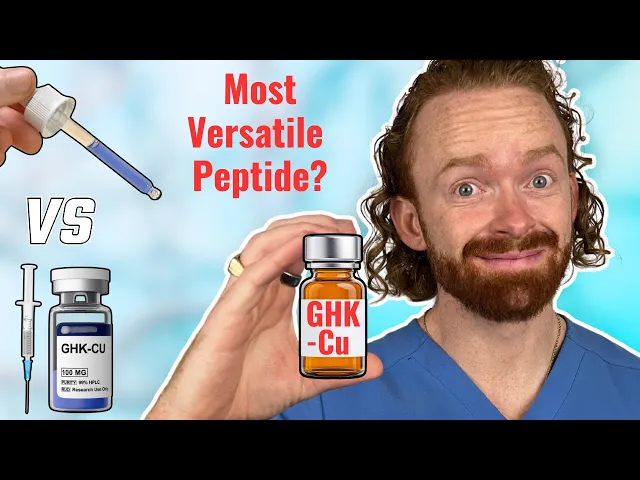
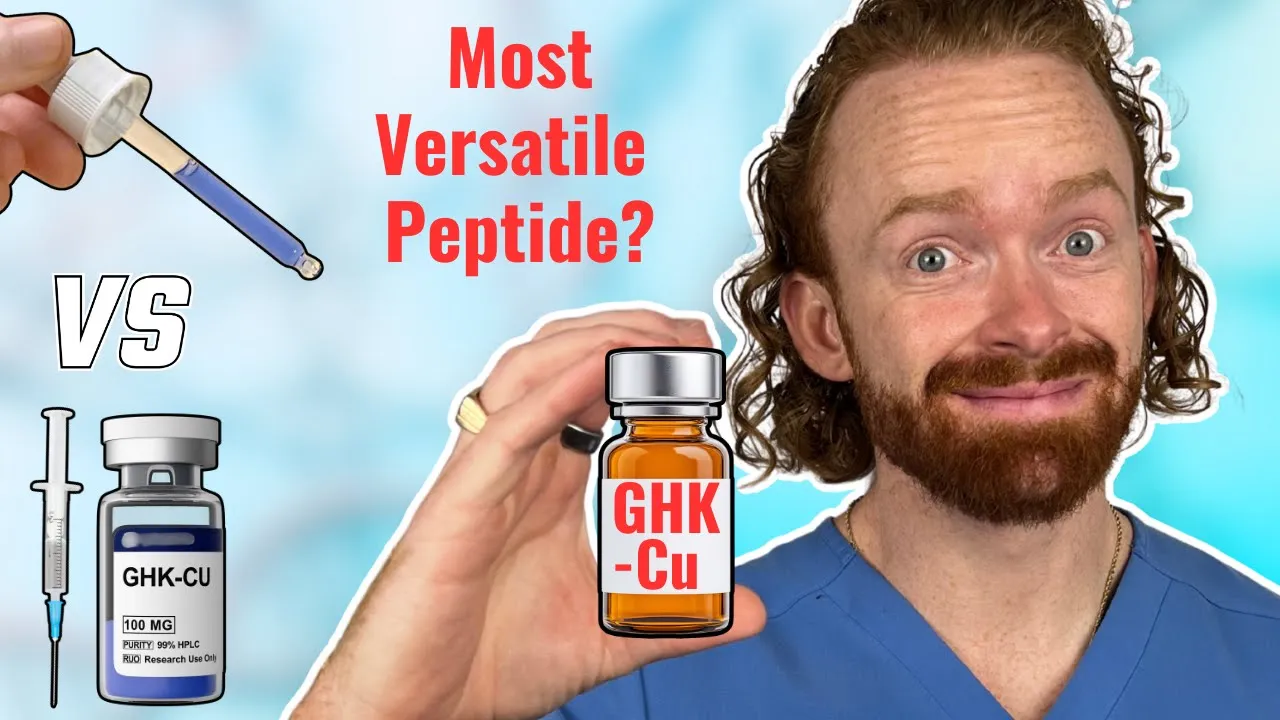
GHK copper is a naturally occurring peptide that everyone is talking about for skin restoration and hair growth. But what if I told you that these effects are just the tip of the iceberg when it comes to this peptide? Because when you see how it actually works, you'll understand how GHK copper could be one of the most versatile peptides for anti-aging and longevity. So, in this video, we're diving deep on GHK Copper, clearing up all the misconceptions, talking about the studied benefits and the risks, and also getting super practical. For instance, is injectable actually better than
topical? And what are the optimal doses, frequencies, and cycles for each? And although I am a licensed medical doctor certified in peptide therapy, this is all of course educational content and not medical advice. So, GHK copper or GHKCU is a tripeptide, Meaning it's made up of three amino acids with the GHK standing for the three amino acids, glycine, histadine, and lysine. And this is why it's also known as copper tripeptide 1. And GHK has a very high binding affinity for copper, which is why it readily forms the GHK copper complex, which is the most commonly
produced synthetic form. However, GHK and its copper complex are also naturally occurring in the human body and were discovered by Dr. Lauren Picker and his lab in 1973. And upon its initial discovery, this copper binding mechanism was thought to be the main way in which GHK copper worked. essentially allowing for the transport of copper through the blood into tissues where it could be used for multiple healing processes. However, this copper transporting ability has since been determined to not actually be the main way that GHK copper works. Instead, its main mechanism is actually regulating The expression
of DNA, RNA, and proteins to improve multiple bodily functions. Specifically, it's been found that GHK copper can positively regulate the expression of 32% of human genes, essentially helping these 4,000 plus genes return to a healthier, more youthful state. So while the copper transporting mechanism is still beneficial for certain actions that we'll talk about and the copper complex rather than just GHK itself is necessary For many of its benefits, the main reason that GHK copper has such wide sweeping effects that we'll talk about is because of this gene regulating effect as well as some other direct
actions on other proteins. And specifically due to these mechanisms, there are seven interconnected clinical effects of GHK copper for us to talk about. And the first one is probably the most known and that is its ability to remodel and regenerate skin. And to Understand how GHK copper works here, you really have to understand the structure of human skin and how it normally degenerates with age. So there are three main layers. The top one is the epidermis which is a thin outer layer comprised mostly of cells called keratinocytes which serve as a protective barrier. Then separating
this layer from the next is the basement membrane which provides a connection to the next layer but also acts as a filter And a signaling platform to help regulate stem cells. Then below that basement membrane is the next layer or the dermis. And the dermis consists of some cells such as fiberblasts but mostly is comprised of extracellular matrix or basically proteins that are mostly made by the fiberblast which provide the skin with structure and elasticity. And this layer also contains nerves which help not only with sensation but also help to direct Healing after an injury.
And this dermal layer also contains blood vessels which can supply the skin with needed nutrients. And then finally the third layer below the dermis is the subcutaneous tissue made mostly of fat which provides insulation and shock absorption. And this layer also contains more blood vessels and nerves. Now in younger individuals the fibiberblasts that are within the dermal layer are usually functioning properly. They're Properly laying down those proteins of the extracellular matrix i.e. the collagen which provides the structure or the elastin which provides more of the elasticity. And these fiberblasts are also producing things such as
glycosaminoglycans which are helping organize that collagen and elastin and are also providing the dermis and the skin with hydration. However, it's not just about producing more of these components of the Extracellular matrix to strengthen it because we also need to break down and recycle the damaged components that are there. And that's where MMPPS or matrix metalloproteines come in. And younger individuals generally have a good balance of laying down new extracellular matrix components as well as breaking down the old components with these MMPs. And then on top of this, younger individuals generally have a more robust
stem cell population hanging around at That basement membrane. These stem cells can then help bolster the epidermis by creating new keratinocytes or help bolster the dermis by creating new fiberblasts. But with aging, much of this process goes ary. We get too little or too much MMP activity breaking down that elastin and collagen and then not enough new collagen and elastin due to aging scesscent fiberblasts. And then again on top of that we have less stem cells to create new fibroblasts or new Keratinocytes. All of which leads to increasing skin wrinkles, sagging and laxity with age.
But this is exactly where GHK copper comes in to work on skin regeneration and repair. Because again through gene regulation, GHK copper is able to increase the synthesis of fiberblasts and increase their production of collagen, elastin, and glycosaminoglycans to improve the strength, elasticity, hydration, and organization of the dermal layer of Skin. And furthermore, JHK copper can also positively regulate MMP activity to really control the recycling of the extracellular matrix. And it even promotes the survival of stem cells which help produce new fiberblast and new keratinocytes. But GHK copper's effects are still not done because again
through upregulating certain genes such as those for VEGF or FGF-2, it's also increasing angioenesis or the creation of new blood vessel branches within the Dermis or the subq layers, providing the skin then with more nutrients that it needs to heal and remodel. And furthermore, GHK is even able to attract repair cells to the site of a skin wound or injury to then help heal it. So, all to say, GHK copper is a true powerhouse when it comes to skin regeneration and remodeling as it works through gene regulation and other direct effects to work on many
pathways that help repair all layers of the skin and really just Reset it to a more youthful state. And this ability of GHK copper to revert skin back to its more youthful ways really makes sense because younger individuals have been found to have higher levels of GHK copper in their plasma compared to older individuals with studies noting that 20-year-olds have 200 NOGS per milliliter of GHK copper in their plasma compared to 60-year-olds which only have 80 NOGS per milliliter. So you could hypothesize That part of the reason our skin deteriorates with age is due to
this natural decrease in GHK copper levels. And thus by giving some GHK copper back, we could essentially restore this deficiency and reverse some of this skin aging through all the mechanisms that we just talked about. And this is exactly why there have been many cosmetic skin products coming out that contain GHK copper in them. But what actual human studies do we have on end markers of Skin quality? Because the studies we've looked at so far are really just looking at mechanistic improvements and mostly in animals or in vitro models. Well, this is the area actually
that we have the most human data on GHK copper. But unfortunately, even most of these studies don't contain detailed methodology, at least publicly available. So, it is hard to take them for full gospel. We do have one study that demonstrated that 70% of those Treated with topical GHKU had improved collagen synthesis compared to only 40 to 50% who were treated with vitamin C, melatonin, or tininoan. And additional placeboc control trials in middle-aged women demonstrated that GHK copper was able to reduce skin wrinkles and fine lines and improve skin density and thickness all after 3 months
of administration. And then outside of just improving cosmetic skin appearance, we also have studies on GHK copper Improving skin wound healing. For instance, one study used a topical GHK copper gel on diabetic foot ulcers and it was found to improve percent closure from 60% all the way up to 98%. and it caused the wound to heal three times faster. So, all to say, I think there's a ton of promise for GHK copper in the arena of skin regeneration and wound healing. And we'll talk about the best forms, dosing, and cycles later. But similarly, I think
there's a lot of Promise for GHK copper for hair growth as well. And truthfully, the mechanisms for how it improves skin are very similar to the mechanisms for how it improves hair. For instance, the improved angioenesis through increasing veg F also supplies the hair follicles with needed nutrients for growth. And GHK copper also produced special fibroblastike cells for the hair as well. Although this time instead of dermal fiberblasts, they're dermal Papula cells which increase the growth of hair follicles and the hair itself. And through these mechanisms and others, JHK copper has been studied in mice
and found to improve their hair growth cycle similar to minoxidil, a known hair treatment. But GHK copper had even higher end hair density than did minoxidil. And in humans, we have limited data for this application. But there is one pertinent study discussed in a review paper by Lauren Pickard, Again the discoverer of GHK copper. And he notes that when GHK copper was used alongside a hair transplant, it increased regrowth of new hair by 50% and reduce shedding from 30% down to 10%. However, unfortunately, we don't have all the details of this study publicly available online.
But regardless, overall, while there are definitely more studies and more mechanistic basis for GHK copper's use for skin regeneration, I still think There's also a ton of promise for using it in a stack made for hair regrowth. And one additional reason for this is the next clinical effect we have to talk about for GHK copper, and that is its ability to act as a powerful anti-inflammatory and antioxidant. And this action definitely also contributes to GHK copper's ability to regenerate skin, but it contributes to much more than just that. And that's why it's its own category
here. But GHK copper acts As an anti-inflammatory again chiefly through its gene regulating mechanisms. And specifically this time it has been shown in multiple models to suppress something known as NFCAPPA B which is a master regulator of inflammatory gene expression. And through this and other mechanisms GHK copper has been demonstrated to lower multiple pro-inflammatory markers such as IL6, TNF alpha and TGF beta 1. And then similarly to act as an antioxidant, GHK Copper has been shown to positively upregulate nerf 2 or the master regulator of cellular antioxidant responses. And through this and other pathways, GHK
copper increases your own body's antioxidants such as superoxide dismutase or SOD. And for skin regeneration, this is all important because one, lowering chronic inflammation creates an environment that shifts from degradation of the skin to more healing, repair, and remodeling. And then two, the antioxidant effect allows for the protection of the growing skin or the growing hair to really protect it from any oxidative damage that would otherwise halt the growing process. But outside of just skin and hair, as we've discussed on this channel multiple times, chronic inflammation and oxidative stress are at the root of many
chronic diseases and even at the root of the aging process itself. So this ability of GHK copper to inhibit Inflammation and inhibit oxidative stress could play a huge role in inhibiting disease or even inhibiting aging. And these broad sweeping benefits of anti-inflammation and antioxidant actions are why this particular effect of GHK copper plays a role in all the other effects on this list. But do we actually have any human data on GHK copper lowering inflammation or reducing oxidative stress? Well, the data is very limited here, but we do have one human Trial comparing humans with
COPD to healthy controls. And what they found was that those with COPD had lower GHK levels than did healthy controls and lower GHK levels were associated with higher levels of inflammatory markers and lower markers of antioxidants. So theoretically based on the mechanistic and animal studies we mentioned prior giving back GHK copper to these patients might have decreased their inflammatory burden or their oxidative stress. However, unfortunately we don't have any interventional studies in humans yet like this. So we can't really prove this anti-inflammatory or antioxidant effect yet. But based on all the studies we just talked
about, I do think it's very likely. The next main clinical effect to talk about which also benefits from this anti-inflammatory and antioxidant action is other tissue healing and remodeling outside of just skin and hair. And GHK copper's effect on different tissues in The body is pretty wide sweeping with studies demonstrating effects on the liver, the gastrointestinal tract, the lungs, bone and muscle. And its effect on tissue regeneration in general is driven by a mechanism that's pretty similar to JHK copper's effect on skin. I.e. That gene regulation that we keep talking about drives beneficial remodeling of
the extracellular matrix. It improves angioenesis. It improves stem cell modulation and it again Produces those anti-inflammatory and antioxidant effects. But how these effects manifest really depends on the tissue that GHK copper is working in. In the gut, there have been studies on GHK copper being used in rodent models of inflammatory bowel disease or like ulcerative colitis for instance. And specifically, they found that JHK copper used in these models was able to decrease markers of inflammatory damage in the intestines and also significantly Decrease disease activity. And part of this is due to the mechanisms we've been
talking about, helping heal the mucosa of the intestines. But this study also notes that part of JHK copper's benefit in inflammatory bowel disease could be due to its ability to better regulate tight junctions, essentially helping the gut become less leaky. And the study notes that this particular ability is due to GHK copper's ability to regulate the cert one pathway. And this pathway Is extremely vital when it comes to GHK copper's gene regulatory effects. And it's also an extremely vital pathway when it comes to anti-aging mechanisms in general. So this effect will be important as we
talk about further effects of GHK copper. And then furthermore in the gut, Pikart mentions in his review papers that there are also studies on GHK copper being used to help heal stomach ulcers in rodent models as well. And while there are no detailed Human studies on GHK copper healing gut issues, Pikart does mention one study in his review paper which rectily administered GHK copper to patients with inflammatory bowel disease and this resulted in a 60% reduction in disease severity. Then next in the lungs we have multiple animal studies on GHK copper improving lung tissue healing
in multiple disease models. And this is due to many of the mechanisms we've already discussed, but also due to an Anti-rootic or an anti-car tissue mechanism that largely stems from a lot of the anti-inflammatory pathways that GHK copper acts on. So for instance, through all of these mechanisms, we have studies on GHK copper improving lung tissue healing in mouse models of pulmonary fibrosis. And we have further studies on GHK copper inhibiting lung damage due to acute lung injuries in mouse models. and even more studies on GHK copper inhibiting lung scarring in a Disease model of
silicosis. And then in regards to human studies, we don't have any interventional data on GHK copper improving human lungs. But what we do have is the study we've already mentioned talking about how patients with COPD generally do have lower levels of GHK copper. And then impressively, we also have studies looking at gene expression changes in patients with COPD. And researchers found that JHK copper was able to reverse some of these Changes due to its gene regulating mechanisms. And then similarly to all this, patients with asthma have also been demonstrated to have lower levels of GHK
copper. And even more interestingly, even lower levels of GHK copper are associated with more severe asthma. And while we don't have any human studies giving GHK copper to people with asthma, we do have animal studies giving GHK copper to mice with asthma. and this did improve their Symptoms and this was found to be successful and largely mediated again through that cert one pathway. So all to say while we don't have a lot of human data on GHK copper for lung healing I think GHK copper shows a bunch of promise here. The next tissue to talk
about is the liver and we definitely have less studies here but interestingly when Pikart first discovered GHK copper he noted it to be a peptide that was able to cause old human liver to Synthesize proteins just like younger livers could. And then in his review papers, Pikart does note that there was one study that demonstrated GHK copper's ability to inhibit liver damage from toxins. And these potential effects on the liver just again go to show how wide sweeping GHK copper's effects could be throughout the body due to those gene regulating effects. But it doesn't stop
there because we also have some data on GHK copper for muscularkeeletal Regeneration. But to put this into perspective though, we don't have near as much data here as we do for say TB4 and especially not for BBC 157. But one mechanistically it would make sense that GHK copper could work in muscularkeeletal tissues as well i.e. healing tendons, ligaments, bone or muscles. After all that increased synthesis of collagen and glycosaminoglycans, the increased angioenesis, the anti-inflammatory Actions and the antioxidant effects and even the stem cell modulation, all of that theoretically should benefit muscularkeeletal tissues as well. And
then two, we do have a few direct studies on GHK copper being used in muscularkeeletal regeneration. For instance, in that study on the mouse model of COPD, GHK copper was found to reduce muscle mass loss, increase muscle cross-sectional area, and improve markers of grip strength. And then for Bone, there's an in vitro study demonstrating that GHK copper enhanced hydrogels were better at bone building than standard hydrogels alone. And this was partly due to better stem cell differentiation. And then finally, there was one mouse study looking at injecting GHK copper into knee joints after an ACL
repair. And they did this once a week for 4 weeks after the repair. And while there was benefit in knee laxity seen at the 6 week mark, there was actually no Benefit seen at the 12-week mark. So to me, this signals yes, there definitely could be some benefit for GHK copper in muscularkeeletal healing, such as this ACL repair, but probably not as much as TB4 or BBC 157. And if you were using it for muscularkeeletal healing, the dose and the frequency would have to be much more optimized than what it was here in this ACL
study. But that's really all we have for interventional data when it comes to GHK copper for muscularkeeletal Regeneration. So, I definitely like BPC and TB4 much better here, but I still think GHK copper definitely holds a place for this use case, and we'll talk about that more later. But overall, what GHK copper really does have going for it is just the wide variety of tissues that it can positively act in. And again, it largely has this benefit due to these wide sweeping gene regulating effects. And the next extremely exciting thing that GHK copper has going
for it is a Potential anti-cancer action. Now, the development and progression of cancer is super complex and happens through multiple different pathways. But interestingly, JHK copper through again those gene regulating effects could potentially act on multiple of these different pathways to hopefully inhibit the progression of cancer. Specifically, one way in which cancer can develop is when DNA mutations go unrepaired and then this can downstream cause Uncontrolled growth. But GHK copper could theoretically help here by upregulating genes that are required for DNA repair. thus hopefully helping us repair any mutations that occur before the cell could
become cancerous. And then furthermore, one way that these DNA mutations happen in the first place is through oxidative stress to the DNA. And as we've already talked about, GHK copper upregulates many of these antioxidant genes, which hopefully would Help us reduce oxidative stress that would occur to the DNA and thus limit mutations that may lead to cancer. And then yet another thing that could potentially drive cancer development is chronic inflammation, which promotes an environment for cancer to initially develop. And again, we've already talked about GHK copper's ability to lower inflammation through gene regulating effects. And
the mechanisms for GHK copper potentially inhibiting cancer Progression still aren't done because even after cells turn cancerous, GHK copper may have the ability to still intervene. For instance, after this inflammation, oxidative stress, and DNA mutations occur and maybe even cause a cell to be cancerous, the cell should theoretically be able to recognize that it's turned cancerous and then kill itself off in a process known as apoptosis. However, cancerous cells often get the ability to avoid this Apoptoic pathway and thus avoid being killed off and then are just allowed to continue to grow. But yet again,
GHK copper could intervene here by upregulating the genes required for apoptosis to essentially allow these cancer cells to kill themselves off and stop growing and dividing. But then even once a tumor develops, GHK copper could still intervene by potentially inhibiting the cancer from metastasizing. One study, for instance, Looked at genes that were upregulated in patients that had metastatic colon cancer. And then the study looked for compounds which could inhibit some of these genes. And GHK copper was one of the two compounds that was found to do so. So all to say, GHK copper has the
potential to act on many different pathways to potentially inhibit cancer growth and progression. That being said, there are no human studies on this and really only a couple interventional Studies period on it. We have one in which JHK copper was found to inhibit the growth of neuroblastoma cells or a cancer of certain nerve cells, but this was an in vitro study. And then we have another study in which GHK copper in combination with vitamin C was found to inhibit the progression of a connective tissue tumor in mice. So all to say while the mechanistic data
is extremely promising here, we really need a lot more interventional data to prove this Potential anti-cancer benefit. And the next potential clinical benefit to talk about is in a similar boat. A lot of promising mechanistic potential, but not a lot of interventional studies yet. And this benefit is a potential decrease in cardiovascular disease risk. And multiple mechanisms that we've already talked about so far could contribute to this. For instance, chronic inflammation and oxidative stress are known drivers of atheroscerosis or plaque production. So GHK copper's anti-inflammatory and antioxidant actions could help us here. And then GHK
copper's ability to promote angioenesis could also theoretically benefit us here by allowing new blood vessels to form around the heart when other vessels are blocked off by disease. And then interestingly, GHK copper's ability to promote copper homeostasis could also play a role here because disregulated copper balance and then copper induced cell death are also Known drivers of cardiovascular disease progression. But one mechanism that we haven't talked about yet that could help us here is GHK copper's ability to lower fibbrronogen synthesis through gene regulation. And fibbrronogen is a protein that is vital for your blood's ability
to clot. And it's also an inflammatory marker. So you can imagine if fibbrronogen is too high, your blood might become too viscous which could result in blood vessel dysfunction and Cardiac events. And this is why high fibbrronogen levels are consistently associated with cardiovascular disease. And when GHK copper's gene regulating abilities were examined, they found that GHK copper had a strong ability to regulate the genes that decrease fibbrronogen synthesis, which would theoretically provide cardiovascular benefit. So through all these mechanisms, there's definitely reason to believe that JHK copper could provide a Lot of benefit for cardiovascular disease
prevention. However, really the only interventional study we have on this so far is one study in zebra fish which demonstrated that GHK copper was able to inhibit copper induced cardiotoxicity. So again, we definitely need more studies on this potential benefit. Then next up on GHK copper's extensive potential benefit list is neurop protection and other positive neurologic effects. And many of the Reasons why JHK copper could be beneficial for cardiovascular disease are the same reasons why it might be beneficial for brain protection. For instance, the anti-inflammatory and antioxidant mechanisms, the angioenesis, and the copper homeostasis mechanisms
all are also very important for promoting brain health. However, there are additional reasons why GHK copper shows promise here. And one goes back to its effect on apoptosis or that Controlled killing of cells. So, as we mentioned, GHK copper has the ability to upregulate apoptosis when we need it, i.e. in cancer cells. But here it also has the ability to downregulate apoptosis in neuronal cells when we don't need it. Essentially allowing these cells to survive and then further contribute to positive brain function. And there have been multiple studies exploiting this mechanism of GHK copper to
better improve neurologic function After brain bleeds in mice. And then another mechanism of GHK copper that could be potentially exploited to improve neurodeenerative diseases is the ability of GHK copper to inhibit improper protein folding caused by copper and zinc. And this improper protein folding and aggregation is a hallmark of neurodeenerative diseases like Alzheimer's or Parkinson's disease. So this on top of a lot of the other mechanisms we've talked about are why Researchers are so excited about potentially using GHK copper to work to inhibit neurodeenerative diseases and just general cognitive decline. And even in addition to
all these protective effects that GHK copper can have, GHK copper also through its gene regulation can increase nerve regeneration and nerve growth. And it does this through increasing the expression of things such as nerve growth factor or neurotrphen 3 and 4. And it's thought that through This mechanism and through other direct actions on some pain related pathways, GHK copper might also have some anti-pane, anti-anxiety, and anti-agression properties. Although we don't have the full studies publicly available, PickArt's review papers do note that there was one study where JHK copper was given to mice who had to
touch a hot plate. And when GH copper was given prior to this, the mouse took longer to lick their paws, signaling a Decreased pain response. Then in different studies, GHK copper was also found to decrease fear and anxiety in mice, demonstrated by the mice being able to explore an open area longer before hiding and freezing. And finally, GHK copper also decreased aggressive attacks towards other mice after the mice were administered electric shocks. So although there are no human studies on neurologic protection or enhancement, there are a lot of animal intervention Studies and just mechanistic data
to say that GHK copper could show promise here. And then last, but certainly not least, when it comes to possible GHK effects is its effect on anti-aging and longevity in general. GHK copper could partially promote longevity through inhibiting chronic diseases that we've already talked about such as inhibiting cardiovascular disease, neurodeenerative diseases, or even cancer. However, through its unique and very varied Mechanisms, many of which we've already discussed, GHK copper could directly target many of the 12 hallmarks or root causes of aging and thus theoretically even enhance lifespan. For instance, we've already talked about how the
anti-inflammatory and antioxidant effects of GHK copper target multiple of the root causes of aging. And we've also talked about how GHK copper can upregulate DNA repair and just positively regulate gene expression in General, which work on the hallmarks of genomic instability and epigenetic alterations. And we also talked about GHK copper's ability to positively regulate stem cells, which acts on yet another hallmark of aging. And furthermore, we've mentioned GHK copper's ability to positively regulate cert 1, which is extremely important not only for mitochondrial function, but also for proper nutrient sensing and regulation as it essentially promotes
Proper cleanup and repair pathways. And similarly, also working on this nutrient regulation hallmark of aging. GHK copper has the ability to suppress insulin-like genes which when overactive further drive aging due to too much growth signaling. And finally, GHK copper also promotes proper protein folding and organization. In disregulation of this and accumulation of damaged proteins is yet another hallmark of aging. And GHK inhibits this hallmark through Increasing the activity of something known as the UPS or the ubiquitin proteome system. And the UPS is extremely important for clearing up these damaged proteins and making sure they don't
accumulate. So all to say, GHK copper works on a ton of the hallmarks of aging, which makes it super exciting as a potential longevity peptide. And further adding to this case is the fact that as we already mentioned, GHK copper concentrations Decrease with age. So by giving it back, you could hypothesize that we would be replacing a deficiency that might be driving aging. However, all of this being said, we don't have any interventional studies on this. Definitely not in humans, but not even in animals yet. So while GHK copper is super promising as a longevity
peptide, this effect really remains to be proven. But overall, through all of these potential seven clinical effects that we Talked about, you can see just how wide sweeping GHK copper's potential benefits are. But are there any risks or downsides to its use? Well, the main risk that's talked about is potential copper toxicity. But do we actually need to be concerned about this? Well, first let's talk about how much copper you'd actually be getting from injecting GHK copper. So GHK copper is 15.7% copper by molecular weight. And we'll talk about proper dosing in a little bit,
but if You were injecting even 2 mg of GHK copper systemically, that would amount to only 314 mg of copper per day. And for context, the recommended dietary allowance of copper for the average adult is.9 milligs per day. And for even further context, in the US, the average diet will exceed this RDA with males consuming on average 1.4 milligs of copper per day and females 1.1 millig. So, the copper from GHK copper is likely only going to amount to 20 to 30% of the Copper that you're already getting from your diet. And furthermore, the upper
tolerable limit of copper intake per day is set at 10 millig, i.e. about 30 times the amount that you'd be getting in a standard GHK copper dose. So, all to say, just based on copper intake from GHK copper, copper toxicity in the general population seems highly unlikely. And furthermore, as we've mentioned, there are actually multiple studies demonstrating JHK copper's Ability to reduce copper induced damage due to its high affinity to bind up copper and inhibit its redux activities. For instance, again in that zebra fish study, it was found to inhibit heart damage due to copper
toxicity. And then in other in vitro studies, GHK copper was found to inhibit cell death that was caused by copper induced protein misfolding. So, all to say, based on our pre-clinical data and mechanisms, I have very low concern for GHK copper causing Copper toxicity in the general population. However, since we don't have any real human data on injectable GHK copper yet, we aren't really fully sure how it would interact with copper homeostasis in humans. So, because of this, I like to even further mitigate our potential risk for copper toxicity through a few ways. One is
by measuring blood markers of copper homeostasis before and during treatment with GHK copper. specifically getting at least a Serum copper, a ceruopplasmine which binds up copper and carries it around in the blood and three using these to calculate a non-cerulopplasmine bound copper as this essentially represents the free form of copper that could become more toxic if too high. Then outside of this I also like to measure liver enzymes from a complete metabolic panel as copper toxicity can cause liver damage and then also a red blood cell copper, a red blood cell zinc and an Iron
panel complete with transfer and saturation and feritin. And this is because levels of copper, zinc, and iron all can affect each other's absorption and metabolism. And finally, I also like to get a high sensitivity CRP, which is an inflammatory marker and helps us determine whether potential elevations in copper or iron are driven by inflammation rather than being a true metal overload. And this comprehensive type of lab monitoring not only helps Mitigate risk of copper toxicity, but also allows us to see if we should be supplementing with additional iron or zinc to maintain proper metal balance.
And this type of lab monitoring also allows us to screen for rare copper metabolism disorders such as Wilson's disease, which if you had that, that would be a reason to not pursue GHK copper therapy. But again, to me, the risk of copper toxicity is very low and these measures are really just to even Further mitigate our risk. Then outside of this potential copper toxicity, the other main theoretical mechanism to talk about is GHK's effect on cancer. For any compound that promotes tissue growth and regeneration and especially promotes angioenesis, we have to be at least a
little wary of that compound promoting the growth and progression of a pre-existing unknown cancer. And we've discussed this risk in depth in our videos on BPC and TB4. And you might Think that GHK copper could carry this same level of cancerpromoting risk due to its angioenic properties especially. However, as we've already talked about, GHK copper also has a lot of anti-cancer mechanisms as well, with some studies demonstrating inhibition of cancer cells and other studies looking at its gene regulating effects on multiple pathways that would actually decrease cancer progression. So, to me, I definitely lean towards
GHK copper being way more Anti-cancer compared to cancerromoting. And I wouldn't say the same for BPC and especially not for TB4. But because of its angioenic properties and because its effects in humans are really unknown, I definitely would still advise sticking away from this one in active cancer. But overall, I really do think that GHK copper has a great theoretical safety profile, likely even when injected. However, the key word there being theoretical because as we've mentioned, We really have no human studies on injectable GHK copper. And until we have that, it's really impossible to truly
prove that it's safe. That being said, topical GHK copper does have some human studies. And topical is generally inherently more safe than injectable due to much less systemic exposure. So topically, I think you can feel even more safe using it, which is why it's included in many over-the-counter cosmetic products and is why the topical Form is not included in the FDA's ban on peptides like the injectable form of GHK copper. And really, if you are using the topical form, the main thing to look out for is any irritation, redness, or itching at the application site.
But on this topic of local side effects and local irritation, it is worth noting that injectable GHK copper is probably the one I hear the most complaints with in regards to people getting a stinging or burning at the injection site. And This could be due to multiple things including pH or osmolality. But truthfully, it's most likely due to the copper component causing local tissue irritation. So in general though, ways to potentially decrease the sensation would be one diluting the concentration of GHK copper. So for instance, instead of putting the 1 millig in.5 milliliters, put that
same 1 millig into 1 milll. Then two would be injecting more slowly to allow for better tissue Accommodation. And then three, if you're still getting that burning sensation, I'd recommend using fresh needles to split your dose up across multiple sites. But overall, based on all the potential benefits we talked about and the potential risks, who would maybe benefit from using JHK copper topically or subcutaneously? And of course, you're always doing this in conjunction with your doctor and you're not really even doing the injectable form right now Given that GHK copper injectable is not FDA approved
for human use. Well, I think this one is a top tier peptide for multiple use cases. One is obviously for skin and hair regeneration. And GHK copper is my top peptide for this use case. This is where we have the most preclinical and clinical data on GHK copper. And given its mechanistically great safety profile, I like the addition of this one to almost any skin anti-aging or hair regrowth stack. Then The second use case is for muscularkeeletal and wound repair. As we've already discussed, we have way less interventional studies here than we do for BPC
or TB4. So if you're someone who's cancer-free and has a low cancer risk, I think BPC or TB4 are going to be better options for you here for moderate to severe muscularkeeletal injury healing. But due to its mechanisms and due to the data we do have, I still think GHK copper can play a big role Here in a few scenarios. One is for severe injuries that are not responding to BBC and TB4 alone. GHK copper could be a good addition here as it does have some different although overlapping mechanisms that could help further support muscularkeeletal
healing. And then two, I could see using GHK copper here if you have a slightly higher risk of cancer but you have a moderate injury that needs healed. As we discussed in other videos, I don't really like using BPC or TB4 when you have a high risk of cancer due to their potential cancer activities. However, as we've mentioned, I don't have this same level of concern for GHK copper. So, if you do have a slightly higher risk of cancer, but have that injury, I do think GHK copper could be one you'd look to. And then
three is using GHK copper for more mild injuries or for just improving gym session recovery if this is something that you're struggling with. I recommend it Against this use case for BPC and TB4 due to their safety profiles. But I don't think this use case is out of the question for GHK which has a better safety profile in my opinion and due to its anti-inflammatory and tissue regenerative effects. I think GHK copper could potentially be useful here. So I think this one is worth having an individualized risk benefit discussion with your doctor about if you're
considering using GHK copper for very Mild injuries or gym session recovery. But given its better theoretical safety profile and all the other potential benefits you might get from it, I think JHK copper could be a good peptide for this use case. And speaking of all these potential extra benefits, the third main potential use case for GHK copper is using it for longevity and anti-aging purposes in general. Just mechanistically speaking, based on the wide sweeping effects of GHK copper on Longevity mechanisms, this one is a top tier anti-aging peptide. However, the reason it didn't make it
into my top five peptides for longevity is really just due to the lack of interventional studies on injectable GHK copper, especially for anti-aging outcomes. So, to me, this is the only reason why GHK copper is not in the elite or top five tier for anti-aging and longevity. But, it's definitely close. And due to those extra benefits of skin, hair, and Muscular skeletal regeneration, I do think it's probably a worthwhile ad to any stack targeted at general health and longevity. And then finally on potential use cases for GHK copper, it's also worth mentioning its potential use
in other tissue healing. And to me, this one is a top tier peptide for lung tissue healing, specifically in the cases of COPD, asthma, or pulmonary fibrosis based on all those studies we previously talked about. And then to me, It's a second tier peptide when it comes to gut healing behind the top tier of BPC, KPV, and laorazzide for instance. But if you had mild gut symptoms and you were also focused on longevity, again, GHK copper could be a good ad. But if you are considering using GHK copper for any of these use cases, what
is the best form, dose, timing, and cycles? Well, for the form, to my knowledge, there's only one study on an oral form of GHK copper, and that was the one on Ulcerative colitis. And while this was successful for ulcerative colitis, I'm still slightly skeptical of using oral GHK for more systemic issues as it's likely going to be pretty degraded in the gastrointestinal tract. And it's also unclear whether the copper complex it forms would be taken up by the usual tripeptide intestinal transporters. So to me, that leaves us with really two main options to discuss, injectable
and topical. And GHK copper's chemical Structure does provide some difficulties for using it topically. First of all, it's very hydrophilic, meaning it dissolves very well in water but not in fat. And this becomes problematic when it comes to penetrating the top layer of the skin called the stratum corneium because that layer is extremely hydrophobic or basically a substance that interacts well with fat soluble substances but not so well with water soluble ones like GHK. And because of This, GHK copper has been shown to have a hard time penetrating that top layer of skin, which could
be problematic because, as we mentioned earlier, GHK copper could have effects on all of the layers of skin if it could just penetrate down deep enough. So, if it's unable to do so, we could be leaving a lot of potential benefits on the table. However, that being said, we might not need a ton of the GHK copper to actually penetrate down through the deeper layers Of the skin in order to still see a positive effect. After all, not only do the mechanistic studies note that we could still see a positive effect here, but most of
the studies using topical GHK copper have just used the standard form and again have seen positive effects. So despite limited absorption of the standard form of GHK copper, I still think you're probably going to get some benefit for skin and hair purposes. But to improve this benefit even Further, special formulations of GHK copper have been produced in order to better penetrate the skin. Specifically, one is a liposomaal form, essentially wrapping up the hydrophilic GHK copper in fat so that it better permeates through the hydrophobic stratum corneium. And while this has been shown to successfully encapsulate
GHK copper, there are limited head-to-head studies comparing a liposomaal form to a more standard form. Although we do have one Mouse study that demonstrated improved markers of angioenesis when a liposomaal form was used compared to just the standard form. And then other advanced formulations also exist such as an ionic liquid-based micro emulsion technology which was demonstrated to increase topical delivery three-fold. And then there are even other conjugated forms such as hyaluronin or algoarginine conjugates which could improve stability or penetration respectively. So overall I do really really like these advanced formulations if you're going the topical
route although they're not absolutely required and they're difficult to find in practice often. But the next thing to talk about that could really limit your topical GHK copper's efficacy is pH or the acidity of the solution that it's in. GHK copper is very sensitive to pH with studies noting that increased pH generally improves its ability to permeate through the skin. And this has A couple of practical implications. One is you have to be careful what your GHK copper is mixed in with. Many online GHK skin products include a ton of other ingredients in their formulations,
some of which are very acidic, such as kic acid, which if it's not buffered properly, could cause the entire solution to be too acidic, and thus your GHK copper might not penetrate through the skin as well. And then the second practical implication of this is that Impurities, degradation products over time, and improper copper to peptide ratios all also can decrease the pH and thus limit efficacy. So, this is why for GHK copper, maybe even more than other peptides, it's really important to get a high quality form. And because of this, I personally am not a
huge fan of online or over-the-counter GHK topicals. And instead, if you have access, I much prefer getting my GHK copper from a regulated compounding pharmacy, which Are much more likely to produce a quality, stable product. So all in all for topical GHK copper your best bet is to get a standalone product or at least one without any acidic ingredients in it and then if you can get a liposomaal or micro emulsion or another studied advanced formulation. But to me the most important thing is to hopefully get it from a compounding pharmacy to make sure you're
getting a high quality pure product. And from there one thing from An application standpoint that can really enhance efficacy of topical GHK is micro needling immediately prior to its application. Micro needling allows us to overcome the limitation of GHK copper not penetrating the stratum corneium and it does this essentially by creating small channels for the GHK copper to permeate through and in vitro studies have demonstrated that micro needling significantly increases the penetration of GHK copper through human Skin. That being said, it would be much too irritating to do this every day. So this is more
of a every other week or even every four-week practice depending on location and needle length. And then finally, hydrating the skin with hyaluronic acid 4 to 6 hours prior to GHK copper administration can also confirmationally change the stratum corneium to even further improve GHK copper penetration. So yes, topical forms can be really beneficial for hair And skin regeneration, especially when using all these tips. But is injecting GHK copper more beneficial? Well, as with most things, it depends. First of all, if you want any chance of getting all those extra benefits that we mentioned of GHK
copper, then you're really going to have to inject it because topical GHK copper is not going to provide systemic levels high enough to really get any of those effects. But what if we are chiefly focused on the Skin and hair benefits? Well, interestingly, I'm actually more of a fan of a quality wellapplied topical form than I am a subcutaneous form in this case. And there are a couple main reasons for this. One is that if you inject GHK copper subcutaneously, it's going to get absorbed into systemic circulation and then be more so evenly distributed throughout
the entire body. Thus, the concentration that goes to the facial skin or the scalp is going to be Pretty diluted as that one dose has to distribute to many bodily tissues. And then two, just like the hydrophilic nature of GHK copper limits its penetration through the top layer of the skin, that hydrophilic nature is also likely going to limit its ability to reach from systemic circulation out to the skin and out to the scalp. So because of this, although we don't have any human data on this, obviously systemic injections are likely going to Result in
pretty dilute levels of GHK copper at the skin or the scalp, which still might be enough to provide benefit for skin and hair, but to me, likely not as much as a well-applied topical form that can more so concentrate on the skin and the hair. And truthfully, my hunch as to why topical forms are not as well regarded in the peptide community at large is due to improper application of poor quality topical forms compared to a proper compounded pharmacy highquality Form applied correctly with micro needling and proper hydration. If you do that, I do likely
think you're going to get more benefit for skin and hair compared to injecting it systemically. So if you are focusing on a skin regeneration or hair regrowth protocol correctly applied topical GHK copper is your way to go and then if you want to add the additional muscularkeeletal benefits or longevity benefits then you can add a subcutaneous form on top of This. But if you are more focused on the longevity benefits, but you also would love to see some additional skin and hair benefits, then subcutaneous is your way to go as you will still likely get
some benefit in the skin and hair arena while still possibly getting that full spectrum of benefits that we talked about earlier. And then it's also worth noting that if you are more focused on the skin and hair benefits of GHK copper, one theoretical option could be Having a medical practitioner inject the GHK copper intrammally to bypass the stratum corneium while still delivering that GHK copper to the area of focus at a much higher concentration. However, this is much more technically challenging and thus with it comes much higher risk. So definitely do not do this at
home by yourself. And truthfully, I still think you're going to get enough benefit out of a much more frequently applied regular topical form If you apply it like we've discussed prior. And then finally on the form, it's worth mentioning here a different copper tripeptide altogether and that is AHK copper or copper tripeptide 3. So AHK copper is one amino acid different than GHK essentially subbing out the G or glycine for alanine or A. And this one is not a standalone naturally occurring peptide like GHK is. Instead, AHK is just part of the larger naturally occurring
protein albammen. And AHK Copper has not been near as studied as GHK copper has. But there is one in vitro study on AHK copper improving human hair growth through improving the growth of hair follicles. So because of this and due to some anecdotal reports, AHK copper could be a good option for hair growth specifically. However, GHK copper is much easier to source especially from compoundingies and again it has way more data behind it. So to me, I'm sticking with GHK copper even For hair for right now. However, if you can get a high quality AHK
copper from a compounding pharmacy, that could also be a good option for hair regrowth and potentially even in combo with GHK. However, for any use case other than hair, I would definitely stick with GHK copper as again AHK has really no other studies behind it and that one amino acid change could significantly change its gene regulating effects that GHK copper has. But for GHK copper, what is The optimal dose based on the data we do have? Well, for topical, it's very difficult to determine for multiple reasons. One is that we have very limited human data
even on the topical form and even the data we do have, a lot of it doesn't contain its full methodology, thus no dosing information. Two is that dosing is very dependent on the quality of GHK copper that you're using. I.e. a.5% concentration of a compounded pharmacy version may be more Efficacious than a 7% GHK copper from an online unregulated source. And then three is the fact that higher might not always be better. For instance, there was one in vitro study noting that there was a certain concentration at which you got the highest efficacy of GHK
copper. But then at concentrations higher than this point, efficacy started to diminish. Meaning, in other words, we can't just pick the highest concentrated product and hope for the best. So Because of all these challenges, I can't just give you a quick answer in regards to what concentration or dose of topical GH copper is best. But some studies we have do give us a starting point. For instance, the study that measured GHK copper's ability to penetrate through human skin used a concentration of 68%. And found that that concentration was potentially efficacious for promoting skin benefit. And
then Pikart notes that the concentration used in the diabetic Foot ulcer study was 2%. So to me, this.5 to 2% concentration of GHK copper is the ballpark for where you want to start when it comes to concentration of your GHK solution. And I also again recommend getting it from a compounding pharmacy as that would most closely mimic the product that was used in these studies. And then again because studies have noted that higher is not always better. And because there's anecdotal reports of worsening skin or worsening Hair with too high of doses being used, I'd
really recommend starting at the lower end of this range, i.e. the 0.5% and applying a thin layer of that topically. Do that for a while and if you don't notice any benefit, you can then start to move up in concentration. So that's topical, but what about for subq? Well, this is even more speculative than for topical because again, we have no human data on subcutaneous GHKU. However, as mentioned Earlier, we do have data on the normal natural concentrations of GHK copper in younger and older individuals. And if we assume an average 3 L plasma volume,
that would mean that 20-year-olds have an average of 6 millig of GHK copper running around in their circulation. And this decreases to only.24 24 millig on average for 60-year-olds. So if we wanted to increase a 60-year-old's GHK levels to that of a 20-year-old, we would have to increase by.36 millig. And If you account for an estimated bioavailability of a subcutaneous administration being about 70%, that would mean giving a dose of.5 millig. However, this is super simplistic as it's assuming steadystate levels, doesn't really account for tissue distribution, etc. Thus, we can't just stop there. Instead, I
also think it's helpful to look at animal studies using injectable GHK copper and then create human equivalent dosing from there. And In these studies, dosing is pretty variable. For instance, the study on pulmonary fibrosis used doses of 2, 2, and 20 milligs per kilogram every other day. Then in the acute lung injury and brain bleed studies, they used doses of 1 and 10 migs per keg every day for 3 days. And in all the studies using injectable GHK copper, they found that all the doses they studied were efficacious. But they also did note that there
was somewhat of a dose dependent Effect, noting that the higher doses tested were generally more efficacious. However, given the lack of human studies, I do still think it's prudent to start at the lowest possible efficacious dose, especially given that we have other studies noting that too high of a dose could be less beneficial. So if we use that 02 mig perkig every other day dosing and also account for intraaritinal to subq administration differences and use the size of an Average 70 kg adult that gives us a human equivalent dose of 1.26 millig every other day
or about 63 millig every day which is fairly close to our.5 mig per day dose that we calculated based on normal human concentrations. So based on all of this, I really actually like starting at 0.5 migs per day subcutaneously. Despite this being lower than other anecdotal recommendations, and I also think that starting at this lower dose is not only the safest, but Can also help ensure that we're not going too high right out of the gate, as again that could be less efficacious. But due to the dose dependent responses that we see in most of
these injectable GHK studies, once you've used 0.5 millig for a few weeks and have had no negative side effects, I do think it's reasonable to start moving up in.5 milligram increments all the way up to 2 millig. However, generally I'm landing on about 1 millig per day subcutaneously if You're using it for more general longevity reasons. But how frequently should you be administering GHK copper? Well, for topical, I definitely like starting at once a day here, as this is what most studies did, including that diabetic foot ulcer study. However, I do think it's reasonable to
increase to twice a day dosing if you're not noticing an effect at only once a day. But if skin irritation develops, this is definitely a sign to cut back on your Dosing. But what about for subq? Should you start with just.5 milligs every day like we were saying, or should you use 1 millig every other day like that successful mouse study did? While I don't think you can go wrong by doing it every other day, given the success of that mouse study, I do think that based on the mechanisms and what we know about GHK
copper, it'll likely be more beneficial to do everyday dosing compared to every other day. Although we Don't have exact pharmacocinetic data on GHK copper, its size and its hydrophilic nature mean that it's likely very rapidly metabolized and eliminated. And since GHK's presence is necessary to get its positive gene regulating effects, it would make sense that more frequent dosing would more frequently trigger positive gene regulation and thus give us more positive effects. So because of this, I think a good balance between practicality and efficacy would be Administering your subcutaneous GHK copper once a day. And then
finally, how long should you cycle on and off GHK copper? Well, per usual with peptides, we don't have a ton to go off of here other than just theorizing based on mechanisms. But for topical, based on likely very low systemic absorption, I think you're safe to do that one pretty much indefinitely as long as you're monitoring for side effects and scalp or skin irritation. And then for subq, it's A little more tricky and really just depends on your current health status, the reason you're using it, and your labs. So, as with everything, I'd highly recommend
determining your cycle lengths with your doctor. But for general anti-aging use, I think a good starting point is on cycles of 3 to 4 weeks and then being off it for 1 to 2 weeks. And again, we don't have much to go off of here, but that pulmonary fibrosis study that we talked about used a duration of 21 days and saw a positive effect. And then the short off cycles help further mitigate our risk of imbalancing our copper homeostasis as well as helping mitigate any long-term risk that we just don't really know about given again
there's no human injectable data on this one. That being said, as we've discussed, I do think the theoretical safety profile of this peptide is much better than some of the other ones we've discussed. Thus, I do think the on Cycles could be extended for longer durations with frequent lab monitoring and depending on your situation. And then the off cycles could theoretically be minimized as well, given that there is less concern for tolerance or receptor desensitization based on the mechanisms and things we know of GHK copper. Now, want to learn about five peptides I think are
even more promising for longevity compared to GHK copper. Well, check out this video here and then Subscribe for deep dives coming soon on Redat True Tide and Sank.