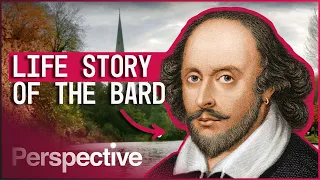
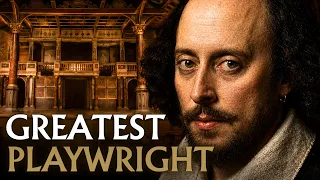
from Andy this is biography [Music] from AV studios in New York with Peter Graves the plays of William Shakespeare are universally acknowledged as timeless classics but his life is shrouded in mystery no playwright has ever found a wider audience for all the world is indeed a stage for William Shakespeare the bard as he's called is larger than life he wrote plays of such magnitude passion and comedy and drama that they continue today to enthrall audiences all over the world actors revere him and sing his praises audiences delight and his wonderful use of the english language
Shakespeare explored all of man's vanities flaws passions desires he brought tragic heroes and overbearing buffoons to life so now a graffiti look at the life of William Shakespeare blow winds and crack your cheeks rage blow you cataracts and hurricanoes spout till you have read stuff William Shakespeare the greatest playwright the English language has ever known his plays his poetry his every word had become the very essence of our culture Shakespeare lives on today through the words of his plays 400 years on his genius has never been surpassed his drama takes the English language and run
life's but a walking shadow a poor player that struts and frets his hour upon the stage and then is heard no more Shakespeare's writing shows an extraordinary level of insight into the human experience our innermost thoughts yet his own life remains an enigma shrouded in the mysteries and complexities of Elizabethan [Music] William Shakespeare lived at a time of expansion conquest exploration and discovery England was a rising international power Queen Elizabeth the first reigned with a firm hand and a clear vision bringing England to the edge of glory there was a time of new pride in
the nation and for perhaps the first time a pride in the English language England was ripe for the arrival of the genius of Shakespeare Shakespeare was born in the spring of 1564 he was baptized in Holy Trinity Church in the market town of stratford-upon-avon on the 26th of April the register records his name with the Latin Wilmes Phileas Johannes Shakespeare Elizabeth and baptisms took place three days after birth so Shakespeare was born on st. George's Day [Music] the year he was born Stratford was struck by a terrible outbreak of plague people died in their thousands
cruel and painful deaths the names of the dead are listed in these 16th century records the vicar has written in the margin hick in kippot pestis here begins the plague and you can see as we turn the pages the entries get more and more frequent throughout July August September a terrible month by the end of the year the outbreak had passed away perhaps it's a miracle in a sense that Shakespeare even lived to write the plays he did William was the third child and first son of John and Mary Shakespeare his two elder sisters had
died in infancy while Shakespeare the child of a quite well-to-do family particularly at the age in which he will have first gone to school his father had come to Stratford from snitterfield from a little village close by he'd been in a quite a substantial farming family before he came here and when he got Stratford he obviously made good John Shakespeare was a Glover and leather worker a shrewd man he improved his living by money lending and wool dealing making his way up the social ladder eventually becoming high bailiff of Stratford William's mother Mary was alive
Lee and intelligent with him brought up on a farm at Wilm KITT she was an important influence on the boy as a child Shakespeare led a very disciplined life in the summers you got up between 3 & 4 in a rural community in the winters at 5 o'clock Shakespeare would get up he would clean his teeth with the soft cloth and a sweet paste he would go downstairs and hope to get his father's blessing assigned of approval he might go off to help his father at the Thursday market otherwise he would go to school for
quite a number of hours during the day John Shakespeare's position in the town meant that William was allowed to go to the local school the Elizabethans took education seriously and the school day was long and demanding here Shakespeare translated texts from English to Latin and Latin to English at that school he would have read some of the great classics the great Latin classics like Ovid for example he would have read of its metamorphoses which clearly became one of his favorite books he would have been expected actually to speak Latin from the age of about eight
and he would have been whacked if he didn't speak in Latin this was a requirement of the school I suppose for our Salvage signs like a classical author a rather dreary matter people think of classical authors in fact of it is a very exciting author who will have filled Shakespeare's mind with images of violence on the one hand and romance on the other Shakespeare's interest in the lives of the great Romans was reflected later in his life in the plays Julius Caesar Antony and Cleopatra and Coriolanus [Music] but of all skate [Music] [Music] Shakespeare's first
taste of the theater was undoubtedly watching the traveling players who came to Stratford every year performing their plays and songs in any available Hall tavern or market when Shakespeare was a child there was a great festival that nearby Kenilworth Castle had belonged to Robert Dudley the Earl of Leicester a suitor of the Virgin Queen Elizabeth Dudley arranged the festival in the hope of charming her with its amazing sights its plays music singing - dancing as an 11 year old boy at the time of the entertainment which was famous throughout the county notorious which people were
flocking to I don't doubt that Shakespeare's father took him over to Kenilworth that he saw these events was aware of their immense appeal these childhood memories perhaps inspired him when he wrote his plays there's an episode in Midsummer Night's Dream where Oberon seems to describe the sights of his splendid festival at the castle we know Shakespeare did not go to a university his family were badly off as his father's business dealings had gone from bad to worse but little else is known about his life at this time these early years have become known as The
Lost years I think the most plausible explanation is that at the end of his school days he was withdrawn from school at the age of 14 or 15 and became an apprentice to his father in his father's Glover's business in Stratford only a mile away in the village of Chaudhary did the woman who was to become the Shakespeare's wife Anne Hathway and was eight years older than Shakespeare and fell pregnant with his child when he was only 18 they hurriedly obtained a special license to marry dated November 28th 1582 six months before the child was
born the church court the ecclesiastical court could have asked Shakespeare and his wife to apologize for their sexual activity before marriage by standing up in church in a white sheet and making a statement to the whole congregation this would have been difficult really not only for Shakespeare but for his father it would have been a slightly black mark against the family very little is known about his marriage to Anne Hathaway we do know that 10 years later Shakespeare was working in London there are hundreds of conflicting stories about what he was doing throughout his twenties
some people think he might have been a soldier because the requestor lots of souls is in the place some people think he might have been a sailor because the plays include references to the sea some people think he may have traveled to Italy for example because there are a lot of Italian settings for his plays there is a fairly early legend that he spent that time as a schoolmaster in the country we do know he had three children his daughter Susanna had been born the summer after his wedding and two years later twins Hamnet and
Judith were born William Shakespeare had a growing family but it seems these ties were not enough to keep him it's thought he began writing in Stratford perhaps some sonnets and during the 1580s he left home and headed for London and it was in the hustle and bustle of the new professional theatres that William Shakespeare was about to launch what was to be the most sensational playwriting career in the history of the English language [Music] by 1592 William Shakespeare was in London making his mark as an actor and writer he joined a group of actors in
the new theatres and it turned to writing his first plays two gentlemen of verona and henry the six he was a great success and the literary establishment took against him his startlingly talented young man Robert Greene who was dying of alcohol and a lot of other things in 1592 he produced a very bitter last pamphlet called his groups worth of wit bought with a million of repentence in which he attacked Shakespeare and a couple of other playwrights for being in effect parva newsmen there is an upstart crow beautified with our feathers that with his Tigers
heart wrapped in a player's hide supposes he is as well able to bombast out of blank verse as the best of you and being an absolutely honest factotum is in his own conceit the only shake seen in the country Green attacked Shakespeare for being very tight with money for being a waspish little worm for being ungrateful egotistical me minded he actually paraphrased a line from Henry the six part three about a tiger's heart wrapped in a woman's hide in which he talked about a Tigers heart wrapped in a player's hi Green's outburst is the first
evidence we have of Shakespeare as a playwright it proves that by 1592 Shakespeare had already written the third part of Henry the sixth and was established as a playwright his career was going from strength to strength [Applause] he was obviously a great success one of Shakespeare's first plays one that we we hardly ever take any notice of these days Henry the sixth part one produced tears from 10,000 spectators in the theatre and with the success of his play that was the first sort of public credo the public advert of how effective Shakespeare's plays were Shakespeare's
talent lay in his ability to write a vast range of material throughout the 1590s he wrote poems sonnets and plays the early comedies and the history plays he almost seemed to set out to show that he can write a clever comedy the comedy of errors based on a room and play for example a lyrical comedy the Two Gentlemen of Verona based on an Italian novel a deeply serious gory tragedy Titus Andronicus full of references to the early history of Rome a very profoundly ambitious work for a young man and there are the English history plays
the plays about Henry the sixth followed by Richard the third culminating in Richard the third now is the winter of our discontent made glorious summer by this son of York and all the clouds that lourd upon our house in the deep bosom of the ocean buried [Music] Shakespeare's success in the theater drew into the attention of a number of great noblemen most importantly he was drawn into the circle of the Earl of Southampton in 1593 and 1594 he dedicated two poems Venus and Adonis and the rape of Lucretia to the Earl of Southampton the love
I dedicate to your lordship is without end where of this pamphlet without beginning is but a superfluous moiety some of the most well known and most beautiful love poetry in the English language is found in Shakespeare's sonnets much of it written by the poet to a young man perhaps the Earl of Southampton Southampton was his patron and some scholars say they were lovers shall I compare thee to a summers day thou art more lovely and more temperate rough winds do shake the Darling Buds of May and summers lease hath all too short a date the
Earl of Southampton undoubtedly would was what we would call today bisexual if not homosexual in his early youth he had plenty of lovely young men around and Shakespeare undoubtedly was dazzled by the exterior of this beautiful young man sonnets or elaborate exercises in the technical skills of writing poetry they are artifice but of all Shakespeare's work we can perhaps come closest to the man in the sonnets there's a sort of story behind the sonnets the story of the poet's affection for it might not be too much to say infatuation with a young man a man
younger than himself deep affection could even be a love affair between the two men there is a rival poet as the suggestions another poet is a rival for the affections of the of the young man and then in the last group of sonnets as they were eventually printed there is a woman who is always known as the dark lady my mistress's eyes are nothing like the Sun coral is far more red than her lips red [Music] the sonnets - and about the dark lady portray an obsessive love a love which the / despises himself at
times for feeling an entanglement and emotional entanglement that he'd really rather in many ways be out of a sort of state of intense intimate emotional unhappiness I have seen roses damn esct red and white but no such roses see I in her cheeks and in some perfumes is there more delight than in the breath that from my mistress reeks the beautiful young man and the dark woman are both resented they're both considered treacherous and duplicitous she is a bay where all men ride ugly and dreadful and I only regrets as it were says the sonnet
speaker that I'm attached to her we I can't break off my relationship now the young man is supposed to be very beautiful and very consoling but he too proves to be fickle so Shakespeare is raging through the speaker at people whom he apparently likes and that's rather disturbing but it was the theater that called him back again and again demanding more and better scripts each time his plays were popular successful and above all commercial Shakespeare had to be better than the best of them [Music] the theater was very greedy for scripts at that date we
have evidence of theater proprietors actually knocking on the doors of playwrights saying is the script finished yet and clearly Shakespeare will have been sensitive to that kind of pressure and the 37 plays that he produced in the well was it 20 years that he was in London is quite a lot of plays while living in London Shakespeare very much kept himself to himself he worked hard rehearsing in the mornings and performing in the afternoons he had to write in the evenings and that meant huge costs not only in paper which itself was a hugely expensive
item but also in candles and tapers and lanterns and things too to be able to see to ride by I have a theory actually he spent most of his time in Elizabethan tubs because there you got automatic light along with the meal that you had in the evening it would certainly been cheaper for him to work in a pub than it would have been to work in his lodging Shakespeare was living away from the family they were growing up in stratford-upon-avon without him he was writing new plays Love's Labour's Lost Romeo and Juliet and a
Midsummer Night's Dream there's an actor and a member of the Acting Company he had to be on call every day of the week throughout the period of acting and the only realistic time to ride up to Stratford which would have taken two three days from London anyway would have been through the 40 days of Lent where acting was officially banned [Music] perhaps Shakespeare's marriage was indeed loveless there are not many happy marriages in his plays in Twelfth Night his character Orsino gives this advice don't marry an older woman let's still the woman take an elder
than herself so where's she to him so sway she level in her husband's heart that I love be younger than thyself all thy affection cannot hold the bent for women are as roses whose fair flower being once displayed doth fall that very hour [Music] throughout the 1590s London was threatened by several serious outbreaks of the plague at its height it was killing a thousand people a week [Music] if you show the symptoms you stood a 70% chance of dying those who could fled the city and the theatres were closed Shakespeare's new playwriting career was repeatedly
halted by these devastating outbreaks of plague the Queen's government and the city together are could decide to close down the theaters for any length of time because of a plague alert that is if the number of deaths in London from plague plague was always more or less present but if it reached a certain number maybe twenty or thirty deaths a week the theaters could be closed [Music] thomas dekker a writer of the day described this terrible disease that swept through London [Music] a stiff and freezing horror sucks up the rivers of my blood my hair
stands on end with the panting of my brains mine eyeballs are ready to start out being beaten with the billows of my tears out of my weeping pen does the ink mournfully and more bitterly than gold drop on the pale-faced paper even when I do but think of the bowels of my sick country have been torn out a fascination with death resonates throughout Shakespeare's plays the tombs of Romeo and Juliet the bones of the charnel-house the graveyard in Hamlet Shakespeare's darkest fears were about to be [Music] in the summer of 1596 back home in Stratford
Shakespeare's family was stricken with that August our disaster struck and that the cruelest thing happened to Shakespeare imaginable the very worst thing the most terrible event of his married life this register records the burial of Hamlet Shakespeare's only son Hamlet phileas William Shakespeare Hamlet son of William Shakespeare 11th August 1596 aged 11 what this meant was that there would be no male Shakespeare to inherit Shakespeare's wealth the family would die out whatever Shakespeare did no matter how much money he he earned how much land he acquired it would all be dissipated grief fills the room
up of my absent child lies in his bed walks up and down with me puts on his pretty looks repeats his words remembers me of all his gracious parts stuffs out his vacant gardens with his form towards the end of the 1590s Shakespeare began to write plays of a greater depth that seemed to reflect the experiences of his life the death of his son Hamlet is interesting when you think he wrote a great great play called Hamlet and any loved Hamlet passionately clearly did it comes through everyday life was fascinated me or not to be
that is the question whether tis nobler in the mind to suffer the slings and arrows of outrageous fortune or to take arms against a sea of troubles and by opposing and [Music] Shakespeare's troubles were not yet over the actors could not renew the lease in the land with her London theatres stood the city fathers had objected to this popular new form of entertainment they saw theaters as ungodly and in world undaunted Shakespeare's troupe tore down the old theater and transported it plank by plank south across the River Thames and built a new theater amongst the
bear-baiting gambling houses and brothels of Southwark this was to be the new Globe Theater it was one of the most splendid theaters of the day who was part owned by William Shakespeare his 10% share was valuable and made him his fortune the theater company won great acclaim the first play performed at the globe was Shakespeare's Julius he was writing for a fit without scenery with very simple costumers under open light and so he had to use the one tool he had which was language which ship which is his words to create the world so there
are a lot of there's a lot of visual imagery in his language there's not a character detail in the language there are a lot of stage directions in the language the audience had to be persuaded in language into imagining themselves into the situation they're in you've got that at the very beginning of Hamlet for instance where you're told in the first six lines of the play that it's past midnight and it's bitter cold and that was something people were told middle of the afternoon in broad daylight Shakespeare's audiences relied on their imaginations during every performance
the simple stage reverberated only with Shakespeare's words all the women's parts were played by men the the great heroic women were played by adult men by very experienced adult male actors the sort of girls parts and that includes the part like Juliet in Romeo and Juliet would be played by a boy whose voice have not yet broken there isn't a great deal of evidence about what part Shakespeare played and whatever they were there are pretty certainly not major ones there is a sonnet that praises him playing kingly parts which is understandable and one of the
kingly parts that he almost certainly did play was the ghost of Hamlet's father a nice role the ghost that instigates the whole story I am my father's for a certain term to look and for the day confined to fast in fires till the foul crimes done in my days of nature are burnt and purged away and it was his experience as an actor that added so much to his skill as a playwright he brings it out to sensibility and he brings it actors common sense he brings an actor's skill to the delineation of of character
interesting he called himself a poet of course that's how he described himself not a playwright not an actor a poet and we should probably never forget that that actually there is something in the distillation of language the condensation of experience into words that the poet can do unlike anybody else Shakespeare's words written at this time of great linguistic invention transformed the English language forever the subjects of his plays however were taken from many different sources even from existing players [Music] like most of us be things Shakespeare derived most of his stories on the whole he
didn't invent them Berta Shaw praised Shakespeare's genius for telling a story provided somebody else had told it to him first that was a characteristic bit of shady and wit but there's a lot of truth in that almost all of Shakespeare's plays are based either on history or on ready written fictions Richard the third was a popular villain and Henry the fifth was a popular hero so that one more play about both of them would go down very well particularly with this freshness that Shakespeare's adding to it another version of Hamlet will be delightful but by
the 1600s something was beginning to happen to his work Shakespeare was becoming a better and better observer of life was writing more profound and more disturbing plays [Music] in tragedy of his powers as a dramatist were now so developed he was about to create some of the greatest dramas that have [Music] you in 1603 King James the first was crowned king of England Shakespeare's players became the King's Men actors of the court and the king Shakespeare was the leading dramatist of the time his family had been granted a coat of arms several years before and
he was now a gentleman these last years were perhaps the greatest of his playwriting career between 1604 and 1607 Shakespeare wrote the tragedies both fellow Macbeth and King Lear Shakespeare's tragedies are somewhere close to the very center of his work and so they must have been close to the center of his imagination clearly the the violence of plays the attention the sense of personalities that one gets in the tragedies must have had a distinct appeal for Shakespeare there must have been something within Shakespeare that was urging him on to write in this way that it's
part of an interior journey a development of the soul if you like to use a rather old-fashioned phrase the deep interest in human psychology which is evidenced for example in Othello with the very vivid and intensely felt portrayal of a seller's jealousy of the tragedy of Lear with the tragedy of an old man reluctant to give up power you see me here you gods a poor old Manas full of grief as age ratcheted both of it bu to these daughters odds against the father fool me not so much so barren tamely touch me with noble
anger and let not women's weapons water drop stained by man's cheeks I'll have such revenge's on you books that all the world you don't write a play of the depth of the profundity and significance of King Lear just because somebody says it's time you wrote a serious tragedy old man you write it because you've been meditating for rather a long time rather deeply on the issues that a play like that raises to the surface he shows us people of sustained rage very unusually King Lear would be an obvious example but what about gentle Prince Hamlet
Hamlet rages through the whole play so the writer of these plays was a man who understood anger very well the tragedies give us a tantalizing glimpse into Shakespeare's character his innermost thoughts and deepest emotions he's writing scenes which reflect human situations take Hamlet for example the morning for Ophelia Hamlet's mourning over athelia the plays are full of things which go on speaking to people as long as human beings are human beings and have sufferings and longings [Music] in middle-age Shakespeare became more and more concerned with his relationship with his daughters time and time again throughout
his later plays he presents us with a father who is preoccupied with his daughters in Pericles Cymbeline The Winter's Tale at The Tempest one may turn to perhaps the greatest tragedy ever written and are the most most affecting moving terrible work of the Jacobean era which is King Lear the whole tragedy begins doesn't it with difficulties with the daughter and here we've had this tremendously moving ending when Blair finally recognizes Cordelia's worth I know we rounded large loss [Music] do not laugh at me as [Music] this lady shy [Music] what [Music] perhaps in the last
play he wrote alone for tempest we can see the clearest picture of Shakespeare in his final years in the character of Prospero Prospero puts on a mask and entertainment in the course of the play and you can draw a parallel between Prospero as the creator of that mask and Shakespeare as the creator of dramatic entertainments but above all Prospero is a character who has magical power but he's also somebody who gives up his magic at the end of the play he says he'll burn his books and he returns to being an ordinary person again [Music]
our revels now are ended these are actors as I foretold you were all spirits and are melted into air into thin air and like the baseless fabric of this vision the cloud-capped towers the gorgeous palaces the solemn temples the great globe itself yea all which it inherit shall dissolve and like this insubstantial pageant faded leave not a rack we are such stuff as dreams are made on and our little life is rounded with a sleep [Music] in the summer of 1613 the globe was destroyed it burned to the ground during a performance of Henry the
eighth leaving nothing behind a new globe theater was built but without William Shakespeare the fire marked the end of his career and he retired to Stratford [Music] William Shakespeare retired a wealthy man he was a gentleman a businessman and a landowner he owned the second largest house in Stratford and was respected figure in the town the desperate struggles of his days as an actor in the red-light districts of London were forgotten but still he had no son no male heir to inherit his fortune his will is an angry document it's in two parts showing a
tremendous amount of worry over what what is to happen after his death Shakespeare had made out one version of his will apparently early in 1616 he made out a very different version later not long before he died empowering Susanna his older daughter and Susanna's husband John Hall who was a physician and really leaving no power to either Judith or to Shakespeare's own wife this bitter rift in his family life is perhaps shown by the big quest to his wife and of the second best bed in there Stratford home it seems curiously offhand it seems somehow
to a man so sensitive to the use of words a man whose occupation was in using words to use the phrase with I think without excuse without apology my leave to my wife my second best bed seems somehow to suggest that maybe the pair although reasonably well matched in terms of social status and so on may not have been emotionally very close over the period of their marriage one night after a drinking session with his old theater friends the story is written down that Shakespeare ate too many pickled herrings and drank too much wine he
caught a fever and fell sick he died on his birthday and was buried on the 25th of April 1616 aged 52 perhaps some of the last words he wrote were his own epitaph [Music] good friend for Jesus sake forbear to dig the dust and close it here blessed be the man that spares these stones and cursed be he that moves my bones William Shakespeare died without seeing his plays officially published odd quarters it appeared during his lifetime some scribbled down hurriedly and inaccurately during performances his plays were brought together for the first time in 1623
seven years after his death carefully gathered by his fellow actors and friends ben jonson a man who had been his Severus Critic greatest rival and good friend was instrumental in putting together the folio it was filled with verses written as tributes to Shakespeare it is perhaps the greatest gift ever bestowed on the English language Johnson describes him as gentle Shakespeare and sweet swan of Avon these verses in the folio pay tribute to Shakespeare and the greatest of them is the poem by Ben Jonson in praise of Shakespeare in which he has the famous phrase he
was not of an age but for all time it's an eloquent tribute from one artist to another to the memory of my beloved the author master William Shakespeare and what he have left us while I confess thy writings to be such as neither man nor Muse can praise too much soul of the age the applause delights the wonder of our stage thou art a monument without a tool and art alive still while thy book does live and we have which to read and praise to give without these efforts we might never have known William Shakespeare's
plays eighteen out of the 36 plays gathered in the folio had never been published these plays including Macbeth Twelfth Night and The Tempest might have been lost forever in 1899 the first film version of a Shakespeare play was made starring Herbert bierbaum tree as King John since then countless movies and television films of his plays have been made and shown throughout the world in every continent his plays are performed in the best theaters to packed houses for an actor the highest accolade is to perform the great Shakespearean heroes Richard Burton Elizabeth Taylor Laurence Olivier Orson
Welles Sir John Gielgud Kenneth Branagh the very greatest of them have all played Shakespeare after whatever it is 400 years Shakespeare still has the power to transform people's lives I've sat in the for one season strapped upon it and I've watched hundreds and hundreds of shows of our shirts from the back of the stalls and you can sometimes witness something happening in the theater which is very profound and clearly the stories the words of Shakespeare affect people in a way that no other playwright can do written for the simplicity of the Elizabethan stage Shakespeare's plays
have taken on a life and influence way beyond their original intention the constant renewal of Shakespeare the way in which new ways of staging him are always being invented is actually one of the reasons why we have to say he is the greatest playwright his plays are more fertile they actually generate more exciting ways of doing it and exciting things and indeed exciting ideas than any other play and this is this is the ultimate testimony achieve greatness remember who commended I yellowstone and wish to see the ever cross logo to that what made it our
desire is to be some I made not let me see the as servants till this very midsummer madness [Music] Shakespeare is a supreme manipulator of language his themes interweaved the major and minor the universal in the particular he writes about love death happiness sorrow jealousy hate crossing all international boundaries he is a poet but more than that he is a storyteller a raconteur a dramatist Shakespeare is inescapable he's in the air around us even though we may not be conscious of he's in the water suppliers at work to die to see to sleep perchance to
dream aye there's the rub for in that sleep of death what dreams may come when we have shuffled off this mortal coil must give us William Shakespeare remains the very greatest enduring his right is his legacy to the world [Music]