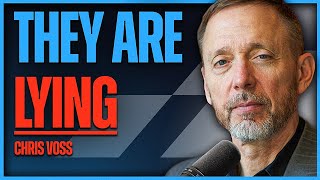
We had to be very careful about not making him feel forced. We make him feel forced, we're probably going to have to kill him. >> Chris Voss, master negotiator throughout his time as the chief crisis negotiator for the New York City division of the FBI and then as the lead international kidnapping negotiator. >> This concept wasn't getting people to say no. It's okay to say no. This Preserves people's autonomy. And I knew from hostage negotiation that people would die over their autonomy. No script performs 23% better. And their close rate went from 12% to 60%.
is your neurochemicals are going to be triggered by the tone of my voice before I finish my sentence. The secret to gaining the upper hand in a negotiation is giving the other side the illusion of control. And what they really want more than anything else, more than a deal. >> Chris, welcome to the show. Welcome Scottdale. Yeah, it's beautiful. >> All right, let's roll. So, I love the book. Probably a lot of our listeners, uh, wa people watching this have read the book. I want to know, and I'm not sure if anybody's ever asked you
this, like maybe they did in a different way, why did you write this book in the first place, and who did you write it for? >> Uh, well, um, I was I knew I needed a book at some point in time. Soon as I Got out of the bureau, >> Yeah. >> Um, and effectively, you know, private sector consultant, coach, >> everybody I talked to said, "Look, you got to have a book. Nobody's going to listen to you if uh you don't have a book. And if you don't have a book, why should I listen
to you? >> Yeah. >> But I wasn't ready to put one out right away. I wanted to make sure that we had A full system. Like my gut instinct was that uh emotional intelligence, if you will. >> Yeah. >> Applied emotional intelligence of hostage negotiators, we refer to now as tactical empathy. >> Yeah. >> Worked in every human interaction. >> But I needed proof of concept uh outside of my experience. >> Sure. So in teaching at Georgetown and At USC and at Harvard, I made the students and these were master's degree level students. These are
not undergrads. >> So that most of them were part-time, which means they had full-time jobs. >> Mh. >> And so to pass my course, you had to use my skills in your life. >> Okay. >> Whether it's Wall Street or whether it's at home with your wife negotiating over What kind of Christmas tree to get. >> Sure. Yeah. And so then we collected a bunch of proof of concept which the book is full of stuff from real life negotiations. It's contrasted to other hostage negotiators that came out. They just said here's what we did. >>
Yeah. >> Uh try it in your world. >> And it's a little bit too much of a leap to make. So we needed proof of concept and it took us a few years to put it Together and then found tall Ross, genius writer, genius writer for business books >> and the book has done really well since. >> Yeah, it's a great book. Uh I want to I want to talk a lot about uh you know getting the no that eventually leads to the yes. Uh we we call it different things with sales training. Uh and
I love that concept. You know are you against would it be completely unrealistic? Some different techniques Like that. >> Where did you actually learn that? Because I went to school to become either a psychologist or a psychiatrist. I went the psychologist route because you know I didn't want to go for eight more years. I'm like, you know, I'm like trying to figure out math and like my brain doesn't work that way. >> But it's very rare that, you know, somebody would even know how the brain functions to cause a prospect or anybody To feel, you
know, they're far more comfortable with the word no in a sales situation than they are with the word yes >> or even in life. >> They know where that leads to, right? Everybody knows that script or that frame, right? >> So, where where did you actually learn those techniques? because that's not really taught very >> Yeah. Well, you know, the first the First time that really got me rethinking the whole thing because I used to be yes is success >> and yes is agreement. And in point of fact, at best yes is only an aspiration.
>> Yeah. >> Like we don't even try to get agreement with yes. We try to get agreement with that's right. >> Yeah. >> That's what we're going for. >> But so then uh 20 roughly 2002 I'm Working kidnappings. I'm rolling in and out of airports always checking looking for books like you. I love to read >> and I see this book out of the corner of my eye on the shelf says start with no and I I I remember literally doing a double take going like start with no. I thought you were supposed to get
to yes. >> It's almost like a pattern erupt. >> Yeah. Absolutely. >> It is. Yeah. >> So I pick it up and I leave through it. Jim Camp who became a friend uh his concept wasn't getting people to say no. >> It was telling them it's okay to say no. >> Yeah. Okay. I see. >> And he said this preserves people's autonomy and people will die over their autonomy. Now, this is a business book >> and I knew from hostage negotiation that people would die over their autonomy. >> Yeah. >> And we had it all
the time. We had to be very careful about not making them feel Forced. >> Yeah. >> And then they'll come out. We make him feel forced, we're probably going to have to kill them. >> Yeah. >> So, um then I started sharing a book with all my hostage negotiators, you know, cuz I got to tame all over the world. I previously shared Getting to Yes with them. >> Yeah. >> And everybody's reaction to getting DS was always the same. >> This makes so much sense. >> Yeah. But that's all they would ever say. They wouldn't
say I made a deal because of it. >> It actually works. >> Yeah. No. No. Nobody like it intellectually. Yeah. It makes sense, but you can't apply it. >> Yeah. >> So, I'm sharing uh start with no. And One of my hostage negotiators says, you know, did I do this? And she actually asked, she was in a boss was mad at her, was going to remove her from the team, >> which was going to be uh it was a control oriented move. It was a bureaucratic guy who was jealous of her. And she says to
him, "Do you want the FBI to be embarrassed?" >> Which is a no-arranted question. >> And I can remember she's telling me the Story and and when she says this in my brain, like all my alarm bells are going off. I'm being horrified. Like that is so clearly manipulative. It's so obvious. >> I figure the next thing she's going to tell me this guy was screaming at her. >> Yeah. >> And instead, she said when she said that, "Do you want the FBI to be embarrassed?" He He relaxed. >> Yeah. He sat back in his
chair. He, you Know, this is steepling. >> It's what people do when they feel really good about themselves. >> Yeah. >> And he says, "No." >> Yeah. >> Now, this is a subordinate to a boss, which is a great test of whether or not a skill works. >> Can it work with someone who sees you as sees you in an inferior position? >> Mhm. >> That's the reality. >> Gives you situational status, raises your status. So if he doesn't blow up and then she follows up with uh a differential question. >> Yeah. >> What do
you want me to do? >> Yeah. >> And instead of arguing >> and what he needed was a restoration of the feeling of comfort and control. >> Yeah. >> And he says, "Well, you know, go back to the hostage negotiation team. It's all right." So he walked she walks into the office to get fired. >> Yeah. >> And she walks out intact. So, you know, we start to look at this and we at the time is me and my son Brandon, he's he used to teach alongside with me, Derek Gaunt, guy on my team. >>
Yeah. >> And we're fascinated by this. >> So, we decided to take it a step further. >> What if you get him to say no? Cuz there's an instance where somebody you got somebody to say no is a game changer. >> Yeah. >> So, we start to develop this and one of the students at Georgetown takes the ideas. >> Yeah. and he's working for a Republican fundraising committee in the second Obama election. >> And if they're if they're calling for money at night, it's yes, it's the yes momentum. It's a yes. Three yeses. Everybody learns
three yeses, ask for the money. >> It's so bad. >> And he changes the first question on their script from would from it used to be would you like to see the Republicans back in the White House in November >> to have you given up on taking the White House back in November. Ross a no no no no script side by side with the yes script no script performs 23% better >> very proud of himself bosses come in in the morning he wants to show them how he's improved their their approach >> and they say
never do that again >> yeah even though it works >> we don't do it that was a fluke when people most of the time people see something that's against their training >> you show them proof and they go you know That's the exception that proves the rule which is something I've never understood that there's no logic behind that >> and So, we began to just insert it into part of our overall approach. And >> yeah, >> one of the uh one of the entrepreneurs that came to a two-day training in Chicago just about a month
or so ago said the only thing he did, he measures everything. Every entrepreneur should be Measuring everything on their sales teams. >> Mhm. >> And they had their sales team switch from yes to no to close. >> Yeah. >> And their close rate went from 12% to 60%. >> And it's really how you you use it's how you say that. It's how you say that question. Like your tone, right? Tone >> because your tone is completely It could Be a monotone tone because if they're just like, "Are you are are you willing to let the
Democrats take back the the House?" Like, well, no, but it's not going to trigger much emotion, but like, are you are you going to let them take back the White House? Like a challenging tone. You're going to trigger a different emotion to get them. They say no, but it's more power. Well, no, I'm not going to let that happen. And now they're emotionally involved all in your Tone >> or or you know and that there's multiple ways and a challenging tone is a great tone >> because challenge in context you know challenging is often coaching
and people want to rise to the challenge and another one to say you know inquisitive just genuinely curious like are you are you willing to let him take back the wine? Yeah. It's almost like it's kind of like a curious slash you're Concerned. Like it's a concern tone. >> The concern tone, the tone that shows empathy is the game changer with sales and persuasion. You know, your tone is how the the person interprets your intention behind what you're saying and asking, >> right? It's crazy. >> Amen. >> Yeah. We're on the same page. So, like
I said, it it's like I said, it's very rare because, you know, I speak with I Have a lot of friends that are sales trainers that are, you know, and have different strategies than obviously we we would with my methodology. It's very rare hearing somebody talk about you need to understand how the human brain makes decisions to influence and persuade. Otherwise, you're like guessing. You're like throwing mud against the wall hoping something sticks. So in your in your mind why is under why would a salesperson why would A business owner why would anybody need to
understand the way the human mind works if they want to be like top at persuasion negotiation or anything why is that so important >> accelerate it's an acceleration >> um >> hey guys miner here a lot of you guys keep asking me really really good questions in the comments on how to sell more so the easiest way to actually get a hold of me is to actually text me way Faster so 484 418-6755. So text me 480418-6755 because here's the deal. I started this sales training company to help you finally master sales and persuasion once
and for all, which is I know what you want to do. So text me and then let's get back to the show. >> Hey, one of the companies we were training on a few years ago, they they'd already taught their people the only thing that affects deal timelines are Relationships. Mhm. >> So your communication style is either causing the timeline to be longer or shorter. >> Yeah. >> Usually longer inadvertently. >> The the yes thing >> makes the timeline longer. >> Triggering them to like delay and procrastinate because at the core of every human being,
we have all we all have a fear of change, right? So any Objection you get, any reason why a person delays, procrastinates, doesn't do something is because they have a fear of change. They might not like where they're at, but at least they know it and they're comfortable with it. They're uncomfortable being comfortable or they're comfortable being uncomfortable, but on the other side of change, they don't know what that looks like. >> The double unknown. >> Exactly. >> Yeah. >> So, it's with with your techniques about getting them to say no that leads. Yes. That's
a technique that gets them to kind of overcome that fear. It's a start, right? There's a lot more, but to help them overcome that fear of change so they can get to the other side >> or deactivate it. You know what I'm what we're really looking to do is deactivate it. And you know, you said objections are fear-based. >> And I tell I I tell people there's no such thing as an an objection. There's only fear. >> I agree 100%. So so much sales training, obviously you you've looked at it, is is all about like,
oh, we got to get better at objection handling. I'm like, you need to get better objection prevention because what causes a prospect to object about anything? It's uncertainty, right? If you're uncertain about something, you're not going to change. You don't Feel any urgency. So, when you talk about like sales cycles being longer, it's because sales people are triggering uncertainty in the brain and it causes the prospect to be uncertain. That's why they don't. >> Right. Right. Exactly. Yeah. >> I love that. So, let's talk about your company. You started the Black Swan Group back in
2008, which I love the name. Like, that is a brilliant name. It's like almost like a panorupt as Well. Um, can you give us an overview of the companies you help and kind of what problems you solve for them? >> Yeah, well, we help them all. I mean, I keep everybody says in business, you got to have a niche. You know, what's your ideal client look like? Our ideal client is is somebody who's curious and ambitious. >> Yeah. >> Um, now there's two importance. That's a psychographic versus a demographic. >> If you're ambitious, you're innovative.
>> Mhm. If you're competitive, you're not innovating. You're looking to perfect what you do. >> It's a good >> great the great contrast in the NFL, I think. >> And forgive everybody that doesn't follow the NFL, forgive me, but Kirk Cousins versus Patrick Mahomes. And and someday Kirk Cousins is going to walk into an office and say, "Stop picking on Me." >> Yeah. >> But Cousins is very competitive. >> Mhm. And I think a self admitted perfectionist. >> Yeah. You see that? >> So what happens? Cousins wins games. >> Yeah. >> Cousins will get you
into the playoffs because he's gotten several teams into the playoffs. >> Sure. >> He hasn't got a ring yet. >> That's valid. >> And I wouldn't be surprised if he gets a ring. >> Yeah. >> But he hasn't got one yet. And then also he's kind of famous like he'll have a a one or one a great game and then a horrible game. >> Yeah. or two great games and a horrible game. Now, what's that? A result as a Result of >> when you set a goal and you meet the goal, you tend to relax,
>> right? >> You quit. >> You you met the goal. I could chill. It's And it's a problem in human nature. >> Why do championship teams have trouble repeating? Well, they met the goal >> and and and they're not they're not working as hard afterwards. >> Yeah. >> And also, perfection is essentially a fool's errand, you know, to be the best. So, you're always unhappy >> and you don't realize it, but you're limited by your competition. >> If your goal is to be number one, >> then when you're number one, you could quit. You met
your goal. >> Yeah. >> Now, Mahomes, on the other hand, >> creative, innovative. He's not perfecting his throwing motion. Yeah. >> Ellie threw a pass behind the back the other day. >> He's trying different things nobody's done. >> He's all this and he's having a ball. >> Yeah. And he's he's always looking like his measure of of is not his competition. His measure is how did he do last game. He's got to do better. Yeah. >> And he's delighted and he's happy. >> And how many rings has he got so far? >> Was it is
it I know it's at least three. It's three or four. >> It might be four. But unless he gets hurt, >> it's three. Yeah. >> And you know they keep they Chiefs do a great job putting good players around him. >> Yeah. >> Like he's just going to keep getting ranked. So that's the difference between competitive ambitious >> ambition. You can never stop getting better and you love it. It's >> I think that's what I loved about Tom Brady. He was so ambitious because every week, you know, some quarterbacks in the NFL, you guys know
watching this, some quarterbacks in the NFL can do well against certain teams that run certain defensive schemes, but other teams that run different defensive schemes is like they're just not that good. But Brady, it didn't matter what the scheme was. Like he was always figuring out how to perfect his game against anything that was thrown at him. Yeah. Like literally. And it's like if they threw a different scheme at him within like the first five minutes, like halfway through the first quarter, he's already figured it out because he spent so much time studying be the
the the the team before he even strapped on it. He he said he's like, "Look, we we were winning the game in practice. >> That's when we won the game was in the week before practice. We didn't win the game on the field. We won it the week before." What are your thoughts about that? >> Yeah. And that's how much prep time are you willing to put in to get better? >> Yeah. >> Is the real issue. And that and that's the hard thing especially about negotiation. >> Negotiation is a perishable skill. >> Yeah. >>
So doing it Brady didn't win those championships by only playing in the games. >> Yeah. >> Um he believed in focusing on his craft, >> not in the game to get better. And a and a lot of people um if you don't take the time take time out to find a way to practice your negotiation, even if it's in your everyday interaction, your skills slip. >> Yeah. >> And a lot of people who want to take on negotiation course. >> Yeah. >> And then never pay any attention to whether or not they hung on to
the skills, let alone improved them. >> You got to rehearse that, >> right? Reverse it. Like if you're in a meeting with a board or you're negotiating something like you should be rehearsing that over and over and over For probably weeks before you get there. I always say with sales people or companies it's like well how much how much time are you putting in to really master right >> your tonality because I want you to imagine I always tell them like give me your favorite movie star you know somebody's like Leonardo DiCaprio. I'm like perfect
example. How much time do you really feel he puts into every role before he even gets on stage in that Part? He's hours a day because the the best actors and actresses, they actually become the character they're portraying in their almost real life. It's not like they're just like he's this guy and then he just gets on set and changes into, let's say, the Wolf on Wall Street. You know, he's starting to act and behave and do things and those patterns in his everyday life. So that's always tell sales people like you don't want to
like learn how to sell just when you get on The phone or in front of a prospect. You need to learn how to communicate like with anybody everywhere, >> right? >> What are your Yeah. >> Yeah. Well, you got to stay sharp. >> Yeah. >> And and there's certain intentional practice >> and then, you know, should I choose to engage with a lift driver, >> you know, trying to open them up. >> Yeah. >> You know, somebody at the airport, somebody behind the counter, anywhere. >> Mhm. because I got to stay sharp. Yeah. And and
not that long ago, like I practiced on the TSA, guys. >> Did you all Let's hear the story. I'd like to hear what' you do. What happened? >> Well, in this in this particular instance, you know, you got to practice doing a read. You know, we call it a Cold read. You got a pretty good idea somebody's where somebody's head's at just by looking at them. >> Yeah. And I'm rolling through TSA and I realize that, you know, I hadn't really, you know, dusted off my skills and and I see this guy. He's waiting for
my bag to come out and I look at him. He's got kind of a bland look on his face. But what I do is I read him incorrectly. >> Yeah. >> Which is one of the things that's great about practice cuz there's there's no penalty for a wrong answer. Most people are afraid of getting penalized for a wrong answer. So I look at this guy, I go, "Tough day." And he's kind of like, "No." And I go, "Now I'm down." And I go, "Just another day, right?" >> Yeah. >> And he goes, "Yeah, just another
day." So I grab my bag, but with that little Bit of practice, 5 minutes later, I'm in the middle of a very important phone call. >> Mhm. >> I don't normally take calls at the airport. >> If if I get on the phone with you, I want you to get my 100% attention. I don't take calls when I'm driving. >> I don't take them at the airport. >> Yeah. >> I'm disgusted by these guys that talk on The phone in a bathroom. Like, I can't imagine that. Like, how does a person on the phone not
hear that flushing in the background and not know where you are? That's just rude, >> right? Yeah. >> But this guy was a good friend and very hard to get on the phone. So, I I'm in I'm in the airport. I got to take this call. >> I'm reacting in the call because I just sharpened my skills back up just a few Moments before. >> Yeah. >> And so, I'm doing that all the time. I'm reading people. I'm reacting with them. I'm trying to draw them out. Yeah. >> Get stuff out of them that nobody
else has gotten. So when you were FBI negotiator uh because I you know third principle of my methodology NPQ neuro emotional persuasion questioning I always say listen to what the prospect means >> not just what they say >> right >> so when you were negotiating with terrorists how did you learn how to read their tone to really understand if they were what they meant not just what they were saying? Well, human nature, >> there are a number of things that are predictable upfront. >> Yeah. >> It doesn't matter the circumstances. >> People make decisions and
react based on How this is affecting their identity. >> Yeah. >> And how it's affecting their future. >> Mhm. >> And then if they're in a given in a given set of circumstances, uh the the decision journey is >> a slow escalation. >> Mhm. You're going to try to acco if you try to accomplish something via violence, you've been trying to accomplish it nonviolently leading up to That. >> Sure. >> So, if I'm talking to a bad guy on a phone, what do I know? >> Yeah. >> I know he's been struggling with this problem
for a while. >> Yeah. >> And I know he's tried to solve it other ways. >> So, that'll be the clues in advance that I'm looking for, >> right? >> I know he's going to be driven by a sense of loss. I know he's going to be thinking about what his future holds. >> Yeah. >> I know he's going to have an evaluation of what he's doing right now. >> You're looking for patterns. >> Looking for patterns. And many of them are predictable because people make decisions >> the same way no matter what the Circumstances
are. So, you know, I I'll say to a bad guy, um, sounds like you've been struggling with this for a long time. And they'll respond. >> Everybody hear his tone there. Why is your tone right there with that concern tone, empathy, so important when you're talking to that bad guy? >> Because people that because of neuroscience >> and neurochemicals >> and your neurochemicals are going to be Triggered by the tone of my voice before I finish my sentence. >> Yeah. >> And I know what those neurochemicals neurochemicals are going to do. The old phrase, emotions
are contagious. >> Yeah. >> That's not psychology. That's neuroscience. >> So I can change the speed that your brain is operating >> and the uh mood >> at will. >> Yeah. >> Now you can fight it. >> Yeah. >> Like I can try to get you to smile. That's why people smile back because it's a neurochemical response. >> Sure. >> Now you might fight the smile, but that doesn't stop me from starting the process in your brain. >> You're taking them out of a frame. Yeah. >> Out of a way of thinking into a new
way of thinking >> based on neurochemicals. >> Yeah. >> And so the calming soothing voice triggers chemicals that calm you down. >> You're disarming them. >> Yes. >> Getting them to let their guard down. It's just like if you're in sales, if you are, let's say, you start a cold call and you're either like super super Excited like a no pun intended used car salesperson, which we love you. We train a lot of you. You're crushing it. >> And we want you too timid. like you're uncertain, you're triggering fight or flight, right? So, in a
terrorist, I'm assuming it's it's the same thing as, you know, if you're a psychologist with a patient, you can tri you have to trigger them to get them to let their you have to >> cause them to let their guard down Because if they don't let their guard down, they won't emotionally open up >> and they can't hear you. >> They can't hear you. Yeah. >> Yeah. >> I like that. Tone is so important. We're going to talk more about tonality. What What are your thoughts about NLP? I I haven't really studied it, but those
that have are frequently telling me there's a lot of overlap in what we talk about, which makes sense because great Communication in human beings is going to have overlap. >> Yeah. >> So, what little I'm familiar with, you know, there's there's a lot of overlap. >> Yeah, there is for sure. Uh, and you know, just mention framing for a second. Now, I might call you might call it something different than I would call it. So, NLP talks a lot about framing, but NLP like didn't invent that term, right? It's it's been around actually From Jesus
sigman Freud talked about but so every as a psychologist or a psychiatrist every patient or every human being and in the world has a certain way of thinking right they call it a frame that's and it's your worldview based on how you're raised as a kid you know usually from the ages like four to 13 you're influenced heavily by your parents your your aunts your uncles people you're around now if you're a kid on TikTok you're influenced By influencers you So you have a worldview based on that condition. That is your frame. >> So let's
say a prospect's frame might be like, well, I always believe that I'm never going to make a decision on the spot. I'm just making something up. That could be their way of thinking. Like I don't make decisions on the spot because of something bad happened in the past where they made a bad decision and it didn't work out, right? That could be a Negotiation, too. So it's like you as the persuader, how do you take them out of that frame or way of thinking? We call that deframing them. How do we take them out of
that frame? We're deframing them out of that frame. And then you probably heard this. We're reframing them into a new way of thinking or a new frame. Now, when you were negotiating with terrorists, I'm assuming you're doing the same thing that a way of thinking or a frame and you are getting Them out of that way of thinking and reframing them into a new way of thinking. Well, frequently if if there's a change in uh frame, so to speak, perspective, it's going to be there's going to be difference between short-term and long term. >> Yeah.
>> And so if I want to have influence on how they're seeing things, that's the purpose of empathy, tactical empathy. >> Yeah. >> I want to get inside of their brain with their permission, >> you know, that's rapport. Demonstrating understanding, not agreeing. >> Yeah. >> Demonstrating understanding. So when I when I'm when I'm in there in inside behind the defenses with permission >> Mhm. >> then I can find a way to try to get them to think about it in a new way. >> Yeah. >> Which is usually uh I ask questions not to get
answers. >> Yeah. >> I ask questions to trigger thinking. >> Yeah. >> Now, if I want answers, I'm not going to ask a question. I'm going to I'm going to come at you with a completely different um communication skill. >> I'm assuming you're probably getting the terrorist to question their way of Thinking. that might have got them into the situation. Not at the beginning. >> No, not really. Because I'm not gonna ask them to change their values. I'm gonna ask them to change uh that the out the different outcome can still fit their values. >>
Could you maybe do that once you built more trust and credibility? You wouldn't do that at the beginning. They don't trust you yet. But once they are bought in that you care about them, that you're You understand them. >> Yeah. Well, interesting words. There's difference between understand and caring. >> Yeah. Um, >> talk about that. I think everybody liked to know. I think it's good. >> Yeah. Well, I can understand, you know, as a hostage negotiator, I can understand you. I mean, in in a larger term, >> you know, unless you're serial killer or A
serial evil person, >> yeah, >> I'm I'm going to care about you in point of fact. I don't want bad things to happen to you, even if you're making really bad decisions right now. Mhm. >> Uh but I but it's more important to me cuz I know the neurochemicals that are get triggered if you feel understood by me. >> Yeah. >> Uh Steven Cutotler, friend of mine, Brilliant writer is he says empathy is about the transmission of information. Compassion is the reaction to that transmission. >> That's good. So, I'm going to I'm going to transmit
information and you'll probably re react in a way where at a bare minimum you're going to feel heard and respected and you're going to want to continue to talk. >> Yeah. >> Now, at that point in time, what I'm Going to talk with you about is in larger terms, is there is there a better way to accomplish what you're trying to get done? >> Yeah. >> And what you're trying to get done is uh secure a better future for yourself in your life. >> Yeah. >> Or get away from the current problems. Mhm. >> And
so, u I might ask, well, you know, If if this goes the way you're taking it right now, and it'll be more complicated than this, how I would lay it out, >> but what are the what are the consequences of what you're doing right now versus consequences of long term? >> Yeah. >> Is essentially what's going to come down to. >> Yeah. And right there, you're getting them to question that way of thinking because now you're you're getting them To see what the consequences are if they continue down this path. >> Yeah. That we're problem
solving. >> Yeah. Exactly. That's good. What would you say? This is not something I was going to ask you. It just came to my mind. So, you know, you have the the new president now coming in, President Trump. Uh you've got these countries like Iran and and these other countries maybe, you know, that maybe don't like the US or whatever. What would you say Is whether it was pres President Trump coming in or the you know the former president Biden how do you feel about the way the US talks about like Russia or Iran and
and how do you feel they view us? Why why do you think there's that conflict there where they can't understand each other? >> Um so I tend to vote more Republican than Democrat. >> Sure. But, you know, Trump is even a Little bit different, a different breed because American politicians have typically specialized in telling other countries they're wrong. >> Yeah. All the time. >> There's an accusation we're either imperialistic in in a military sense or culturally imperialistic. Yeah. >> You're wrong. >> Yeah. We call Putin like the dictator or whatever, >> you know, or whatever
we call him. >> There's a there's a complete lack of understanding, not agreement. you know, uh, the second Iraq war, >> which I thought was one of the worst decisions in the history of American foreign policy. >> Yeah. >> But, you know, President Bush, I voted for Bush, essentially a Republican, mostly in support of the policies. He says, "This is my opportunity. This is opportunity to bring democracy to the Middle East." So what you just said to every Middle Eastern country that you're hoping for cooperation with, we want to replace your leadership >> cuz none
of them had democracies. >> So there's going to be some obviously, >> you know, you want the Saudis to give us air bases and simultaneously we're telling them we want them to replace their government. >> We don't realize that's what we're Saying, but that's what they're hearing. >> Yeah. to his to his credit under under the Abraham Accords under Trump which was you know uh his son-in-law Jared great interview on Le Freriedman about it >> okay >> um you know at at at Donald's direction but Jared's implementing >> so his approach is all right to
get to the table here the agreement is everybody gets to keep their job >> so this the first time America is not saying we want to replace your government >> leaders yeah >> and and now the other side Yeah. Oh, I get to keep my job. >> Yeah. >> That's the price of admission. Table stakes. Yeah. >> I'm stepping up. >> Yeah. So, they started a meeting at the table. >> Yeah. And and now now they're talking about it. And >> you know the flip side as supporters of Hamas and Hezbollah, >> you know, I've
heard them say, "Well, we were never given a seat at the table. >> You never agreed to the table stakes. M >> you are keep telling the Israelis >> Mhm. >> that they have to lose their jobs. >> And your excuse is Israelis are telling you the same thing. That's why we can't Say >> right. >> But look, you didn't. All you got to do is agree that if you negotiate with me, you can keep your job. >> Yeah. >> And that's why the Abraham Accords are a spectacular agreement. Nothing before it. No, no foreign
policy agreements in my time. And I've watched a lot of presidents. >> Yeah. You know, I'm on in my old job, my Name was being mentioned at the White House a lot. >> Yeah. >> So, I've seen I've seen him operate and and and from a empathy tactical empathy point of view, I'm not going to talk to a bad guy and say, "Oh, by the way, if you if we make a deal with you, I'm going to lock you up." That's not how I open my conversation. >> I think a lot of it is just
because of politics in general. They're so used to Attacking each other. Like, we're right. We're right, you're wrong. Like you're 100% wrong. We're 100% right. That when they go in and you know, let's say somebody does something over there, like Russia starts to invade Ukraine or whatever, there's a lot of behind that. It's like they're evil, they're wrong. >> And then demonizing the other side. >> It just triggers the other side to be like, "Well, they're evil. They're wrong." You know, like nobody thinks They're the evil per the evil government. Like everybody thinks they're the
great government, you know? >> They're all patriots of their own country. >> Yeah. in point of fact or at least in their mind. >> Yeah. And that's I think it's where it's it's the empathy, you know, it's trying to understand where they're coming from. You don't have to agree with them, but if they feel like you're trying to Understand their side, automatically it draws them in to try to understand your side. >> Changes the game. >> Changes the ball game. Uh let's Okay, a couple more questions here. So, A type personalities, let's talk about A
type CEOs, right? That let's say they're aggressive. you start having a conversation with them, uh, they're aggressive, they put you on the spot. What would be maybe a technique or a Tactic or something you could say or maybe you've had a a client that you train to do something, a certain situation that kind of maybe got that a type to let their guard down a little bit. >> Well, uh, typically, you know, they're looking to establish control. >> Yeah. >> And if they're not aggressive, if they're not attacking, they feel out of control. >> Yeah.
>> So, you know, it does you no good. You don't, you know, firemen do not go to houses with flamethrowers, >> right? Yeah. >> So, fighting fire with fire is not a smart move. >> Yeah. >> And if I'm going to get an aggressive guy to relax. >> Yeah. >> I love deference. There's great power in Deference. The secret to gaining the upper hand in a negotiation is giving the other side the illusion of control. That phrase is specifically designed to go with the A type. >> Yeah. Because if they feel in control >> and
what they really want more than anything else, more than a deal >> Mhm. >> to be respected and heard. >> Yeah. >> So if I respect them and feel them make Them feel heard, >> that's immediately a different conversation. >> Yeah. >> It's all about disarming them, too. It's like, right, >> you know, if you sit in a boardroom, there's eight people in there. is I I've learned this in in one of my corporate careers in in B2B enterprise sales that let's say they come in and you come in like you know they're like hey
how you Doing today most like oh I'm doing great I'm really excited to be here thanks for the opportunity and it just sounds like everybody else >> but if I walk in and I use like a playful tone and I'm like oh you know just trying to stay out of trouble what about you guys are you get in trouble today just a little playful tone like oh they just chuckle and they laugh right >> dopamine's released in their brain they start to let their guard down. You know, It's just little disarming techniques here and there.
Playful tone. And I love the playful tone. Or if you get on a Zoom call like, "How you doing?" If they the prospect ask you, "How you doing today?" "Oh, you know, I'm just hanging out being boring. What about you?" "Oh, I'm sure you're not boring." Guard comes down. It's just playful tone. It's all It's like everything everything with a human being, the way they view you really is your tone and your body Language, >> right? >> You know, it's crazy. >> Where did you Where did you learn those techniques? cuz most people don't know
those techniques unless somebody's like, "We're not born with those." Where did you really learn? >> Well, everything's learned. So, you know, it first started the late night FM DJ Voice. >> Yeah, that's good. Yeah. >> You know, I first started on on the suicide crisis hotline that I volunteered, you know, last century. >> Yeah. >> And then like I like to learn like if some if somebody shows me something really interesting and they achieved a completely different outcome than what I expected, >> Yeah. I'm like, "Oh, that was interesting." And so I get exposed to
great Communicators along the way. And then and then I try what they're doing and and you know, I'm constantly testing and learning. So >> I I love I love the people that do stuff where everybody else says, "I have no idea how that happened." >> Right. >> So what does that mean? That means they didn't bully anybody. >> Yeah. You know, in law enforcement, it was always like, you want somebody to Cooperate, you got to have a hammer, you know, and then I'd work with agents that got people to cooperate and never had a hammer.
>> Yeah. >> And I'm like, and everybody go like, yeah, you know, I don't know how he got that guy to cooperate. >> So, you know, it was it was emotional intelligence. And so, what does that mean as a user? >> There are never these celebratory Moments. >> They're just incredible effectiveness. >> Yeah. And when you got to see people work magic where you failed before and it was it was subtle and it was quiet >> and everybody had great regard for them. >> And I always watched out for guys that did stuff like that.
>> Yeah. Just learned from what they did. It's I'm assuming what they did is they just got really good at disarming the pro the the the bad guy where the bad Guy let their guard down, became more open because that's the first part, right? If you're forcing, you're typically triggering resistance, right? When you force, when you push, you you get pushed back. It's resistance. So fight or flight in the brain. So survival part of the brain, as you know. So any type of sales call or any type of bad guy or whatever, if you're going
and trying to force or posture, you're typically going to trigger sales Resistance most of the time. Yeah. >> Or some type of resistance. What are your thoughts about sales training that talks about how you need to read personalities to make sales? Uh well um much of it is over complicated. >> Uh you do need you need to read emotions first. >> Yeah. >> Because yeah personalities and a lot of the stuff Just so way over complicates things. They're just real basics in humans and it it it doesn't matter their personality, gender, ethnicity, geography, nothing. >>
Um there's a school of thought out there that I haven't seen anybody contradict. They're adjusting that you're born with five basic emotions as a human being. >> And I think they're anger, fear, disgust, sadness, and joy. >> Original equipment. >> Doesn't matter gender, ethnicity, religion, geography, nothing. So that's what you need to start to read. And then the other stuff that you're talking about, how people interact with the world then triggers subsequent feelings. Mhm. >> I used to think the distinction between emotions and feelings was academic, useless, mumbo, jumbo. >> Yeah. >> Now, I appreciate
the difference because You're born with five emotions. >> Mhm. >> So, number one, uh, everybody's got that original equipment. You want to read that. >> Yeah. >> Number two, the important thing about that is of if those are the five, four out of five are negative. >> Mhm. >> So, people are driven largely by negative emotions. And so if you're Focusing on the positive only, >> then you're leaving all these great tools of influence off the table. Yeah. >> Which is why timelines are much longer in building relationships. >> Yeah. Very true. >> So how
do you navigate the the the negatives? How do how do you deactivate them? >> Mhm. >> Um and if you read that, You don't need to worry about personalities. >> Yeah. I I think trying to read personalities in sales, especially for new sales people, is almost impossible because it's like you're trying to like there's seven different personalities or five or whatever book they've read and within a five minute conversation on the phone, they're trying to, >> you know, is this a person this or that. It's it's you can't duplicate that in a Company. You might
have a few salespeople that eventually learn that. Most can't. If you focus more on what you're talking about about reading their tone, right, or you know, uh, listening for patterns or, you know, if you're in person or virtually, you know, looking at their body language, that's going to tell you far more in my mind, uh, than their personality because I I believe like if you ask the right questions at the right time with the right tone, the Context, right, of the tone, because you're not going to have a challenging tone in the first two minutes
of a conversation where you don't have much trust cluster uh uh credibility, right? Uh it's more of a curious tone, you know, and if they say something, let's say if I'm selling life insurance, you know, I don't know if you've ever heard this, but life insurance is a big space for us is our probably the biggest industry trend in the world. And a lot Of life insurance sales people will say like, "Well, what what caused you to to look at a life insurance policy?" And the prospect like, "Well, my, you know, aunt just died." And
most sales people that sell lunch like, "Oh, I'm sorry to hear that." Now, let me ask you. And it's just like, >> right, >> what what do you you know, you might have had a salesperson where you said something that was really bad that Happened to you and they're like, "Oh, I'm sorry to hear that." And they just go to the next question. What's the first thing in your mind? >> You're not listening to them. >> You're not listening. You don't give a about me. So, instantly your guards up, right, >> salesperson. So, instead like,
"Oh, what what actually happened?" >> Your tone, concerned tone, you empathy. Oh, well, he died of this, blah, blah. Oh gosh, did did their family have a policy or what happened to the family? And you're just probing, right? But the prospect on the internet feels like, wow, they care like and then that trust, that bond starts to form, you know, just by shifting your tone. But if I'm like, oh, well, what actually happened? >> Doesn't do anything because that tone's kind of like just in your face. It's like monotone, you know? >> Okay, so a
couple more questions here. So, uh, what's it? I always pronounce his name. Have him on the podcast. couple weeks. Uh it's uh it's Robert called >> Chaldini. >> Chald Deini. Yeah, he's on here in a couple weeks. In his book, Persuasion talks a lot about social persuasion. What are some really good tips that maybe salespeople can do to maybe increase their social persuasion for business? >> Um just generally across the board, >> um it's combination of two things. And uh I heard a stat a long time ago that I believe in is you're six times
more likely to make a deal with somebody you like. >> So how likable are you? >> And a lot of that has to do with is your energy putting people off? Are you too aggressive? >> Yeah. >> Um how much you smile? >> Uh how much you let people talk? And then to the point you were making a moment ago, >> what evidence are you giving them that you listened? Yeah. >> Like you might have listened. >> Yeah. >> But if you don't give any evidence that you did >> Yeah. >> then they're not going
to know. >> Yeah. >> So you if you when you're genuinely interested in somebody, interesting people are interested. >> Yeah. >> You you take the time to find out about people. >> So almost some of the cliche stuff >> that mom was trying to get through our head when we were little. >> Yeah. and and in point of fact and then then that starts to accelerate you >> among the people that are not taking the time to do that. >> Do you feel like there's a difference between liking someone and trusting someone? >> Yeah. Because
there are a lot of people that you like that you don't trust. Trust is about predictability. >> Uh and I can I can remember particular uh when I was on a FBI NYPD joint terrorist task force in New York City. >> Yeah. There was one particular sergeant that all the detectives liked and none of them trusted him >> to. Yeah, they might liked him because maybe like he's a cool guy going to go to the game, have a beer like my best friend, but they might not have trusted that he could get his job done.
>> They were he was fun to hang around with, but you know, also >> yeah, >> you know, would he protect them if they Made a mistake? Is he going to bury him or is he going to look out for him? It's the same concept because and and I love uh who said it people buy from people they know like and trust. I agree with that just in a different ses misinterpret who who said that what's his name? >> How to win friends and influence. >> Oh uh you know yeah that would be >> have
an emot right >> Carnegie. Yeah. Yeah. Exactly. Yeah. I Think my sales people misinterpret what that means because they feel like oh I got to get the prospect to like me. So they talk about, "Oh, you went here." They see a picture in the office. Oh, I I love to fish or, you know, I love to do this or like they're they're trying to like get the prospect to like them. But most prospects see through that. They feel like it's fake. >> I would say people buy from people they trust can get them the best
result. They Don't necessarily buy just because they like you. To me, those are two very different things. >> Yeah, I would agree. So let's say like I'll give you an examp I always give the example like okay let's say that you somebody comes up to you and wants to start a business with you. Let's say it's President Obama. President Obama comes wants to start a business with you. You're like ah you know I'm not really sure. Then President Trump comes To you. You might not like Trump but you might trust that he if he started
business with you that it would be better than Obama. You might like Obama better and want to hang out with him because you like him. You want to go to the game with him. He's cool. He's got all the celebrities, but you might trust Trump more in a business setting than Obama even though you like Obama more. >> Right. Right. Right. >> You see what I'm saying? >> Yeah. Yeah. Yeah. It's always what Well, you know, what do we know? I heard that Trump doesn't doesn't drink at all. We know Obama at least crack a
beer every now and then. So, I might have a beer with Obama, but I go to work with Trump. >> Exactly. You might Hey, I want to go to the game. He's Obama's awesome. And I would say that be like I want to hang out with probably a lot of fun at a game, right? >> Celebrities fun. He's awesome. But if They both came with a business idea, I might trust Trump could get a better result even though maybe I liked Obama way better. Right? >> And I think a lot of sales people just have
that misalign. Trust is built by the quality of questions you ask that get that person to really think through and internalize their situation and how you use your tone that gets them to let their guard down emotionally open up. That's how they bond and trust that you Can get the best result because they because you're able to like take you know how sales people they'll follow a script. Right. Right. >> And the prospect will say something and they'll just ask the next question on the script and the prospect's kind of like I I just answered
that or I just I I just already told you because most sales people don't know how to take the data or the information the prospect's giving them and then tweak the next Question on the fly >> where the prospect feels like, oh, >> he or she gets me. like they understand my situation the most. And I always say when probably negotiating too or in sales, when that person or company feels like you understand their situation the most, they trust you can get them the best result. Yeah. All right. Uh where do you want to take
your company? Where do you want to go with Black Swan? >> We just want to keep coaching and Training like at all levels >> and uh globally. >> Yeah. >> Um the book is uh works in every country on earth. it. And why does it work in every country? Because a lot of people like, well, you know, with any type of negotiation or sales train like, oh, well, my country is different. You don't understand people in London, they're more skeptical. Or, you know, you don't understand people over here in, you Know, Norway, they just don't
think like Americans or, oh, you don't understand people in Argentina, they're just different. What would you say to those people? >> Well, you're born with five emotions. Yeah. >> No matter who you who you are. >> Yeah. >> Number one. Number two, the neurochemistry in your brain reacts the same. >> Yeah. >> No matter who you are, where you are. >> Yeah. >> And if you understand those two things, >> and empathy is really about respecting where the other side's coming from. >> Yeah. >> So, I'm going to respect where a Norwegian's coming from. Yeah.
>> I'm going to show them that I understand and respect them by feeding it back. A Norwegian, a German, an Italian. >> It doesn't make it a Russian, Ukrainian, um you know, Palestinian. >> Yeah. >> They're all human. They're you're selling. >> They want you to know >> Yeah. >> where they're coming from. And how how do you know the only way you can demonstrate it is repeating it back to them. >> Yeah. >> And everybody reacts the same. >> Yeah. It's it's just human behavior 101. Like if you sell to humans, what Chris is
talking about will work because you're selling to humans. >> It's just human nature. Uh Chris, where can they go to learn more about you? Maybe maybe they're a CEO wanting to bring your company in to teach better negotiation communication skills. Maybe they're an individual salesperson. Where do they go to learn more about what you Do? >> Blackswanltd.com is a website. blanltd.com. >> Okay. >> Now, we get you uh we got a lot of free stuff. We got a uh a newsletter that comes out uh negotiation mastery at Tuesday mornings, actionable, concise. You can choose to
sign up for that. >> Yeah. Okay. There's a bunch of stuff you can download. >> At some point in time when you're Starting to get better, >> we do coaching, in-person coaching. >> Okay. >> We coach people on on deals. You know, it's not cheap. >> You sure? What's the biggest deal you help coach through that a client has won? >> Uh $300 million. >> $300 million. Probably worth the funding that they invested in your training to get the $300 million deal. >> Yeah. Yeah. So, at some point in time, you're going to need the
live training. You know, any anytime you go and focus on something for two days, you make a quantum leap in your abilities. >> I agree. >> And we've got a in March, right on uh St. Patrick's Day, we got a two-day >> uh inerson live training we're doing in Louisville, Kentucky. >> Okay, good. All right. So, we're going to have his uh website in the show Notes. Go there, check out Chris. I can assure you, you're going to learn things from his training materials that will help you negotiate more, sell more, persuade more. Chris, thanks
for being on the show today. Thanks, my friend. Appreciate it. >> Anytime.