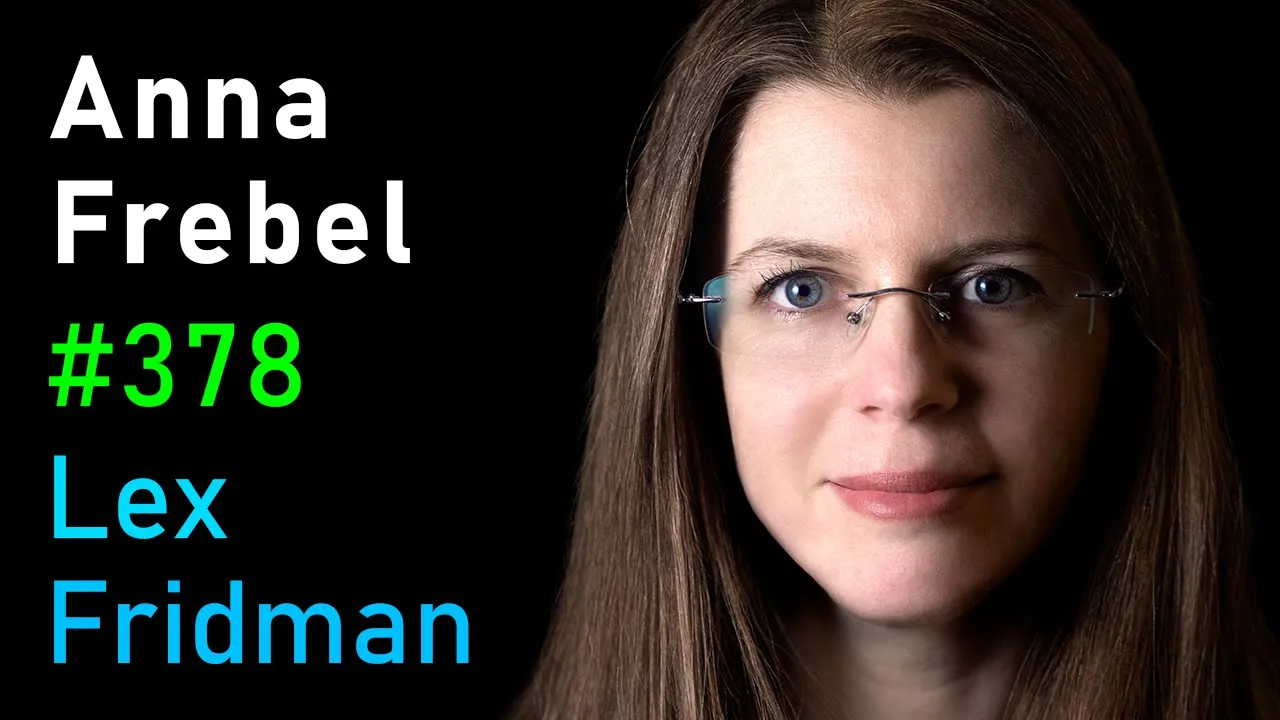
I would run outside and just lay on the ground under the southern Milky Way beautiful right up there and I would just lay there like the snow angel and just kind of let my thoughts sort of pass through my brain and this is when I personally have the feeling that I'm a part of it I I belong here rather than feeling kind of small yes I'm small but there are many other small things and lots of small things make one big hole The following is a conversation with Anna for about an astrophysicist at MIT studying
the oldest stars in the Milky Way galaxy in order to understand the chemical and physical conditions of the early universe and how from that our galaxy formed and evolved to what it is today the place we humans call home this is the Lex Friedman podcast to support it please check out our sponsors in the description and now dear friends here's Anna for Belle Let's go back to the early days what did the formation of the Milky Way galaxy look like or maybe we want to start even before that what did the formation of the universe
look like well we scientists believe there was the Big Bang some big beginning but what is important for my work and I think that's what we're going to talk about is what kind of elements were present at that time so the Big Bang left a universe behind That was made of just hydrogen and helium and tiny little sprinkles of lithium and that was pretty much it and as it turns out it's actually quite hard to make stars or any structure from that that's fairly hot gas and so the very first stars that formed prior to
to any galaxies were very massive stars big stars 100 times the mass of the Sun and they were made from just hydrogen and helium so big stars Explode pretty fast after a few million years only that's very short on Cosmic time scales and in their explosions they provided the first heavier elements to the universe because in that course All Stars fuse lighter elements like hydrogen helium into heavier ones and then that goes all the way up to iron and then all that material gets ejected in these massive Supernova explosions and that marked a really Really
important transition in the universe because after that first explosion it was no longer chemically pristine and that's at the stage for everything else to happen including us here talking today so what do you mean by pristine so there's a whole uh complex soup of elements now as opposed to just hydrogen helium and a little bit of lithium yeah so after the big bang just hydrogen and helium we Don't really need to talk too much about lithium because the amount was so small um and after these very first stars formed and exploded they and the heavier
elements like carbon oxygen magnesium iron all of that stuff was was suddenly present in the gas clouds tiny amounts only very tiny amounts but and that actually helped especially the carbon and the oxygen to to make the gas cool these atoms are more complicated than hydrogen that's just a proton and So it has cooling properties can send out photons outside of the gas cloud so the gas can cool and when you have gas that that gets colder and colder you can make smaller and smaller Stars so you can fragment it and Clump it and turn
it into stars like like the sun and the cool thing about that is that when you have small stars like the sun they have a really long lifetime so those first low masters that formed back then are still observable today That is actually what I do I try to find these early survivors because they tell us what the gas looked like back then they have preserved that composition of these early gas cloud the chemical compositions until today so I don't need to look very far into the universe to study all the beginnings I can just
chemically analyze the older stars and it's like unpacking everything that that happened back then it's very exciting so To just reiterate so in the very early days in the first few million years there's giant Stars that's mostly hydrogen helium then they exploded in these Supernova explosions and then they made these clumps yeah so the first one is pristine non-pristine clumps yeah pretty much fun so it took a few hundred million years for the first stars to emerge and then they exploded after a few million years Kaboom and then it's like I always Consider the universe
like a you know a nice soup and then these first Supernova explosions kind of provided the salt you know just a little sprinkle of heavier elements and that made it really tasty it's just changed it completely right and that changed the physics of the gas so that meant that these these gas clouds that were you know surrounding the the Forma first Stars they could now cool down and Clump and form the next generation of stars that now included Also little stars and as I just mentioned the small stars have these really long lifetimes the sun
has a lifetime of 10 billion years any star that is even less massive will have an even longer lifetime so that gives us a chance to to still observe some of the stats that form back then so we are testing the the conditions of chemical and physical conditions of the early Universe even before the Galaxy formed so what's the Timeline that we're talking about what is the age of the universe and what is the earliest time we got those salty delicious soup Clump soups with heavier elements well the universe is 13.8 billion years old well
legitly yeah when I was in high school the universe was 20 billion years old yeah so the estimate did you change do you think that estimate will evolve in interesting ways or no is that is it I think it's Mostly converged yes because the techniques are very different now much more precise the whole business of precision cosmology by mapping out the cosmic microf background you know that that's a marvelous feat um maybe you know the digits will still move around a little bit but that's all right plus the gravitational waves and all that all the
different sources of data yeah kind of mapping out this detailed picture of the early Universe Yeah totally and so we think the earliest little stars formed I don't know maybe half a billion years after the big bang right again a few hundred million years for the first stars to emerge and then you know took some time so give or take half a billion years and um that was the time when sort of the very first pro photo galaxies formed early Stella structures Stella systems from which the Milky Way eventually formed right so it was the
Mickey was Probably a bigger slightly bigger one and we know today that galaxies grow hierarchically which means they eat their smaller neighbors so if you're the bigger one and have a few a few friends around you're just gonna um eat them absorb them and then you grow bigger and um so all these these little early Stars you know kind of came into the Mickey way through that kind of process and that's why we find them in the outer Parts of the Galaxy today because they're just kind of deaf and just left there since so the
old stuff is on the outskirts of the Galaxy and the new stuff is in closer to the middle is there broadly speaking okay yes because that's where you would look for it so maybe it's just a step back like what is a Galaxy what is the part of the Galaxy I love that question so the Galaxy is um assembly of Stars the Milky Way contains something like 200 to 400 billion stars and most of the material and the stars are in the disk and when we look at the night sky what we see as The
Milky Way band on the sky that is actually the it more the inner the next inner spiral arm because we actually live in a spiral this galaxies are the Mickey who has a spiral disc Galaxy um and we're looking um actually depends a little bit in the Northern hemisphere we're looking out of the Galaxy so we're seeing the next outer spiral arm and as you can imagine there's only dark space behind that so we don't see it all that nice on the sky but if you travel to South uh to the southern hemisphere let's say
South America you see the make you and it looks so different on the sky because that's the next inner spiral arm and that's backlit by the galactic center The galactic center is is a very big puffy you know region of gas there's a lot of star formation that the galactic party is happening there so it's very bright and it it makes for this very beautiful Milky Way on the night sky that we see so actually if you if you ever get the chance to experience that I encourage you to almost like close your eyes while
seeing this and imagining that you're sitting in this kind of disc in this Pancake and you're just kind of looking right into it and you can you can really feel that we're in this 2D disc and then you can imagine that there's a top and the bottom and that that we really part of the Galaxy you can really experience that we're just not not just lost in space somewhere but we're really a part of it and you know knowing a little bit about the structure of the Mickey wear really helps do you feel small when
you think about that when you Look on that spiral on the inside of the Milky Way and then you look out to the outside like how are we supposed to feel I I don't know I I don't feel small necessarily I feel in awe and I feel I'm a part of it because I can really feel that I'm a part of it um I think for many people they think like oh that's just the planet and then there's nothing and that's almost a little bit sad but that's really not the case right because There's there's
so much more and I really like to imagine wow I'm I'm sitting in this big Galactic Merry-Go-Round and we're going around the center and I can see the center above me right and I can almost feel like we're going going there um of course we can't really feel that but the sun does Circle the galactic center but there's a kind of sadness to like looking pictures of a nice vacation place All we get is that light and old light is do you feel like sad that we don't get to travel or you and I will
not get to travel there and maybe humans will never get to travel there yeah I always wanted to travel to space and see the Earth and other things from from up there there's there's certainly that but I don't know it's it's also okay it would just be at our vantage point and and see it from from here with the sensors with the telescopes that we have And explore the possibilities yeah I mean there is a kind of wander to the mystery of it all what what's out there what interesting things that we can't possibly imagine
you know there could be all kinds of life forms bacteria all this kind of stuff I tend to believe that um you know it depends on the day I tend to believe there's just a lot of very primitive organisms just spread out Throughout and they build their little things like bacteria type organisms um I used to think what kind of Worlds there are because they're probably really creative living organisms because the conditions I guess the question I'm wondering to myself when I look out there to the Stars how different are the conditions on the different
planets that orbit those Stars it will definitely be Very different I mean the variety out there is is huge we know now that I think it's about every other star has at least one planet I I already mentioned the number of stars in the galaxy I mean you know that's it's a huge number of planets out there so who knows what that looks like all we know is that there's there is a lot of variety we don't quite yet understand what drives that what governs that why That is the case why is it not all
one size fits all right maybe the Dynamics of Planet formation like exoplanet formation or Star formation the whole all of it all of it our formation is remains a much research topic it kind of we definitely know that it works because all the stars are there same for the planets but the details are so varied per gas cloud right um it's very hard to to come up with Very detailed prescriptions broadly we have figured it out you need a gas cloud you need to cool it something clumps and fragments and somehow it makes a star
with planets or without but the Dynamics of the clumping process is not fully understood no no and and the local conditions are so varied right I mean it's the same with you know all people look like people but individually we look very different so even the subtle diversity of the Formation process creates all kinds of fun yes so you we just don't know how this turned out in an individual case and it's kind of hard to to figure it all out and and to take a look certainly with planets right the chance forever to ever
actually take a picture of a planet is minuscule because they don't shine so they're really dark yeah so I'd say there's there's a lot of possibility out there but we have to be a little bit more Patient before we come up with Technologies where patience becomes less necessary by extending our lifetimes or or increasing the speed of space travel all the kind of stuff he was a pretty pretty intelligent they're pretty uh sometimes yeah for the most part I hope and now when I'm on the optimistic days well maybe just to linger on the on
the what a galaxy is um what should we know about our understanding of black holes in the Formation is that an important thing to understand in the formation of a galaxy like uh so all the orbiting all the Sparling that's going on how important is that to understand all of the above that's what makes astronomy really hard but also really interesting right no day is like another because we always find something new I want to come back to the the idea of the Proto Galaxy because it's actually matches or you know relates to to the
black hole formation So most large gal well pretty much all large Galaxies have a supermassive black hole in the center and we don't actually know don't we don't really know where they come from again we know that they are there but how how do we get there so if we go back to the to the early Universe right we had a a little Galaxy that just sort of you know I don't know had some small number of stars it was a first gravitationally bound structure that that was held together by dark Matter because Dark Matter
actually kind of structured up you know first before the Luminous matter could because that's what Dark Matter kind of does and it it started to hold um gas and then Stars sort of together in this first very shallow um what we call potential well so these gravitationally bound systems and then the Milky Way Grew From absorbing neighboring smaller even smaller systems and somewhere in that Process there must have been a seed for one of these supermassive black holes and I'm I'm not actually sure that it's clear right now kind of what was there first the
Supermassive Black Hole uh or the Galaxy so lots of people are trying to study that and of course the black hole wasn't as massive back then as it is these days um but it's that's a it's a big area of research and the new um James Webb the Jwc the telescope the infrared telescope in space is um is working on many people are working on that to to figure out exactly what what happened and there are some some surprising results um that we really don't understand right now so so to solve the uh the chicken
or the egg problem of uh do you need a supermassive black hole to form a Galaxy or does the Galaxy naturally create the supermassive black girl yeah yeah I mean I we can't answer that because there are lots of little dwarf galaxies out there you know the Milky Way remains surrounded by many dozens of of small dwarf galaxies I have studied a bunch of them and to the extent that we can tell they do not contain black holes so they are certainly were gravitationally bound structures so either you can call them proto-galaxies Or dwarf galaxies
or first galaxies they were definitely there but there must have been bigger things like the Proto Mickey way where something was different right what made them more massive so that you know they would gravitationally attract these smaller systems to to integrate them so we'll have to see how do we look into that the into the the Dynamics of the formation the evolution of the portal galaxies is it possible that they shine I mean what what are the set of data that we can possibly look at so we've got gravitational ways which is really insane that
we could even detect this um there's the light what else can we uh so that that would fall into the category of observational cosmology and the the jwst is is the prime telescope right now to any promises big big steps forward this is in its early days because it's only been Online like a year or so um but that collects the infrared light from the farthest like literally Proto Galaxy's earliest galaxies that light has traveled some 13 billion years to us and they are observing these faint little blobs um and folks are trying to you
know again study the early the onset of these early supermassive black holes how they shape Galaxy so they're they're seeing that they are they were there you know Surrounded by already bigger galaxies ideally I'd like for for my colleagues to push a little bit further hopefully that will eventually happen in terms of looking towards the older and older ones yeah yeah more and more sort of primitive in terms of the structure but of course as you can imagine if you make your system smaller and smaller it becomes dimmer and dimmer and it's further and further
that way so we're reaching the end of the line from a Technical perspective pretty quickly but it's dimmer and dimmer means older and older um yes in a sense because it it all started really small or smaller yeah in that phase of the universe it would otherwise it it doesn't yeah uh just to take a small attention about black holes and you know because you do quite a bit of Observational cosmology and maybe experimental um astrophysics um what's the difference to you between theoretical physics and experimental so there's a lot of really interesting Explorations about
paradoxes around black holes and all this kind of stuff above black holes destroying information do those worlds intermixed to you when You especially when you step away from your work and kind of think about the mystery of it all um well at first adversely much crosstalk personally I mostly observe Stars so I don't usually actually think too much of black holes about black holes and stars is a fundamental kind of chemical physical phenomena that doesn't that's right the physics is kind of different it's not extreme yeah um I mean you know You could consider a
nuclear fusion sort of be perhaps extreme you need to tunnel there's some interesting physics there yeah but it's it's just a different flavor and I don't I don't do these kinds of calculations myself either um I I very much like to talk with my theory colleagues about these things though because I find there's always an interesting intersection and often it's it's just I've written a Number of um papers with colleagues who do like simulations about galaxies and so they're they're not quite as far removed as let's say the the black hole you know pen and
paper folks but um even in those cases we had the same interests in the same topics but it was almost like we're speaking two different languages and we weren't even that far removed you know both astronomers and all um and it was really interesting just to Take that time and really try to to talk to each other and it's it's amazing how how hard that is you know even amongst scientists we already have trouble talking to each other imagine how hard it is to talk to non-scientists and other people to try you know to we're
all interested in the same things as humans at the end of the day right but everyone has sort of a different Angle about it and different questions and way of formulating things and sometimes really takes a while to to converge and to to get you know to the common ground but if you take the time it's so interesting to participate in that process and it feels so good in the end to say like yes we tackled this together right we overcame our our differences not not so much in opinion but just in expressing ourselves about
this and how we go about solving a Problem and these were some of my most successful papers and I certainly enjoyed them the most it could also lead to Big discoveries I mean there's a I think you put it really well in saying that we're all kind of studying the same kind of mysteries and problems I mean I see this in the space of artificial intelligence you have a community maybe it seems very far away artificial intelligence and Neuroscience you know you would think that they're Studying very different things but one is trying to engineer
intelligence and in so doing try to understand intelligence and the other is trying to understand intelligence and cognition in the human mind and they're just doing it from a different set of data a different set of backgrounds and the researchers that do that kind of work and probably the same is true in um observational cosmology and simulation so it's a it's a it's like a Fundamentally different approach to understanding the universe let me use for simulation let me use the things I know to create a bunch of parameters and create some just play with it
play with the universe play God create create a bunch of universes and see in a way that matches experimental data as a as a fun it's like playing Sims but at the cosmic level yeah so but and then probably the set of terminology used there is very Different and uh maybe you're allowed to break the rules a little bit more let's have you know yeah take the Drake equation yeah you don't really know you kind of come up with a bunch of values here and there and and just see how it evolves and from that
kind of into it the different possibilities the Dynamics of the evolution of a galaxy for example yeah but it's cool to play between those two because we it seems like we understand so little about our Cosmos so It's good to play yes it's like a big sandbox right and everyone kind of has that little corner and they do things but we're all in the same sandbox together at the end of the day but in that sandbox does have super powerful and super expensive telescopes that everybody's also all the children are fighting for the resources to
to make sure they guess get to ask the right questions using that uh big cool tool well can we actually step back on the The The Big Field of Stellar archeology uh what is this process can you just speak to it again you've been speaking to it but what what is this process of archeology in the cosmos yeah it's uh it's it's really fascinating so um I mentioned the the lesser the mass of the star the longer it lives yes yes and again for reference um for the next dinner party the son's lifetime is 10
billion years so if you have a star that's 0.6 or 0.8 solar Masses then its lifetime is going to be 15 to 20 billion years and that's that's an important range for our conversation because even if you assume that such a small star formed soon after the big bang then it is still observable today you mentioned old light before yeah that light is like a few thousand years old but compared to the age of these stars is nothing so to me that's Young oh it comes straight from from our Galaxy or you know it's not
far these stars are not far away they're in our galaxy in the outskirts they probably did not form in the galaxy because again hierarchical assembly of a Milky Way Bend exactly they're formed in a little other galaxy in the vicinity and at some point the Milky Way ate that which means it absorbed all the stars including you know these little old stars that are now on the outskirts of The Milky Way That I Used to point my telescope to so what can we learn from these Stars why should we study them now these little stars
are really really efficient um with their energy consumption they are still burning for the experts just burning hydrogen to helium in their cores and they have done so for the past 12 13 billion years however all they are and they're going to keep doing that for Another few billion years same as the sun the same Sun also just does hydrogen helium burning and we'll continue that for a while which means the outer parts of the star well pretty much actually most of the star that gas doesn't talk to the Core so whatever composition that that
star has you know in in its outer layers is exactly the same as the gas Composition from which the star formed which means it has perfectly preserved that information from way back then all the way to the day and going forward so I'm a Stella archaeologist because I don't dig in the dirt to find remnants of past civilizations and and whatnot I dig for the staff or the old stars in the sky because they have preserved that information from this first billion year uh years um in their in their outer Stellar Atmosphere which is what
I'm observing with telescopes so I'm getting the best look at the chemical composition early on that you could possibly wish for what kind of age are we talking about here or talking about something that's close to that you know like a 13 billion 12 13 billion age range that's what we what we think now it has a small caveat here we can not accurately date these tasks but we use a Trick to say oh these tests must have formed as some of the earliest generations of stars because we need to talk about the chemical evolution
of the universe and the Milky Way for a second so already mentioned the uh the pristineness of of the universe after the big bang right just hydrogen and helium then the first stars formed they produced a Sprinkle of heavier elements up to iron than the next generation of stars formed that included Again massive stars that they would explode again but also the little ones that keep on living right so and then the massive ones again exploded Supernova so they provide again another sprinkle of heavier elements and so over time all the elements in the periodic
table have been built up there have been other processes for example neutron star mergers and other exotic supernovae that have provided elements heavier than iron all the way up to uranium from Fair Early on we're still trying to figure out those details but I always say pretty much all the elements were done from like day three so iron is where like once you get to iron you got all the fun you need most of the fun yes I know uh I I really like the heavier elements you know gold silver Platinum that kind of stuff
for person reasons they're for Star Formation well both okay I mean like what's the importance of these heavier Metals in uh in the evolution of the Stars every Supernova gives you elements up to iron that's cool but at some point it gets a little bit boring because that always works but that's the Baseline we need that um and that's certainly what came out of the first stars and then all the other Supernova explosions that you know Followed with every generation and it took about a thousand Generations give or take until the sun was made so
the sun formed from a gas cloud that was enriched by roughly a thousand generations of supernova explosions and that's why the sun has its its chemical the chemical composition that it has including you know and somehow the planets were were made from that as well so the Supernova explosions the many generations are creating more and More complex elements no it just goes all the way up to iron yeah and then it's just it's a little bit more of of all of these elements just more yeah just yeah it's one sprinkle then another and it just
kind of adds up right now the heavy elements form in very different ways they are not Fusion made they are made typically through Neutron capture processes but for that you need seed nuclei Ideally you know iron or carbon or something so the Supernova made elements are a very good seed nuclear for other processes that then create heavy elements and because they cannot be made everywhere they when you when you know so I my sum of my stars have huge amounts of these heavy elements in them and they tell us in much more detail something really
interesting happened somewhere well wait I thought I thought The really old ones we would not have so what does that mean if if the old yes important clarification um so the stars that we are observing today these old ones they formed from the gas and the question is what enriched that gas ah so it could have been just a first star dumping their elements into that gas all the way up to iron and we have found some stars that we think are second generation Stars so They form from gas enriched by just one first star
that's super cool yeah then we find other old stars that have a much more complicated um heavy element signature and that means okay they are probably formed in a gas cloud that had a few things going on such as maybe a first star maybe another more normal Supernova and maybe some kind of special process like a neutron star merger that would make Heavy elements and so they created a local chemical signature from which the Next Generation star then formed and that is what we're observing today so all these old Stars basically carry the signature from
all their this these progenitor events and it's it's our job then to unravel okay which processes and which events and how many you know may have occurred in the early universe that led to Exactly that signature that we observed 13 billion years later is it possible to figure out like the number of generations that resulted in this um in these Stars well we can we we think we can sort of say okay this was like second generation or third because the amounts of heavy elements in in the cells that we observe um is so tiny
one Super One normal Supernova explosion is actually already basically too much it would give us too Much of it and the thing is you can never take away things in the universe you can only add there's no Cosmic vacuum cleaner going around sucking things away the black holes are probably the closest to that but they would have taken the whole stop yeah they'd take the whole thing not just they wouldn't take up stuff out of the gas you know um so we have a maybe 10 stars or so now where we where We are saying
they're contained so little of these heavy elements that there must be second generation because how else would you have made them and again I wanna I wanna stress that the elements that we observe in these stars were not made by the Stars themselves that we observe they that's just a reflection of the gas cloud so we don't actually I had to say that because I love Stars we don't at the end of the day we don't really care for the stars That we're observing we care for the story that they're telling us about the early
universe so yeah so the stars are kind of a small mirror yeah into the the the earlier yes yeah and so what are you detecting about those thoughts can you tell me about the process of archeology here like what kind of data can we possibly get to tell the story about um these heavy elements on the Stars that depends really on Um what store you find um there are many different chemical signatures um we actually pair up these days our our um our element signatures with also kinematic information how the star moves about the Galaxy
that actually gives us Clues um as to where the star might have come from because again all these old stars in the galaxy but they are not off the Galaxy that's a small but important distinction so they all came from somewhere else so you can rewind back in time to kind of estimate where it came from yeah so we can't really say oh it came from that and that dwarf Galaxy but interestingly enough so I'm just I just a few days ago I submitted a paper with three women undergrads it was so good to work
together and we found a sample of stars that have very very low abundances in strontium and barium so very heavy Elements and I had a hunch for a while that these Stars would probably be some of the oldest because as I said heavy elements give you extra information about special events and again finding something that's really low means it must have for it that must have happened either really early on or in a very special environment right because we can only ever add so if you find Something that's that's incredibly low in terms of the
abundance it maybe just one event contributed that Max so we looked at the kinematics how are these Stars moving and they're all going the wrong way in the galaxy how how is that possible well it is possible because consider now we come back to the Proto Galaxy the Proto Galaxy was like a beehive it just didn't Really know what it was or what it wanted to become when I grew up so and it was absorbing all these little galaxies to grow fast some galaxies some absorbed galaxies were thrown in going the main way and some
came in the wrong way huh happens it happens but this could only happen early on when you know there wasn't left and right and up and down so stuff would come in from always so now 13 billion years later we're still doing it yeah the a they're still doing it and B we just looked for stars that have low straw human barium abundances and then we look at the kinematics and lo and behold they are at hundreds of kilometers per second going the wrong way it's like dude you must have come in really early on
from somewhere else so we call this retrograde motion that's a clear sign of accretion so something that has come in to the Galaxy and Because they are so fast um and it's really all of them that that must have happened early on right you can't throw a Galaxy into the Mickey right now the wrong way it eventually will turn around can you actually just a small tangent speak to the the three women undergrads like this little it's pretty cool that you were able to um use a hunch to find this really cool little star Um
yeah what's the process of like especially with undergrads I think that would be very interesting and inspiring to people yes it was a wonderful little collaboration that actually emerged in the fall um I so I like I really like working with with undergrads and grad students postdocs um and I came up with a New Concept for a class at MIT where I wanted to Integrate the research process into the classroom because sometimes um people find it really hard to called email a professor hey you know this is I'm this and that person and I'm interested
in your research could I possibly you know come yes and um I wanted to to streamline that and give uh and you know just trial how it would work to provide a sort of a safe confines of a classroom where you just sign up and do research in a very Structured way and uh I developed it was a lot of work a little bit more than I thought to map up an entire research project basically from scratch in 10 worksheets so that they could do it again in a very structured and organized fashion created this
whole framework for it for them to do the whole thing um but the promise was you come sign up for my class in teams of two you each get your own old star That has not been analyzed before I don't know what the solution is because in research we don't look up the solution at the end of the book we do not know what we're going to find our job is to do the work and then to interpret the numbers because our job as scientist is to find the story anyone can crunch numbers anyone it's
it defines complicated sometimes But it's doable right yes but coming up with a story when you only have three puzzle pieces what does the puzzle look like that you have to be a little bit bold you need to have some experience and you need to you need to kind of see the universe in 3D you just need to kind of go for it and that's the beautiful thing I really love that and so this was a story of weird kinematics going the wrong way combined with this particular Weird signature in terms of the elements exactly
and you have to come up with a story yeah and so the story of that paper is now usually I don't say I find the older stars you know when I talk to my research colleagues I I talk to them about we find the chemically most pristine stars because that's actually what we measure the chemical abundance that tells us okay it must have been second or third or fifth generation of stars right but these low strong theme Stars that go in the wrong way like they're getting paid for it they must be the oldest stars
that came into the Galaxy because they formed before the Galaxy was the Mickey way right and this is so cool and it was so wonderful so this class it it went so well in the fall I had nine people sign up that's not unusual for for classic specialty class at MIT so small number it was eight women and they were so into it that I Said okay let's use this opportunity you're gonna do some extra work with me and we're going to publish this try to publish yes I also like that um you're using the
terminology of chemically more pristine when I'm talking to younger people I'll just say that I'm more chemically pristine than them I like the description of age so there's this term of metal poor Stars so most of these old stars are going to be Metal poor yes I I search for the most metal poor stars and what does that can we just Define yeah I don't know who came up with this I would I would love to know but um the universe is a complicated place so many decades ago someone clever came up with the idea
to say let's simplify things a little bit let's call hydrogen X helium Y and all the other elements combine Metals Z [Laughter] When I give public talks I always ask us is there a chemist in the audience let me just tell you neon is a wonderful metal and they're like oh my God what's he saying but I'm an astronomer I'm I'm not a chemistor I'll get away with it so if you just roll with it for a moment all the elements except hydrogen helium are called metals now if we look again at chemical or the
concept of chemical Evolution it means more and more of all the elements Everything heavier than hydrogen helium gets produced slowly but surely by different types of stores and events so that's a you know a monotonously increasing function um and so we look for the stars that have the least amounts of heavy elements in them because that means we are going further and further back in this process in that function almost all the way to the very beginning And that is the first Stars right they they started that that process that's why I said it was
such an important transition phase because it things were we we call you know the the post big bang universe pristine just hydrant helium and after that the mess started if you soon as you add elements to it things kind of get a little out of hand that that's that ends in this beautiful variety that that we have everywhere these days yeah and you're looking at The very early days in the introduction of the variety yes exactly when it was still a little bit more organizable um but the the variety of different types of metal poor
stores we have a stark um many different types of stars many patterns we have sort of identified but they are so crazy ones out there that we're still trying to kind of fit in so what kind of stars have been discovered so you've uh already a while Ago uh helped discover the star he 1 3 27 23 26 great name yes and I Chief 15230901 what can you say about these these stars and others that have been found I love them okay they're my baby Stars what do you call what do you call what do
you call your your baby Stars well I'm probably the only one who can you know spit out these names without cheating there's nicknames are there well no that's that's that's not allowed okay uh well some colleagues at Conferences have just called them anasta or Freebo staff because they they didn't want to learn the the phone number you know I I get it phone number yeah and these numbers are actually based on on older sets of coordinates for these Stars so they um yes the the minus in the middle means that they're in the southern hemisphere
so negative is in the southern hemisphere positive and then uh 13 and 15 means that sort of observable in the middle of the Year Okay so that's the deal with the observation and where it was observed yes yes but um have very different stores both absolutely significant career defining actually for for me but really pushed pushed the envelope in in very different ways so 80 1327 of the first one that you mentioned that was the second second generation star that we found and you know usually people say like oh the first one is the big
one and the rest is nobody cares but to us it Proved that yes we can do it because one astronomers live in a sort of way of you know there are a lot of serendipitous discoveries and we that's really great but we need to show that we can do it again reliably because then then we're on to something it's not just some kind of weird Quirk and there are a lot of quirks in the universe but we want to know is is that a real thing does that happen regularly is there something that we can
learn right is That a piece of the story and so finding the second one that was even a little bit more extreme than the first one really showed yes our search techniques work we can find these Stars they provide an important part to the story in the sense that if we had more than two stars and by now we have about 10-ish or so what do they tell us about the nature of the very first Stars And what we found um again working with a theorists of course who run these Supernova models is that so
actually let me let me before I get into this these two stars had huge amounts of carbon relative to iron so we usually use iron as a reference element for what we call the metallicity so the overall metal content the overall amount of heavy elements in it so that's why it's called iron deficiency that's right so this does an incredibly iron Deficient which means there must be of the second generation because there was and interestingly enough there was this discrepancy a normal Supernova until then we thought would get us so much iron you know you
would distribute that in the gas cloud and then you would form this little star that we're observing but the iron abundance that we measured was actually much lower than that and I already mentioned you can't take things Away that must mean these early massive pop three we call them population three the first Stars they must have exploded in a different way than we previously thought they can't output as much iron because they just can't otherwise it wouldn't match our observations got it and so that's when we started to work with uh several Theory groups on
on supernova yields so what comes out of from the explosion of the Supernova That's called Supernova yields and so this one was not yielding much iron well we needed to concoct a theoretical Supernova that made less and it's actually surprisingly difficult because you can always add more in the universe right but you can't take stuff away so Japanese colleagues kind of came up with the idea of a fainter Supernova that just doesn't have a much is enough oomph you know when it explodes so somehow there's there's less iron coming Out but at the same time
then these Stars showed huge over bonuses of carbon you know a thousand times more carbon so how do you now get a thousand times more carbon out of these poor first supernovia that was the theoretical Challenge and because we didn't have just one star but two um that really spurred the field to think about what was the nature of the first Stars how did they explode what what are the implications because if They are not as as luminous and bright and energetic that has consequences for for these early proto-galaxies in in which you know they
must have been located in terms of you know blowing the gas out let's say and disrupting the system so much higher chance for the the earlier system to stay intact for longer right so there's a whole tale of consequences and this is what I mean with we need to find the story because you do you one thing and it's like The Dominoes the consequences everywhere and then you have a different Universe right so what could possibly be a good explanation for something that that yields a lot of carbon and doesn't yield a lot of iron
well it's not so much an explanation more like finding a mechanism for what happens in supernovae and the the official term what what was sort of as I said cooked up in order to to explain the observations and we have by the way Found a whole bunch more of these tasks so that holds and it's called a fallback mechanism so actually in in the uh Supernova during the Supernova explosion a massive um black hole emerges and so some of the material falls back onto the black hole so here is a a vacuum cleaner now plopped
into the middle right like a temporary one that just cleans up somewhere sort of right because if you think of the we haven't talked about this yet but um if you if you know what A star looks like a master star looks like on its on its in its interior before it explodes um you have hydrogen helium still on the outskirts and then you have your layers of heavier and heavy elements all the way up to iron so you have an iron core in the center um and because you can't get any energy out of
iron when you want to fuse to iron atoms anymore right that's when the Supernova explodes what occurs really it's actually an implosion first and then you have a balance of of the the sort of neutron star phase that that that occurs in the process and then it's so awesome gets disrupted yeah it's like this giant you know basketball it all goes up explosion first explosion yeah and so in the process right if you make your black hole basically big enough it will suck away some of the iron because that's the closest in the In terms
of the layers you you you hold on to it you don't let it escape and carbon is much further out you let it all go and so so that explains why you can have a big oomph and not much iron yield yes yes so is this explain the he 1327 correct uh and others like it yes so there's a there's a well well established now that the lower the iron abundance of the stars are the higher the carbon sort of gets and Carbon is is such an interesting element in that regard if if we come
back to the formation of the first Lomas does right so we had the the hotter gas just hydrogen helium that made the first stars there were 100 solar masses or so because it could the gas couldn't cool enough so they were big and puffy carbon then coming from the first Stars probably led to enough Cooling in these gas clouds that enabled the formation of The first lawmesters so think about what happened if there wouldn't have been any carbon or the properties of the carbon atom would be different it would not have cooled the gas in
such significant ways perhaps there wouldn't be any lawmaster we wouldn't be here today right and we're carbon based and so I think carbon is really the most important element in the universe for for a variety of reasons because it is just enabled this Whole Evolution that that we're now observing and literally seeing in the sky and it's really fascinating so combined with the fact that you have the iron deficient so all of that is probably important to creating humans yeah yeah we need all the elements but if you don't have stars you know like the
sun small stars that can actually host planets that have long lifetimes you need long long lifetimes If you want to have a stable planet and and develop humans and carbon is kind of important in many ways yes yes this is perhaps a interesting tangent if I could just mention that you interviewed a Mildred dresselhaus carbon Queen the remarkable life of the Nano size Pioneer um is there something you could say about the magic of carbon and the magic of Millie Well Millie was certainly magic she was a professor at MIT for many decades I I
met her a number of times her photograph actually a young and an older Millie is still on the wall every time I step out of the elevator in one of the buildings I see it um she pioneered all sorts of carbon um Nano work so she is a was a material scientist um very far removed from what I do on a daily basis Um but yes carbon has amazing properties when you study it and again that's indeed another aspect of why carbon is so fascinating um not just in in the cosmos but also for us
you know making us creating us um in the way that we can use it um it's wonderful you sometimes think about this chemical evolution in this big philosophical way that we're we're the results of that chemical Evolution like we're made of this stuff Like we're made of carbon yes we're made of sore stuff yeah and it can go right I mean it's almost like a cliche statement but it's uh it's also uh a materials a chemical a physics statement so it came from hydrogen and helium and somehow this formation has created these this interesting complexity
of soup that made us what are we supposed to make of that like what did we just get really lucky why why do we get all this cool stuff Yeah that's that's a good question I don't think it's a question as an answer I keep just asking why no but it's uh it's just this incredible mystery so much cool stuff had to happen so much sorry Hot Stuff had to happen right and and so much could have gone wrong and there would have been another outcome you know and it's actually amazing how how many things
kind of fell in place I mean maybe that's all sort of self-deterministic in some ways right we Are who we are because that that was the path maybe we would have ended up being robots I don't know um but it's it's it's certainly wonderful to you know a scientists for us to to help contribute unraveling our our Cosmic history right I always say the biological evolution on Earth was you know absolutely facilitated by the chemical evolution of the universe right and one doesn't go without the other in That Evolution from a human perspective that Evolution
seems to be creating more and more complexity the kind of interesting clumping of cool stuff seems to be accelerating and increasing it it's hard not to see as humans that there's some kind of purpose to it like a momentum towards complexity and Beauty you know well Beauty's in the eye of the beholder but yes everything gets more complicated but there's also a beauty to the the Chemically pristine Universe in the early days yes yes I love the desert it's nothingness yeah that it has so much Aesthetics and appeal we came from nothing will return to
nothing so what about he 1523 what's exciting a red a red giant star yes uh that's another one of your babies yes 13.2 billion years old um yeah um so that one isn't quite as Iron deficient as the other one so probably not a second generation star but easily second third sorry third fourth fifth or so we we can't really pin it down but that's also not super important for us what what is important is that that star has a very different chemical composition in a sense that yes we have all the elements up to
iron there they have sort of normal ratios uh which means kind of the same As most other old stars and not too different from the Sun or at least you know different in quantifiable ways um but it has this huge overload of very heavy elements and what was so nice about that stone particular was that I could measure the thorium and the uranium abundance and again that was the second of its kind um but the uranium abundance was could be more well determined so we had a Better grasp on that now why arthurium and uranium
interesting um they are radioactive elements they have they Decay thorium has a half-life of 14 billion years I believe and uranium of 4.7 which uh you know to focus on us on Earth is a really long time but those kind of timelines are really good when you want to explore the early universe so there are two questions now that that Kind of come to mind where do these elements come from and what what do they tell us right and um these as we know these heavy elements are made in a specific process it's a neutron
capture process usually referred to as the r process for Rapid Neutron capture process we talked about seed nuclei before right so we still don't exactly know where this process can occur so you have let's say a lone iron atom Somewhere and it it is in an environment where you have a strong Neutron flux which means there must be lots of neutrons around and again when we talk about the side we can summarize and Ponder where where that might be the case um but you have this iron atom and you bombard it with neutrons and you
do it incredibly fast now what happens in the process that iron atom you know you collect lots of neutrons it becomes Really big and unstable so it's a heavy Neutron Rich nucleus that wants to Decay because it's not stable it's way too big um and so let's say you add only one Neutron to it that would already make it unstable so it will then it has a characteristic Decay time that's called the beta Decay time scale so it will Decay to a stable nucleus so the neutron will convert to a proton and that makes it
stable If you know bombard lots and lots and lots of neutrons onto that seed nucleus within that time scale of the beta Decay that's how you get to this huge fat Neutron Rich nucleus that then wants to Decay right so the r the rapid process is you have your seed nuclear they get bombarded you create these these really heavy Neutron Rich nuclei they are heavier than uranium even the neutron flux stops and then all these heavy nuclei they Decay and they Make all these stable isotopes that we know of all the way up to thorum
and uranium so that rapid nuclei Decay is what creates all the functions correct and the whole thing is done within two seconds so just to add to the rapid here and literally the snapping on my hand it's it's all there in my talks I often I have this nice simulation that that illustrates Um you know this this creation of these rap of these heavy neutral nuclei and I always say this is the only simulation you will ever see that's slower than real time because in astronomy you know we show oh this is how Galaxy forms
13 billion years in 30 seconds really short right this is the opposite me showing you this the element is already long long made so where and when does this happen does this process so You need the strong Neutron flux the clumping of the the neutrons yes that's right and so there are not that many options right so where do you find lots of neutrons in the universe so it's neutron stars right neutron stars form in the making of supernovae of the explosions okay so maybe some of this heavy material gets sort of made in the
making of the Supernova explosion and then gets expelled Or you have neutron stars so the you know if the neutron star survive I mean usually that's the leftover of the Supernova if you have two from a binary pair so Stars usually actually show up in pairs and so it's not too unusual to um create a pair of of neutron stars that will still orbit each other after both of their progenitor Styles have exploded and those two Neutron cells will orbit each other diligently but as we know now Thanks to ligo the gravitational wave Observatory ah
I mean we know already that before but now it's been measured by ligo is that these two neutron stars they will orbit each other for like forever but in the process they will they will lose energy so that that orbit is what we call the orbit decays and eventually the two Neutron cells will merge and that results in a in an explosive event that has roughly the Energy of a supernova but uh the process is completely different and the cool thing is when these two neutron stars collide they produce a gravitational wave signature because neutron
stars are super dense objects they are like giant atomic nucleuses so there's a lot of interesting physics happening already and so if you basically form a super neutron star by Smashing two into each other uh more interesting physics happens and That means that there's this Ripple sent out you know into the space uh the you know the space-time Continuum basically you know the what do people say the the ripples of space time you know it's like yes it's like you drop a rock into water right you see the waves coming so that's exactly what happens
when two two neutron stars emerge and this is Neutron's Galore right it's really violent to smash two neutron stars you know so that are so dense already into Each other and um they in in 2017 one of these events occurred and the ligo and Virgo gravitational wave observatories they detected that and then the astronomers pointed their telescopes in that direction and they indeed observed what we call the electromagnetic counterpart so there was something seen in the sky that faded over the course of two weeks and that's light curve that light was exactly What you get
when you create all these heavy Neutron Rich nuclei in the r process and then the neutron flux stops and then it takes about two or three weeks for most of them of these nuclear 2 DK2 stability so we saw the astronomer saw in this electromagnetic counterpart the nucleosynthesis of heavy elements occurring and that's that's just that's amazing awesome so that's so awesome that's Electromagnetic counterpart to the gravitational waves that were detected with yes two neutron stars colliding aggressively violently to create a super neutron star and that's where you get all the neutrons and neutron flux
somehow and then that the whole shebang that happens in two seconds so that confirmed that one of the sites for sure is for the r process to occur as neutron star mergers interestingly enough I have To mention this here A year prior in 2016 my former graduate student Alex G and I we discovered a small dwarf Galaxy that is currently orbiting the Milky Way it's called reticulum 2 that was full of ancient iron deficient stars that also had a strong signature of these heavy elements exactly like he1523 we weren't looking for that I actually wanted
to prove that they had really low levels of heavy elements because that's What we had seen in all the other dwarf galaxies and I was dead set on showing yet that that is yet the case again and that that is a typical signature of early star formation we already talked about low strontium and barium abundances and the oldest Stars right this is what we had seen anecdotally in in the ancient dwarf galaxies that are surrounding us so that's an ancient dwarf Galaxy the network galaxy has a bunch of ancient Stars in it yes and so
now we find reticulum 2 and it has these the Stars show the signature of the rapid Neutron capture process the r process and we elect okay these stars are located in a dwarf Galaxy right now we have environmental information they are not lost in the Galaxy where we don't know where they actually came from now we know these stars were formed in that Galaxy because they're still in it And that we already deduced from that that it must have been a neutron star merger that went off in reticulum 2 at Early times that polluted the
gas from which all our little stars formed can you speak to what a dwarf Galaxy is can you speak to what this particular two dwarf Galaxy is that it's orbiting the Milky Way galaxy yeah it's going to be eaten by it presumably it totally is going to be eaten I can't tell you exactly when Um yeah the Milky Way remains surrounded by dozens of small dwarf galaxies and they are collections of stars um some of them we call them Ultra faint dwarf galaxies because they now only contain I don't know a few thousand stars um
very very faint still detectable uh yes because they're fairly close and and we detect actual individual stars now so I've observed some of the the faintest Stars you know you possibly observed With current telescopes in in these dwarf galaxies because I was like I need to know what the chemical composition is because there are leftovers from the early Universe right they they did not get eaten so they're still in their native surroundings I I go it's like getting the lions in the wild right I gotta study those and compare to the counterparts that got eaten
and are now in the Milky Way and so I so presumably most of those Stars it's not all those Stars Network Galaxy are really ancient they're all really ancient because actually as it turns out if you have a small Galaxy um there was a process early on in the universe called reionization that kind of heated up everything and together with some Supernova explosions in an early shallow you know bound system all these little systems lost the gas it was sort of blown out or it simply Evaporated or both probably both um and so these systems
have been unable to continue to form Stars since so it's it's it's the best for a Stella archaeologists that you could hope for because it's a whole bunch of stars still sitting there it's not just one there's a whole bunch of them still sitting there ever since and nothing has literally nothing has happened to them they're just been waiting there for us so from the Stellar Archeology perspective what is like juicier more interesting the uh the old stars and the outskirts that have been eaten or the outskirts of Milky Way or the the stars in
the in the dwarf galaxies what's uh what's uh about the world you said you love Stars so uh which do you love more of you oh that's a hard one I mean I love them all of course um they serve different purposes the the SAS in the Milky Way um I can get much Much better data for them because they're brighter they're closer so they're brighter and that uh that tickles my fancy and they have interesting kinematics presumably yes and we can get that and so he1523 for example you know that one is really bright
only it's a red giant so it's intrinsically bright and it's fairly close and so the data I got for that was insanely good and that yielded this Uranium detection and thorium detection um I can never get that kind of data for dwarf Galaxy Star so that's a big trade-off but the environmental information that would we get along with the basic information about these stars in each dwarf Galaxy is really really valuable in establishing you know these um for example these site information right sure because the the Galaxy is still there so nothing crazy could have
happened so actually to close that Loop Probably some heavy elements come out of supernovae here and there but somehow my theory colleagues tell me that the normal Supernova just doesn't have enough oomph to really get an R process going and doing doing it all so any disorbiting super we need them the probably the neutron star mergers or we need a special kind of supernova that's maybe extremely massive or heavily rotating or does something else funny right to really Kind of get that particular process going but uh the normal supernovae don't do it right so only
a little bit comes up but you could come alongside Anna why don't you just take 100 supernovae together to build up the yield right but then I come along and say like Mike look this dwarf Galaxy is still intact today if you would have plugged in 100 supernovae into this little system early on it would have blown apart it would have blown apart past five supernovia or Ten so that's a really important constraint that we have that these systems are still alive right so um it helps us to pin down where certain processes could have
possibly happened and so that's it's just a it's just a different type of information that we get it'd be amazing if we could talk about the observational aspect of this the tools of observation so what telescopes have you used do you use and what does The data look like and I think I've read a few interesting stories about the actual process of day-to-day observation a bunch of uh probably late nights well yeah astronomers are doing it all night long so oh yeah can you explain the all night long aspect of it um well let me
start by saying uh I mostly these days use the Magellan telescopes in Chile they are 6.5 meter telescope which means the the mirror Diameter is 6.5 meter um that's not the largest that there's out there but it's among the largest and um I use a spectrograph because I'm a spectroscopist I don't take pictures um and uh that particular spectrograph at that telescope is actually um unusually efficient so it kind of makes up for the fact that the mirror isn't as large and not let's say the eight meter telescopes from the Europeans or so so I'm
very happy with That efficiency meaning how many photons get collected sort of per time unit because we that that's always the limiting factor um uh prior to the pandemic we would travel to Chile to do our observations um those telescopes are the that's the last Observatory where people were sort of supposed to travel there and take their own observations most other observatories Basically have staff there by now who take the observations for you so there's the directly the scientists are specifying where to point the telescope and sitting there and collecting the data make sure the
data is collected well the cleaning of the data the what offloading of the data all that kind of stuff yeah so it's mostly done for them yeah um obviously that's super convenient but It also takes takes away a central part of what the work of an astronomer is which is data collection right we don't have an experiment in the basement where we can go day and night or whenever we please um and ask a certain question of the apparatus right let's turn this knob and see what happens let's turn that knob and see what happens
no you know we we only have one experiment uh which is the universe and We what we see is what we get and I think it's it's so important to to take an active role in that so I really love going to the observatory I've taken many students there over the years to to teach them and to just show them what it means to to be in astronomer because you you go to the these remote mountain tops and it's such a magical environment and you wait there you know for the sun to go down and
then you get ready and you look outside and It's it's such a Serene environment um it's it's a little bit out of this world you're sitting there so the sun goes down it's evening late evening and uh what does it look like what are some of the most magical experiences of that process well you know when you're on top of a mountain uh you know climbers I guess get to see that probably um otherwise um it's it's very calm and the colors are So beautiful and I always become much calmer when I'm there I'm just
a because I'm just there for one purpose only that's data collection I can say no to my emails I can say no to everything else because I'm observing so there's literally less less distractions because you know you're just there to do one thing and also the emails somehow seem less significant yeah yeah it's just you can't afford to Focus on this one thing and you it just kind of does something to you it's it's a little hard to describe but um you know if you then fast forward maybe I can speak a little bit about
that and I have done a lot of astrophotography there as well so and and I observing faint dwarf Galaxy Stars you know these are like 45 minutes 55 minute exposure so you actually have a lot of time so I would run outside And just lay on the ground under the southern Milky Way beautiful right up you know there and I would just lay there like the snow angel you know and it just stare up there and just kind of let my thoughts sort of pass through my brain and just like I'm I'm one of it
right we talked about this in the beginning this is when I personally have the feeling that I'm a part of it I I belong here rather than feeling kind of Small yes I'm small but there are many other small things and lots of small things make one big hole yeah we're part of that big hole and um so that's looking at the inner spirals yes Milky Way galaxy and just you know this this dark sky with the with the bright stars and I have described this in my my book um years ago if the Milky
Way Is All Bright above you you don't need a moon or anything you can walk in the Starlight and you will Find your way there are no trees there for safety reasons but you wouldn't even run into a tree right I mean you can see you can almost see the shadow you know from from The Starlight because it's such a dark side and and the stars are so bright and these are kind of moments that that kind of change you a little bit and you see the unity of it all yeah and it's just you
and nature and you know with modern civilization and All of that we I think we often try a little bit too hard to be removed from from nature you know to to be independent of it and figuring it all out but at the end of the day we're just a part of it and and that really helps me to remember that that you know well one and the same well that fills me with hope that because I I tend to think of us humans as in the very early days of whatever the heck we are
so that makes me think uh thousands tens of Thousands hundreds of thousands of years from now there will be reached whatever we become will be traveling out there to explore more and more and more yeah so we're what you're doing is the early days of Exploration with the tools we have yes the early seafarers looking at the sky for navigation coming up with different theories of what uh what's on the other side that the Earth is starting to gain an intuition that the Earth may be round And then we might be able to navigate all
the way around to get to um the financial benefits of getting spices from India whatever the reason whatever the grant funding process is all about but ultimately actually results in a deep understanding of the mystery that's uh all around us and I mean it's just to travel out there I mean to me the discovery of life in the solar system I really hope to see that in my lifetime some kind of some kind of Life bacteria something maybe dead because that means there's life everywhere and that that's just the kind of stuff that might be
out there all the different um all the different environmental conditions chemically speaking that are out there and it just seems like when you look at Earth life finds a way To survive to thrive in whatever conditions and so uh maybe that process just kind of humbles you as a super exciting to know that there is life out there of different forms and of course that raises the question of um what is life even we tend to have a very human-centric perspective of uh what is a living organism and what is intelligence and all this kind
of stuff and all the work in artificial Intelligence now is starting to challenge our ideas of what makes human beings special I think we're doing that through all kinds of ways and I think you're working some part doing that as well like the unity you feel is realizing where uh we're part of this big mechanism of nature whatever that is that's creating all kinds of cool stuff from The Humble pristine Origins to uh to today um So what is if you could just kind of Linger on the on the process of the data what does
the data look like and how does the data the raw data lead to uh a discovery of an ancient star well as a spectroscopist we have to I guess talk for for a brief moment about what what a spectrum is yes um everyone I hope has seen a rainbow in the sky that is that is basically what we're doing uh we Don't send the Starlight through a raindrop that then gets bounced around and splits up the light into the rainbow colors we um we do it with a spectrograph so basically a prism so we send
a Starlight through a prism of sorts and that splits it up and then we record exactly that so it's a little 2D picture actually of a spectrum now uh it's not gonna look colorful it's just black or black and white different And different colors have of course different energies that's what what we record um more specifically we we record it as as wavelengths so wavelengths and frequency and energies all all the same at the end of the day um we process that that little image in the sense that we do a cross cut and then
sum up a few columns so that we get all the data that we recorded and what we see is a um it's a bit funny to Describe just with words but a wiggly line with lots of dips so the 2D process Spectrum we call it Continuum so it's just a flat line basically and then they are dips so the interesting things are the dips if you think back of the rainbow what we actually see in Our Stars is not just a rainbow but it would be a rainbow with lots of black lines in it which
means certain little pieces of color have been eaten Away by a certain amount and so we can no longer see it as Well or not at all why is that happening so if we come back to our Stars what we're observing we're observing the Stella surface we can actually never peer without telescopes inside we only ever go can go after the surface and the surface contains oh the surface layer contains different kinds of elements every one of those types of atoms so elements are just different types of Atoms they absorb different photons that are coming
from the hot core where the fusion is occurring and so that means that if you're the Observer you know with a spectrograph or without um you will see the Starlight but certain frequencies certain energies of that light will have been absorbed by all the different atoms in the gas so you see less of them and so those are the dips and the strength of the dips tell us you know which element was it And how much of that element was or is in in the star so we have many many dips the the solar Spectrum
for reference you know all the dips are overlapping because the abundance of all the elements are so high it's actually very complicated Spectrum my Spectra really look like a straight line and then there's a dip here and then you have the straight line again there's a dip there the sun doesn't have straight lines I mean That's just all absorbed in some form or another um but the old stars have so little of all the elements that they're only occasionally these dips that then indicate okay that one at that wavelength was iron and here we have
carbon and there's magnesium and sodium and oh there's a little strontium line here so we have a much easier way to um map out this barcode that the Spectrum you know pretty much is in at The end of the day and to then measure the strength of these we call it absorption lines to then calculate with existing codes that mimic the physics of the Stellar hemispheres like how much was absorbed how many what what kind of elements were were present in in the cellar atmosphere and so this is how we get to our abundance measurements
and then all together that gives us the the chemical composition and and that particular Signature in that star if you uh do you ever look at like the raw spectrograph and the absorption line and they're able to see Intuit some interesting non-standard outlier kind of patterns or does this have to do heavy amount of processing um we actually process our it's fairly straightforward to to do our processing we do it at the telescope so I often take a shorter exposure first let's say 10 or 15 minutes uh so mostly when I do Discovery work we
would just take a quick look Spectrum then we process it while we observe the next uh then we take a quick look we have what I call the summary plot it's it's a collection of little areas in the spectrum that have the the key positions uh the positions of the key elements in it and it's kind of like reading the tea leaves I have stared at so many Spectra I just need to know I just need to see Our summary plot and I can tell you exactly what the numbers are going to be awesome and
also to tell if it's going to be promising to look at further exactly and so that's a thumbs up thumbs down uh you're worth my time or not in most cases it's not or it's good enough we can do a basic analysis maybe publish this as part of a larger sample just so you know we output that we have observed the star and and their Basic nature that that's an important part to to publish as well um and uh yeah I had a I had a run so now we do remote observing I do all
of this now from my home from my living room all night long um and um I often work with with colleagues so we we do it over zoom and we process the data we look at it same thing still and we we just found a star that um had a very low iron abundance and Then we decided okay that looks interesting we're just gonna keep exposing so we'll talk more data on it on the spot and we're writing up the paper right now how do you know where to point the telescope it's not random there's
a lot of work that goes into that um I began my career by answering trying to answer that question as in like doing the search process that's why I called my my book that I've Written some time ago searching for the oldest ass because searching is one thing it's very time consuming and then on top of that not everyone finds right and I often don't find but I keep searching because you know techniques have established that yes we can do it if we're just patient enough and keep going because it's a numbers game and that's
often the case in science and that's something that not a not enough is talked about how tedious It is and how long it takes to get to that one a discovery right that that moves the field further and how difficult it is to believe that there is a thing to be discovered yes yes um if we have the saying I I learned this I think from my supervisor one star is a discovery two is a is a sample and three is a population so as soon as you found three of roughly the same kind you're
done but You need to get there yeah probably at first is the hardest right yes but it kind of remains really hard and but the thing is that at past three many of us are okay we solved that problem we've done it three times so we can't do it that's a thing right that's a population three iron deficient Stars let's say right that's one puzzle piece now we can move on to the next thing that's an indicator that there's many more of them yes potentially yes yes yes So to cut a long story short about
the searching um we started early on with um what's called low resolution spectroscopy of many stars so for example my thesis work almost 20 years ago was piggybacking off um a quasa survey that had collected so quasars are basically giant supermassive black holes that are really far away so you only see a one big bright light point so it looks like a star but it's Actually just a giant supermassive like all that outshines it's it's its own Galaxy and people had been trying to study those and they had taken little Spectra of of you know
all things in the sky and it turns out oh you can fish out the actual stars from that and and look for certain signatures um that might indicate uh Low Middle City Star so it starts with low abundances Um and so it was painstaking work to then take medium resolution spectroscopy to get a little bit more information and to use the approximations and to kind of get candidates that we can then eventually take to the big class like Magellan to get a high resolution Spectrum so we really see the dips of all the individual elements
that then give us the final answer is it yay already um these days uh with another grad Student I just I developed a new technique to use um images actually of all the stars in the sky taken with very narrow filters so it's like you're wearing very specific glasses that only let so much light through and so we can do similar things through having several narrow band filters what we call it to fish out things that have you know no absorption over here so just the the straight line And then a little dip here so
a little something there and that has proven fairly successful in recent years so looking at the entire looking at a broader regions of space that's right because these stars are a little bit like the needle in the haystack right there are not that many left over and the certainly the galaxy has made plenty of stars in between we need to comb through all of those um to to get to the goods yeah so we Always start with millions and then work our way down and in the end we have like three good candidates I wonder
how those ancient Stars feel that they were noticed they probably know that nobody pays attention no I'm just kidding we're all special right so understands it's good it's inspiring even if you're the outcast um in your pristine nature you still might nevertheless be noticed I'm hoping the same about humans if somebody's Observing us um is there something else you could say that's about the challenges of this kind of high Precision measurement uh that you're doing so this kind of collection of data looking trying to come pull out the signal from the noise out there Well
that's literally what we're doing in multiple ways actually so we find trying to find the needle in the haystack and then we find something and then it turns out it's just a little bit too faint to actually get the kind of data quality on it that we would like or that would would be warranted given the the potential of the Star right it's like so there's always noise There's always a little bit of noise and you have to try to say like what uh yeah how special is this when you're looking at the absorption line
yeah how so the most iron Pro Stars their iron lines are so tiny that they're literally you know almost in the noise so you need an incredibly good data to make detections and and the funny thing is we're looking for the nothingness of let's say the iron lines but then we don't want nothing because if there's nothing in The Spectrum we can't measure anything we can only get an upper limit but we'd really like a measurement so we are looking for the the last little bit that you could possibly detect and that's the strong function
of the brightness of the star because the telescopes have the size that they do that that's not going to change for a while hopefully eventually it will but it's going to be at least 10 years out um and so yes we'll often literally Stuck in the noise because we can't make the measurement so actually the record holder for the most iron poster only has an upper limit we can't get enough data on this to actually pinpoint a measurement to then take it to our Theory colleagues and say like give me this little iron out of
your first star so it's a bit frustrating but also super exciting at the same time so let's go to both sides of that Spectrum what's uh what's like the most exciting Discovery To you personally where it's is there a moment you remember that you saw a piece of data and you kind of your heart skipped a bit um yeah yeah of course is it the is it uh he1327 that was that was definitely one of those moments I wasn't actually present at the telescope but we will send the data immediately for my colleague and we
just looked at it and our eyes got really white and it's like oh my God This is this really what you think it is so we had to run some numbers and and it was and it these are magical little moments yeah the thing is you know often we we have false positives yeah and so there's always this this kind of period and often it's it's I don't know 10 15 minutes where you need to make some tests to kind of make the decision is this really something I should keep observing now is this really
as good as I think or or am I being fooled by something right so actually if you take a spectrum of a white dwarf a white dwarf is the leftover core of a star like the sun that has gone extinct and why dwarves have lost all their outer atmosphere so it's just the hydrogen helium core so they look like a metal poor star because that's only hydrogen helium left right but the hydrogen lines that you can see in the spectrum of our stars and of the white Dwarfs a little bit wider than normal so you
need to have a good eye just to check you know does this look a little bit wider than us is this a white dwarf who's fooling me here right and so it's like this moment it's like oh my God it's just minutes of nervousness yes yes and sometimes you know it's it's a dud and sometimes it's not what's been uh what's been a big that you remember heartbreak like a painful low point is it all leading up to the first is it All about HG 1327 again just the leading up to it or has there
been like a uh yeah has there been like low points in this search um that's a good question I mean you know it starts with mundane things as in like you you want your telescope time you travel there and the weather is completely cloudy it rains and you you had three nights which is a lot and you go home empty-handed so that's definitely a low point [Laughter] uh probably not what you were thinking of uh but there is a certain occupational hazard to it which requires a kind of resilience and a patience yeah and you
just gotta learn to to live with it um coming back to reticulum too actually you know that little dwarf Galaxy that was a run that we had and the weather was incredibly bad and I had sent my student there Um and I was at home and he calls me at 2AM and he was like Anna I think I observed the wrong stuff I'm so sorry there's this line there this europium line and it looks like a metal Rich star and I was like it's cool we all make mistakes send me the data send me that
summary plot and so I look at it you know I was like super tired and it's like I I can't really tell it doesn't look Wrong but I can't tell you right now that it's right either so why don't you go to the next Target he calls me back an hour later you know it looks just the same what am I supposed to do and then I joked well maybe we found an R process Galaxy let's go to the next one and the weather was degrading um and so to cut a long story short we
had to come so he was observing the Right stores it was an r-process Galaxy the first one we had ever discovered totally and I mean unpredicted we had no idea that this was a thing I mean you know of course we we thought that you know such a thing might possibly exist because why not right Neutron summer just happened somewhere uh crazy supernovae probably too but we were not prepared in that moment to to find this thing And in the end the weather was getting worse and worse and we wanted to see how many our
processors are in this galaxy so we managed by a hairline to observe the nine brightest stars but the data quality was atrocious and weather affects the data quality yes absolutely because these were really faint Stars um so we we were really lucky by making a very tight strategy of getting the Absolute bare minimum for all the stores so we could at least take a a very crude look is it a yay or is an a we couldn't even say yes or no just just to get an idea because we needed to know why was that
important because we could only observe this system again nine months later so there's always a window of observation yes it was setting this was our chance and it was going away with the clouds you know that was super high stakes but we we we Just made it like really it was almost impossible and it was just the the thing is this is such a serendipitous moment in a serendipitous moment the enhancement of these heavy elements was so strong that even in this really crappy data we could still see the enhancement right the absorption was so
strong they're stuck out of the noise if the enhancement wouldn't have been as strong we would not have been able to say Anything because we wouldn't have been able to tell but because it was so extreme it lent us a hand despite the weather and all to say like yes this is it so that was quite the night look that means a lot of this is just luck so that was the first our process Galaxy discovered yes I didn't sleep all that much um do you have hope are you excited About uh James Webb's Space
Telescope and other telescopes in the future that uh increase the resolution and the Precision of what can be detected out there absolutely um database is fantastic already I am not planning to use it personally although I think I'm on one or two observing proposals actually because similar to what we already spoke about we're interested in the same thing we're just kind of looking at the different Sides of the fence right I have my my old surviving stars and I concoct these little stories about what the earliest galaxies may have looked like what what the objects
were that contributed you know energy and and elements and all these things and uh my jwst colleagues they try to detect some of these earliest photons from these earliest systems to look at the energetics and and other things you know what was there how many these kind of things right so Together we're trying to to explore this first billion years but we do it in very complementary ways and so I'm I'm very excited to to see what what they can come up with and how that helps me to inform my stories better and more comprehensively
uh what do you think is the future of the of the field of Stellar archeology how much can we maybe what are the limits of our our understanding of this first billion Years of our uterus um well obviously lots of limitations in the sense that I always say I have a metal poor star for any of your questions because there are so many different kinds out there um and we still find new patterns sometimes right and there needs to be an explanation the question is is it ultimately just one quirky star or is it two
or is it three right is it is it a Sample is it a population so we haven't concluded that kind of work yet so every metal poor star is the kind of data point that you can use to improve the quality of your model of how the evolution of the early Universe yes yes and I would say we're we've made huge progress over the last 20 years when I joined that field it was in its infancy and there was this serendipitous discovery of that first second generation star And we have filled in the canvas a
great deal since then and this is what I have greatly enjoyed about doing so because there was so much Discovery potential and it's been it's been dying down a little bit because of all the progress um it's gonna it's gonna it's on on the up and coming again because there's so many large spectroscopic surveys in the works now that will just provide a different level of data that we haven't had before I'm sort of of these older Generation I have only very few colleagues I work in small teams and I observe every single star myself
that you know I whatever I can I do myself I don't generally take other people's data at least not certainly not in the end stage and and uh you know I'm not a big data kind of person although we're all headed that that way I I certainly use uh data from the Gaia astrometric satellite for the kinematics for example but that's personally a new Thing for me to to use sort of Big Sky surveys um that are available um so it's still very sort of hand grown field you know where we do our individual observations
um have enjoyed that a lot but that's about to change so one star at a time yes I mean there's power to that to build up intuition of the early Universe by looking one star at a time yeah and and this is how you can really drill Down on the questions that you have right because you control what data you get um otherwise you have the data that you have right you get what you get and you don't get upset I don't like that I'm a little bit snobby I I really like to formulate my
questions go to the telescope and then come what may I will try to get it and I also develop the intuition of where the data can be relied upon and what it Can't and all the different quirks of the data and all that kind of stuff yeah sometimes a lot is lost in the aggregation of the noisy data yeah yeah yeah and and that's always the danger if you have someone else's data that you just don't really understand the you know the limitations and completeness things how certain things were set up and you know you
get out what you put in so I'm I'm really particular about that and it certainly Paid off for me that's one of the main Notions that I try to teach in my classes and to my my students that you need to be able to formulate your quest question really well because otherwise you're going to get an answer to a different question but you won't notice that it had that the goal post has shifted in the meantime right so your interpretation can only be as good as the question if you need to change your question that's
cool do it But then you know it needs to pair up with your interpretation again and so knowing really being in the know about every step of what happens that relates to Quality results I think that's why I have sometimes a little trouble with with sort of big data and statistical analysis yes on average that's true I'm not debating that but I I'm the kind of person I like to look at the outlier so not the bulk but you know the special ones and they just need to be treated in A different way and there
needs to be an acknowledgment of that different ways for different things so uh big data can look at uh divorce rates and uh perhaps you and I are more interested in the individual love stories yes um so I don't know if it's possible to say but what do you think is the big discoveries that are waiting uh is it on the different dynamics of The yield the common narrative the common story of how some of these metal poor stars are formed is it where are the discoveries in this field that you think will come I
think the individual discoveries are actually we've made most of those certainly through individual Stars um finding yet another second generation size incredibly important for me but Isn't isn't really going to move the needle finding 50 of them or 100 of them that would move the needle but that's in order or two magnitudes up and new search techniques and new uh surveys may enable that but would you still call that a discovery right so that's just a scale that's a scale yes so I think about it more like literally of the puzzle let's say you have
a thousand piece puzzle and you Know you have 900 pieces in there if you're a person like me I want to get to the last ones I'm not gonna leave it it's like okay I see broadly what this is going to look like right I'm done now no I want to get to the last one so is the picture globally going to change no are we going to figure out all the details and how it really works yes right so really careful getting detail into it the the ancient uh the ancient Stars of our universe
yeah because I think that's what many of us scientists are a real little bit detailed obsessed but I think that's that's our job too right to really kind of make it airtight to really walk away saying I fully understand this not just broadly but you know I really know we really know now and so more and more of that is going to happen um and so I think this is probably true across astronomy these individual 10 Sigma discoveries become less and less if they were easy we would have made them already right which means we
have made many of them but really filling in the details is is is is is the next sort of level of Discovery maybe we need to find a new word for that um the hopes and expectations that go along with the word Discovery are so enormous we we may not always be able to live up To that but it doesn't mean that we're not finding out new things it's just a different kind of quality because the questions have shifted you close one door suddenly that 10 new open doors that that we want to explore and
March through and that's the you know finding these last puzzle pieces here and there that Miri make it airtight so there's a lot of value a lot of power and Beauty to the discovery in the big picture of our universe and In the details yeah we need both absolutely uh perhaps drifting into the philosophical uh let me ask about the Big Bang as we kind of encroach onto it so your work is kind of taking steps back through time in a weird way do you think we'll get to deeper and deeper understand the really really
early days of the Big Bang and um the philosophical question do you Think we'll be able to understand what was before the Big Bang or why the Big Bang happened you think about that stuff um not with stars For Better or For Worse because you know Stars only probe the time when they were formed and the Big Bang is surely before then I mean I I often talk to my students about the difference between math and physics let me give you an example um we talked earlier about 80 1523 and you know I I Was
happy to to share with you that I measure thorium and uranium but I actually didn't quite close that Loop so we we did this to try to attempt to calculate an age for these Stars right um but they rely on us knowing how the r process works how these elements are created where it happens and then how those elements get dispersed into the gas and end up in the next Generation store so quite a few question marks so that's how we got to the age of 13.2 Billion years this is probably not accurate but this
is the best calculation we could do um and uh the reason why I'm bringing this up is that that was actually the average of multiple um Elemental ratios that each gave a certain age and then we average that because For Better or For Worse this is the best we can do so some of these numbers said oh this star is 15 billion years old and then others said oh this Is 10 billion years old and so I often use that in my class to say like what's the good news and what's the bad news here
some ratio said 15 something 10 right is 15 correct and then I asked to ask them and some people will say something and so the the thing here is that it's an absolutely correct calculation given the mathematical and physical model that we constructed but does it make sense no it doesn't if we believe the universe is 13.8 billion years old 15 is is ridiculous yet it is correct isn't that interesting correct from a mathematics perspective it is not incorrect because this is what I calculated nobody made a mistake now we can question whether that's a
good model but that's that's a separate issue so you're saying physicists are much closer to truth than mathematicians well it depends yeah sometimes yes and sometimes no right so yeah what our job as Physicist is is to take the mathematical model calculate our numbers and then ask the question does this make sense right now in the case of 15 it doesn't but we took the average anyway because that was the the best we could do right so all right let's put that aside let's apply the same sort of thinking to the Big Bang right math
can tell us things that we as physicists cannot grasp because it doesn't make sense to us now In the case of the big band that's big bang that's a special case because we don't actually know what's supposed to make sense yeah and this is where things get interesting but this is where math will ultimately be the winner because we can no longer say this makes sense or this doesn't make sense because the physics is broken down but math breaks down too in the singularity of things well or no depending on who you ask okay sure
sure this is this is the current Question right how far how much further can we push math let's say to the front of the Big Bang if there is such a thing um what's the front in the back what's the front before the Big Bang the front okay so how far can we let the math go before that stops to make sense right and I don't know what the answer is to that but it's it's really cool that because math doesn't have is not limited by of our physical nature It can probably go a little
bit further than the physics yeah right and math can go into uh more Dimensions than four dimensions comfortably and it's it's judgment free because it just calculates things on its own whereas as physicists we are so judgmental yeah this makes sense this doesn't make sense right it doesn't get any worse it's such a beautiful dance it's such a uh it's so amazing that through this dance you can explore the Origins of the universe like doesn't the Big Bang just blow your mind that this thing has just started from a point yeah and now we're here
yeah yeah yeah hydrogen and helium and then all the stuff you're studying I mean this this this evolution of chemistry created humans and we're here talking And there's a lot more to the story it's amazing yeah yeah yeah uh and this kind of March that you're doing is observing data and is there foreign you're looking at old light on old data but only a few thousand years right just a few thousand that's that's the difference between me and my jwst colleagues yes their objects that light has traveled 13 billion years or Whatever it was to
us and they're observing that now my light has only traveled a few thousand years it's it's nothing so whatever You observe now is likely still going on yes these stars are alive and kicking and having a blast Thousand Years just a few thousand years that all it takes if we can travel close to the speed of light yeah maybe we can reach out there we wouldn't have any planets around Those tasks though so that's is that a definitive intuition well what are planets made of elements right to take the Earth as all Heavy elements right
the universe needed to reach a certain stage first to have produced enough of all these elements to actually make a planet so on average you've got so okay right so that took quite a few billion years so they're not going to have a mechanism for forming planets you could have visitors probably but the the the Kinematics of that are weird are unlikely yeah I would say so so they're interesting in that they reveal the early chemical evolution of the universe yes not that they're uh they could be good vacation spots but not well there's nothing
like a warm it's just not no Planet Islands to to go to to chill in your book you highlight the major contributions in the field uh by many women some of these women were not as You describe immediately credited for their discoveries so for me from from computer science perspective uh the story also tells Harvard computers uh who were these women and what can you just say about the nature of science and Humanity discovering things is is in is part of the human nature right and so it has happened for the longest time um not
just by men but also by many Women um the field of Stella astronomy which is is my field has particularly benefited from from many discoveries made by women you mentioned the Harvard computers that's uh a term used for uh women who worked about a hundred years ago at the Harvard College Observatory and they were hired for their low wages and willingness to do diligent and patient work to comb through the Big Data of the day so the Observatory director they were carrying out large Sky surveys at the time and they needed uh that that data
needed to be processed and looked at and analyzed and so many women or several dozens or one or two dozen women over over the years where um were hired to to do this work and in the process because they were looking at the actual data and they were smart even though they had often no formal education They made a lot of discoveries simply by by being in tune with what they were doing so they weren't robots as you know the term computer would perhaps let on uh lead on um so any Jump Cannon classified thousands
and thousands of Spectra and found out that uh you can you know stores have different temperatures and their Spectra look according we still use the classification sequence today um Cecilia Payne gaposhkin later on in I Think 1925 was one of the first women to obtain a PhD uh in in Stella astronomy and she figured out she calculated that the sun is mostly made of hydrogen and helium that seems normal to many of us these days but at the time it was thought that celestial objects are made of the same thing as the Earth it's a
gutsy amazing Discovery yes it was later termed the most important thesis of humankind or something like That what a revelation to realize that stars are made of hydrogen and helium right and this was exactly the time when people figured out why stars are shining namely because of nuclear fusion and that its protons and you know the tunneling effect that leads to to the actual Fusion otherwise you know you the the protons repulse each other they don't come together and so what an incredible time it was Back then and so stars and nuclear physics were very
closely related and and it remains that now it's called nuclear astrophysics and so many women had many uh contributions to that of course prior to that Marie Curie uh discovered two new elements ah so awesome um uh radium and polonium discovered nuclear fission that is the basis for understanding the our process This is exactly what happens uh in in the our process you know the heavy nuclei let's say uranium if you bombard it with a neutron we talked at length about it it will Decay it will well not Decay actually it will fission it will
split into barium and Krypton let's say so two lighter elements that's exactly what we observe I have always a higher abundance of barium than the heavier elements because of this fission cycling that she Calculated uh in 1938 1939 um so many many contributions and it's it's just so remarkable if you just take that body of work that that changed how we how we do things how how we see the Universe um how we understand things has led to so many subsequent discoveries good ones and bad Um well we did all of it is taken together
that's progress right it's it's ultimate science is what it is we have to decide what we do with that knowledge right we can always use things for good or for bad um that's that's part of the human uh Endeavor as well and also part of the human endeavor and the human nature is the issues with corruption and credit assignment and all these kinds of things that make this whole ride so damn Interesting about what's right and wrong and about the nature of Good and Evil yeah and that seems to surface itself in all kinds of
places all the time yes yes Lisa Maynard was nominated for the Nobel Prize 40 times more than that even it's amazingly she holds the record for that she never received it uh so I guess in point um yeah and of course the Nobel Prize is its complexities one is the credit assignment but two even in astronomy Sort of assigning credit to a handful of folks on so many more contributed as a complicated story also yeah it's very complex okay sorry for the Romantic question but what to use the most beautiful idea in astronomy in Stellar
astronomy well when I was in high school I I was thinking like okay well what what what do I want to do when I'm growing when I grow up right I knew I wanted to do Astronomy but I was a little bit torn because my interests were definitely Stars Stella astronomy but also chemistry I always had a Fascination about the elements so Marie Curie was was a a big role model um my friend actually made a beautiful produced a beautiful movie about the discovery of um of of the elements this is the theater play but
digitized where when I thought I could actually kind of relive this sort of Discovery Moment that that Marie Curie had it sent shivers down my spine it was fantastic I mean this is this is the kind of thing that that I wanted to experience um but yeah so nuclear physics and element creation information was really interesting to me chemistry the elements stars and all of that and I was like I don't know if I ever find something that combines all of these things and then I ended up in Australia and I I Met this this
person and he was working on Old stars and as I was sitting in his talk hearing about this for the first time it kind of it clicked all over my head and it's like oh my God it it all fell in place because we can use these old stars to study the elements to learn how they're formed we can get these clean signatures that help us inform the nuclear synthesis processes you know and I know of course I need to know a lot About stars too so it's it's like all together and that that was
sort of a moment of magic and then the fact that I have now done that for 20 years this is just like I won the lottery it all clicked into place so in some sense it's an it's an ongoing love story for me if I could say it like that where you know I found my stars my thing and I am fortunate enough to be able to keep doing that and I'm happy to See where where it will take me you know it's an evolution as with every relationship you have to if you don't March
forward you move backwards I'm not interested in moving backwards so I'm I'm letting the field and the discoveries and the findings lead me to you know and I'm often um I'm I'm it's it's not hard for me to follow sort of my hunches and sometimes even at the telescope it's like Let's take a look at this one I have a good feeling and then usually something good or you know not bad pop pops out at the end and I um I really like that hey that I have the freedom to to do that that I'm
allowed to follow my hunches um too many people I think are sort of boxed in with their job or their life that they they don't have that kind of Freedom that that's really important to me and I certainly try to make use of That I also try to teach that to others to trust them to learn you know you need to learn your things but then you need to also trust that knowledge and that you have a grasp on it right you get out what you put in and um being able to contribute in meaningful
ways to our knowledge about our Cosmic ancestry our Cosmic history um that that's that's a wonderful thing and And in this way your personal love story with the Stars evolves what advice you've already spoken to it a little bit but what advice would you give to young people that are trying to find the same kind of love story in their career in their life increasingly hard for folks to to find that um sometimes I feel um that you know young people uh have all the opportunities these days and That's that's wonderful but it's almost like
that leads to some what's the right word they're they're a little bit of tired of too too tired to make all the decisions because at some point you need to put your eggs in a basket and you need to be okay with that we can't do all the things even though we're often told you can be president too and I think that's really important to convey but at the end of the day we can only have sort of one job or one Type of profession I'm not saying you know you need to be locked in
but um it's hard to change 180 degrees and and so lots of people I think are often afraid to to really dig in at least for some time and get the hands real dirty and really learn from the bottom up on one thing on one thing because they're afraid they're missing out on on 99 other things but life is a little bit missing out on 99 other things because we only have 24 hours in a day I I have that feeling very often there are so many things I would like to do many things I
would like to try to be good at sometimes I wish I had a different job you know because I have other interests too but I realized okay I can only do one thing so I have no regrets but this is this is a general feeling that I think I would think most of us have but if it Lets if it stops you from really digging drilling down on one thing to become an expert in one thing to become really good at one thing that you call your own then that it just makes it difficult and
so a fulfilling life is in part likely to be discovered in a singular pursuit of a thing of one thing well yeah for at least for a time yeah for some time with your with your heart and your hands um because I think most people long to Own something you know we all I think want to leave some Legacy of some sorts you know for our children for Humanity for this planet and I think it's really important for young people to strive for that and not lose sight or trade that for all the opportunities because
an opportunity is nothing if you don't do anything you need to you need to do something at The end of the day so I chat with lots of people about this and I often start by just saying hey tell me what you don't like because it's often much easier to to narrow down narrow down narrow down let out what what's not on your plate yeah and then this way we get a little bit closer and then it's like well why don't you take a risk yeah and just sign up for something for three months but
that's what it feels like that that's What it feels like and it is that is a risk commitment is a risk yes because it's you're basically sacrificing all the other possible options but then I guess you have to trust the magic you you noticed in that thing yes if you notice one thing just stick with it and then and then maybe there's something there right right and and this moment of kind of feeling it in in your entire body and mind that this is the right thing you know getting there is is Probably really hard
but if you don't try you won't find out right the hard stuff is the fun stuff that's also another thing you find out and then there's that yes somehow it doesn't make sense uh you also mentioned that uh you've taken a little stroll into the artistic representation of yourself uh can you can you speak to that for a little bit yes I already just mentioned I wish I I you know had more time to do Other things I find little little um sideways I guess to to pursue things that that I like besides astronomy or
at least I try to find connections and so um some years ago I um again with the help of of my friend who made this Marie Curie movie uh she and I wrote a one-woman play where I actually portray Lisa midna who was an Austrian German physicist nuclear physicist I'm from Germany so I have the Right accent for that uh and we wrote this play about this moment of discovery of nuclear fission again this is an absolutely critical piece that explains my work today and we all stand on the shoulder of giants she was one
of those Giants and in some ways it's it's of course a way for me to acknowledge other people's work that have come before me it's a wonderful way to highlight um the contribution by a prominent woman And the way I I do it is it's a 25 minute play in costume where I relive for people the moment of discovery then I turn into myself and then I give a 30 minute presentation on the r process and the creation of heavy elements because the audience can now perfectly understand that the public audience given the historic backdrop
of this discovery that they just lived through my presentation And it's it's a wonderful compliment that almost spends 100 years from one woman to the next passing on the torch and you know when we write up our results in let's say you know in magazines like Nature and Science it's always about the results on the gold platter perfectly prepared it's the discovery is never described only ever the results you asked me beforehand right what does It feel to be at the telescope in this moment right I'm happy to talk about this but it's no way
of written ever nobody nobody really talks about it and so having a form of uh you know theater of the Arts to bring this this exciting moment that that is what we all want to experience as scientists to a wider audience is so profound and so rewarding and they all love it because everyone can understand a moment of Discovery I was looking for Something and then I found it it's like you misplaced car keys right or love it yes yes it everyone can what the Glorious experiences yes the the implications and the findings that is
much harder to understand for the for anyone this is where the scientists work truly lies this is our job but the moment of Discovery is easy and it's beautiful and it needs to be said and so taking my audience on this journey what is the perils what are my Worries and then ah here is the moment of Discovery let me tell you about it it profoundly transformed me and here here's how it went right it it it's so good and art is a way to reveal this fundamentally Human Side of science yes it's the problem
with science is that's people doing it that's also what makes it beautiful right yeah humans are fascinating and that we're able to come up with these ideas through all the struggle through All the hardship through all the Hope through all the search and so the art is a great way to to portray that and to broadcast that right I think this is how the audience really should be interacting with Scientists much less about the findings but really more about this Yearning For answers right I need to find these khakis I need I need it because
I need to go right it's like now now and then oh God here it is now I can go my my Merry ways it's It's so relatable yeah we just need to find more and better ways to to do that so I hope to turn this into also a digitized version at some point to again make it more accessible I hope so too so far I'm just doing it in person but it's I would love it I think a lot of people would love to see it so I hope you do just that let me
ask you a big ridiculous question you look up at the stars you look up at the early Early Stars so let me ask the big question that we humans often ask and struggle to answer what's the meaning of this whole thing why why are we here the biological evolution requires the chemical Evolution for all of this to kind of play out and carbon played this important role and you know in some sense we're just a consequence of all of these things being the way they are right so Maybe this is just where we are supposed
to be because you know the laws of physics sort of work the way they do and um we talked much about the variety of of everything really in certainly you know from over here to over there and things in the vicinity of where the sun and the solar system formed they were the way they were and life maybe wasn't necessary consequence of that I in some sense I like to believe that because then it becomes reproducible and We can apply that same argument elsewhere if it's total chance right that makes it harder and that's not
not truly satisfying to to a scientist so it's uh as a consequence of psychological Evolution which is the consequence of biological evolution which is consequence of chemical Evolution consequence of physical Evolution whatever whatever disciplines it's uh turtles on top of turtles turtles all the way down yes Yeah I studied some of the most ancient turtles yes at the very bottom of the thing that's right they live for quite a while yeah they do well uh thank you for your incredible work thank you for uh highlighting both The Human Side and and the Deep scientific side
it's just I'm a huge fan of you working thank you for everything you do and thank you for talking today This is awesome of course it was wonderful thank you thanks for listening to this conversation with Anna for Bell to support this podcast please check out our sponsors in the description and now let me leave you with some words from Douglas Adams in Hitchhiker's Guide to the Galaxy far out any Uncharted backwaters of the unfashionable end of the western spiral arm of the Galaxy lies a small Unregarded yellow sun orbiting this at a distance of
roughly 92 million miles is an utterly insignificant little blue-green Planet whose Aid descendant life forms has so amazingly primitive that they still think digital watches are a pretty neat idea thank you for listening I hope to see you next time