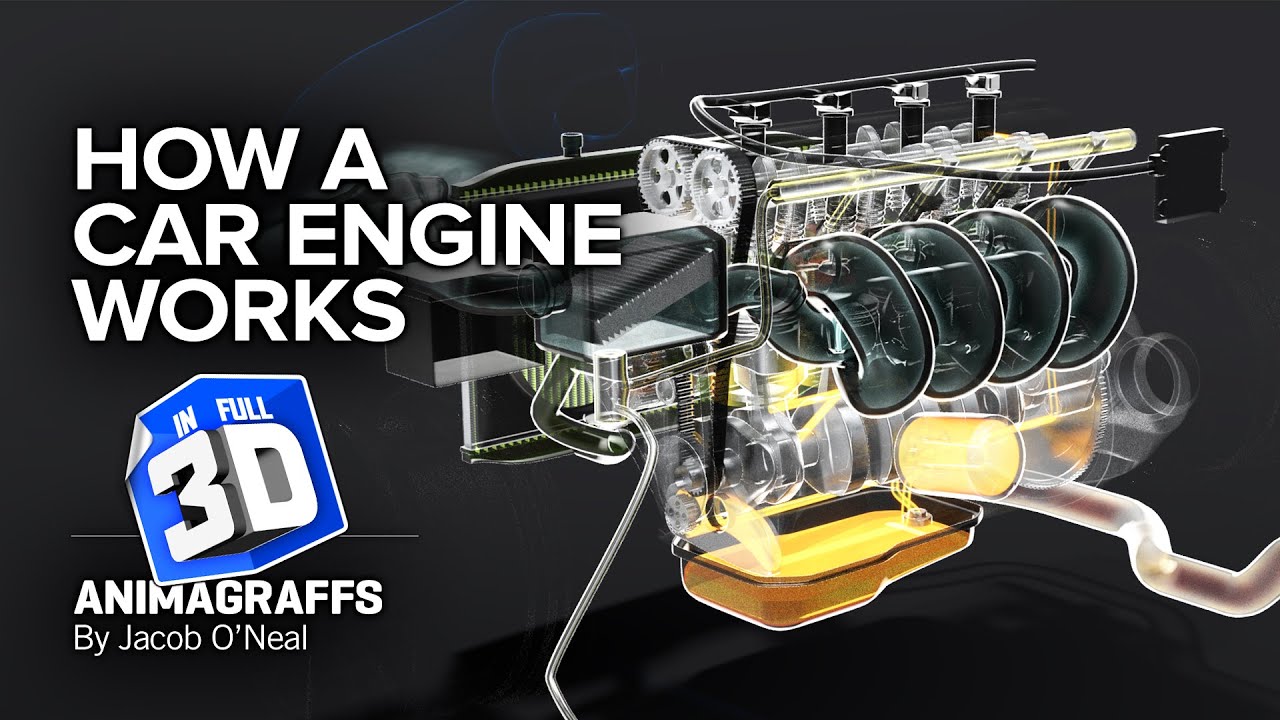
In this video, we’ll learn about how gasoline engines work. First, let’s take a brief look at the basic structure of the engine. Here are two valves.
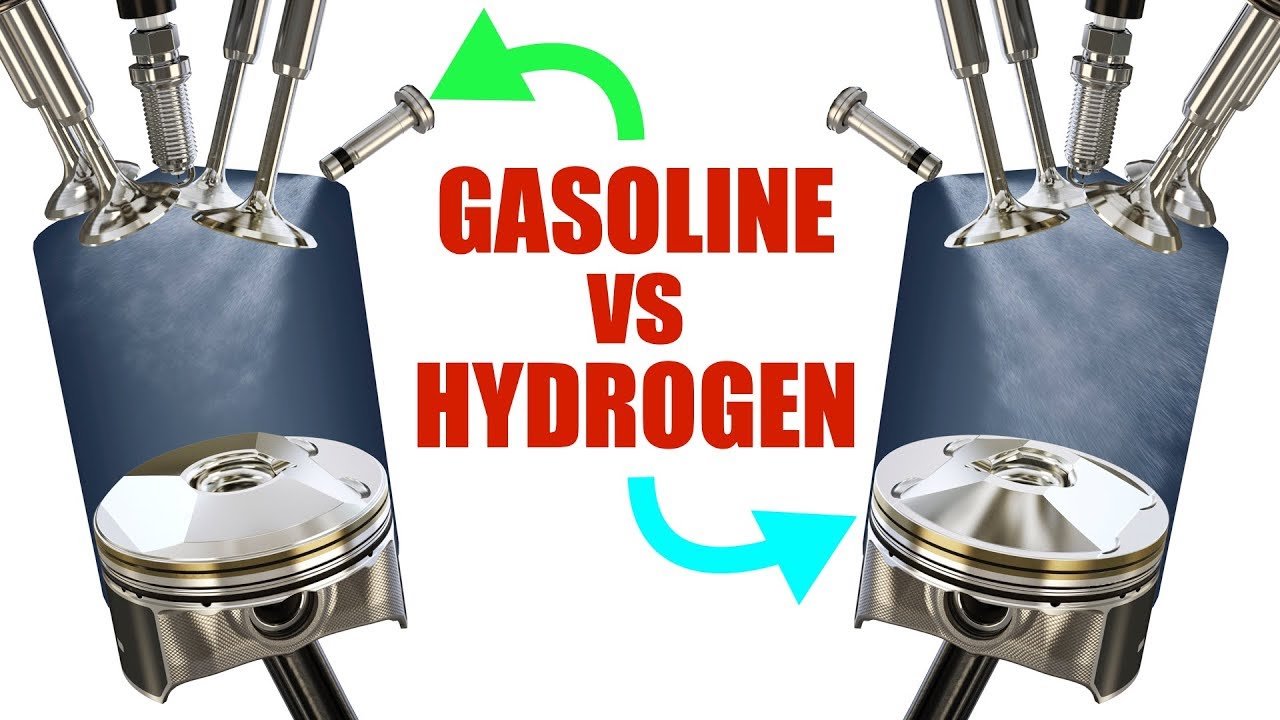
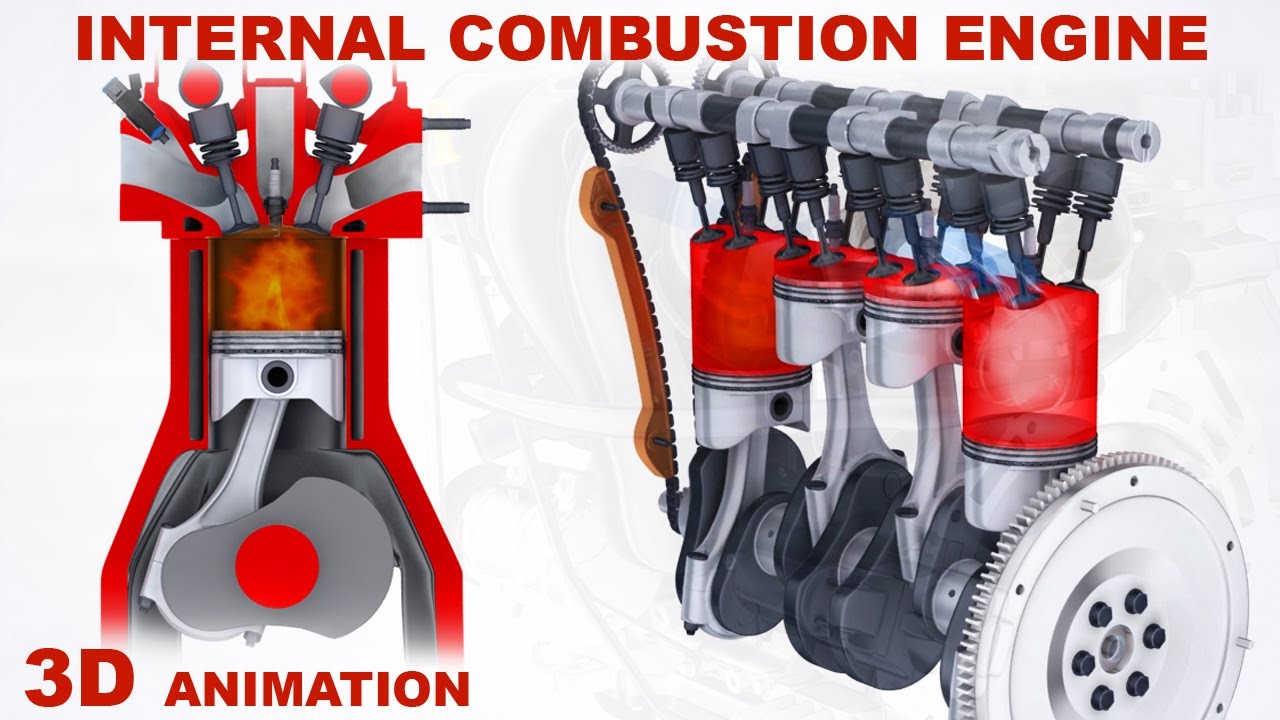
One of them is an ‘intake valve,’ and the other one is an ‘exhaust valve. ’ There is a spark plug between the two valves. There is a cylinder in the bottom side, and the piston moves up and down to create a repetitive motion.
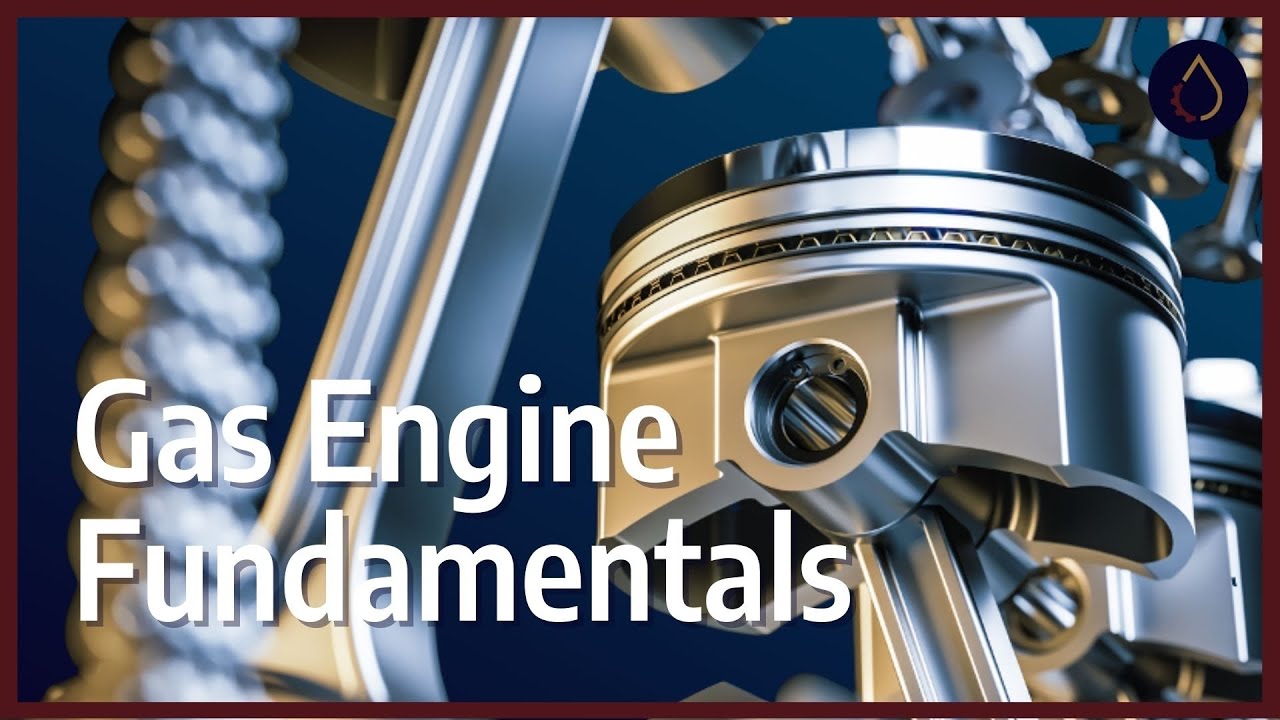
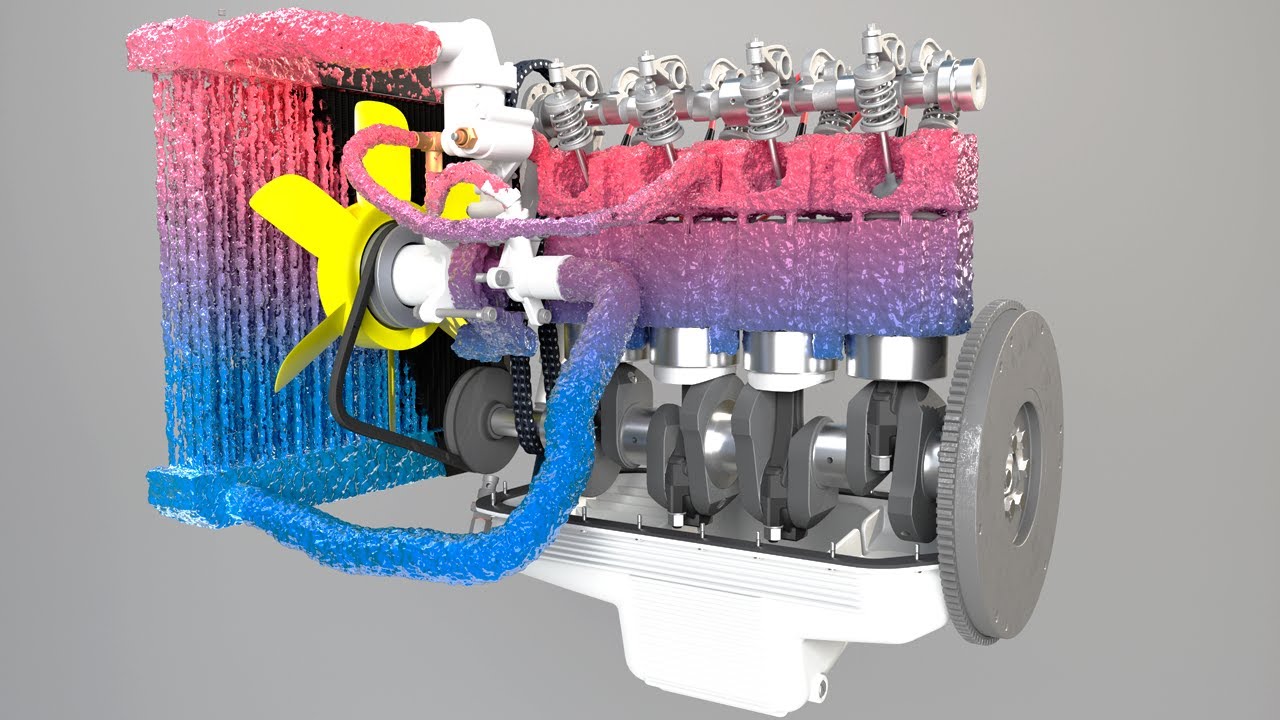
Coolant circulates around the perimeter of the cylinder to prevent it from getting overheated The piston has three rings. 2 of them are compression rings, and the other one is an oil ring. The ring located on the top prevents the flue gas from going down.
The second ring prevents the oil from flowing into the combustion chamber. The third ring plays the role of constantly applying the oil to the inner wall of the cylinder. This is the crankshaft.
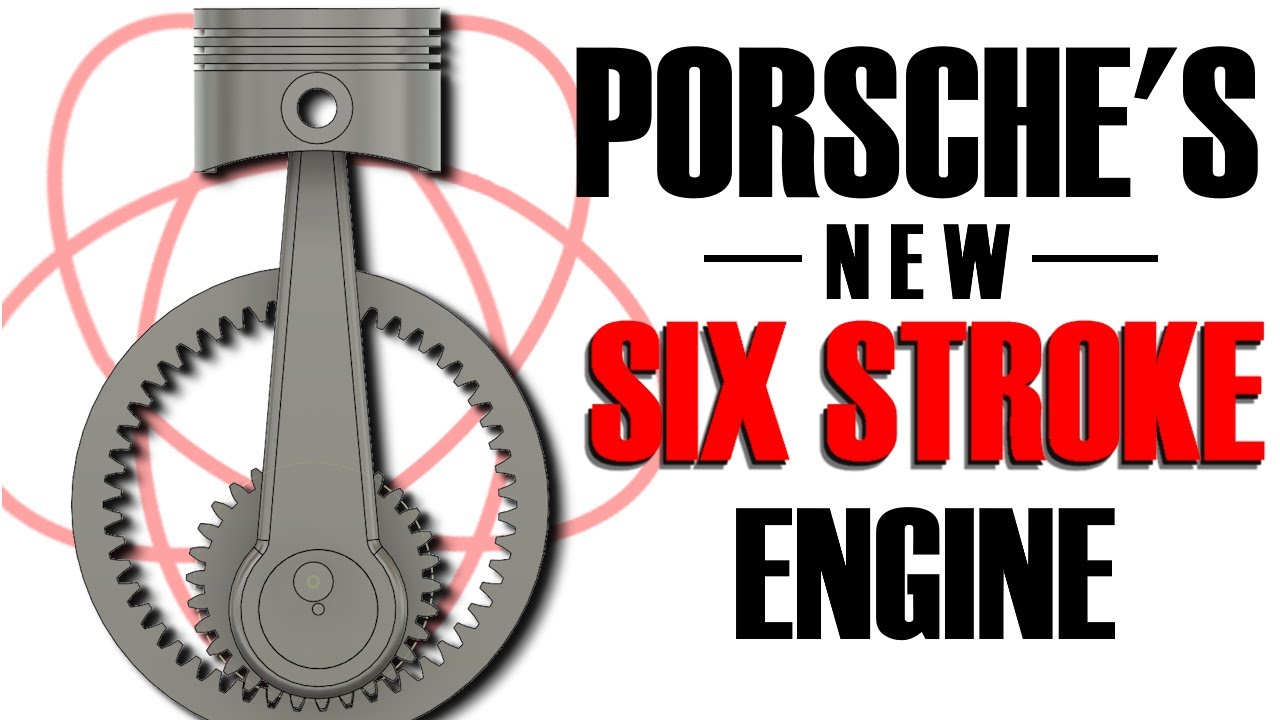
It converts the piston’s linear motion into a rotational motion. The connecting rod connects the piston and the crankshaft. Next, we’ll learn more about the ‘four-stroke cycle’ It goes in the order of ‘intake-compression-power-exhaust’ (1 cycle) First, the intake valve opens, and the piston moves down.
Then, a mixture of air and gas flows into the inner side of the cylinder. This is the ‘Intake’ process The intake valve gets closed, and the piston rises up to prevent further intake of fuel. This causes the mixed gas to be compressed at a high temperature, which is called the ‘Compression’ stroke.
When the spark plug causes a spark on the compressed mixed gas, an explosion occurs. The force from the explosion causes the piston to go down, which is called the ‘Power’ stroke. Then, the exhaust valve opens, and the piston rises up to release the exhaust gas.
This process is called the ‘Exhaust’ stroke. During this single cycle, the crankshaft rotates twice. It will make a half-turn during the intake process, and another half-turn during the compression process to complete a full turn.
Then it makes another half-turn when the gas explodes, and a final half turn after the exhaust process is complete, completing two full turns. Next, we will learn how the intake & exhaust valves open and close The valve is opened and closed based on the movement of the camshaft, which converts rotational motion to a linear motion. Camshafts are connected by a crankshaft or a timing belt.
Normally, timing chains are used more often due to the weak durability of timing belts. The intake valve opens during the intake stroke. The valve stays closed during the compression & power stroke, and the exhaust valve will open during the exhaust stroke.
While the crankshaft rotates twice, the camshaft only rotate once, and both the intake & exhaust valves are opened and closed once each. For the camshafts, there are two different types, one exhaust camshaft and one intake camshaft. We call this the DOHC method.
There is also a method called SOHC, which uses a single camshaft to control the intake & exhaust valve. This is the throttle body. There is a throttle valve inside.
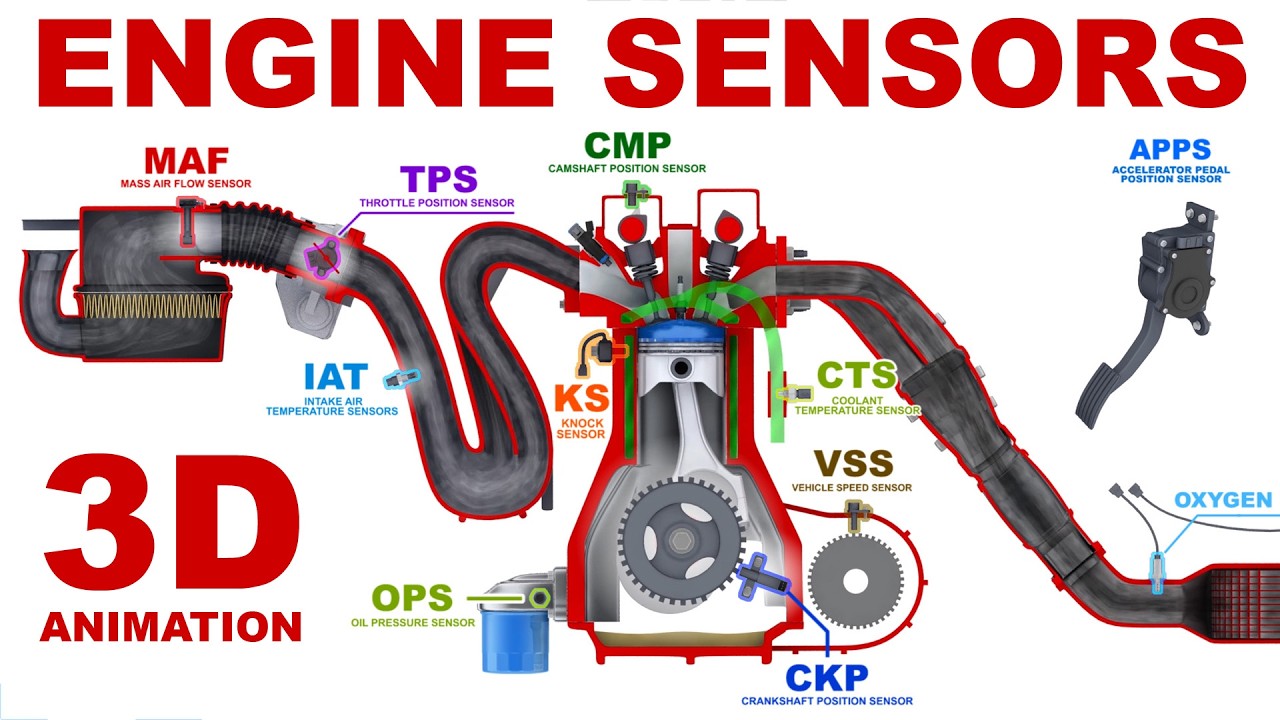
The amount of air drawn in can be controlled by opening/closing this valve. By pressing on the accelerator pedal, you can open up the valve and allow more air to come in. This will lead to increased power & faster speed.
The mixed gas is distributed evenly to each cylinder via an intake manifold. This is a linear-4 engine. 4 cylinders are positioned in a straight line.
It is also called the L4 Engine, using the letter L from the word Linear. These are the cylinders of a linear-6 engine. This is the intake manifold where the fuel heads into.
The fuel is divided based on the number of cylinders. This is the exhaust manifold where the exhaust gas is released. It collects the exhaust gas and sends them to the muffler.
This is a V6 engine. The cylinders are positioned in the shape of the letter V. When the number of cylinders increase, the length of the engine gets longer, which will also lead to longer crankshafts/camshafts.
Naturally, the width of the car gets longer. That is why many automobile companies produce V6 engines. By positioning 6 cylinders in a ‘V-shape’ configuration, it becomes able to reduce the length of the engine and the width of the car.
However, the L6 engine is much more quiet than the V6 engine, and enables smoother power transfer.