these devices far ahead of their time highlight a profound understanding of mechanical principles that ancient people had so we're counting down 15 of the most advanced ancient machines let's start with number 15 Lu Young's South pointing Chariot when traveling across huge distances it's vital that you know what direction you're pointing in but before the invention of the compass there really weren't many reliable ways to do that in ancient China though a scholar and official of the western Han Dynasty is credited with the creation of a device known as the South pointing Chariot which is an
amazing example of early mechanical Ingenuity and is sometimes referred to as one of the earliest forms of a navigational compass The Chariot was supposedly invented to ensure that the chariot's figure typically a wooden figure or statue mounted on it would always Point South regardless of how the Chariot was turned or moved the earliest references to these kind of devices come from around the 3rd Century bcee but Lu Young's contributions in the 1 Century BCE are when mechanisms became reliable the principle behind it is relatively straightforward but highly sophisticated for its time the chariot's wheels were
connected to a set of differential gears as The Chariot turned the gears would adjust the position of the pointer to compensate for the rotation of the vehicle ensuring that continued to point in a constant Direction this system allowed ancient travelers to maintain a sense of direction even in vast and featureless Landscapes like the steps or deserts now interestingly the differential gear system used in the South Point hinting Chariot is considered one of the earliest examples of such a mechanism in history the differential gear is now a fundamental component in modern machinery particularly in the automotive
industry the use of these kinds of Advanced Mechanical Concepts in ancient times shows just how sophisticated the Chinese understanding of engineering really was number 14 the Greek water clock the Greek water clock also known as the clepsidra was an ancient timekeeping device that used the steady flow of water to measure time the kider is one of the oldest types of clocks with Origins dating back to ancient Egypt and Babylon but it was the Greeks who refined and popularized its use now in its most basic form the club Citra was made up of a vessel filled
with water which had a small hole at the bottom as the water slowly drift out the level inside the vessel would decrease and this change in water level could be calibrated to measure the passage of time the early versions of these clocks were pretty simple and mainly used to measure short periods such as the length of speeches or the time allowed for a trial in the courts of Athens in fact the kider played an essential role in the legal system of ancient Greece ensuring that each participant had equal time to present their cases the Greeks
also adapted their water clock for various purposes including astronomical observations for example the famous Greek engineer and mathematician tobius who lived in Alexandria during the 3rd century B.C is credited with designing a highly Advanced kidum his design included a system that compensated for changes in water pressure ensuring a more consistent flow and added an elaborate display that showed the time on a dial with a pointer tas's water clocks were so precise that they could be used for timing astronomical events which was significant it was an improvement over earlier versions number 13 the ballista the ballista
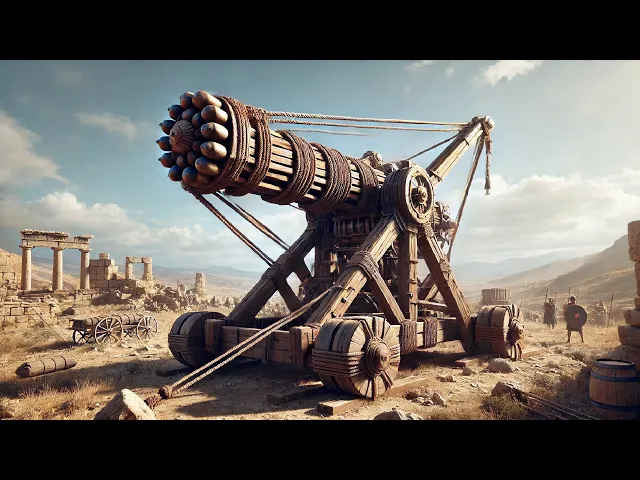
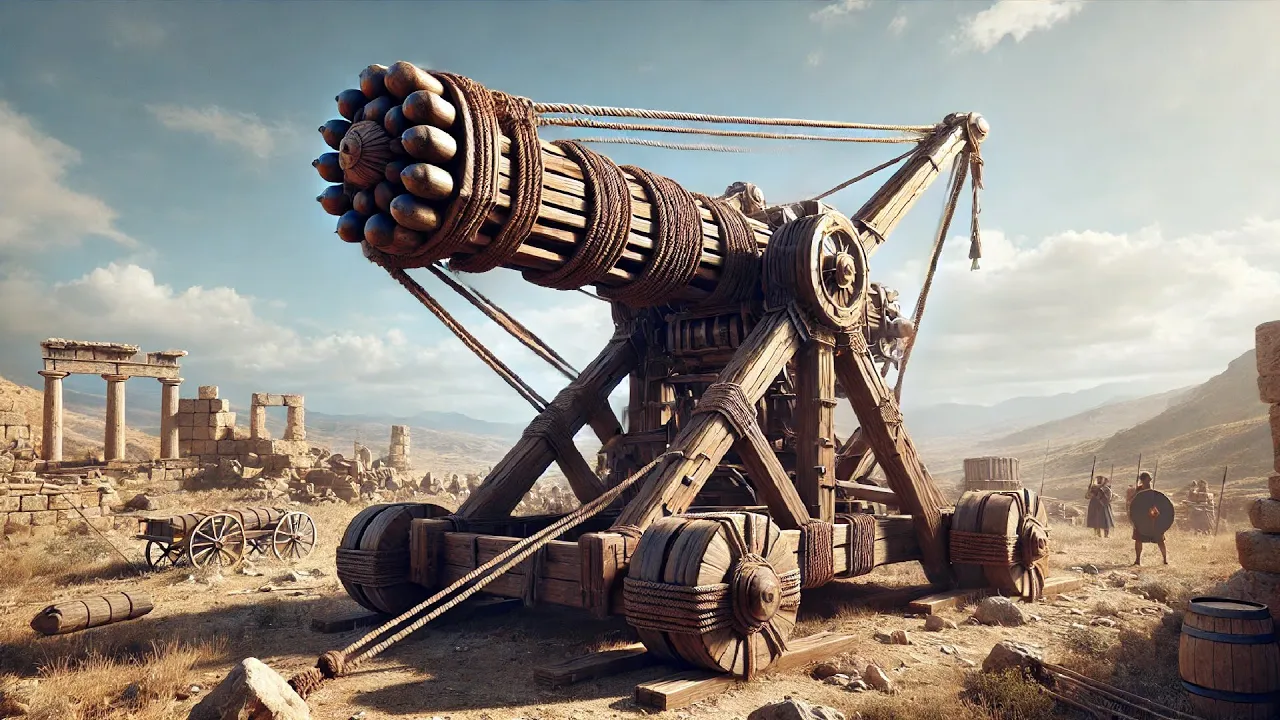
is an ancient powerful weapon developed by the Greeks and later refined by the Romans and it played a crucial role in Siege Warfare resembling a giant crossbow the ballista used torsion powered mechanisms to launch large projectiles that such as Stones darts or heavy bolts over long distances and with great accuracy its Origins can be traced back to the Greeks specifically to the engineers in Syracuse during the 4th Century bcee under the reign of dionisius I these early Greek versions were known as kapel Tha and the mainly used for hurling smaller projectiles like arrows or Stones
the Greek ballista used Twisted skines of senu or hair a principle known as torsion to store and release energy and when the weapon was fired the T in the Twisted skines would Propel the arms forward launching the projectile with considerable Force the Romans adopted and improved the Greek ballista during the height of the Roman Empire they standardized the design making it more powerful and versatile and Roman ballista were typically made of wood metal and senu with a pair of horizontal arms connected to the Twisted skines the Romans develop different size of baste from smaller more
portable versions to larger fixed versions one of the key advantages of the ballista was its accuracy unlike other Siege engines like the Catapult or the trebuchet which relied more on sheer force the ballista could be aimed with Precision in Siege Warfare the ballista was often used to Target enemy defenses such as walls towers and Gates gradually weakening them more until they could be breached but the use of baste fell out of fashion with the fall of the Roman Empire but their influence persisted in the development of medieval Siege machinery and artillery the principles of torsion
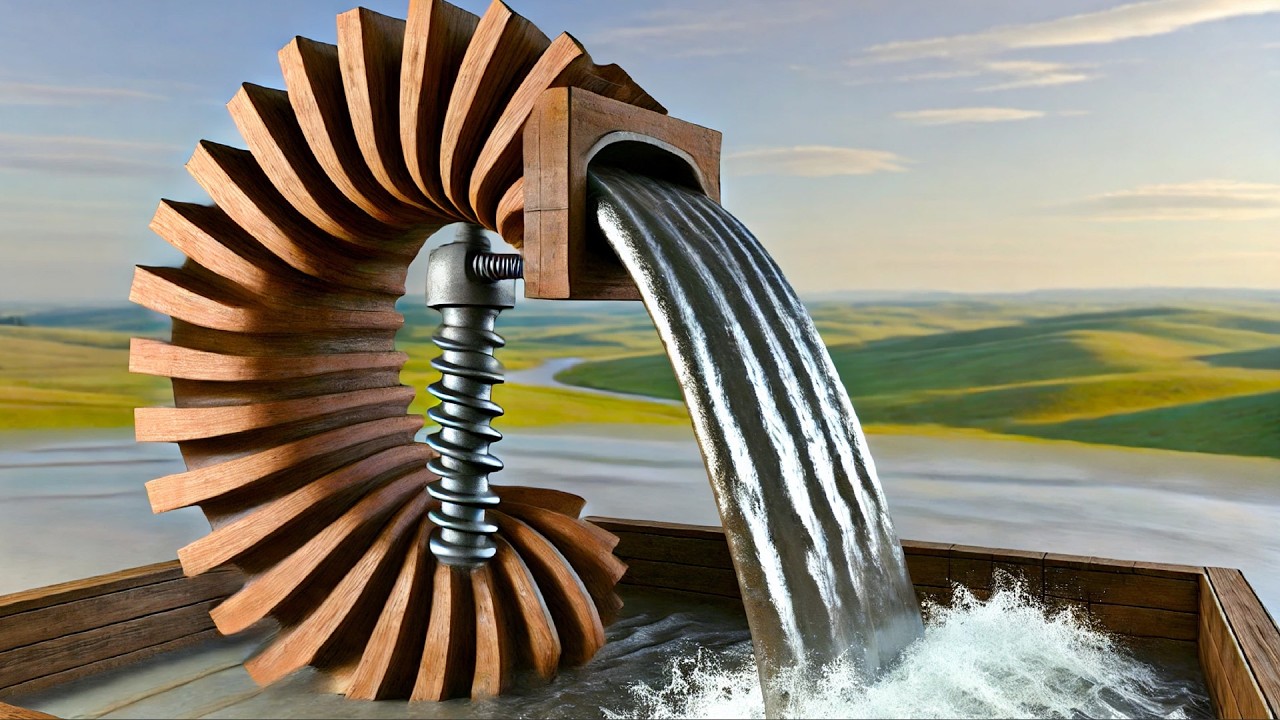
and mechanical engineering demonstrated in the ballista lay the groundwork for l Innovations in weaponry and Military technology even to this day number 12 the Archimedes screw the Archimedes screw it's one of the most ingenious inventions from ancient times attributed to the Greek mathematician and engineer Archimedes of Syracuse in the 3rd Century bcee the simple yet effective device was designed to move water from lower levels to higher places and has had a lasting impact on engineering and agriculture the Archimedes screw is made up of a cical surface wrapped around a central cylindrical shaft which is encased
within a hollow tube when the screw is turned the water is trapped within the spaces between the Helix and the tube and as it rotates it lifts the water along the spiral path from the bottom to the top of the device this invention was originally created to solve practical problems particularly in areas where water needed to be moved from one place to another such as irrigation draining water in low-lying areas or even pumping water out of ship's holes the screw was highly effective in these tasks allowing water to be transported over significant vertical distances with
relatively little effort the screws design is so effective and easy to use that it has remained virtually unchanged for over two Millennium even today modern variations of the screw are used in a variety of Industries for example it's used in wastewater treatment plants to transport sewage in Grain silos to move bulk materials and in hydroelectric power plants where archimedian screws are used as turbines to generate electricity from flowing water number 11 Hero's steam engine so we usually think of steam engines as being machines from the Industrial Revolution but humans have been building devices that harness
the power of steam for far longer Heroes steam engine also known as the alop pile is one of the earliest recorded devices to do so and dates back to the first century CE this invention was imagined by hero of Alexandria the aoli pile is considered the first first rudimentary steam engine and while it had no practical applications at the time it represents a significant milestone in the history of engineering and the development of steam power it consisted of a hollow metal sphere mounted on a pair of horizontal tubes that allowed the sphere to rotate these
tubes were connected to a boiler usually a cauldron of water which was heated by a fire beneath it as the water in The Cauldron boiled the steam was generated and passed through the tubes in the sphere the sphere had two or more bent nozzles from which the steam could Escape AP as the steam exited through the nozzles it created a reactive force that caused the sphere to spin much like a modern day jet engine operates by expelling gas to generate thrust this machine demonstrated the principles of action and reaction as described later on by Newton's
third law of motion where every action has an equal and opposite reaction the steam escaping from the nozzles pushed against the air causing the sphere to rotate in the opposite direction hero regarded it more as a curiosity or a toy rather than as a device with a practical utility it was primarily used to entertain or demonstrate the power of steam rather than to perform an useful work it is fascinating to see how close hero was to a technological breakthrough that could have revolutionized the ancient world but though it remained largely a theoretical curiosity and the
potential of steam power would not be fully realized until the 18th century when Engineers like Thomas nukan and James Watt develop practical steam engines that could drive machinery and transportation number 10 10 the astrol the astrol is one of the most important instruments in the history of astronomy and navigation developed over 2,000 years ago it became a critical tool for astronomers Navigators and Scholars throughout Islamic Golden Age the Middle Ages and the Renaissance its invention is often attributed to the ancient Greeks with hipparchus a Greek astronomer and mathematician of the 2 Century bcee credited with
its development however it was the Islamic scholars who perfected the astrol expanded its use use and passed it on to the Western World an astrolab is a sophisticated analog device that can be thought of as an early analog computer for solving problems related to time and the position of the Stars the instrument is made up of a flat circular plate called the Mater which serves as the base over this base is a rotating disc called the Reit which is a skeletal framework with pointers representing the positions of important Stars the Reit rotates over a background
plate which is engraved with a stereographic projection of this Sky typically including lines for the Horizon the Zenith and the Meridian as well as circles representing the tropics and the equator in astronomy it could measure the altitude of celestial bodies determine the time of day or night and calculate the position of the stars and planets it could also be used to find the time of sunrise and sunset determine the length of the day and even predict eclipses for Navigators the astrol was invaluable in determining latitude while at Sea making it an essential device for early
explorers and Mariners what was revolutionary about it was its ability to perform these calculations through simple geometric principles by aligning it with a particular star and noting the position of the Stars pointer against the horizon line users could determine their position relative to the heavens this made the astrolab an indispensable tool for both scientific inquiry and practical navigation by the late Middle Ages it had become a standard tool in European universities and was widely used by astronomers such as Johannes Kepler and tiob brah during the the Age of Exploration the Mariners astrol a simplified version
adapted for use at Sea became an essential instrument for European Navigators enabling them to embark on Long voyages across uncharted waters number nine Persian windmills Persian windmills are one of the earliest known instances of harnessing wind power for mechanical work originating in the region of modern day Iran these windmills were developed during the early centuries of the first Millennium around the 7th Century CE although some sources suggest they may have been in use even earlier these windmills were mainly used for grinding grain and pumping water making them vital to the agricultural economy of the regions
unlike the more familiar European windmills which typically have large horizontally rotating blades Persian windmills were vertical AIS windmills they were made of a vertical shaft connected to a series of wooden blades or sails which were mounted with a rectangular tower-like structure the entire assembly was often made from locally available materials such as wood reed and Clay the design of these windmills was particularly suited to the harsh dry environments of the Iranian Plateau where strong steady winds known as the 120-day winds blow consistently from the same direction during the summer months the wind would enter the
tower through the openings in the walls where it would then strike the vertical sails causing them to turn the central shaft this rotational motion was transferred down to the base of the tower where it powered millstones to grind grain or operated a pump to lift water the vertical axis design allow the windmills to operate effectively regardless of the wind's Direction which is a significant advantage over the horizontal axis windmills this made Persian windmills pretty effective in the environments where winds might change direction or where constant alignment with the wind would be difficult to maintain today
some of these ancient windmills can still be found in parts of Iran particularly in the provinces of syan and bistan where they've been continuous use for centuries the principles behind how they work have also found new relevance in modern times as an interest in renewable energy sources has grown the vertical axis wind turbine inspired by the ancient Persian design is being explored as a viable option for generating electricity in urban environments number eight The Pantagraph The Pantagraph is a mechanical device with a rich history that stretches back to ancient times its primary function is to
replicate enlarge or reduce drawings designs or patterns with Precision the name Pantagraph is derived from the Greek words pantos meaning all and grapo meaning to write or to draw this device has been a crucial tool in various Fields including art design and Engineering for centuries the origins of the Pantagraph can be traced back to ancient Greece where early versions of the device were used by Greek Scholars and Artisans although the precise details of its invention during that era are not well documented in its simplest form a Pantagraph is made up of a series of linked
rods arranged in a parallelogram these rods are connected in such a way that when one point on the device called the tracing point is moved over a pattern or drawing another Point known as the drawing Point replicates the motion on another Surface by adjusting the length of the rods or the position of the drawing point the user can create a copy that is either the same size as the original enlarged or reduced artists and draftsmen found the device really useful for scaling drawings and creating detailed larger versions of small sketches or reducing large images with
high accuracy this was especially important but for the Advent of modern photocopying and printing techniques in addition to its applications in art though the Pantagraph became an essential tool in engraving where it was used to transfer intricate designs onto metal surfaces this was crucial for the creation of coins medals and printing plates where Precision was Paramount The Pantagraph also played an important role in the early development of mechanical engineering in the early 19th century it was adapted for use in Machine Tools allowing for the production of complex parts and patterns in metal work for example
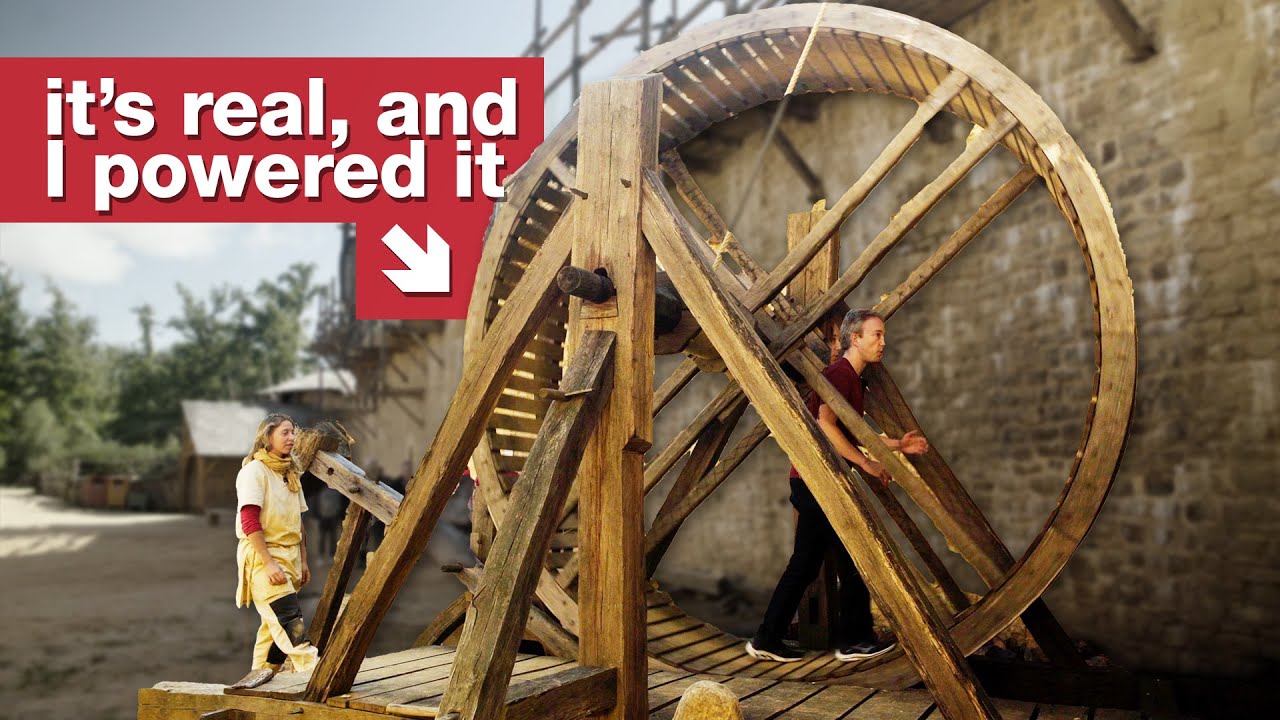
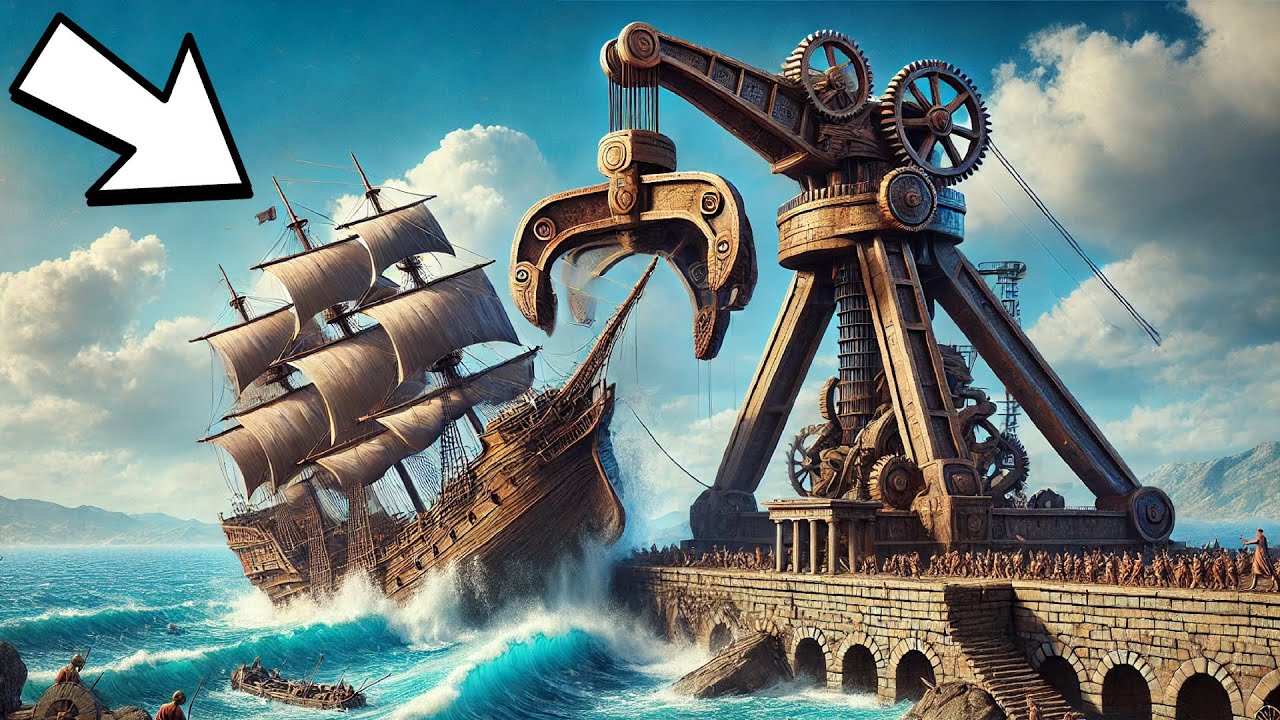
it was used in the manufacturer of firearms to engrave intricate patterns on metal surfaces and replicate detail components today while The Pantagraph has been largely replaced by digital Technologies in many fields it remains a fascinating example of how simple geometric principles can be applied to solve complex problems moving on to number seven Greek treadwheel crane the Greek treadwheel crane is an engineering machine that played a pivotal role in the construction of some of the most iconic structures of the ancient world the device which harnessed human power to lift heavy loads represented a significant advancement in
the field of construction and Engineering it was essentially a large wooden wheel mounted horizontally with a rope or a cable wound around an axle workers would walk inside the wheel much like a modern hamster wheel causing it to rotate as the wheel turned the Rope would wind around the axle lifting a load attached to the other end of the Rope the mechanical advantage provided by the wheel allowed a relatively small number of workers to lift heavy Stones columns and other construction materials the origins of the tread wheeel crane can be traced back to the 5th
Century bcee in ancient Greece the earliest cranes were simple machines that used levers and pulley but the introduction of the tread wheel significantly increased her efficiency one of the most famous examples of the use of a tread wheel Crane in ancient Greece is the construction of the Parthenon in Athens built between 447 and 432 BC e it required the lifting and precise placement of enormous marble blocks and columns the ability to control the speed and direction of the lift also made it possible to place the stones accurately which was critical for the stability and alignment
of the structure the operation relied on the fact that the force required to lift a load decreases as the radius of the wheel increases allowing human power to be effectively multiplied it was later adopted and further developed by the Romans who used it in the construction of their vast infrastructure including aqueducts amphitheaters and even Monumental buildings the basic design of the treadwheel crane has remained in use for centuries and was a common sight in medieval construction projects where it was used to build Cathedrals and castles across Europe number six Hero's vending machine well it's hero
again hero of Alexandria a prolific Greek engineer and mathematician of the first century CE Hero's vending machine was created to serve temples where visitors needed to access holy water for purification rituals the device operated on a simple principle that when a coin was inserted into a slot at the top of the machine it would fall onto a pan that was attached to a lever the weight of the coin would then cause the pen to tilt which in turn pulled a valve open allowing a small amount of water to flow out of the machine after the
coins slid off the pan and into the collection box the pan would return to its original position closing the valve and stopping the flow of water this ensured that each coin would dispense a specific controlled amount of water preventing was or overuse this automation not only made the process way more efficient but also introduced an element of novelty and wonder for the temple visitors who were likely Amazed by the idea of a machine giving them holy water in exchange for a coin although this vending machine was relatively small and specific invention it was part of
a larger tradition of automata and mechanical devices developed by Hero and his predecessors the concept of automating the transaction process has been expanded and refined over the centuries but the fundamental idea remains rooted in the kind of mechanical thinking that hero is known for number five the Baghdad battery the Baghdad battery is one of the most mysterious artifacts from the ancient world often sparking debates among historians about its true purpose and significance discovered in the 1930s in modern day Baghdad Iraq the ancient artifact is made up of a small terracotta pot copper cylinder and an
iron Rod it's believed to date back to the parthan or san periods roughly around 150 to 600 CE although the exact dating remains uncertain now the basic structure of the Baghdad battery is relatively simple the Terra Cotta podt is about 6 in or 15 cm high and contains a cylindrical copper sheet which is rolled into a tube and soldered with a lead 10 alloy the iron Rod is placed inside the copper cylinder and the cylinder is sealed at the bottom with bitumen this bitchin also insulates the iron rod from the copper cylinder preventing it from
coming into direct contact some reconstruction suggest that jar would have been filled with an acidic liquid such as vinegar or lemon juice which could act as an electrolyte this setup would generate a small electric current through the chemical reaction between the iron and copper if the Baghdad battery was indeed used as a battery it would have been capable of producing a small voltage likely around 1 volt similar to the voltage produced by a modern AAA Battery however the purpose of this potential electricity generation remains a subject of speculation some researchers suggest the battery could have
been used for electr plating this Theory supported by evidence that the ancient Egyptians and other civilizations knew of methods to Guild medals with gold or silver and it's possible that the parthe or cenans could have used similar techniques not everyone though is convinced that the bag do battery was intended to be a battery at all some argue that the artifact could have served a different non-electrical purpose such as being a simple storage vessel for Scrolls or other small objects the materials used copper iron and bitchman were common in the ancient world and could have been
there for various purposes unrelated to electricity furthermore there's no direct evidence from ancient texts or other sources that confirm the use of electricity in those cultures which leaves the battery Theory open to some interpretation number four the Greek lever press the Greek lever press is one of the earliest applications of the principle of the lever which is a simple machine that's been used for thousands of years to magnify Force the device which was result of the mechanical insights of ancient Greek engineers and scientists particularly Archimedes played a crucial role in various aspects of Greek society
from agriculture production to the creations of goods and infrastructure the basic principle of the lever as explained by aredes in the 3rd Century BCE is that a rigid bar or lever can be used to move a heavy object by applying a smaller Force at a different point along the bar the effectiveness of the lever depends on the length of the lever arm and the position of the Pivot Point or fulcrum which the lever rests on by adjusting these variables the Greeks were able to multiply force making it possible to lift or compress objects that would
otherwise require much strength the lever press used a long wooden beam as the lever with one end attached to a large stone or weighted counterbalance the olives would be placed in a bag or basket underneath a heavy Stone and connecting the lever to the arm when force was applied to the opposite end of the lever usually by human effort or additional weights the press Stone would lower crushing the olives and squeezing out the oil this design allowed for the application of significant pressure ensuring that all of the oil was extracted from the olives it was
also used in wine making where similar techniques were applied to press grapes Additionally the principles of lever were utilized in the construction of Greek architecture and engineering projects large stone blocks used in temples and other structures were often moved or lifted using lever systems the importance of the lever press isn't just in its practical lications though but also in the wider understanding of the mechanical principles that it represents Archimedes famously said give me a place to stand and I will move the Earth that sentiment reflects the power of the lever and the impact of understanding
and applying basic mechanical principles number three the hydraulus water organ humans have been developing musical instruments for thousands of years but perhaps the most surprising from history is the hydraulus or water organ which is one of of the earliest known keyboard instruments invented in the 3rd Century BCE by tibius of Alexandria a Greek engineer and inventor we've already talked about this is a unique instrument that combined principles of hydraulics with musical creativity and it resulted in a powerful and versatile instrument that became popular in both public entertainment and private settings the basic design of the
hydraulus involved a large container filled with water known as the wind chest which was connected to a series of pipes air was forced into the wind chest by a pump and the water acted as a regulator maintaining a consistent air pressure within the chamber when a key on the keyboard was pressed it opened a valve that allowed air to flow from the wind chest into the corresponding pipe producing a sound one of the major things about the hydraulus at the time was its ability to produce sustained powerful sounds the use of water pressure to regulate
the air in the instrument to maintain a steady tone was a significant improvement over earlier wind instruments it was capable of playing both soft and loud music and its sound could be varied depending on the configuration of the pipes and the amount of air pressure applied it was often used in large public spaces such as amphitheaters and Arenas where its powerful sound could fill the venue its popularity spread throughout the helenistic world and into the Roman Empire where it continued to be a favored instrument for public entertainment Roman emperors and Aristocrats commissioned elaborate versions of
the hyrus for their Villas and palaces and the instrument was depicted in mosaics Fresco and other artworks of the period despite its widespread use in ancient times though the hydraulus eventually fell out of favor and by the end of the Roman Empire the instrument had largely disappeared however its influence persisted particularly in the development of later keyboard instruments the principles of air regulation and pipe construction used in the hydrus laid the groundwork for the development of the pipe organ number two the anti catha mechanism the anti cath mechanism it is one of the most mysterious
artifacts from the ancient world often described as the world's first known analog computer discovered in 1901 by Sponge divers off the coast of the Greek island of antia this device dates back to around 150 to 100 BCE During the helenistic period when first discovered the device was corroded and broken into many fragments but over Decades of study researchers have gradually uncovered its Secrets the mechanism's purpose was to predict astronomical positions and eclipses making it an essential tool for understanding the cosmos it cont track the cycles of the moon and the sun the phases of the
moon and even The Irregular orbit of the moon the device contained at least 30 bronze gears including differential gears which are used to calculate the difference between two angular positions a concept not commonly seen in Mechanical Devices until the 16th century the largest gear which had 223 teeth was used to track the 19-year-old metonic cycle a period after which the phases of the moon repeat on the same days of the year the back of the device had two spiral dials one showing the 18-year Soros cycle used to predict eclipses and another indicating the 76-year cipic
cycle an improvement on the metonic cycle for predicting the positions of the moon and the planets more accurately before its Discovery it was widely believed that such Advanced Mechanical Devices didn't exist until the Middle Ages this mechanism suggests that the Greeks had a deep understanding of astronomy and mechanics and they were capable of creating highly accurate instruments the technology in the antia mechanism would not be matched until the development of complex clocks and astronomical instruments during the Renaissance number one Zang hang seismoscope earthquakes they have of course affected humans forever but the idea of detecting
them is far from being a modern concept Zang hang's seismoscope invented in 132 CE is one of the most impressive achievements of ancient China and it represents the earliest known attempt to measure seismic events Zang hang is a polymath known for his work in astronomy mathematics and Engineering he created this device during the Han Dynasty it was a large bronze vessel approximately 6 and 1/2 ft or 2 m in diameter shaped somewhat like a giant n or a barrel the device was designed and decorated with eight dragon heads each one facing one of the main
Compass directions and Below each dragon head a corresponding bronze toad was positioned with its mouth open wide inside the vessel was a sophisticated internal mechanism that according to historical records could detect the mo movement of the earth and determine the direction of an earthquake's epicenter when an earthquake happened the mechanism inside the seismoscope would cause one of the dragon heads to release a small bronze ball which would fall into the open mouth of the toad directly beneath it the direction in which the ball fell indicated the direction from which the seismic waves had originated for
instance if the ball fell from the dragon facing west it suggested that the earthquake had happened to the west of the seismos scope's location this early detection allowed for a rapid response to the affected regions which was crucial for a vast Empire like Han China where distant provinces could be severely impacted by such natural disasters Zan hang's invention was revolutionary not just because it was the first known seismoscope but also because it demonstrated a deep understanding of the principles of seismology and mechanical engineering his work predated the development of modern seismographs by more than a
millennium as well as itself being important because a response could be sent to affected regions it's also an indicator of The Wider Trend in China of applying scientific knowledge to practical problems Zan hang himself was a key figure in this tradition contributing not only to seismology but also to astronomy where he developed an early model of the celestial sphere mathematics and even literature thanks for hanging with me guys I'll see you next time thank you to our channel members