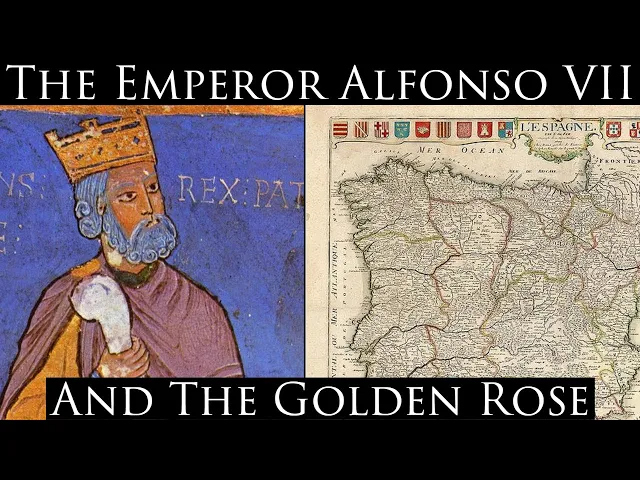
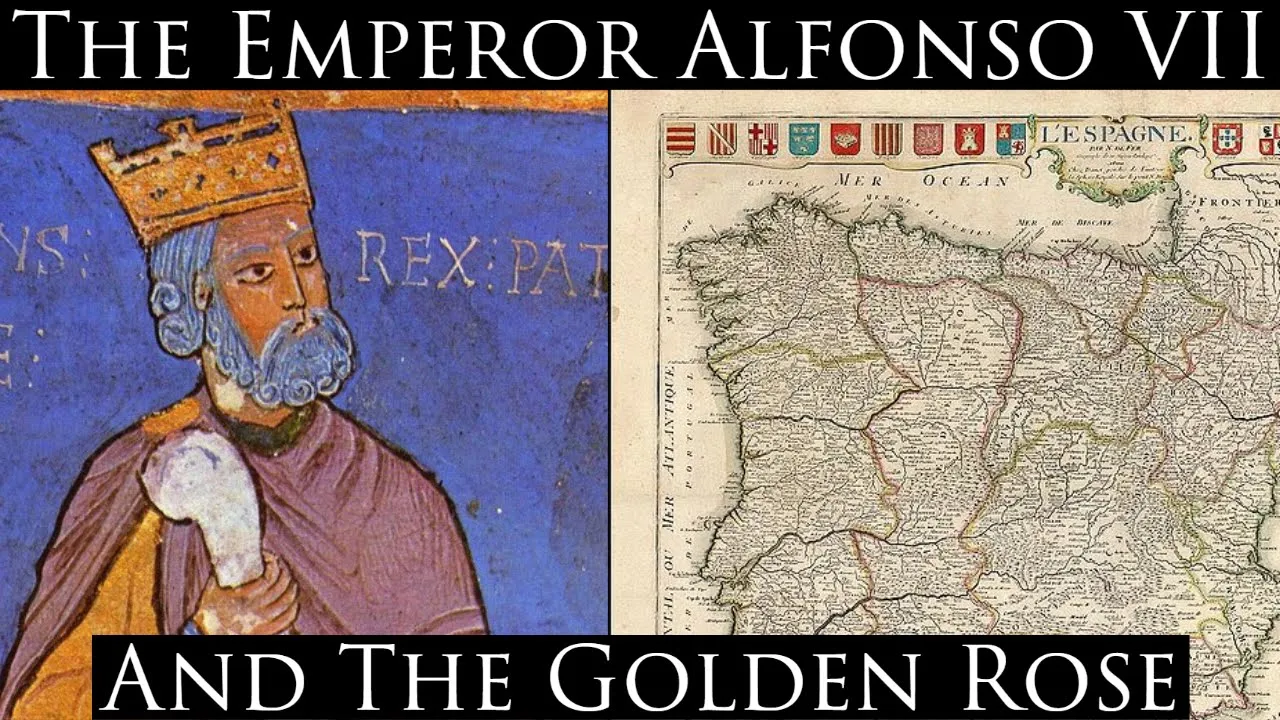
Hello everyone and thank you for checking out my youtube channel the study of antiquity and the Middle Ages my name is Nick Barksdale and I'm your host today and I am very excited to bring you a very special guest dr. Lincoln dr. Lincoln is going to be doing a very interesting and fascinating talk about a very obscure subject in medieval history a subject that revolves around a golden rose in 11:48 Pope Eugene the Third cent a most unusual but not unprecedented gift to the emperor of Lyon Alphonso of the seventh it is an honor and
a privilege to be here with you all today and to bring you a wonderful and excellent teacher dr. Lincoln ladies and gentlemen sit back and relax feel free to take notes and comment your thoughts below and more importantly have a great time thank you all so very much [Music] Ladies and gentlemen thank you for checking us out on YouTube today this is the study of antiquity in the Middle Ages and I am your host Nick Barksdale and today I'm joined by a very special guest who I was just talking about earlier and that is dr.
Lincoln dr. Lincoln would you mind telling us a little bit about yourself sure so right now as we're recording this in January of 2020 I teach in the history department at the University of Wisconsin's lacrosse campus I did my PhD in medieval history and finished that in 2016 at st. Louis University since then I've taught at Carroll Mizzou College a little bit at Western Michigan University as well in between I'm at present finishing up a book on the castilian church under Alphonse the eighth who hopefully will speak about more in the coming weeks and I'm
at present on the boards for the American Academy of Research historians In medieval Spain which is a mouthful here comes another acronym it takes forever as well as the Association for Spanish and Portuguese historical studies Episcopal switch is the Society for the study the clergy in medieval world and last but not least the Society for the study the Crusades in the Latin East all of that is to say that most of my experience in academia has been in crusading in 12th century Iberia in ecclesiastical stuff so hopefully what We're talking about today will be a
nice little entryway into some of those questions and conversations kind of tip of the iceberg for a much bigger conversation that scholars are having and hopefully give some people some suggestions on some things to look at in their own reading and notification that is absolutely phenomenal honestly I can't wait to get into this a lot of people are relatively familiar with the idea of getting flowers as the token of Affection and we often think about the act of gift-giving as a kind of way to understand social relationships right we give gifts in times of great
significance whether that be religious significance at the time of the holidays has just passed us by or in times of great social significance right we give people gifts that that the occasion of their wedding or or a birthday times we reinvest things with a lot of meaning a lot of times we Have those gifts or we have cart we have personal mementos but as you can imagine over time our families might lose track of the original gift or they might lose track of the card imagine than eight and a half centuries removed the kinds of
echoes that we might have other significant exchanges of gifts that's kind of what I want to set as our backdrop for what we're talking about today because in 11:48 Eugeni is the third often sometimes called eugene the Third entirely unimportant how we pronounce it both names work just as well a distortion Pope who had actually been elected in part because of his relationship to the then most important religious intellectual of the period bernard of clairvaux of course the abbot of Clairvaux and sort of leader of the Cistercian order Eugeni as the third sent a single
flower apparently golden whether it was a sculpted gold rose or the idea being Though somehow a gilded actual roses is entirely unknown I suspect that it's probably a sculpture as that would be a little bit more durable to the then reigning king of león and Castile a man by the name of a fun so so styled Alfonso rim windows and some chronicles because it was the son of Burgundian count to it journey to Spain to make his fortune and it married then a princess about to be queen Muraki león and Castile exactly why he gave
this gift is Unknown there are some stated reasons Alfonso's position is this kind of laid up Christi and in the contemporary vernacular an athlete of Christ this person struggling for some greater achievement but as is usually the case medieval documents will only tell us what they want us to know first and foremost and will often have a large background of evidence of conversation a relationship that's only partially hinted our echoed in documents giving a Golden road seems like a pretty strange gift especially if we remember that the Pope as this sort of chemical and wielder
of the so-called spiritual sword and the glazing version of things the two swords being spiritual and material that is to say religious authority and temporal power giving a rose doesn't really seem like a normal gift for a king we can think of a lot of the trappings of royal investiture whether it be a Sword belt or a sword a cloak a crown a ring all these things that might suggest affection but we know that the Pope's gave lots of gifts over the Middle Ages one of the most important and in symbolic was actually a gift
frequently given by Pope's to Archbishop's a woollen garment called the pallium which was studied brilliantly and recently award-winning Lee by Steven shown again is both bonds of wool a simple garment a simple cloth collar effectively Italian Drapes around the neck and goes down an outside-in sort of meeting in the middle a piece of wool right thank you doesn't seem that significant but a shouting is shown say that three times fast show me this show laying that piece of wool on the tomb of st. Peter not only made the garment a contact relic but was this
symbol of the spiritual connection between the Pope's themselves as givers of the guests and the recipients the Archbishop's in question so thinking About gift-giving as this kind of statement of a relationship we can look at this at this individual Golden Rose has an important window into what Pope you journeys the third thought of at least for a time of flunks of the seventh but why I should back up and do a little bit of background because by now we've named a bunch of people who we haven't even introduced so let's start with the key in
question Alfonse of the seventh of Leon and Castiel is sometimes Referred to as Alfonso the Emperor he's not the first to be called an emperor in fact that title Emperor of all this means might go back is early into the 10th century although the best evidence suggests that it's early in the 11th of the time of Fernando the first s calendar Antoine has shown her wonderful book Imperator tody spawning there is it least some kind of sense of this emperor of the Spain's as a kind of leader of the Christian kingdoms in the north not
Entirely dissimilar to other similar Appalachians amongst regional kingship but what makes it particularly interesting is that although this title Imperator would normally suggest a kind of regional conglomeration of power under which a single figure not entirely dissimilar to the Holy Roman Empire that doesn't seem to quite be the case in in in the Iberian monarchies instead what it seems to be is a kind of recognition of prestige a kind of Appellate jurisdiction in some sense that connects all of the kingdoms and territories together Alfonso doesn't come by this title easily in fact he comes by
it having fought off a number of rebellions and having his own succession something in doubt in part because his grandfather and namesake Alphonse of the sixth although allegedly that sort of conqueror of Toledo although there wasn't ever actually any conquest he Just sort of walked it I always imagined him walking through the the northern gate that's where there's now a churro stand through the besotted I gained almost on accompanied except by his own royal retinue into this city the recapture of Toledo in 1085 was a kind of signal moment for the Christian kingdoms in the
north especially for Leone which had been struggling for legitimacy against other regional partnerships we know that for example in The late 10th and early 11th century by far the most powerful of the Christian kingdoms was a vast kingdom of Navarre under Sancho the 3rd also sometimes called some show the great usually when you're in charge of most things you get to be the great or the emperor in that moment Alfonso the sixteen taking over Toledo had recaptured what had previously been under the Visigothic Kingdom which of course was eclipsed under the Muslim conquest in the
early 8th century had previously been the kind of herbs reggie's right that that Royal City that kind of we want to say capital in the modern version but it's not at all that in any real sense rarely are there solid capitals in the media world know that but in said there are cities that have are are kind of centers of gravity right Toledo is one of them certainly especially for the Kingdom of Toledo as it's often label is one of the many places that leonie's in Castilian Monarchs will claim they'll also claim would ghosts have
the kind of importance and the trade routes in the east and that to west route from the pyrenees toward santiago de compostela both as a polka mature and for trade of course we can also mark out Leone or Oviedo in the kingdom of Leon itself we can so points is something I got a couple Stella as an important sort of position point Iberian Kings were itinerant and so Alfonso's recapture of Toledo added Another stop on that route the bigger the connection he could make them more important his kingship would seem but it's important also to
remember that Afonso was not alone in attempting to assert himself we know that there are similar attempts in in eastern part of the peninsula particularly under the Catalan councilor though they're all named Ramon Berenguer even when there are twins there's no Ramon Berenguer and a barangay Ramon of course they get into Some trouble during a hunting accident accident accident and things become a little bit more difficult for Alfonso the six this is a time where there's a lot of struggling right a struggle that allegedly leads him to conspire to kill his brother Sancho the second
the famous episode that creates the the treason that Rodrigo Diaz de Vivar apparently senses the last straw although there's quite a good bit of work that suggests that none of that actually happened Although there was a civil war of some sort between Alfonso and his brother Sancho there does seem to have been a difficulty for Alfonso the sixth and coming into kingship one of the signal moments in his early reign however is his cementing of his of his alliance with the papacy just five years before taking Toledo at a council little Inn in 1080 Alfonso
changed over at least nominally the religious Ordo so the pattern in which the mass was set from An older visit gothic it's often sometimes referred to inaccurately as a mozarabic rite to the later to the later adopted and more contemporary enrollment and and Frankish circles roman rite so by shaping the way the mass was said this is a powerful symbol when you remember that the rhythms of life in the medieval world are often governed by religious observance that liturgical change is a huge signal to the papacy in Rome but also to the religious officials Of
the kingdom that in fact Alfonso is playing by the rules and he's playing on a people team no doubt then that in 1085 with the relaxation of Toledo he then Alfonso able to a new Archbishop and and the sort of early struggles of the Archbishop's of Toledo not only to have control of the over their own city and so repopulated with with Christians both of the most erotic persuasion that's to say Arabic speaking Christians but also of Christians from the from beyond the Pyrenees we know that there's a huge influx of what are usually referred
to as Frankie so probably in modern terms french-swiss northern Italian perhaps even parts of Belgium and Holland parts of Germany as well and in in our modern geography so lots of people coming into the peninsula Alfonso is in particular difficulties with shoring up the the large tectonic arrangement of powers in his own court and so he marries one of His daughters raka to one of two brothers who come to the peninsula from burgundy the elder is called Raymond the younger is unreal Raymond marries Erika Alfonso's legitimate daughter and Inari marries his illegitimate daughter Teresa those
two women who raka and Teresa often get sort of papered over in the telling of histories of live here but they clear a really important role for two reasons first Teresa's son Alfonso Enrique is The first King of Portugal and rakahs son Alfonso the seventh is this emperor of the Spain's as he's often acclaimed in in later chronicles you have these two women will occupy really important roles because after Alfonso the six death they are actually the ones that are guaranteeing their sons power as gianni bini and her work on Baron well of Castile has
shown for a later century and as Lucy picks recent book her father's daughters made very clear Well we're often used to thinking of medieval women as sort of backroom figures as Palace politicians patrons of the arts Iberian Queen seem to have taken a much more direct role both in the administration of their property we have lots of later evidence to suggest that they were directly administrating their lands but also raising and and shepherding armies they they don't seem to have led and battle the way Matilda Canosa does but she's a contemporary of Theirs and it's
not an inaccurate comparison see Matilda can also play in a similar role as both protectress of the church but also as my political figure problematically Erica's husband Raymond dies before her son comes to his majority and so Muraki is left as the reigning queen her father's illegitimate son Sancho dies at a pretty disastrous battle before Alphonso himself does and so we're left With this mother of two small children Sasha and and Alfonso seven later to be Alfonso the Emperor right he's not the seventh yet he's just the prince and she's stuck in a lot of
ways she's got vassals that are really worried we got this unmarried woman on the throne which presents lots of political intellectual and cultural problems yet she seems to be very capable the solution they seem to have proposed is a marriage with the then King of Aragon Alfonso the battler Of course is famous for his his conquests especially in sana Gosa but should probably have his reputation re-evaluated based on the evidence from maracas reign by some acclamations or rocket and Alfonso's marriage is annulled on grounds of their closeness of descent their consanguinity they're related a few
generations back to previous kings but the more pressing matter seems to have been that raka and Alfonso absolutely did not get along and Some contemporary evidence seems to suggest that even by medieval standards and I want to I want to underline that even by medieval standards Alfonso the first was something of an abusive husband physically at least by contemporary terms that's really saying something yeah there there are lots of examples of what is acceptable levels of beating your wife in the medieval world right of course by modern standards that's our super low threshold you can
Kill a spider but anything more than that you're probably going to get in trouble for it in the medieval world we can imagine what that must mean we do know that Alfonso and arakan never had children which makes a little bit of sense and we also know that there's something of a civil war Alfonso the battler of Aragon actually invades at one point board goes that that important central city in the kingdom of Nealon and one of the cities that would Have provided the most political support for iraqis rain it's no surprise then that as
raka he's able to once and we know a lot about child mortality so this next part is gonna sound a little strange but what she knows her kids are safe and have gotten through infant mortalities things about five or six she starts to put them in positions where they can start accumulating more and more power we know for example that by eleven eleven Alfonso the seventh starts To be title as king of Galicia this might not sound like much but if we remember that he's that he's probably born in 11:05 that's a pretty great accomplishment
for a six-year-old and in part this kind of cadet kingship is a model practice elsewhere in Europe we know that lots of Roman emperors a Holy Roman Emperor are practicing this right getting their sons acclaimed as king of the Romans while they are still Emperor so this idea of naming a cadet King at The age of six right after we can sort of expect he's gone through most of the problems of early child birth and infancy once he's through the woods of some of those first epidemic diseases the first time he gets malaria first time
you might be you right now we're starting to think about that the kind of long trafficker that infancy really has in the medieval world we can start to see that kind of spot where now okay he's six we can call him king of Galicia That serves two functions first the guy a go Nobles in a raucous court seems to have been the most difficult for her to pacify in any sense we actually see in some instances the Archbishop's of Santiago de Compostela openly defying Rocco's reign so many nominating her son this is a sort of
saying hey bishops you're a little feisty Nobles you're a little bit feisty I've got a son he's going to take over so now let's start building this relationship back up it's Worth thinking about what that says that already at the age of six he's been named a king now that doesn't mean he's actually doing any administrating right this is this is titular only but it's a powerful signal that a rocket intends for Alfonso to take over at the same time she also seems to be starting to maneuver her older child her daughter Sontaran moon dez
into a position of authority that has a long tradition in medieval Liberia We'll eventually taken or a group of plans that are on the borderlands between león and Castile in what's now called this Hanna de Campos the infant has go region this kind of specific separate it's not quite a dowry it's not quite an honest the the Royal queenship income but sort of separate independent series of Lordships that seem to provide the the daughters of the royal family we're not married to other monarchs or to other princes instead this kind of Base of support where
they can exercise their own independent lordship both Lucy picked arrays Martin Patrick Connery and also trying to be in Keeney have all shown that this region serves as a kind of measure that this is how important the kingship is this is how important mark the monarchy is how capable it is that we can set a daughter aside to exercise this independent lordship a kind of signal that this is a woman not entirely dissimilar to the Virgin Mary That has this separate elevated status they're not the most important figure in the larger makeup but they are
that second tier right this is this is an important figure if we think about the analogy between Jesus and Mary between between Alfonso in his sister Sancho we see a lot of instances of Sanchez on charters where she'll refer to her brother as the Emperor but only in clauses of Goethe she's exercising really independent authority by Positioning her kids in that way it sort of sets up what is to come so that by 1116 when Alfonso starting to take over he's all of eleven he starts to be labeled as ruling in Toledo so he's taken
the two sort of ends of the kingdom two very important politically important areas to areas that both have their own Archbishop's both of whom have some real political power within the kingdom he's starting to sort of really be positioned to take over so that by The time he finally accede to the throne 11:26 this is a kind who's been groomed for power whose influence and authority whose relationships with the court are well established and his family has a pretty strong record of holding on to things even though times were quite difficult okay so my quick
follow up question because I was really curious about the Alfonzo the seventh sister who ends up getting this very independent and really In its own way a very important land territory and mount of power did you marry no this is actually a really important distinction Nick not only does she not married but she seems to be a part of this tradition of unmarried women who because they maintain at least textually of course we have no record other than their contemporary claims because they maintain perpetual virginity and often have the incomes of a lot of churches
right and a lot of Towns they seem to be this kind of symbol that this is how important this this family is right and it's important to remember the medieval monarchies are called monarchies but they rarely are only one individual right Jonathan Keeney's model of plural monarchy this idea that this is a ruling family plus their friends plus their in-laws this kind of collaborative enterprise it's there and so setting the daughter assigned that's a big investment right And holding this independent lordship as unmarried women and doing all of the things that you expect of Lords
right we have for example santorum une des rather famously is able to administer her own justice when it comes to some some peeps and her towns fokker are fishing when they're not supposed to in part of the river and there are all kinds of records that suggest that she's not just collecting income and then like goofing off right she's doing all these normal Lordly things though you expected a male rulers and so both because she is an exception and and it's sort of very clearly defined one but because that exception has a lot of important
significance one of the things that lucy pick has recently suggested is that the the women who hold these border territories are actually the the kind of sacral ization of leanings in Castilian Tisha because ladies in custody and kings for the most part are not crowned And anointed the way french kings are they seem to be sort of elevated because of their military significance and it's in fact the female part of the dynasty that has this kind of sacral ization right and if we sort of think about the the Marian symbolism there that's not insignificant and
it's important to remember that of course much later mary has this enormous role in the religious life of the Iberian Peninsula right she's she's the The signal Saint that gets exported to the new world and for that reason we've got all kinds of all over Latin America who has seniority Guadalupe Western Sierra right this there's all kinds of examples there so we shouldn't undersell that sort of connection we've got a perpetual virgin reigning over her on territory closely affiliated to a royal line and so there's a lot of there's a lot of influence there and
some chef Will actually continue to administer that territory after her brother dies she lives him interesting and she'll continue to do that even into the reign of her nephew for an end the second lay on her nephew Sancho the third of Castile but also her great-nephew Alfonso the eighth who of course is king at all of about five when his father dies of a rather sudden fever about which will speak hopefully in a couple weeks there's a lot of energy to these Positions and so it's really interesting that maracas to children sort of occupy these
two sort of major roles in in Iberian monarchy in the period so that's a great question do you have any others before we get back it's it's kind of slightly backtracking just about but I was really curious you mentioned that whenever they had taken certain territories they begin this process of repopulating it with or Christian style populations what would that what would That process be like right so this used to be called in Spanish historiography ripple Bluff I own that's as is usually the case anytime there's a one-word answer for historiography we know that it's
not true right but like like most of those answers right it gets it sort of something else that's going on there in a lot of cases what this looks like and most recently Alexandra ajunta has done a great book about colonization in the Upper Valley which is a really Wealthy right that's where real hot wine comes from and so it has a lot of a lot of important cultural and economic significance often what it looks like happens is that the we'll issue privileges that are usually referred to as widows in in Spanish a really great
addition and translation of one of these the the toyota of cuenca probably from 1191 or so issued by alfonso v8 survives and has been translated by jim powers it's a really Fascinating read for a medieval lock code which i know it doesn't sound interesting but it's actually really fascinating as a look into what's going on most of these long codes go through several versions right as you can imagine as the town grows you need to come up with new laws and new rules but for the most part what they'll say is those who settle rank
those who are citizens of this place can get these Certain tax immunities right and we're talking about major immunities right immunities from okay if i'm importing bread and wine for consumption or religious service inside the town of blah blah then there's no tax whatsoever considering that most of the taxes that Kings levied on goods traveling was the portago tax that the portage tax that's a big immunity right so if you're importing things freely that's a big economic incentive and so if we couple That with a lot of of actions for territory with a provision of
justice and and and legal representation in some cases these kinds of charters to set out okay here the boundaries of your town here are the legal privileges that you have and here are the ways that you're sort of protected it gives you a kind of insight as to how they were able to attract people so it's it's migration by poll right which is how most migration works this both push and pull right push There's not enough opportunities at home pull there's more opportunities here on the frontier does that make sense no it does how fun
so the seventh takes the throne 11:26 he's about 21 years old of course he's been cadet king by now for about 15 years in galicia had control over toledo for another ten and he really starts to take his own as a king one of the things that shows up rather interesting ly early on is that he starts to develop more and more Relationships with peninsular powers but he also starts to expand a lot he seems to be a pretty quiet came early on in his career right we normally expect okay I'm King now I've got
to get something to prove myself but as these at this track record suggests the very least some kind of long-standing connection with what's going on at the same time of course he's worried about this this newly-arrived all of about 25 years in the peninsular So Alma Robin Empire right and the Open Office they're not in formidable right we know these start as a tax revolt Anna tax reform movement in the Maghreb and that it's the same modern Morocco and they're really substantial because by reforming tax codes they can say look at how many things we're
not asking you to do so you should follow us right famously the Almoravids are responsible for eclipsing Valencia and retake retaking Valencia after Rodrigo Diaz de Vars widow has to flee two years after his death and she holds out of it for two whole years by herself which is is pretty remarkable Alfonso the seventh seems to be this kind of King that's pretty quiet for a long time we know that there are lots of reasons later on in his kingship that might suggest where this golden rose gift comes from so I want to fast-forward a
little bit because there's about 15 years of quiet One of the first markers that he might be developing a relationship with the Cistercian order and therefore that might suggest some later connection with eugenics the third is that he provides some of the resources for founding and Abbey that eventually becomes the abbey of potato it's a different place early on but as is usually the case monasteries will move around a lot in their first generation the monastery of potato becomes this Cistercian anchor in Lyon and caste castile and will eventually become the founding energy behind the
military order of call a trauma which of course has this long connection with castile especially but not not in significantly also with Lyon the family of military orders in the connection between the militaries that were already growing up a holy land as well as the knighthood the nine herds that have been developing in the león and Castile it's just one marker that Something is starting to really develop we know too that there are papal legates that are visiting Peninsula then for those not familiar a lake it is basically a Deputy Pope while they're on the
legation right in fact people leggings will often say that they are issuing an order because they're holding the place of the Lord Pope and then they'll insert the name of the Pope right people legates have a lot of Power and this kind of connection between Rome and león and Castile is starting to bring them together ideally to connect them with one another in a way that's more significant of course there haven't been any big alarm bells ringing in in Latin cursing them at this point although LAN and Castile are sort of at a tense sort
of tense date with the AH Marathas they're back and forth pieces and as Portugal is starting to develop And that occupies actually a lot of Alphonse those early energy figuring out what to do with Portugal what to do with Nevada what to do without alone especially once the sort of weird succession problem of Alfonso the battle or dialect dying went out and air they have to go get his brother who's a monk from a monastery they wouldn't touch for him somehow they know the torture they get him married to the daughter of some college it
was they get married and that Creates this massive mess so he's trying to to slowly work his way into holding some sway right so now we've got establishing the Cistercian so we've got people legates coming to the business little recognizing that in fact okay here's something that's real that's going on we've got an increased connection with the church and then he starts to really put himself on a path towards gaining more territory as the Alma Robbins Starts to disintegrate both from internal pressure internal division but also external threats they're they're being eclipsed in North Africa
by the al Milwaukee doing the AMA wads who are very different where the Almoravids were sort of political and economic reformers the album odds are very much more religious and culturally oriented towards a very different model of Islam with huge theological differences from the Omer ovens so as the AL law Robbins Are starting to disintegrate there are a number of opportunities that are presenting themselves right where Alfonso the sixth Alfonso the Emperor's grandfather had participated in and benefited substantially from this pious relationship sometimes it's referred to as protection money or extortion by Christian kingdoms on
Muslim kingdoms that seems to be an accurate recent research has suggested instead that then Muslim kingdoms were essential Saying hey Christian kingdoms you've got some extra dudes why don't we pay them to come fight our Wars for us which is a really beneficial relationship if we're dealing with mostly small-scale conflicts between these sort of typhus states that grew up in the aftermath of the collapse of the Umayyad Caliphate in 1031 that same sort of process is starting to happen and in fact these poached omarama crews sometimes referred to as a second type of period the
the Taifa label tyfa in arabic has some kind of sense a political party or faction and the sort of second type of period the disintegrating of the almoravid Empire in the peninsula gives off onto a lot of opportunities opportunities like the conquest for example of Korea and 1142 where he's able to really take over for his own a territory that had previously belonged 12-ounce of the six that he had lost it from now more ovens now they're able to retake it And not only retake it but a home so very quickly sends clerics to Rome
to say hey we've got this territory it looks like it'd be a great spot to put a bishop can't we have a diocese right and we might overlook that and think well okay he needs somebody to do Church stuff there for the creation of a new diocese not only was a signal to Rome that hey we're really working on these projects you care about we're really trying to expand the frontiers of Christendom to borrow the line of Jonathan Phillips great book on the Second Crusade but we're also able to see this as a kind of
marker of new administrative territory right adding a new state to take an American example was it big deal right and we can start think about that comprehend what's that mean about the kind of era that we're living in the means more people that means more development than means more tax revenue that means more military Resources but of course that's not without some precursory activity we know that Alphonse in the seventh has a number of closely affiliated Muslim friends and allies the two most famous of these are Zhou Padula and Anne David Marr Daanish and respectively
two of these sort of - Kings we know that in 11:33 for example Alfonso actually helps Sapodilla retake some territories in the south so much so That it really is remarkable this thought of like I'm gonna help you win your Wars because then you'll owe me and you'll pay me for the help so much so that when za padula fightin dies Alfonzo is is heartbroken he says who has murdered my friend who has murdered my sofa doula and and even his title Sapodilla is a nickname it's probably it's more almost certainly a corruption of South
Panola the sword of religion I tailed it has a little bit of Mojo Christian Emperor and North collaborating with Muslim kings who have names nicknames like the sort of religion and even mark doggish is often referred to in Latin sources as Rex lupus as el rey lobo as the wolf king these are powerful these are powerful allies for him and so after securing their territories the bits that are left up Alfonso can start gobbling nose up and taking them over and it's those kind of small holy wars both helping his Muslim allies and friends but
also taking over his own territory that really starts to give him more momentum he thinks over a small bit of territory near a hut in 1139 and he takes Coria and 42 in from 43 to 46 he he helps them a character by the name of even Ghani Nia try to retake Cordoba unsuccessfully eventually the almohads and the Almoravids will bat back and forth and eventually Cordoba I guess we take you and of course stays under Muslim control Until the 13th century when under the third takes over but all of these are are these moments
that are coming right up upon the real problem and I think the real key to understanding where this golden rose comes from in the relationship between you Jenny's the third tunnel into the seventh is exactly this moment because of 1144 there's a real problem Edessa has fallen in the east to a new threat and a threat that the Latin Kingdom of Jerusalem and the Principality is affiliated with it right all of those Crusader states that we often see in maps and counting Tripoli once a death falls to the zanga dynasty there are real alarm bells
right Odessa was not only the sort of first of the Crusader principalities but it's also in a lot of ways the protective shield that keeps in a lot of cases the the Turkish powers the seljuqs and their successor states from pouring into the Latin to Jerusalem it Sets off alarm bells and south-south alarm bells enough that you Jenny as the third starts to really demonstrate this interest in in this second crusade right he sends his mentor Bernard of Clairvaux preaching and of course famously this leads to Louis of France of Eleanor Aquitaine all heading off
on crusade rhythm there's all of these tension to all these figures all going off in the same crusade but it fails really really badly does it fail and so Much so that we can start to think about okay well what are the successes for the second crusade we know that Lisbon is recaptured in in Portugal and and that not without some substantial assistance from Crusader forces landing being co-opted by Alfonso and Rakesh and then some of them staying there are also some precursory words that Jonathan Wilson the study which suggests that distortions they show up
Again and some Crusader forces along side the Portuguese are also involved in in attacks on Santo reign in the process all of this seems to be suggesting that where the real opportunity might be is in the Iberian Peninsula enter the campaign for almería in 1147 we know quite a lot about al meriya from contemporary Arabic records Jim Tedesco has actually shown that in fact if you wanted to go by knock off Baghdad silks the best place to buy them was al Meriya which you know we might Lampoon but if you think about it it's kind
of difficult unless you really know what you're looking for to tell a fake Louie Vuitton bag from a real one and if it's a good fake it might fetch a decent price all Maria's silks were very now even we know that that some less scrupulous types when they're trading season was done might eight to two naval rating of course we call that by a different name and piracy presented a Real problem not only a real problem for merchants but also for the Pope's who are trying to organize large overseas campaigns a lot of which would
go by boat if we add to that the fact that al meriya is a haven for piracy serves as a really big thorn in the side of the overseas Christian trading communities especially peas at general mattis hasn't entered that that sort of Western realm yet and Amalfi's being eclipsed the the coalition formed between Pisa Genoa and Alphonsus the seventh to retake our Maria is huge it's even larger when we were to look if we were to look at a map a contemporary map would show you that león and Castile are quite a long ways for
a memoria and to get there you have to cross a lot of Muslim territory conveniently enough Alfonso can do that because he has friends and the king of Mercia and in making a high-end or visa depending on how thoughtful too low on into silent Style himself so he can effectively cross through his friends backyard in order to take this territory that was a problem for them because it was not aligned with them but and said whether the forces he and wish he could get naval support for it's a stunning success they're able to tenant to
take al Maria they'll lose it spoiler alert almost as soon as helpful into the seventh eyes but that's not without some success and we know that there's a poem Written about the conquest of all Maria that the involvement of Italian principalities we're also deeply involved with these kind of Iberian campaigns because they represented huge markets earlier in the 12th century there were a collaboration between Pisa and the accounts of Barcelona to try and retake the Balearic Islands for only a little bit but with some success and these kinds of naval and and terrestrial collaborations between
the Italian Maritime republics and the peninsular powers of the iberian theater really presents an opportunity taking all Maria at 11:47 and getting ready to say try at 11:48 presented then the one great shining moment the Second Crusade has failed catastrophically the wendish campaigns in the Holy Roman Empire that are storing are brutal they're bloody they're really slow going there's not a lot for anybody to get excited about So Alfonso the seventh is effectively he and perhaps Alfonso Enrique's cousin in Portugal were pretty much the only successful military forces against Muslim powers right now of course
the situation in Iberia is way more complicated than Christian goods not bad because it always feels right but from the papal perspective this is a bit of hope is a really important thing when you think about when the golden rose this Artifact that we started with was first sent from the Pope to the recipients we don't know exactly when the rose itself was sent but by tradition usually it was sent a particular liturgical occasion that occasion is often referred to by platinum legs hari Jerusalem lights Hari Sunday it's three Sundays before Easter so two Sundays
before Palm Sunday traditionally it's a moment of incredible hope that that very name light-hearted Jerusalem liked re rejoice Take joy in be glad for right is a a moment of happiness traditionally if you were to go into into most modern Catholic churches and even if you were to look at a lot of earlier examples you'll see the priests wearing pink vestments we normally associate pink with a lot of different cultural baggage in a modern english-speaking world but pink has a lot of hopefulness to it if you think about it babies when they come out at
least if they have this kind of Northern European complexion come out pink and happy flowers when they're blooming what pink is a very hopeful color I think is also usually the color of the vestments pink is the color of roses and so on that lights are a Sunday it's a kind of moment of hope but what else is going on then if you look at the old liturgical order one of the stories that often gets included and it sort of traditionally a kind bedrock part of the gospel readings for lights for a Sunday Is the
miracle of loaves and fishes fishes and loaves right that moment when Jesus is able to say guys we don't have enough for even a snack but pass it around right and because we hope that it will come always much smaller than we see in the earth there's this miraculous expansion it's this miraculous growth miraculous growth is probably a pretty good metaphor for it's happening in the Iberian Peninsula Eugeni is beset by all these problems that fall on the destined The failure of the crusade is able to say hey you're the next best hope we've got
now we don't know what exactly instructions were there for when the messenger carrying the golden rose conveyed it to Alfonso the seventh but we can imagine this Imperial figure this figure with enormous political power and prestige in the pencil this figure who has a lot of influence over his contemporaries this figure who's seen recent successes both Supporting Muslim vassals who are allied with him against the the more problematic figures but who also are helping him and his own complex of territories really stands out as a figure of Hope if we add in to the fact
that a failed immediately failed campaign to take high-end and 11:48 followed that year we can start to see this larger growth on this relationship between Rome and Alphonse in the seventh it's not without problems of course the Presence of taifa kings of Muslim kings in Alfonso's court is not without some complication for Rome it's not also without some complication that in 1155 Alfonso yells that a papal legate for making a rather important distinction between Santiago and Toledo Alfonso favors Santiago usually because that's where he's come up and made his bones but there is still a
need to sort of balance between the two political powers and then by an elite in 1155 a Leg eight having made the wrong decision gets a piece of Alphonsus mind all this is to say that gift-giving represents the change of a relationship right even if it's just to confirm when it previously been there this giving of a rose coveting gold this symbol of hope really marks out Alfonso as a creative figure that suggests that their relationship between Rome and the Iberian Peninsula is changing and changing the important ways we know that After Alfonso the Seven
his two sons for down to the second and Sancho the third split the dynasty as is usual and an Iberian practice and we'll start to see their own success Sancho won't he dies of a fever but his son Alfonso v8 he and and the the leonie's monarchs will start to push the boundaries further and further south despite a mohan difficulties they'll be defeated time and again there'll be problems as is usually the case the Christian kingdoms Of i'm--you're are fighting each other more often than they're fighting the Muslim powers of the south but there are
Crusades that are successful there are conquests that are successful and the boundaries starting to move for in Part B the support of Rome allows the iberian kingdoms to really sort of conceive of themselves as something important this is a part of the kind of identity construction that's happening and it's a Part of them taking themselves quite seriously as Crusaders it's it's a part of the the introduction of the crusade movement to Iberia in a really substantial way as well and Perkis has noted it's it's probably in this period that we can start to really see
an uptick in crusade energy in the Iberian Peninsula and it's not without a good reason that he's able to make that claim the giving of this small gift in a rose cantle is that by any other name the Relationship between Rome and Castile Rome and Leo wrong angle easy is growing closer and closer together so that even when one also has to recognize under papal pressure yes in fact I guess Portugal is separate Manifesta SPRO bottom says that now Portugal is a separate Kingdom but they should recognize my influence reign this is always this negotiated
process the medieval world doesn't move in straight lines and moves in tax and jobs so even As that relationship is developing the giving of a rose covered in gold is a symbol of the kind of hope that the papacy has for the iberian theater it's worth noting that after that it's given as well to a number of other Kings right we we have the example especially of the French kings receiving these roses but it really starts to pick up as a symbol of papal confidence in either a particular Enterprise like the building of a church
of noblemen as patrons of The church itself and although there had been one previous recipient that we know of bulk of Anjou in 1196 Alfonso the seventh is really the first high-profile figure to receive a rose and it's worth noting that after that within a generation another three or four roses are probably given right we know of a couple of confirmed examples but we can never say with certainty that it's just these three so that's a bit of an insight into the golden rose into the Relationship that's changing between Rome and the Iberian Peninsula especially
under Alfonso the Emperor they're right there's no way for me to to take questions from any else we're not live-streaming this but as represented the any listeners make do you have questions and I can answer yeah actually um this is covered a lot and it's actually this is great like a doctor Lackner I love it when someone can just sit there and just hit A subject the way you just done it you covered so many topics from papal legates and Rome's focus into the Iberian Peninsula to something I'm just now really starting to get interested
in that I actually just discovered and that is Christian soldiers fighting for Islamic factions you know and say of course there's a monetary benefit for that I'm sure they liked the experience also but that is absolutely fascinating I feel like that alone would make a very Interesting episode all by itself I mean Michael Lauer has done some really interesting work on Christian mercenaries in al-andalus and in the Maghreb and it really is quite fascinating there is this sort of exchange and experience and of course Bill Jordan has just published a book about Muslims who come
back with Louis the ninth from Tunisia and come to friends which you know is a really fascinating idea and of course exactly What they were doing right he impacts but it seems to suggest that there was some kind of relationship between Louie and these guys days bringing back how that developed we rarely get glimpses of and so this idea that there would be this kind of collaborative they taught it's pretty remarkable yeah it is and I think that's a very important point in pointing out that medieval the medieval world was a lot more complicated than
I think some of the older historiographers Make it out to be you know cuz you're seeing that and you're like whoa so it's not like hey it's them and us you know like we're these two separate we don't get along we're always fighting under religious influences but then you see this and it's a completely it flips that whole narrative upside down and you're like well you know not only are they you know fighting possibly realistically alongside other Muslim troops on these campaigns but this is apparently Something that you see happening in this exchange between like
Alfonso the seven having a nickname for a fellow ruler who is also a Muslim and that's that's absolutely fascinating add to that there there are more examples from the time of Alphonso the seventh grandsons Alfonso the ninth everyone's named Alfonso sorry both of the night of my own Alfonso the eighth of Castile are the most bitter of enemies right in part because Alfonso the age becomes king before his cousin And because you know kings and Kings are often associated with one another in terms of their liturgical function when it comes to crowning and ceremonial stuff
Alfonso the eighth of Castile the Castilian King has the leonie's King kneel and kiss his hand while he's being acclaimed as king of Lyon which is an enormous ly humiliating gesture right for one King to kneel and kiss the hand of another I'll fall to the 8th notes that oh this is the year in which Alfonso of Lyon kissed the hand of the King in all of his charters as royal documents are dated right with these little bits of news that tell us like what the big events were Hills include that for a few years
until eventually that that sort of becomes eclipsed because something new has happened right and then a new big piece of news but but that's one element and as a result perhaps in the aftermath of the defeat of al Arco sin 1195 when the Castilians Rush to meet the el Mohonasen and pitched battle Alfonso the 9th of Leo and allies with the aldehydes eventually gets a crusade called against him in 1196 the Portuguese are supposed to collaborate with the Castilians the custodians inevitably get help from from the Aragonese to all kind of gang up on Lyon
and slap them around a little bit for a lining with the almohads but that's at the same time that allegedly we don't have great evidence for this That some show the seventh of Navarre who and his death is probably somewhere around six foot eight based on the measurements and FEMA as preserved in the the Cathedral in Pamplona is also leaving a mercenary company among the almohads so there's a lot of precedents kind of back-and-forth activity as well as a Christian powers a line with Muslims and vice-versa right a topic that in its more mundane and
therefore probably more Significant measures simon barton before is that analyzed in his book hunkers brides and concubines right sexual boundaries in the medieval world are also a place where we can see a lot of forgive me friction when it comes to the political intensity that the happens right women's bodies are often a subject for rulers and law givers to really focus on what should be in what shouldn't be and so there's a lot of instances of of Participating with muslim leaders and a Muslim leaders collaborating with Christians and vice versa as well as lots of
cases where we've got laws that are dealing with how these mixed unions play out on the ground I like that you touched on the and I feel like this is something a lot of people don't realize we're especially novices like me and I think what your distinction of this is important the symbolism involved in the Golden Rose Like for example you mentioned the Pope's would give bishops you know the the wool collar you know and that's how that transfers into a relic when it's touch the shrine so on and so forth and that's the thing
that's an important thing to note is that such a major fabric within the medieval society revolved around the importance of symbols whether it be architecture or gifts like that and I I think that's a very important thing that you brought up That I'm that I really really found interesting as far as the papal legates going into the Iberian Peninsula and taking notice of Alfonso the seventh and what is going on there and so I thought that was pretty interesting how you start seeing like you were bringing up the diocese and the medieval Iberian Peninsula the
roles of that play the different bishops and of course this papal involvement that you're starting to see that really when you look from What I've seen of the history of Spain that papal influence and interest seems to only get stronger when it comes to the Iberian Peninsula especially after the rise of King Ferdinand and Queen Isabella especially but you know figures and say like this is what I change but in reality like rarely does a big change happen overnight and I think you know if you look at an Isabella and Ferdinand right at the end
of the 15th century they're in a lot of ways A much much longer story write a story that goes back to it for an an to the third and his conference of Cordoba and Seville a story that goes back to Alfonso the seventh and and his attempts to really kind of push much deeper than and undone Alfonso the sixth and and Toledo I mean all the way back to the sort of myth of Visigothic refugees fleeing to a sturdy us and being led by this Duke named pelayo doesn't exist this kind of this kind of
legend of Connection right they don't tell that story in the 15th century because it's true right it's they know it's not but what they're interested in is if we tell these stories right if we create this version of events if we say that the reason we're doing this is because we have this ancestral burden then we can start to see a bigger continuity right they want to see their relationship with Rome has this kind of signal victory and It's worth noting that the very church where the Golden Rose was probably we don't know for the
very early period we know much later there was probably blastin issued was the the titulus church the the title parish of santa croce in Jerusalem which has this long connection to the true cross to st. Helena and to all of the complications of religious ritual in the late antique period and the cross called as it develops we know that that place right In 1492 there's a whole chaplain you can see it now that has this long inscription narrating the fall of Granada in 1492 right so this this whole story can come from circle in some
ways that the place that gave up on to the seventh the Golden Rose for his activities in defense in defense of Christendom against this love he's now also seeing you know three and a half centuries later the the celebration of Fernando And Isabella's conquest of Granada after you know a decade-long war that there's this kind of long relationship that's built up right rarely does history move like a lightning bolt it's more often a glacier but if you think about it a lightning bolt doesn't do quite as much as the glacier can do as a sit
you know here in a valley Cardinal Mississippi being slowly over time does a lot more than electricity again so we can definitely find some parallels I Think it in the relationship as it changes yeah yeah that's and that's another important thing to all of our subscribers who are seeing this there will be a second episode in the future that will pick up where this one leaves off and honestly this lecture by dr. Lincoln has covered so much and you know I can only imagine what the next episode will encompass on the subject of not only
people and characters and events but just the pure complexity of the Medieval world and especially a complex place such as medieval Spain doctor Lincoln I thank you so much for your time you have been phenomenal and honestly it's truly an honor to have people like you on this channel well thanks for having me Nick I appreciate the opportunity to come in and talk to people we you know scholars often like to get stuck in our offices and work on research articles but I sent off an article last week so I had all this free Time
we might as well do this again [Music] [Music]