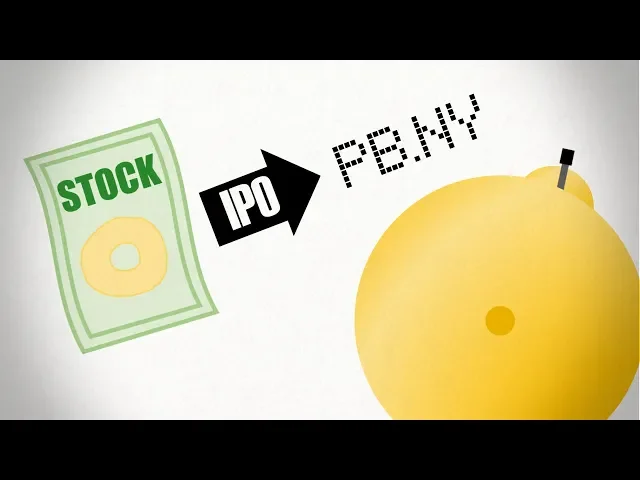
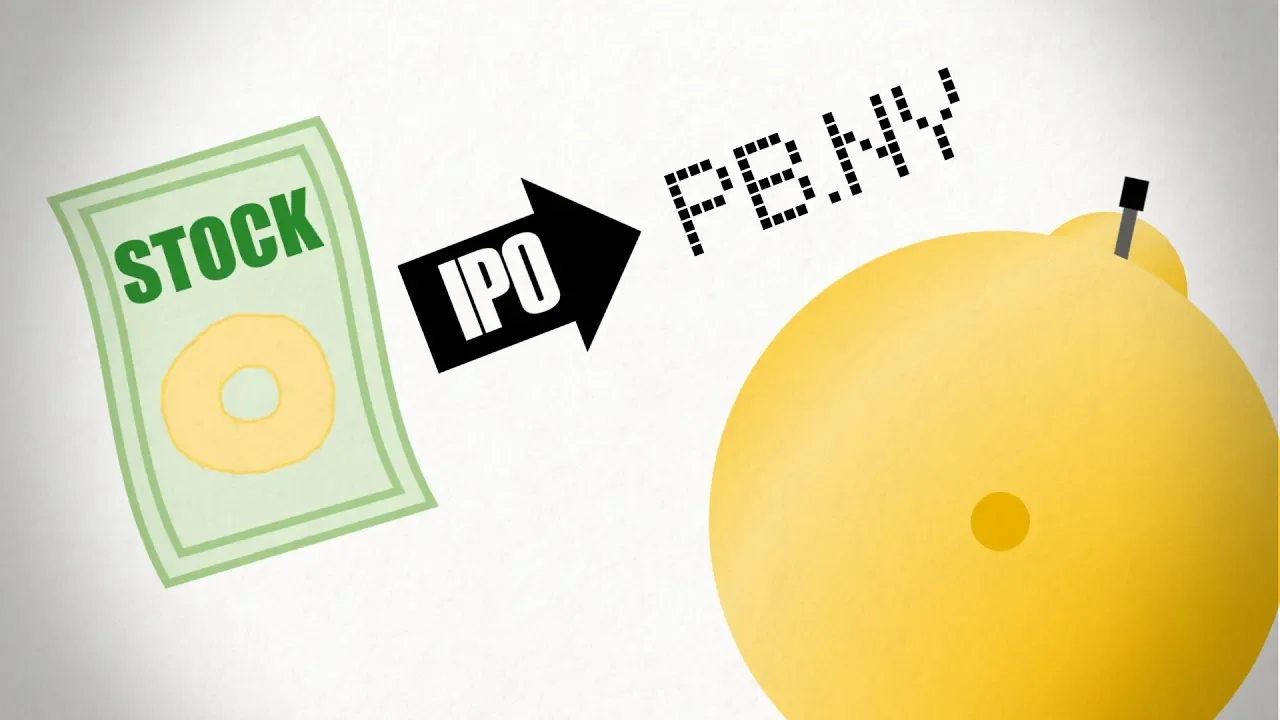
in 2019 Uber the popular ride sharing app is set to become a public company undergoing what may very well be the largest IPO in US history it's just one of the big names lined up to begin trading on stock exchanges this year and as an investor you may be wondering how you can go about receiving some of the first public shares of these promising Ventures after all who wouldn't want to invest in a growing company early on but it's important to understand the IPO process before you commit to buying a company's first public shares because
as you'll soon see it's not always ideal to buy a company right out the gate there are a lot of risks involved with IPOs and more times than not you'll be paying a premium price for a piece of the profit pie well simultaneously handling some unique disadvantages why well let's find out on today's plane Bagel initial public offerings or IPOs as they're commonly called are process in which the owners of a business sell shares of their company to public investors who in turn can then trade the shares with other investors on exchanges it's essentially the
first time that individual investors like you and I can purchase shares of a company and it's a big deal an IPO for many is proof that a firm has made it and finally stands as a legitimate Corporation but there are a number of steps that must occur before a stock can be sold publicly firstly the company must hire an investment banker now I know that title gets thrown around a lot and people sometimes confuse an investment banker with an analyst or an adviser but an investment banker is an individual or group of individuals who first
and foremost help companies raise capital and in the case of an IPO they will work with the company to ensure that they get as much money as they can from the share issuance after all the primary objective of an IPO is to raise money so the banker will help with both IPO Administration and marketing the investment banker also underwrites the stocks meaning that they will be the ones who actually sell the shares to investors on the company's behalf sometimes with an Associate guarantee that a certain dollar amount will be raised once the two parties have
agreed to the underwriting terms the second step is for the company to file a registration statement with the Securities Exchange Commission or SEC the statement will include information about the company's operations finances management Etc and the SEC will investigate the disclosures to ensure that they are accurate and that the company in question is competent enough to trade publicly if everything checks out then they'll set a date for the company's IPO step number three is to create a prospectus here the investment banker will compile information about the company including financial performance and expected future operations and
consolidate it into a document for potential investors the investment banker and the company will then circulate the document amongst institutions and individuals with money to invest a lot of it hoping to generate interest in the IPO after marketing the business the company then allows interested investors to submit indications of Interest basically letting the company know how many shares they want to buy and once the company has an idea of what people are willing to pay for their stocks they will set the IPO price the amount the first public investors will pay for their shares the
company will also finalize its IPO allocation confirming how many shares each investor will get now sometimes an IPO will be oversubscribed meaning that the the demand for shares is higher than the number of shares being sold in the IPO and when this happens it means that some investors will only get a fraction of what they asked for While others will be left with nothing but alas with all regulatory requirements met an iplo price set and subscriptions confirmed the IPO date comes and the company sells their shares as per their allocation celebrating their success with the
ringing of the exchange Bell in honor that notable IPOs receive and a very euphoric moment for those involved at this point after some further book building the investors who received Shares are able to trade them on public exchanges thereby generating the Stock's first market price and thus concluding our IPO process so that's how a stock becomes public and at first glance the process doesn't really appear to set off any red flags even still many investors refuse to participate in IPOs arguing that from a value perspective the stocks are typically too expensive when they first enter
the market in fact a number of Studies have highlighted that at an aggregate level IPO shares tend to underperform why well recall that the primary objective of an IPO is to raise money that means that the investment banker and the company are going to try and get the highest price for their shares after all the owner is effectively cashing out all or at least part of their ownership so naturally they would want to sell High something that goes against an investors's objective of buying low but it's not just the company's wishful thinking that increases their
IPO price there are explicit factors that generally make IPO shares more expensive than shares already on the market firstly as we mentioned earlier the company and the investment banker actively promote their shares during the IPO process in fact many companies carry out a road show when circulating their perspectus like an actual Road Show going around to potential investors and attempting to create hype around the stock like a politician campaigning for office during this road show the company will be advertising that it offers a once in a liftime opportunity and using generous projections to sell its
IPO a successful Road Show will allow the company to inflate its IPO price especially if the IPO becomes oversubscribed another reason why IPO Shares are generally expensive is that the business owners are more than likely only going to sell the shares in a favorable price environment you see the business can delay or even cancel its IPO if the markets aren't favorable so if the owners believe that they can get a better price for their IPO next year they can simply hold off off on the issuance this makes it very difficult for an investor to find
a bargain among IPO shares since the seller can wait for a higher price before launching their issuance so IPO shares have a few factors that can inflate their price but that's not the only problem in investors face IPOs introduce a number of unique risks and disadvantages too firstly there's a large information gap between the buyers and the sellers of the company here well the stock perspectus helps highlight important details there's a very limited range of historical data at the Investor's disposal making it difficult to analyze the company the owner on the other hand has Insider
information and may know something the investors don't whether that be a potential risk with future operations or some undisclosed issue with the firm's finances secondly individual investors like you and I are at a particular disadvantage with IPOs in that we often can't get access to the IPO allocation you see the majority of an IPO Shares are generally allocated to large institutional investors making it very difficult for an investor to receive part of the allocation the only way for a small individual investor to receive an IPO share is if they go through a brokerage that happens
to secure part of the allocation and even then they'll have to compete amongst other potentially larger retail investors for a piece of the share subscription now you can certainly wait until the first trading day to buy the stock on the market but if an IPO is over subscribed you can bet that there will will be plenty of other buyers waiting for the Stock's debut which could boost the stocks market price what you'll end up paying high above the original IPO price so does all this mean that investors should avoid IPOs well not necessarily some stocks
do very well after an expensive IPO Netflix and Google for example have earned decent returns for investors who got in right away other companies however have demonstrated that the hype of an IPO may not be enough to sustain a Stock's price level snap Inc for example which ipoed at a price of $17 in 2017 and increase to $24 on its first trading day is currently trading below $10 a share so as with most things in Investments you simply need to be aware of the risks and make your decision on sound analysis if you want to
buy an IPO share ret out to your broker to see if you can submit an indication of Interest read the prospectus and find out what the money from the IPO is going to be used for identify the risks you'll face from buying early and weigh these against the Stock's growth potential in the end it's it's impossible to know whether up and cominging IPOs like uber will over or underperform and it's easy to get caught up in the hype surrounding these companies but it's important to recognize the added risks and remain objective when enthusiasm runs rampant
like Buffett says be fearful when others are greedy and greedy when others are fearful thanks for watching if you like this video make sure to hit the like button and if you like what we're doing here hit subscribe hit the Bell icon if you want notifications about future videos if you have any feedback or topics you like me to cover in future videos leave a comment down below for the pl Bagel my name is Richard coffin thanks for joining me today [Music]