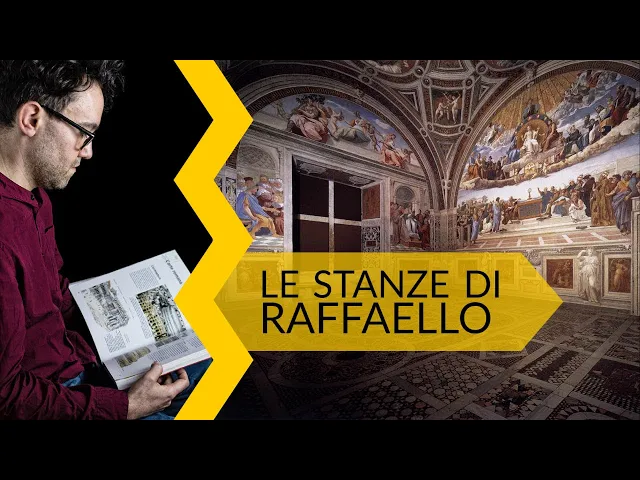
In the Raphael Rooms, which I will talk about today, once upon a time very few people could access because they were used by Pope Julius II della Rovere as a private residence. It is a set of four rooms, all with a rectangular plan and a cross ceiling. The task of decorating them was initially entrusted to a group of artists including Perugino, Peruzzi, Sodoma and Lotto.
However, in 1508 the painter and architect Donato Bramante introduced to the Vatican an artist who was still very young and little known at the time, coming from his own city, Urbino: he was the great Raffaello Sanzio. Raphael began to work in the Stanza della Segnatura, but soon, given the young man's talent, the pope decided to entrust him with the execution of the whole decorative complex, firing the other painters. Just think that, according to the accounts of the time, the walls of the four rooms had already been decorated.
The pontiff ordered that the entire pictorial cycle be canceled to make room for Raphael's frescoes. For the artist, then twenty-five years old, it was a great recognition and a commission that committed him from 1508 to 1520. The first room in the museum itinerary is that of Constantine, created last, destined for receptions, official ceremonies and solemn banquets.
Its decoration was made between 1520 and 1524 by Raphael's pupils on the basis of drawings left by the master after his untimely death on 6 April 1520. The frescoes in the room celebrate the story of Constantine, the first Roman emperor to grant freedom of worship to Christians with the edict of Milan of 313 AD It begins with the Apparition of the Cross in which Constantine, before the battle against Maxentius, speaks to the soldiers and the Cross appears in the sky , confirming that the emperor will win. This is followed by the Battle of Ponte Milvio which commemorates the victory of Constantine over Maxentius, who proclaimed himself emperor in his place.
Then it is the turn of the Baptism of Constantine. While the fourth and last scene depicts the Donation of Rome in which Constantine offered the city of Rome symbolized by the golden statuette to Pope Sylvester. The state of the Church and the temporal power of the popes were founded on this legendary episode.
The choice of these themes is due to the desire to affirm the power of the Church by retracing a historical period in which it established itself as an institution, defeating paganism. The second room, following the path of the museums, is that of Eliodoro, decorated between 1511 and 1514 which takes its name from one of the paintings inside. Here Pope Julius II asked for a clear representation of divine support for the Church and an exaltation of his own politics.
This is to give a sign of strength at a time when the papacy was being challenged by various enemies on several fronts. It starts with the episode of the expulsion of Heliodorus in which the chancellor of the king of Syria is represented, caught stealing the treasure of the Temple of Jerusalem, chased by a divine knight and two young men. The expulsion is a reference to the untouchability of the Church's assets.
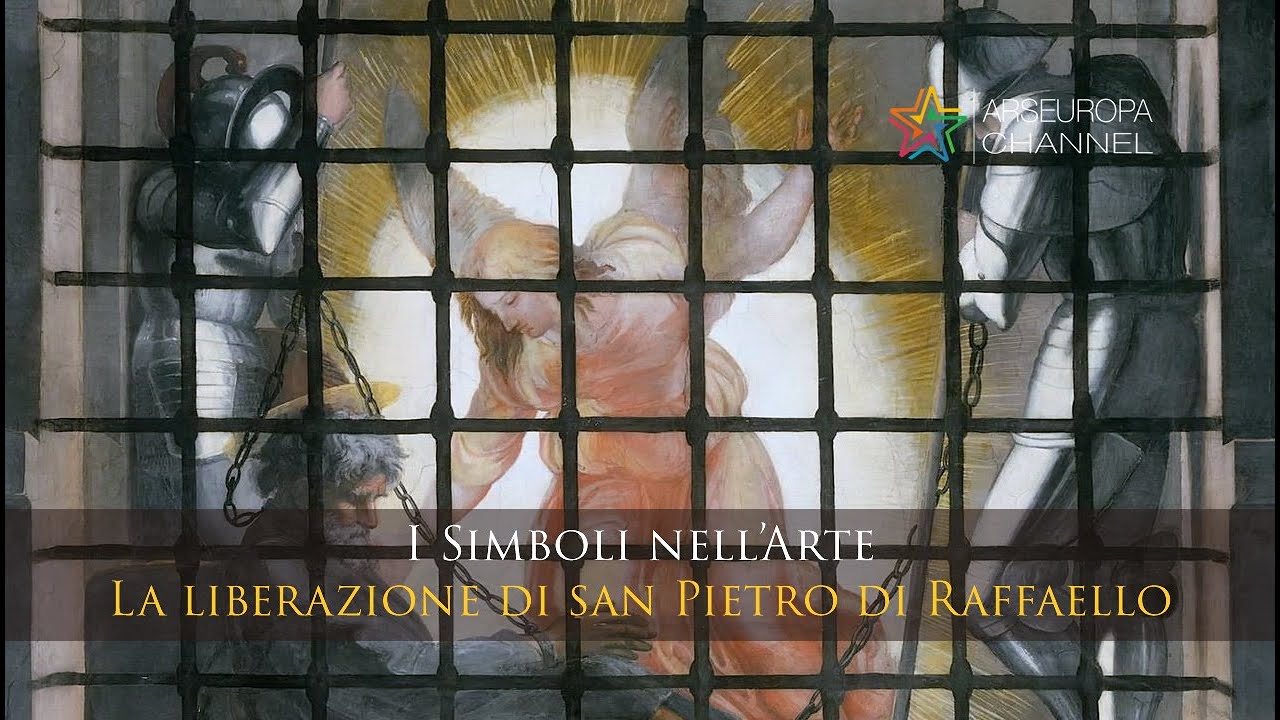
Very original is the choice that Raphael made in moving the narration of the event into two areas at the ends of the wall. On the left the pontiff who witnesses the scene and on the right the actual expulsion. On another wall we find the liberation of St.
Peter divided into three moments: in the center the angel appears in a dream to St. Peter. To the right she leads him out of the prison past the sleeping guards.
On the left, a guard wakes the other soldiers amazed by the sudden disappearance of the saint. It is one of the most evocative nights in the history of art. Another fresco celebrates the meeting of Pope Leo the Great with Attila in which, according to the stories, the pope managed to frighten Attila's barbarians thanks to the appearance in heaven of Saints Peter and Paul armed with swords, avoiding their descent on Rome.
. In the fourth wall there is the Mass of Bolsena, a legendary episode during which a priest doubting the presence of Christ during the celebration of the Mass, saw blood coming out of the consecrated host. This event, which gave life to the Christian feast of Corpus Domini, was also at the origin of the construction of the splendid Cathedral of Orvieto.
On the vault are represented the burning bush in which God spoke to Moses. Jacob's ladder in which God revealed himself in a dream to the patriarch of the Jewish people. The apparition of god to Noah to save him from the universal flood and, finally, the sacrifice of Isaac during which God rewarded the faith of his father Abraham.
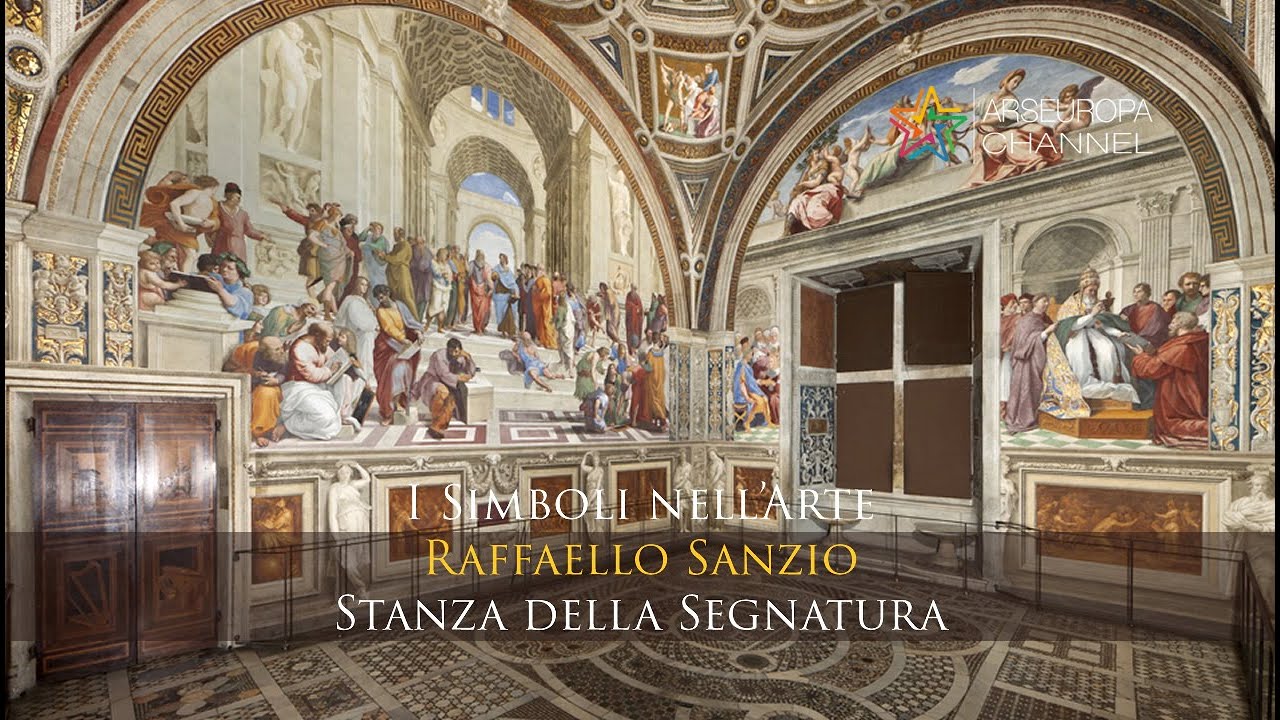
The third room you will encounter in this extraordinary art journey is that of the Segnatura and contains the most famous frescoes by Raphael. They constitute the debut of the great artist in the Vatican and mark the beginning of the full Renaissance. The environment takes its name from the highest court of the Holy See presided over by the pope who met in this room.
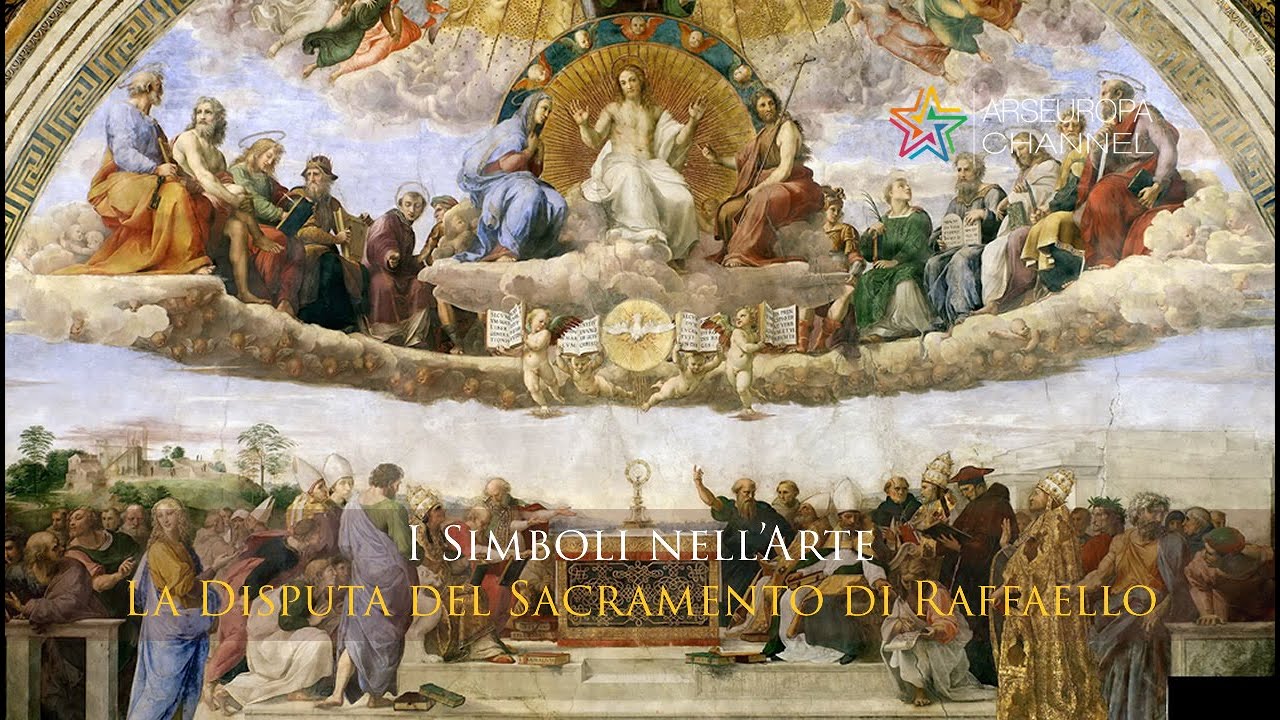
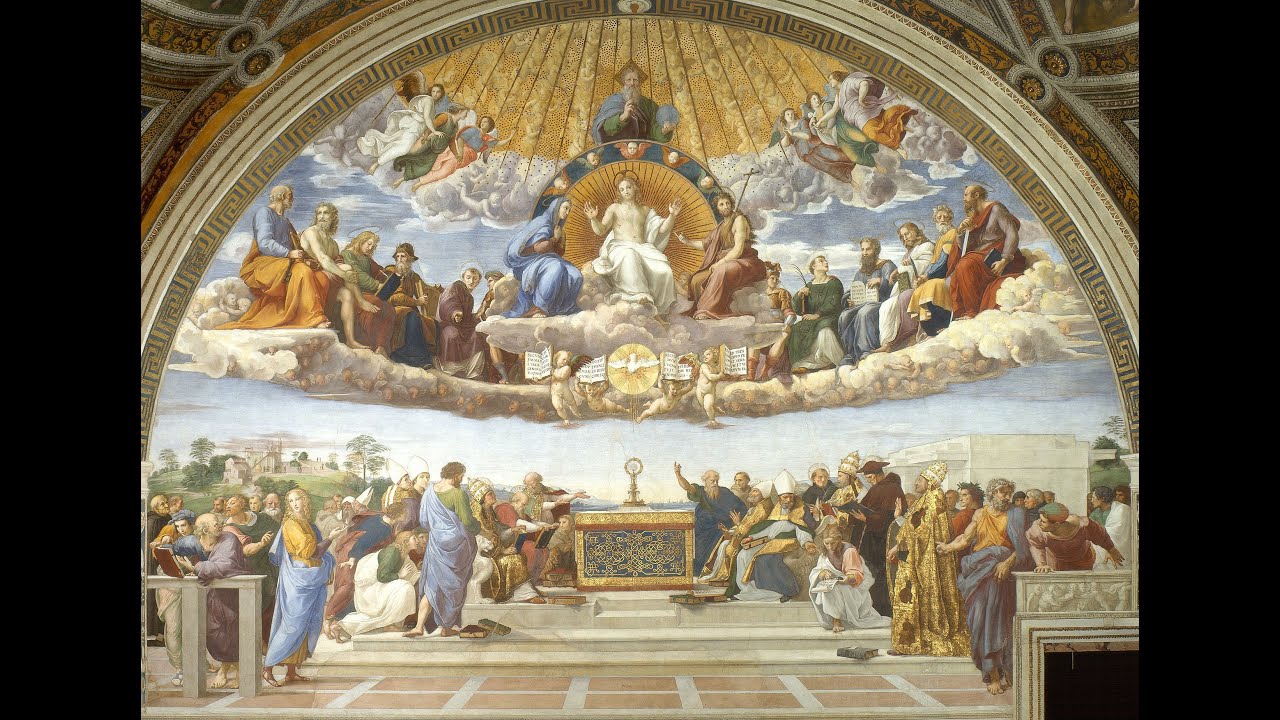
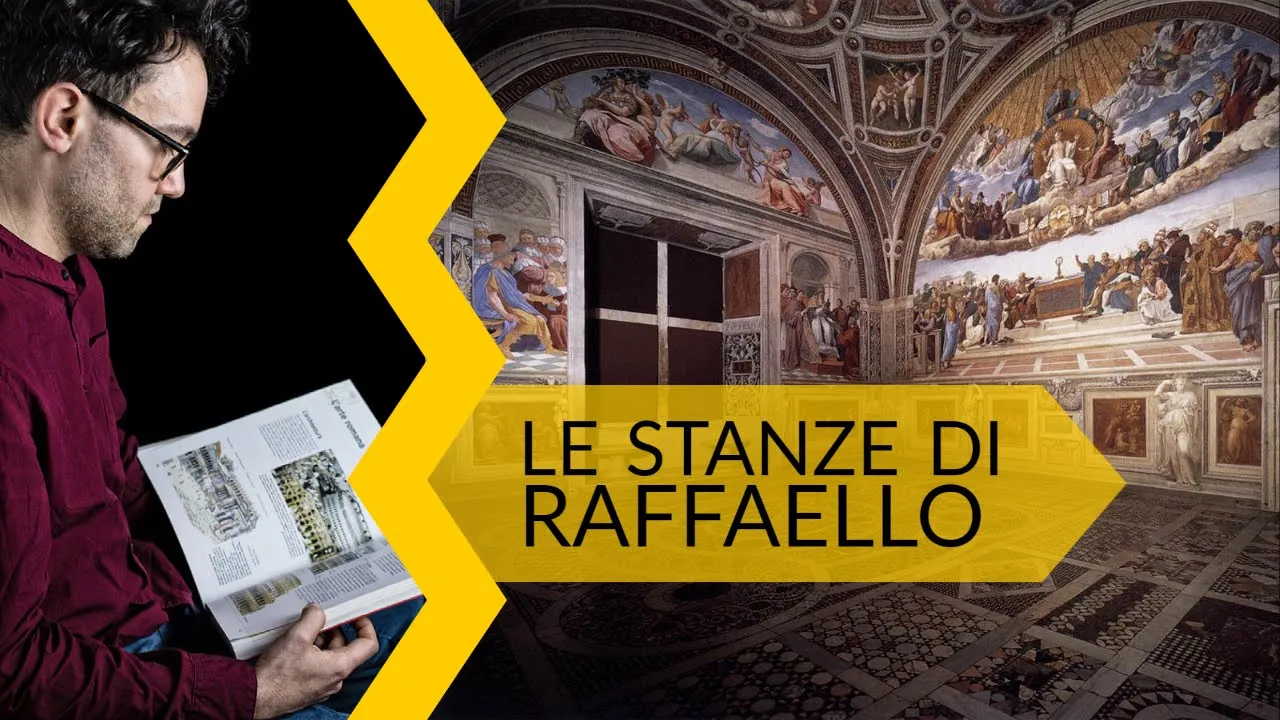
The frescoes represent the three most deserving aspects of the human spirit: the True, the Good and the Beautiful. On the vault, inside some medallions, allegorical figures are portrayed symbolizing four disciplines, Theology, Philosophy, Justice and Poetry. The Disputation of the Sacrament was misinterpreted as it is actually a representation of the triumph of religion.
The composition is divided into two parts: in the upper section there is the militant Church with the doctors and theologians who preside over the sacrament of the Eucharist, the true center of the whole scene. In the lower part there is the triumphant Church with God the Father, the angels, Christ in majesty between the Virgin and St. John.
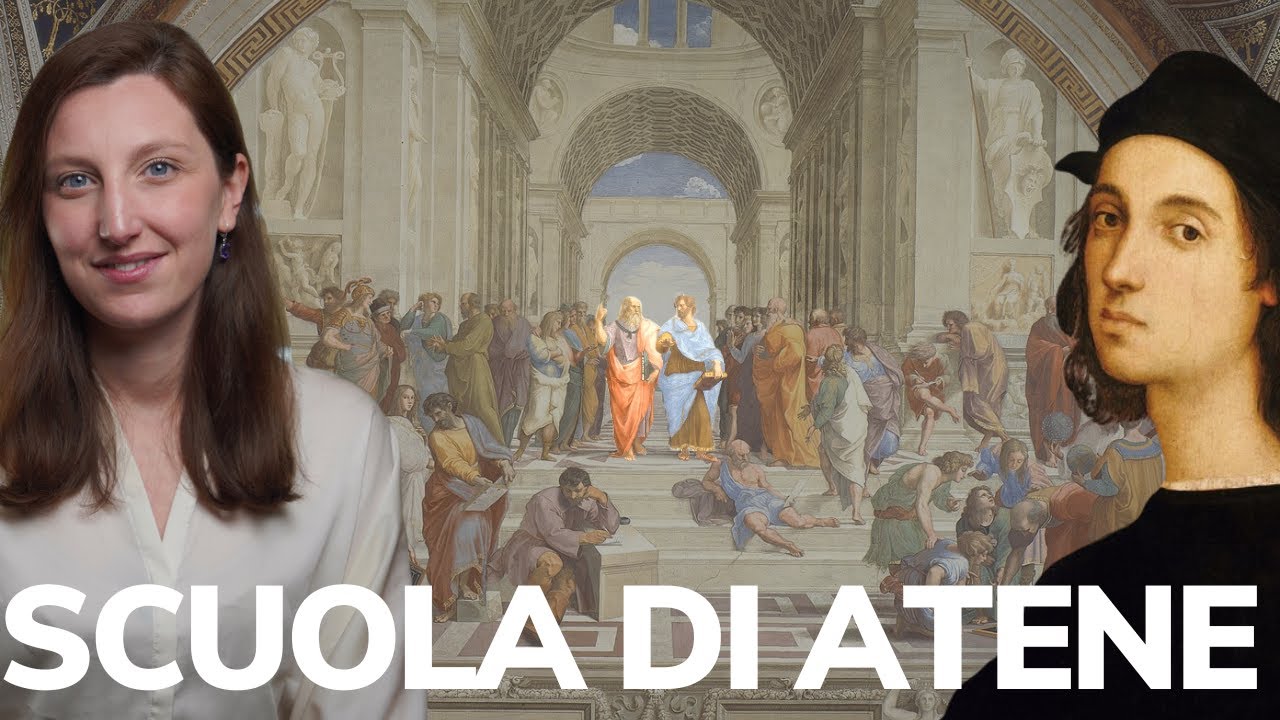
And below the dove of the Holy Spirit. On the entrance wall to the room there is the most famous work. The School of Athens that illustrates a host of thinkers, philosophers and scientists of antiquity, in front of an imposing classical architecture.
At the center of the whole composition are Plato, depicted in the likeness of Leonardo da Vinci, in the act of raising his finger to the sky , indicating the ideal sphere from which he believes the knowledge to come. And Aristotle who with his right arm indicates the surrounding world, nature and therefore the importance of a knowledge based on the observation of reality. The two philosophers represent the possibility of union between the Platonic and Aristotelian doctrines, at the time sharply contrasted.
The third large composition of the room depicts Parnassus, from the name of the mountain sacred to the god Apollo and the Muses according to the classical myth of Greece. In the scene Apollo plays a lyre surrounded by the nine muses protecting the arts. On the left and on the right, classical and modern poets surround him.
On the wall opposite the Parnassus the Cardinal Virtues are depicted: Fortitude, Prudence, Temperance. And the Theological ones: Faith, Hope, Charity. In this, as in the other rooms, Raphael knew, from a direct observation of Roman antiquities, to create an art that became a symbol of Italian painting of the sixteenth century.
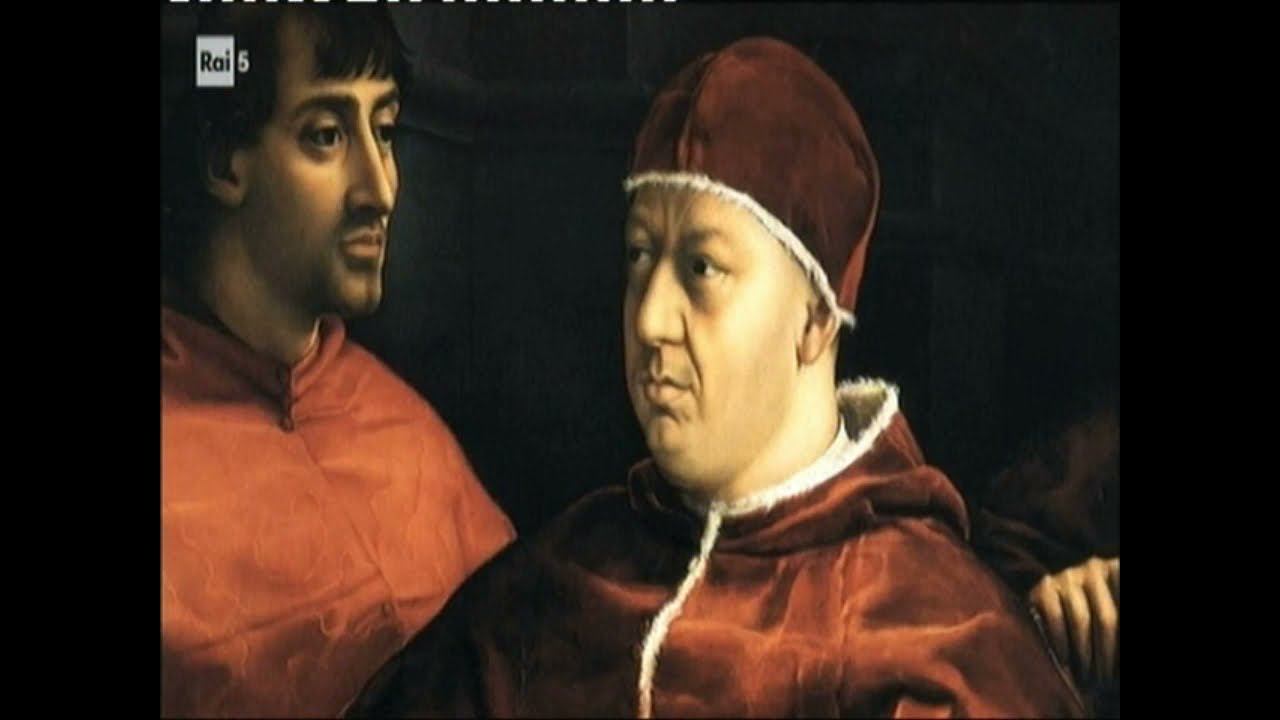
The fourth and last room is that of the Fire in the Borgo, commissioned by Pope Leo X to Raphael who in turn entrusted much of its construction to the students who finished it between 1514 and 1517. This room became the dining room Ordinary of the pontiff's apartments. A unique place to eat!
The frescoes inside illustrate the great political aspirations of Leo X by means of stories drawn from the lives of two previous popes with the same name: Leo III and Leo IV. In all episodes, however, the pope assumes the traits of the reigning pontiff, Leo X, in a sort of demonstration of political, military and diplomatic continuity. The first scene depicts the Coronation of Charlemagne which took place in the Vatican basilica on Christmas Eve in the year 800 by Leo III.
Event that thus gave rise to the Holy Roman Empire. We then move on to Pope Leo III's Justification, which illustrates the promise made by the pope in the presence of Charlemagne and priests the day before the king's coronation. This was to reject the slander that had been directed at him.
But it is the Fire of the Borgo, perhaps, the most exciting fresco. Here we see the prodigious intervention of Pope Leo IV who, giving the blessing, put out a fire that broke out in the Roman district of the Borgo. The scene is dramatic, characterized by a multitude of characters in search of a salvation from the flames.
On the left a man saves his family by loading an elderly man on his shoulders, a woman sacrifices herself to spare her son, while on the right a group takes the buckets to try to put out the fire. A whirlwind of action and feeling. Finally, the last episode is the Battle of Ostia, which took place on the Roman coast in the year 849 and celebrates the victory over the Saracens by Pope Leo IV and his army.
There is no doubt that the Rooms represent one of Raphael's greatest masterpieces. These environments have allowed the artist to compete with the most diverse subjects and to adopt new solutions each time. The habit of calling them by the name of the painter instead of that of the commissioning pontiffs is significant of the importance achieved by his art.
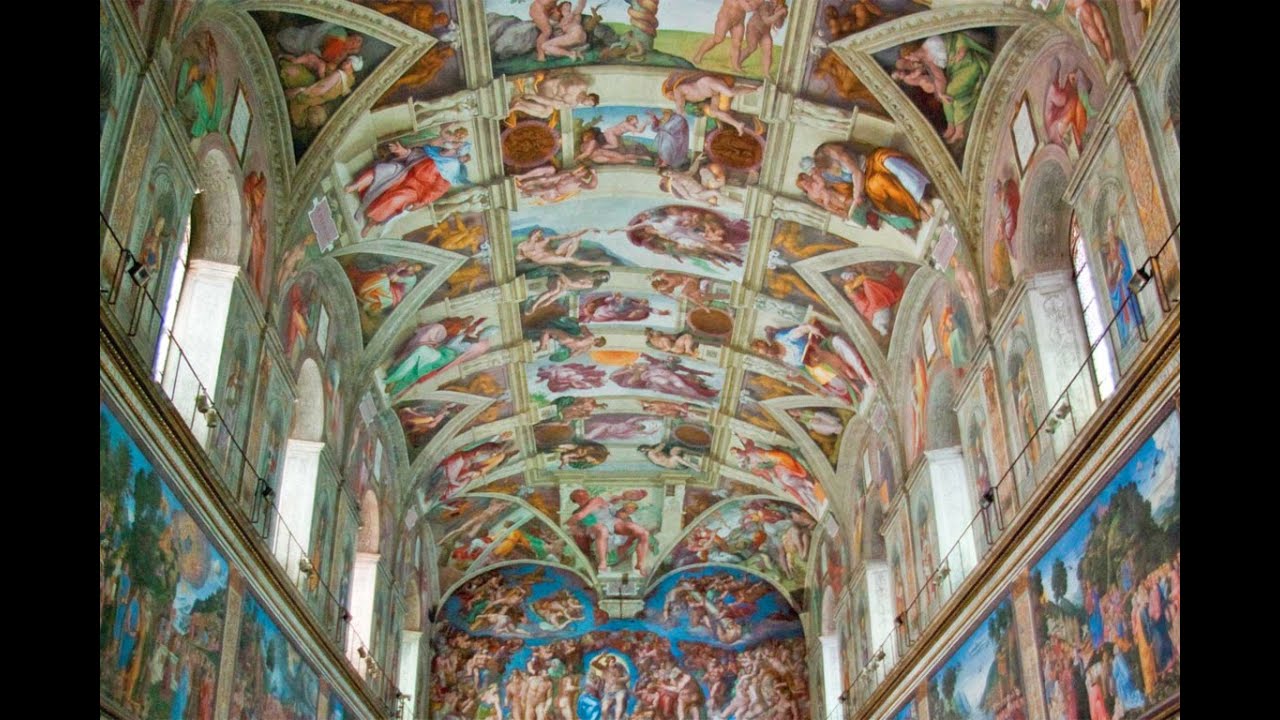
It can certainly be said that, if the Sistine Chapel embodies the heart of the Vatican, especially as a spiritual authority, the Raphael Rooms are instead the political heart of the papacy.