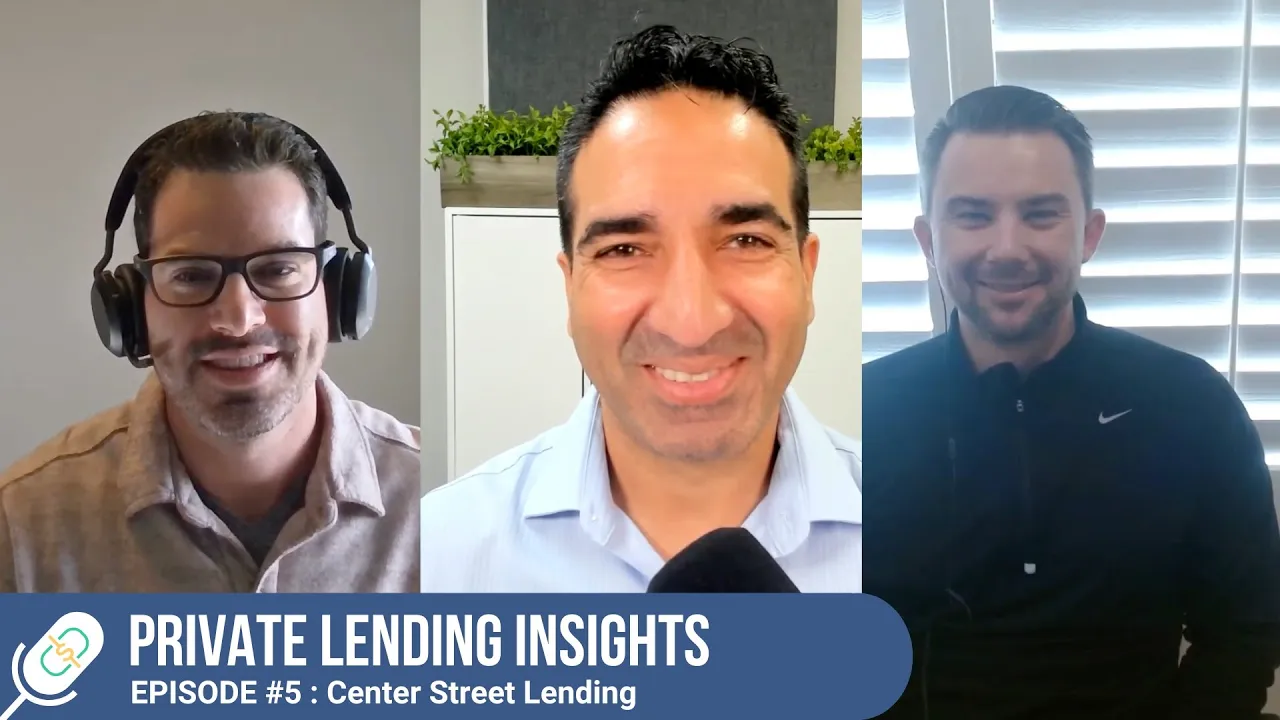
Welcome to private lending insights I'm your host Rocky batani this episode is all about groundup construction financing for residential investment properties throughout the country I interviewed Jeremiah Weidman and Eric Brown from Center Street lending this company is based in Orange County California but they lend nationally and they love funding construction loans so in this episode we get into a lot of Details a lot of specifics about how construction loans are fin financed I asked them to provide some insights on what they're seeing in construction lending in general throughout the country I think you'll get a
lot of great insights about ground construction financing so let's get started here we go all right gentlemen thanks for joining us for this episode of Private lending insights and um uh so so Center Street lending you guys do a lot of Construction loans so I just wanted to get some insights from you on what's happening in construction Lending talk about your loan programs and uh get any other information about uh groundup construction lending for residential investment properties and small multif family so so with that gentlemen if you could uh just give us some insights on
what you've seen as far as Trends uh within uh the private lending space just in the past year for Grounded Construction specifically yeah I mean Rocky thanks for the opportunity to be a part of your platform um you know I would say last year you're only seeing a stronger appetite from investors for ground of construction um I like to tell people you know you get investors and I call it graduating you know they graduate from buying an investment property and doing a cosmetic remodel then they you know they decide you know what I can can
Probably gut a thing you know let me gut a house next and they're like you know maybe maybe I can add some square footage maybe I'll do you right and then you know they get up to and then they get to the senior level of you know what I'm going to tackle R of construction so you know as we've all seen the residential investment space that we all live in you know it's only become more and more diverse and you've seen more people enter this space and I think Really ground of construction is by far
the most queries that we get um over on our side and seeing stuff all the way from people buying just plots of land with plants approved to people wanting to scrape down you know Grandma or Grandpa's house that hasn't been touched in a long time or a house that got fire damag Etc um SE a lot of people try to do subdivision type projects I would say that's probably the biggest Trend in the last Six to 12 months is smaller subdivision type projects anything to add to that Jeremiah yeah I mean basically what's happening is
that you know uh you got a lot of older homes right and people you can only like rehab the house as much as you can so people want brand new homes they want to live in good areas so a lot of people are doing is scraping them and then building you know nicer homes um so that's definitely a trend I'm seeing Obviously huge Trends are like adus that's pretty popular condo Maps people splitting stuff up you know that's kind of some common trends that we're definitely seeing so groundup is by far huge inquiries we get
uh definitely in cry leny because we have the platform to do them and Eric you mentioned that you've got these borrowers that are uh that are mostly flipping houses doing cosmetic rehabs or heavy rehabs uh and then now they're getting Into construction loans are these clients that you've had that you funded their their flips in the past and now they say hey I want to get into construction uh at a in a ground project not just a major rehab um are you typically only taking on those borrowers if you've already funded their deals in the
past good great question so you know we are one of the unique lenders that will do groundup construction loans to borrowers that don't necessarily have a Groundup track record you know we we do take into account the experience that the general contractor that they're using on those um we're all always going to be bullish with our our client base that we have because we want to take care of the clients to take care of us absolutely um but we do look at doing loans to um you know firsttime investors for ground of construction you know
we're going to be stringent on BYO scores liquidity probably throttle back With leverage a little bit but we are one of the few lenders that that will do that um and I'll I'll leave you with this point I got a statistic couple months ago you know of my client base 95% of my loans are repeat clients so it's one of those things if if you come in and we want to make sure you have a great experience and stay with us um is really what we try to to do so when when clients do come
to us and say you know what I want To take on this type of project I know I don't have that that history yet we take a chance on it and it's very hard for us to say no to to CL like that nice but you do require them to have a general contractor so they're not managing the project themselves absolutely y that makes sense and uh Jeremiah you mentioned there's a lot of tear Downs that you're seeing is is a tear down generally easier than if you just bought a plot of land and built
on it or is it All the same once you demo the property it's typically easier because all the stuff is already there like the on-site offsite utility is already there you know it makes sense because there's basically homes in the area when you buy vacant land you got to pull all that stuff in which makes it a little bit more challenging makes sense and uh as far as someone buying land and getting it ready for construction do you fund any of that Or are you only jumping in when it's ready for vertical yeah I mean
basically there's typically two cases there's either they're buying the land or they're going they already own the land um most of the cases we get the client already owns the land they now already spent the money on the soft costs so they've got the plans approved they've got their permits they've got everything kind of lined up they'll come to us now for the construction budget to go Vertical that's kind of where we really like it and then we'll Finance typically 100% the construction depending on the ratios we'll try to get money back to them that's
one situation the other situation if they're buying the land depending on the loan to cost and the arv we will lend up to 60% on day one of the land value or purchase price got it so that's if they had already purchased the land they got it ready uh now what about in the case where they're Just buying a piece of land that someone else has already done all the all the site work so they're going to buy the land and and then it's ready for vertical yeah so say so kind of the same situation
um they're they're buying the land so if the ratios fit we will lend up to 60% of the land and then 100% of the construction nice so they just bring in 40% cash to the to the purchase of the land and then you fund 100% of of the the ground up vertical exactly Typically it's a 12 to 18 month loan the rehab or construction budget is what we call fund control where it sits in a separate escrow account they only pay interest as they draw it's based on a reimbursement they start the work we reimburse
them uh what makes sense a little bit differently is kind of what alludes to Eric why we have so much repeat business is because we've been around for about 14 years and we're servicing our own loans which makes this A little bit different than most private lenders most private lenders will send to like a third party company like an FCI or BSI those guys will manage the third party payments and draws we're doing it all inhouse so that's huge so that's why Eric knows what his clients are doing and I know what my clients are
doing because we're seeing the draw reports we're seeing the payments and that's why we have a lot of repeat clients and how about the inspections Whenever you you hit a a certain Milestone or or it's ready for phase two uh who does the inspections and how does that timing work we typically have a thirdparty company that will go out so the draw department will get a request from the client and then the inspector will go out take pictures make sure that the work is completed that report comes back to us internally we'll like verify it
to the budget they sent us and then we release the wire to the Borrower well let's step back to the to the actual funding when when uh when you say that you'll f fund 100% of the vertical costs at the time of closing does the borrower get a bunch of money to start the project or do they need to front that first phase of the project and then get reimbursed yeah so on a purchase you know usually what happens is that's why grounded construction is a little bit more I would say Capital intense more up
Front is that we definitely require the clients to have what's called reserves so if they're a new client we typically want 10% of the budget and about six months of payments so when they close and they start to do the work they're usually going to sit down with their general contractor or their an owner Builder and then they're going to plan out their phases you know they're gonna like hey this is going to be a five-phase project and they're going to Typically have enough money to start the initial construction and then when they get to
that phase then they'll ually request to draw and then they'll do second phase third phase fourth phase so let's say the construction budget is 200,000 for example or maybe that's is that small for a construction project a little on the smaller side okay fine let's go to The Other Extreme let's say it's a million dollars okay and they and they split up the project into five Phases each phase costs $200,000 so once once you funded the loan they're it it's really they're they're putting out that $200,000 to start the first phase and then once they
get to the end of the phase then you reimburse them for that 200,000 is that how that works essentially but what I you know what I like to inform clients is we're not going to hold you to a a draw schedule or a phase schedule right you you have the ability to pull a draw Whenever you see fit um you know I the way you're describing that you know it makes me makes me feel like I'm talking to you know five clients every day type of thing and I'm like you know hey I'm not going
to hold you to your draw schedule I don't even ask you for a draw schedule you're going to have one with your contractor and he's going to want to get paid in phases Etc and all those things but we're going to reimburse your for work that's complete and I and I Heard heard to mention you know ferti construction and I want to remind people that we will reimburse for soft cost that's something that we do do um very rarely we take on projects where horizontal developments going on and what I mean by that is you
know roads curbs gutters those type of things that's rare for us to do it it's something that we do do but very rare um so again I I tell clients like listen if you can you can frontload a project for 50 60% go for it but if you need draws you know in 5 10% increments that's up to you too you get to manage that however you see fit so I tell you know this is this is your business this is your project you get to run it how you see fit I'm just here to
support you nice so I don't even have to if I'm the Builder the Bor I don't have to even just give you a set schedule of hey here's my different phases so let's just say it's a million doll construction Budget I put out $50,000 I can reach out and say hey guys need $50,000 and then you absolutely okay and then you'll see you have the rare clients that are like you know I didn't pull a draw once and I'm done here's here's my listing I'm ready for an inspection we we'll fund your whole project if
you you know if you want to run it in equity yourself um so we're we're very accommodating from that standpoint when it comes to construction I'm not gonna I'm not going To go and say you know what hey it's been 60 days you need to pull a draw now not something we do that's interesting so I can basically manage my own cash flow if let's say I didn't want to start paying interest on on that money then I can I could just put it all out whatever I have in cash reserves uh I spend all
of that and then I'm not paying interest on exactly on smaller Fix and Flip projects I I tell clients all the time I say you know if You can you confront your project you get it done and you want to get some Equity back before you sell it complete the project call for one draw in a perfect world you're paying interest on the construction money for less than 30 days when you get that Equity back to go and move on to a next project or keep your other projects that you got going on you know
I don't want a lot of investors get equity rich and cash poor very fast and I've been there myself Investing in projects so I I know the Feeler and we try to be as helpful as we can I last thing I want to do is be a hindrance to and put guard rails up on you um you know if you go outside and you you know you get caught speeding you know we'll remind you hey this is this is how we go but we're not going to you know I'm not taking you to jail none
of those type of things so theoretically I could use Center Street lending as even kind of like a a backup Capital provider Right like if I have enough cash project and then it's just if I if I happen to you know use up all that cash before the end of the project then I can I can jump in and maybe like let's say that you you agreed to fund a million dollars and then I only used up um 100,000 or 200,000 yeah am I still I'm not paying interest on the entire amount right it's just
yep n interest it amaz you how many times where I you know I'll get reporting on my side for payoff Requests Etc and I'll reach out to a bar and say you know hey you have X amount of dollars left in your construction budget you you you get the beautiful project listed you want to pull this money oh wow I totally forgot about that thanks for reminding me yeah actually will pull that draw nice so let's just take the opposite scenario where where you have a builder that um that doesn't have that much cash Reserve
from what you said Earlier you want them to to have about 10% of the construction budget in cash reserves right yeah that's our minimum yeah okay and then does That Vary depending on the scope of the project and other factors you know you can give them the gray with experience and and fos and all that fun stuff you you do get into the gray a little bit um really we try to stick to 10% as a minimum because anyone that's been involved in Construction knows that there's going to be something that pops up and there's
going to be some type of cost overrun I always like to look at the construction budget they they provide to us and we allow up to a 10% contingency as well you know there a lot of people that send over budgets and you look at them and go you don't even you don't have a contingency in here let's put one in here because something will pop up and you go gosh I didn't think about that Totally forgot to put that line on them on here so um we do we like I said earlier much more
accommodating flexible whatever adjective you want to use for people that do have like for like experience on those type of projects um but always want to try to set up clients for Success which is why we review the budgets up front and U make sure that they do have a contingency in place great and Jeremiah earlier you Said that sometimes at closing you'll give some money back I didn't quite get that could you explain that that that's in the case of like they own the land you know so a lot a lot of times um
they'll buy the land with cash you know so they'll Own It Free and Clear so we're a cost based lender so when people buy the land with cash and now they spend all this money um they're in it they have a lot of equity into it so then when they refinance it's it's Technically a refinance because you're basically using the land as collateral to get the construction budget to build your home well now there's room to give you some cash back so people call the land draw but basically it's a cash out that you're providing
money back on the dirt day one based on the premise that you have a budget with a future arv of a house you're going to build so there's a lot of people want to buy the land cash because what happens is it's not a very Streamlined process all the time depending on what city and county you're in you might own that land for six to three years before you get the permits planned and you know there's a lot of approvals you know which I think might lead to another question you have is like what are
some of the set packs it's counties right the permitting process right so I think that's another advantage of C Street lending is that we get a lot of guys that we we did the Loan and unfortunately in the 12 months or 18 months they couldn't there was a problem there was maybe a different law that came out or some fire situation and we got to basically help them get in there and refinance again so that they can complete the project because they didn't have the approved permits or plans or the project change material costs got
up or down so a lot of these things change all the time well let's go through a sample scenario let's say I Purchased a land for $200,000 I've gone through all the the permitting and it's ready for construction funding ready for vertical and and let's say the the construction cost is a million dollars just for round numbers and um and I've I have $200,000 worth of land so at closing if I needed some funds you're saying that you would provide some funds to me once once the loan Clos yeah so it it always depends on
the situation right so if you bought the Land for 200 Grand some of the questions we ask of like when did you buy it how long ago uh what have you put into it you know typically if they bought it for 200 they've now spent some money on plans permits architecture blueprints some grading I don't you know depend so so what we do is we take the total cost right the 200k for the purchase let's say in this case they spent 100 Grand and cost meth to date they have a million dollar budget so we
usually take So that's like what that's like 200 plus 100 plus a million right so you know in this case you know sometimes what happens is this the person might get a little cash back in this situation you know but maybe not much it just depends on the budget we take a look at the budget as well kind of find tune that but if they spend all that money then a lot of times they can potentially get some cash back to help Them kind of you know buy more materials and you know kind of go
from there so if that's the case if if it is possible to get some of that cash back they could theoretically use some of that that cash to just start the vertical project and then and then they can request a draw whenever they're ready to yeah a lot of times too these are kind of moving targets right they're still working on the project when they get the loan um it's kind of a it's really like a cat And mouse situation right so sometimes they're like oh I want to do it with all my own cash
and like o but like then you're Tapped Out you know so you kind of want to be in this sweet spot of Leverage where you're like hey I'm still working on it but I put all this money into it but now I need a construction loan you know so there's that there's like that's what we always advise our clients of like hey like make sure liquidity is there in case you have the Money for the draws to continue the project you know so um yeah just depends on the situation every situation is different all right
and what are some of the the challenges that that you've seen with with your Builder clients in the past year let's say 2024 uh maybe 2023 was a was a different story just in in the past 12 months of 2024 what what are some of the challenges you've seen you know it's always a challenge in our end with the Way we're set up is you know I'm not going to I'm not going to advance dollars on materials that aren't on site and install that's always a sticking point that um kind of gives a sticker shock
to everyone no matter how many times you feel that you you say it to them once they get into it and they pull the draw and they go what do you mean I put $100,000 down on Framing it's there I have the receipt look at it and I always tell people I say you know it's amazing how many times that framing never even shows up on the site or go gets delivered to another job site so you know as a lender I gota you know I got to take every every I got to drisk as
much as I possibly can while trusting you at the same time right so um that's always the hardest thing I think for people when they get into these construction projects is what do You mean you can't reimburse on deposits that's just something we don't do and quite honestly I don't think any lender does um so that's that's the hardest thing and biggest challenge really everything else kind of gets worked worked through our draws get done quick I mean we have two different outlets and we're working on a third to get construction draws reimbursed as quickly
as possible these are taken from the time you send the Inspection to us to get funded five business days sometimes three and but the the deposits that's the biggest challenge in 2024 we're no longer in a supply shortage you're not hearing that anymore you know Supply is definitely available to everyone um not here in that project just get installed because you know like shoot I can't get this material I Jeremiah got anything to add to that yeah I mean like I mean it's the basic thing with construction right is Like liquidity right you got to
make sure you have the cash because like someone sneezes the wrong way something happens this way I mean we've all seen The Fix and Flip shows right with chip and Joanna you know Chip's calling the borrower or the client going okay you got to pay five grand for this it's like nobody wants that phone call but it's like as much as you can plan you got to make sure you have a contingency in there because things are going to change So I think people have to be flexible with that you know and um we're a
partner with the developer we are we want you to succeed what they're doing out there is such a hard job right originating the loan is only the first step there's the whole process of helping the person with the draws the servicing budget items are changing you know so it's a constant kind of like trying to get them to get the the project complete and then sold you know Uh what investors do out there like I mean we got to give them a lot of love it's really a lot of hard work and it's very challenging
you know we want to be there to help them with it we're not trying to you know make it harder we're trying to be like we want to do the loans you know and grow the business and how about maturity to fults have you have you had a lot of clients that reach let's say the end of the term whether it's 12 months or 18 months and Then they need more time because things got delayed or or they weren't able to sell the property yeah it's definitely very common I think that's another huge benefit of
our companies because we're servicing the loans and the draws we can run a report and go hey like Eric just mentioned you're 60% complete we can do an inspection so our our whole thing is like we we want to make sure that you're moving on the project if you're moving on the project like we're going to work With you we're going to help you get it done whether it's an extension or maybe doing another 12-month loan like make sure that you get complete so you mentioned earlier some of the projects that you're doing could range
from adus to planned unit developments but what's the most common type of project that you guys fund I would say for right now still fix and flips are most common product um next up is probably scrape and build see A lot of lot of ground up construction requests um fix and flips the most common just because there's more people doing that um but we're funded I I would I believe I saw a statistic that about 40% of the loans that we originate right now is some form of either strap and build or straight Granite Construction
where someone bought a pie of yeah how how about the the number of units are are are you doing any projects where there's where it's more than one House we are I would say we try to stick as much to 1 to four as we can uh we'll go up to 10 units uh anything above 10 units kind of got to go make sure we get committee approval internally um but one to four we see a good amount of people's either scraping something or subdividing a piece of dirt to build four houses or put as
many structures as they can take advantage of Adu laws specifically in California as well you see a lot of Adu Junior adus um Building as much housing as they can because there only so much dirt in the world and as far as the the 10 units you mentioned are you talking about one property with 10 units like an apartment building or did you mean 10 separate houses yeah both but yeah a lot of people come multif family construction is is a hot commodity right now you know there's not a ton of people funding those projects
right now we'll take a look at them you know what those Projects where building one structure five plus unit apartment buildings we're really really hard on making sure someone's got like for like experience whether it's the general contract or the borrow themselves all right and how about geography where uh in the country are uh most of the projects at Center Street funds were Southern California based for the most part uh your Orange County San Diego County LA County uh Riverside San bero County I would say you know really the majority of our business is is
in that pocket um we're trying to become more nationally uh well known and branded know we in the tennesses the floridas um Texas Washington Oregon um North Carolina South Carolina a lot of yeah see a lot of a lot of business in the North and South Carolinas yeah um you know really in Areas where laws are seem to be more favorable for investors entrepreneurs business owners are most of the projects that you fund where the Builder is planning to sell the property or do you have a lot of builders that that do build to rent
projects I think it just depends like maybe they'll go in with a selling mindset but then change their mind if they can rent it so I I still say the majority of people are going in with the Mindset of hey I want to I want to sell this um and I would you know if I had to put a percentage on I'd say probably 75% is end games to sell you got a 25% client base that wants to try to retain um you know Saudi investors are trying to take advantage of you know not paying
short-term cap capital gain STX lot a lot of people try to go past that 12-month hurdle 12 months meaning they want the Project to go more more than 12 months so that the profit is capital gains versus ordinary income so they can pay long-term capital gains tax versus short-term yeah makes sense so long-term capital gains typically what we're talking like maybe 20% uh where where if if it if it was less than a year and their tax is ordinary income then they're paying whatever tax bracket they're in which could be up to 37 for the
federal right correct interesting yeah I never thought about that for for Builders um you know where but what if it was a case where they're finished in in nine months do they are they going to drag it out as much as they can exactly right then then you start punching numbers on a calculator to see what makes more financial sense absolutely uh but you know it is amazing you know if you go back and you look at some projects and see you know buy to Sell B there it's more common than you think where a
property ends up selling you know just over that 12 month Mark or if they at month 10 then they could just tell the buyer sorry we can't close escrow until after the 12-month Mark right now we're getting cretive yeah yeah yeah let's talk about pricing and terms in general for most of your loans at this time what are what are the general terms that you typically offer for your average construction project And with the with the rates you could could give me a Range you know like what's the minimum and what's the maximum what's the
minimum term maximum term right but you know right now I would say 12 months is fairly standard if they're permit ready ready to go vertical and build you know if they they're still going through the permanating process 18 months is is pretty standard pricing for ground up construction you know ranging anywhere From you know bottom floor pricing call it 9 and a half high side 11 and a half and sorry anything at you were gonna say something Jeremiah yeah it's interesting because sometimes we say that and people get like kind of like oh my like
sticker shocked but like you actually probably save more money with that than a lower rate like on a fix and flick because you're paying on the whole loan amount day one so we try to break it down in a calculator to show them Like hey there's no you know there's no pre there's no prepayment penalty so it's actually less money because you're only paying as you draw and I always like to tell people too you know it's a lot cheaper than a credit card yeah a lot cheaper than trying to finance your project on a
credit card so for any Builder that might want to do business with you what are the requirements uh on your end what do what do you expect them to have and what Types of investors do you want to work with so I think um it's hard to generalize but you know there's pretty much four main things right the number one thing we're looking at is the asset itself you know what are you building What's your deal does it make sense you know remember we're private money right so we're always going to be asset base first
so we always look at the deal then we're like okay great well who are we lending the money to so then we look at Like the person's credit their liquidity and their experience so there's a lot of gray area and all that stuff right so we be we we definitely want to make sure the person's got decent credit right and we want to make sure they have liquidity and then we want to make sure they have experience but as I mentioned there's different like you know factors within that right maybe you got a guy who's
got a bunch of fix and flips and he's added A bunch of square footage he's got a general contractor it's like okay well the asset's really cool let's do that one or maybe you got a guy who's never built in his life but you know he's got a ton of money and like great credit he's got a All-Star Builder doing it it's a low leverage okay it's a great location we'll do that you know I think the biggest thing with construction is that you know everybody's looking for a loan to cover everything you know it's
Like remember it's a partnership we're here with you and Leverage is very important but you got to leverage responsibly you know you don't want to be to end to the spectrum of like I want to leverage everything and then oh I don't want to leverage anything it's like a real fine line between the two you know and I think that's why it's so important you can't journalize you have to get on the phone with the clients you got to discuss their project I think That's what we do really well of like hey like what are
we doing here like what are we trying to do like what are you trying to accomplish like let's see if we can make it work so I don't know if that's kind of a like a circle around what your question is but you know there's not like a hard cut like no we won't do this or yes we'll do that it's it's kind of like let's look at it see if we can make it work well said yeah we we got we got Guidelines and we got gray area and we live in both yeah how
how about Brokers do you work with Brokers and is working with a broker any different than with a borrower directly we I mean work witho yeah work with Brokers um take that relationship just as serious as we do as direct clients you know we're not going to mark Mark to to broker clients we will let them manage that relationship with the client as They want you know if you want my team reaching out to them we'll reach out to them if you don't want us reaching out to them you know at all they in the
loan process we're happy to run everything through the Brokers themselves um you know we Mark everything inside our internal system you know if they if they came in through a broker we'll Market it as such we'll put the broker's name and Associated it you know really respect that relationship that the the broker Has with with their client and um manage that as they see fit because at the end of the day you know they're running a business too and we want to support their business great and how about the the size of the projects what's
the minimum that you would fund for a construction loan really 150,000 is like bare minimum and that's even that's even hard for us to get done high side you know we're Doing some stuff in the five plus million range again that's that's got to get internal loan committee approval um but is projects that we're taking a look at you know our sweet spot is really call it three million is kind of Max and very rarely do you see stuff above three million um but you know we we'll get a handful of projects done every year
that are five plus million dollars um with you know the right borrower in area Etc yeah especially if it's like not a Single asset and we're breaking it up into maybe multiple loans where maybe somebody's like building like you know like that's four units but they're selling each unit off individually then you could go higher on the loan amount because you're breaking it up and in that case where someone's building multiple houses let's say they've bought a a huge piece of land and they've got a plan to build up to 20 houses how would you
structure that the Financing on that would you would you say hey um you know we'll fund the first five once that's done then we'll give you a separate loan for the for the other five um does that ever happen and how does that work yeah I think it depends it's like we don't do a ton of those it just depends on situation typically yeah you want to do the first phase and the second phase third phase fourth phase but also depends on like what leverage Are you at you know what are they in the project
what you know um are the different models there's just a lot of factors that go into it but yeah we' probably start like three or five at one time well how about if if it was a a property in California and you're building two large houses um do you want the the Builder to do one at a time or or is it more efficient to fund the whole thing let them build both at the same time so I think that's one of those Things where we'll get on the call with the client and say you
know what is your plan what are you trying to achieve here you trying to build these at the same time or you doing them separate get ins yeah you s them off individually their head and figure out what they're trying to do so so that I can structure a loan that works best for you the last thing I want to do is originate a loan when you're going well this this just handcuffed me I can't do what I was Intending to do at all so I wouldn't say that we're trying to do it either way
to be honest I'm I'm more trying to what works best for the client you know to go back to your subdivision question I mean I can think of a handful of times where I've funded loans where you know they have access to build all 20 Homes at the same time if they if that's something they want to do not I'm not requiring you to build it out in phases usually they have a phasing schedule and that's What they intend to do anyways um but again we I'm going to build a loan that works best for
the client definitely and have you seen a lot of your Builder borrowers uh that come to you maybe in the past year that they used to use Banks and and now they they can't get financing from a bank for whatever reason so they're they're going into into the private lending space yeah you do see that fairly often and you know it's it's interesting I Wouldn't say that they don't necessarily qualify for a bank anymore you hear more you know I was so frustrated with this took so took so long you know I was exhausted with
how much documentation I had to provide for construction draws it took a month to get a draw all those things you know I the last thing I want to do is give death by paper cut uh to clients especially on construction draws not trying to make you bleed out with paperwork um you literally complete an Excel form and sign a piece of paper for our construction draws we then send an inspector out to the property he either meets yourself Andor the general contractor project manager at the job site says you know here's here's the line
items that I see that you guys are requesting to draw on can you show me what you've done and explain the project to me usually you have the same inspector coming out so as you do more draws they get more familiar with you And try to streamline the process as quickly as possible and they go okay yeah that makes sense I'm not asking you for invoices on well you said framing was 100,000 let me see your Home Depot receipt oh oh you went to G all Lumber we don't do that that's not something we're going
to go and this is all based on percent completion of of each line item that you're going to get reimbursed on okay let's let's switch gears to just focus on on California so most of the Loans you're funding are in California are these typically luxury homes are they standard homes are they does it does it kind of range in you know from from low to high or I mean what's the what's the type of projects you're typically funding yeah I would say the majority to loans that are you know match the neighborhood that they're they're
in um rarely are we going to fund the biggest baddest house in the neighborhood we're trying to match what What fits that specific Market um rarely rebuilding you know partnering up on the Ultra Luxury high-end Market if it isn't in a the specific area that supports it so if it's let's say a luxury build I mean if you if your construction budget's 3 million what do you anticipate that sale price is going to be uh upon completion are we talking a about a house that's worth 10 million more Less I you know if you g
say hey my budget's 3 million you know gut check I'm gon to say okay that's probably a five and a half $6 million house at least otherwise you know you start doing math on you know what what what does it cost to sell it what's my hold cost all those things you know doesn't doesn't end up being a profitable deal anyways right and that's something that we look at on our side too when we're underwriting loans too is you know What's the profit margin on this right and then sometimes we'll talk to clients say you
know you only got like a 10% profit margin on this are you sure you really want to do this really I never really noticed that didn't even think about that like yeah well here's all these costs that are you're going to occur through the you know construction phase and when you go to sell it like I don't know if this is something I want to do at all Then and if you get a request where it it is a $3 million budget it's going to sell for 6 million and there's enough profit the numbers make
sense are you comfortable with lending on on houses like that where with such a high value absolutely and what are some of the what are some of the deals that you've done that have a really high uh a completed value like have have you funded projects where the sale price is 10 million or 15 million rarely yeah I wouldn't say That's something that's our sweet spot you know I can think of a you know I can think of a good amount of projects for you know gross sales prices going to be in the 15 to20
million range you know I can think of about 10 of those off the top of my head um but usually those are there's built three four houses okay and so what are what's the the general range of in California let's say Southern California what are what are the typical construction budgets and And and the sale prices just on average it just depends on the area because the budget's going to reflect what kind of finishes they're going to be doing so we kind of have like a general like rule of thumb that like construction should be
around like this per square foot and then when it's like really high we're like what are these what are they doing you know and then we're like what are they what what are they trying to achieve what comp they What kind of finishes they're going to do then we start looking at the Builder like what have they done before is it high-end stuff low-end stuff is it stuff just to move is it just Workforce housing you know so it really depends the high luxury stuff those are sitting on the market a little bit longer so
what we're getting is a lot of like you know scraping builds like you know anywhere from like 15 to 4,000 foot houses right you know maybe even a Little bit bigger you know but when you start to see stuff maybe in like Georgia where these people are building like 10,000 foot houses you know we have to look at those a little bit more specifically because how long are those going to last for in California you're getting a lot of Adu builds a lot of Adu conversions a lot of people building adus because they're going to
basically build these adus and they're going to put uh tenants in there so there goes Your kind of rent strategy very common they're streamlining that process a lot it's technically ground up right because they're going to build a 2,000 sqare foot Adu and maybe have like you know double like they're like double stacked so that's pretty common you know or I just did one the other day where it's a $5 million future value but it's he's going to split into two separate you know condos so each one makes sense because they're only about 2.5 million
Which is like The Sweet Spot in that area you know but when you get to high high arvs it's like oh you know like who's gonna buy that you're kind of really kind of segmenting yourself to a certain you know percentage of the population who's going to do that so we look at that like number one we always look at the deal first of like does this deal make sense if what is selling in the area the last six to 12 months and within California you said That most of your deals are in Southern California
but what specific areas do you like do you prefer Orange County uh do you like all of Los Angeles County are there certain Pockets that you prefer in general I do a lot in San Diego County like uh North County and just in the City generally because a lot of my referrals come from there and we get a lot in La I think Eric does a lot in Orange County because he's from here He's from he's from Orange County so he gets a lot of stuff there and we get a lot of Bay Area stuff
too you know we get a lot of um you know San Francisco San Jose you know East Bay um so how about everything in between do you do you do anything in Santa Barbara V County yeah we don't I mean not as much for me specifically I don't see a lot in there but um like La San Diego Orange County like the whole southern area say majority of is what we See and how about in the Central Valley or the or the Sacramento area yeah definitely yeah yeah um uh anything you could tell us about
California um that like any any challenges you've seen in California whether it's specific parts or or the state as a whole when it comes to construction at least after you funded maybe not not getting into the permitting process because that that has that's challenges everywhere but but once you've come in and and uh and Provided the financing um are there any challenges that you see happening I think it depends on like what area like if you're on the coast you got to deal with the coastal commission that's always a challenge you know we've seen certain
areas that are a little bit harder to get stuff going specifically so we're seeing Trends in certain pockets in California um see certain areas have issues with tenants and squatting yeah la is tough With that you know that's a really good point um but uh like you know Hillside projects are difficult you know um but like you know going back to San Diego like that seems like they're really streamlining that stuff you know that seems to be going through a lot quicker uh yeah I think it just depends on the area and what exactly is
the challenge with the hillside because you have a lot of land that's available that's on a hill um you know and if if The engineering checks off what what exactly are are the challenges that that that you typically have with the hillside one is just being able to get to the area to go and build and then two uh it's expensive to move dirt and people go over budget really fast on those type of projects and they're difficult builds you're shoving kons into the ground you're putting up large retaining walls um just when you start
Getting into the hillside stuff you know imagine trying to get a bunch of dump trucks and excavators up and in there and in areas to go and do the actual site work it's difficult it's expensive um it's a challenge and you can't move as quickly as you want so projects go a little bit longer there's a lot of challenges that go on with you know steep Hillside type projects so with adus are you seeing most of these Adu projects where you're Building a separate structure versus just expanding on on the existing structure you see a
mixture of everything you see people building a structure see a ton of garage conversion specifically in LA to you know that style of home that was built in the 40s 50s where you know you had your two-car garage completely detached from your your main living area and people are converting that into extra living space and uh efficient way to increase value Really quick and you know La specifically done a good job with making that achievable for investors and what is the typical cost if if let's say you took your average two-car garage that's maybe you
know 20x 40 and they want to convert that to an Adu what do you typically see as the the construction budget for that 7500 Grand somewhere there you know whatare foot $125 square foot something like that so you know did probably a Little bit cheaper than that I mean there's a lot there's a lot of um companies out there that specifically Market themselves as you know like 80 U Warriors and go in there and you know I can do this for 50 Grand so you know it's amazing how cheap honestly sometimes I look at it
Go wow really going to do that for that but you know if it's if the the bones are good and you're just going in there and you're putting you know extra drywall up and a Little bit of Plumbing electricity changing up and some finishes in there stuff can get done for as cheap as 50 Grand and in that case is it the the main house is rented and then they're they're you know they provide the ad you as a separate unit so you've got just two separate tenants in a single family house yeah typically you
know some people will Market it as you know hey live in the main house and rent out the Adu and you can you know subsidize your Your mortgage payment you see that a lot but in that case it's a owner occupied home right right sorry I'm talking you know investors marketing it to sell oh okay got it that makes sense so they they uh they build it out to where it doesn't have a garage it might have a carport or nothing and correct and they're just saying hey we've we've made the garage into a separate
unit and then you've got the main house that's also redone or or built from the ground up Exactly yeah there's different different ways of doing it yeah and in the case where someone wants to build an Adu uh as a separate unit on their lot how much space do they typically need for your for your let's say a small Adu whatever the bare minimum is what what kind of lot size do they need for that kind of depends on you know how big their lot is how big the house is on the lot how it's
configured on the lot where they plan on Building um they they squeeze them in there sometimes I mean sometimes some of them are pretty small you know and they can get pretty high rent for them and does the do the cities typically require a certain amount of separation between the main house and the Adu good question there there are you know each County and city has their specific laws and you know unfortunately I don't have everything memorized and in a pamphlet to pull up real quick but um Yeah I would say you know any investor
that's looking at doing that check check with your city that you're buying in and County as well make sure you're fitting their their guidelines because it is specific to the area and do you have uh any Borrowers that let's say they have a rental house they're not building the the main house brand new but then they want to put an Adu on the lot uh do you see that scenario where they're just saying Hey I Want to maximize what I can get out of this property so they put a a brand new structure and do
the numbers even make sense in that case depends depends everything you know sometimes they've bought as an investment they' renovated as a Fix and Flip kep as a rental and then they want to refine add the adus um or they have the house and want to add the that just depends on the situation but a lot of them are doing it Because it does make a lot of sense especially for the rental income and then so it sounds like most of the the time you see an Adu is when it's a brand new build so
they're the the developers putting the main house and then if let's say it has a big backyard they put a separate unit as the Adu and they sell it you know like a house with an Adu sometimes I don't really see the new build mostly with the adus it's mostly Basically adding onto existing house that's already there that's mostly what I'm seeing but I do see some you know either the Adu is in the house or it's you know detached um you're seeing more and more of that happening now yes it seems a very common
thing to do and are most cities throughout California accepting adus is that a a Statewide thing that that the state said hey you guys got to you know all you cities around California you need to start approving these adus yeah absolutely I mean there is a short in California um you know it feels like they're a little exhausted with the high-rise apartment buildings and allowing people to maximize um little bow square footage on lots that can allow for um you know smaller families to live in and that's a wrap thank you to Jeremiah and Eric
for your time and for Sharing all your insights about ground construction financing this episode is sponsored by Center Street lending they're not paying specifically for this episode but they do pay us a monthly fee to be on our platform Center Street lending has been listed on privat lender link.com for over 3 years they offer groundup construction loans rehab Fix and Flip loans rehab to rent Bridge loans and dscr long-term rental loans click the link in the description to get To their profile page reach out to them and please tell them that you heard about them
from from lender links podcast private lending insights