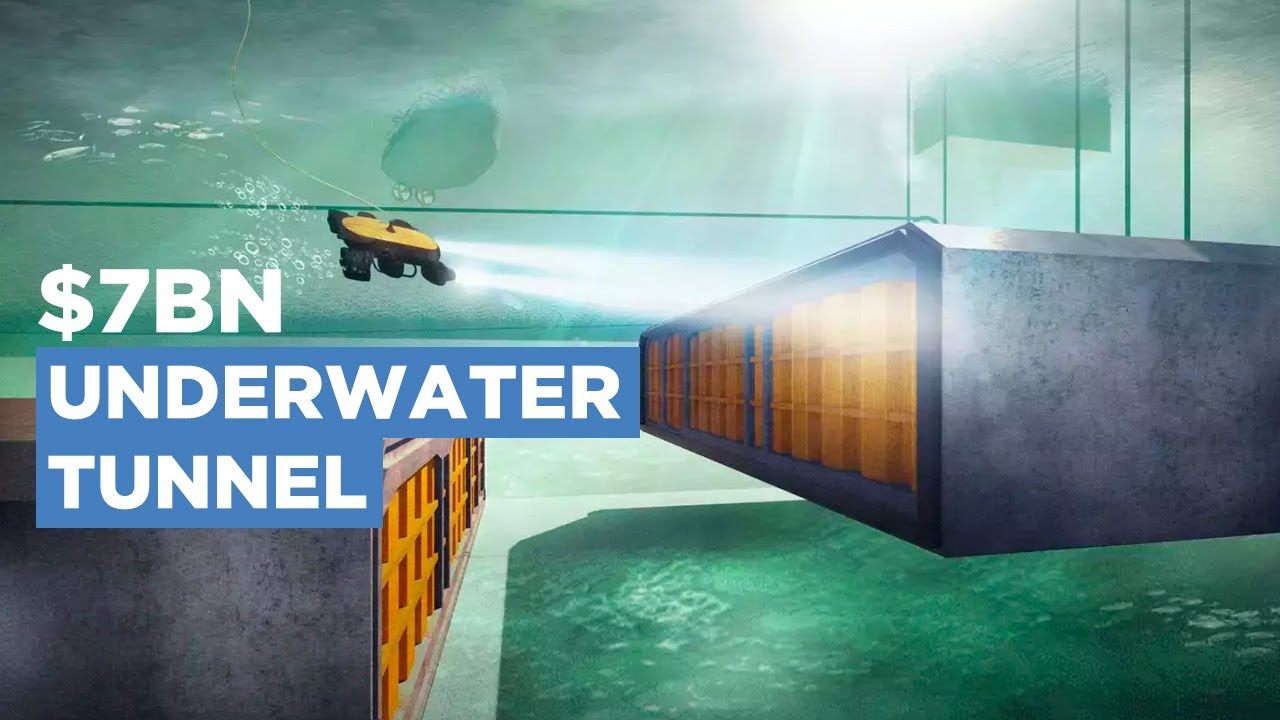
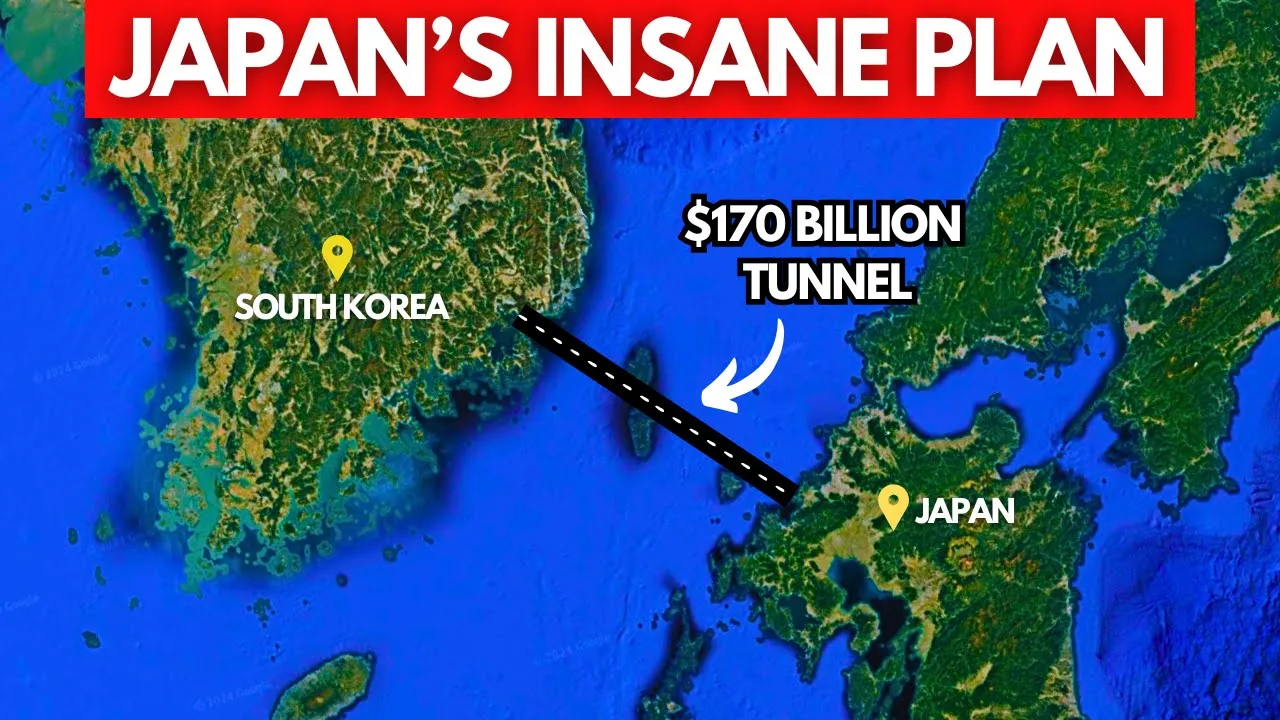
imagine a tunnel stretching beneath the ocean connecting two nations with a long complicated history Japan and South Korea this is a real proposal that has been under consideration for decades the idea is as bold as it is baffling to build an undersea tunnel spanning over 128 km through one of the world's most volatile Marine environments such a project would link two of Asia's largest economies and dramatically reshaped Regional Transportation trade and tourism but there's a catch the area is notorious for its seismic instability and the political Waters between Japan and South Korea are equally treacherous
clouded by historical Grievances and modern-day rivalries so why even consider it today let's delve into the audacious Japan to Korea tunnel Mega project exploring the immense engineering challenges potential benefits and the geopolitical Quagmire that surrounds it don't forget to click on that subscribe button and like this video as it's the best way to support this channel the idea of an undersea tunnel connecting Japan and South Korea has its origins in the 20th century in the 1930s Imperial Japan wanted to build a tunnel to further integrate its colonies including Korea while also connecting itself to its
Ally Germany and Europe through Mainland Asia in 194 41 geological surveys were conducted and by 1942 Japan's plans were finished however by 1944 Japan was on the defense in the Pacific War and its economy was slowly crumbling and the tunnel plans were abandoned since the end of World War II several newer proposals have been explored the first serious discussions took place in the 1980s driven by the growing economic dynamism of both countries and the broader vision of enhancing Regional connectivity in East Asia at that time the notion was inspired by the success of other ambitious
engineering projects such as the channel tunnel between England and France within this context the Korea Japan friendship tunnel was introduced a proposal for a tunnel between Busan and Fukuoka that would Cross Four of The Straits Islands the tunnel would then connect to the Sano shinkansen and Co rail making high-speed travel between Tokyo and Soul possible however the idea never gained substantial traction largely due to the technological limitations of the period the high projected costs and the political tensions between the two nations in more recent years the idea has resurfaced sporadically often driven by the economic
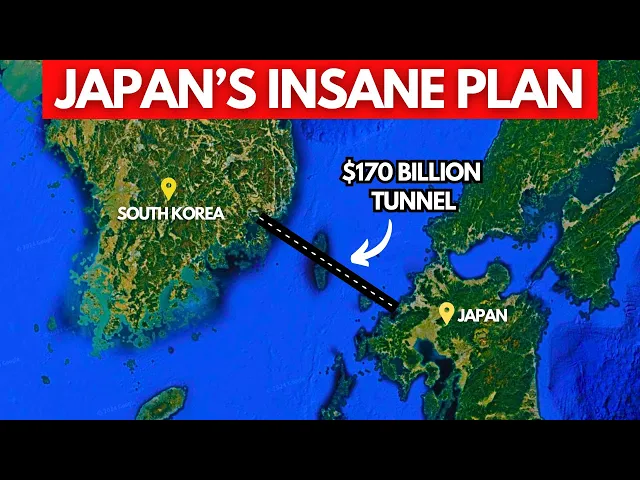
potential of linking two powerful economies finally in the early 2000s three new routes for the tunnel were introduced the favored proposal was the one ending in Busan it would include a bridge from karatu to eki Island a 60 km long tunnel would then Traverse the Gap to tsushima Island followed by land routes across the island and a 68 km long tunnel to Busan the tunnels would have two possible designs the first design would include two smaller rail tunnels with a service and maintenance tunnel in between like the channel tunnel between the UK and France the
second design would include a single massive tunnel hosting both rails and a highway one of the most daunting aspects of The Proposal is the sheer scale of the engineering challenge the tunnel would need to span the Korea straight the narrow sea passage separating Japan and South Korea on each side of it are Busan and fukoka the Korea Strait not only separates these Urban centers but also the entire country of Japan from all of Mainland Asia and Beyond the Korea Strait reaches depths of over 200 M and has two large conveniently located Islands right in the
center of it the distance of the tunnel would be approximately 128 km making it a longer Endeavor than the channel tunnel which is 50 km long the seabed in this region is also seismically active raising the risk of earthquakes tsunamis and underwater volcanic activity all of which pose significant challenge Alles to construction and safety constructing a tunnel that could withstand such natural forces would require Cutting Edge technology immense investment and extensive safety precautions even in the best of circumstances such a project would take decades to complete and would likely exceed its initial cost projections which
are already estimated to be astronomical at $170 billion despite this it has been proven that the tunnel is physically feasible the Korean straight has a maximum depth of only 227 M and tunnels already exist at lower depths not only is the tunnel feasible but Japan and South Korea already have significant experience with mega projects near its scale if constructed the tunnel would be a true Marvel of human accomplishment despite the enormous challenges the proponents of the Japan South Korea tunnel argue that the project could bring significant long-term benefits for Japan the tunnel's main advantage would
be the connection to Mainland Asia and Beyond from an economic standpoint the tunnel could Foster closer trade ties between Japan and South Korea two of Asia's largest economies the tunnel could also reduce Transportation costs for goods traveling between the two Nations enhancing Regional Supply chains and potentially leading to Greater economic integration in addition the tunnel could boost tourism by offering ing a convenient lowcost alternative to air travel millions of South Koreans travel to Japan each year and vice versa a high-speed rail connection through the tunnel could significantly reduce travel time between the two countries making
short trips more feasible and appealing to a wider range of Travelers the tunnel would also allow for the construction of the baso Highway a proposal to connect the mega cities of Shanghai tianen Beijing Soul Osaka and Tokyo from an environmental perspective the tunnel could reduce carbon emissions by providing a more sustainable alternative to air travel high-speed trains emit far less carbon dioxide than airplanes and the tunnel could therefore contribute to the efforts of both countries to meet their climate goals culturally the tunnel could enhance People to People exchanges between Japan and South Korea helping to
build Bridges between two Nations that have historically had a fraught relationship by increasing South Korean and Japanese Unity the tunnel could help blunt China's growing influence over the region unfortunately a Korea Japan tunnel would face significant challenges firstly relations between Japan and South Korea are far from ideal while both nations are allied with the United States their ties are strained by numerous historical and political conflicts Japan's history of invasions in Korea starting in the 16 century and its colonization of Korea from 1910 to 1945 remained sensitive issues for many Koreans as a result a considerable
portion of the Korean population opposes the idea of linking the two countries some Koreans also feel that such a project would mainly benefit Japan allowing it to increase its Regional influence while offering South Korea little in return on top of that there are logistical complications Japan and South Korea use different rail gauges and drive on opposite sides of the road if the tunnel were intended to connect Railways Beyond South Korea it would have to pass through North Korea a country still technically at war with the South and governed by an unpredictable regime one alternative would
be to bypass North Korea entirely by building a tunnel from South Korea to way high China however this route would be even longer and more costly likely making the entire Endeavor economic Al unfeasible the proposed Japan Korea tunnel would come with an immense price tag the estimated cost of 170 billion is more than eight times the price of the channel tunnel that connects the UK and France with such a massive investment one of the main concerns is the potential for underutilization while both Japan and South Korea are major economic Powers the volume of trade and
travel between the two countries may not be high enough enough to make the tunnel financially viable moreover the rise of lowcost air travel in recent decades has made it easier and cheaper for people to fly between Japan and South Korea unless the tunnel can offer a significantly faster and more convenient alternative it may struggle to compete with the established air routes lastly while the tunnel could offer some environmental benefits in terms of reducing carbon emissions there are also significant environmental risks associated with the project the construction process would likely have a major impact on the
marine environment of the Korea straight disrupting ecosystems and potentially endangering marine life there is also the issue of seismic activity in the region the Korea Strait lies near the intersection of several tectonic plates making it vulnerable to earthquakes and tsunamis a major seismic event could cause catastrophic damage to the tunnel posing a serious risk to human life and the environment due to these challenges the project has yet to move forward in 2009 during the global financial crisis both the Japanese and Korean governments were enthusiastic about the idea viewing it as a potential source of jobs
and economic recovery however after reviewing feasibility studies it became clear that the project was economically impractical today the discussion around the tunnel continues as the world evolves politically and economically perhaps one day the project will make more sense and be realized finally linking Japan to Mainland Asia