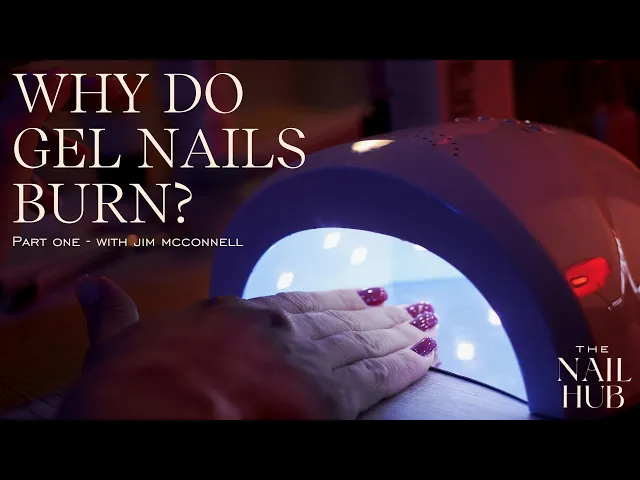
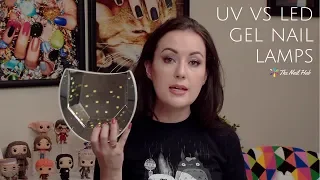
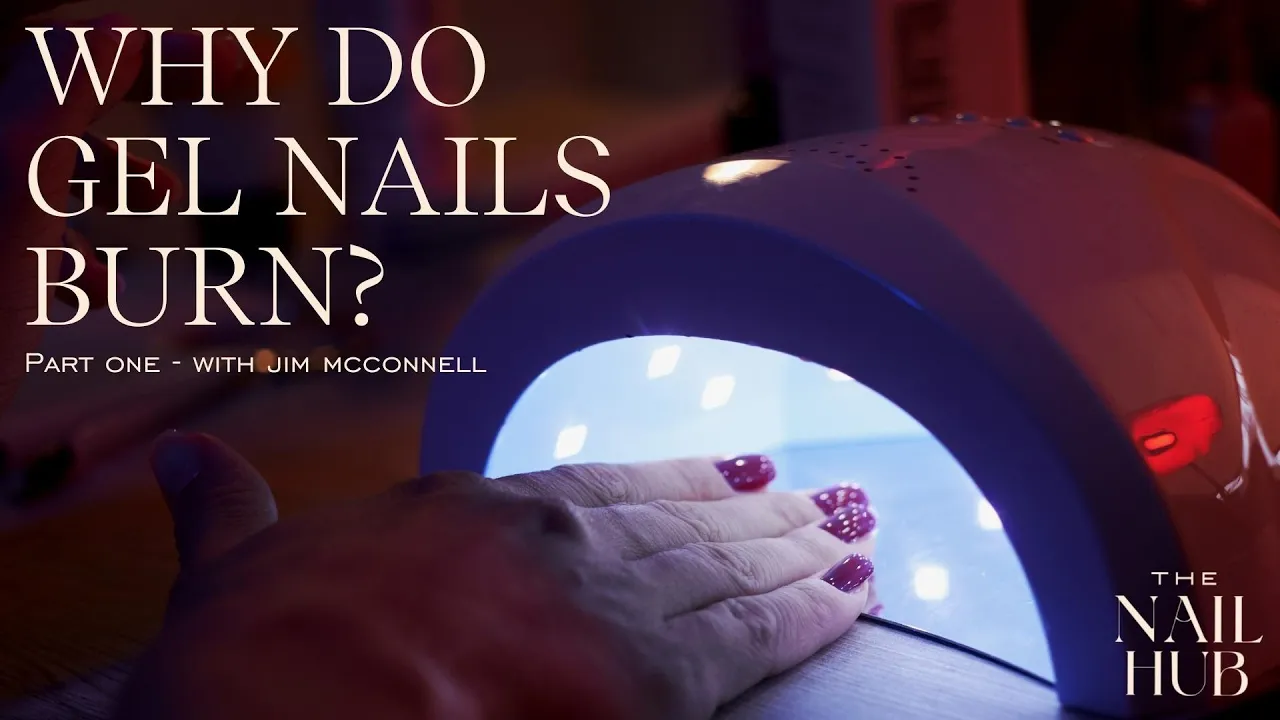
today we continue this amazing collaborative series that i did with jim mcconnell from light elegance headquarters we just finished the what is gel conversation and today we're going to be starting a new three-part series that talks about that zing that zap that burn that you might have experienced when you put your nails in your gel nail lamp we're gonna talk about exothermic reactions and everything you need to know about heat that's produced during curing [Music] this is jim mcconnell from redmond oregon at light elegance hq and today we have our guest liz morris from the
nail hub hey guys and we're going to be talking about exothermic reactions in a series of videos and we are very excited about this yes so liz what have you heard okay so one of the things i always hear when i'm promoting my love for gels is what about the burn right people are so afraid of the curing process because they've had bad experiences with the gel getting super hot they get that seeing that sap that burn and once clients have a really bad experience with that i feel like it makes nail techs insecure it
makes clients insecure and if you don't know what's causing it it makes you extra insecure because you don't know how to explain it to your clientele right so jim i figured you would be the best person to explain what is really happening when we put our hand in a lamp and we feel that intense burning sensation what's actually happening the actual occurrence when you put your hand in the lamp is you're initiating the polymerization reaction between the molecules of the resins that are inside that gel formulation and every time a bond gets formed heat is
given off okay so the term exothermic is exo to give off thermic heat okay so polymerization is the process of hardening our gels by exposing them to ultraviolet light in our lamps so we're taking a liquid gel and turning it into a hardened product hardwood plastic and that exothermic reaction is part of the curing process so you're going to have heat no matter what gel you're using correct correct okay whether you feel it whether you sense that sensation or not depends upon the formulation as well as the light so we can go over the differences
in the formulations the differences in the lights and differences that you as a health professional can do in the service process so your client feels less or no heat sensation at all that's really good to know knowing that it's not friction right the molecules running around on the fingernail together creating heat is really important so let's get rid of the thought that actually occurs and then put into your control facts and the facts but the ability to control how much heat that's getting on yeah your hands has an amplifier yeah and i feel like that's
really important to know that all gels create some amount of heat like you said but you may not be able to actually feel it based on the combination of gel the lamp maybe the amount you're using we're going to get into all of those different details and all the different factors that affect that experience of using gel or applying gel or any of those but even i wanted to bring up the point that even polymerizing acrylic systems there is heat that is given off too you can feel it you can feel it what about like
a dip system we put brush on the acrylic glue the center acrylic glue and then dip it into the pattern we get a lot of people talking about they feel that heat too interesting so basically if you have polymerization happening you're gonna have some level of heat anytime you're forming that bond to form a larger molecule to polymerize that molecule you're giving up wow very cool so now you guys know what exothermic reactions are and what that seeing zap and burn really is and the technical term for it jim and i are going to get
into more details about exothermic reactions how you can mitigate some of those factors with the heat how much heat is being produced and give you some troubleshooting guidance as well yeah because the more you know yeah the more control you have yes and happier clients absolutely being confident in your role is so important and i know that when i have the information i need and i feel confident and the knowledge that i have i'm that much more professional with my clientele and i feel that much more confident in my services awesome yeah all right cool
so what do we have coming up next we are going to talk about the volume of the gel that you put on the fingernail and how that volume will or will not influence the amount of heat that a person uses and now we're going to get into why is there you know what can happen with exothermic reactions why are some of them stronger than other ones and you had a really great idea to show visually what's happening inside of our gel products correct yeah right so the idea here is that we have two beakers in
front of us one beaker contains very small beads and the other contains much larger beads if we envision each one of those beads as one molecule during the polymerization reaction how much heat will be generated so in the smaller beads we can envision this one being similar to a di-functional monomer okay it's used in a gel product okay in the larger one we can envision that as being a di-functional oligomer something much larger than the molecule of a monomer and you can see given the same volume of material that's inside each speaker you have fewer
dye functional resin molecules in the larger beads and many more di-functional resin molecules in the smaller beads right so how does that affect curing as we said in the first video every time a bond is formed between two different resins is given off you can see in this speaker with the number of very small beads that are in there you have a lot more molecules exothermic reaction is not dependent upon the size of the molecule every time a bond is formed but it's the volume of molecules the number of molecules in a given portion of
volume of gel that you place on someone's fingernails so if you have say one milliliter of gel you put on someone's fingernail and you cure it if there's a lot of monomers that functional monomer in that product it's going to generate a lot more heat if you have later functional oligomer similar to what we have here you have fewer molecules fewer bonds and as a result less exothermic reactions right and just to give you guys kind of an analogy that i was asking jim just before we started filming about how we can kind of give
you almost a visual that a lot of people are familiar with we're talking about the difference between putting lighter fluid on a fire versus putting gasoline on a fire just to kind of give you an idea of how you know those two different types of burn can be very different one kind of is very explosive you have a lot of heat released all in one instant whereas using something like lighter fluid is going to still ignite everything but it's going to create a much slower burn more consistent burn and so you're going to have less
of that whoa lots of heat all at once and that experience of feeling like your fingers are going to burn off exactly yeah and just like in the lighter fluid versus gasoline analogy this being more like lighter fluid you have the reactions are taking place over a longer period of time the versus this one here they're all reacting in about the same period of time right and you also told me also about reaction sites with these so for every monomer molecule that's in this formula which we have many more here in this type of formula
of gel each one of those has two reaction sites right so it's even more crazy than just how many monomers we have in this if each one of those has two reaction sites you can imagine how much ignition per se is happening during that polymerization process correct and so in the case of the monomers the monomer may be one tenth of the molecular weight of an oligomer so you could have 10 times the number of reaction sites in the monomer beaker than you do in the alligator beaker and every reaction site takes place gives off
the same amount of heat every time that bond is formed the same amount of heat so in this case here you'll have much less heat being generated with the ligament and the heat that's generated is dissipated over a longer period of time as opposed to the monomer it happens very very fast and it is extreme yeah and just to give you guys a perfect example of why i love using light elegance products myself and also why you put so much time and energy into the formulas that you guys create here light elegance is an oligomer
based product line that's what allows it to have so many wonderful features like hypoallergenic attributes and lower heat because this is the kind of molecular structure that you're dealing with as you're dealing with those those long chain oligomers you're dealing with less reaction science less heat so even if you're using a ton of gel that big old dollop trying to make extensions apex everything you're going to have much less heat with a product like elegance than some of those really high monomer based products that are out there on the market correct yeah yeah yeah really
awesome for you guys to know that about you know the differences between one type of product one brand of product versus other alternatives that might be out there yeah yeah and i know that's also something that you personally spend a lot of time on even improving i mean you've actually done a lot to improve the heat factor with the gels that elegance creates and i just think that's an amazing thing to be constantly trying to improve for those those nail techs and those clients who are experiencing my elegance products on their nails yeah awesome another
thing to think about as a nail technician is now professional when you are applying those gels onto your client if you have something that does have a lot of monomer in it how do you control the amount of heat that's being generated by that monitor right again keep in mind if you are working with a gel that has a lot of monomer in it and it's the volume dependency if you decrease this volume of gel that you apply by one tenth you have essentially the same number of reaction sizes as you do in the alert
right so apply one tenth of the amount you'll get the same amount of external reaction as you would with a greater volume of an oligomeric material right yeah absolutely and so basically you know when it comes to application we're talking about thinner coats of product maybe applying it in two or three steps rather than all in one big dollop but i know for me i really like the slip layer dollop technique and get that nail built in one go so having a formula that really does have you know less reaction size for me is a
plus for me in the chair when i'm working on clientele but absolutely you can definitely change the amount of layers you're working with the amount that you're working with per layer and that will help you if you've got a high monomer product and the other thing to think about too is that if you have gel already on the fingernail what is that shell acting like it's an insulation layer so if you already have a gel you're doing a fill on something and you put down the same volume gel that you might on your first layer
for a full set because you have that first layer of gel on the fingernail it acts like that insulation there therefore your clay feels much less heat yes now that brings up a really good point jim so when we're talking about heat i think a lot of us has nail techs and i'm sure clients who are watching this as well have had some experiences with gel where we literally thought our fingers were going to fall off that's how bad the burn was and that brings up a point which is how much heat is too much
heat i mean is there a danger zone for this kind of stuff there is a danger zone just like when you're cooking meat this is a visual that we really don't want to have but if you if your temperature exceeds say 165 or 170 degrees fahrenheit for a prolonged period of time then yes you can actually do some damage to that the tissue underneath the fingernail you're not going to damage the fingernail necessarily right but it's the living tissue making sure that you know how to control it is important absolutely and i myself have even
had that experience when i was first toying around with gels before i ever became a professional i remember i actually got a bruise underneath my nail plate on my nail bed because of the amount of heat that was produced by one of the gels i was using back then and i mean you can be left with you know injuries of that nature if you're not careful with these kind of things so yeah and as the chemistry evolves and as the resin technology evolves we can really do a great job in the laboratory to help create
better products with less heat the other thing is curing technology yeah so certain curing technology is available to help you reduce that amount of heat as well absolutely and so in our next video we're going to talk about the physics of curing lights and how the new physics of carrying lights can help reduce the amount of heat that you experience and what settings to use to make sure that that's insurance awesome well stay tuned guys we'll be back in another episode thank you