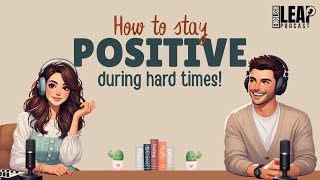
English Leap Podcast >> from Speak English with Class. >> Hey English learners, welcome back to the English Leap Podcast, your cozy place to learn easy English through real life conversations. I'm Anna >> and I'm Jake.
We're really happy you're here. Maybe you're walking, cleaning, studying, or just lying on your bed, phone in your hand. >> Yeah, phone in your hand is the important part.
Be honest. How long can you scroll? But as soon as someone says read a book, your brain goes, uh, I'm tired.
>> Exactly. We can watch videos for an hour, but 10 minutes with a book feels like a big project. >> I've heard so many people say, "I wish I could read more, but I just don't have time.
" Or, "Reading is boring. " >> And maybe you've thought that, too. Or maybe you love reading already, but you never really thought about what it's doing inside your mind.
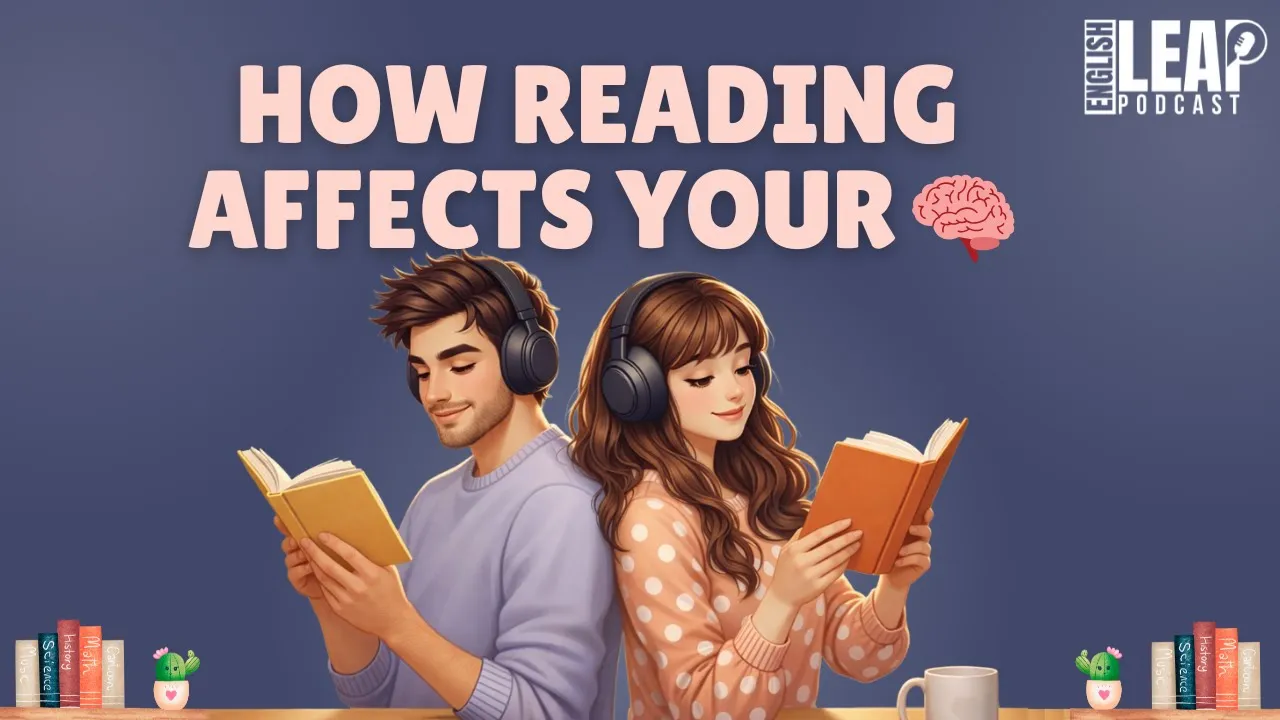
>> So today we want to talk about how reading changes your brain, your focus, your emotions, even the way you see people in the world. >> Not in a heavy science way, in simple B1 level English with real examples. So you can also steal some nice sentences to talk about reading in English.
>> If you don't understand every word, that's okay. Just relax. Listen and let the ideas sit in your mind.
You can always listen again later. >> And at the end, we'll do a short word tour. We'll take some useful words from this episode and explain them slowly with examples so they really stay with you.
>> If you like learning English like this through calm conversations, don't forget to like this video and subscribe to the English Leap podcast. It really helps more learners find us. >> And we'd love to hear from you later in the comments.
Are you already a reader or are you not a reading person yet? >> All right, let's jump in. Let's first talk about why so many people feel they don't have time to read even when their thumbs have time to scroll.
>> Yeah, that sentence already hurts a little, right? Because if I'm honest, I say that, too. I have a lot on my plate.
I just can't get around to reading. >> Same. I say, "My day is so busy.
I'm exhausted. " And then somehow I still lose track of time watching short videos in bed. My eyes are tired, but my thumb is still scrolling.
>> Exactly. It's like our brain thinks, "I don't have energy for a book, but I have energy to scroll for 40 minutes. " >> I think a lot of us feel guilty about that.
We want to read more, maybe in English, maybe in our own language, but life feels hectic. work, family, messages, cleaning, and then your brain hits a wall and just wants something easy. >> And if that's you, we just want to say you're not broken.
You're living in a very loud world. Your mind is tired, not lazy. So today we just want to sit with you and talk calmly about what reading can do inside you, inside your brain, inside your feelings, and how you can slowly bring it back into your life, even if it's just 10 minutes, >> right?
And maybe the first thing we should say is your free time is yours. >> Yes. If you love dramas or games or just lying on the sofa doing nothing, that's okay.
After a long day, we all need to wind down somehow. For me, sometimes it's climbing videos or travel vlogs. I tell myself, "Just one, and I end up in a rabbit hole of people hiking in places I can't even pronounce.
" >> For me, it's music and random cat videos. I put my headphones on just for a song and suddenly my tea is cold and 30 minutes are gone. >> So, we're not here to say reading is better, everything else is bad.
>> No, we just want to show that reading is different. Other hobbies are like fast food. You enjoy them quickly and that's fine.
Reading is more like a slow meal you cook at home. It takes more time, but it also feeds you in a deeper way. >> Yeah.
When you watch something, the world is built for you. Sound, color, faces. But when you read, you build the world.
Your brain has to wake up and paint the picture. >> So reading isn't about being a better person. It's about giving your brain a different kind of rest, a quiet, active rest.
And I think that quiet is really rare now. We live in what people call a microwave age. Yeah.
Everything has to be ready now. Fast food, fast messages, fast entertainment, 10-second videos, notifications all day. >> I notice it in myself.
I open a page, start reading, and after two paragraphs, my hand reaches for my phone by itself. My brain is like, "Where's the next shiny thing? " >> Me, too.
I remember one evening, I lit a candle, made tea, sat on the sofa with a book, thinking, "Tonight, I will be that aesthetic reading girl from Pinterest. " 5 minutes later, I was on my phone looking at more pictures of people reading. >> Yeah, we're all like that.
And it shows how short our focus has become. >> That's why reading, even for 10 minutes, is like a tiny gym for your attention. >> When you read, your brain has to stay with one line, one sentence, one story.
No quick cuts, no jump, jump. >> At first, it feels uncomfortable. Your mind wants to run away.
But if you stay with the page slowly, your thoughts start to line up. For me, it's like being in a noisy room and then walking into a quiet library. At first, the silence feels too big.
And then after a few minutes, your shoulders drop. You finally breathe. If your mind feels busy all day, you might be surprised how peaceful 10 or 15 minutes of reading can be.
It won't fix your whole life, but it can give you one small calm corner. >> And that's just the short term. Over months and years, something deeper happens too.
>> In easy English, we can say reading is a workout for the parts of your brain that help with language, memory, and understanding. >> Yeah. You see a new word, you guess the meaning from context, you connect it to something you read last week.
That little connection is like lifting a small weight. >> And the more you lift, the stronger you get. Over time, many readers find it easier to remember things, to learn new ideas, to stay mentally active, even when they're older.
>> We're not doctors, so we won't make big promises, but many studies say when you keep reading, your brain keeps learning how to learn. >> I like to think of it like this. Every book is a trail in your mind.
The more trails you walk, the easier it is to move around inside your own head. But honestly, my favorite part isn't even that. It's what reading does to your heart.
>> Same. When I read a good story, I feel like I'm borrowing someone else's eyes for a while. >> I remember reading a book about a father who worked on the sea for months and barely saw his kids.
My own life is different, but for a moment, I could feel that mix of love and distance and guilt. It stayed with me for days. >> Yeah.
I once read a story from the point of view of a very unlikable character, someone selfish, someone I would not want as a friend. At first, I almost stopped reading, but then I started to understand why they were like that. Their fear, their past, their secrets.
And that's the magic, right? Reading doesn't tell you this person is good, this person is bad. It lets you sit in their head and feel the mess.
After that, in real life, when someone is rude to me on a busy day, I'm still upset, but there's a little voice that says, "Maybe they're carrying a heavy story today. " >> And reading also gives you more words for your own feelings. Instead of, "I'm fine," or "I'm bad," you see characters say, "I feel empty.
I feel overwhelmed. I feel hopeful again. " >> And if you're learning English, that's huge.
When you can name your feelings in English, you don't just translate, you express yourself. You let people really see you. >> Sometimes people ask, "Okay, but what should I read?
Fiction, non-fiction, self-help, biographies. " >> Honestly, I don't think there is one correct answer. >> Yeah, I love non-fiction about mountains, survival, people who go on crazy adventures.
For me, those books are like fuel. They make me want to move, to be brave in my own small ways. >> And I love fiction.
Give me magical worlds, quiet family stories, strange little towns. I love when a book lets me travel without leaving my sofa. Headphones on, soft music, and I'm gone.
>> Fiction can give comfort, escape, and big questions. Non-fiction can give information, inspiration, and real stories. Both can shake you a little and make you see your own life differently.
>> So, you don't have to choose one team. You can read a fantasy novel this month and a true story next month. The important part is you're reading something that feels alive to you.
>> Still, we know what some people are thinking right now. This all sounds nice, but reading is hard for me. >> Yeah, and we get it.
If your brain is used to fast content, a page of black and white text can feel heavy, like your eyes are climbing a small mountain. >> That's why we recommend starting tiny. Not I will read one book every week, just I will read 10 minutes a day >> or 10 pages or one short chapter, something small that your brain can accept.
>> And I really recommend this. Put your phone away on a shelf, in your bag, even in another room. Give your book 10 minutes of your full attention.
>> At first, your mind will complain. You might feel bored. You might hit a wall after 3 minutes and think, "This is not working.
" >> But if you stay with it slowly, day by day, it gets easier. It becomes part of your routine. >> I'm a bit of a creature of habit.
I like to read at the same time, in the same corner, with the same cup of tea. When I sit there, my brain already knows, okay, this is our reading time. >> And of course, some days you really do have a lot on your plate.
Work, kids, health, problems. On those days, maybe you only manage three pages. That's still something.
>> The goal is not to be a perfect reader. The goal is to slowly teach your brain you are allowed to slow down. You are allowed to focus on one gentle thing.
And maybe the last wall we need to talk about is this idea. Isn't reading a waste of time? Shouldn't I be doing something more productive?
>> I really want to push back on that. A hobby that brings you peace, joy, or rest is not a waste of time. >> When I read before bed, I sleep better.
I don't wake up feeling so drained. Reading helps me wind down in a way that scrolling never does. For me, reading is like pressing a small pause button on the world.
My heart beats slower. My thoughts stop shouting. For those minutes, I'm just with the story.
>> And while you're enjoying that pause, your brain is quietly training in the background, building focus, growing empathy, learning new words. >> It's okay if you read slowly. It's okay if you only read a few pages a day.
It's okay if you read just because it makes you happy. You don't need to justify that to anyone. >> If you can, maybe try to prioritize a tiny reading moment in your day.
The same way you make time to reply to a message or watch one episode, you can give 10 minutes to a book. >> Because reading isn't just for book people. It's for tired people, curious people, people who want a small, quiet place for their mind.
And tonight, we've already used some really useful English to talk about all of this words and phrases that you can use when you talk about reading and daily life. >> So, let's slow down even more now and take a gentle word tour together so these expressions can stay in your mind and in your English. >> Yeah.
Take a breath, relax your shoulders, just listen. You don't have to remember everything. >> Right.
So the first word from our list is prioritize. >> Prioritize means to decide what is most important and do that first. When you prioritize, you don't try to do everything at the same time.
>> For example, I try to prioritize reading for 10 minutes before I check my phone. >> Or if you have a lot of tasks, it helps to prioritize the most important one. Next word, exhausted.
>> Exhausted means extremely tired, more than just a little tired. When you are exhausted, you feel like your energy is empty. >> For example, after work, I'm usually exhausted and I just want to lie down.
>> Or she was so exhausted that she fell asleep with the light on. >> Another word we used, drained. Drined is similar to exhausted, but it often means your emotional or mental energy is gone.
Your body might be okay, but inside you feel empty or heavy. >> For example, after a long day of meetings, I feel completely drained. >> Or scrolling the news for an hour can make me feel drained, not relaxed.
>> Let's look at narrowminded. Narrow-minded describes a person who only accepts their own ideas. They don't want to see other opinions, other cultures, other ways to live.
>> For example, he used to be narrow-minded, but reading different books helped him understand other people. >> Or I don't want to be narrow-minded. I want to listen before I judge.
>> Another common word, productive. >> Productive means you are getting useful things done. When you have a productive day, you finish tasks, you move forward with your goals.
>> For example, some people feel guilty if they relax because they think they should be productive all the time. >> Or even 10 minutes of reading can be a productive way to relax. >> And a very important word for today, empathy.
>> Empathy means you can feel or understand another person's feelings. You try to put yourself in their shoes and see the world from their side. >> For example, reading stories from other cultures can help you build empathy.
>> Or when my friend was quiet, I tried to show empathy and ask how she was really feeling. >> Now, some phrasal verbs. First one, get around to.
>> Get around to doing something means you finally do it after waiting a long time. You wanted to do it, but you were busy or you kept delaying it. >> For example, I finally got around to starting that book last weekend.
>> Or, I want to read more, but I never get around to it. >> Next phrase, lose track of time. >> Lose track of time means you don't notice how much time is passing.
You are busy with something and suddenly it's very late. For example, sometimes I lose track of time when I'm reading a really good story. >> Or, I wanted to sleep early, but I lost track of time on my phone.
>> Another useful one, wind down. >> Wind down means to relax slowly after you were busy or stressed. It's the gentle time between working and sleeping.
>> For example, I like to wind down with a book before bed. or reading helps me wind down after a long day at work. >> Let's look at cut down on.
>> Cut down on something means to reduce it, to do it less, to use it less. You don't stop completely, but you make it smaller. >> For example, I'm trying to cut down on late night scrolling.
>> Or she wants to cut down on TV and read more instead. And one more phrasal idea, hit a wall. >> To hit a wall means to suddenly feel you can't continue.
Your brain or body feels blocked. You can't move forward even if you want to. >> For example, after 10 pages, my brain hits a wall and I can't focus anymore.
>> Or when you hit a wall with reading, it's okay to take a short break and try again later. >> Now, a couple of expressions. First, have a lot on my plate.
>> If you have a lot on your plate, it means you have many responsibilities or problems at the same time. Work, family, study, everything together. >> For example, she has a lot on her plate right now, so she only reads a few pages each night.
>> Or when you have a lot on your plate, even 10 minutes of reading can feel like a rest. And the last one for today, go down a rabbit hole. >> To go down a rabbit hole means you start looking at one thing, maybe one video, one link, and then you keep clicking and clicking.
Time passes and you are very deep in it. >> For example, I wanted to watch one video, but I went down a rabbit hole of book reviews. >> Or it's easy to go down a rabbit hole online and then feel drained.
So, these were some of the key words and phrases from today. >> You don't have to remember all of them perfectly right now. Even if two or three stay in your mind, that's already great.
>> You can always listen again. And each time, one more phrase will feel natural for you. >> So, before we say goodbye, here's a small homework idea for you.
>> Yeah. Choose just one of these phrases from today and connect it to your real life. And if you feel brave enough, write your sentence in the comments and share it with us.
>> Right? It doesn't have to be perfect. Even one simple line is amazing practice.
>> And remember, reading is not a test. It's a quiet place. It's one small way to give your brain a rest and your heart a new story.
>> If you're just starting, that's okay. If you read slowly, that's okay, too. If you only manage a few pages, that's okay, too.
you're still training your mind to slow down in a fast world. >> If this episode helped you or if it made you feel a little less alone with your tired brain, please like this video and subscribe to the English Leap podcast. It really helps more learners find this cozy space.
>> And tell us in the comments what kind of reading do you want to try next and when will you give yourself 10 quiet minutes for it. We're really proud of you for listening all the way to the end and for taking care of your English and your mind. >> Yeah.
Thank you for letting us be a small part of your day. >> This is Anna. >> This is Jake.
>> And you've been listening to the English Leap podcast. Bye. Your progress doesn't end here.
To continue advancing your English skills, click on the next video or explore the additional videos we've thoughtfully selected for you.