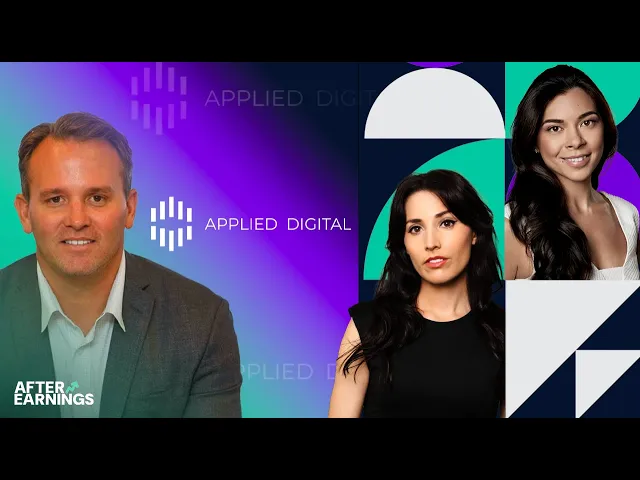
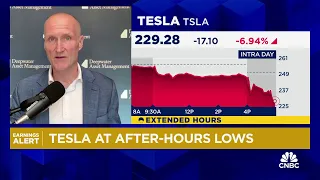
I'm Anne Barry I'm Katie Perry and this is after earnings and it's a big one Katie it is the day after Nvidia earnings Super Bowl Super Bowl tlor Swift but but watch parties people are gathering a lot of people in bars drinking watching what was happening crazy them well I wonder what the Swifty equivalent for NVIDIA is we'll have to come up with a with a good name for it but this was this was a fascinating one right Nvidia earnings were pretty strong yet the stock is down so this has been the poster child for
the AI Revolution good earnings stock is down so what do we do yeah naturally if the play is not the chip maker where else do you go what do you think about that an like what else is in that value chain that you see opportunity in well that's why I'm really excited for this conversation we've got coming up Katie with applied digital because to your point they're not chips they're also not software right software using the AI there's something else they infrastructure they're the data center so not an area I know a ton about so
excited for this one same we talk a lot on the show about the cloud and this is sort of like not the cloud the physical locations that are the size of multiple shopping malls that are making this super Computing possible and even more interesting is where these data centers are being placed in the country places like North Dakota where frankly a lot of these rural areas have been left behind by the AI the tech Revolution lot to learn so let's get into it let's bring in CEO and co-founder of applyed digital Wes Cummings welcome to
the show Wes it's so great to have you here with us today thanks for having me I appreciate it so let's get right into it let's talk about appli digital what is it that you guys do and where do you fall in the AI value chain sure so appli digital what we call is we build Next Generation digital infrastructure so we're building you know the foundation the building blocks primarily data centers for uh Ai workloads and those data centers are you know just a different style of data center than what has been built and used
in the past for you know applications like this video streaming that we're doing now or you Tik Tok or YouTube that was all stuff that was you know built in Metro areas and population centers um pretty low power density and now we're building ultra high power density ultra low latency inside the data center for for supercomputing right supercomputing is really what drives Ai and it needs a different style of infrastructure to support that so what we're building is you know really purpose-built facilities for NVIDIA gpus right now um so we build that we also run
uh a compute platform where we actually own the gpus we operate them for our customers these are typically AI Labs or or AI startup companies uh so so those are the the two primary products we provide but it's really the you know it's the foundation for for what runs Ai and operates it in the world W you made a reference there to how you know prior data centers tended to be located in heavily populated areas talk to us a little bit about the geographic footprint of your portfolio data centers right now sure so we're building
our first you know big campus in a a town by the name of Ellendale North Dakota so this is not a you know a traditional Data Center Market uh it's a place where we found you know a significant amount of abundant power that doesn't really have the the grid to to move the power from the point of generation to the point of of load or where where someone would use it so we sit at a substation where two gws of wind power feed into the substation then when the wind is blowing it can't really transport
all of that out to users and so the number one ingredient for AI and for these you know these workloads is power and so we're able to to do large scale power but latency outside of the data center is less important so the footprint is very different we prefer cold locations because when you use a lot of power you generate a lot of heat need a lot of cooling so free ambient cooling you know outside is is very useful uh and then low cost power is is helpful as well so so power and cooling is
what we focus on cool and then I I know you mentioned in the earnings call there was a a pretty pointed question from analice saying you got you know someone's looking at multiple contracts you guys other people why are you guys why are you different and you mentioned something about just the approach to where you're finding these energy sources and building from as part of that can you just explain how this NextGen approach is different than uh sort of some of these Legacy systems that are in place today sure so Legacy system when you were
doing development for legacy data center you would go to the location first so so you wanted you know something near New York City for example where we're all sitting or something in Dallas or something you know in Phoenix and you would go to the location you would look at the fiber map and and pick the right place from the fiber connectivity perspective you'd buy real estate then you would put submit an application to the power the local power provider for X number of megawatts for the the system the issue now is you know people would
still do that however you go and make those submissions for example Northern Virginia the biggest data center you know Market in the world you're 10 years out on Power and especially large amounts of power and so we reverse that and we've been doing this and you know one of the things that's interesting about our companies we've been doing this for a couple of years already um and which isn't that long but you get to remember that this really kicked off 18 months ago uh when the you know the Nvidia h100 was introduced right after chat
GPT hit so we were ahead of that we find power first land fiber and we make sure we have all the ingredients but focus on the power first so we take these workloads to the point of power generation rather than to the point of population and then and then transport power in to power these workloads where if that's been your Edge so far let's talk about how that might change for applied digital with the Advent of nvidia's new Chips I saw first page on one of your previous investor presentations has got nvidia's logo and has
has it up there as as apply digital strategic partner and Nvidia earnings just out a lot of chatter around the New Black wealth uh chip faster but also consuming less energy so if your key strategic partner is now launching a product where a key aspect of its strength is going to be a reduced consumption of energy does that change the way in which apply digital competes versus other providers so so you should we should clarify this so it produ it consumes less energy for the output y but they've made the chips more dense so the
server itself consumes more energy you just get more flops per amount of Watts consumed if that makes sense so the infrastructure of from the power density perspective actually goes up not down uh you're just getting more out of it it's like you know when you had a laptop that was you know really power inefficient 20 years ago your P your laptop now maybe uses the same amount of power but you're getting so much more out of it so the infrastructure portion is not going to change the big change that's coming and and we've purpose built
our facility in North Dakota for this I think it's going to be one of the first large scale buildings for this is the uh liquid cool the move to liquid cool this is going to be one of the first very large scale liquid to liquid cooling systems uh in the world in in our facility in endale North Dakota and so that uh I think it's just important to make that distinction yes it's getting more efficient but actually the infrastructure power density is still going to go up W let's talk a little bit about uh your
the recent results so slightly mixed Q4 and fiscal year 24 results I know that there was some reflection on underlying performance there are a couple of one-offs that also hit your earnings numbers like a power outage for example why don't you just give us the the the highlights uh from the applied Digital earnings that have just come out sure so on the positive side significant year-over-year Revenue growth uh significant year-over-year IA growth uh on the negative side we had some operational issues at one of our our facilities which I should clarify this you know when
we started we were building data centers for Bitcoin miners which are built much differently than what we're building today for AI just from a a redundancy perspective so we had some outages due to some Transformer issues that kind of you know hampered operations in the quarter those are completely resolved at this point and so we won't have that you know as as we operate going forward uh the other item that I would highlight is is we and we talked about this on our call is while kind of our underlying financial performance I think improved the
way we account for and appreciate gpus that we are buying the Nvidia gear that we're buying um you we talk about the the financial depreciation doesn't reflect the useful life in our numbers and we're we're working on a different financing mechanism which will change that dramatically and so uh to to explain it in somewhat layman's terms is you we we are purchasing gpus and and servers that have a five to six to 7ye useful life we're depreciating or expensing those assets over two years so it has a drag on our EPS number um but we're
we're working to remedy that in future quarters so that the actual you know financial performance shows in in our results but we're still seeing you know significant year-over-year Revenue growth and significant year-over-year EAA growth even with the the operational challenges we had in the quarter let's talk a little bit about how your customer base is evolving KT that you particularly focused on that yeah you mentioned on the call huge Loi with what you refer to as a hyperscaler I think some of our listeners might not know what that is so first off can you just
Frame Up what hyperscaler means in the context of you and also paint some color on what this Loi if it comes to fruition will mean for your business sure so hyperscaler is you know is kind of exactly what the the word means you know so very large scale you know data center operator so but we'll you know we operate we're developing and we'll operate the data center for them they put their compute workload inside you know they sell it generally as a cloud service they may consume it themselves when people refer to hyperscalers here in
the US and we said a us-based hyperscaler you know there's there's a handful of them but if you focus on kind of the top five hyperscalers in the US you know you're you're talking about Amazon Microsoft Google meta and uh apple and so those are the types of companies that that were targeting for this for for our business and for this large scale buildout in North Dakota and this will be one of the largest campuses in the in the us when we complete the campus you know it's it's 600 megawatts utility power 400 megawatts critical
it load uh just a massive massive amount of power going in there uh but those are the type of of customers that we're focused on and you know what I talked about on the call is you know the way we're breaking into this Market we're a small company and the way we're breaking in is our speed to Market so we saw this you know I think little earlier than other people we started building this building in Ellendale last year on spec um we we worked with nvidia's data center design team to to design the facilties
that we you know we're kind of future proofing it for for Blackwell deployments um and so we started building it on spec we didn't have a customer but then we did uh sign this Loi with with a hyperscaler in uh April and we've been working through the qualification process so they call the S soq uh and it's a lot of technical due diligence design diligence you know power redundant see all of the things that you need to have a site that operates at 59s of reliability and we've made it through that process uh we're not
quite to a assigned lease yet but but we're right you know call it kind of the one one yard line here and I think that's really going to transform our company it's a you know it's a big stamp for us to get through that process and break through into that market it's a big Market uh and one of the fastest growing markets especially again with the the AI workloads that have just really transformed what's going on in the industry whereas the the hyperscalers are fast growing they are also including many of the names you just
listed as the key hyperscaler potential clients that you're in Loi stages with many of them are developing their own chips in competition with Nvidia over the longer run in these negotiations are you seeing any pressure to bake in an openness to change out your Nvidia chips to a hyperscaler own one down the line so so just to be clear in in this type of building we don't choose the equipment that goes inside so we don't choose whether it's Nvidia or whether it's AMD or whether it's their own gear all of the gear is going to
need the same style of infrastructure so think of us as you know a high-tech landlord and then they put their own compute gear inside we don't take the risk on that gear it's theirs they operate it we just you know do do smart hands and some operations on site so we don't actually don't make that choice uh so the the infrastructure is built you know kind of in an agnostic way you know for the future where what we know is it's going to need high power density uh which means you know you know I don't
think I mentioned this but so the traditional data centers we talked about that are streaming are like 7 KW per rack per cabinet of compute these on our data center goes to 120 right so so we're almost we're not quite 20x but we're significantly higher and everything in the future because when you go from Communications focused applications to compute focused applications compute equals power and so even whatever their own chip design is going to be it's going to still need this type of infrastructure and that's that's what we're building so we don't we don't take
that risk which which I think is nice interesting yeah yeah and I want to go back a bit to the revenue breakdown I know you have the data center business and then this Cloud business GPU as a service uh what are the trends across those two lines of business and as a follow-up to that uh how much of the data set our business is still tied to crypto versus other use cases like the AI superc Computing sure so on the on our data center Services right now it's all crypto revenue or we're we'll start in
the next calendar year recognizing revenue from this large scale build we're doing in in endale and then on the the GPU business that the what we call our cloud service business you know that that's up from zero last year to uh 17 million in the quarter and you know we'll see that you know we're guided to things going up sequentially again um but but the way these work Katie is that they'll you know think of it as you know we're building a hotel and you spend all this capex and you have no revenue and then
all of a sudden you have a huge jump of Revenue you know almost in a single day when you open the hotel and so that's how this big build you know it's a billion dollar building that we're standing up in North Dakota um you know we'll spend all of that then put the customer inside and then it'll turn on one day you know we expect just that building to generate you know hundreds of millions of Revenue and so there's going to be these big step functions in our business but um you're seeing you know some
some very nice year-over-year growth and you see some some sequential growth in the current quarter and year-over-year growth but you you're going to see these big step functions in our business as these turn on whereas the analogy with other kinds of real estate like hotels is an interesting one it does point a little bit to the capital intensity of your business model what's your capex outlook at the moment so the as I mentioned the building that we're working the first one there will be three buildings in total this campus the first one is uh about
a billion dollars of spend we've spent uh a little over $200 million on that building so far the again as we you know kind of cross the Rubicon here and work on signing this lease what is what's going to open what that will open for us is the ability to finance these at the asset level we've been financing them from the company level so far which has been somewhat of a strain on us but when we when we get this you know first one across the Finish Line we're going to have the ability to finance
at the asset level at at very attractive rates of capital um and so you can on on builds you can Finance you know we think somewhere between 80 and 90% of the cost with you know think of construction loan and then you flip that into what's effectively a mortgage we call it an ABS uh at the end so it's going to really lower our the the the strain on the company so think of the the public company and really move the financing down to the asset level the entire campus you know was going to be
around $4 billion you know from through here through kind of the end of 2027 is the expectation yeah so this is actually a helpful breakdown of like the the nuances that go into this and like an mentioned the real estate reference is is very helpful for framing uh is it your point of view then that this Loi goes through you built this and as you said as a spec workor basically I think a lot of us are familiar with that in in various Industries and then you then you know try to prove concept and sell
that and your thinking is once that goes through you'll have people coming to you earlier on in the process and that's kind of what you mean by the asset level financing they're goingon to actually help you with some of that upfront cash yeah so once we're through again I thought the the way for us to break in to to this industry this large fast growing industry is speed to Market you know I had a and others in in our company had a strong opinion last year that in you know 202 24 especially going into 2025
Data Center capacity is going to be the bottleneck for AI and so that's why we pushed forward on this build we did the design we did the build but once we're through once we're proven then you know you can expect that we will not be building on spec we will be contracted prior to building uh anything else in the future but we'll be in a position to be able to do that where we wouldn't have been before where your business model is really interesting because you you found this real treasure in terms of this location
right and and the access to power that you've described do talk to us a bit about your pipeline of other locations sure so I mentioned I think both in our press release and on the call last night that we' have started marketing uh three additional campuses uh totaling 1.4 GW for 2026 power and so that that means power that's ready to be delivered in 26 uh you know 2025 power is is kind of done at this point if you haven't started building you're not going to turn anything on in 2025 and so we're focused you
know out marketing these other large campuses um for the same style of customers for 2026 so it's a it's a rather large pipeline of power that that we're you know in in the market with uh which I think also makes us you know somewhat of unique asset and are you running into competition W in terms of people going off the same pockets of land I know private equity's been circling data centers for for quite a long time now and have been pretty successful in doing that who are you running off against in the bids for
these locations sure so um the when you look at these locations so we see a a couple of different you know types of players in the market so this building data centers for hyperscalers is not a new market uh there's an there's an industry there's several large players that are all all privately held uh that we see primarily as competition now they're the the traditional goto you know a a tier one tier 2 uh Cloud Market you know the way I described finding the real estate and then asking for the power I think they're starting
to look more and more creative ways for power there's been some other um you know Bitcoin miners that have power contracts that I think are looking at monetizing in this this way as well and then we see you know a lot of private players getting into this but it's you know it's uh just a little bit of a gold rush that you know people have figured this out now uh it it really started earlier this year the data center was going to be again back to it's going to be the bottleneck and and I think
it really is going to prove out to be a significant bottleneck for compute workloads for AI and so there's it it's what has historically been you know a pretty boring Market has become very exciting there's a lot of people interested in being in the market yeah even just like flipping through your materials I have so many just questions on how this actually happens how it comes alive these things are essentially the size of shopping malls right these are huge huge structures yep think of um the the one in North Dakota if you you know like
kind of five five Costco maybe put together is the you know the size they're they're massive and outside of the hyperscalers which is going to be obviously a super important strategic uh customer base are there any like large customers perhaps government entities or the government itself that would would need to utilize services that you offer or is the the hyperscaler audience really the one to unlock there so right now we're seeing it for for us mostly at hyperscaler there's definitely other customers out in the market obviously you know open AI is a huge consumer of
of the comp um and so you you have you know companies that are like that as well but there there's a a a big group of companies and then it's this is going to move into Enterprise uh we're seeing that in the market where on our cloud services business you know it was mostly AI labs and AI startups and we're starting to see a lot more interest from Enterprise uh level customers that are you know probably been working on what are we going to do with AI and what's the strategy for the past uh you
know 12 or 18 months so there's kind of two two ways this goes you you move it into kind of development which is when you do training on uh gpus and then you know when you move your model into production is when you do inference but they're definitely moving into the development area and so you know this is going to be all types of companies so we've started to see it first is what I would call like enterprise software Tech more Tech leaning companies we're starting to see it from Financial you know you know Banks
large Banks uh seeing it from Healthcare companies uh and you're going to see it from consumer companies you know you're going to start to see all of these companies figure out you know how does AI fit in my strategy and they're all going to be customers of this style of compute and now how do that roll out through our products you know right right now we're focused on the hyperscale market you know I think later there will be a chance for us to focus on the Enterprise Market um but it's it's a pretty you know
broad spectrum of of potential customers out there we just see the largest percentage of the demand in the hyperscale market wellas when when you think about the many different ways that you could go in your growth strategy what are the top two right now what's what's grabbing your attention we have such a big opportunity on these data center builds I mean just massive massive projects uh and then several campuses and so the we're hyper focused on how much power can we bring on in these buildings through the end of 27 because I think we can
you know sell everything that we can bring on um and then on the our GPU Cloud business you know we're we're pushing that hard towards the Enterprise Market uh and I I think like I was mentioning those starting to come into the market I think over the next 12 to 18 months there's a lot of of runway for growth on that part of the business as well yeah so Wes you mentioned being a small company initially and I I looked on LinkedIn and currently you're listed at under 200 employees so curious what is the headcount
um and that you know I'm always interested in public companies that have big opportunities that are are fairly lean for a public company so can you just talk about how you look at you know headcount where most of your talent is located now in terms of within the organization and what that could look like for example if you you do go through with this hyperscaler client so um we're still under 200 uh I think we're about 175 I don't have the exact number we've been hiring pretty aggressively especially for you know the talent we need
in that specific area on the data center side and also on the cloud side uh if you look back you over the past you know since May we've made some some announcements of some some pretty key hires for us uh really talented people coming our way we we get a lot of inbound which is great you know we the the industry is you know fairly small from a gossip perspective and I think generally people know what we have going on and so uh we have a lot of you know people interested in joining kind of
the the next generation of of of infrastructure so hiring aggressively but but you know we have a great team and we're accomplishing a lot with not a you know a huge number of people um most so headquartered in Dallas and we have two locations in Dallas so that's where a lot of the people are and then obviously we have operations on site in North Dakota uh and then we have you know like every company these days we have some people who work from you know different parts of the country that you know mostly work from
their home office so but most of it in Dallas Wes how do you think about m&a as a potential Avenue for growth obviously you've got the the acquisition of New pieces of real estate I I put that as your core competency but in terms of consolidation across data center creators like yourself do do you think that there's a scope to to accelerate your growth in that fashion I think maybe there's a a chance for that for us in the future to do that but right now there's so much organic growth for us from a development
perspective that you know I don't think we could take on you know m&a projects we just again the you know the scale of what we're doing now just if we were only doing just our endale campus it's such a large project just that single campus um but we're going to be doing more than that and so the the amount of organic growth that we have you know in our pipeline doesn't make a lot of sense for us to be looking at m&a at the moment and then I I love doing these shows and an and
I talk about all the time just getting someone with very deep uh expertise within a specific area that not a lot of people outside of uh that industry are talking about and so I'm curious you know in your conversations with with other business people perhaps relatives family when you're talking about what you're building and your Ambitions what is something about either the process or the opportunity that would tend to surprise people that aren't as close to it as you are just in this market in general yeah in terms of like what you're building or just
yeah what you what you view when you look ahead and like if you're you know in a conversation with an in-law and it what would blow the regular person's mind as it pertains to what you're doing the you know the what so here's I think the most interesting thing about what we are doing is we are building Leading Edge facilities that are going to be some of the most advanced supercomputers in the world in Rural America right this is going off in you know Ellendale is a town of just over a thousand people in North
Dakota I mean imagine a project that is going to be you know one of the largest supercomputers in the world when it's finished going into you know a small town it's going to bring a lot of you know high paying great jobs a lot of you know a lot of economic benefits to the area um and so I think what's really interesting about really with the whole AI industry at large is we're able to you know in many ways Revitalize some of Rural America bring tech jobs into these you know locations that never would have
been possible before and and I myself I grew up in a town of of 200 people in Idaho and so like the thought of you know for me it's kind of you know special I guess to be able to take this type of infrastructure project into a location just like where I grew up and create some really interesting you know high-paying high-tech jobs well just I'd love to dig into that a bit more if we take the Ellendale campus that that's underway right now how many jobs are forecast to be created in that location yes
so the it's a little bit of a moving Target as we you know iron out all of the operations so that's one of the big the key pieces we're building out now is operations but you're going to be looking at you know north of 200 jobs or or higher in that location and again for the town out size if you look through some uh I don't know if we if we press release this but we get you know a lot of uh coverage in North Dakota um but we're you know we're building houses we we
partnered with a developer for building houses in in the the town uh we're working on a lot of infrastructure Services there there's a lot of things that we have to bring so that we you know that the the town can support uh the workers that we need at those facilities so it's it's a it's an interesting Dynamic and and actually quite fun that you know you're solving problems you never would have thought of you know that you would be involved in in in from a business perspective right our jobs to you know build and operate
this data center but you know there's a lot of other things when you're doing these types of locations that you need to build out so you can have the people that'll be there to operate and build the data center so uh that that's been you know been I would say a challenge but it's also been uh a pretty fun challenge for us and just something I didn't expect wellas what you've just described is is an anecdote in some ways I mean it's an important one that's emblematic of a shift in the needs in the labor
force here in the US with respect skills that lend thems to fueling more investment in AI you've talked about the infrastructure to support uh the people that will be employed around endale talk to us about the education and the skills levels how much training is is required locally so we have as a in the history of our company you know we've hired a lot of people locally and trained them with the skills necessary to operate in our facilities and I expect that to be the same as long as you know as we can find the
people there's going to be some skill sets that will have to be brought in um you know externally for this but for the most part we we just have a history of you know hiring and training up people uh you know one of one of our uh manages one of our facilities for us one of the the gentlemen that does you know he was he was um working at at Walmart in the town before we hired him he came in as a low level operator did a great job learned everything and then when we built
a new facility he became the manager of that facility and so those those are great opportunities that we create and we try to keep that local but I think that's one of again it's it's probably the most unique thing about what we're doing yeah I love that West I also grew up in a small town uh recently it was announced Micron was opening a big plant there and everyone I know from back home's talking about it and uh there has been a lot of conversations around how do we bring jobs back to these rural areas
so I I love that you brought that up uh we're so excited to see sort of where you guys will go next we hope you'll come back on the show sometime and give us some updates uh wanted to thank you so much for taking the time after you know you had your earnings call you have a busy schedule really appreciate you coming on to join us today thank you so much for having me I'm Katy Perry and I'm ad Barry thanks for tuning in to after earnings the show that brings you up close and personal
with the executives behind the world's most interesting publicly traded companies if you learn something today don't forget to subscribe like share with your friends upcoming episodes will feature CEOs and CFOs from a major semiconductor player one of the world's largest pharmaceutical companies and more quick announcement in just a few weeks we are bringing you a special edition of the show and you're invited to be a part of it a firm's CF Michael Lyford is coming back to chat with us after a Stella quar and if you're a shareholder of a firm you'll be able to
submit your question for Michael before the show this is a show first and it's something we plan to do a lot more of in the future our guests are leaning in and finding ways to connect with their shareholders in more direct and ongoing capacities so follow us on social media at after earnings for more details