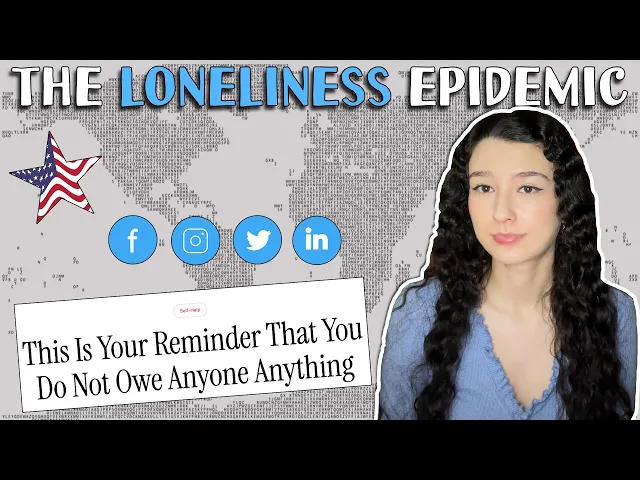
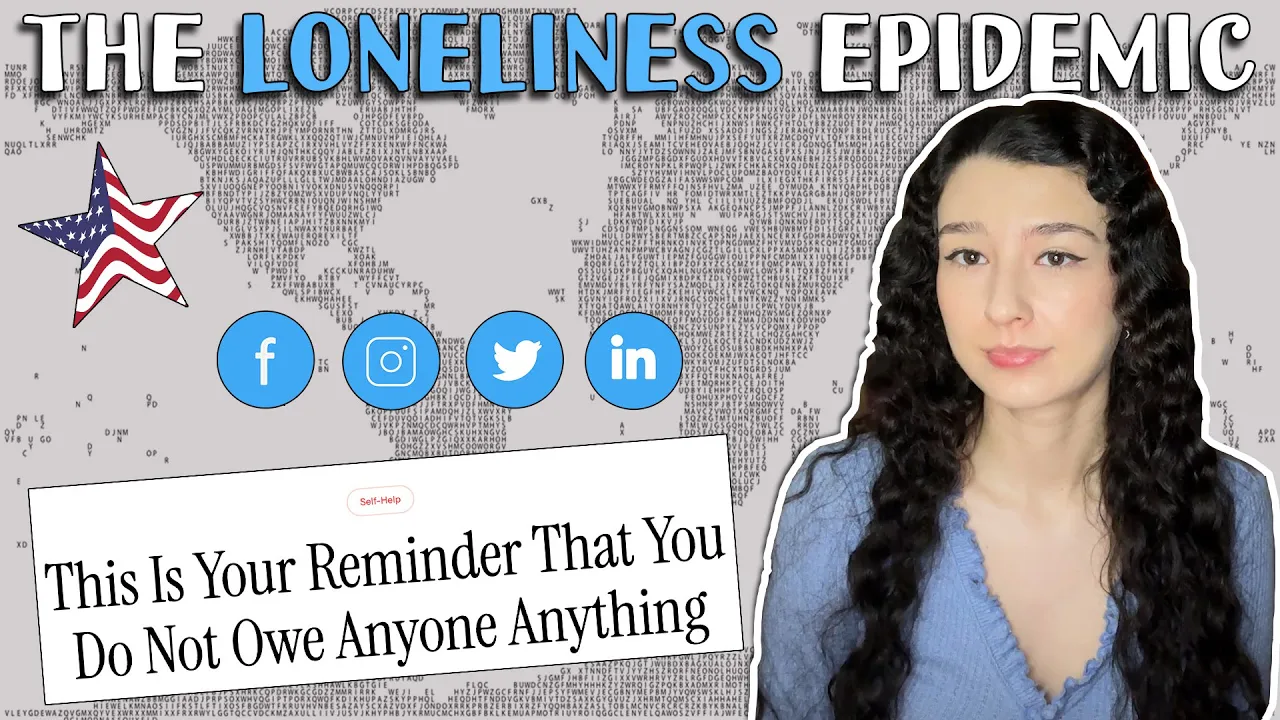
thank you to aif flow for sponsoring a portion of today's video every year it seems like we hear more and more about the loneliness epidemic in the US as someone who moved back to Europe this past year this is something that I've been reflecting on a lot and today I'd like to share from my perspective five factors that I think are contributing to the loneliness epidemic particularly for People based in the US although not necessarily limited to it also what I think a path for moving forward in a more connected way is [Music] so one
thing that I'm observing that I think must play a role in the loneliness epidemic is flaky Behavior I know I'm not the only one who has noticed a huge rise in flakiness particularly among friends because I'm hearing more and more people also talk about it I genuinely believe people lost so many social skills during the pandemic and so my resolution for 2025 is that if I organize a gathering a meal a night out or something and you provide an excuse at the last minute about why you can't come we're going to talk about that we
are going to talk about the effect that has on the relationship it is not okay and I don't understand what changed in the last few years where people start to think that this is okay and look I'm not talking about real reasons for people not showing up at the last minute but what I'm saying is that the volume of last minute excuse uses for people not showing up has increased precipitously in a way that doesn't make any sense to how people actually live their lives not to say I should win an award but I'm just
saying if I put in the effort for something and you make an excuse yeah it's going to have negative effect on the relationship and people remember that and you know there's a lot of discussion out there about how people are lonely and people don't have community and like this is the exact reason so some common complaints are people will make plans and then cancel last minute or worse yet just not show up I remember a few years a I had a friend who would just literally not show up like wouldn't even let me know that
she wasn't coming other times people will make plans then be extremely late like I'm not talking about 15 minutes I can give anybody 15 minutes grace period even if it happens every time I'm talking more like 30 to 60 plus minutes late people will often say let's see each other soon but then never follow through with plans because it just doesn't feel convenient to like leave the comfort of their home and people will often complain about how they don't have a big enough social Circle they'll try to go out there and make friends but then
they never end up really hanging out with those new people more than a couple times this flaky Behavior not only is really disrespectful of other people's time but it also harms the person doing it because your Social Circle starts shrinking more and more and this seems to be a cultural phenomenon that I'm seeing particularly among Young Americans among older Americans I haven't really observed this let me know if you think I'm wrong and in southern Europe at least it's not uncommon for people to be quite late to things but people are much more social like
especially throughout the week they will hang out with people after their workday multiple times a week so what's going on here what is going on with the cultural norms and values of Young Americans specifically that's making them so flaky this is where I think we need to talk about the second Factor contributing to this loneliness epidemic which is overly rigid boundaries and Hyper individualism Young Americans are more aware than ever about the importance of healthy boundaries a lot of them having gone to therapy and learning from online psycho Educators like myself they understand that everyone
needs to have limits on what they're willing to tolerate and what they're not and they're more informed than ever on what it looks like when somebody is violating their boundaries unfortunately even good things come with their own set of drawbacks and in the case of boundaries there are people out there who misuse the term who misunderstand boundaries as something that must be rigid and impenetrable like a brick wall rather than something flexible like plywood who take the approach Ro of I don't owe anyone anything considering only their own needs without letting anyone else's needs even
factor into their decision and who seem to think that we all live in independent bubbles rather than the reality which is that we're all interconnected whether we like it or know it or not hyper individualism is running rampant among Young Americans and sure that might sound great when you're putting yourself first by cancelling last minute on your best friend's wedding cuz you just weren't feeling like going out that day but the drawbacks quick become very obvious once you actually need something from your village unfortunately a lot of people are building up very high impenetrable walls
around them you know making a little moat of water around them pulling up the drawbridge and only then do they realize that they're completely isolated and without resources when they need it most like yeah you're protected no one's going to be able to pass through your Castle but they're not going to be able to pass through a castle if you need it either like check out this Tik Tok that I thought was hilarious because honestly it's so relatable I think we all know somebody that does this this girl I know just posted her 2025 New
Year resolutions and the first thing on her list is putting myself first and I just got to say you don't need to do that actually I've known you for over 10 years now and and you've been doing that you're you're good I remember this one time it was your friend's birthday dinner and you made them change the restaurant where they wanted to have their birthday dinner because you didn't like the menu so maybe let's not put ourselves even more in front of others maybe like let's work on some self-awareness in the new year that could
be that could be a good one then the third thing I'm noticing that I think is contributing to the loneliness epidemic is this sort of unwillingness to communicate directly with people something that I'm realizing now that I live in Europe again is that Americans tend to communicate much more indirectly than other cultures do you know like every time I visit my home country of Romania I'm amazed that you can really trust Romanians to shoot you straight like if a Romanian person doesn't like you they will make that clear you know a few months ago I
was like on a train uh not in Romania and I heard the people behind me speaking Romanian and I was like oh my God they're Romanian and I said oh you're Romanian I am too this woman looked at me dead in the eye and she said good for you a Romanian person will make it clear if they don't with you but if a Romanian person wants to do something nice then you know you can really trust that they're being authentic that it's sincere and their good feel feels so much warmer because of it it really
lights you up inside this was really important in the Communist Regime in a lot of Soviet block countries because there were a lot of people kind of reporting each other to the authorities on no basis and so you needed to know that people were trustworthy and the way to know that would be if they were very direct and very honest even with things that you didn't want to hear and also in like basically any Latin country the communication is typically quite open and direct people freely Express anger just like they freely Express warmth this pattern
in Eastern Europe Sou Europe Latin America it's very different from how young people are operating in North America I'm noticing a real reluctance among Young Americans to directly communicate with each other when they have a conflict even for myself there were a couple occasions this past year when I confronted someone about the fact that they were acting weird acting like they had a problem with me and they straight up wouldn't even engage in a discussion about what was bothering them because in their words what's the point of arguing I was like who's arguing since one
is having an open honest respectful conversation arguing how do you think you're going to have anyone at all left in your life if you run and hide at the first sign of conflict and look I'm ambivalent about this for a couple of reasons one is that there are different cultural communication Styles and none is more correct than the other you know there are cultures that are called high context that operate on a lot of like unspoken cues where like body language or tone or what's not being said is a cue to you about what they
actually mean those cultures they have advantages of their own you know cultures that communicate super directly can for instance be really disregulated for people who have a history of relational trauma for instance and the second thing is that I don't think anyone needs to get involved in a conflict if they have reason to believe that the other person is going to harm them in the process you know if someone's proven themselves to be unsafe you are putting yourself in danger by directly confronting them about a certain conflict however the conflict pattern that I'm seeing more
and more in Young Americans isn't even in line with this healthy indirect High context form of communication where you communicate through subtle cues or you work through Conflict by focusing on Common Ground by being super soft in the way that you approach things no what I'm seeing is people refusing to work through Conflict at all instead running away from it or expressing their anger passive aggressively retaliating further on and also a lot of the people doing this are not doing it because they're actually in an unsafe relationship with the other person person the other person
poses no harm to them they just don't feel like communicating or working through the conflict and I do think that this is behind a lot of the loneliness epidemic that people just straight up refuse to communicate with each other once the relationship hits the smallest roadblock they'd rather throw out the whole relationship and look for a new one than try to fix and repair the one that they do have like there are always going to be ruptures and relationships you can't just go throwing out those relationships the first time you hit a rupture now the
next factor that I'm going to go into is social media but before I talk about the negative consequences of technology I want to tell you about a much more productive way to use technology to your advantage and that is where I'd like to thank the sponsor of today's video akif flow akif flow is the ultimate productivity tool for those of you busy bees that want to maximize productivity and minimize procrastination it combines time blocking with all of your Integrations into one easy to use platform I mean I know if I can use it you guys
can too so let me just show you my schedule for the next few days and I'll explain how I use it all right so here we have what I did yesterday and then here we have what I'm doing today and tomorrow as you can tell I am already behind on what I was supposed to do this morning because I woke up super late cuz I didn't get a good night of sleep so when you're time blocking you can either drop something down in here or you can add a new task in here and then drag
it into your schedule so for example yesterday I wasn't able to finalize finding a venue or sending the save the dates for my baby shop hour so I'm going to just pop that in here you also get to choose the color coding so for me purple typically means work related tasks and then green means self-care and something that really speeds up this process is you can easily just duplicate something and then just drag it into a different day so that really speeds up for me planning the next week ahead based on what I did last
week also they have the Integrations feature where you can link all of the apps that you use and so everything is just in one spot which is super easy to use you can also add labels or tags and now that there's an AI feature it automatically does it for you so making things even easier it puts tasks into different projects there's also a new statistics feature that really allows you to see how you're using your time so for example this is my recap for yesterday you can also look at what you have on your plate
for today you can prioritize what is your top priority for that day and then it automatically gets highlighted at the Forefront of your day one-on-one productivity coaching is available and also you get an onboarding call when you sign up for ACU flow so really helpful tool for those of you that are trying to be more productive or have a lot on your plate check out the link in the description box and in the pinned comment if you want to give it a try thank you so much to akie flow so Factor number four that I
think is contributing to the loneliness epidemic this one's not going to be a shocker social media I can't help but wonder if a lot of this inab ability to communicate that I'm referencing is directly caused by excessive social media usage and the thing is I think social media can be a real double-edged sword I think it can be incredibly valuable it helps small businesses reach their ideal customers it creates job opportunities it helps people feel connected with their loved ones if those loved ones live far away it helps people Branch out socially it gives people
access to a multitude of resources at their very fingertips but unfortunately it also means that some people will use it as a substitute for socializing in real life instead of using it to enrich their life they're using it to subtract from their life a lot of people are not really making an effort to put themselves out there in real life because their brain can't distinguish between real and imagined relationships so they figure if I'm having these virtual relationships that's good enough that's the same as going out there and interacting with people which it's not and
then when they're not going out there and interacting with people then they don't practice the communication strategies required in order to be in healthier relationships you know these relationship skills they have to be contracted like a muscle if you want to function in relationships you need skills like active reflective listening expressing dissent perspective taking and empathizing with other people effectively expressing your feelings all of these are skills which are included in the connection course by the way if you're somebody that feels like you need a little extra help getting these social skills up then I
have over four hours worth of lessons in there the point I'm making though is that social media is great for creating a sense of connectedness if you don't have access to real life relationships for whatever reason right now and for building real life relationships but it's not so great for people who use it as a substitute for real life relationships and the number five the last thing that I think is really contributing to the loneliness epidemic especially of late is political polarization and people straight up refusing to engage with each other because of differences of
opinion and look every time I say that this is really bad in the US Europeans will tell me well it's also really bad in Europe and like yes I see it too it's getting worse in many places in Europe but the political polarization in the US is truly unparalleled in my opinion because of social media algorithms and because of echo Chambers unfortunately many people these days truly believe that anyone who doesn't hold their exact worldview is toxic they're very driven by hate for the other side and they try to absorb whatever the in group wants
them to believe without ever stopping to ask hold on is this what I truly believe are there things maybe I disagree on with my ingroup and is that okay if so I've even had people in my own life get really up in arms when I express a belief that's like even just a tiny bit threatening to their worldview you know even something about like resilience for instance if I talk about how stress can actually be a good thing and that it forces us to be resilient there are people in my life who get really upset
with me and who not only want to convince me that I'm wrong and that what I said is offensive but I can tell it's like genuinely becoming a rupture between us and I thought it was really dangerous how in the wake of the US election a lot of influencers and even mental health experts were advising a lot of their people to cut off family members who voted for a different party so if you are going into a situation where you have family members where you have close friends who you know have voted in ways that
are against you like what you said against your livelihood and it's completely fine to not be around those people people and to tell them why look I consider myself an independent when it comes to politics but I too was very concerned about one of the US political candidates however the moment we start to cut off our lines of communication with the other side especially when the other side is a majority of the country that's when things are sure to never get better and that's honestly probably part of the reason why we're in the situation in
the first place there are even people out there who estrange themselves from best friends and siblings because they disagree on one aspect of politics just one and some of them even have newborns you know newborns that have now never met some of their family members they no longer attend family events it's sad it's really sad and it's only going to get worse unless we do something about it because at some point every single person in your life is going to have a different opinion than you so what are you going to do then you're just
going to end up completely alone it doesn't need to be this way it's like people have forgotten how to ment alze the idea that everyone has their own perspectives and beliefs we expect everyone to think just like us and we assume that if somebody reaches what we consider an immoral conclusion it must be that they're doing it for immoral reasons when most of the time what I would consider to be good people reach bad conclusions because of what they consider to be good reasons if you need help with this one if you're kind of like
yeah I'm really easily offended I really struggle with like people disagreeing with me I have a video on my book and hearth Channel where I talk about how I became less easily offended that might be helpful for you so I'll pop that up here but in conclusion I think there are five factors that are really contributing to the loneliness epidemic flaky Behavior overleveraged boundaries and Hyper individualism an unwillingness to communicate social media being used as a substitute for real life interactions and political polarization leading to estrangement so if we want to move forward from this
climate then we need to do the polar opposite of those things we need to be reli able and dependable when we make a commitment to other people we need to make sure our boundaries have just enough paracity and flexibility to allow feedback to consider other people's needs as well we need to communicate and work through conflict even if it means doing so in our own maybe more gentle maybe more indirect route the only wrong communication style is to not communicate at all we also need to use social media to bolster real life connection not as
a substitute for it and we need to have more compassion for the other side and to get less easily offended what do you think did I miss something that you think is contributing to the loneliness epidemic if so pop it down in the comments below hope you have a lovely rest of your week and I'll see you soon [Music]