You are happy? Are you satisfied with your life and work? Many do not even like to reflect on the subject.
They live on autopilot. . .
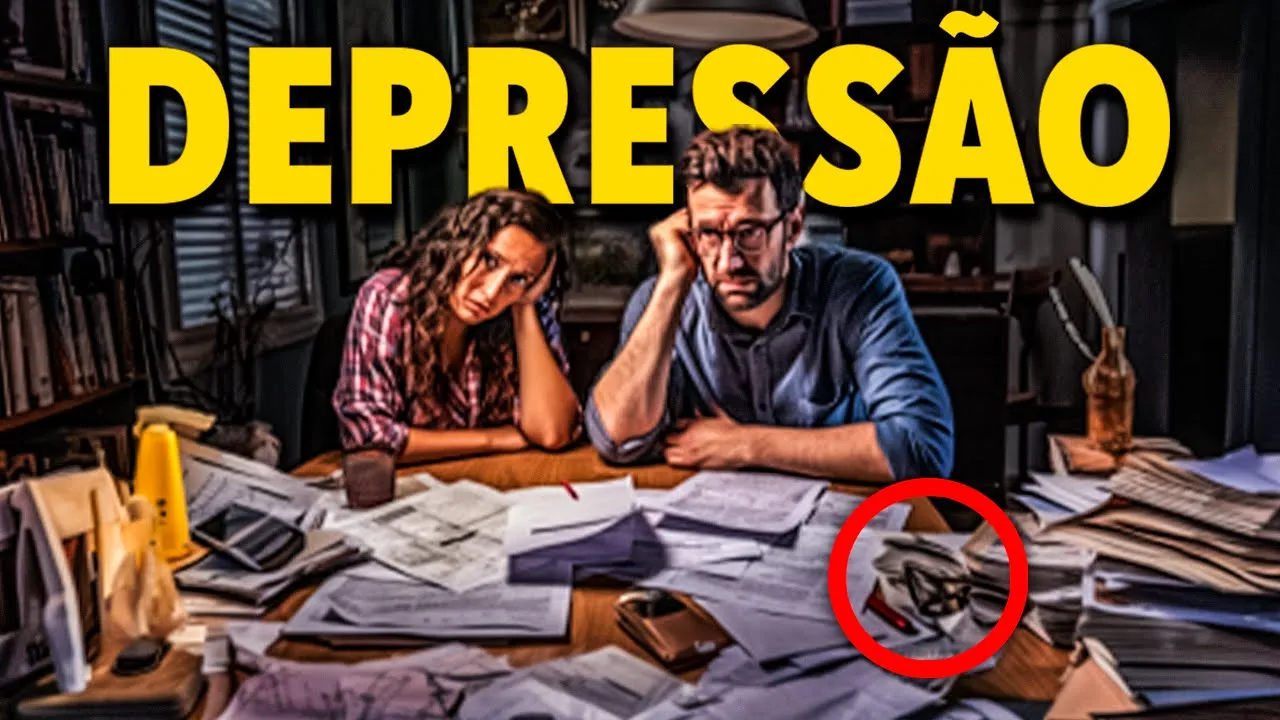
But the statistics don't lie: Brazilians are DEPRESSED. What is behind this phenomenon? Many Brazilians have a horrible life.
A job that pays poorly but requires a lot of effort. You work more and more, but you don't feel like you're getting a good return for it. When going to and from this job, you still have to deal with terrible public transportation.
So even after hours, your mind is still not able to relax. Add this to the bills that accumulate and the destruction of hope for a better future. It's a recipe for mental collapse.
In fact, the situation is so bad that Brazilians live every day on automatic. Buy a house? Out of the question for hundreds of millions.
Are you going to buy a car? Be prepared to pay for good insurance to ensure that, if it is stolen, everything doesn't go down the drain. Not only is the quality of life worse, it seems like there is no escape.
But I'm not doing this to make you even more hopeless. There is a way out and that's what we're going to see. The leader in depression The disease of the 21st century is depression.
Around the world, a colossal number of people suffer from this illness. Generally, depression is most associated with Generation Z. Young people, in fact, are very susceptible to it, lost in the modern world, looking for a place in the sun and a purpose.
But anyone who thinks that only teenagers or young adults suffer from depression is mistaken. More and more people in their 30s, 40s, and 50s are admitting that they suffer from a depressive disorder. And it doesn't stop at that age.
Unfortunately no one is immune. Neither me nor you. Everything about depression becomes especially true in Brazil, the country that records the most cases of this disease in all of Latin America!
At least 300 million people worldwide have been diagnosed with depression, according to the Pan American Health Organization, an arm of the WHO. In fact, Brazil is the country with the highest prevalence of this disease in Latin America, according to the report “Depression and other mental disorders” by the World Health Organization. Data from the latest mapping on the disease carried out by it indicates that 5.
8 % of the Brazilian population suffers from depression, equivalent to 11. 7 million Brazilians. We are above countries like Cuba, Barbados and Paraguay.
At a continental level, encompassing all of the Americas, Brazil appears second only to the United States. But we're not at the worst part yet. This is because a recent study by the Ministry of Health reveals that in the coming years, up to 15.
5% of the Brazilian population may suffer from depression at least once throughout their lives. A number of factors explain the high incidence of depression among Brazilians. There is an absurd difficulty in accessing quality treatment in the public health network, coupled with a strong stigma in relation to mental disorders.
But these are treatment-related factors. The cause may be deeper and vary from case to case. But do you know what explains a lot of the depression today?
Something very simple: Lack of money. Not coincidentally, the WHO points out that the number of people suffering from common mental illnesses is increasing mainly in LOW INCOME or DEVELOPING countries. Guess which group Brazil fits into?
As I said, in that same study, the WHO warned that depression can affect people of all ages, with the risk of becoming depressed increasing with poverty and unemployment. Do you think Brazil contributes to its population developing problems like this? Just imagine that in our country we have many unemployed people, and most of those with jobs have to deal with low wages, which are often not enough.
There is NO prospect of improvement. Brazil is a country with a high tax burden and a low average salary. This means that the population has to work much harder than others to be able to access basic services that are not offered with quality by the State, which ends up putting a burden on Brazilians' mental health and triggering disorders such as depression and anxiety.
Our failed state punishes its own population in every way. The key, then, is simple: DO NOT depend on the government. This is because Brazil helps you get sick and does not help you treat the disease.
TRILLIONS in taxes are paid every year by the population and what do they receive in return? Anything. Based on data from the National Registry of Health Establishments, there are only 19 psychologists for every 100,000 inhabitants in the Brazilian Unified Health System.
In some European countries, this number of professionals exceeds 40. A Datafolha survey carried out last September showed that Brazilians are more insecure, afraid of the future, SAD and DISCOURAGED. While 45% of the population has ANGER at their own country, the number rises to 61% of people who are discouraged.
This is the same number for fear of the future and sadness. More than half of the Brazilian population has simply lost hope in a better future. Furthermore, reports of BURNOUT are increasing.
In other words, people are simply EXHAUSTED from their work, feeling physically and psychologically unable to continue. Exhausted The job market is competitive and stressful, and there is little appreciation for the mental health of employees. In this scenario, many people are being diagnosed with burnout syndrome in Brazil.
Burnout syndrome is characterized by physical, emotional and mental exhaustion caused by chronic stress at work. It is classified as an occupational disease by the World Health Organization. A study by the International Stress Management Association reveals that Brazil ranks second in the number of diagnosed cases, surpassed only by Japan, where 70% of the population is affected by the problem.
Do you feel exhausted by work? Truly exhausted. We are all tired, but exhaustion is different.
In these cases of burnout, exhaustion is felt by the complete loss of ability to continue doing your work rigorously, with the quality and disposition as before. Your workforce is lost. Not because of a lack of physical condition, but because his mind reached its limit.
According to data from the National Association of Occupational Medicine, approximately 30% of Brazilian workers suffer from burnout syndrome. Although the disease has a significant impact on the well-being of professionals, legal issues related to the syndrome in companies still lack adequate solutions. Workers are increasingly exhausted, but companies have not realized this.
Experts point out that the syndrome faces difficulties in being recognized by society. There is a stigma, a prejudice around this. If you say that you are mentally exhausted from work, you may hear unpleasant words, treating them as frills.
But it is not. Experts also argue that burnout can be a result of the work environment and not just the individual, which makes it difficult to directly recognize the syndrome. Moral harassment by leaders, discrimination among colleagues and rigid and inflexible goals imposed by business culture can trigger the condition.
Until companies create spaces for dialogue to address the issue and promote psychological safety in organizations, cases of burnout will become increasingly frequent. Workers are increasingly unhappy. Overall, the Brazilian is unhappy.
The price of the dream Answer me honestly: how satisfied, or happy, are you with your occupation? Does it offer you opportunities for growth? Or do you feel stagnant?
Years and years of doing the same thing, with insignificant salary adjustments while Brazilian inflation destroys its purchasing power. This could be your case. But know that you are not alone in this scenario.
Millions of Brazilians are unhappy with their own occupation. No prospect of improvement. What does the future hold for us?
Our parents' generation worked and often had a simple goal in mind: buying a property and a car. Realistically speaking: do you see yourself buying a property from quality in today's Brazil without having to spend a real fortune? Everything is inflated.
The food, the clothes, the services, the cars, the properties. Drams are inflated. Brazil even takes away YOUR RIGHT TO DREAM about a better life.
The majority of the Brazilian population wants to buy a property, but the scenario is not favorable. Interest rates are sky high and houses are more expensive, especially in large centers such as São Paulo, Rio de Janeiro, Belo Horizonte and Brasília. If you intend to buy a car, I can imagine that you are increasingly considering purchasing a pre-owned one, after all, zero kilometers are costing a lot.
A Renault Kwid or a Fiat Mobi, entry-level cars, doesn't leave the factory for less than R$70,000. 36% of young people aged 18 to 24 neither work nor study, making up the so-called neither-neither generation. A trip to the market is a torment, because the basic food basket represents 40% of the minimum wage.
Do you notice what a pile of bad news looks like? The internet sometimes serves as a refuge from reality, but it can also become a prison. It's common for us to see young people drowning in alternative reality to fill their own existential void.
But, as I said at the beginning of the video: it's not just young people. What we mostly have are adult and experienced people who use the internet as a subterfuge to face unfavorable reality. Betting at online casinos.
Twitter fights over pet politicians. Geopolitical analyzes of what happens on the other side of the world. Pornography.
Video games. Addictive social networks. People are even becoming addicted to news, becoming intoxicated by information.
They want to know everything while they have no control over anything. All of this serves to alleviate the pain of today's Brazil, but any medicine can lead to an overdose. Perhaps the medicine itself is an overdose in itself, figuratively speaking.
The virtual reality you find in the inane news will NOT save you. It’s important to take a step back and recalculate your life’s trajectory. If you feel discouraged, sad or overly stressed, see a psychologist.
Whether it's burnout or depression, it's important to be treated. Take the time necessary to improve. If you don't have any of these illnesses, which should be treated by a healthcare professional, and your problem is more financial or work related, then listen to what I'm going to tell you: The internet is an extremely powerful tool to get you out of the mud.
. What I'm saying is not a contradiction, pay attention: The internet is in fact a tool. You can use it for good things, bad things and neutral things.
For things that don't take you anywhere and for uplifting things. Why spend hours on TikTok without earning a penny when there is an OCEAN of opportunities with DIGITAL PROFESSIONS in the palm of your hand? Simple professions to learn, where you will be in the comfort of your home, without having to struggle on the terrible Brazilian public transport.
Without having to face your boss's frown first thing in the morning. Without having to wake up at 5 am. If you want to go further and leave your profession that has left you stagnant and exhausted, there is a solution.
And the best: it depends only on you. And I can help you with that. I'm creating a legion of digital masters, to earn up to 3 thousand dollars every month using a computer with internet access.
. . Without speaking English, without needing to expose themselves and without needing to sell absolutely anything!
The best: without depending on the government. If you want to be part of this movement and build a dollar income in a safe and practical way, I have prepared a free presentation. Just click on the link in the description or the pinned comment, and I'll see you there in a few seconds.
If this is not of interest to you, I am grateful that you watched this video and understood the dimension of the mental health problem that Brazil faces. It's not something new, it's not something simple to resolve. Don't let them tell you otherwise.
Why is the middle class disappearing in Brazil? And the which I explain in the video that now appears on your screen. That's it for this video, a big hug and good business.