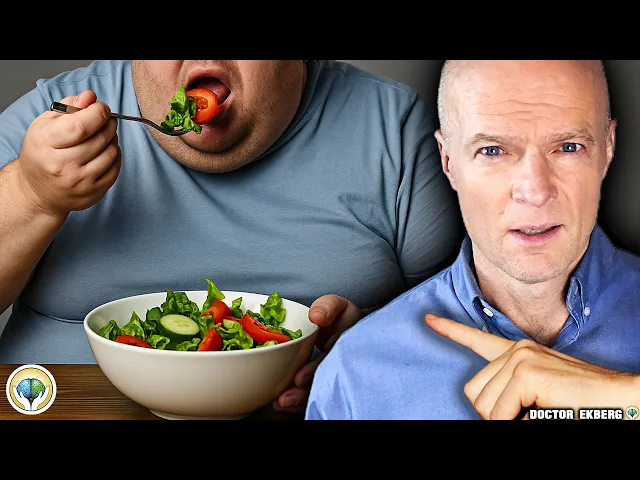
They had designed the perfect diet to get fat. People will say, then, that's why they get fat because fat has so many calories, etc. , which is true.
Fat is very effective at making you fat if you also have a lot of carbohydrates. If you have enough carbohydrates to drive massive amounts of insulin, then that's a deadly combination. When we don't understand the difference between real food and ultra-processed, and the ultra-processed still fit within the guidelines, then that's a problem.
Hello, Health Champions! Today, I want to talk about what would happen if you were to actually follow the dietary guidelines. Are they really healthy?
Are they so-so? Or are they even responsible for a lot of the health problems we see around the world today? So, I want to start talking about what is natural for humans to eat.
What type of food, historically, have we eaten for most of the time that we have been on the planet? So, if we look at this rectangle, this width represents how long humans have been on the planet, and that's over two million years that our DNA has been mostly unchanged. It doesn't mean it hasn't changed at all; it means as far as breaking down food, as far as having the DNA that produces certain enzymes, and what our digestive tracts have looked like, that has not really changed for that time period.
And I'm going to pick 1. 6 million years just because it makes the numbers work. So, we cut that in half, and we have 800,000 years; we cut it again, we have 400,000; and then 200, 150, 25, and 12,800 years.
So, this tiny, tiny little sliver over on the side here is 12,800 years, and this tiny little sliver represents the approximate time that we have had some kind of agriculture, where we have grown things on purpose to mass-produce food or produce it in higher quantities. And that little sliver also represents a longer time period than all of human recorded history. And during all of this time, this entire time period except that last sliver, humans have eaten meat and fish, nuts and seeds.
We've had fruits but primarily seasonally, and it hasn't been as sweet as the fruit that we have today by far. We've had some vegetables, and we've had some tubers like rutabaga and sweet potatoes and so forth, but what we haven't had during that time, as I said, is agriculture. No agriculture, which means we have had no grain, which is the foundation of most food on the planet today, and we also have had no processed foods, which in the U.
S. is about 70% of what people eat is ultra-processed foods. But now let's blow up this tiny little sliver of 12,800 years so that we can look at it more closely.
And now this tiny little sliver that's just a pixel wide is represented by this whole width again. So we can look at it closer, and we cut that in half; that's 6,400. We cut it again; that's 3,200.
And again is 1,600, and then we keep cutting, so we have 800, 400, 200, and 100 years. So now this tiny little sliver is just 100 years, but that is still the entire period that we've had any significant amount of processed foods. It's just the beginning of refining some flour and having some sugar and so forth.
There was sugar available, but it was expensive, and most people couldn't afford a lot of it. And I hope this helps give a little bit of perspective that virtually all the changes that we have seen in human diet have been in the last sliver of this entire time period, which is only a sliver of the time period that we've eaten very differently. Now, every time I do a video on food, I get comments like this one: "So there is basically nothing left to eat," and it's really tragic when people have that perspective because there is still so much food to eat, but what they mean by that is, "I have always eaten processed foods.
I've never eaten anything else than the foods that you talk about as being processed and unhealthy, and my parents have never eaten anything else, and maybe my grandparents haven't either. " So, they're talking about 50 to 75 years that they've eaten processed foods in their family, and therefore, they think that is normal and that's what all humans have always eaten. And even though this is the entire time period that humans have had agriculture to some degree, it is only since the 1950s that we've had modern grain, that we have hybridized it, that we have changed it, that it looks very, very different; the gluten is different, the chromosomes are different, and that's all happened in the last sliver, which again is just a fraction of the sliver up here.
Now then, the next step is when we got the first dietary guidelines in 1977, the United States felt the need because they saw some very unhealthy trends. So, they figured, hey, we got to teach people what to eat. So I want to compare those guidelines with what people ate for the hundreds of thousands of years before we got agriculture and before we got guidelines.
And for all of that time, we were hunter-gatherers, and we ate basically what a lot of people call paleo because we ate like our Paleolithic ancestors, and they've done some estimates and based on what foods were probably available, and they would probably get somewhere between 50 and 65% of their calories from fat, and they would probably get somewhere between 15 and 25 from protein, and they would probably get between 10 and 25 from carbohydrates. So, I'm going to take the midpoint of these ranges, and I'm going to convert it into how much we probably ate in terms of grams of each of these components if we ate about 2,500 calories per day. And then we're going to compare that to what the guidelines say.
Now, we probably had a little over 150 grams of fat, we had about the same amount of protein, and we had maybe about half, or at least under a 100 grams of carbohydrates, and that might be overstated because again, carbohydrates were mostly available during the growing season, so we might have had six months of this much, and then six months of considerably less. So that's probably what humans have eaten for hundreds of thousands or even millions of years. And then in 1977, the guidelines come along, and they cut the fat almost by half, they cut the protein significantly, and they increase the carbohydrates by more than four times.
And then for the next 50 years, we have got new guidelines every 5 years, and for every edition, they have refined, they have tweaked it a little bit, they had new opinions, but it basically hasn't changed much at all. If anything, the fat has been recommended to come down a little more, protein come up a little bit, and carbohydrates are very close to the same. So what has it done to our health to go from our historical diet to the guideline diet?
And let's start looking at obesity. So before 1800, it was basically non-existent. Then in the 1900s, we started getting some sugar and white flour, and we had a few per obesity, and then it didn't accelerate very quickly; we had a couple of wars, world wars in there, but in the 1960s, people recovered from the war, and we got a little more affluent.
So for the next decades, we had a steady rise in obesity, then from the '90s and on, we had a dramatic increase in obesity, and even though genetics can definitely predispose you to obesity, there are genes that are more or less favorable, the point is that overall, the human genome has not changed, so we can't blame the genes if it was non-existent in the 1800s, and now we have 40%. It has nothing to do with the genes because they haven't changed. So instead, we want to keep looking, and we want to look at type 2 diabetes, and again, it was non-existent before 1900s.
Then in 1960, it was still very, very low, a couple of percent, then, as with the obesity, we saw a steady rise, and from the '90s and on, we've had an exponential growth that's been much more dramatic. I want to point something out you may have looked at already, and that is the slope, how quickly were these things getting worse before the guidelines and after the guidelines? Then we can see that there is a tremendous difference both in the obesity and in the diabetes trends.
So when we look at the first arrow here, this is where we started getting processed foods and where there was also some affluence; people had more money after World War II, and then we added the United States dietary guidelines, and we see that there was a tremendous change both in obesity and diabetes. And like I've often spoken about, it takes a while to break the body; the body is very adaptive, it has lots of defenses, but if you keep doing something decade after decade, eventually, it will sort of break down. And what this represents is basically a carbohydrate intolerance; that's what diabetes is, it's a very progressed stage of type 2 diabetes.
And as you can see here, the obesity took off earlier because already in 1990, there was a change in direction, whereas the diabetes took 10 years longer. We've heard so many times that obesity causes diabetes, but it's not a causative relationship; it's an association because what's really going on is insulin resistance that causes both obesity and type 2 diabetes. So when we look at these curves, it's almost as if they had designed the perfect diet to get fat, and some people have called this diet obesogenic, meaning something that is causing obesity, something that makes people fat.
Now here's an interesting thing about lab rats and lab mice because they do a lot of animal experiments on those, and this does not mean I, in any form, condone those experiments, but it's just a fact that they're out there, and they need a lot of rats and mice to perform these experiments. And when they produce these rats, then they try to make them as fat as possible, as fast as possible, because that's going to save them money obviously if they can get them super fat in a month instead of three months, that's going to save them a lot of money. So obviously, if there's a market, there are companies that specialize in this, and they get really good at developing food that will accomplish fat rats as soon as possible, and they call it obesogenic rat chow.
So let's look at how the rat chow would compare to the other diets that we already discussed. Now, I'm doing this comparison in grams, and obviously, humans are a lot bigger than a mouse or a rat, so we're going to make it equivalent based on 2,500 calories. So when we look at fat, we see that the obesogenic rat chow has more fat than the guidelines but less than the Paleo.
We look at protein, and it's kind of similar, and then we look at carbohydrates, and it's very, very high, just like the guidelines. But these companies, being experts in fattening up rodents, they also know that there's one magic ingredient that you have to include in very large amounts, and that is sugar. So, out of the total carbohydrates of a little over 250 grams, they have the equivalent of 163 grams of sugar in there, and the average consumption of sugar in the United States, even though they don't recommend in the guidelines to eat that much, is over a 100 grams per person per day.
And since a lot of people don't eat any sugar, the people who do eat sugar probably eat at least 60 grams a day. So the rodent chow is higher in fat than the guidelines, and a lot of people will say then that, well, that's why they get fat because fat has so many calories, etc. , which is true.
Fat is very effective at making you fat if you also have a lot of carbohydrates. If you have enough carbohydrates to drive massive amounts of insulin, then that's a deadly combination. However, we need to understand the relationship here that low carb high fat is okay, and low-fat high carb can be okay if you are just maintaining if you are at a healthy place and you don't have a lot of processed foods.
Then a very low-fat diet can work because it's very restrictive in calories, so even though you're driving some insulin with the carbohydrates, then it's not enough to make you fat because you're not also eating a bunch of sugar and processed foods. However, it is much more difficult for most people to sustain it because it's much easier to get hungry on a low-fat diet because fat and protein are what make you full and keep you full for a long time. So, it's the combination of high fat, high carb that is terrible, and both the guidelines and the rodent chow are much higher in carbohydrate than the low carb high fat, and they're much higher in fat than a truly low-fat diet.
And then as the final nail in the coffin, they add a ton of sugar because that is very addictive, and it creates a fatty liver, and it really fuels cravings. So, all put together, that spells out an absolute disaster. So, I bet a lot of you are thinking right now, you're wondering, have we been lab rats in the greatest experiment on humanity in history?
And I'll let you answer that question for yourself but keep in mind the following here: that these guidelines have basically demonized fat, even though they allow 30% of calories from fat, which is a whole lot higher than a truly low-fat diet. Plus, the fat they're recommending is mostly so-called vegetable oils, which contribute to insulin resistance. And then when they've also promoted high carbohydrate diets, they've basically paved the way for ultra-processed foods, not that people need a lot of convincing to eat those, but when we don't understand the difference between real food and ultra-processed, and the ultra-processed still fit within the guidelines, then that's a problem.
And for many, many years, low-fat, high carb became heart-healthy, even if it was ultra-processed. So we had low-fat dairy, we had low-fat milk, low-fat yogurt with tons of sugar in it, we have cereals, we had muffins, we had bread and soda that was all low-fat, high carb, just like the guidelines. Now, in the defense of the guidelines, I have to say that they do restrict sugar.
They only allow 10% sugar, which on a 2,500 calorie diet comes out to about 62 and a half grams, but that's added sugar. So natural sugar occurring in foods like fruit are still highly encouraged. So, the rat chow had 60 g per 2,500 calories, so by the time you add some fruit juice, you're not that far off of the rat chow percentages.
And the biggest positive change in the guidelines have probably been that over time, they're moving closer; they're emphasizing quality more and more. So maybe in another 10 or 20 years, or a couple of generations, then they will have moved all the way to eating the way that we have always eaten, not meaning the last 50 years, but the previous several hundred thousand. If you enjoyed this video, you're going to love that one.
And if you truly want to master health by understanding how the body really works, make sure you subscribe, hit that bell, and turn on all the notifications so you never miss a life-saving video.