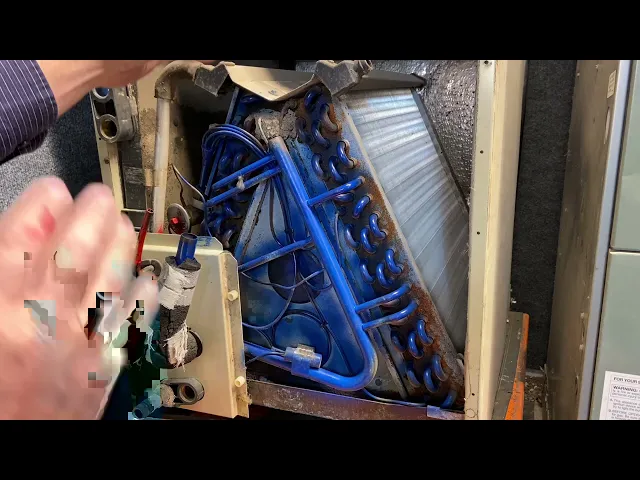
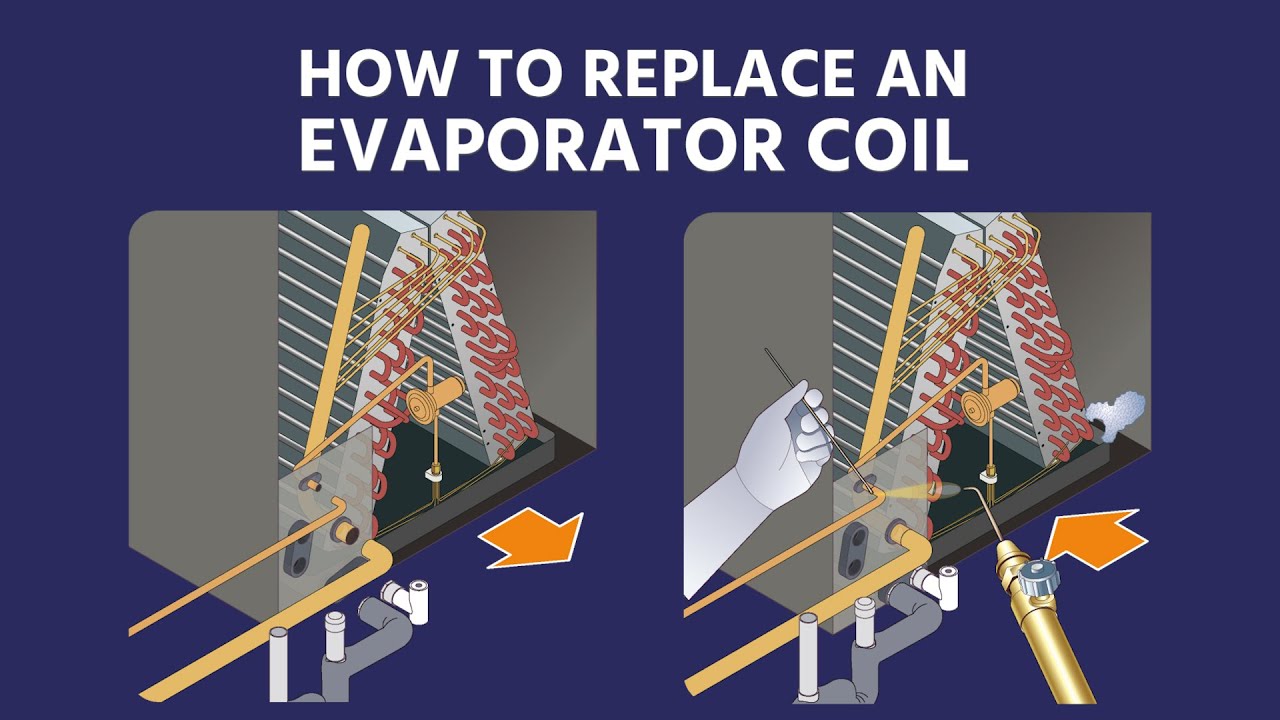
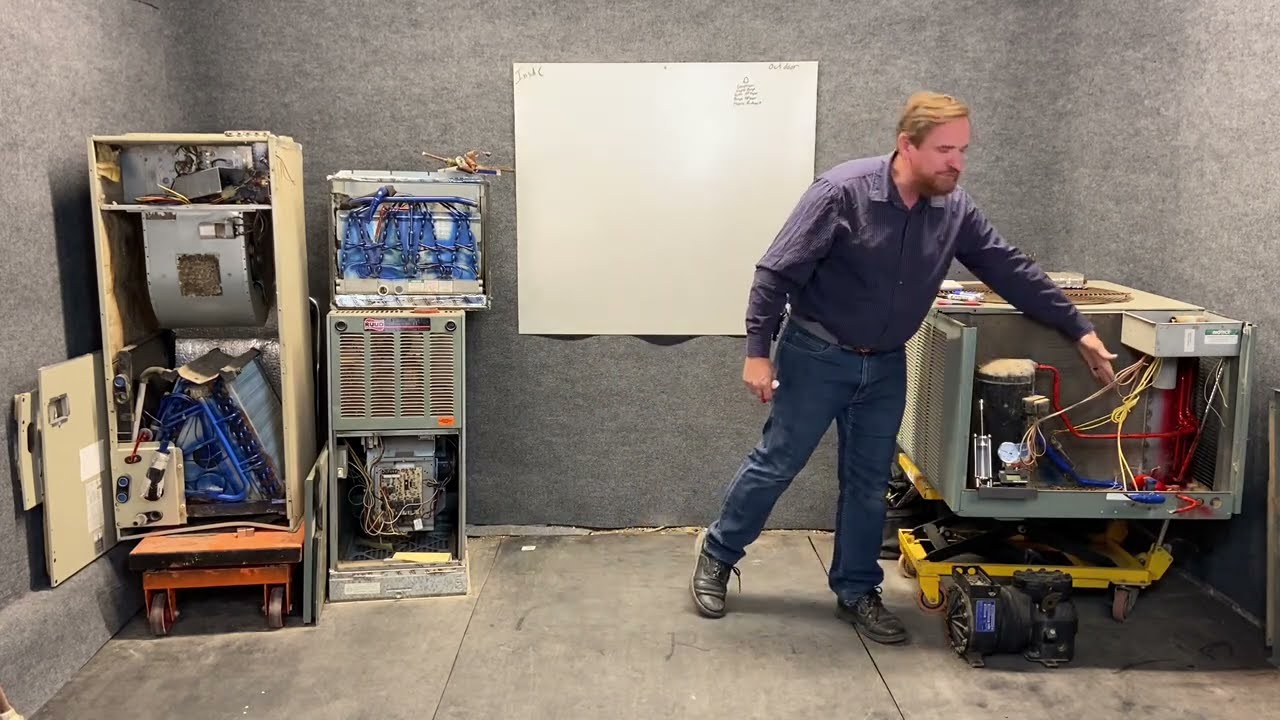
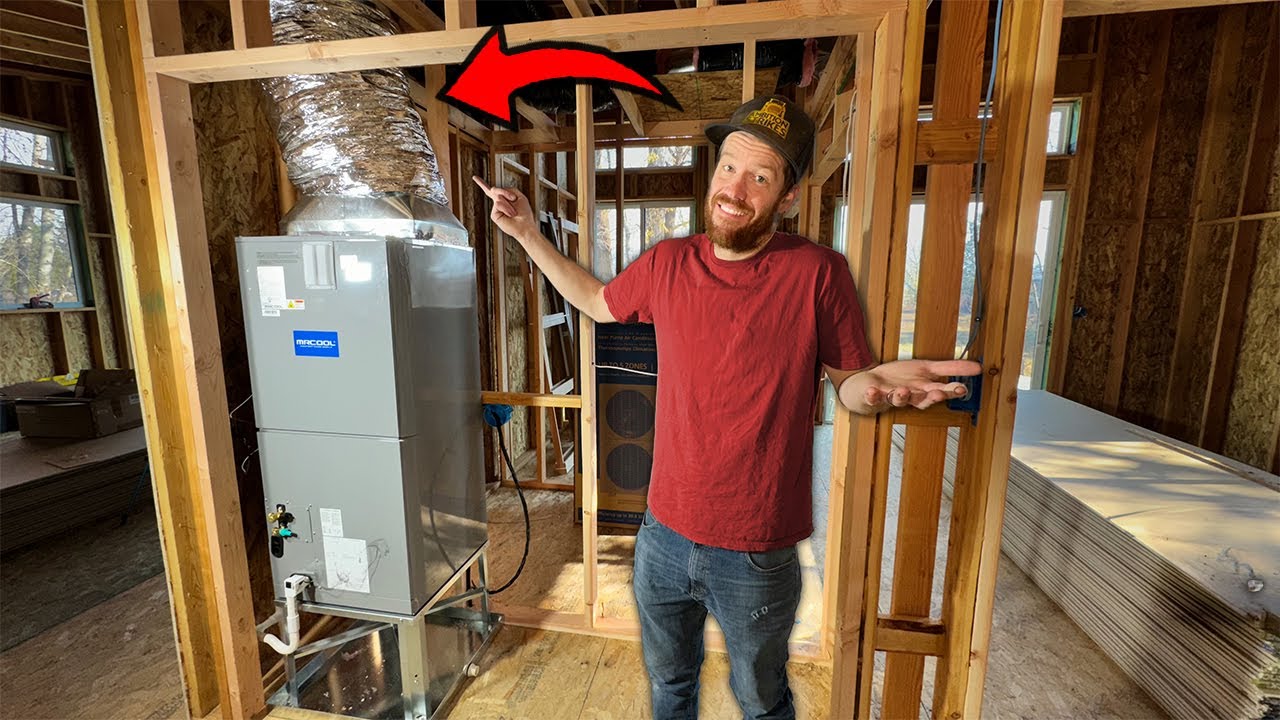
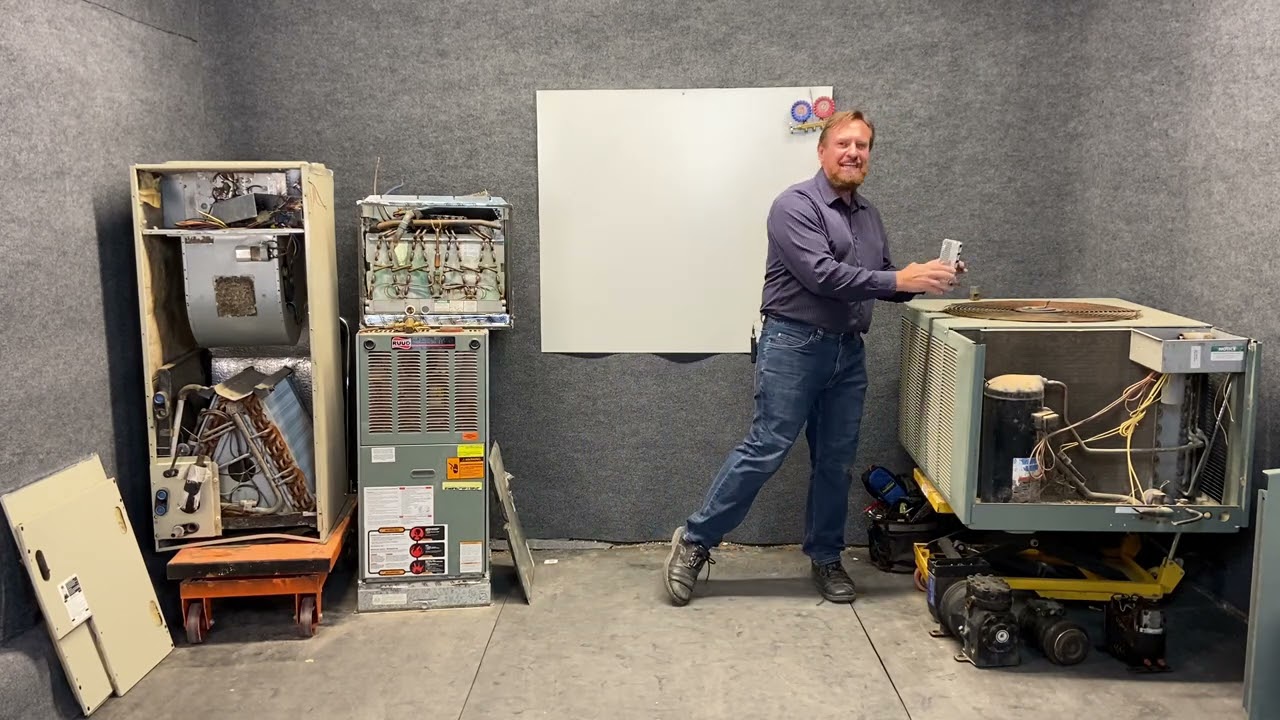
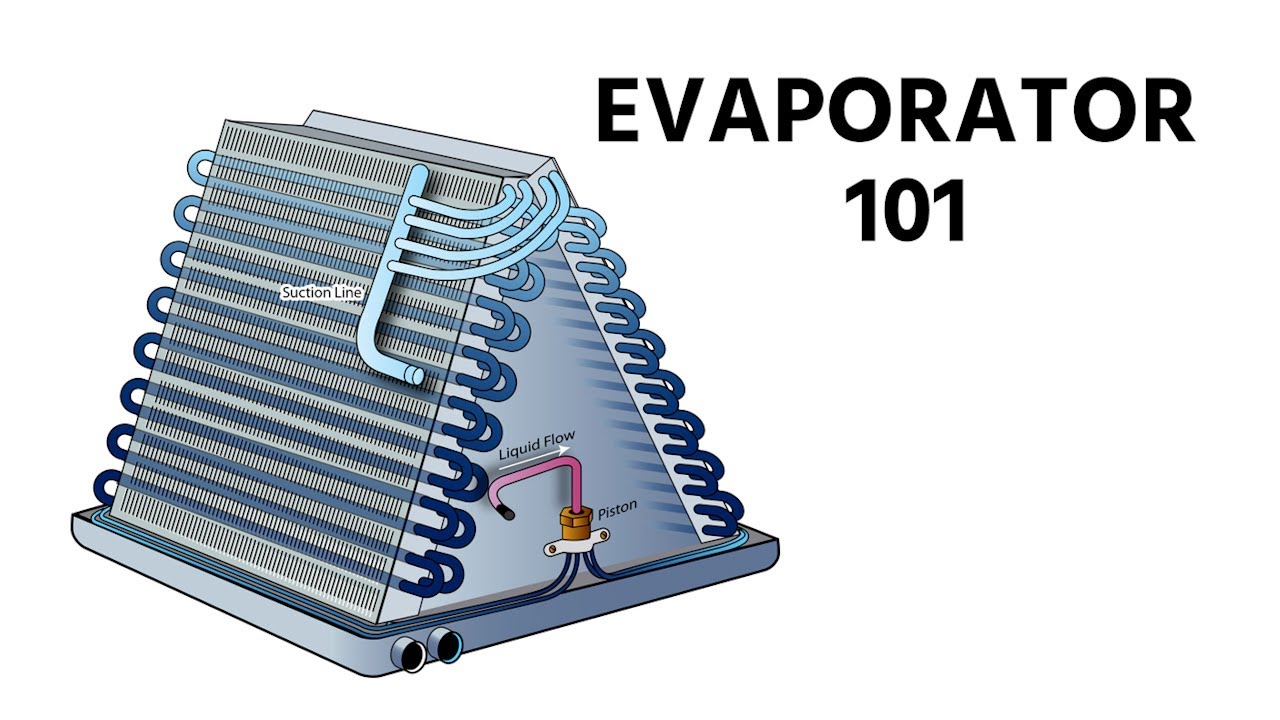
so here we have our evaporator coil so the refrigerant is going to be evaporating we're actually boiling we're going to talk about that later on but we need to know now is we had an immediate pressure drop so here we went from a high pressure liquid to low pressure saturated mixture we'll talk about saturated later on as well so here we because we had a pressure drop we also had a temperature drop so now the temperature of the refrigerant is a lower temperature there's a lot of places that actually cool with just simply a pressure
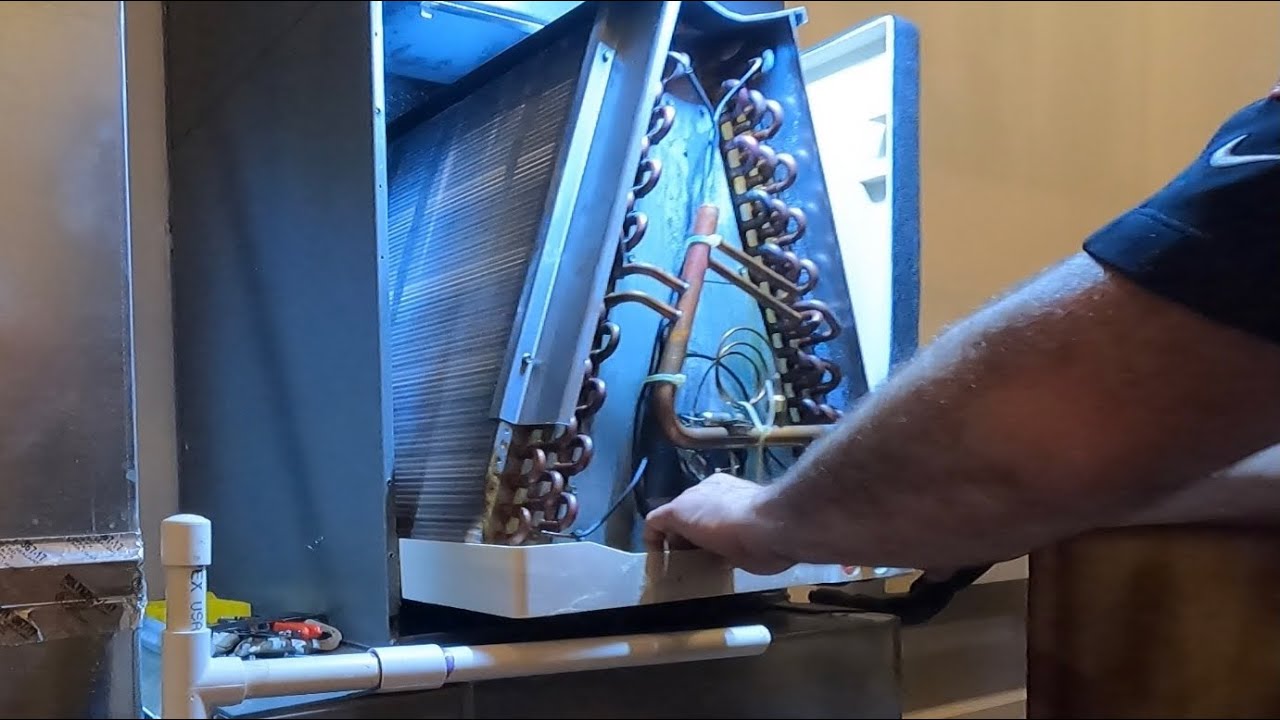
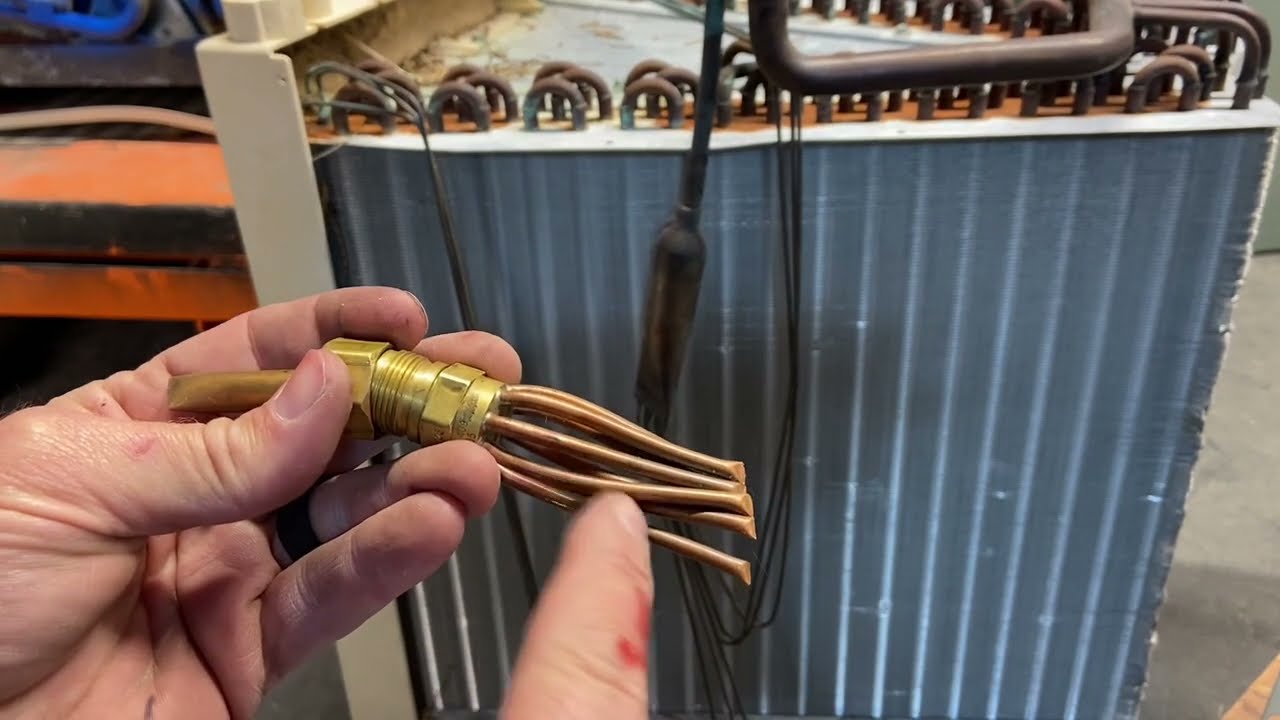
difference in air you can actually have a cooling effect just simply with the pressure difference so we're doing inside of here is dropping the pressure of the refrigerant which is also dropping the temperature of the refrigerant so blue is representing low pressure if you see we're feeding this coil for through six different locations one two three four five six there's actually six of these little tubes remember these are distribution tubes because this is my metering device so we're distributing that refrigerant to multiple locations of this coil now this refrigerant runs back and forth back and
forth across this evaporator clone all these tubes these are called little u-bins or youtubes the original youtube but the refrigerants going back and forth through this evaporative coil the idea is as we're sending all that refrigerant there's a lot of surface area a lot of tubing a lot of that tubing is touching a lot of this aluminum so there's a lot of surface area the second law of thermodynamics the refrigerant is a lower temperature than the air so the heat is going to leave the air and go to the refrigerant since there's a lot of
surface area and it's made of aluminum and copper which is great for transferring heat we can very effectively move heat second law and thermodynamics go all in here now as we take heat away from the air the temperature of the air drops i've taken heat energy out of the air and put it into the refrigerant so the air comes out cooler so we're only cooling the air by removing heat from it that's the first law of thermodynamics but it's essential that we have air flow across this evaporator coil in this case our blower is up
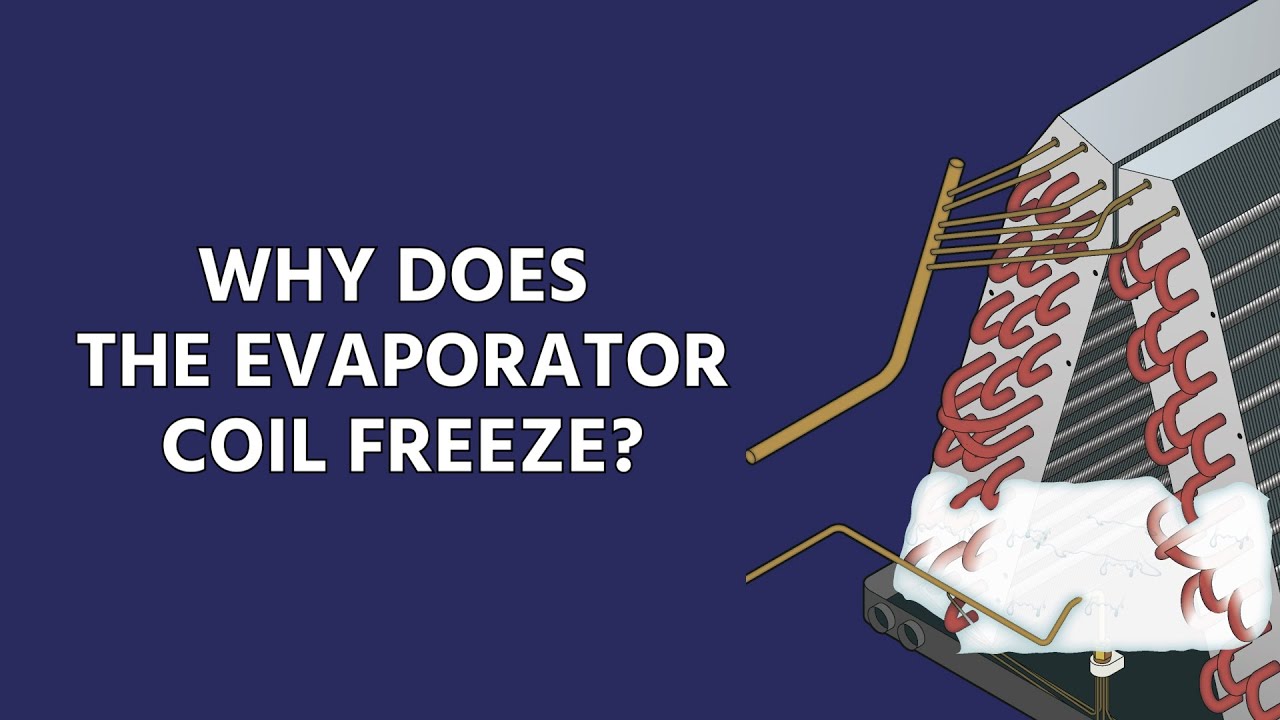
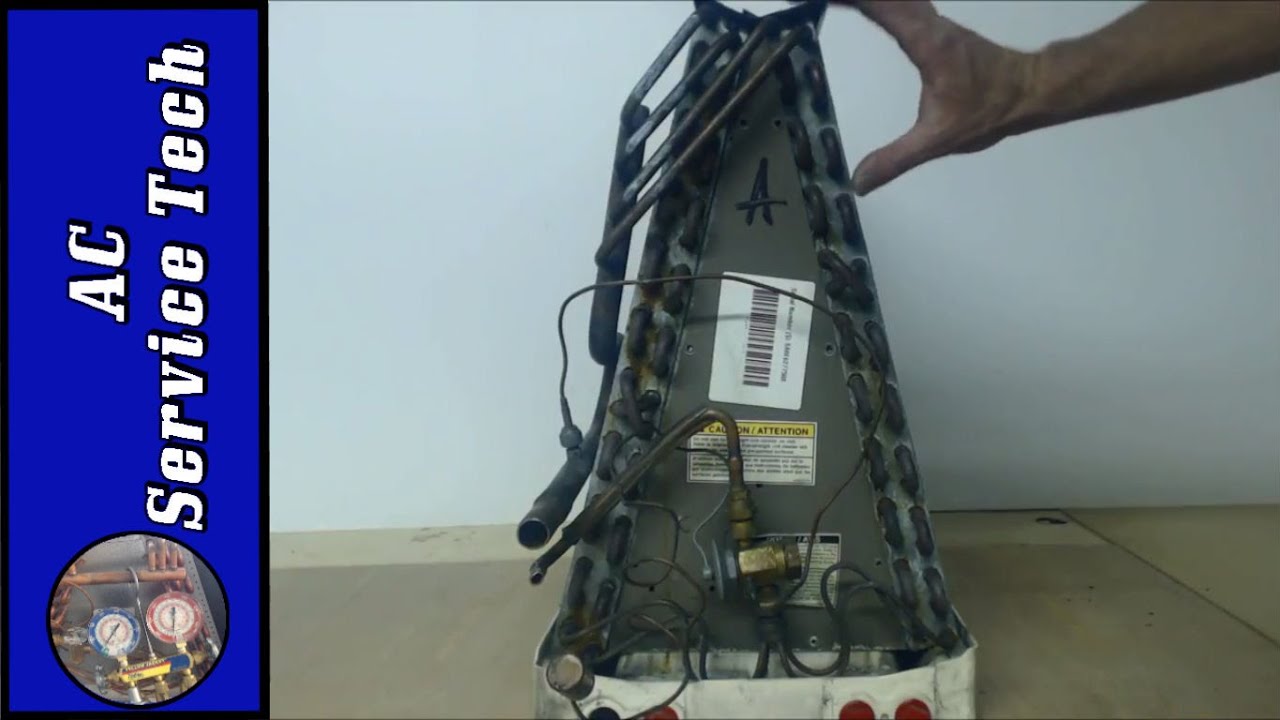
here above it and we're actually pulling air across it and other cases like the gas furnace the coil was on top and i'm pushing air across that evaporator coil it doesn't matter if we pull air or we push air as long as we get air through the evaporator coil there's many different styles of evaporator coil but here's another example just these little bitty tubes and just like we had with the condensing coil it's a heat exchanger here we have the tube and fin style so the refrigerant as it's running through these tubes it's low temperature
low pressure and it's lower than the temperature of the air the air is flowing through these fins on the other side and we're taking the heat out of the air through this type of heat exchanger to the refrigerant so the heat leaves the air goes to the refrigerant the temperature of the air drops we push that cooler air back into the house now there's a whole lot more going on with this we're going to talk about that soon but let's just first learn the basics the refrigerant here is absorbing heat it's absorbing heat away from
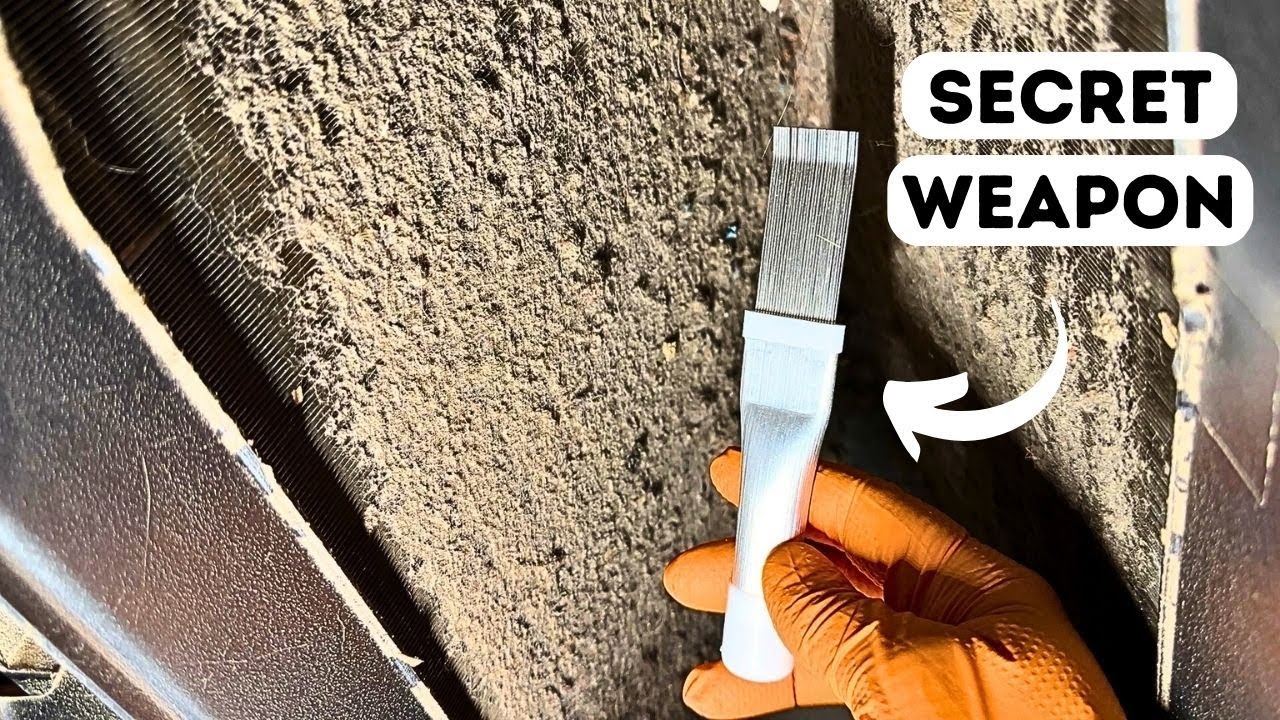
the air it's essential that we keep our fan running so that we move air across the coil because if we want to absorb heat from the house we need to absorb it from the air so having that fan run is essential and many times it's overlooked if we look in other cases we also want to make sure that coil stays clean here's an example of an evaporator coil on the underside that's extremely dirty this does two problems number one it's blocking airflow number two the dirt is working as an insulator so insulators prevent heat transfer
it slows the second law of thermodynamics so now i'm blocking air flow that means there's less heat coming across it and also with the dirt i'm insulating the coil so i'm slowing the heat transfer down this makes this evaporator coil less effective i'm not transferring heat from the air to the refrigerant like we need to and it's a very big problem so airflow is essential so airflow is essential for refrigeration cycle we're going to be talking about airflow a little bit later on but we can't really do anything with the refrigeration cycle if we don't
have the proper airflow now we talk about airflow and these evaporator coils but there's also other kinds there's many different types of evaporator coils this particular one can have a 1950 coca-cola cook machine registered trademark or affiliation with them but the idea is same thing the temperature of the refrigerant is lower than the temperature of the air so the heat leaves the air and goes to the cooler refrigerant as the air cools off and travels around the soda cans the heat leaves the soda goes back to the air the air warms up there's this little
fan here that's pulling air across this coil the heat leaves the air it goes to the refrigerant air cools off goes back around and the cycle continues so thermodynamics is a huge part of what we work with but it doesn't just have to be with air we can also cool many other things such as water or glycol or beer or stones you've heard of cold stone creamery we're actually taking heat out of the stone that then takes heat out of the ice cream some of the older refrigerators had coils that look something like this this
is actually your evaporator coil the refrigerant actually flowed through these fins here and this is where your ice tree actually went and it would take the heat out of water and if you take heat out of water it will turn into a solid also there's a little bit of fan that moves around and this would cool the rest of the freezer as well as it had a damper that controlled how much air went to the bottom side to control the temperature of the box we'll get into refrigerators a little bit later on but i want
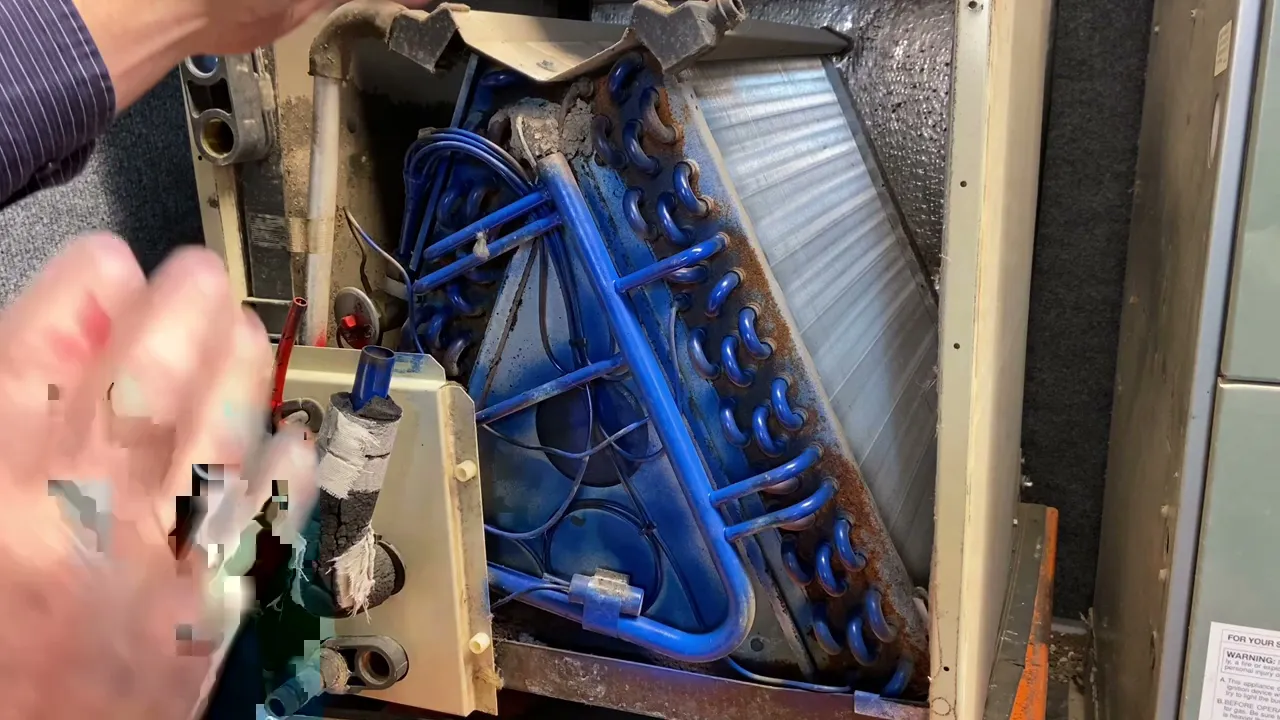
to understand it's still going to have an evaporator we're still going to be absorbing heat this guy here is still absorbing heat and this one here is still absorbing heat so here we have another style of evaporator coil a different brand and there's a whole lot more of these little bins here we call this a w coil this particular brand uses a whole lot more of these little bitty tubes but the idea is use them in less space so if we were to pull that coil out it would actually look something like this notice it's
not painted but all this would be low pressure we would draw this in blue so the air is traveling through all of these different pieces if you notice this side right here has a significant amount of dirt on it this side has a lot of dirt but this one doesn't that tells we had an airflow problem there wasn't flowing through this evaporator coil properly but also this is really really bad this definitely needs to be cleaned what happens is this has caused damage to the compressor outside and we'll talk about how how that ties in
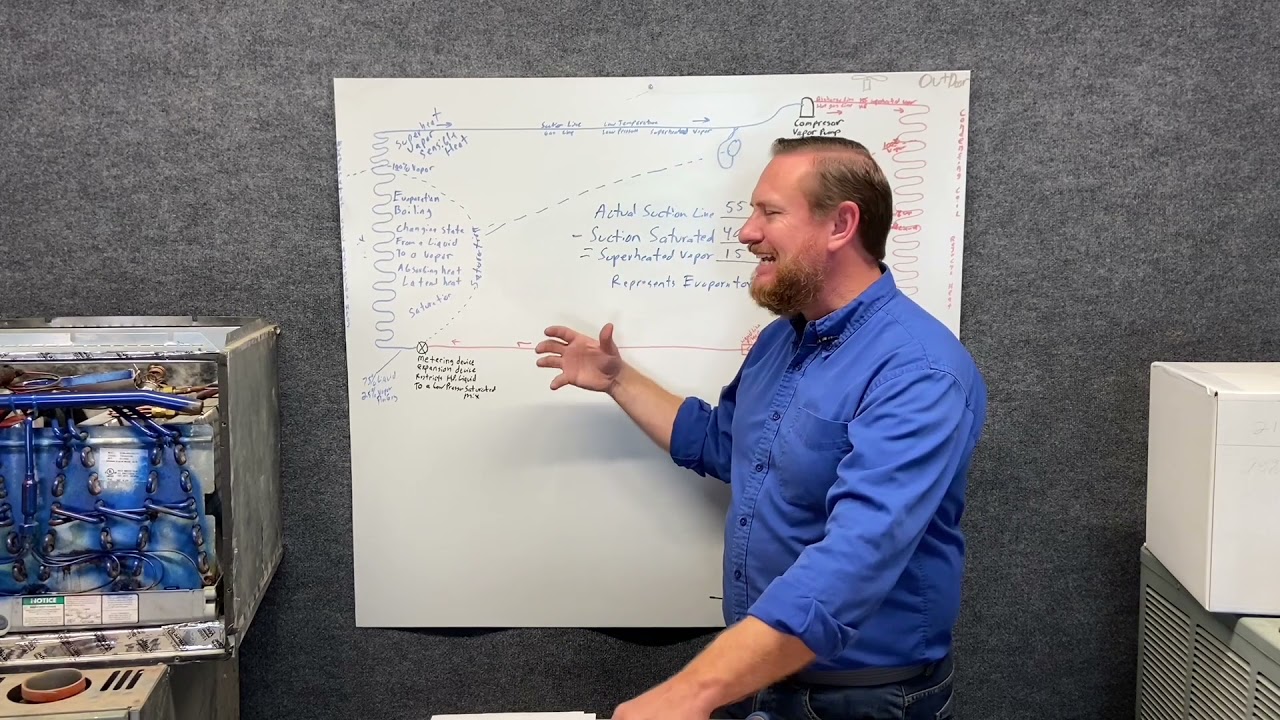
later on as well and let's not forget our drawing so we have our metering device now we're going to change to blue blue represents low pressure so we're going to do is go back and forth back and forth as we draw and this is going to represent our evaporator coil and these little back and forth represents those little u-bins that you saw those little u-tubes so we're going to write over here evaporator coil and what that evaporator coil does is absorb heat and we're going to do is label on this inside because this is the
inside unit our metering device is located right near the evaporator coil so both of these together are inside and our compressor and our condensing unit is located outside now we're going to add a whole lot more stuff to this evaporator it's not just low pressure there's a lot more that goes into it stay tuned we're going to get there practice these words make sure you know all those vocabulary and we're going to continue on