[music] Welcome to the Mental Health podcast. I'm Kevin Frankish. When I first planned this episode about giving good mental health gifts, I had a pretty good idea of the direction I had hoped things would go on.
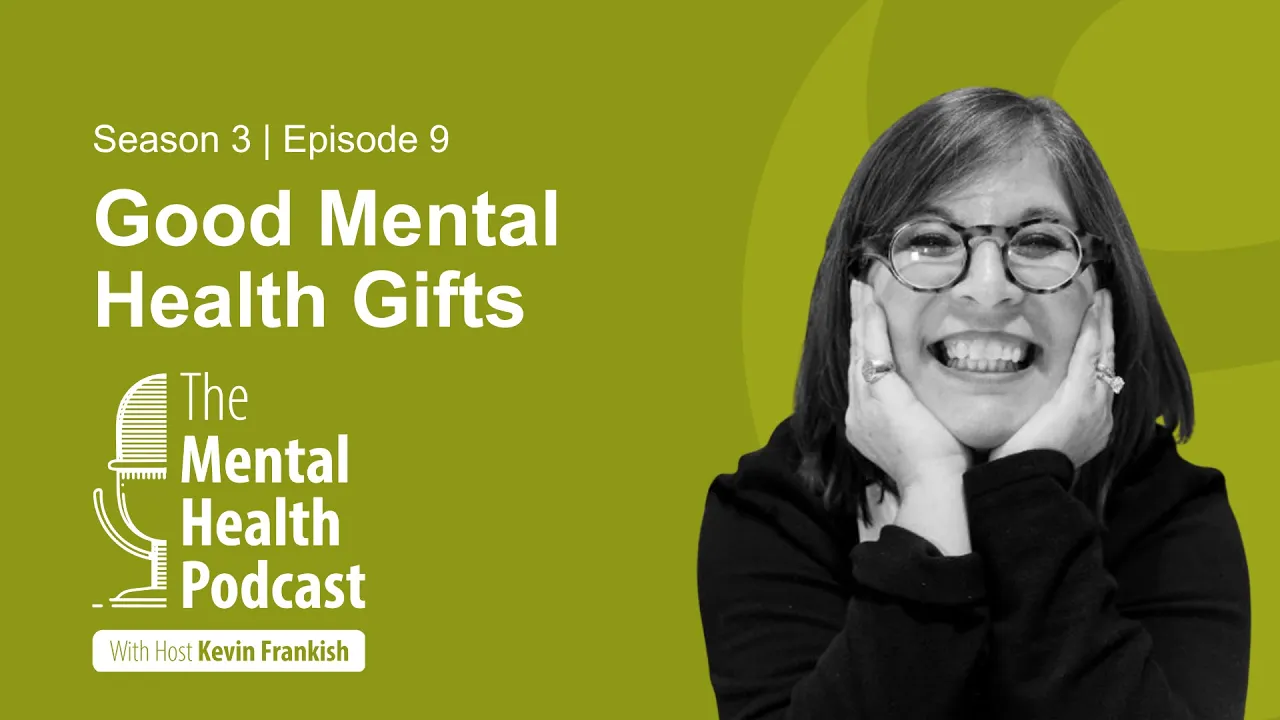
And I could think of no better guest to talk to about all things shopping than my good friend Rita Deamontis. For years, Rita was the lifestyle editor for Sun Medium and the quintessential shopping expert, an all-around nice woman. As you are about to hear and see for yourself, she didn't disappoint in that aspect.
However, after reviewing our conversation, I couldn't help but realize that Rita unknowingly had changed the wellplanned focus of this episode. You see, Rita is also a caregiver, caring for her husband who is in the throws of cognitive decline. Like so many, my friend Rita is always confident.
She spreads joy wherever she goes. What I saw and you are about to see is a person more vulnerable, more, let's say, unguarded than I've ever known her to be. I know for a fact that Rita is not in any way looking for pity, nor do I want to give her any.
Turns out she is speaking for a growing caregiver population doing what they do out of love and necessity. [music] But there is a limit to the human spirit and many caregivers are at or near burnout. There are millions of caregivers in Canada and the US.
[music] So no doubt you know one or a few. I'm asking you do what I did. stop and really listen to these caregiving angels.
What can we give them even for a moment to lighten their load? Good mental health gifts right now on the Mental Health podcast. [music] >> Oh, lovely Rita.
It is beautiful to be with you again. >> It's amazing to be with you again, Kevin. Uh, we go way back.
We have such a incredible friendship that goes back decades when you think about it and always positive and always so profound. So much fun. >> It's always been fun.
You've dragged me through many a darkened alleyway to get to some abandoned warehouse in the baddest part of town. [laughter] >> You are a professional shopper. >> I certainly am.
I made a career of it >> and the best at it. So, that's I could think of nobody better to talk to me about gifting for the holidays when it comes to mental health. And and we're talking about it could be for uh someone's uh personal mental health journey.
It could be for a caregiver. Uh it could just simply be giving calm to someone. And um you are you are especially designed for this or you are especially um uh made for this because you are a caregiver yourself.
>> Yes, I am. I've been caregiving my husband for 14 years. Uh but the last four years have been his most challenging.
So my husband uh suffered a series of strokes 14 years ago and slowly his cognitive uh thinking has uh deteriorated. He has been di formerally diagnosed with Louisibody uh vascular dementia as well as u medically induced Parkinson's disease. So tech you know the last few years have been very very challenging.
In fact, I actually resigned my position after 47 years with the Toronto Sun to be his caregiver. I get to freelance for them, which is wonderful. And I get to freelance uh for magazines and and do all sorts of crazy things.
I even did some commercials and I appeared in a very low lowbudget film shot in Toronto. I played an Italian na. Wow.
Type casting all over. [laughter] >> But I and I did that for my own mental well-being, of course. And I love writing.
I can't give up my career, my my writing, but I do take care of Mario 24/7. And it is an interesting journey, let me tell you. I >> It must be.
And and as a caregiver, you know the importance of taking care of yourself. >> Yeah. And you forget that.
>> Mhm. >> As a caregiver, it's one of the things that you kind of forget about your own mental well-being and recognizing the signs that perhaps you're going down a rabbit hole that you shouldn't be. things like, you know, I'm not sleeping.
Gee, I wonder why. And addressing it and, you know, looking for the elephant in the room. Being a caregiver, you have to deal with a variety.
I mean, the holidays are a difficult time regardless. People deal with the the bills and the price of food and they perhaps they're not getting along with the family and they're estranged or they're breaking up or or a million things. They're grieving loved ones that passed away.
Add to that someone who you've lost but still lives in your life. And I think that's the biggest challenge of all. It is challenging.
It's lonely. It's frustrating. I've had to deal with not only frustration, but like the why me, but then why not me?
You know, who am I? I'm not special. And uh and I think that grounds you.
I think the importance is grinding. Grinding yourself like grounding yourself. Grinding is for another discussion obviously, but [laughter] >> and and the other thing too is it's the holidays.
It's supposed to be a time of happiness and joy and family and and sharing. So that throws another weight on the shoulders of caregivers. >> I won't.
The sad part is I haven't celebrated Christmas or New Year with Mario in the last few years. Uh, he doesn't recognize the holidays. I've decorated my home.
I love Christmas. I'm a Christmas person. I have more bling in my room in my my home.
I have more fairy lights. I have, you know, I put up tons of trees and goodies and things like that. I'm making Christmas cookies this afternoon.
And yet he doesn't recognize one thing. Uh, there Daisy doesn't even recognize me. all of our thoughts >> are with you and uh and sending as much support your way as as I can.
>> And so I I think with that in mind, you were able to do some searching >> for items that are going to relieve someone's mental health uh or ease it. So let's where do you want to start? Where do you want to start?
>> You know, it's funny. You know, we we spoke about this. What do I think that people who are people like me and there's thousands of us out there.
What would I want? I want the gift of time. Time to myself.
I if I was to give, you know, gifts to a caregiver, I would think in terms of come on over and help me clean my house or uh let me go out and and just spend an hour by myself, you know, having coffee by myself. Uh so I don't lose my identity per se. instead of being Mario's caregiver, I'm still Rita Deamontis.
Um, I'm thinking in terms of gifts that I would I personally would purchase for caregivers in general. I would, you know, when was the last time you went to the theater or a movie? When was the last time you had dinner out?
When was the last time you went and had a Manny Petty? It sounds frivolous, but it's just an amazing gift to give someone because it it helps them reestablish, you know, what is important, which is the everyday uh the routine, the daily routines, you know. So, I love gifts to give and I love gifts to receive.
But the gifts that I look for now are are, you know, from they're not tangibles. They're not like, "Oh, this is a beautiful perfume. I love the socks.
I could always use an extra set of, you know, appliances, you know, small appliances. But what I look for are things that will give me back um lost time or uh stolen time in a way. Um and also give me the gift of listening to me because that's the hardest thing.
All I know now is my little world of taking care of someone and I worry sometimes. That's all I talk about. My You know, my good friends and my family, they reassure me it's okay.
It's what we do. We listen. I think the gift of listening is one of the greatest gifts of all because we're not going anywhere with this disease.
It is a horrible horrible disease because my husband is such a a brilliant man. I mean, we would watch Jeopardy. He knew all the answers.
You know, he still watches Jeopardy and he laughs and he points, but he doesn't understand anything anymore. So if that's one gift I can ask people for is the gift of listening because that's one of the most >> come in the form of of a gift certificate or you could make up your own gift. >> You can make up your own gift certificates.
Here let me come over and let's go grocery shopping or let me come over and I'll keep you company or let's go to a movie or I'm signing you up for a massage or a a manny petty which is a quite a lovely indulgence. other things like taking a pottery class or taking a cooking class or or just, you know, sort of like a a distraction gifts they're called because they're tangibles. You can do it and we'll find the time for it if we will stay here for you and you go and have [clears throat] this, you know, Manny Petty or I'm going to take you out for lunch.
Um, if you like grocery shopping, that's exactly what we'll do. uh or if you want to go buy a gift for yourself, that's exactly what we'll do. So, that's what I look for now.
And I think as time goes on, you know, tangible. Sorry, my cat just came to say hello. [laughter] Hello, cat.
>> Hello, Sebastian. [laughter] >> How about you? How do you feel about gifts like that?
>> Well, I I think it's it's something we can easily overlook. And when you said, "Oh, I think there might be hundreds of caregivers. " No, you're wrong, Rita.
There are millions of caregivers in Canada. Millions. So, the chances are that somebody watching, listening right now, knows that at least one caregiver.
And we we may want to wrap up some really nice perfume and put it under the uh under the tree for them. But what use is that if you have nowhere to go to to to use that perfume? So, this is definitely food for thought for a caregiver, whether they're caregiving for um an older person, a a a partner, a spouse, a child.
We need to recognize that maybe the gift of time is so incredibly valuable. >> Absolutely. And and little things like I I I live in a wonderful community and my condominium.
Uh I've been here since 1991. we've been here and I've developed relationships and friendships that transcend, you know, it's it's it's more than family now. Like my next door neighbor Frank, I ask him, "Can you come over and help me put up Christmas lights?
" He's right there. He's got his ladder and he's got his creativity and we have a laugh and then you know uh we have we share a couple of cookies and we look at the work and I think it's an amazing experience that I could I have friends in my life who do that. Um I went to Europe uh for my nephew's wedding in the summer.
It was incredible. I hadn't been to Europe actually. It was my first vacation in decades because when I used to travel it was for work.
This was a wedding in in uh you know in Tuscanyany in in Sienna. >> Beautiful. >> So my neighbors banded together to take care of Mario.
So he was never alone. 24/7 someone was coming in to feed him, feed my cats, making sure he took his meds, make sure he got to bed. They all had keys and they were all taking care of.
And I thought, well, and I had cameras in the house just to make sure he didn't fall or anything like that. >> Your cat. I can hear the cat.
>> Hang on. He's going. Sebastian, get up.
Come on. [laughter] Just pause for a second. >> Okay, we'll pause here.
>> You're not supposed to go there. Come on. >> You know, it's amazing, too, because like I said, we've we've known each other for a long, long time.
>> And we realize now that time does move on. Now, Rita hasn't changed a bit. >> Not one, not one little bit.
[laughter] >> Oh, yeah. I have changed. Trust me on it.
Did you see that? You know, I'm ruled by cats and uh [laughter] >> Yeah. And that's another thing is pets are such healers, >> you know, like dogs and cats, hamsters, rabbits, uh they just supply.
They're they're they're non-judgmental. You just have to feed them, care for them, and they reciprocate like tenfold. And they're not they're not only great for the caregiver, they're great for the the caregiving, >> the ill person, >> I guess.
Yeah. >> And now it's not recommended you give dogs and cats for for Christmas and things like that or pets, >> but a certificate is fine to say, "Listen, I'm going to get you to choose out choose a new cat, dog, parrot in February or or midway through January is something once the Christmas rush has uh has gone down. " >> Or how about this?
Come with me. I'm a I'm a professional dog walker. I go walk dogs for the various humane societies.
And I think that's so admirable and a lot of people do it. Come with me. Spend the afternoon while I walk a couple of dogs and then we can sit on a park bench and have a coffee.
That's I mean they're little things and they sound kind of clichéish but they're not. You're having you're taking someone out giving them fresh air and company and then and and listening and maybe just talking about nothing. you know the latest >> in this day in this day and time when things are so expensive this doesn't cost anything except your time.
>> Absolutely. That's why time is just you can't measure time >> and yet it makes for the most unbelievable gift. It's it's so profound when you think about it.
>> Okay, let's move on. Now we've talked a little bit about caregivers, but people in general with uh with their mental health about um what what are we what are we thinking? What's on the shopping list?
Well, if you really like shopping, I mean, I do not I'm a shopaholic because I like it. I like the sensation of going in and finding things on sale and and sharing it. Like I I'm honest with people.
I go, "Oh, you wouldn't believe what I found for this. " And um for mental health it I was thinking about it and depending on some people suffer severe anxiety, some people suffer um they can't be in crowds or the noise is too loud and you can source out organizations, theaters even where they accommodate this. They'll have the lighting is a little lighter.
uh they can accommodate um wearing ear ear muffs for the noise or recognizing people will run out of a theater like these are little things and they're small organizations that do take care of that. So I think it's the first step is recognizing exactly what a person who is suffering with mental health issues has. Um, and being prepared.
Let's just saying someone who doesn't really like leaving their home, making plans to take them out, and at the last minute, I'm going to take you out for dinner. And at the last minute, they bulk and said, "I can't go out there. Bring dinner home.
" So, you're still having the enjoyment of a dinner out, but the out is inside someone's safety net, which is their home. So, little things like that. A lot of it is common sense, and a lot of it is just thinking it through.
uh and and it just depends on the ver, you know, I I think so many people today suffer from anxiety disorder, uh PTS, post-traumatic stress disorder, um you know, and it depends on the degree of of the the mental illness as well. Um obviously, >> we have to remember as well, it's not just about a a mental illness, it's about people's mental health in general, period. and and the fact that well here's here's an idea.
Uh if you're if you're buying something for somebody's kids for their good or their mental health, don't buy them a drum set for the kids. [laughter] >> Exactly. >> Maybe we should do a list of what not to buy.
>> Drm sets. They did a list of the toys that came out in the 60s that remember the clackers that >> Yes. Oh, and anything that made noise and [snorts] >> darts.
Remember darts? [laughter] Well, I mean, let let's talk about let's talk about teens especially too with their mental health. I mean, in a day when we are in, you know, teens basically are absorbed by tech, by uh social media or or simply uh with with uh their AI chat friend.
>> Let's talk a little bit about that. Uh what kind of what should we be looking at for gifts for for teens? for teens.
It's an um they've they have come out with some amazing line of and I won't call them toys but uh you know holiday products that challenge their you know their mental capacities their mental well-beings at the same time are not encouraging them to be isolated let's say on their on their phones or having um a chat with with with an artificially created persona. So there's things that you do with friends. There's uh I know that there's uh products out there that play music and you step on a mat and you dance to it.
>> Yeah. Yeah. Which has been around for a while, but >> it still is okay.
>> It is tech, >> but it's actually >> Have you seen the new tech monopoly game? >> No. >> And and why not?
Apparently it's >> exactly, you know, >> if you are going to play like maybe a tech chessboard game. So yes, you're playing tech, but you're still playing a game challenging your own mind. >> Exactly.
That's why I'm a big Scrabble lover. I actually play Scrabble against a computer several times a day because it keeps your mind sharp. Scrabble is awesome.
It It really especially since the new words have been incorporated in it. Games like Monopoly, like board games are unbelievable and they continue. Even the old ones like Clue and everything, they continue to be incredibly popular.
So, board games are really really hot, especially the updated board games and uh games that test your your skills and things like that and in include and involve other people so that you are not isolated and you're not alone. So, those are really really important ideas. And right now there's so many um there's so many sales taking place because the holidays are just coming up so quickly and a lot of companies have to move their stock because they're already planning for next uh next season's uh gift ideas and that includes toys and things like that.
>> What else you got for for mental good mental health that you can encourage your friends, your family? It's weird because I was uh discussing this with my nephew recently and he has young children and you know I I asked what are the kids looking at and things like that and I have always been a voracious reader and I've always lost myself in good books and I always bring up uh the Narnia series by CS Lewis which is transcends all ages age groups. It's a beautiful series.
It started with the magician's nephew, the lion witch in the wardrobe. And it even for a young child, you can read to them from the book. And the older you get, the more immersed you get in the and it's a beautiful fantasy in a sense.
These children go through a wardrobe and find a completely different world. But it's the underlying message, you know, what what the the book stands for. And the series is, I would think, a good book.
You know, when I was a kid, I used to read baseball biographies. I was like grade [laughter] three, four, and I love reading the sports biographies because each one of them was a story of triumphing, triumphing over adversity, >> and I love that and I learned so much. So, they're all >> I what we're I think what children are being robbed of is their ability to have uh you know, to daydream, to see their fantasy, >> imagination.
Yeah. >> Their imagination is being stifled because it's being done for them. Yeah, exactly.
Exactly. Um I know I know for my um my partner's son, he's nine years old. Um and I mean his mom is has read to him uh forever, but now he's getting a little bit older, you know, it's it's not that time.
So what I got I got him a Kindle. >> And wow, >> it's so wonderful. First of all, if you're going to buy a book, it's much cheaper to get on the Kindle than it is to actually phys get the physical paperback or or or hardback.
But now, story time has been replaced by him and I laying back, me reading a book, and him reading a book >> and we find that really special time before bedtime. So, and a Kindle is wonderful. It really, really is.
That's a great idea, you know, and the prices of like Kindles and even uh iPads are affordable. So, getting an iPad where you can download games that you can do with someone else or challenge someone. You like I like I said, I play Scrabble and I can challenge my friends online, which I think is great because you have that interaction at the same time.
But, you know, the gift of words, I remember reading books when I was a kid and the passages come back to me. You know, there's a book I read in grade five. It was The Outsiders, which impacted on me.
So, Essie Hinton, I think that book is the every man's book, The Every Person's Book. And I loved it to the point where I asked my teacher, they should be teaching this book in school. And she laughed at me.
Well, they do teach it in school now. So, you know, like not not things should be, you know, they shouldn't shove things down your throat because they feel that you should be, you know, it's just making kids aware that there is a whole world out there that they're missing out on, you know, buying. Not everybody knows how to skate or rollerblade or go out in a park and go down a hill on freshly fallen snow.
Those are wonderful gifts to give someone. I would love a gift. Like I mean I used to skate when I was young.
I would love to learn how to skate again. >> I thought you saying you wanted to bargain again. >> No, I don't.
Well, toboggony and I never really really got off on a on a good story. >> Oh, it was ugly man. [laughter] >> Is there a story there?
>> Great outdoor. >> Is there a toboggoning story? Is there a deontestous toboggoning story?
>> No. I just No. No.
No. No good toboggoning because there really no big hills when I was growing up. However, we used to live on Davenport Road and you know I I like to tell people I grew up in the shadow of the castle Castaloma >> but there would be a pond across the street >> and we would sneak in there and my brothers and I and I was given secondhand skates by some neighbors of ours and we all had secondhand skates.
They were a gift like you wouldn't believe. And I skate it and then we'd get cold and we would learn not to get too close to where the, you know, the um ice was cracking and it was wonderful. You know, you'd skate and then you'd come home and your your cheeks were fresh and you felt fabulous and you you know, and my mom would make us hot chocolate and then, you know, we'd you know, sit together and not even watch TV.
We just sharing like, "Wow, did you see that? We saw a rabbit. " Whatever.
It was like, it sounds hokey. The W the Waltons. Yeah, maybe.
Yes. But it it led to a wonderful appreciation for of my siblings. And I think that's really really important.
It takes you out of your comfort zone in a way. It makes you appreciate what really is important in your life. >> My first pair of skates I got uh I got for Christmas and they were uh girls white figure skates painted black.
They were spray painted black. [laughter] Uh, and I loved them. I loved them.
>> You know, skating set you free. You always felt like um you're flying. And I'll give you a quick anecdote.
Uh, so you know, one of my nephews um hockey is big in my family, like huge. You know, one of my nephews is a retired professional hockey player. He played with the Yale team and before that he was with the Moskegan Lmer Jackson.
And then my other nephew who is legally blind, he uh teaches uh he works with um various organization. He teaches young children who are born blind or are visually challenged to skate. And when these kids hit the ice for the first time, he he says they tell him things like, "I feel like I'm flying.
" >> Yeah. >> I feel like I'm flying. And I just think that's that's what skating does.
Like I mean skating is our national treasure come to think of >> and when you see that when you hear that and you watch a game of blind hockey it is an incredible experience. So things like that blind hockey when they have their their their events. Yeah.
They're free to the public. Sign up watch what happens in a game. It will blow your mind.
It's so incredible. So little things like that. The city is full of freebies.
you know >> what what do you think you know as we're talking here it's sort of hitting me you you use the word hokey and I think sometimes we default to that thinking oh you know what a checkers game it's kind of hokey or a book or however we we bust our butts trying to find the latest tech and then we lose our kids. >> Yeah. >> So it it it isn't hokey.
It isn't hokey to to remind the kids. Now, sure, this is not 1960, 1970, 1980 anymore, but at the same time, >> fun is fun. >> Oh, and the thing is when you gather with your friends and your family, like when I was growing up, every uh either Christmas Eve, especially New Year's Eve, uh we'd pull out the Monopoly game and we played till like 3:00 or 4 in the morning.
>> Yeah, I remember those days. Those were the great days. You know, you'd have you'd have cookies and you'd be loud and you'd throw things at, you know, and then before you know it was like 4 in the morning, it was time to go to bed.
But you I remember those days and this took place decades ago and with people that you loved and and and you shared you can never get those back. Nowadays, you know, I you go to events, everybody's looking at their phone, which is so sad. >> Yeah.
what is so important in your life, you know, >> and maybe that's the bottom line of shopping for mental health. >> What is most important in your life? >> Rita, thank you for this.
Um, >> I wish you peace this holiday season. >> Um, and I know you will find it. I know what kind of person you are and you're able to see all the good around all the bad.
So thoughts with you, a prayers and have have a very merry Christmas >> and Kevin to you, you know, you you're such a profound friend and a kind friend because you've never lost the empathy and the compassion and the kindness and I think those are the key words for the holiday season. So may I take this opportunity to wish you a very very merry bonal and a safe and happy new year to you and all your listeners. Ciao, Bella.
>> Ciao, cow, chow, chiao. Lots of love. >> Yeah, take my word for it.
She is a as beautiful in person as she is on the air. Uh, and I do honestly wish her so much peace. She she said to me before the best thing that she could ever have would be an uninterrupted eight hours of sleep.
So think about those in your life whether they're caregivers whether they they are living with a mental illness or just people everybody in everybody has mental health. We always keep emphasizing that don't we? So what can you do that gives them some peace?
So is it you know an appointment for a massage? Uh is it a weighted blanket? Is it simply just showing that you care about their piece?
You can get them a um you know, get them a year of the Comm app, which I I highly recommend. No, I don't get paid for them, but it's a really good app, or there's a million other apps out there as well. Uh there are um you know, CBD classes um and uh you can learn CBT, which is cognitive behavioral therapy.
anything that will bring peace to someone. It's better sometimes than the the racket that big tech can bring. But like I said, don't discount big tech.
There's some items there as well that you can give for mental health. Have yourself a great holiday and we will see you in 2026. Until then, take care of yourself and take care of each other.