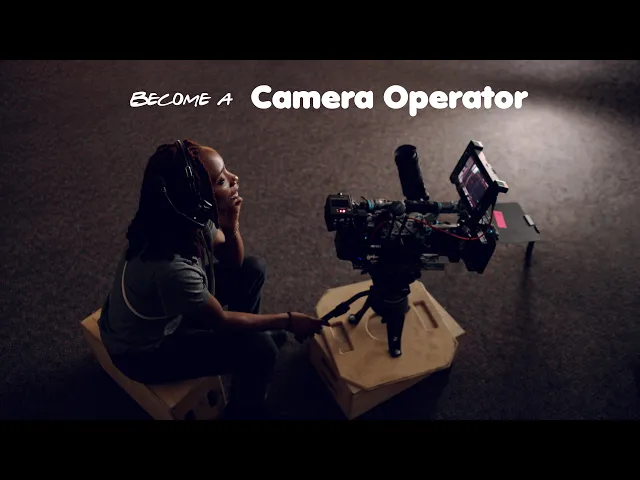
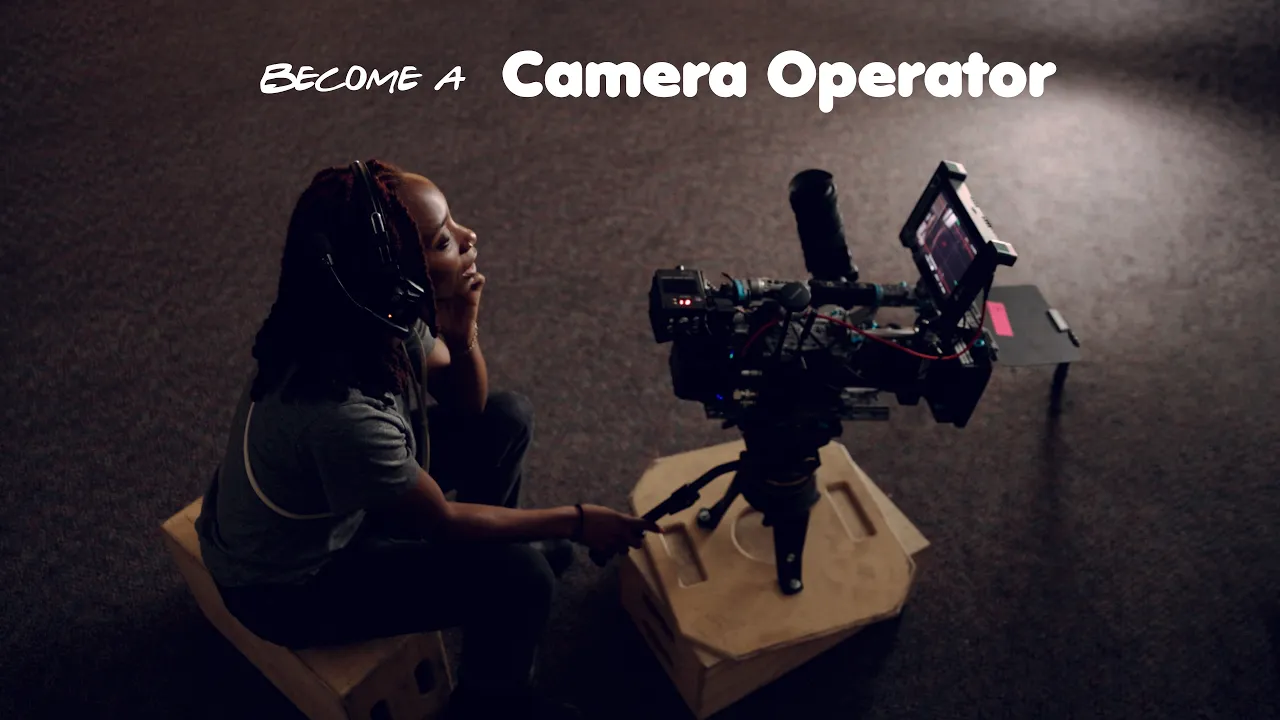
This video is sponsored by Higsfield AI. A lot of people ask me how they can become a better DP. Honestly, one of the best ways is to learn from the great, learn from your peers, and most importantly, become a camera operator.
Let's get into it. Behind the scenes. Lunch time.
Hey, Mark. Got to stretch. after they cut action landing.
Recently, I got the opportunity to camera operate for a day on a feature film called Father Sun Time. And although I've been on features before, it all reminded me of why I love operating. [music] Being self-taught and not going to film school, one of the best ways to learn is by [music] being on set.
Being a camera operator puts you in the closest position to the DP. We're actually going to do two cameras on this. So, let's get Farooq.
We're going to have you on a 50 and Farooq on a 75. Do a wider tight end basically. Perfect.
And we're just going to do the top of the scene and the end of the scene. You know, her entrance when she walks out. And when she walks out, so we're going to light for that.
Okay. And then here. So, let me get you cuz what's going to end up happening is you land into what the cross cut is going to be.
Yes. And so we're gonna hold on you and so uh stupid man like you know something along the lines of this. So I just need to set a mark for her you know.
Yeah there. And also I don't know if you noticed like when she lands she's doing a lot of up and down. Up and down.
Did you want me to follow? I want you she's pushing the camera right. So when she lands, you stick it.
But if she adjusts, you adjust. Okay. So try not to anticipate it.
Yeah. Okay. I mean, you'll you'll you'll feel it out.
Yeah. Being a camera operator gives you reps behind the camera without having to carry the full responsibility of lighting, directing, and everything else at the same time. You're focused on framing.
You're focused on movement. You're focused on storytelling through the lens. And when you're doing that over and over again, your eye naturally gets better.
You start understanding composition faster. You start understanding when to move and when to stay still. You start understanding how to support the story visually.
You're right in the action. You're seeing the decisions being made in real time. You're watching how the DP shapes light.
You're watching how they communicate with the director. And you're watching how they problem solve when things go wrong. and you start to learn that process for yourself.
And that's something you don't always get when you're just watching tutorials online or when you have to just immediately step into the DP role. And one of the biggest mistakes to make is not being a student of your craft. The best way to do a handheld shot with an FX6 is to use an FX9.
Um, it's really hard to balance the FX6 for handheld and the FX9, if you have the right accessories, are naturally made to balance for handheld. So, it's much more even cuz you can put a shark pin there. Put a proper plate, a balancing plate.
Got the EVF in the right place. I have the airy plate up top. You know, there's a lot more places to mount accessories.
Have a terterodc and MDR for a Preston, you know, and it's balanced, you know, so you can get it in the right place. So, like, you know, you can let go and it can be balanced. It's really hard to do that with an FX6 because it's such a tiny body and it's built more to be like a kind of shooting from here, you know, holding it here, holding it up.
But like so much about handheld work is about having a balanced camera and holding it for a long time. I just did a whole veritate dock where every shot was handheld. We shot 293 hours and I had no back problems with this.
But you can get a lot of back problems if you have to hold a camera like this for hours. I even learned some things from the director that I feel will help me as a DP and my pre-production. So, we were using Higsfield for a lot of storyboards and some video previs even.
Um, but one of the cool things we were able to do about it do with it is we could take location photographs. We were in our tech scouts and we could drop those photographs right into the uh into the um storyboard program. So, like you can see the spot we are here at the pool and like this is the exact pool here.
We just dropped that in and told them who we needed to have in it. So, and then we could adjust from there if we needed to get in closer, things like that. We could change the uh the lens and the uh uh uh the lighting setup.
You can even move the like lighting point and things like that, which was super useful. Um, we were able to program the exact location into the program. So, we could actually show what the shots would look like here, which was really useful for us because uh we got at the very limited location scout.
And the fact that we were able to just plug in our location photos and Google Maps and it rendered this exact pool really helped us a lot just to previsualize and figure out what we needed. Mhm. Yeah.
And we even were able to I didn't use this as much today because the actor wasn't here, but um in with Cinema Studio 2. 5, we're allowed to drop in characters that we create in another part of Hicksfield. And so I could have one of our lead actors, we actually could put his image in.
So like you see, this is uh uh one of the ones from yesterday of our our actor Landon. This is a you know approximation of what his face actually looks like. A little bit of Landon and a little bit of Jesus.
A little bit of each. I also learned how to find the frame so the DP could trust me because trust is huge when you're operating. If a DP trust you, they give you more freedom.
If they give you more freedom, you grow more. If you grow more, you become a better DP. And with that, I learned how to truly be a helping hand.
I think sometimes we get so focused on the credit of being a DP that we forget this industry is about serving the vision and being a camera operator is a serving position, but it's also one of the most collaborative roles on set. It's taught me so much. It's also open doors that being a DP wouldn't have because I've been able to get on some amazing sets just from being a camera operator.
sets that I probably wouldn't have gotten on as a DP just yet. Being able to work under some of my peers and camera operate for them has been such a fulfilling experience in my career that I'll do it over and over and over again. And once you're on those sets, you're learning at another level.
[music] You're seeing bigger productions, you're seeing bigger lighting setups, different lighting setups, you're seeing bigger teams, and that exposure to all of that helps you grow faster. really tricky. The end shot, she stands up and she kind of goes back and forth.
So, I'm trying to follow her but not anticipate and go before her, but not go too late after her. The goal is to have her move or the camera move with her, which is you never know if and how and when she's moving. So, that's what it's been like killer for me.
I want to nail it. I want to get it. The best camera operators aren't just told what to [music] do.
The best camera operators help craft the vision through their eye. [music] They take all the information given to them and they find ways to make it better. So, you have to have confidence.
You have to trust your instincts. You have to understand story. [music] You have to understand movement.
You're responsible for your camera and you're working closely with your AC. You're communicating with the rest of the team and you're doing all of that while still trying to create something beautiful. I am actually a camera operator.
So, a camera operator is pretty much like to me the main camera op. And so with this, we're working with Sony FX6s today. And for our lenses, we have the DZL Film RS Prime, the Vista Vision, which is super dope because I've never actually gotten a chance to use these or see in real time, like in real life how they operate.
I always just see on like YouTube videos and I feel like it's different when you can actually see what they do in real life. And so, [snorts] shout out to BH Photo for allowing us to use these and they look good. that we've already like shot a couple of things and I love the pairing between the DZL's and the FX6.
Like beautiful. And it's cool because I own the FX3 and the FX6 and FX3 is very similar. So, I can see kind of what that pairing would look like on my FX3.
So, it's been super dope. And, you know, we just have our full setup. You see some Condor Blue.
I actually have this matbox at home. Um, it's great. Super super small, super compact, super lightweight.
It's a three-stage like I use this over my Tilta um MB12 matbox cuz the MB12 is actually a little bigger. So, I love this this matbox. Super dope.
And I see some familiar things even with my Sony FX3 setup. Small HD is my go-to when it comes to monitors. Um a nice a nice uh nice sticks.
And then they gave me a rundown art on this cartoon head, which I've never seen before, but it's like super old school, but it's super dope. And the biggest thing that I want to talk about is really as a camera operator or even DP, are you an eyepiece kind of person or are you just like a monitor looking kind of person? Cuz I've been using an eyepiece all day.
So let me know down below if you're an eyepiece person or if you're just a monitor person. [music] And great camera operators are proactive. They make suggestions.
[music] They find the best angles. They anticipate moments. They're not just waiting for instructions.
They're collaborating. [music] And honestly, those are the camera operators I love hiring because they make the entire project better. I've hired some amazing camera operators and I've grown into a good camera operator myself.
And that didn't happen overnight. That came from reps, [music] that came from being humble, that came from being willing to learn. So don't underestimate stepping into that role because it's incredibly fulfilling.
We're all just trying to get better. We're all trying to grow and sometimes the best way to grow as a DP is to step back, learn, and operate. [music] Learn from the greats in this capacity and I promise [music] it'll make you a better cinematographer.
Huge thanks to all the sponsors for making this possible. And be sure to check out the links down below to catch even more behind thes scenes content from other amazing creators.