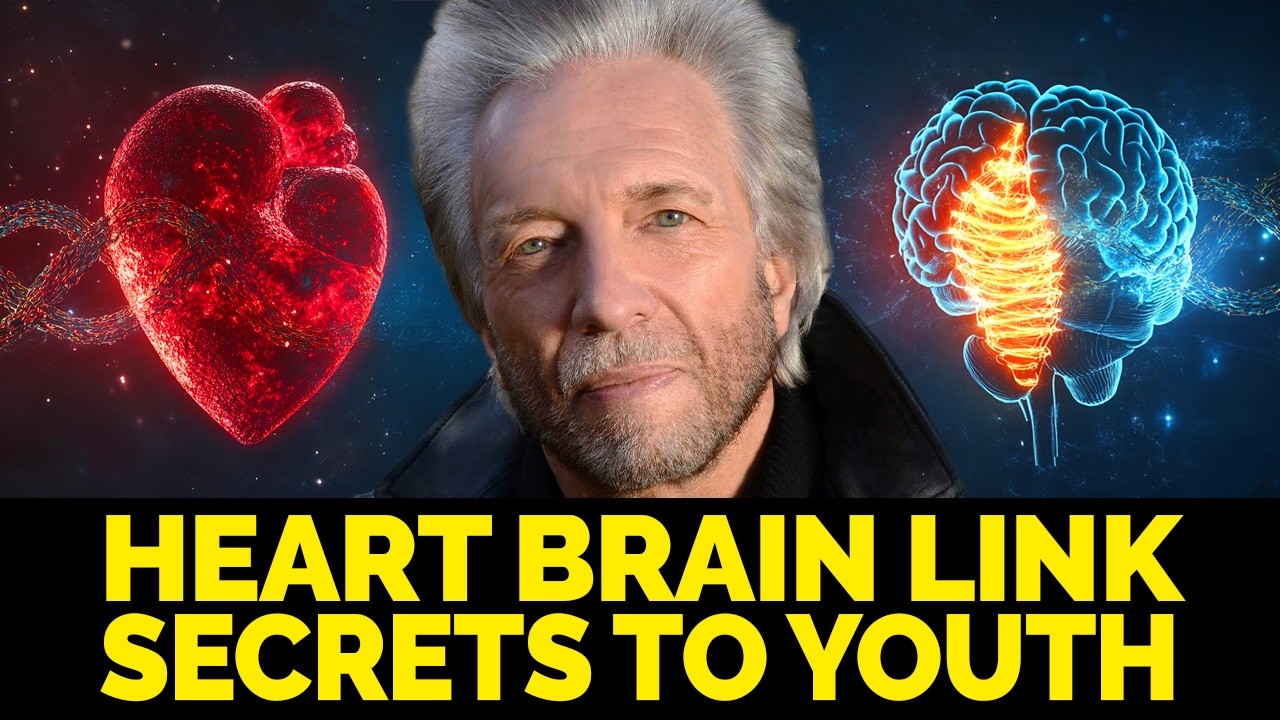
[THEME MUSIC] >> My name's Gregg Braden and I'd like to welcome me to this very special presentation of "Missing Links", the deep truth of our origin, history, destiny, and fate. In our last episode we discovered that the mysterious fusion of ancient DNA is what makes humans possible and it's what sets us apart from all other life. We also discovered that it was the precision, the extraordinary functions and the timing of this fusion, that suggests something much more than nature, natural evolution, were involved.
Something else had to happen. This is where the real science ends because the answer to what made that fusion happen cannot be scientifically proven, at least yet. But what we do know with absolute certainty is that because of our genetic makeup, because that fusion happened and we have human chromosome number 2, we are endowed with extraordinary capabilities that we can awaken when we choose, when we want, on demand.
And in this episode we're going to reveal those potentials and discover what it is to be fully enabled, fully capacitated as a human. So one of the key tenets of Darwin's theory of evolution was proposed by a colleague of his, Alfred Wallace. During the same time, Wallace was a supporter and a researcher and a scientist.
He believed in the theory of evolution, and he actually collaborated with Darwin to create this theory. And the tenant that Alfred Wallace put forward that has become a key facet of evolutionary theory is simply this-- nature only gives us the things that we need when we need them. In other words, nature only gives us the ability to warm our bodies when we have cooler temperatures that require that.
Or, nature only gives us the ability to see in the dark when we have no light when we need that ability. I'd like to read to you precisely what Alfred Wallace wrote, because it lays the foundation for where we're going to go and what the discoveries are telling us right now. In his final chapter of the book entitled "Contributions to the Theory of Natural Selection," it was published in 1870, Alfred Wallace said this, quote, "Nature never over-endows a species beyond the needs of everyday existence.
" Nature never over-endows a species beyond the needs of everyday existence, and that's where the problem is. The problem is, we are all over-endowed. We are over-endowed as a species.
Here's your reason why. We showed up, as we said, 200,000 years ago. And when we showed up, we already had the advanced features that set us apart from all other life intact.
We were fully enabled, fully capacitated. They didn't develop slowly, gradually over long periods of time. For example, when we showed up 200,000 years ago, we had a brain that was 50% larger than our nearest primate relatives that we were supposed to have evolved from gradually, slowly over long periods of time.
We had evolved speech. We had advanced characteristics of opposing digits-- thumb and finger-- that allows us to do all kinds of things. We had complex language, and we had what is called an extended neural network-- an advanced and extended neural network.
That's where we're going with this whole thing. Our advanced, extended neural network, it gives us abilities that no other form of life-- at least no other form of life that we know of today on Earth-- have. We have them.
And when we begin to embrace what it is those features are and what they tell us, it opens the door to an entire new realm of possibilities, and what it means to be fully enabled, fully capacitated as a human in this world. So I'm going to begin with a relatively new discovery. It was made only in 1991.
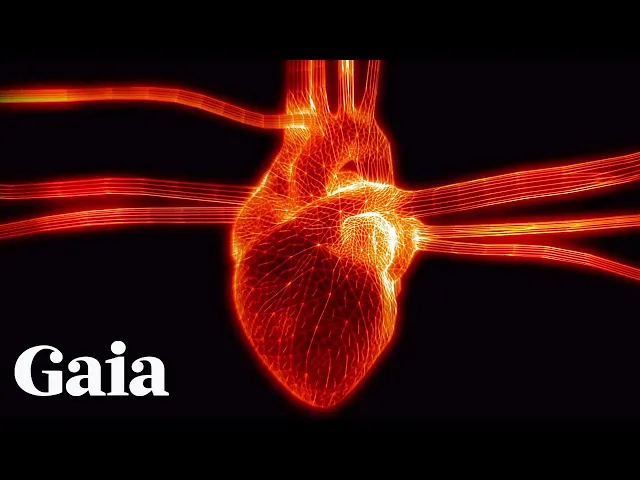
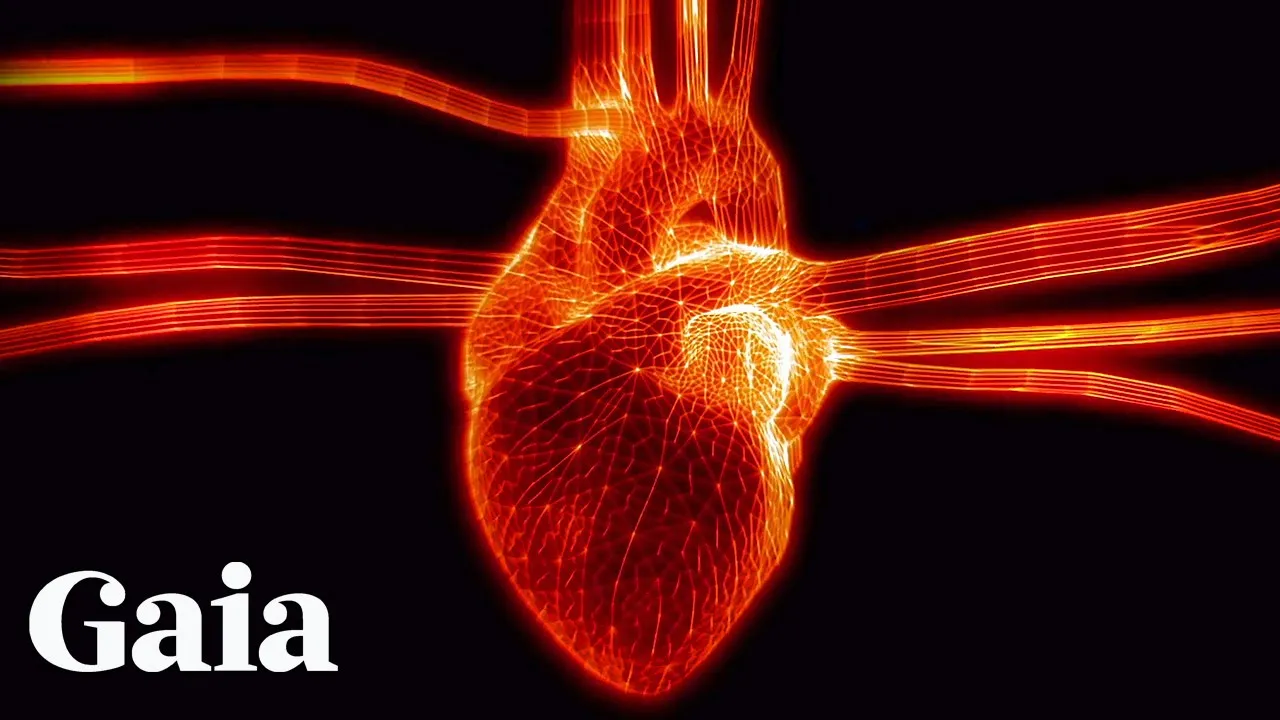
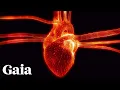
It's a discovery that involves the human heart. Now this is interesting unto itself because we-- our society-- have been doing heart transplants from one human to another since the 1960s, and they have been relatively successful. They don't happen necessarily every day, but there are an average of maybe 5,000 heart transplants per year in the world, and they are relatively successful.
And scientists attribute that success to their belief that we pretty much know everything there is to know about the heart. And it's for that reason that a discovery-- such as the one I'm about to share with you, made relatively late in 1991-- is now on the radar. How could we have gone so long without recognizing what this discovery is telling us?
Well, the discovery itself is that scientists now recognize we have within our hearts about 40,000 specialized cells concentrated in a very precise way in our hearts. The specialized cells, they are called sensory neurites. Sensory neurites, that's a very technical term.
It means they're essentially brain-like cells, but they're not in our brain. They're in our heart. And that they are in our heart, concentrated in such a way, that scientists now call these cells in our heart the little brain in the heart.
One of the things that is so amazing to me is the name of the man who found the cells. His last name's Armour. Armour-- this is love in French.
So when I think about karmic destiny and maybe what this man's karma was-- at the age of five years old if someone asked him what he was going to do for a living he would say, I'm going to make a discovery of a heart. It's in my name. But this kind of discovery is so powerful.
And what it is that he found-- these 40,000 cells in the human heart-- because this isn't a metaphor. This is literal. These cells in our heart, they learn independently of cells in our brain, of the neurons in our brain.
They think independently of the cells in our brain. They feel independently of the cells in our brain. So what we're finding now is that we have a form of intelligence focused in the heart that can function completely separately from what we typically know in the brain.
And as you'll see in a moment, they can also be married. They can be harmonized with the human brain. The heart and the brain may be harmonized in a very precise way to awaken these functions.
Before we get into that, I just want to share with you some examples of how real these cells and their function really are. It is very common for medical doctors and scientists-- they would go to conferences and they would share with other scientists and researchers and doctors their experiences in heart research, or for the doctors sometimes, heart transplants. And it was common for stories to arise where a recipient of a heart would-- a successful recipient of a heart would begin to assume different characteristics of personality and different qualities of the way they thought about themselves and viewed life after the heart transplant from what they had before the heart transplant.
So one of the first stories, for example, it was a woman that received the heart-- she knew it was from a male, and typically the donor information is not shared with the recipient. Typically, that information is sealed in the courts. It can be discovered.
And there are ways to do it, as you'll see, but it's not commonly done. So the woman's transplant was successful. And when the doctor came to check on her and he asked her the question, he said, how do you feel?
She said, I feel fine. I feel great. She says, I'm hungry.
And the doctor said, OK, I'll have the hospital bring you some food. And she immediately-- she recoiled. She says, I don't want hospital food.
She had very specific kinds of food that she was asking for. And what makes this interesting is that there were types of food that she had never eaten in her life before she received this heart. Very specific kinds of food, and there was only one place where this food could be found, and that is at a fast food restaurant that is called KFC.
KFC is the only food that would satisfy the cravings that she was having. Well after she was released from the hospital, she wanted to find out whose heart she had. The records were sealed, but she did a little personal investigative work, and she went through some obituary columns.
It was a small town. She was able to go back, and she found that the heart she had received was from a man who had died in a motorcycle accident. And she was able to track down-- through the obituary-- his family, his parents, and go to talk to them to find out about the man's life whose heart was now in her body.
And during that conversation what she found is this man's favorite diet was KFC. And when doctors hear things like that they say, huh, isn't that a coincidence. Isn't that interesting?
And then they go on to the next transplant. Well this has happened time and time again and it has been written off as anecdotal, that is until one particular story changed everything. This is a story that happened in a small town in the Midwest.
It was a story of an 8-year-old girl who received the heart of another little girl who was only two years older, a 10-year-old girl. And the heart transplant was successful. And typically, this is what happens.
The doctors will try to match the heart from the donor to the recipient within a range of ages so that a very young person isn't getting a huge heart or the older heart of a very older person. So the young girl, she received the heart. The transplant was successful, but something happened almost immediately.
She began having a dream-- a reoccurring dream-- and it was a bad dream, so we will call it a nightmare. And she began having this nightmare over and over and over again. It wasn't every single night, but it was multiple times a week.
It was common enough that her doctor recognized that something else was going on. And it was something that was out of his realm of expertise, so the doctor said, I've done my job. I've given you a new heart.
It is successful. Now you can go live your life, and I think you need to speak with someone else about the dreams that you're experiencing. So the doctor set her up with a psychiatrist, and the psychiatrist recognized immediately this wasn't a typical dream.
It had the characteristics of a memory. The question is, whose memory? Whose memory was this little girl having night after night?
So they brought in a forensic artist so that the girl could detail to the artist all of the clues in the memories that she was having as she was going through this dream. And the dream is very similar every single night. So the artist came in and the girl began recounting the dream and here's what she said.
She said the dream always begins at night and she's in the woods. She's in a forested area, and she's running very fast because someone is chasing her. A man, a big man, is chasing her.
And she's running fast in the dark, and she trips and she falls on the earth. And the man catches up with her and he begins to assault her. He looks her in the eyes as he is assaulting her, and he said very specific words to her.
She recounted these words to the forensic artist, and then the man killed her, took her life. So the artist now has an image or rendering-- from the girl's memory in the dreams-- of the man that she saw, and the artist now has the words that the man was speaking as he was taking this girl's life. It was a small town, and this information was put out to the authorities in an all points bulletin, and it wasn't long before they found the man that matched the description.
And when they brought him in, under questioning, very quickly he broke down and he admitted that he had actually killed the girl. He admitted taking her life. And here's the key, when the questioners-- when the interrogators were asking him the details, he recounted the very words to them that the young girl had shared with the artist that were revealed to her in her dream.
It was based on this evidence that the man was accused. He was tried. He was convicted, sentenced, and he is now serving time for the murder of this young girl.
And it is only possible because the memory of the girl who was killed was preserved in the cells of her heart that are now in the body of the new recipient-- the younger girl-- and she was able to share those memories with the authorities. And I'm sharing this story with you for one reason-- that is how real the memory is in our hearts. It's not a metaphor.
It is a literal storage of impressions, of memories that we all have. But the heart has its own language. The heart speaks to us in a language different than our mind, and we communicate with our heart in a language very different from our mind.
So we know now that these specialized cells, these sensory neurites, they serve three functions-- they learn, they remember, and they think independently of the cells in our brain, and they can also be tuned, harmonized, to function together with the cells in our brain. So I'm going to invite you now, think about what I'm saying to you. Two separate organs-- a heart and a brain-- but they share an extended neural network that's made possible by the genetic fusion that happened 200,000 plus years ago that makes us who we are.
We typically-- in our culture, we are very accustomed to our brain. Sometimes we discount our heart. And especially for males in the Western culture, we've been conditioned to discount the intuition that comes from our heart, and we're going to explore in these episodes.
Other cultures do just the opposite. There are cultures when the young children are born-- such as the Kogi, for example, in South America-- their emphasis as young children is on developing the thinking, the feeling, and the memory of the heart first for a period of years, and then they are immersed in the world with all of the physical activity to engage their thinking mind. But they learn about the world of their mind through their heart, where we are conditioned to learn about the heart through the world of our mind.
I think it's fascinating. And I'm not saying what is right and wrong, good or bad. They're just very, very different ways of embracing the potential, and that's where I'm going with all this.
This is why I'm sharing this with you. We have this potential, and it's been with us from the moment that we appeared. It didn't develop slowly, gradually over long periods of time.
We are over-endowed with this potential. So, what does that mean? What does it mean in our lives to have this kind of potential?
Well, when we harmonize our heart and our brain together, that's what gives us our super abilities. We harmonize the heart and the brain. Again, two separate organs sharing a common neural network.
So the neurites in our heart and the neurites in our brain, all of a sudden we have access to super information processing. We can think and solve problems really, really quickly. We have almost total recall.
You walk into a room-- and if you think about this, this is true. When you walk into the room and you look at the room, your eyes have seen it. You may not have made a conscious effort to remember it, but you have just taken in all that information.
It's there. Heart brain harmony allows us to access and to have total recall of that kind of information. This harmonizing, the heart and the brain, it opens the door as a conduit to our subconscious.
A conduit to our subconscious. We don't need to go under hypnosis or be in an altered state. We can, but we don't have to, because we have the ability to trigger these states for ourselves.
We are self-healing beings. What kind of healing am I talking about? When we talk about subconscious, why would you want direct access to your subconscious?
Well, the short answer to a very long story is this. From the time we're in our mother's womb until we're about six years old, we begin to absorb from our environment patterns of personality, patterns of behavior from our caregivers-- maybe our parents, maybe our adopted parents, maybe our aunts and uncles or grandparents, maybe our friends. From the time we're in the womb hearing through our mothers stomach until the time we're about 6 years old, we are in a brain state that is like a sponge.
It's called a hypnogogic trance, and we don't know how to filter what's coming in. So this is nature's way of preparing us to be in the world. We absorb these patterns unconsciously so that we learn how to respond to the world.
Here's the deal. If you were born into a really healthy family that had really healthy patterns and healthy ways of dealing with life, that's a great thing. If you were not-- and I know very few people who can honestly say they lived in a healthy family.
If we weren't, then we're dealing with patterns in our relationships, in our most intimate relationships-- lovers, friends, siblings, parents-- the relationship with our bodies, and our organs with our bodies all linking back to these subconscious patterns that may not be the healthiest patterns. And it's through access through the subconscious that we can change those. We can set new, healthy, vibrant patterns, where we affirm life by access to the subconscious.
So this is just one more of the possibilities when we could harmonize the heart and the brain. Harmonizing the heart and the brain gives us access to extraordinary states of deep intuition. Here's the key, deep intuition on demand.
On demand. I think we've all had the experience of picking up a telephone, for example, to call someone, and the other person is already there. There was a time in my life where I was able to-- every Sunday-- wherever I was in the world, I would pick up the phone and call my mom.
And we'd look forward to our Sunday conversations. It didn't happen every single time, but it was common. I would pick up the phone to call my mom, and she would already be on the line.
Or I would pick up the phone to dial my mom's number and it was busy, and I would hang up the phone and it would ring because she was calling me that same instant in time. And she used to get a kick out of this. My mom, she would whisper on the phone when we finally connected-- I mean, there's no one listening-- she would whisper.
She'd say, see, you called me when I called you because we have ESP. She says, we're psychic. She used to love to say that to me.
So when that happens-- now think about it. When that happens, there has to be a connection between the two people that it's happening. If I were on my way to the telephone and I was diverted even for an instant-- to get a glass of water, to open up a window or close a door for privacy-- even a nanosecond, I would have missed the instant that my mom was picking up the phone, wherever she was on the planet, to call me.
We wouldn't have had that. When that connection happens, that is intuition. It is deep intuition.
However, it is spontaneous. And I say that because we didn't necessarily do it intentionally. How many times have you been sitting at a stoplight when the light was red and you're waiting, waiting, waiting for the light to turn green.
And while you're waiting you were in an open state, because you don't really know when that light's going to turn. So you're kind of not really thinking about anything consciously, and that openness is the invitation for intuition. That openness is the invitation.
All of a sudden, while you're waiting for the light to turn, you see this vision. You understand the nature of life and the meaning of universe and where your life is going to go. And it's crystal clear, and then the light turns green and you start driving and it all goes away.
And you say, where did that go? How can I do that again? Well I'm sharing these with you because I think you can relate to these examples.
They are spontaneous intuition. They happen when they happen. The key is-- and this is where we find our power-- how can we trigger those when we choose?
How can you tap into that kind of information on demand when you want to do so? That is what harmonizing the heart and the brain is all about, and that is only one more of the powerful attributes that are available to us when we are able to harmonize the heart and the brain. These three examples I'm giving you-- tapping the subconscious, super learning, super information processing, deep intuition on demand-- these sort of form one category of potential, of human potential, sometimes even relating to the esoteric subconscious and those kinds of things.
And if you're interested in this but you're not interested in those kinds of things, you still have benefit from harmonizing the heart and the brain. Because even if you're not into any of that, your body interprets heart brain harmony as healing, as love. This is how we love our bodies in a language that our bodies recognize.
When we harmonize the heart and the brain, we set up a conversation between the heart and the brain. We're going to explore that conversation a little bit more in just a few minutes, but that conversation is what triggers over 1,300 biochemical reactions-- positive biochemical reactions in our bodies. Anti-aging hormones kick into overdrive.
Powerful immune response kicks into overdrive. Cardiovascular benefits kick into overdrive just from this heart brain communication. So all of this becomes possible, and more, from harmonizing the heart and the brain.
And one of the things I find so fascinating is that our most ancient and cherished-- once again-- spiritual traditions and indigenous traditions, they know this. And they incorporate this idea into many of their traditions, their ceremonies, their techniques, even their prayers, but they don't use science to explain it. This is what we're going to do right now.
I'm going to share with you precisely what it is that's happening, because it's all about the neurons. And then I'd like for us to have the opportunity to experience this heart brain harmony together in this episode. So everything that we're talking about, it's all about neurons.
Neurons in the brain, and we're all familiar with those, but now we're talking about neurons in the heart. So I'd like for you to see, maybe for the first time, what those neurons really look like, how they function, what they do, and what they mean in your life so that we can use this idea and you can have this mental imagery as you move forward and begin to connect your heart and your brain. So on your screen right now what you're seeing is a typical neuron in the brain.
The large nodule is the neuron itself, and the branches that come out are the neurites. So any appendage on the neuron is considered to be a neurite. The neurites can become a lot of things.
They can become axions, if you're familiar with neurology. They can become a lot of different things, but these are what the neurites are all about. The next image that you're looking at right now-- this is really exciting because these are some of the first images of the neurons, but they're not in the brain.
They're in the human heart. There is an organization, a pioneering research organization in Northern California, The Institute of HeartMath-- H-E-A-R-T, capital M-A-T-H, but it's all one word-- and they are pioneers at researching the human heart in non-conventional ways, based on rock solid science. They've made these images available to us today so I can share them with you.
So you're actually seeing the neurons in the human heart. And these are the neurons that begin to communicate with other neurons and form the network between the heart and the brain that enable the activities, all the things that we just talked about-- subconscious access, super learning, super information processing, deep intuition on-demand, all of those things. I want you to see how this happens, so I'm going to share with you a brief film clip.
In this little clip-- the technology now is so awesome. It allows us to see these neurons not as still images, but we can actually see them functioning inside of living tissue. So what you're seeing on the screen right now is you're seeing neurons in time lapse, and you're seeing from the neurons-- you're seeing the neurites as they move out.
They're very social. They want to hook up. They want to connect.
So these neurites are looking for other neurites to hook up with because they want to form a network. They want to form a chain. And when they do, like you're seeing right now, the red arrows on your screen are showing these networks connecting, as well as disconnecting.
A passing thought. This is what happens when we have a passing thought. There's a connection.
It's brief. And then that connection goes away. So as we see these images, I'm going to invite you to think about what this means in your life.
Because when these neurons are growing, they are growing in response to something that you are doing in your life. The act. The act of you striving to become something more in the next moments of your life than you were in the last moments.
The act of you choosing to learn something new-- to learn a new way to play your guitar, to play the piano, or a new form of art or a new thinking, in terms of solving a mathematic problem, or a new book or a new play or a new sculpture. It is the act of creativity. The act of you triggering that creativity within your will, within your being.
That act, that is the biological trigger that sets into motion the neurons that you have just seen as they begin to grow and seek out partnerships and connections with other neurons, to match what it is that you have just asked them to do. When you ask your being to solve a mathematic problem and you say, well, I've never done this kind of math before, or when you ask yourself to learn a new language-- maybe you're learning French, or when I was trying to learn Tibetan. Tibetan is a very difficult language for me because it doesn't relate to English the way alphabets and the way that we're used to hearing words.
So when I began learning the little Tibetan that I do know, what I would do is I would go through the motion. It's called fake it until you make it. I would go through and say the words phonetically.
They didn't mean a lot to me, but I would say them again and again. Here's what happens. What scientists have found is that when those neurons are growing-- you saw the time-lapse.
That time-lapse doesn't happen in an hour or in a day. It happens in about 72 hours or about three days. Scientists tell us it takes about three days for us to grow a new neural network that will allow us to embrace the new things that we have asked ourselves to embrace so that we can become better people, ultimately create a better world.
And we trigger the whole thing consciously, at will, on demand in a way that no other form of life can do. In our next episode we'll continue exploring these extraordinary abilities and others-- super learning, deep intuition on demand-- but we're also going to experience the actual techniques to awaken these potentials in our lives. So I want to thank you for joining me today.
Be sure to tune in for our next all new episode of "Missing Links," the deep truth of our origin, history, destiny, and fate.