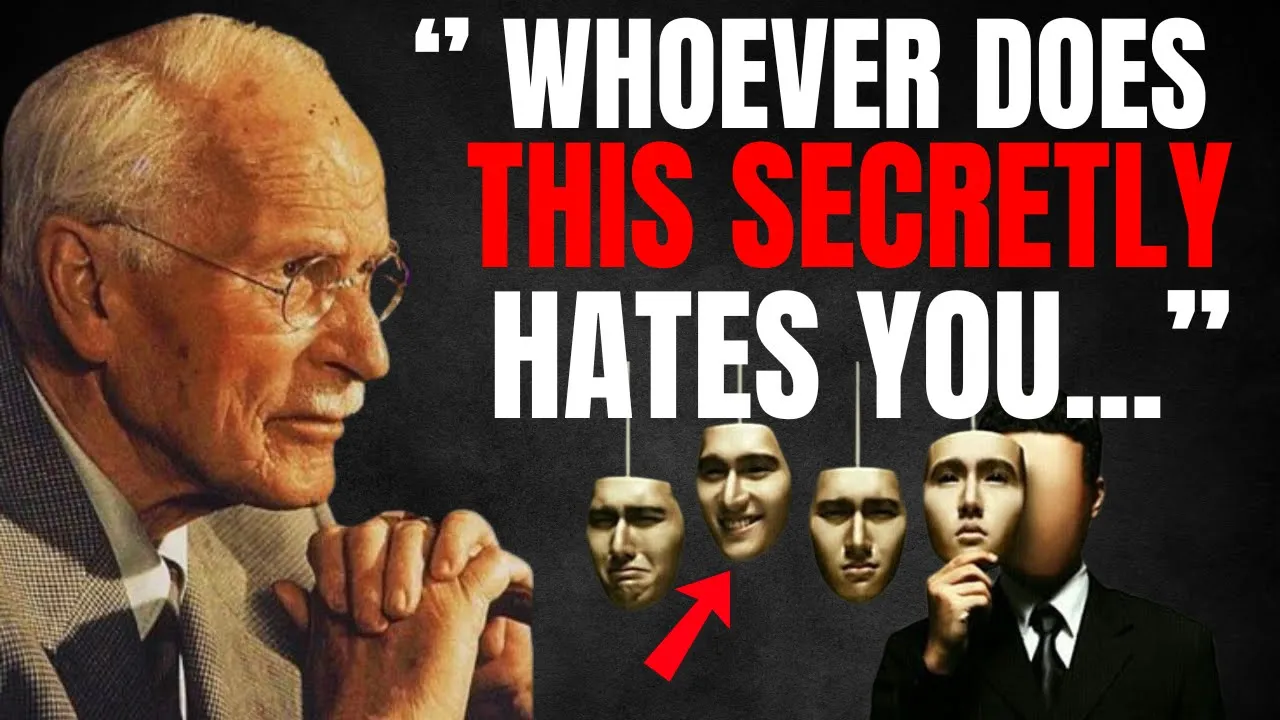
Have you ever worked with someone who seems kind, but something deep within tells you something is off? That innate sense, a gentle alert in your head, is alerting you that there is more under the surface than first greets the sight. Their words may seem kind, their behavior may appear benign, but your intuition detects an unseen barrier, an implicit enmity buried beneath a polished grin.
One of the most powerful psychologists, Carl Jung, developed the idea known as "The Shadow" to help clarify this phenomenon. The shadow stands for the aspects of ourselves we ignore: the unconscious anxieties, the repressed feelings, the buried anger. Many times, these repressed components never remain buried; rather, they show themselves in ways we may not even be totally conscious of in our contact with others.
Though they would never express it explicitly, someone who holds animosity, envy, or hatred for you will always show it—they pass through in the manner they respond, talk, or behave while you are near. Understanding these signs helps you avoid concealed negativity that saps your vitality and disturbs your peace of mind. Today, I will identify eight subtle but clear indicators that expose if someone close to you harbors latent anger or ill will, even if they go to considerable effort to hide it.
Stay with me; the final indicator is the most misleading, and once you see it, you may never see certain individuals the same way again. Unquestionably, the first symptom is concealed disdain. Usually, hiding animosity takes the shape of sarcasm, passive-aggressive humor, and subdued mocking.
It seldom manifests as a frontal attack. Some individuals use jokes as a weapon—stinging comments under the cover of comedy. They mock your aspirations, your hardships, your dreams, only to dismiss it with, "Relax, I was just kidding," or "You're too sensitive.
" Deep down, however, you sense it; that uncomfortable sensation in your gut is not just in your thoughts; it is your intuition picking up the disrespect concealed in the comedy. The most telling bit is there is not randomness in these jokes; they target the places where they know you feel most vulnerable. They are calculated and always circle the same themes.
This tendency causes you to doubt yourself over time. Jung thought that frequently, via projection, our unconscious shadow aspects show out externally. This suggests that someone who constantly makes fun of a certain quality of you is usually reflecting something they find difficult to accept within themselves.
Someone who makes fun of your goals, for instance, can be inwardly resentful of their own lack of drive. Though it doesn't make it any less harmful, their concealed scorn is more about their inner struggle than about you. The second indicator is little sabotage.
Sometimes, envy and resentment show themselves as little apparently benign behaviors that hold you back rather than as overt hatred. Have you ever told someone about a significant objective, and then had them provide false guidance or seeds of uncertainty? Perhaps they forgot to provide crucial information, accidentally set up a roadblock, or deterred you from acting with lines like, "Are you sure this is a good idea?
" or "That's really difficult. " Most people fail to see these actions go beyond chance events; repeatedly, they expose an unconscious need to halt you from onward motion. Usually struggling with their own inadequacies, someone doing subtle sabotage also—Jung said that individuals who avoid facing their own disappointments project them onto others, behaving in ways that stop those around them from achieving.
Imagine, for instance, telling a buddy about a company concept only to have them minimize it or relate a tale of someone who failed at a like-minded enterprise. Though deep within, they have a portion that prevents you from surpassing them. The purpose may not be overtly hostile.
Understanding this indicator is vital, as it usually hides behind a nice smile and well-meaning remarks. Unspoken competitiveness marks the third symptom. You observe that certain folks just cannot be happy for you.
Every time you succeed, they find a means to deflect the focus back to themselves. Tell them great news about a promotion, and they instantly raise a better possibility they came across. Bring up a personal achievement, and people soon bring to memory their own.
The discourse is about demonstrating they are still ahead, not about praising you. Usually stemming from deep-seated fear, this quiet rivalry paints their perspective of your accomplishment as one of danger rather than inspiration. When people neglect to confront their own shadows, Jung said, they project their inferiority outward and act in ways that make them feel better at the cost of others.
Consider it: someone who is really confident in themselves doesn’t have to compete with you in every interaction. Allow me to provide an example: consider yourself having just finished your first marathon, a major personal accomplishment. Rather than supporting you, this individual responds right away, "Oh, I ran one a year ago; my time was much better," or "Running is easy; I don’t know why people make a big deal out of it.
" They minimize your achievement, not because it is little, but rather because appreciating it would compel them to face their own emotions of inadequacy. You could be working with someone who secretly hates you if every contact seems like a contest instead of a constructive conversation. Protecting your tranquility starts with identifying these little indicators.
Many times, the person displaying these actions is not conscious of their own driving forces; though their unresolved emotions affect their interactions with you, they are not always purposefully hostile. Jung's lessons help us realize that understanding others, as well as ourselves, depends on self-awareness. Finding these habits helps you establish limits, cut yourself off from negativity, and surround yourself with individuals who truly help you develop.
Remember, too, that the last indicator I will show is the most sneaky one. It is difficult to see, but once you identify it, you will. .
. Never be able to undo it. Stay tuned; it may permanently alter your view of certain relationships.
Fourth, their shallow support is a subtle but telling indication that someone hates you covertly. These people could present an encouraging front, but their behavior tells another tale. When you really need aid, they either conveniently vanish, provide nebulous promises, or create excuses rather than acting.
Their response is tepid at best. When you do something noteworthy, their support seems more like performance than compassion. They could even completely overlook your achievement, fake a grin, or offer a quick thanks.
You imagine working hard to reach a personal goal, such as starting a new company or receiving a degree, only to discover that a putative buddy hardly notices it or rapidly shifts the focus. This trend becomes difficult to overlook over time; it's not just about one incident of being absent; it's a persistent conduct that shows their lack of real concern for you. Psychologist Carl Jung discussed emotional detachment, which is the process by which people lose touch with their own feelings and hence find it difficult to really help others.
This might help to understand why some individuals appear apathetic to your achievements and challenges. Although they may not be overly unfriendly, their lack of effort or zeal says volumes. Acknowledging these indicators helps you to change your expectations far more than hanging around with individuals who provide hollow platitudes.
Surrounding yourself with people who really celebrate your successes and provide true support in difficult circumstances can improve your life. Let us now turn to another crucial indication of concealed resentment: control disguised as concern. Some people, under the cover of worry, take control over you.
Although they say they behave in your best interest, their actual intention is to make you rely on them. They persist in dictating your judgments, challenging your decisions, and making you feel inadequate in conducting affairs on your own. This kind of control is often hidden by loving direction or protective counsel; hence, it is not always visible.
Imagine, for instance, a buddy who continuously questions your professional path or a family member who thinks you should consult them on all kinds of decisions, including relationships and money. Their statements cause you to question yourself rather than empower you. One important clue of this hidden control is how their words make you feel.
Real advice should empower and strengthen you; manipulation makes you feel less confident and smaller. According to Jung, emotional turmoil among those who battle their own anxieties and doubts often drives the need to dominate others in order to compensate for their own inadequacies. Should you find that someone's concern often saps your confidence, this might indicate that they are more likely to be controlling than helping you.
Someone spreading gossip and criticism about you behind your back raises another serious red flag. People that have bad opinions of you typically won't face you straightforwardly; rather, they use subtle but destructive strategies, disparaging you to others behind a pleasant front in your presence. Since it influences your relationships and reputation without your awareness, this may especially be damaging.
Imagine, then, finding that members of your social circle have begun to avoid interactions, treat you differently for no apparent reason, or seem aloof. Later on, you find that misleading tales or two dramatic narratives have been spreading. Perhaps someone turned a benign event into something evil.
Those who struggle with self-consciousness often use this kind of undermining of others. Carl Jung proposed that individuals project their own deficiencies onto others in order to escape their own failings. Those who talk typically do so not because of your errors, but rather because of their own ingrained sentiments of inadequacy.
Rather than facing their own conflicts, they try to drag others down so they can feel better about themselves. The greatest approach to fight this is to keep your integrity and separate yourself from those who feed on negativity. Instead of acting in the same manner, you can avoid poisonous people from impacting your life by concentrating on your own development and surrounding yourself with truly supportive people.
Someone's incapacity to really celebrate your achievements is one obvious indication they secretly hate you. Whether great or small, true friends and well-wishers fully applaud your achievements. They understand that your successes do not diminish theirs; rather, they make them happy because they genuinely want for your development.
Those who carry secret animosity, however, find it difficult to hide their displeasure when you communicate great news. You may find a forced grin, a stifling pause, or dismissiveness. Rather than joining in your enthusiasm, they could minimize your achievement with lines like "Oh, that's nice," or swiftly veer the conversation back onto themselves.
Imagine telling someone about a well-earned promotion, and instead of praising you, they reply, "Must be nice to get lucky," or "I guess they were desperate for someone. " These responses expose an underlying animosity, not merely platitudes. Some may even attempt to downplay your achievements by bringing up their own prior victories, thus gently competing rather than celebrating with you.
Psychologist Carl Jung pointed out that those who find it difficult to feel glad for others often bear their own fears. Their own stagnation is reminded of by your development, which makes them feel inadequate. Rather than focusing on their own objectives, they transfer their annoyance onto you, even if they never express it clearly.
If you often get tepid or dismissive responses to your successes, it might be a clue that someone is more jealous than supportive. Non-verbal communication—body language, micro-expressions, and understated movements—betraying actual emotions is another potent indicator of latent animosity. Although individuals might deliberately choose their words to conceal their actual emotions, their unconscious responses usually expose their true thoughts.
Even the finest actors find it difficult to totally manage body language. When someone is near you, a tentative grin, a quick glance, or a rigid stance may all point to hidden feelings. To underlying hatred: have you ever seen someone's facial expression briefly shift when you mention a success?
Perhaps their jaw closes, their eyes dart away, or their voice changes just slightly. Usually unconscious, these messages are rather informative. If someone says they are delighted for you but avoids establishing eye contact or has their arms crossed defensively, for instance, their body may be expressing something their words would not.
Tension in their hands, clenched fists, fidgety or unexpected uneasiness while you're talking about your development is another often occurring indicator. It matters even how people respond to your presence. These little signals might point to an underlying unpleasant feeling if their posture stiffens when you walk into a room or if their energy changes somewhat.
Carl Jung held that even in cases of emotional repression, the body and unconscious mind never lie. This is the reason trained behavioral analysis experts focus especially on non-verbal signals instead of just words. Trust your gut sense; if you feel as if someone's energy is moving around you, often long before our conscious mind makes sense of them, our instincts catch on to these minute elements.
By focusing on these non-verbal cues, you may identify who merely seems to support you and who really does.