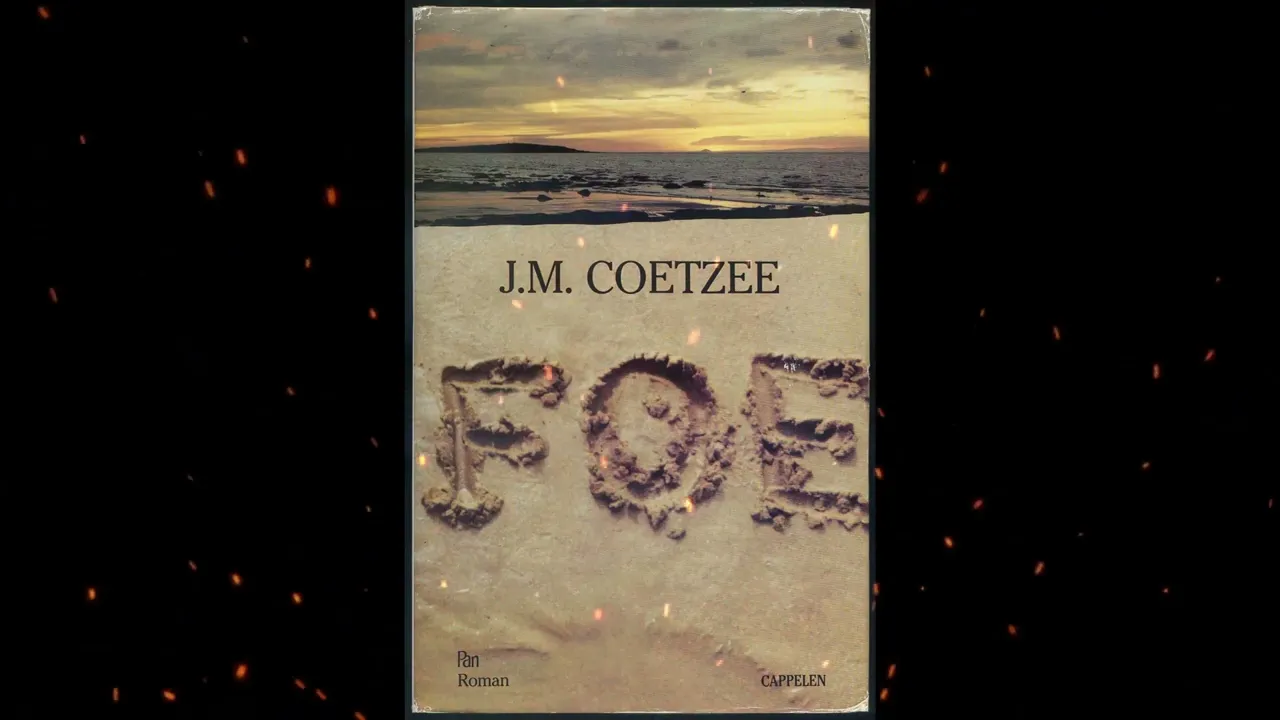
"Foe" by J. M. Coetzee is a novel that takes inspiration from the 1719 classic, "Robinson Crusoe," and explores the themes of power and storytelling.
It follows the journey of Susan Barton, a castaway in the early 18th century, who seeks to turn her experiences into a popular novel with the help of the real-life author, Daniel Foe (also known as Daniel Defoe). Susan begins her story by waking up on an unfamiliar island, where she encounters Friday, a man of African descent. Initially fearing for her life, she discovers that Friday means her no harm and takes her to meet Cruso, a white man who speaks English.
Susan learns that Friday understands English but cannot speak due to having his tongue cut out during his enslavement as a child. Susan recounts her past, explaining how she ended up on the island after a tumultuous journey from Bahia, South America, in search of her kidnapped daughter. She tells of her traumatic experiences on a mutinous ship that led to her being cast away on the island.
On the island, Susan, Cruso, and Friday coexist, with Cruso and Friday living in a small hut and surviving on lettuce and fish. Susan joins them, but she becomes frustrated by their lack of ambition to leave the island and Cruso's seemingly meaningless tasks. As time passes, Susan's relationship with Cruso takes a complex turn, marked by a sexual encounter.
However, Cruso's health deteriorates, and eventually, a passing ship rescues them. Susan pretends to be Cruso's wife, and Friday is treated as a slave during their journey back to England. Tragically, Cruso dies on the voyage, mourning the loss of his island home.
Back in London, Susan seeks the assistance of the famous writer Daniel Foe to tell her story, but they disagree over the narrative's focus. Susan insists on highlighting their survival on the island, especially Friday's experiences, while Foe wants a scandalous account of her time in Bahia. When Susan and Friday move into Foe's abandoned house, Susan's empathy for Friday grows as she learns of his castration during slavery.
She attempts to return him to Africa, but their journey is fraught with difficulties, and she realizes the plan's flaws. Upon their return to London, Foe continues to push for the Bahia story, which Susan refuses to tell. She feels a strong responsibility to tell Friday's story because he cannot tell it himself.
Foe suggests teaching Friday to write, but Friday only creates O's on the slate. The novel concludes with a dream-like sequence in which Susan revisits the island, finding Friday's body chained to a shipwreck at the ocean's bottom. This enigmatic ending leaves readers contemplating the themes of storytelling, power, and the privilege of shaping narratives.
In essence, "Foe" is a thought-provoking exploration of storytelling, the dynamics of language and power, and the responsibility of those who can give voice to.








![DISGRACE by JM Coetzee 🇿🇦 BOOK REVIEW [CC]](https://img.youtube.com/vi/Ka3GeftaoYc/mqdefault.jpg)