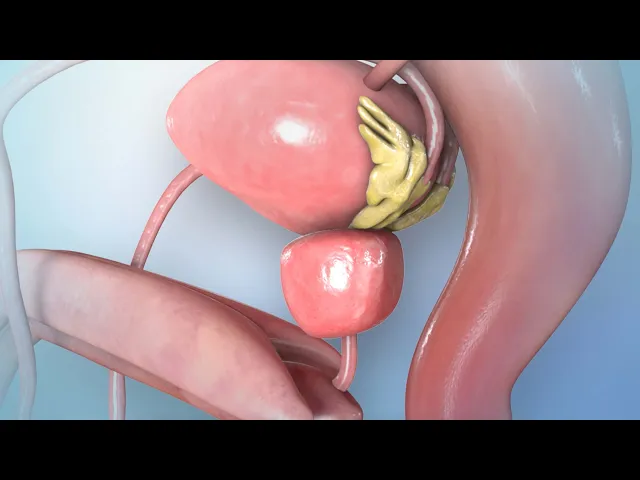
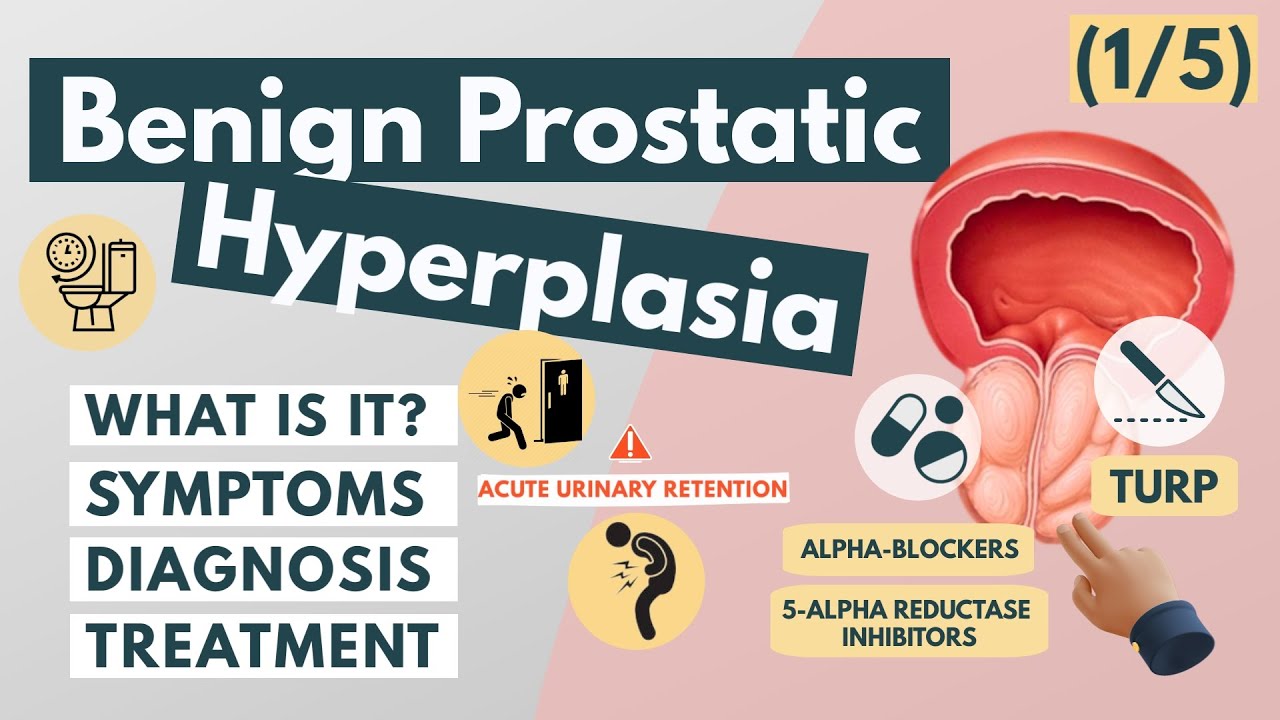
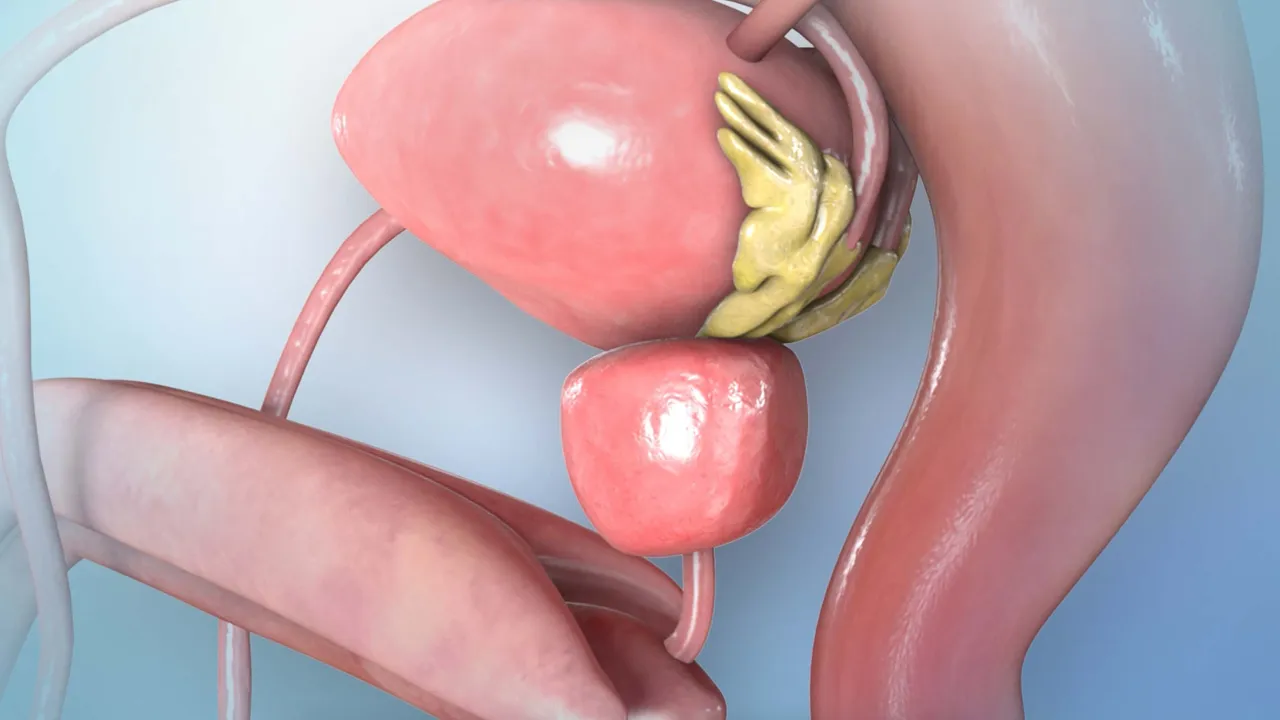
if you have benign prostatic hyperplasia or BPH your prostate gland is enlarged the prostate is a walnut-sized gland in men just beneath your bladder your prostate gland surrounds your urethra the tube through which urine and semen exit your body your seminal vesicles and prostate make fluid that combines with sperm cells to create semen during normal urination urine flows from your bladder through the part of your urethra inside your prostate then through the rest of your urethra to leave your body for unknown reasons your prostate gland May enlarge as you get older if you have benign
prostatic hyperplasia your prostate May grow large enough to compress the part of your urethra that runs through it as a result your enlarged prostate may slow the flow of urine out of your body when you urinate left untreated your prostate can get larger and reduce urine flow even more this may keep you from fully emptying your bladder see your doctor right away if you are unable to urinate your risk for benign prostatic hyperplasia is higher if you are age 40 or older have a family history of BPH have other health problems such as obesity diseases
of the heart and blood vessels or type 2 diabetes don't exercise or have erectile dysfunction the symptoms of benign prostatic hyperplasia include frequent urination or urge to urinate especially at night a weak or interrupted urine stream and straining to urinate over time untreated benign prostatic hyperplasia may cause the following complications inability to urinate damage to your bladder and kidneys urinary tract infections bladder stones and blood in your urine if you have benign prostatic hyperplasia with mild or no symptoms your doctor May recommend watchful waiting which includes getting your prostate checked every year to make sure
your symptoms or health are not getting worse if you have moderate symptoms that bother you your doctor May recommend medications such as alpha blockers or those that treat erectile dysfunction called pde5 inhibitors both of these medications relax muscle tissue in your bladder urethra and prostate this can help improve your urine flow five Alpha reductase Inhibitors may also be prescribed this medication helps to improve urine flow over several months by reducing the size of your prostate you may receive a combination of these drugs if medication isn't relieving your symptoms your doctor May recommend a surgical procedure
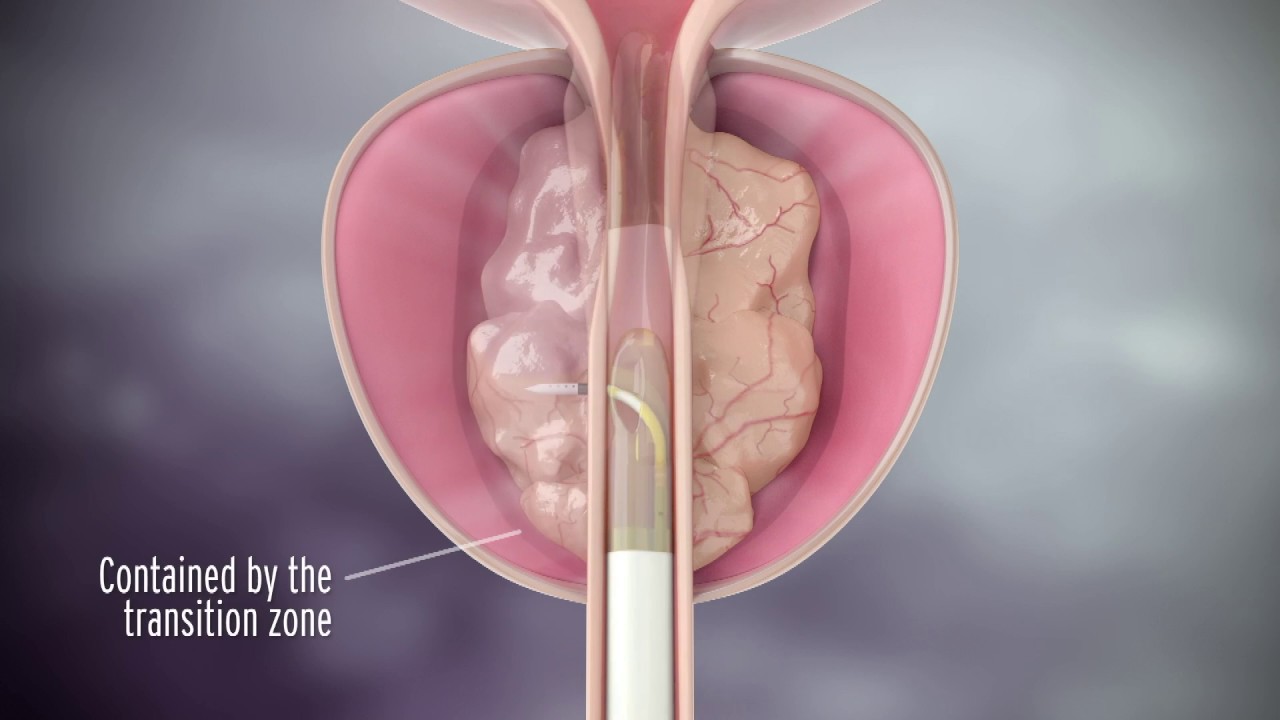
called transurethral resection of the prostate or terp during this procedure your surgeon will insert an instrument called a receptoscope through your urethra to reach your prostate then a wire loop at the end of the receptoscope will be used to shave off tissue which will widen your urethra other minimally invasive variations on this type of procedure use lasers microwaves radio waves or electrical energy from tools inserted through the receptoscope to remove some or all of your prostate gland if your prostate is very large your doctor May recommend an open prostatectomy procedure in open prostatectomy your surgeon
will make an incision in your lower abdomen after exposing your prostate your surgeon will make an incision in its outer capsule next the tissue inside your prostate will be removed and the capsule incision will be closed with sutures finally your skin incision will be closed with sutures or Staples you can't prevent benign prostatic hyperplasia but the following lifestyle changes can make your symptoms less severe avoid medication that can make it harder for you to urinate such as antihistamines and decongestants stop drinking fluids for a few hours before bedtime avoid drinking alcohol or fluids that contain
caffeine try to empty your bladder by double voiding to double void urinate wait a moment and then try to urinate again to find out more about benign prostatic hyperplasia talk to your Healthcare practitioner