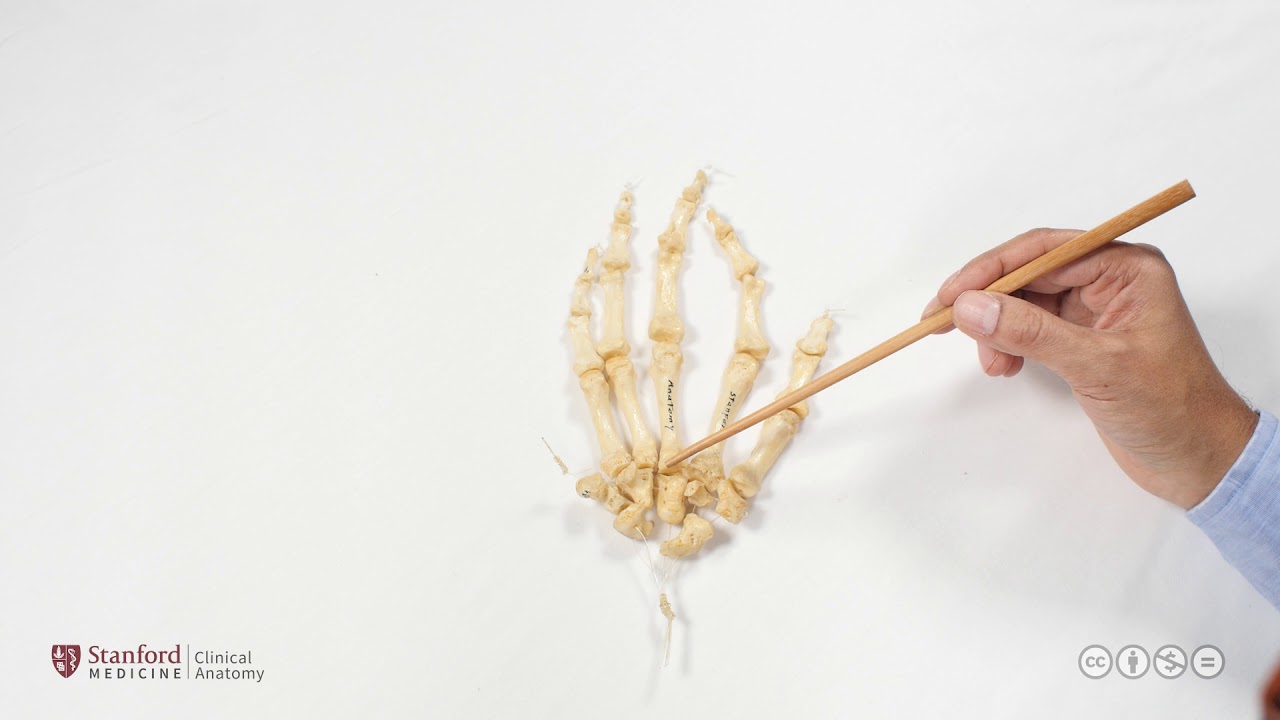
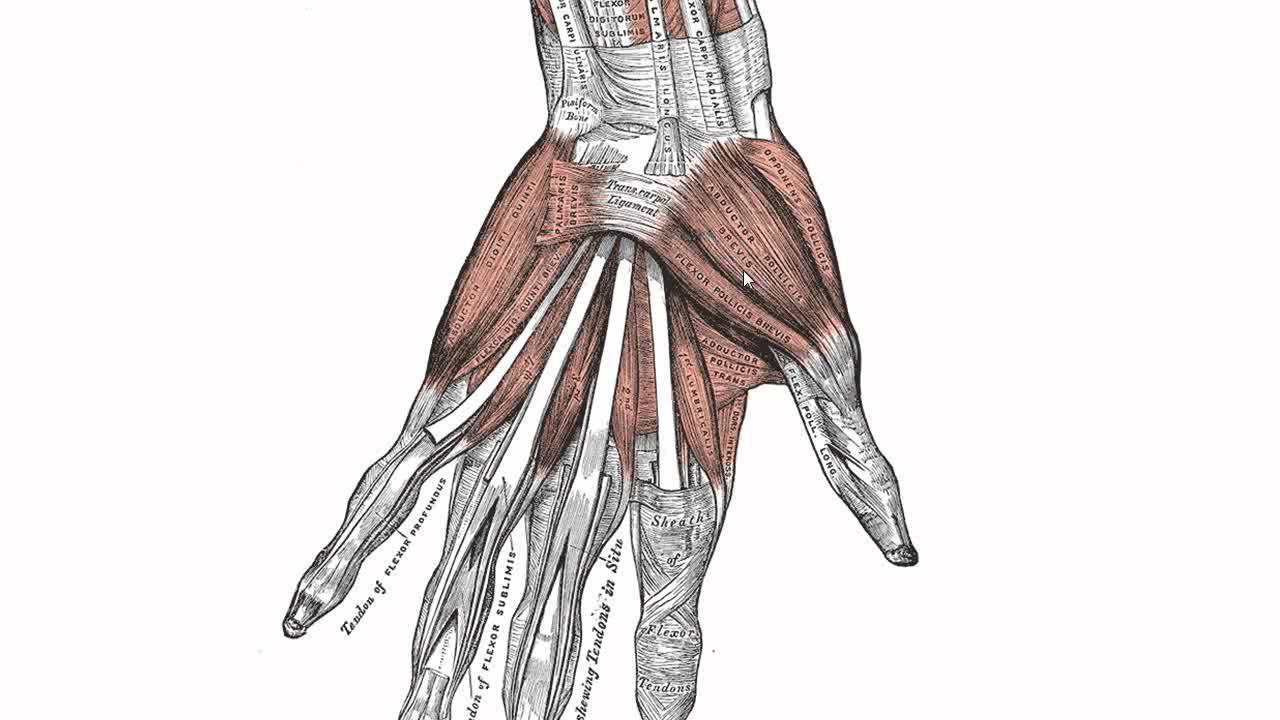
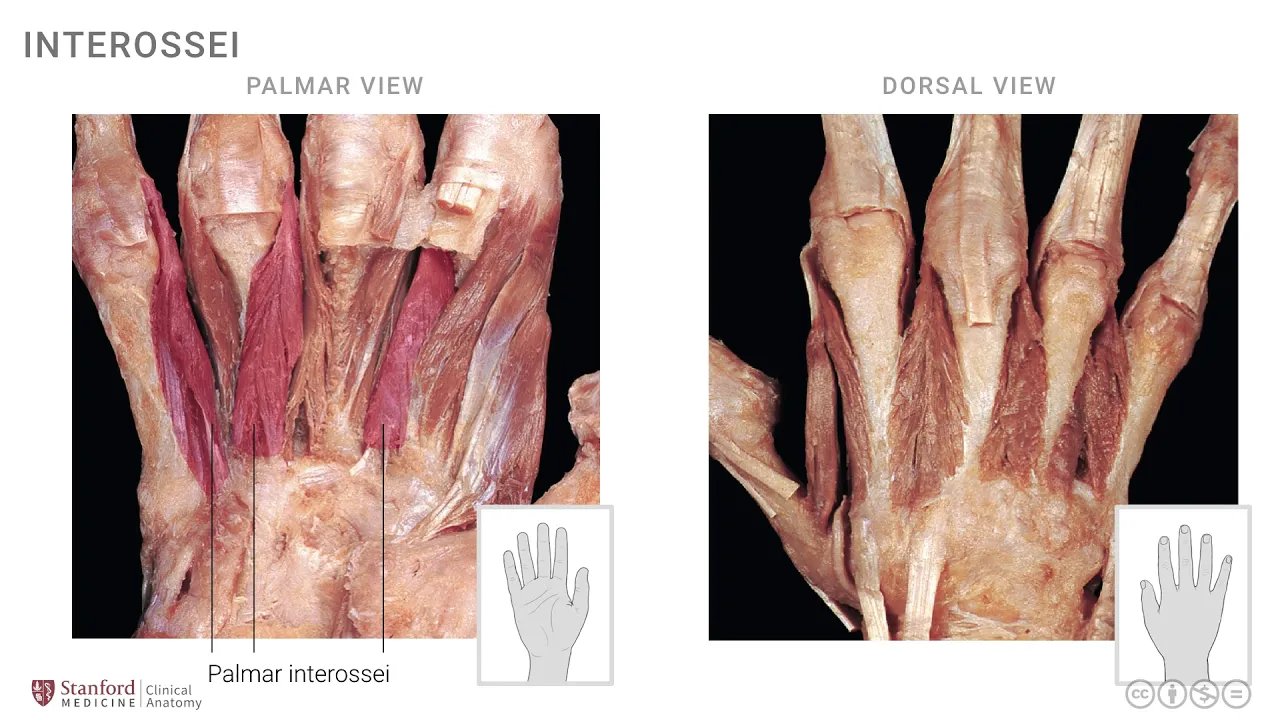
[Music] in this lesson we will review the deeper muscles of the hand the intro CIA group of muscles and the lumbricals let's start by looking at a simple line drawing of the right hand on the left side of the screen we have a palmer view of the skeleton and on the right side of the screen we have a dorsal view of the skeleton let's start by looking at the Palmer side of the skeleton and put the muscles from the intro CIA group that are known as the palmar interosseous or Palmer intro CI in terms of
being purely these are the muscles that are attached in this location over here as well as over here and over here the attachments of these muscles are onto the basis of the proximal fillings they attach onto the metacarpal more approximately across the metacarpal phalangeal joint and attach onto the base of the proximal phalanx in a very specific location so that it is attached onto the outer side of the index finger over here the radial side of the ring finger and the radial side of the little finger and if you think a little bit about the
actions of these muscles based on the location of the attachments you could you can deduce that but because of the contraction of this muscle the movement of the finger will be towards the middle finger the movement of the ring finger will be in this direction and the movement of the little finger will be in this direction and so in a very simplistic way one can say that the fingers come together that you pull them together we'll review this movement in a simple diagram of the hand in a moment let's look at the dorsal view and
put on the dorsal interossei eye as shown here and in contrast to the Palmer where we have three we have four dorsal interossei muscles as seen here and these also attach onto the metacarpals more approximately but they are attached on two adjacent metacarpals not a single metacarpal they do cross the metacarpophalangeal joints and attach to the proximal failings the base of these proximal failings but the locations are a little different so we have one the first dorsal interosseus which attaches on to the base of the index finger on the radial side you have a dorsal
interosseous on both sides of the middle finger a seat here and then you have one dorsal interossei that attaches onto the base of the ring finger and so if you think about the movements that these might produce the index finger will move away from the middle finger the middle finger will move in either direction and then the ring finger will move away from the middle finger as well so those are the movements that will be produced collectively by contracting the dorsal interossei muscles so let's look at them these muscles in a deeper dissection photograph off
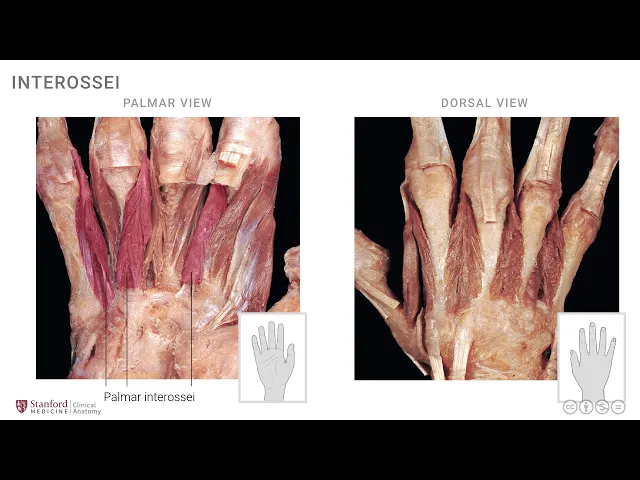
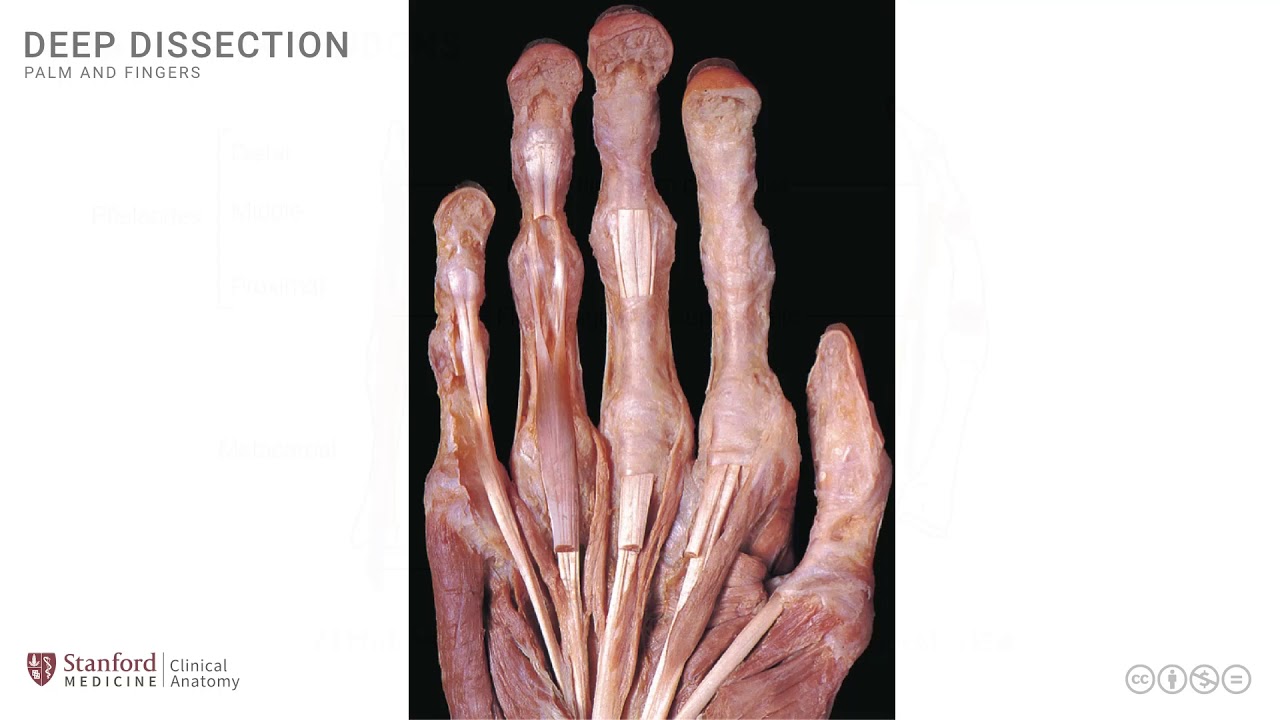
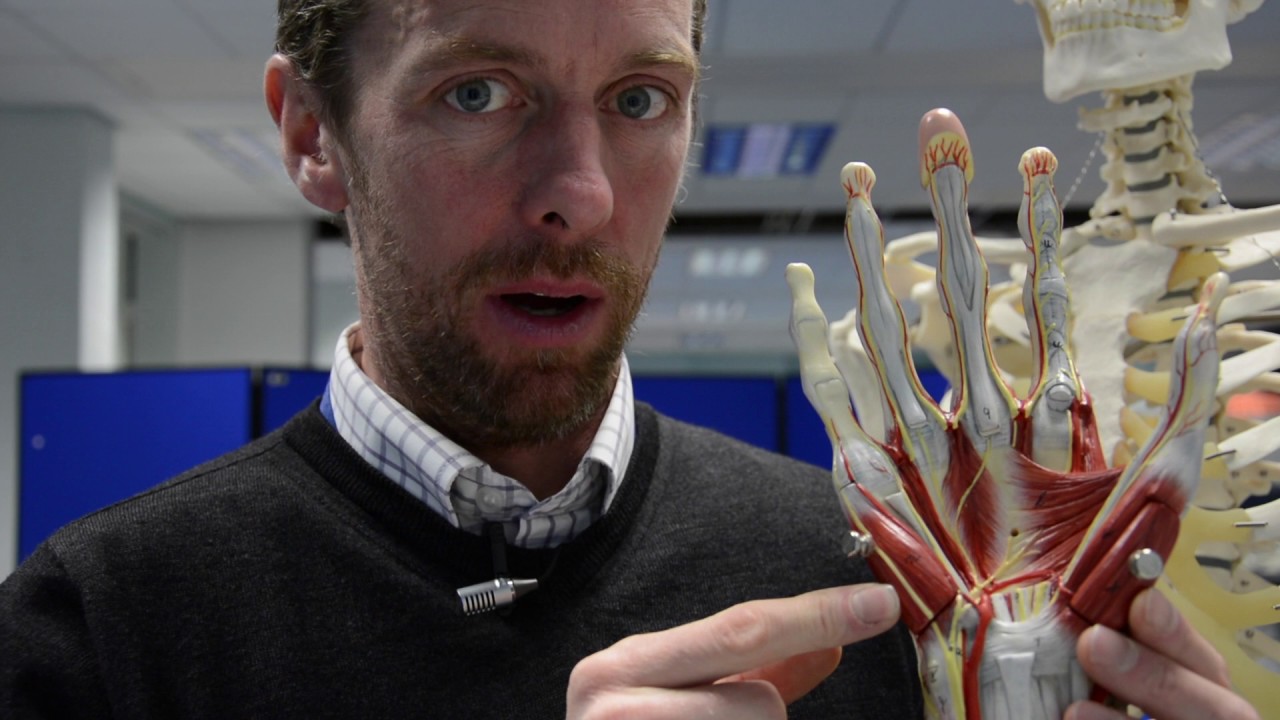
the hand this is again the right hand the view on the left side of the screen is the Palmer view and the view on the right side of the screen is the dorsal view and the muscles that are seen on the Palmer view include both the Palmer and the dorsal we can actually see a little bit of the dorsal as well but if you follow where they are attaching then these are the Palmer group of interosseous muscles seen over here one the second one here and the third one over here and you can note that
they attach onto those specific locations at the base of the proximal phalanx as we just reviewed the dorsal interosseous eeen in the dorsal view though you can also see a little bit of it on the Palmer side but in order to really see it well you need to see it in the dorsal view as shown here so these are the dorsal interossei muscles one two three and four over here and note exactly where the attachments of these tendons are onto the base of the proximal phalanges if we review the movements we can do that in
a very simple diagram like this and if we look at the right side and right hand palm side the middle finger is taken as the axis from which these movements are related and so if we look at the palmar interossei they take the fingers towards the middle finger and we call this adduction pulling the fingers together like this is called adduction and so Palmer's adapt sometimes this is often expressed as a mnemonic called pad Palmer's adapted the dorsal interossei good muscles have a duct because they take the muscles away from the middle finger they pull
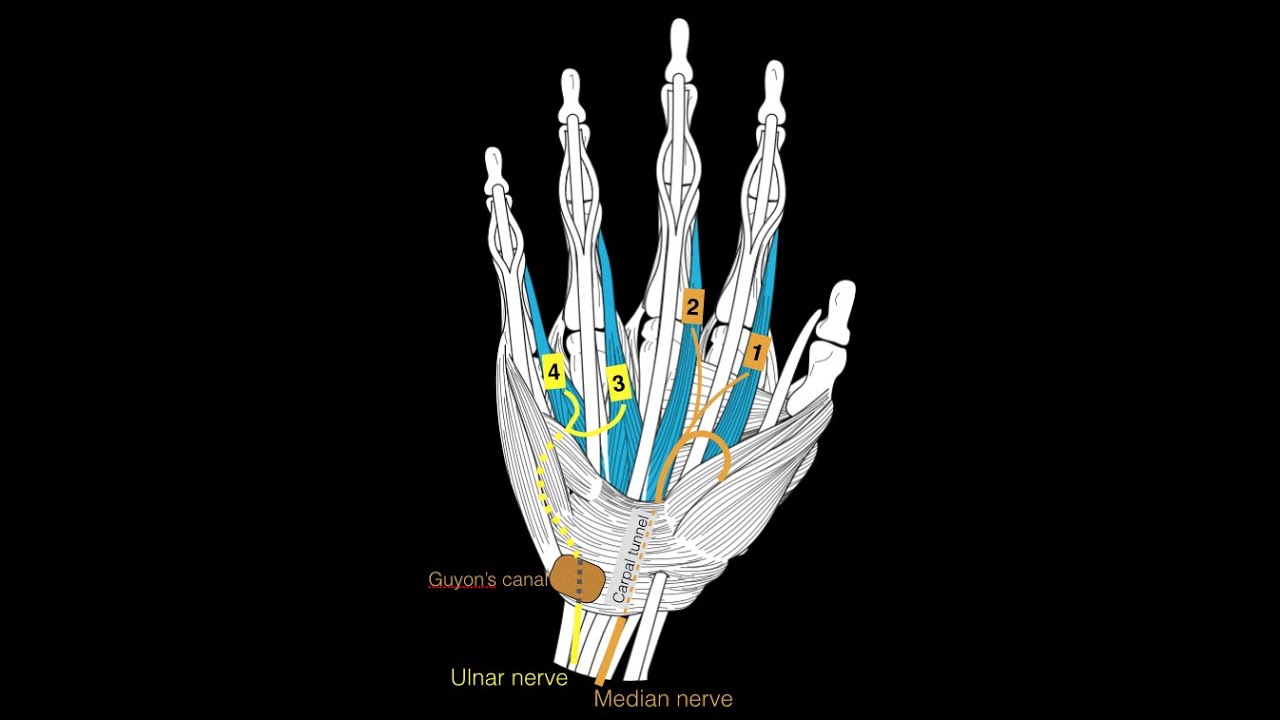
the fingers apart and so the movements are in the opposite direction and we often use the mnemonic dab to talk about the dorsal interossei muscles dorsals abduct and so this is a very easy way conceptually to think about the intra CI group of muscles all of the internal CIA group of muscles are supplied by the ulnar nerve we will conclude this lesson by looking at a side profile of the intra CI and lumbricals in terms of their attachments and the relationship to the small joints of the hand here we see the intra CIA and lumbrical
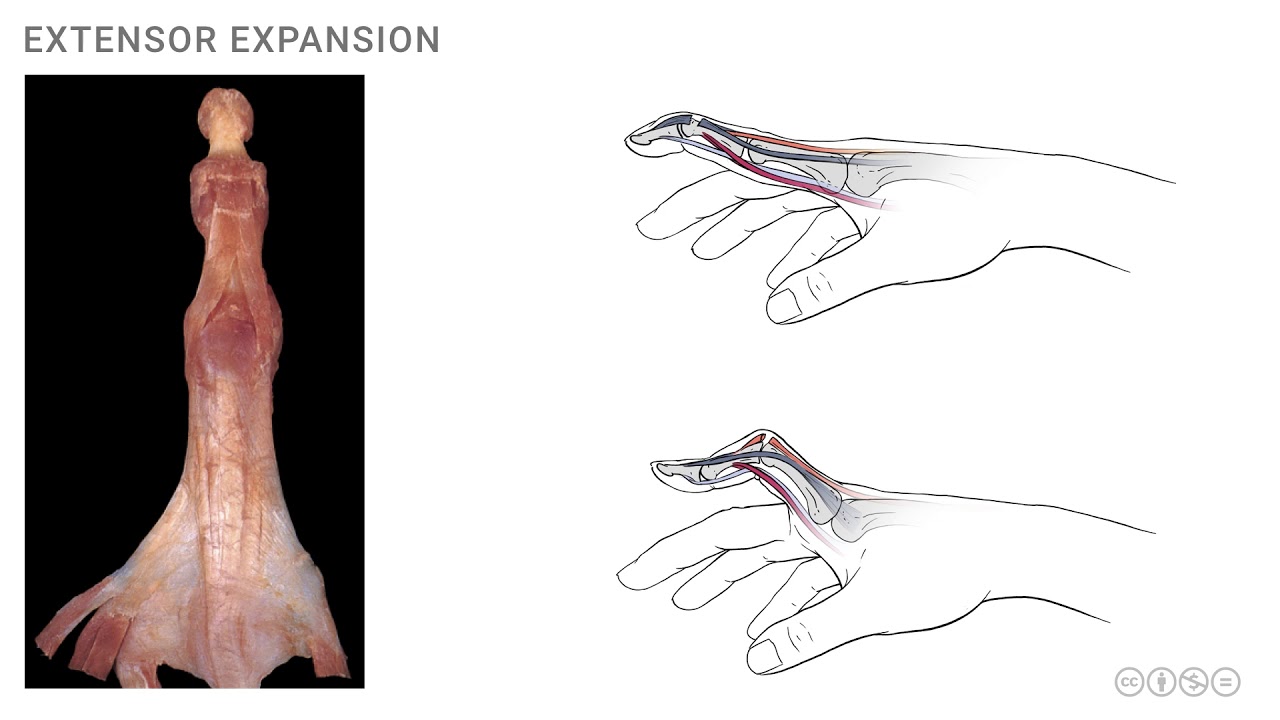
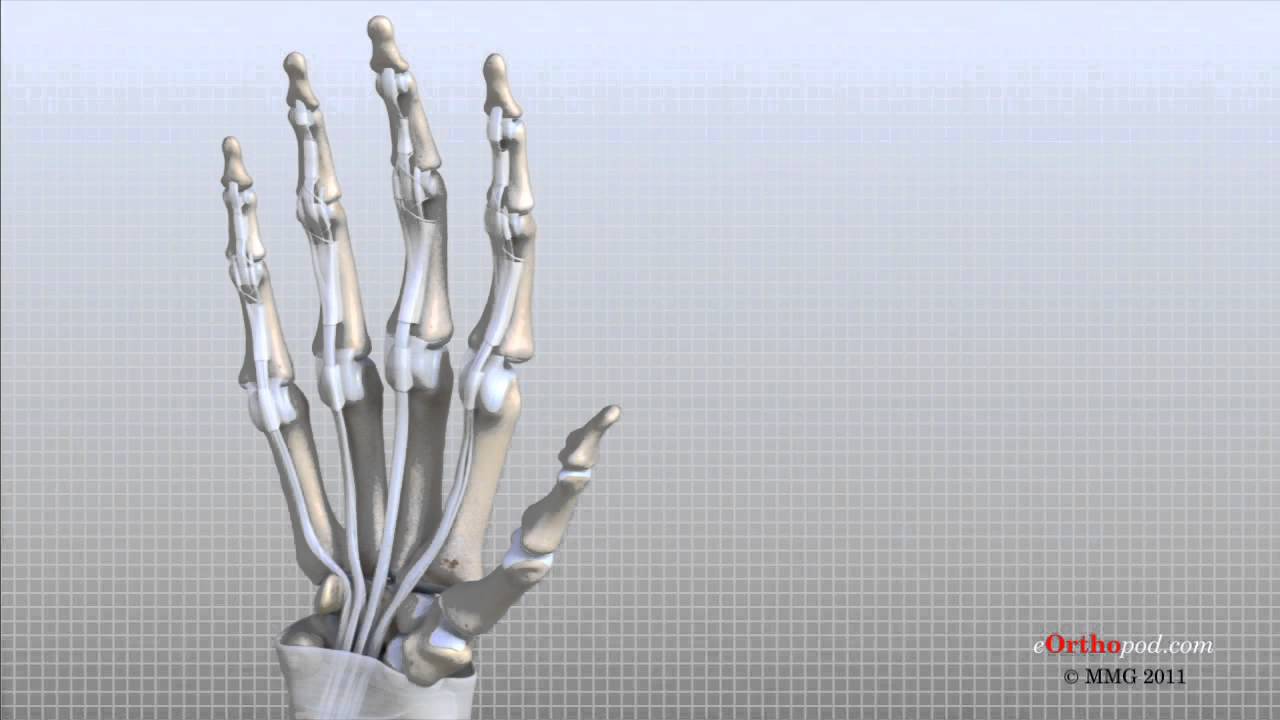
muscles taking their attachments on the palmar side of the hand and then crossing an attachment and crossing and attaching on to the dorsal expansion the tendons move in a very peculiar direction the tendon and the pull of the tendon is on the volar or Palmer side of the axis of rotation at the metacarpal phalangeal joint but it is on the dorsal side of the axis of rotation at the interphalangeal joints therefore when these muscles contract they flex the mCP joint but they extend the di p and p IP joints this is a very interesting arrangement
and a peculiar arrangement and so if I play this little animation it'll show you how these muscles in fact when they contract they flex the mCP joint and they extend the D IP and IP joints I can play that once more and give you second view of this and you can see here the flexion of the mCP joints and the extension of the D IP GIP joins this type of movement is in contrast to the long flexors in the long extensor tendons which have uniformly a movement of flexion or extension depending on their their location
and so allows for a lot of manual dexterity and it allows for us to keep these various joints in any permutation in any combination of flexion and extension and we are not constrained by either flexing or extending all the joints at the same time and really is a unique unique feature of the movements that we have in the human hand so this summarizes some of the functions and structure and some of the key features of the intra CI and lumbrical muscles [Music] you