hello my friends today is February 8th and this is Markets weekly so last week ton of things happening so a lot to talk about Market itself was pretty volatile and personally I'm beginning to get the sense that we that the top is in for the entire year but anyway first let's have an update on tariffs last week we talked about the impending tariffs on Canada and Mexico and now it seems there are are new tariffs to worry about this coming week secondly now Trump did a whole bunch of stuff the last week so let's talk
a little bit about the Sovereign wealth fund about Doge and about comments from secretary bassent and lastly we did get some data last week so we got to talk a little bit about the nonfarm payrolls all right starting with tariffs so last week we were all kind of on the edge thinking whether or not Trump would impose 25% tariffs on Canada on Mexico and 10% on China well on Monday Trump surprisingly just tell everyone that we had he has a deal with Mexico so tariffs on pause for a month and shortly after the same thing
for Canada so it looked like that was a negotiating Ploy but is that the end now personally I continue to think that this is really just the beginning now at a press conference on Monday Trump was asked about his uh Canadian tariffs this is what he said what I'd like to see Canada become our 51st state we give them protection military protection uh we we don't need that them to build our cars I'd rather see Detroit or South Carolina or any one of our Tennessee any one of our states build the cars they could do
it very easily we don't need them for the cars we don't need them for lumber we don't need them for anything we don't need them for energy we have more energy than they do we don't need them for energy uh so I say why are we doing this why do we why are we willing to lose between a hundred billion and 00 billion dollars a year we don't need them as a state it's different as a state it's much different and there there are no tariffs so I'd love to see that but uh some people
say that would be a long shot uh if people wanted to play the game right it would be 100% certain that they'd become a state but a lot of people don't like to play the game because they don't have a threshold of pain and there would be some pain but uh not a lot the pain would be really there so what so I pay special attention to the last 20 seconds of that because what that tells me my sense as a trump Watcher is that you know this isn't over yet that that he is quite
serious about his potential territorial acquisition here now on Friday there's a journal there's a story in the Wall Street Journal where Trudeau now is telling his advisers you know I think this guy was just being mean but now I think he's serious because uh maybe he wants Canada's natural resources now for those of you who don't know Canada is actually a very vast country huge huge amounts of land one of the largest countries in the entire world with a lot of natural resources that that are difficult to develop because the government at least uh the
Trudeau government has frowned upon natural resource extraction so that is a possibility I I don't know but Trump has been talking about things like Greenland and talking about making deals with zalinski to acquire re AR Ukraine so it seems like Trump is thinking a lot about natural resource acquisition so uh we'll see my sense is it's it's not over now with regard to Mexico again 30-day reprive now the problem with Mexico is not so much about resources or territorial acquisition Trump has never said he wanted to take over Mexico but I think it has more
to do with his vision for bringing manufacturing back to the US because a lot of the companies in China for example have moved their factories to Mexico and so they manufactur in Mexico and then because of the trade agreement just shipped it to the United States terar free so that's going to be a big problem that has to be resolved and I'm not sure how he's going to go about doing that now what was quietly missed though is that the 10% tariffs on China did in fact go into effect now China did retaliate a little
bit but the China Watchers say that this was very much a half-hearted effort and it seems like the Chinese are trying to avoid any further escalation now the new front in the Terra War happened uh on Friday when President Trump was having a press conference with Japanese prime minister ishiba let's hear what he has to say I mean we're going to have tariffs mostly reciprocal tariffs where we go with and I'm going to be probably meeting on that Monday or Tuesday have an announcement probably a news conference but probably reciprocal tariffs where a country pays
so much or charges us so much and we do the same so very reciprocal because I think that's the only fair way to do it that way nobody's hurt uh they charge us we charge them it's the same thing and I seem to be going in that line as opposed to a a flat fee tariff so it seems like Trump's new tariff plan now is reciprocal tariffs so the thinking is that for a lot of countries the United States does not tariff them but they tariff us so for example uh it's much more difficult for
the US to sell Cards into the European Union because of things like tariffs and it's easier for the Europeans to sell Cards into the US so the new idea seems to be you know if you put a 10% tariff on us for these Goods we'll do the same to be reciprocal now I don't really know if that's going to happen next week because the timeline of course is is a bit tricky for this now everything president Trump does is you know draws controversy and oftentimes legal challenges so uh over the past week we've had legal
challenges to to Doge for example so they don't really want to do something and then have some you know judge from Hawaii or whatever stop it so they want to do things in a way that they can defend it legally so the cariff for Canada and Mexico were under aipa under the guise of a National Health Emergency now in order to have proper economic tariffs you actually need a little bit more paperwork you need some investigation and the thinking is that this wouldn't really be ready until April so I'm not sure how they will get
tariffs done uh next week but I guess we'll find out it seems though that the ter war is moving on towards the European union now the European Union has a sizable Goods Trade Surplus with the us around $300 billion so um Trump has been complaining a lot about American cars not being sold in Europe and so forth and some people would say that it's because Europeans don't like American cars and maybe American cars are too big for for European streets and that's all legitimate as well but in any case As Trump turns towards Europe it
seems like he really is going to put more tariffs on from from what I hear and on Friday we also had a response from the European Union talking about willingness to lower tariffs On Us cars now in the past we've also heard people like Christine lagard say that one way we could satisfy the Americans is maybe to just buy buy more energy from them so the the European Union has been buying more n gas from the US especially as they kind of try to turn away from Russia um but they would really have to buy
an enormous amount of natural gas to to close that trade deficit so it seems like that's still a work in progress one thing about the European Union is that it's a little bit more difficult for them to act together because it is kind of a union of many different nations and you have to have a lot of uh agreement consensus so it's a slow process there is some indication that they would be willing to retaliate on big tech companies in event of us tariffs but again this is all up in the air uh but again
this is only week three of the Trump Administration we have a few more years of this and I continue to believe that uh the trade war is going to get much worse before it gets better so that's all for tariffs on this week and next week we'll figure F out we'll find out if um the reciprocal tariffs really did happen Okay the next thing that I want to talk about is all the other random things the Trump Administration did the past week now interestingly Trump put out an executive order to try to create a US
Sovereign wealth fund now this is kind of a surprising thing and kind of a strange thing for the us to do now if you look across the world the countries that have Sovereign wealth funds all have something in common for example China tremendous amounts of sovereign wealth why well they have a trade surplus of about a trillion dollars a year so that means every year they have about a trillion dollars worth of foreign currency coming into their country they got to do something about it right or you can look at Norway sell tremendous amounts of
natural gas a lot of money coming into the country they have a lot of money what are they going to do about it so what you see is that these countries take all this Sovereign wealth take all these money and they invest in let's say Treasury or stocks or uh let's say loans to countries in Africa and so forth so the common thing is that countries that have Sovereign wealth funds have a lot of income they don't have tremendous fiscal deficits like the United States and the United States in particular kind of doesn't really need
a sovereign wealth fund since they have um the dollar as a reserve currency like if you're if you're China for example your currency is not uh the reserve currency so you have to hold some hard currency like the dollars not the case in the US so it is a strange thing and to to me personally kind of worrying when I was watching that press release it seemed that press conference it seemed like bessent was talking about the Sovereign wealth fund is going to be used to invest in America and then Secretary of Commerce ludic was
mentioning as an example say that if the United States buys um from a lot of from a vaccine manufacturer maybe the us could get some warrants on that company's stock so that we can capture a bit of the upside of doing business with that company now that all sounds fine but having a sovereign wealth fund is kind of having another slush fund so today maybe we are using it to invest in America maybe tomorrow we'll be using it to buy a whole bunch of you know windmills and solar panels in Alaska or something like that
so having having a solone wealth fund is kind of strange for the us but we at the very least need to get the governance right now another thing that was pretty interesting the past week were comments from Secretary of Treasury bassent on interest rates let's listen to what he had to say the whether the FED is going to cut not cut uh what we are focused on is lowering rates so uh we are less focused on the specific of rate cuts and how do we get the whole curve down I mentioned that the tenure I
believe is the important price to focus on its mortgages its long-term capital formation so um and look I I think with the president's policies of energy dominance deregulation and non-inflationary growth I I think that the the 10e is going to naturally come down and then look on top of it what if we do get some big savings on the spending side from the do programs now his dialogue clearly tells you that he is not interested in trying to bully the FED to cut but he's trying to get the entire interest rate curve down and the
way he's doing this again not to believe the FED I think he's again he is a macro investor so he knows that if you kind of force the FED to cut interest rates then I think the market could potentially freak out think that we would have higher inflation and then you can have the 10e yield go higher now the 10year yield is obviously much more impactful to the economy and to the markets than the overnight rate right mortgages for example are key off the 10year yield now I was surprised by some of the commentary on
this but his commentary I thought was pretty I know straightforward not particularly controversial he wants to get the way that he wants to get the interest rate lower is by carrying out his plan which is of course getting Energy prices down reducing regulation again reducing costs for businesses and just increasing growth and know that's all I don't know very conventional so anyway that just tells you that the administration is not going to bully the FED they're going to do other ways to to relax to lower interest rates and we already see their efforts to lower
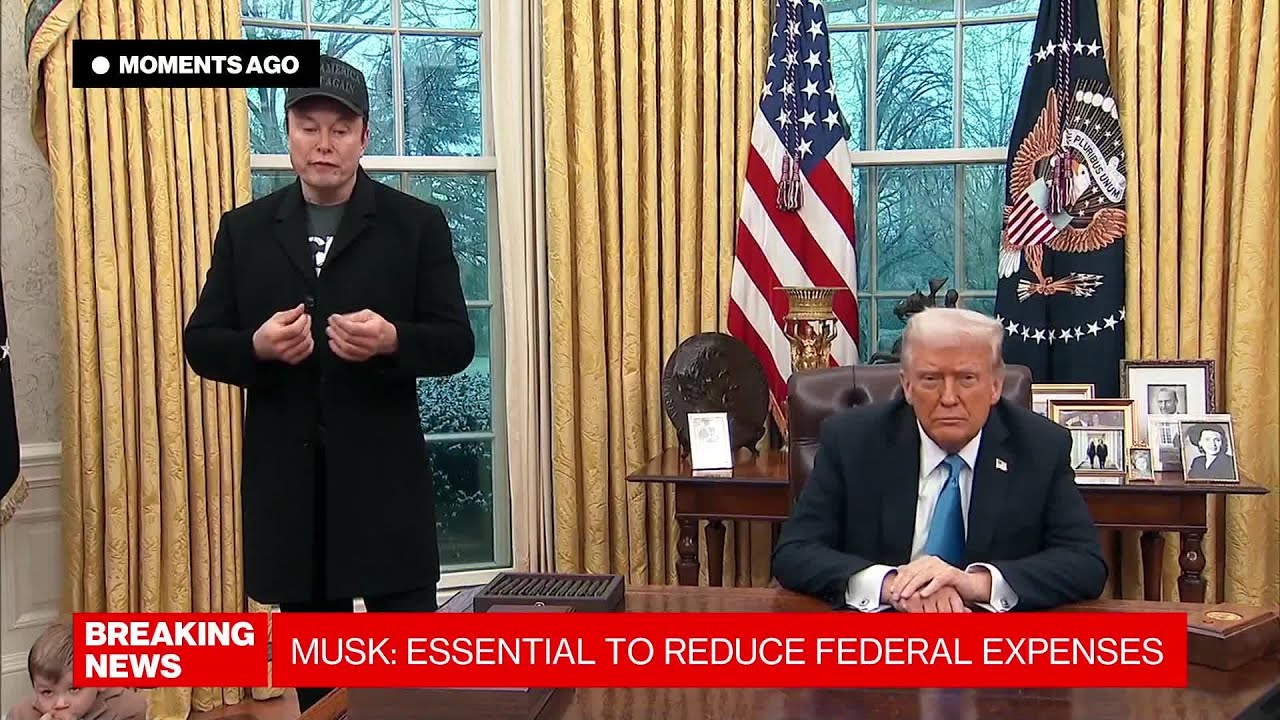
energy prices and I think very soon we'll see their efforts um to probably do something with the banking regulations that could help with the uh interest rates which I can talk about I think uh in a future post um let's see what else one oh again we have to talk about Doge of course now doge is has been kind of a wrecking ball uh this past whole week stirring up a lot of controversy so as we all know Elon Musk gained read only access to the treasury payment system and has been trying to root out
uh some fraud or at least waste now the US government runs a 2 trillion fiscal deficit the growth spending of course is even higher now what that means when you have these trillions of trillions of dollars flowing into the system you know there's a lot of people who are receiving that money a lot of people who benefit from this and if you try to know take away the piggy bank people who were benefiting from that they're going to lose some money and they are going to be unhappy so I would expect there to be lots
of controversy and a lot of people very angry about what's happening now one of his big moves the past week was of course shut down us Aid and one of the things we've learned is that us Aid provides financing for a lot of Nos and also a lot of the media as well so you know if you have a newspaper that that is saying angry things about Doge I think that's not surprising because Doge basically uh you know took away some of their money but from a broader view though it does seem do just being
pretty effective in cutting government SP spending now he does have that government employee buyout so far it seems as of this morning uh 60,000 people took that offer a judge has paused that so we'll see what happens but so far I think it's been surprisingly successful it's very hard to touch all these intrenched interests but it seems like Elon is definitely making progress towards this now I was listening to an episode of the odd lots a few months ago where a professor from Boston University who specializes in government waste uh was was telling some pretty
surprising stories now obviously there is a tremendous amount of waste in the government now the professor noted that uh and this was surprising to me 1% of the entire federal budget is spent on the dialysis program and the reason why it's so expensive is because of this loophole now if you are a DI dialysis patient and you can't get to the dialysis station uh the government is very they provide you with a paid ambulance and so uh that's a way of just helping these people who are maybe too sick to move to get to a
dialysis center and the flat fee for that program is $250 for the ambulance and that doesn't sound like a lot for an ambulance but if you are a taxi driver that sounds like a lot so after the Inception of this program uh there were thousands of people all across the country who basically started you know ambulance programs where they would you know you could buy a used ambulance for $30,000 have a few people and they would just fi these cause and just you know collect $250 one way uh one way and $250 back and so
in a sense that's how this program basically uh with good intentions became just kind of the slush fund for all these fraudulent uh ambulance operators and ended up as big as 1% of the entire Federal uh operating budget so there is instances like this again everywhere so there is a tremendous amount of fat to cut obviously we're not going to go from a two trilon deficit to a to a balanced budget on Doge alone but I think we can actually make a surprising difference so far it's been very promising we'll see how that goes and
of course that has implications on employment on growth and on the term Premia so a lot of things happening there hopefully I think we can all agree that uh and a more efficient government is in the Public's interest and people who complain uh I'm guessing that they're losing some money okay the last thing we want to talk about of course is the job market report now as usual when you look at the job market report we have to look into the details so um on the headline basis job job games were a little bit lower
than expected but in the details it was unambiguously a very strong report now even though the headline jobs created was a little bit lower than expected there were revisions upward that well that overall raised rais the uh the amount of jobs on a on a moving average basis now looking at wage growth surprisingly strong as well much higher than expected now to be clear we have to be careful about the average hourly earnings because it doesn't take into account the compositional difference of employees it's just a blunt average so if you hired for example more
doctors and lawyers in one month that will bring the average higher and of course the unemployment rate surprisingly surprisingly declined to 4% now if you're looking at this from the fed's perspective well fed has cared about cares about unemployment and um price stability the unemployment rate went lower we don't have to worry about that and from an inflation standpoint wages much stronger than expected so you you got to be worried about that as well so the market took one look at this and the entire curve went higher and that is totally totally the correct U
interpretation of this but before panicing I would know that this is one job report the overall trend is overwhelmingly towards a cooling labor market we see this in jolt for example we see this steadly decline in uh average wages and of course going forward I'm pretty sure we're going to have tremendous amounts of economic disruption from the ongoing trade War all right so that's all I prepared for today thanks so much for tuning in and I'll talk to you guys next week