implementation methodology that's what's made my company grow super fast when I understood how to deliver project correctly it's very important that's what makes the difference between excellent partner and regular partner as project managers our job is amazing we have the opportunity to improve people lives at work that's super important we see a massive Improvement on the day-to-day activities of people when they use a do but implementing management software is as difficult as it is impactful it's hard it's very hard to be a good project manager more than 50% of traditional Erp implementation fail why because
it's too complex and it's too expensive and only 18% of smmes have deployed an integrated management software because they think the project is too heavy for them so this constant failure on the market to deliver are actually our opportunity as oo Partners to drive by making implementation project Smo predictable and affordable we can transform the market and we start with the main advice about this talk and probably the number one thing but stay for the rest of the talk too it's read the book we wrote a book about implementation methodology you have to read it
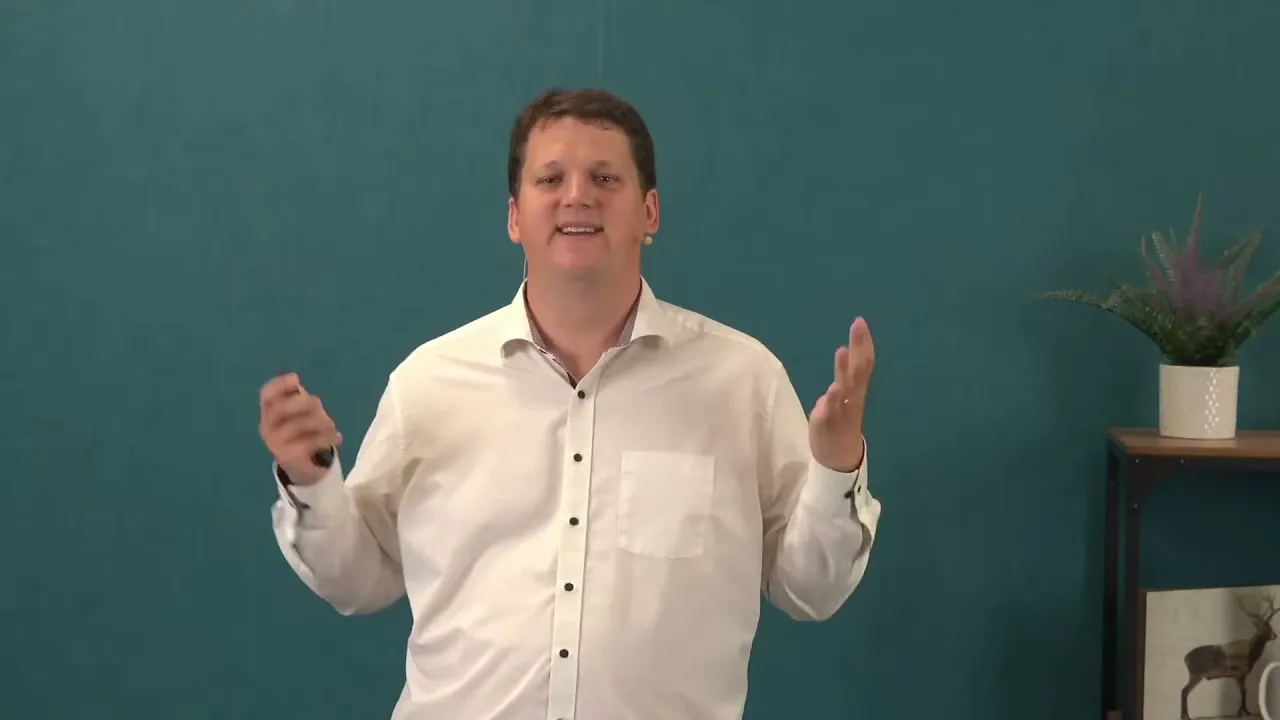
hi I am Marcelo and I am the interactor with Fabian day I have read the book two years ago already ah great but you know we changed everything one month ago we released a new release with new chapters and we fine-tuned the process with all the expertise we we get from the market ah so it's not this one it's this one H I will read it yeah so let's time to do a small quiz you know what's the first chapter of the book you can trade it no don't check yeah it's a key Concepts um
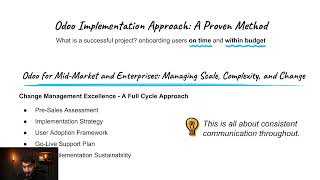
maybe later on but we'll start with what is a successful project and there is an easy answer to that a successful project is on time and on budget and I'm insisting on that because a lot of service companies think about satisfaction of the customer it's very easy to satisfy a customer just say yes to everything and you should say yes yes yes and yes with everything yes with everything uh it's very easy but it's a very short-term approach because if you say yes to every development custom development the customer is asking for the project will
get delayed it will cost a lot and at the end the customer won't be satisfied and it's very also important to understand who is your customer because you work with key users and key users expect more features but the people you want to satisfy are the people who are buying the project the executive committee or the CEO and those guys want the project to be on time and on budget so when you have to balance between accepting new features satisfying the customer getting on time on budget making exceptions always think about the success of the
project in the long term that's what makes the difference between the great project manager and the average one they focus on the long-term success of the project rather than than the short-term satisfaction of the customer yes all right we can speak about the key concept now okay that's the first chapter I mean yes second one uh and what matter in the key concept is the mindset if you want to transform your company that implements Odo it starts with the mindset of your team and let's start with the responsibilities you have to deign what are the
responsibilities of the customer and your responsibility as a project leader usually a customer man Master the business know how they know the business they know what to do but they don't know the product and they know how to implement so what should be done and how it should be developed or set up is your responsibility as project manager and I insist on that because I see a lot of project manager when the project fails when we develop too many unnecessary features they say yeah but the customer asks for it no it's your responsibility as project
manager to ensure that we do the right things and then we challenge the things that are not necessary it's also your responsibility to be on time and budget but I already said that second thing which is very important in the mindset is to keep thing simple Limit Custom development to the minimum necessary there are plenties of tips and tricks on how you can do that to challenge the customer in the book fewer meetings less paperworks faster decisions so reduce the number of people in the meetings limit the number of stakeholders if you have a meeting
with 10 people it's just impossible to uh uh challenge the specification and decide on what should be done you can have 10 people in a meeting but it's a training it's not a um a business meeting and also something that is important I see a lot of services company working full-time on customer location that's good for change management being onite is very good for training and change management meeting people but it's inefficient to get things done so have a good balance between when you go on site and when you uh walk from your office where
you can uh set up the system when you are close to the expert or the developers that can help you if need it third thing that is important the people it's it's project about people project manager must be problem solvers as well as product and business Expert that is very important never have a project manager that is not an expert in the product uh the main the best decision you can get come from the fact that you know both the business and the product if you only do the business you will do a mess in
the product if you only do the product you will do a mess in the business you have to train your project managers so that they get and two people doesn't fit the role you need one person that Master both so that he can efficiently balance the pros and the cons of every decision you must avoid intermediaries who are not decision makers sometimes customer subcontract uh to another company who will do the project management for their side it's usually a Bad Thing usually you should try to have decision maker who can decide quickly and who know
the business so that the project get faster um a success of the project is strongly related to velocity of the project the faster it gets the better it is if it start to be slow people get demotivated delay in the project it's not good and we have to train the key user early on in the project so that they get committed and the last thing that matter is project manager that's the most important role in a project it's a key success factor it's more important than the developers or the tester or whatever uh if you
have the right project manager you will have a success in the project if you could have average developer it works but if you have great developers and no good project manager the project will have difficulties so it's key to recruit and train the best talent and retain only the best performer and even the best project leader Miss critical details so it's very important to even if you have great project manager to challenge their work at Key phases in the project like in the ROI analysis so that they get feedback because when you are too much
in the project uh discussing every day with the customer sometime you need someone with a front point of view just to challenge your idas all right so I've seen what's the mindset what are the key things to for a project let's go now on the different phases of a project so it start with the pre-sales phase like a analysis where we decide a budget a planning usually we charge for it but it's not the real project and the customer gets a planning a budget a phasing and specification of everything that should be done in this
phase and then we sign the contract for the implementation and you have several Sprints of implementation and at the end there is a go life and then supported maintenance and let's start with the phase one return on investment analysis it's usually a phase that we charge for a few days could be between five to 40 days depending on the size of the project and I recommend here to use the all the tools that are available in the book so in the book we provide templates for everything key users interview return return investment anal spreadsheet closing
presentations there's Tools in here yeah yeah but you have to click on the link ah okay there is no link on the paper but there is the URL um all right let's have a look at some of these tools uh that's the templates of interview so when you do the interviews with the key users to understand their process their paino you just follow these templates as all the question fill in the mind map and you have a good basis uh for your interview with the key user to analyze their business needs um that's the return
on investment analysis spreadsheet there are a lot of tabs there from return on investment then you have the savings and the ey for the investment so you see all the tabs basically what we do is two things returns so we analyze what will be the impact of AO in the company what the customer will save because of AO how we will improve in process because of AO that's the returns and then the investment what they will have to pay to get to that level of implementation of AO so it's the Gap analys what we call
the Gap analysis before a list of specification things that are missing in the software things that you should configure in the software that's the investment and when you have both together you have the return investment and in this document you have the model for everything and for pretty much every industry you have sample of what are the usual returns and usual issues so that you have a prefield document it's very easy to start with that's a sample of the return so we analyze how people spend their time and then what is their efficiency and what
can we save if they use a do let's say you have a inventory with 10 workers and uh three people or four people who record all the trans transaction of the worker obviously if you deploy Barcode Scanner maybe this four people who record transaction in the system only one is necessary to do the tasks for the worker but they can scan directly so you save a lot of time and you can just write percentage of what you save there and we transform that into cost basic on the salary of the full-time equivalence and you have
a list of all the process and the pain points that the customer have uh the thing that we should improve and that Odo will allow to simplify that's the return that what they will win using Odo and then you have the investment it's what it will cost them a list of features to develop and both together does the return investment all right so when you have done this analysis working with key user you have this spreadsheet that is filled so you have you have a budget a planning a phasing everything's there you have to present
that to the stakeholders of uh the company and for that we have the template of the presentation meeting with all the slides of the things you should show about the structure of the project main pain points how we'll solve them the cost the issues in the cost the planning and so on and so on so we also provide in the book the link to the PowerPoint that you can use for presenting the return on investment analysis some tips and tricks for the return on investment analysis I've seen a lot of companies doing Gap analysis instead
of return on investment analysis so basically what they are doing they are analyzing everything the customer needs and big spreadsheet with all the items to develop or to set up and with the cost and then you have a cost and a budget the thing is at the end if you only present things that cost and only present missing feature that you have in the product to the customer it's not it doesn't feel very valuable I mean the customer wants some thing for the money they will invest so if you forget about the return phase what
they will save by using o do what they will improve as a process BYU uh it's not going to be efficient so we propose that you move to the returnal investment analysis instead of Gap analysis that's one of the Improvement of the new version of the book um uh it's going to be much easier and you will have a better success rate all right so you one thing that works very well in once you have done this analysis with an ask an expert that is external to the project to challenge the specification sometimes when you
work daily with the with the key user you forget about some of the thing being an expert project manager is very hard so having an external point of view it's always good to challenge the specification and when you challenge he has to do two things do the split between what's necessary and what's optional can Implement in phase one for the go life only what's necessary why because the change the the need of the customer change after the go life he probably requested a lot of things that actually are not really needed because Odo is different
from what they used to do before so all the things they have in mind pain point they add in the old software doesn't matter too much with a do but when you go live you will also find new specification that you absolutely need so it's better to do the minimum requir to run the business and do the optional things after the go life that way you are sure you don't waste money developing things that you don't really need and so in the book you have lots of tips and tricks about how to do the AR
analysis I'll present here my three favorite ones the first one is to don't offer different options to the customer don't tell him we should we have this problem and I we have three possibilities either we do that or that or that it's a very bad manage product management approach you have to choose so that the customer doesn't have to choose why because the customer doesn't know the product it doesn't know implementation of such a complex project so if you don't know he will know EV n so it's your responsibility to propose something and one and
it's the responsibility of the customer to challenge what you propose so you propose something you explain the pros and the cons and it's the role of the customer to change never has the customer which one of these three options do you prefer you choose because you know better it's also important to decide what's necessary or optional I've seen some Partners sending the big spreadsheet with all the developments to do and asking the customer to fill in the fields is it necessary and optional obviously when you do that the key user they put necessary every everywhere
because they want everything but that doesn't help the project to be on time and on budget so you have to do the choice what's necessary what's optional what will be in phase two after the go life not the client of course the client will challenge that sometimes it tell you no you did a mistake this is really necessary but at least you did the initial setup and when you do demos and when you train the user ask uh the the key user to do the the m and the the keyboard themselves they learn better that
way all right so we did the uh the analysis now it's the kickoff meeting with everyone is excited we start the project that's when the seral thing start right after the contract is signed and same thing we have lots of idas and tips and tricks and templates in the book uh but my favorite ones are the following on one manage customer expectations it's um uh don't o don't over promise and under deliver do the opposite overd deliver because you under premise uh tackle issues directly you it's you you I know it's very easy Junior project
manager they want to avoid complex confrontation they try to avoid it's if you the best project manager if they find an issue or something that is risky they address the issue early on it's always better when it's early on and of course I line everyone on the methodology the customer should understand why you think that way why you act that way because if you understand it it's going to be easier to walk with him directly we just put them in line like we align them very well like that and that's it it's drinkable [Laughter] customers
and so you did the kickoff and now you go to the phase three which is the implementation when the complex thing starts so you have different phasings and things like that so I'll let you read the book to check the templates and how we work but some of the best tip tricks that I like in the book is that data import are very costly so they put the project at risk and usually you don't really needed them there is a story in the book from wiand that says had a customer that wanted all his accounting
data for the past five years the thing is if you have to do that it's probably two months of development and we have would have consume all his Service Pack just to do the data import so he made a deal with the customer he told he told him I think you don't need them and the customer say yeah I really need my data he said no I think you don't really need them so I I do a deal with you and the deal was the following I do you implementation of your accounting software in two
weeks without the data I train you we do the thing and you use it as it is in two weeks it's going to be done instead of two or two months or three months and if after that you still need the data of your history then I will import the data later on the customer say yes they went in production in two weeks and the customer called back uh five month later he was super happy the software was very good and he said to Wi you know what I did not even needed the data only
one time and what I did it was looking to the old software I just lost one minute and because you've challenged me to not import the data we save two or three months in the project so data import are costly just keep that in mind so you can challenge it minimize specific developments I would say that it's very often like 30% of the case customer request specific development that they don't really need so if you don't challenge them they will pay for 30% of things they don't need and because they think in a certain way
and know do address the same issue in a different way and there are plenty of reason for that and there are a lot of good tips and tricks on how you can challenge or value the specific development in the book challenge customer request I mean everyone can say yes to a customer it's very easy but only the best project manager can say no and then invol the single point of contact of the customer in the project so that it feels committed and ask them to do the business flow we sometimes have the big presentation to
the executive committee sometimes it's done by the single point of contact of the customer and it's very it's great when it's that because the involvement is much better and it's rewarding for the team all right um so now it's time for the go live so there are plenties of tricks for the Gove obviously first a training is not a conference make them uh act play with the software have a mouse and a keyboard and they should do the thing themselves instead of just listening to you training them key users are not professional testers I see
a lot of project managers saying yeah we have issues after the go but it's because the customer did not test it I mean you should test everything yourself you should take the responsibility of being sure that it will works obviously it never works you always have issues but then you fix them but you should get the responsibility and not delegate that to the customer of course the customer have to test and do his best but it's a professional job to be good at testing for a specific environment so you have to do it deeply create
the momentum we see a lot of issues when the the customer is scary about The Go life so is waiting that it's 100% perfect so he always push back the go life and that puts the the project at risk because the longer it is the the the the more the motivation decrease and the risk that the needs of the customer change over the next months so it's important to create a momentum and go and and have a go life you know that the sales people they have something like they call with the closing they negotiate
a deal at a point they have to close the deal we sign and we go for it and we have to push the customer to that some some Sal people do that whoever whoever closes it is the key users right yeah in this case um it's more about you have to close the goif you have to get a commitment make sure everyone is happy don't overell them tell them they will have issue it's okay we'll have issue after the goli life and we will fix them but if push back we'll have even more issues so
at some point you have to push him to okay we go and we go live and we take the risk because some customer doesn't want to take any risk and then things get very complex um and then we have the post go life um that's where you do support maintenance so on and there was one thing that I really like that we introduced in the book a month ago so you probably didn't read it not yet but I will yeah it's the progress report um at the end of the project customer likes to do um
a progress report where you do a summary of everything you did so you check you re explain the timeline of the project the project status the people's adoption and the business achievement that have been done it's very important to do that because even though you feel like they understand everything you did sometimes the executive committee or the CEO doesn't know because they were not part of the project so it's good to uh re explain everything that worked the thing that didn't work or we will improve the the collaboration between your to companies in the future
and one thing I really like in the progress report is the digital opportunities it's the next step a lot of people just deploy the Erp and that's it but in as part of the digitalization of the companies you can do a lot of things you can um transform make them become paperless improve the HR the marketing activities there are so many things you can do with a do so do digital opportunities all the features and that you rank that they could deploy and you rank based on the potential impact and the ease of transformation and
that way you help the customer decide what's the next step you can make them dream about other things uh after you deployed the core business all right so I have a a last tip uh for you read the book plenty of T tips and tricks templates of document there are use case with squee there is a personal assessment tool so you can uh compare your level compared to the the the project leaders that are working at to do because we and say me um so to assess your experience we did a survey amongst all project
manager and on this survey you get some points based on the answer you you you do and you can compare yourself basically the people having one year experience at to do had an average of six points between one and two years they had nine points two and three years they had 17 points and the ones who had three years experience working in our company as project leader get 20 points so try the survey it's in the book and you can rank yourself compared to the other team thank you and I'm open for the the questions
so welcome everyone to this Q&A so I'm Antoine business service manager at ODU I'm responsible for the implementation of ODU Ines and I'm faan so let's go with the questions so I will start with a question a lot of you ask where can we get this book so you can come here to the office to get a paper version but if you want to be up to date there is a the electronic version available on the website we will post it on the on the chat and on the extended Q we will have uh afterwards
yes so we we'll and I go with a question from s is there a stepbystep guide about the AI preparation I believe the templates we have in the Google spreadsheet uh is kind of a step by step because they are a lot of samples data of the most common um issues you find in traditional businesses so you can relay on the template the presentation R and we also have three extra presentation on the a analysis during oo experience so watch out the agenda so we are short I think we will continue yeah we will uh
jump directly in the uh the so we'll give you a link in the chat click on the link and we continue with Antoine and me in the link so we can have a close discussion in the link you will receive in the in the chat and don't hesitate to post all your question you already post here on the chat so we can answer to all of them so see you in a few seconds we just move to another room and we meet you in the chat