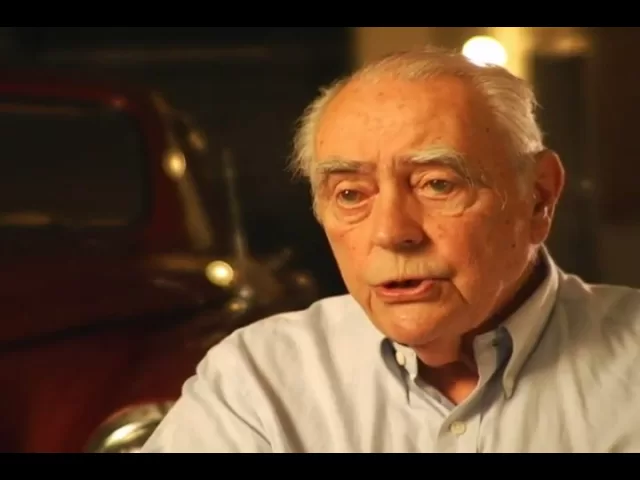
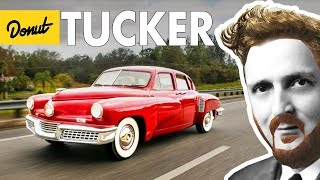
DAVID CAMMACK: I'm David Cammack and I'm a collector of Tucker things. He built 51 cars, 47 still exist, four have been destroyed over the years. There are a few people who have owned two Truckers, I'm the only one that owns three.
[MUSIC PLAYING] DAVID CAMMACK: Bought my first Tucker in 1972. And that was the grey one. And it was number 1022.
A year later, another one showed up for sale. My oldest brother said, well, you might as well try to get it. There can't be but a couple of them out there.
That turned out to be number 1001. It's the first one off the prototype assembly line. And in '74 I bought my latest one, which turned out to be the only one with the automatic.
And so it's pure luck that I have really got the best cross section of everything Tucker did. I didn't really know what he had or anything, I didn't know how many he'd built. I had no idea hardly anything about it, until I started acquiring them.
All the car companies said, they actually started building 1942 automobiles. When the War started, they shoved their production lines out in the back lot and put it in the war equipment. When the War was over, they went out in the back lot and brought in those same old production lines.
So if you bought a so-called new car in 1946 or '47, you were really buying a 1942 automobile. And here Tucker was coming out with something you might say brand new from the ground up, but it was so advanced over what cars were at that time. Of course, he was talking about disk breaks-- cars didn't have disk breaks back then.
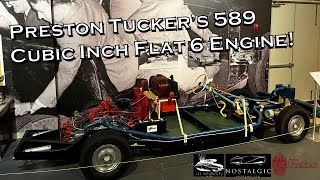
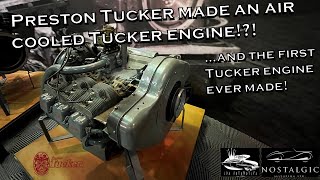
Cruise at 100 miles an hour-- cars in those days did not cruise at 100 miles an hour. It had the aluminum engine, lower center of gravity, four-wheel independent suspension, cyclops light that turns ahead of your steering. There was so much interest in the Tucker, just hard to believe.
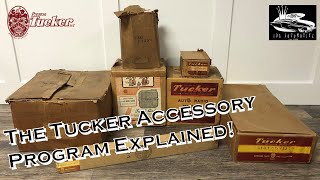
There was a lot of black market going on with car dealers after World War II, I had to put up $100 to get on new car list. As the veterans were coming back, and people they'd dealt with prior to the War, they would get my car, and I'd just keep sliding down the list. Tucker came up with this idea that when you went to a Tucker dealer, you would purchase the radio, the seat covers, or the luggage, and that gave you a specific number.
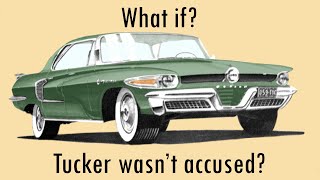
It'd be pretty hard for the dealers to put people in between. Well, that raised talk Tucker almost $2 million in less than two months. That's when the government stepped in and accused him of fraud, because he was selling parts, but no car.
So that's that the fraud charge came about-- he was a good promoter. But I think he was sincere. You just don't do all the engineering that he did and not intend to build a car, because I have all of his engineering drawings.
Every item has a drawing, every nut, every screw, every bolt, how many threads to the bolt, whether it's hard steel, soft steel. Then I spent about two and a half years trying to sort them out and kind of got Tuckered out, I quit wanting. I enjoy showing the things and I enjoy seeing people enjoy it.
Well, I guess I don't advertise it very well. I have no signs. It's a building this that's in the center of the block, you can only get to it through alleys.
I call it a warehouse, most people seem to call a museum. I don't even know the address of this building. [LAUGHS] I wouldn't want it if I had to keep it in a safety deposit box.
Who wants something like that? You can enjoy it, nobody else can. It's not my nature.