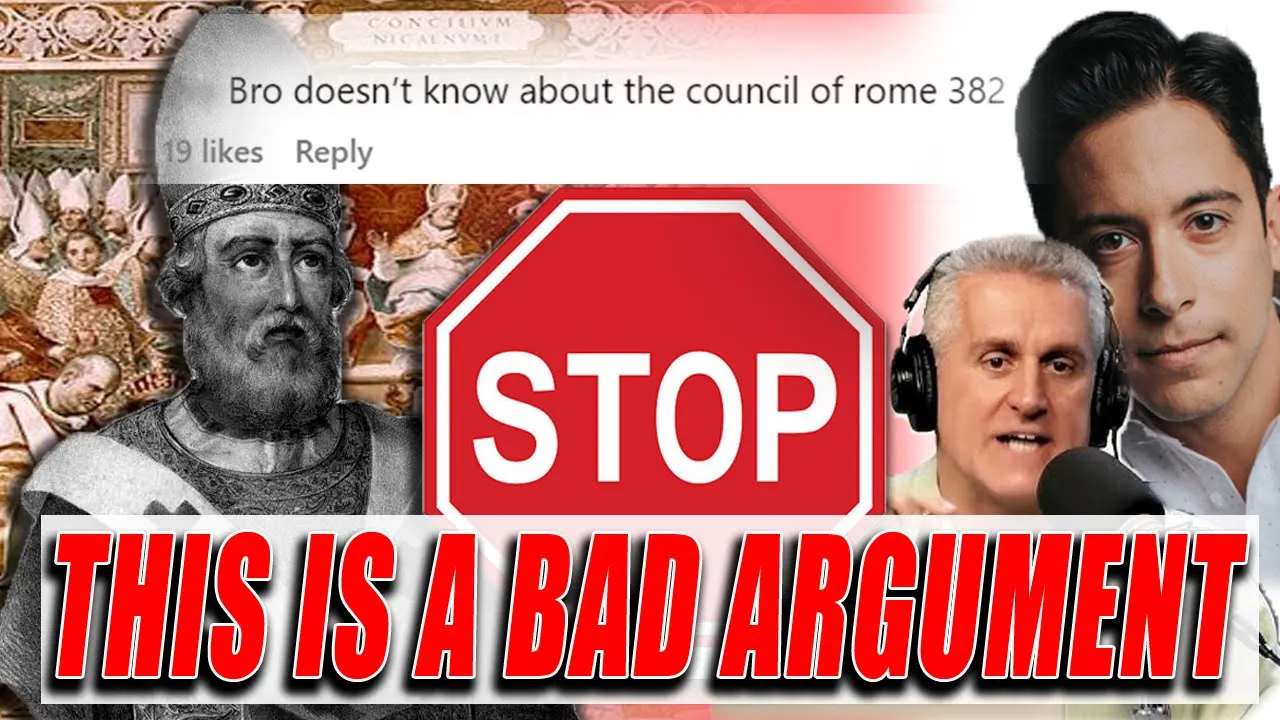
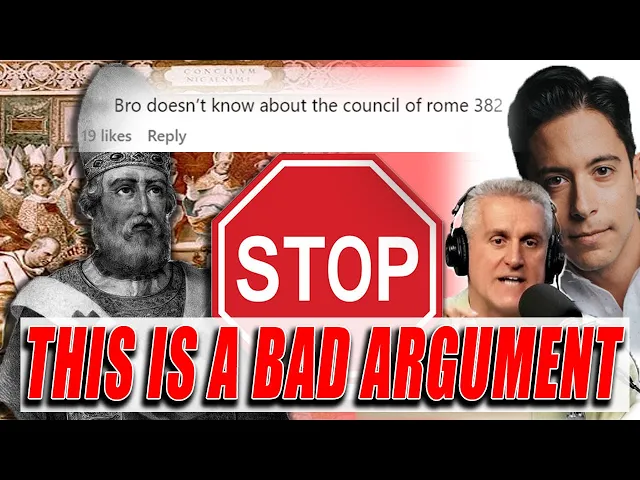
so I wanted to make this video because I've been seeing for a very long time now a really bad argument that your average street level Catholic makes in order to defend either the cannon of scripture or to defend the infallibility of the church I think it's a bad argument it can backfire very easily and is very easy to disprove and I also think we have better arguments so the argument is the whole idea of the Senate of Rome in 382 under St Pope damis the first and they also include the sen of Carthage and hippo
and sometimes even Pope Innocent the first letter affirming the Cath Canon of scripture in the late 4th century and early 5th Century now there's various problems with this but what this video is going to do is talk about the problems with the the decrees of the the supposed Council of Rome talk about some of the scholarship done in it take into consideration hippo and Carthage and also shows some evidence that it's not as simple or cut and dry as many Catholics make it seem and there was you call for a council and where it was
resolved was a senate of in Rome in 382 by Pope damus where he declared the truth of the matter though not infallibly he declared it and basically answered the question for a thousand years out of Rome under Pope damus in the year after the second Council and one of the things they dealt with at the sen of Rome they dealt with you know the issue of Authority for example but they also dealt with the can scripture and they included exactly the same books in Scripture that were later included by hippo and Carthage and other Regional
councils 5 adamis in 382 prompted by the Council of Rome wrote a decree listing the present Old Testament and New Testament Cannons of 73 books now the Council of hippo in North Africa in 393 approved the present Old Testament and New Testament Cannon the Council of Carthage in 397 approved the Same Old Testament and New Testament Cannon Pope St innocent the first in 405 approved the 73 book Cannon and closed the Canon of the Bible he said that's it these are the books that are written and the end of this no up until the Canon
was approved there was a lot of debate some were saying that some non-conical books were inspired such as the gospels of Peter and Thomas the letters of barnabus and Clement the pope innocent's decision settled the matter for the next 1100 years which was convened under the leadership of Pope dsus which promulgated the 73 book scriptural Canon this biblical Canon was reaffirmed by the regional councils of hippo in 393 and Carthage in 397 and then definitively reaffirmed by the eal Council of Florence in 1442 we're all familiar with the argument that some Protestants use that quote
the Council of Trent added books um you know the seven apocryphal books to the Canon of scripture and we know that if it's not true they had been used for a very long time so it's a very simple argument that some Protestants can make on the other hand we can also be guilty of this argument when we say that the sen of Realm you know settled or decided the cannon and it went totally unquestioned until Martin Luther you know was an evil guy and threw them out because they have to Squatch some new Theory and
that's why they come about so like well see there was you know infallible teaching on the Canon until the 16th century because there's no need to have one because everybody in christom believed that this was the can but then Luther came in you know started throwing books out of the Old Testament wanted to throw out Hebrews j u this is not true funny enough When I Was preparing for this for this video I saw that the conservative commentator who's also a Catholic Michael nolles tweeted out that supposedly the fathers of the Council of Rome were
so wise and led by the spirit and so they knew which books to include into the cannon but I'm going to show why this is just not a good claim that we should be using I see this all the time in comment sections even and the big problem is that Catholic answers is always promulgating this argument they're always promoting it and it's really really bad so let's get into it so the Council of Rome did happen in history it occurred in the East or it occurred in the west at the same time as a council
in the East was going on in Constantinople it took place in 382 which is a year after the second ecumenical council of Constantinople 1 and it was basically trying to resolve the issue of the the privacy of different seas and the canonical ordination of the bishop of Constantinople so we have a synical uh sonical letter written from the Senate of Constantinople in 382 to the west to the Senate of Rome and it's written especially to damasus um interestingly enough St Ambrose is also there and some other Bishops in the great city of Rome and so
this letter talks about how the Bishops in the East are being persecuted by Aryan Heretics how they are not able to make it to the Senate of RM so it seems that they were invited they affirmed the ni in faith and and they also list the canonical Bishops in Jerusalem Antioch and Constantinople interestingly enough St s is the bishop of Jerusalem at this time however this letter makes no mention it is totally unaware of a Canon of scripture going on at the Council of Rome in 382 they're not aware that this is going on when
they write to this Council that they were invited to they don't mention it they don't talk about how hey this is our opinion on the cannon in other words why the heck would they not do this if the Senate of Rome supposedly was focused on this and you'll see how later on Catholic answers and even the Catholic encyclopedia make this argument so where does this claim come from it comes from the decum ganum which the first three chapters are usually said to be of Pope damis the first in the Council of Rome and the fourth
and fifth chapter are usually said to be a later edition of Pope galatius um sometimes chapter three about the the three different uh Chief CES Rome Alexandria and Antioch are might be said of to be of Pope galatius but they're sometimes included to be under Pope damus the big problem the decree of what the canonical list is of books is that it makes a really big claim it makes the claim that Pope damus has supposedly said that this is what the universal Catholic Church would accept or what it should avoid and so it lists it
correctly lists the Catholic uh Old and New Testament but the problem with this is this is supposedly to have said that the uner The Universal Church was going to hold to this but that's just not what we see throughout history and if this is what really took place in that Council and this is not a later addition or an alteration or a forgery then why the heck do you even need Carthage a few years later why do you need hippo why do you need someone to ask Pope inent the first in 401 if these are
the right books and he replies with a letter and so you just wouldn't see this this is really simplistic history it's really bad history it's not correct and I think that as Catholics we we ought to strive for the truth at all times which means avoiding bad arguments like this the Catholic encyclopedia makes this claim too they say that the Council of NAA nor the Council of Constantinople the year before had considered the question of the cannon which is not true and we'll see why and so the says that this Roman senate must have devoted
itself to it it must have but that's just come on that's just really bad history um this is it's not true Catholic cancers makes this argument all the time they you know they love saying it 382 382 has become a very famous number and pop apologetics very famous and and easy it's basically low hanging fruit but um this is not a good argument that we should be making a big problem with it is that the first first chapter on the holy spirit is a direct verbatim quotation from one of the works of St Augustine in
other words it says that for the holy spirit is not of the father only or of the son only but of the father and the son for it is written he who Delights in the world the spirit of the father is not in him and so on this is a direct quotation from detracted on John number n paragraph 7 which St Augustine wrote in about the year 416 or 414 which is about 40 years after the Council of Rome now one might say well maybe St Augustine got it from the Council of Rome maybe he's
just copying it from then but this is a really bad argument because many people don't seem to be aware of this Council it was a very local Council and even then no one would seem to be aware that a canonical list was issued at this Council I mean that's a big claim again it says supposedly that Pope damis has said that this is what the universal Catholic Church will hold to but that's just not how it actually plays out um St Jerome would have said that the council covered it even though he mentions a council
so just not true so basically the argument that you're going to see from Scholars is that this is a later alteration of the text the text has been altered many times and so it's very unlikely that this is a decree from the Senate of Rome one such argument is made by Francis Crawford berkett he's a he was a Anglican scholar and basically he he points out that uh from between the 500s all the way up to the to the 700s this text went under many uh additions and alterations and so it's no in no way
is in its original form in the manuscripts that we have uh we see also uh hannaman I believe it's it's pronounce his name he says how jome is silent about the issuing of a canonical list by the Council of Rome this damis sign decree of Pope damasis which includes the one of the Holy Spirit the the Bishops of the of the key cities and the the Canon of scripture is not mentioned before the year 840 which is so just really bad really bad evidence for it in history and finally Von D dubut I believe that's
that pronounced that correct um he's the one who who also points out that hey this is a direct uh you know verbatim quotation from St Augustine uh on the contrary though uh this is something that I found um in one of the commentaries on this Council of Rome uh Ed Edward Schwarz uh takes the other side of the argument and says that these words from St Augustine were likely interpolated or in other words they were added to the to the Council of Rome afterwards but not in an intent to to forge but just an intent
to clarify or to to edify the text but in other words you have my point is you have both Catholic and Protestant Scholars admitting that it was not St Augustine who got it from the Council of Rome but that this decree this manuscript that we have of it these manuscripts got it from St Augustine even though St Augustine came later so there's this obvious evidence that people Christians Bishops early on were not aware they were not aware that there is supposedly this Canon of scripture that was decided on the Council of Rome St jro mentions
the Council of Rome in epistle uh 108 but he does not seem to be aware of any canonical list on the contrary he says in his prologue to the book of Judith on the the the Latin Vulgate that the Nan Council the Council of NAA did find the the book of Judith to be numbered among the Sacred Scriptures and so that's actually pretty good evidence for the dudal Canon even though we don't have a remaining Canon um I I keep using the word Canon with multiple meanings we don't have a remaining Canon from the Council
of NAA that gives us a Biblical Cannon however St Jerome who was closer to the time does say that the Council of NAA covered the cannon and included Judith presumably other Theo canons St jome also says and this is from Bruce meter's book the Canon of the New Testament St jome also says that at his time the Epistle of Jude was rejected by a great many and and other texts like apocalypse second Peter second and third John uh and then and even James at times and the reason for this is because they belong to the
antile which is basically you can think of it as a new testament Apocrypha New Testament dudal Canon the authorship the authenticity the validity of these letters of these Epistles of these books were rejected or questioned for a long time among a lot of Christians actually and so it's not so simple and even after the Council of Rome even up until the reformation and so it's not so simple to just say the Council of Rome settled this I don't think it's a good argument that we should be making it's just not good there's really good scholarship
that's been done to show that it's probably not a valid or an authentic decree and even if it was afterwards people didn't act like it was actually issue because they still kept debating and had and they felt the right to to give a different opinion on the Canon of scripture now common argument that will come up is though someone might say well maybe there were a few dis sensors maybe there was a people who were not obeying Church teaching but that's just not true and we'll we'll see why that's not the case um but you
do see Pope Innocent the first in 401 affirm the same Cannon and yeah it's true uh the Council of Carthage overseen by St Augustine also saw the same Cannon sure uh but as Bruce mezer points out even though that this was at least in the New Testament this 27 book Cannon did become more or less the the standard for the Latin church it would be a mistake to represent this question as settled and the reason for this is because the letter to the Hebrews um was left out of many manuscripts before the the 4th century
and after the 4th Century after all these councils supposedly even the Council of Rome um the letter of the Hebrews was not immediately enlarged into these other Bibles in other words there was no rush from Christians to include the letter of the Hebrews AIT all the way up into the 9th century uh Greek and Latin Cotes still lack the letter of the Hebrews so again if the Council of Rome settled it then why isn't there this why isn't there's their idea or this practice of hey we have a cannon let's let's make sure our manuscripts
are correct uh a big a bigger problem I think is the epist to the L Lans uh which is a forgery and it was been was told to be written by St Paul but it was included into many manuscripts even though St Augustin never mentioned it the council Rome never mentioned it Council of Carthage never mentioned it as being canonical or neither did Pope andent the first but yet it was included into a lot of cannons and it doesn't seem like people are dying or going out of their way to make a big deal out
of this but rather they just went along with it even up until the 10th Century we have alfrick a monk who writes that in his Canon he believes that there are actually 15 letters of Paul not 14 um because he includes the letter to to the Lans uh right before the Reformation all the 18 German Bibles that were printed prior to Martin Luther's translation they also include the letter to the Lans and so again we can see why this close Cannon idea of you know after the Council of Rome is not a good argument there
it was still very very flexible and Christians were not in a hurry to settle it a big problem is you have Cardinal kitin who was a faithful Catholic who opposed the Reformation yet he himself did did not hold that the Doral Canon of the Old Testament was inspired scripture and you see this says that they're that they're useful for edification of the faithful but not as a rule of Faith like the other ones and so Dr James White tweeted out that Cardinal kattin in his commentary on the Old Testament Works wrote this basically holding a
different opinion of what is sacred scripture than the Council of Trent and what Catholics today hold to and I think this is what this is the problem because we make these simple simple arguments about history very basic understanding of history when all it takes is to open just one book uh it makes jobs like those of James White or or any other well- read Protestant really easy so we need to stop making these arguments because Cardinal kajian who was a very faithful Catholic during the reformation and yet before Trent he himself did not see a
problem with giving this opinion that the dudo Canon although included in the Latin vgate were not inspired he believed that they were useful for edification but not inspired which is not a big difference in what the Protestant reformers themselves were saying so you have this Catholic this faithful Catholic during the Reformation taking an opinion that the Protestants themselves held which we criticize them for but our own Catholics did that too even after the Council of Trent people still debated whether the dudal Canon was inspired it wasn't until the uh Council of the Vatican where it
said that no these Lal Cannon are not just useful for edification but definitely equally inspired by the Holy Spirit and so again we cannot be making this seem more simple than it really is it's very complex Cardinal kajan also um rejected the authentic authorship the authentic Apostolic authorship of many letters like the epis of James of Jude second and third John so again it's it's not so cut and dry and even among the reformers uh the reformers demonstrate a very similar attitude sometimes uh for example you have here Andre bodenstein who was a friend of
Martin Luther and he divided the Canon of scripture into three ranks of of differing dignity now if a Catholic sees this in the common level a street AP Street apologetics they would criticize him and saying you're going against Church teaching but this is kind of the same thing that Cardinal kajian did or other Catholics so I guess in closing I just wanted to say the Council of Rome there's good evidence that it's not an authentic decree that we have from it it very good evidence that it didn't actually it did not actually cover the cannon
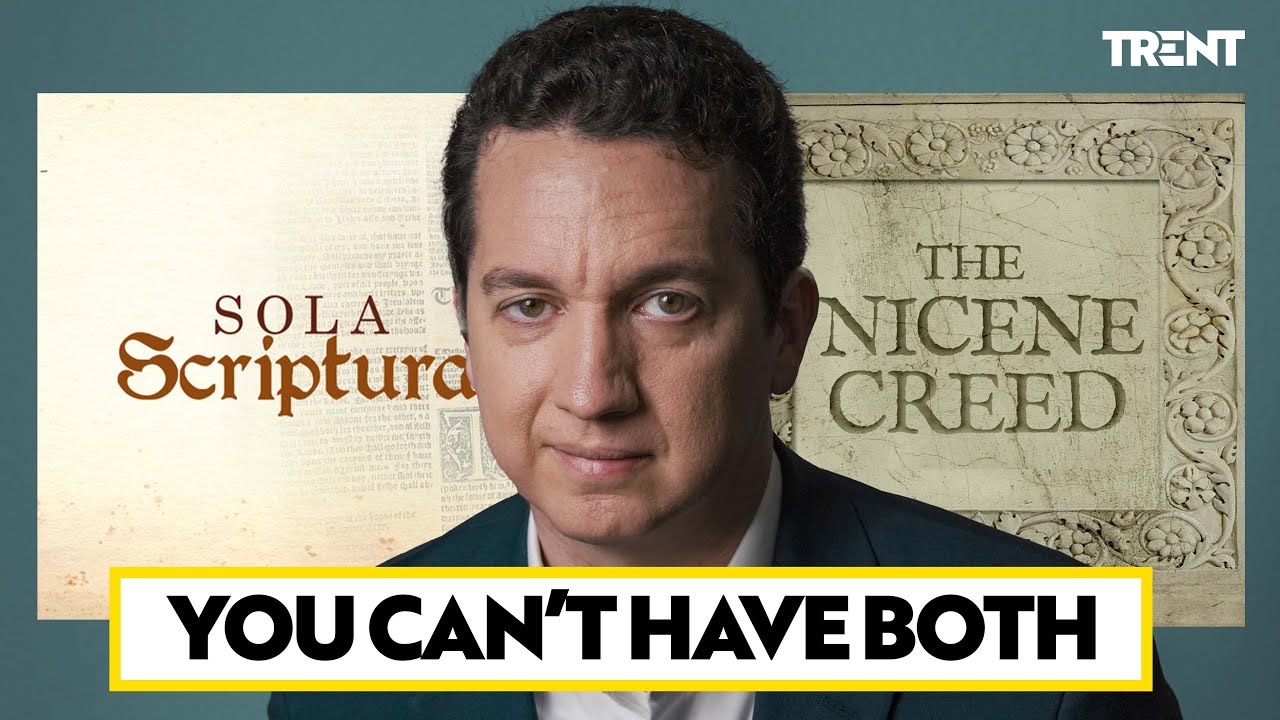
of scripture two even if it did even if that decree was legit the Christians for the next 1,100 years up until and even after Trent did not act like the church had made a binding decision uh but how can we use this as as a as a defense for the Catholic faith well it simply shows that Christians were not dying they were not in a hurry to have an infallible Cannon because the life of the church went on and so I find it as a problem how we're supposed to practice Sol scriptura if we can
have this almost carelessness throughout centuries of some books leaving the the Canon or some books entering the Canon that are not supposed to be there this is a problem I think for Sol scriptura but we need to stop making these simple arguments because they're just going to backfire and you see how Dr why is able to make these very true but very good arguments against Catholic faith because we're setting ourselves up for failure if we keep arguing like this so just wanted to make this video I hope you enjoy I hope you leave a like
And subscribe if you enjoyed and share this video with others thank you [Music] [Applause] [Music]










![The Errors of Dispensationalism [Scriptum #4.3]](https://img.youtube.com/vi/0K1D5bvI3Wc/maxresdefault.jpg)