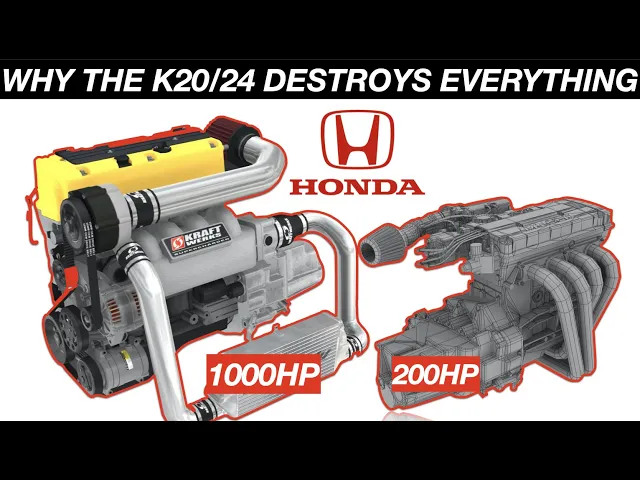
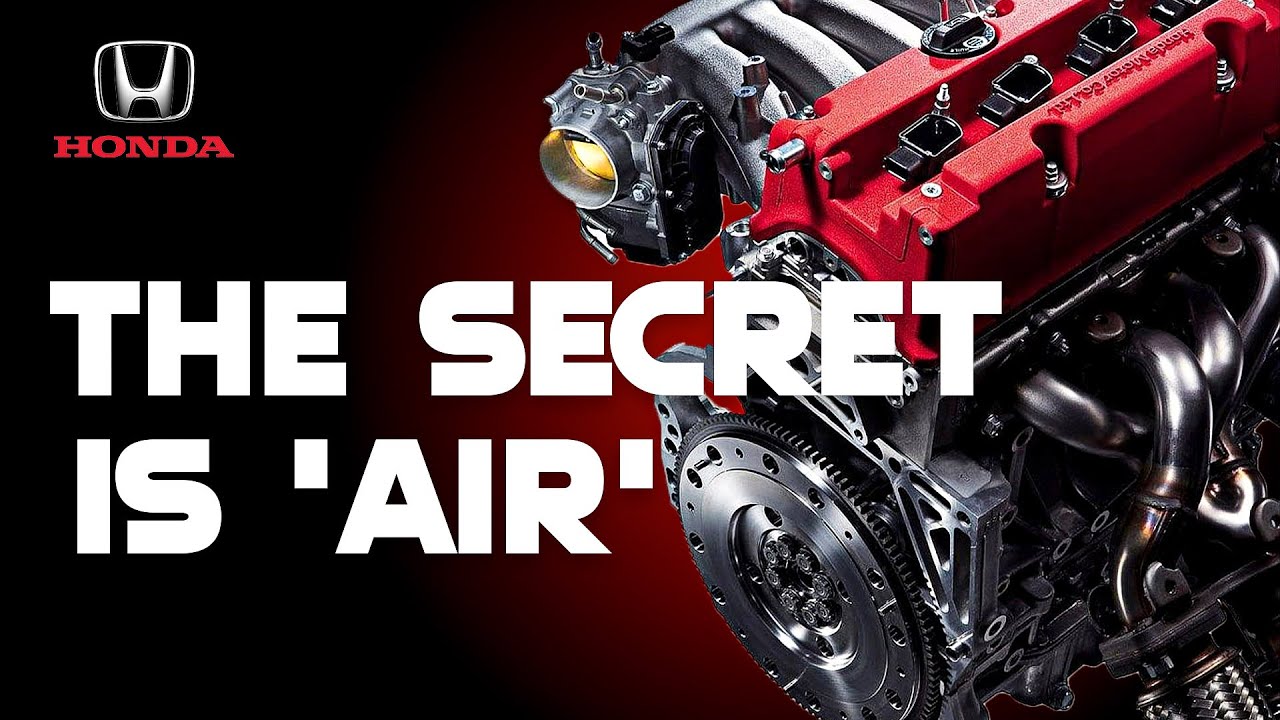
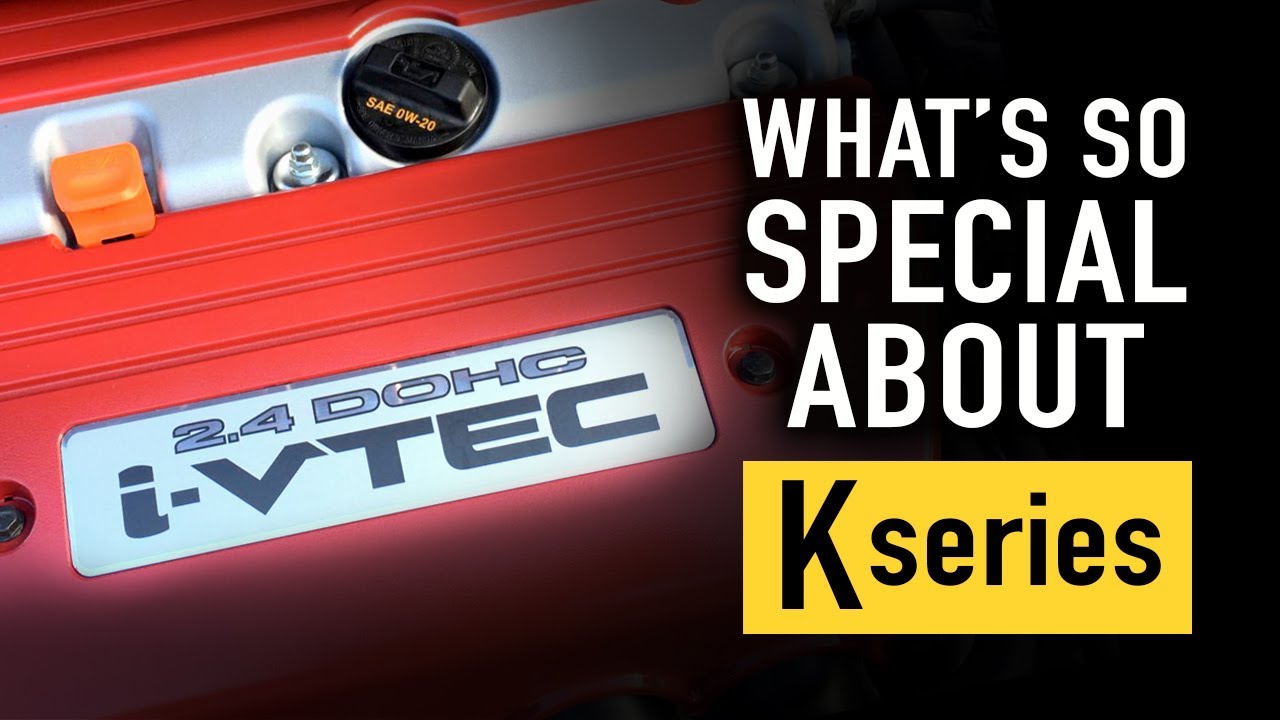
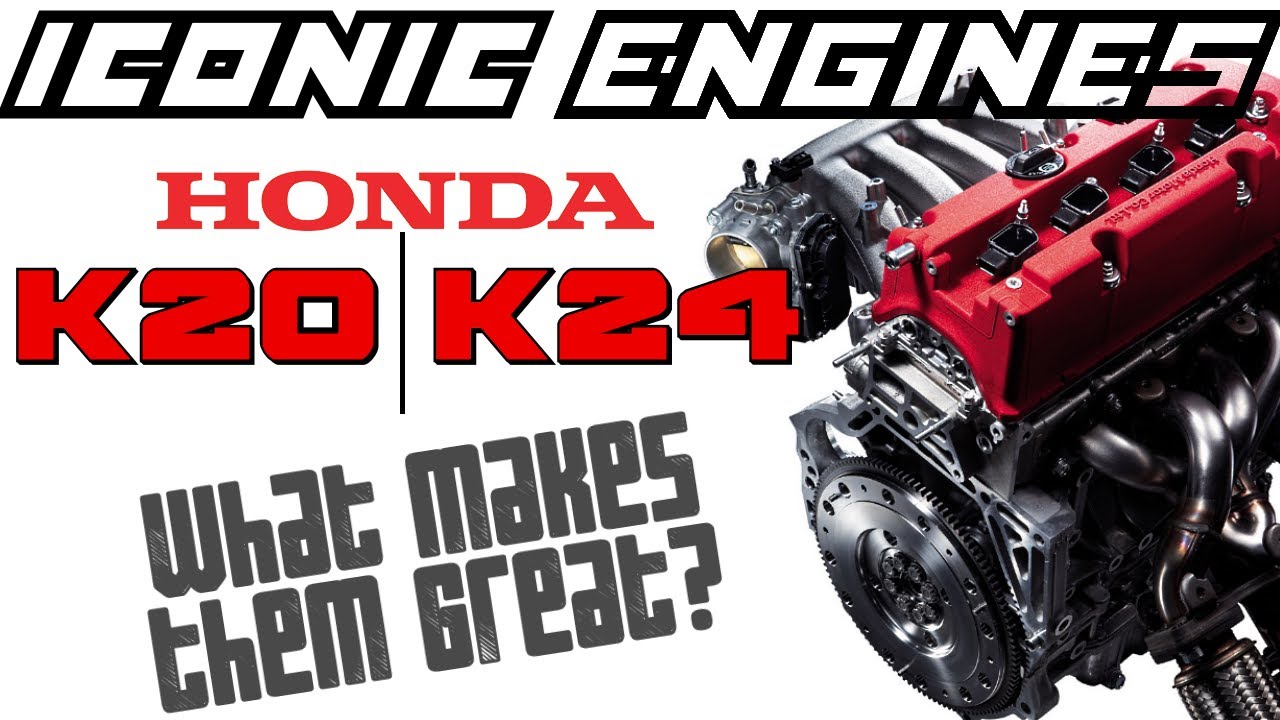
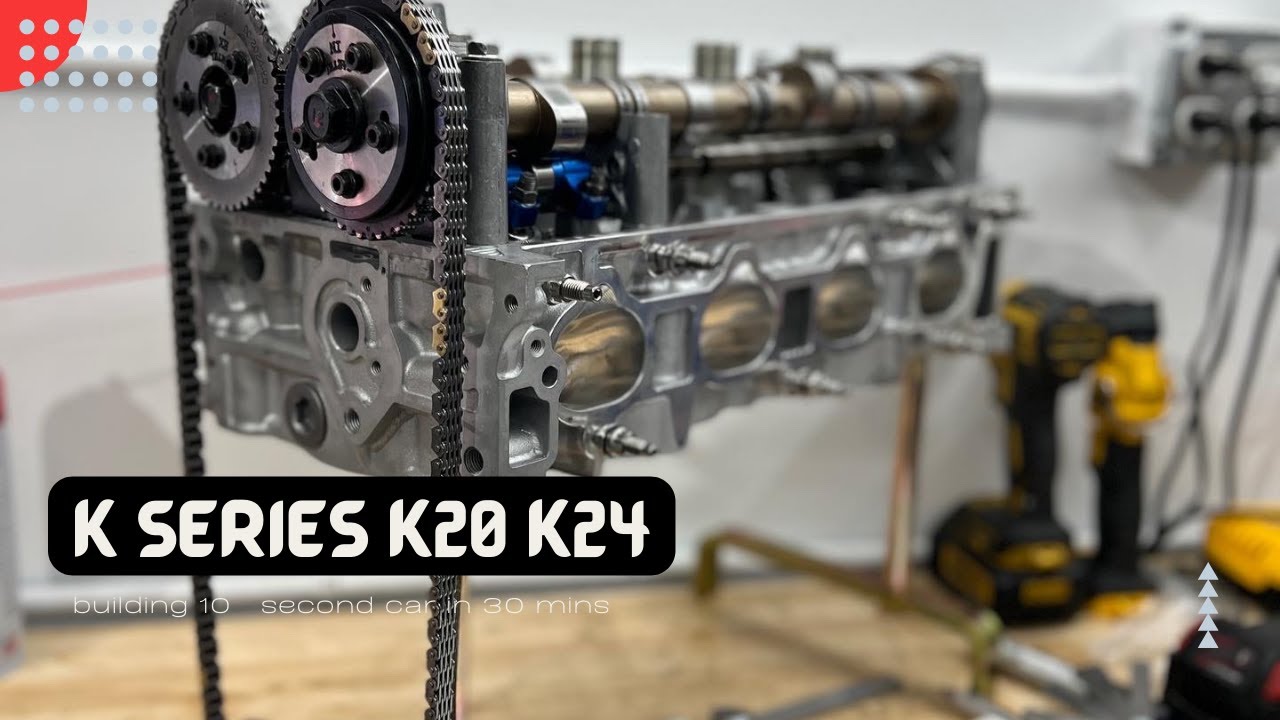
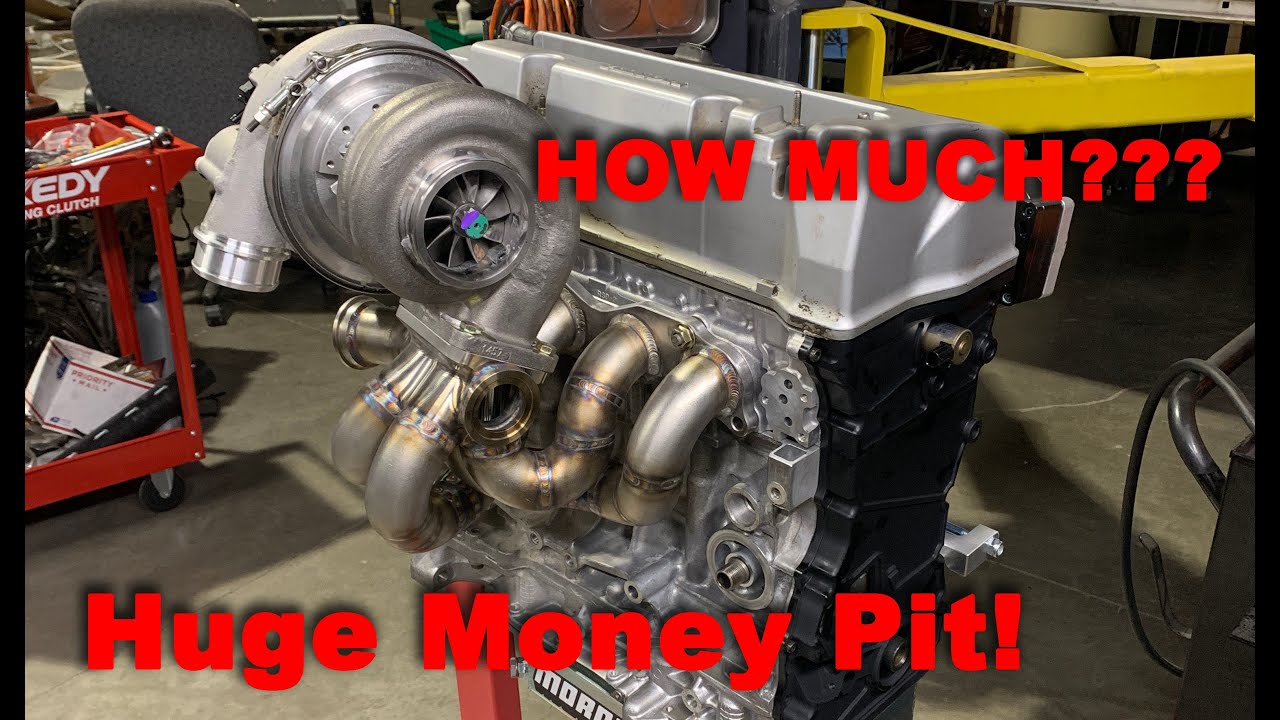
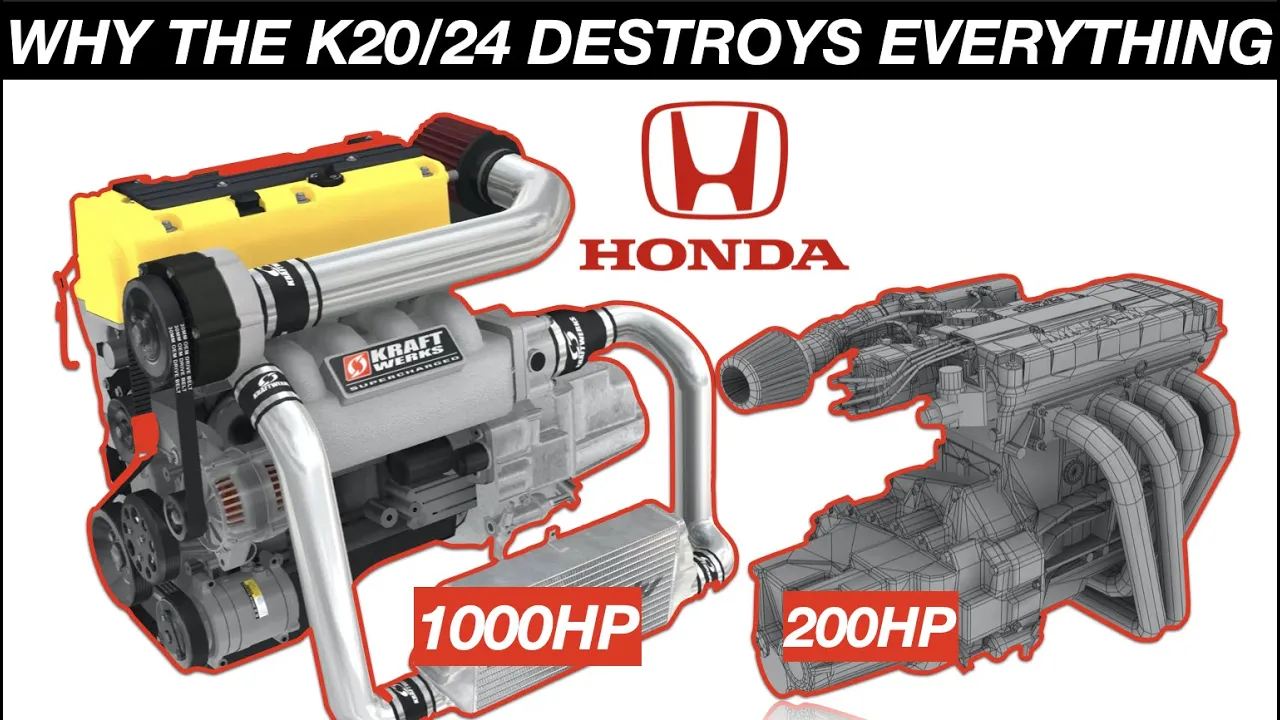
the honda k series one of the best bang for your buck inline four-cylinder engines probably ever and for a good reason the honda k series brings together two main features of earlier honda engines the high revving nature of the b series b16 and b18 engines that gave honda such a legendary reputation but also larger displacement and more torque gear power bands similar to the h-series engines like the h-22 and h-23 what the k-series engine accomplishes is the ability to make very good naturally aspirated and turbocharged power wide availability and proliferation across many vehicles and heavy
aftermarket support to retrofit these engines in just about anything today on explain we will dive into what makes the k series so damn good [Music] the year 2000 saw the introduction of honda's new k20 engine which phased out the legendary b-series engine k-series engines have key differences from the b series first being that it has a timing chain versus a timing belt has direct fire ignition versus a distributor set up it has an intake manifold in the front near the radiator support versus nearing the firewall and the accessory drive is on the passenger side versus
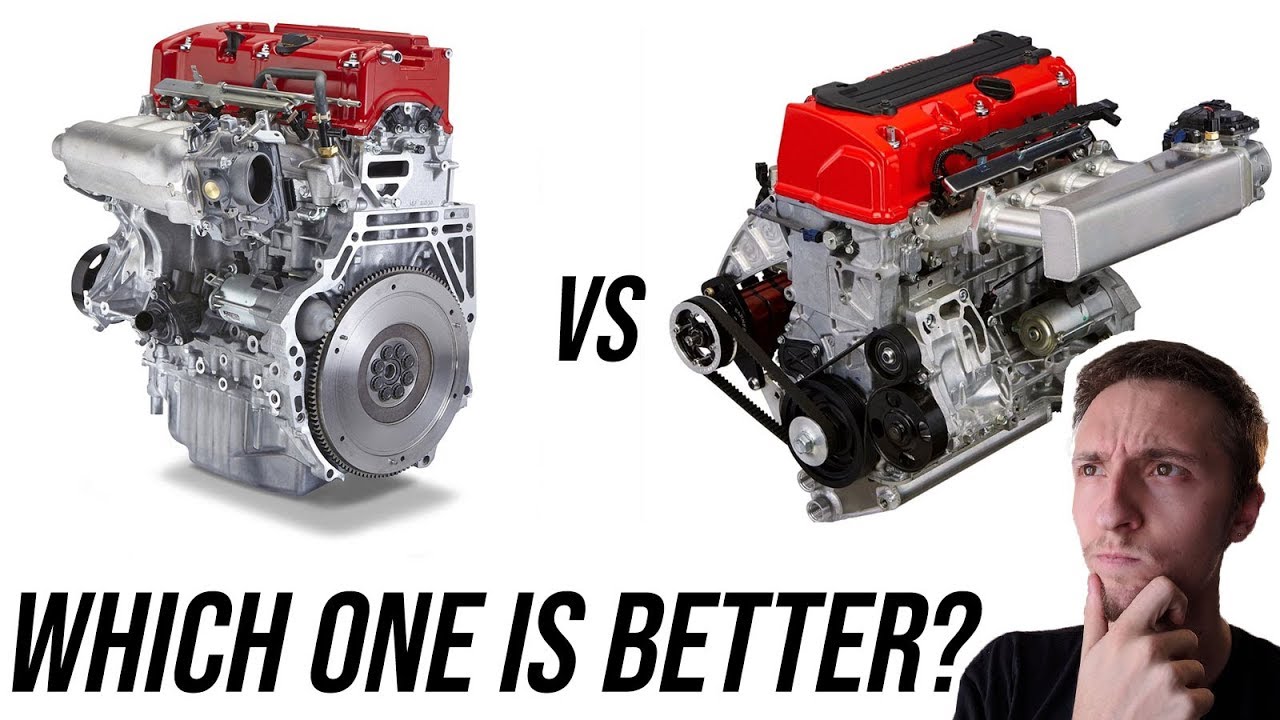
the driver side both engines are aluminum block and aluminum cylinder heads and not very little change in weight between the two the k20 has a slew of variations but all feature a 86 millimeter bore and 86 millimeter stroke with a 212 millimeter deck height with an awesome design with the crankshaft girdle when comparing the highly regarded b18c to the newly introduced k28 engine you notice some very important details first it runs significantly higher compression in the cylinders and also on a flow bench it outflows the b18c cylinder head at 316 cfm intake and 211 exhaust
there's more duration and lift on the vtec operation putting that cylinder head to good use with larger 35 millimeter intake and 30 millimeter exhaust valves versus the b18s 33 millimeter intake and 28 millimeter exhaust valves the k28 all around was just more capable but that's almost to be expected being the type r high performance engine and it has a larger displacement as well what's more important is the power you can squeeze out of the k series engines in the cheaper format the k28 holds a large premium since it was never released in the states here
we got the k20a2 the a3 the z1 and the z3 all these aren't built equally and here's the breakdown first the k20a3 found in the rsx base and ep3si is regarded as the least performing k series of all since it has lower compression of 9.821 doesn't have actual vtec only has variable cam timing for low end torque and red lines at a disappointing 6800 rpm it's a good building block to piece together but everything you'll swap on can be found in the k20a2 the k20a2 was found in the rsx type s from 2002 to 2004
and has a much better cylinder head flow with the iv tech on the intake and exhaust for more lift and variable cam timing that extends to 50 degrees of range stronger connecting rods and higher compression of 11 to 1 giving it 200 horsepower stock and there's plenty examples that have been turbocharged with proper tuning the fuel system a clutch to make 450 to 550 wheel horsepower fairly reliably and since it doesn't have the balance shaft oil pump it can push some high rpms the k20 z1 found in the later rsx type s has battery factory
camshaft for 10 horsepower bump but are almost identical to the a2 the k20 z3 is also a very good contender as it's found in the 2006 to 2011 honda civic si high flowing cylinder head just like the k20a2 but has the rbc intake manifold and throttle that is dyno proven to produce much more top-end power at the expense of some low-end torque the only drawback to this one is it does have the balance shaft oil pump which you're going to be limited to rpms less than 8 000 typically if you want to have reliability now
as solid as the k20 is bigger is always better the k24 is the big block chevy of the honda world it has a 87 millimeter bore and 99 millimeter stroke making it under square and also has a taller deck height versus the k20 by 19 millimeters there's a slow variance of the k24 but let's keep it to the bread and butter the k24a the a1 a2 a4 a8 and z7 the most common k24 you can find is the k24 a4 from the 2003-2005 honda accord which is shared with most of the odyssey and element these
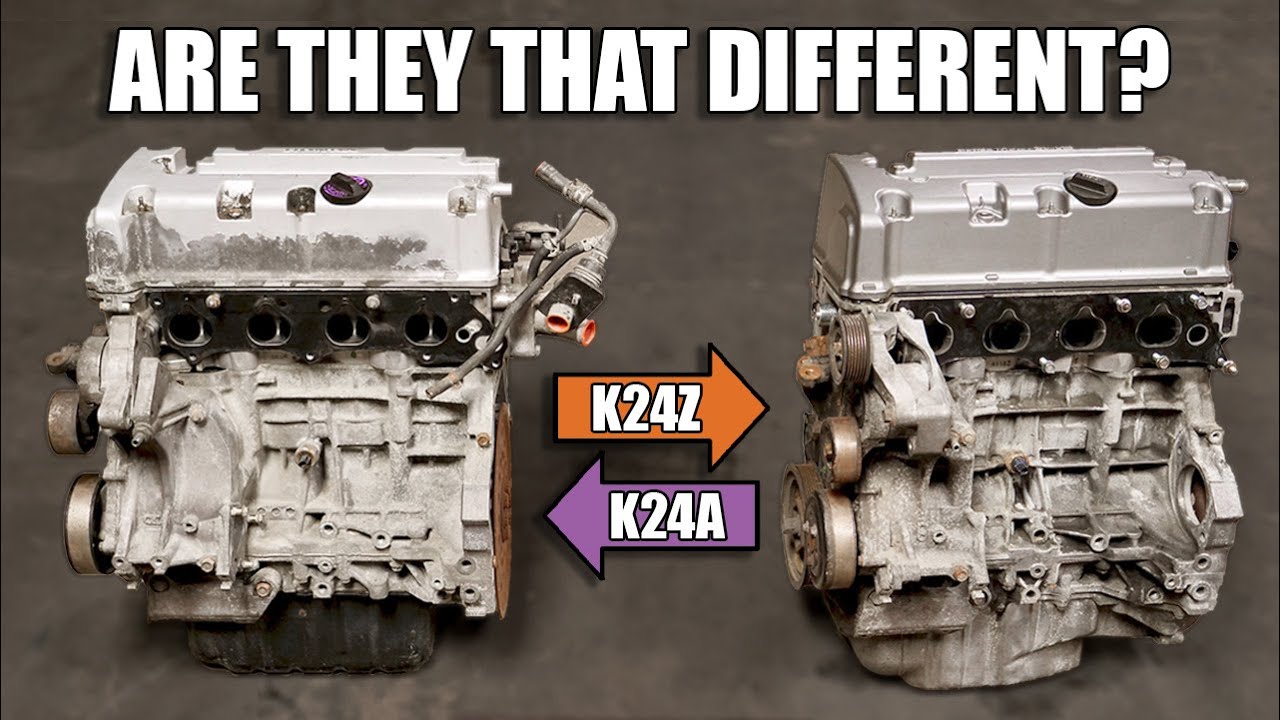
are some of the cheapest k24s you can find but with some issues the factory head doesn't flow nearly as well as the k24a2 variant found in the tsx and doesn't have true vtec or piston oil squirters also if you plan on swapping to a high flowing k20a2 or z1 head the k24 a4 pistons don't have the proper piston to valve clearance forcing you to swap pistons and rides to either factory tsx or aftermarket pistons and rods the k24a2 found in the 2004-2008 tsx is a really good budget k series build candidate especially the o608 which
got better factory camshafts and they can swap the typefast k20a2 head directly on without valve clearance issues they come with factory oil squirters which depending on who you talk to is either a plus or minus downsides in the k24 a2 is the balance shaft oil pump which is similar to the k20s which if you want to push high rpm you're going to need to swap that out to the k20 a2 pump and the vtc gear is limited to 25 degrees of movement but modifying both concerns make the k24a2 a solid choice the a8 and a1
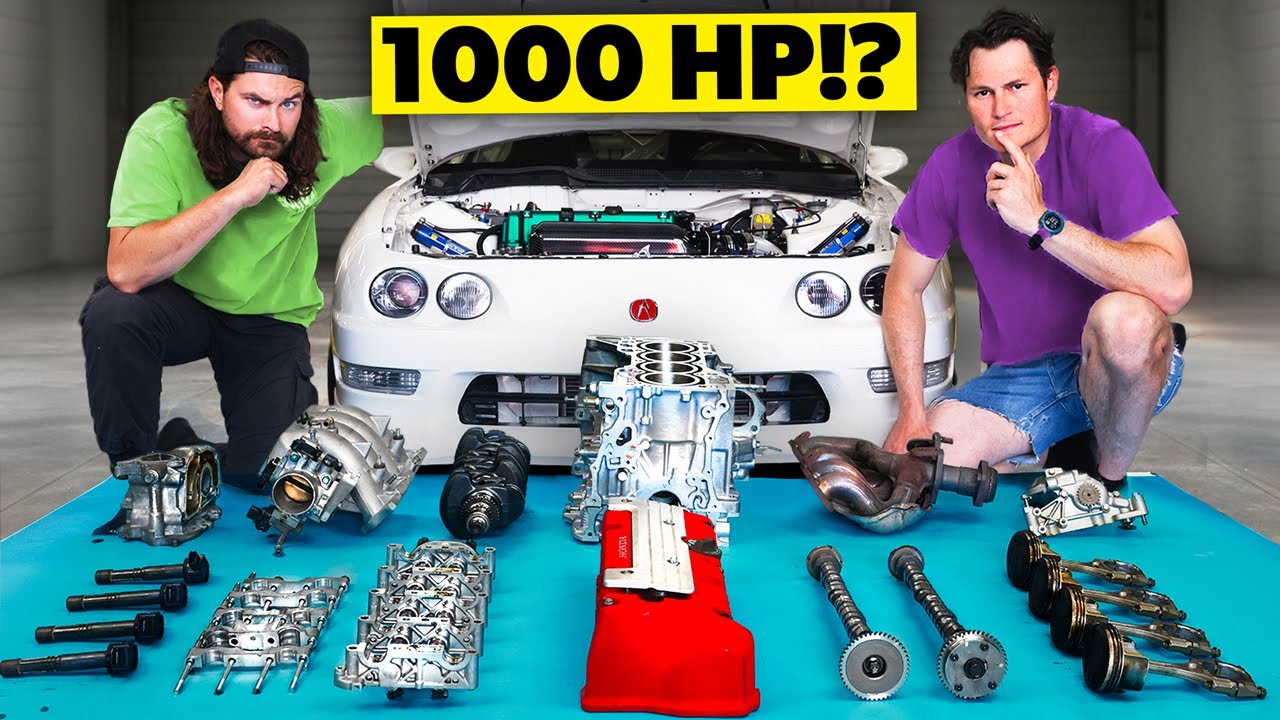
are both good candidates to swap piston and rods and do the k20a2 head swap and oil pump and vct gear and make six to 700 horsepower pretty damn reliably the k24 z7 specifically found in the 2012-2015 civic si is unique because it has a cylinder head design where the exhaust manifold is integrated into the head this helps clearance in the back of the engine especially for swaps but it limits the power output it's not really the ideal engine you want for any swap especially it should just be left inside of the civic aside it came
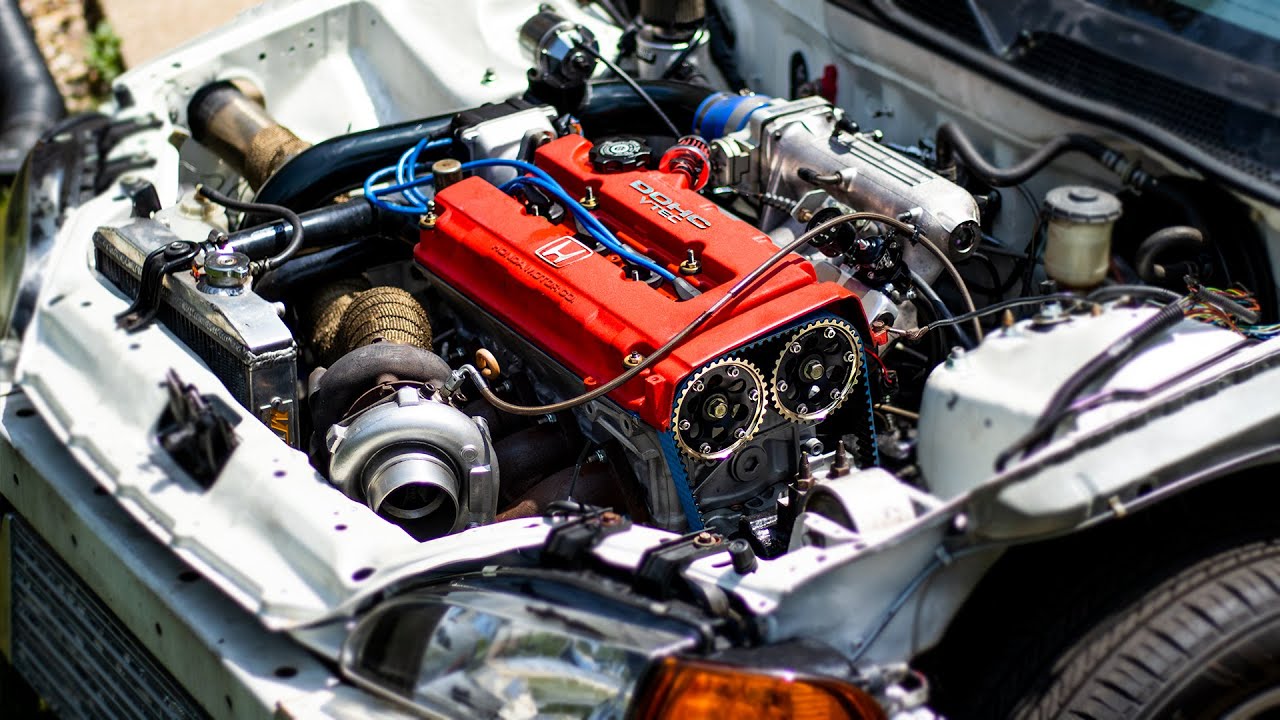
in now where case your engines really shine are going to be in turbo applications now even in naturally aspirated applications they are very very potent usually going over 100 horsepower per liter in very basic bolt-ons and in race applications you can have 120 150 horsepower per liter now in turbocharged applications since k-series engines are naturally very volumetrically efficient when you strap a turbo to these things they get absolutely ridiculous now when it comes to reliability the k20 and k24 are very very stock remember that the cars that you pull these engines out of for swaps
typically have over a hundred thousand miles and then they're still prime to actually build on now you also have to make sure that these have been well maintained because sometimes because it's a honda accord or an older age honda product some people tend to not really take care of them but it's really it's not the fault of the engine usually is the fault of the previous owner now in that same regard hondas really don't have a lot of issues especially in the high horsepower area once you stay below 500 wheel torque that's really where the
connecting rods on the k20 a2s and the k24 a2s it's usually where they start to go bad and then you have the the balance shaft oil pump which if you start to hit a lot of rpm with these things without the proper valve springs and and then especially with the stock oil pumps they really can have some nasty side effects but other than that i mean i believe the k series is really the rebirth of the b series everything that the b series did good the k series just carries that on and it does it
a little bit better because of technology and you just have advancements in general so overall the k series is absolutely goated the k-series will always be the go-to four banger for any type of swapping especially for hondas