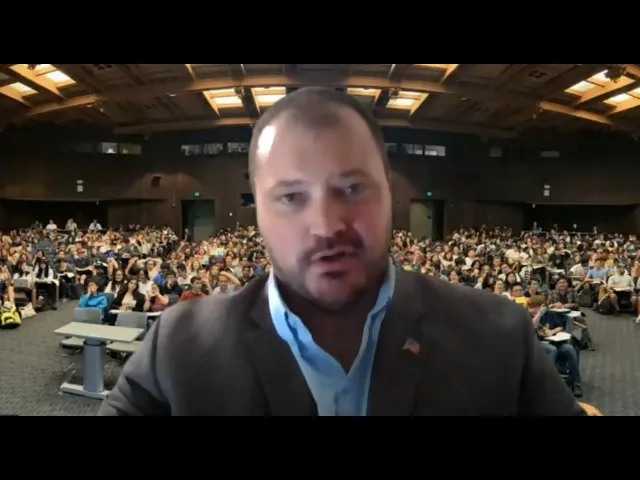
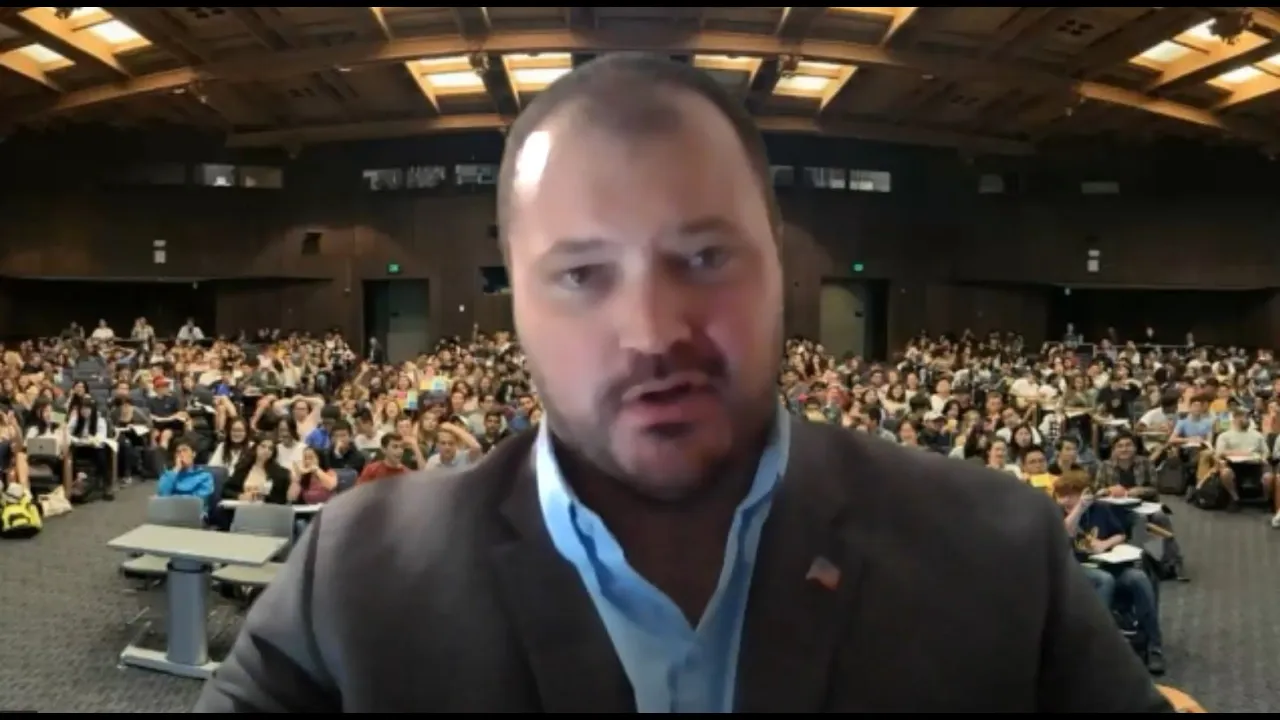
welcome to Florida Gulf Coast University I am your professor Kyle Pusa with today's criminal justice lecture in module three uh for this course objective reasonableness and that's going to be one of the big pieces of the puzzle in this criminal justice equation right and the case Focus Point here is going to be Graham versus Connor from 1989 that is one of if not the most important uh Supreme Court case law in criminal justice uh barring Terry versus Ohio we talked about last week um Graham versus Conor when you hear those words Graham or Graham versus
Connor I don't need you to know the case citation the year but that that is you should to explain what that case produced and what what it what it what the product was all right all right take notes uh we'll have some questions at the end if we have time off the recording but definitely post your questions and the FAQ board in canvas I think I've had one so far this term so check that out if you want to all right and we are recorded right now we are live all right the key concepts for
this and this is a pendulum this this the Law changes folk the law is living it's alive and this this this topic explains exactly that so Graham versus Connor that's obviously what we need to be focusing on here with that the use of force which is throughout my career that's the terminology but most recently we've added the terms response to resistance so it's not just officers proactively using Force it's always responsive to subject resistance so now it's the long title use of force in response to resistance but uoff you might see that uh RTR but
uoff is kind of the the uh not the UFO but it's UF use of force respon the resistance all right the objective reasonableness and the test that's not a or that just you might see o and caps that's means objective reasonableness very big term Graham the case the three-prong test and the factors needed for that test the totality of circumstances another big buzzword and the test associated with that and then forceable felonies so there's not that many in terms of number uh but we are dealing with quality over quantity folks all right so why is
objective reasonableness important every encounter can escalate into a use of force incident every single one every single one use of force decisions are the most serious choices criminal justice officers are entrusted with bigger than an arrest decision but a decision to use physical Force it's a crime to commit battery upon someone but this is a justifiable battery justifiably using force and there are certain laws and and this is the most serious of choices criminal justice professionals must be very familiar beyond the media's slant and the bias that exists and the ignorant Court of public opinioned
in reasonableness and objective reality so first first week we talked about objective reality last we talked about reasonableness well we're putting them together what we got here all right objective reasonableness it is imperative to have a sound understanding of the fundamental legal Lines within this Dynamic and these incidents body warn cameras incredibly BWC incredible tool technology helping and assisting us it's a double-edged sword while it is an incredible incredible uh tool an asset I've gotten out of more complaints using that because it's it tells what what actually happened not their side of the story but
it's a double-edged sword because it only shows what's in that box what's on that screen what's capture of that camera lens what that microphone hears not what I see my head on a swivel not what I hear not the totality only captures what's in there and we're using so much of that the media today government officials using so dependent upon that even the prosecutors certain certain districts they're only Prosecuting things like DUI if it's on camera if the field sobriety uh tests on camera which that is not correct we cannot become so dependent upon technology
that we disregard when it doesn't work use of force respon or resistance there's a buzz term for you it's the physical effort required by an officer or person to compel compliance from resisting subject it says officer or person because there's a provision in Florida State Statute that anyone I summon I ask for help if I'm struggling with somebody on the side of the road and you drive by and you stop and you run over to help me and you say hey can you my help and say yes help thank you get his hand get his
other hand in that moment I have deputized you and extended my lawful Authority onto you as well as your protective from imunity your protected or qualified immunity you're protected by my agency you have the same power I have in that moment to put this subject under control so that use of force used by by by the public the off are not liable for that and and and the subject is not liable either as long as it's within reason all right what black screen you know that means objective reasonableness Graham versus Connor generally the use of
force today's response to resistance is limited to what an objective officer believes is reasonable and necessary big words reasonable and necessary to overcome resistance and or compel compliance from someone without the benefit of hindsight that is the most important piece of the puzzle right there without the benefit of hindsight reasonableness is in accordance with reason fairness Prudence being being supported or justified by what is appropriate for the facts or circumstances objective a judgment not influenced by personal feelings or emotions or opinions considering only the facts at hand so in this instance we're putting the two
together without hindsight that's the that's that's the underlying hint there is without hindsight okay so the test for objective reasonless is an evaluation of an action or a decision not just use of force an action or decision evaluation that can be considered reasonable and necessary to another prudent officer if given the same set of facts and the totality of circumstances known at the time without the use of hindsight that's why without use of hindsight it's in red even okay that's the biggest piece of the puzzle objective reasonableness this foundational principle can be conceptualized by asking
just one question and looking at one photo are you ready which gun is real there's no time reasonal what is reasonable what is reasonably considered a a deadly weapon well the court has ruled that this can be an everyday glass bottle stick or a pipe there's a case law from that citation from Florida's fourth district court of appeals car boat or other dangerous INR rality another Florida case Brian that's 2004 these are these are more recent folks a small common pocket knife all right that's another Florida case all right so this guy with a knife
it look like Shadow character has a pocket knife but still he's far enough away right waving a club waving a club while making threats through a closed window of a stopped car another Florida case so there's some plus sign soon as qualifiers all right consider the totality of circumstances okay it changes everything when you all you're looking as one thing those subjects when you see the totality you see you're stopped he's already bashed your window about to break the glass you see how close he is to you uh and you see obviously that looks like
an an officer there in that in that photo that he's squaring up against an officer with a club okay there's the guy in the corner with with the knife all right and could you target could could you use a firearm and in self-defense from that individual from that distance I I I I I'd have to question that one uh but what about that see the totality of circumstances because a knife but the totality of circumstances that's the key the totality of circumstances test is is a method of analysis involving the consideration of all Rel factors
instead of focusing on just one specific factor or an isolated set of details play which one's a toy Graham versus Connor more this is more case law all right the test for reasonableness under the fourth amendment is not capable is not capable of precise definition or mechanical application police officers are often forced to make split-second judgments in circumstances that are tense uncertain and rapidly evolving about the amount of force that is necessary for a particular situation the reasonableness of a particular use of force must be judged From perspective of a reasonable officer on scene rather
than with the 2020 vision of hindsight reasonableness of a particular use of force must be judged from the perspective of a reasonable officer on scene not with 2020 vision of hindsight the calculation of reasonableness hold on here my my computer is freaking on uh the calculation of reasonableness must embody allowance for the fact that police officers are forced to make Split Second judgments in circumstances that are tense uncertain and rapidly evolving by the amount of force necessary for particular situation sounds like a repeat of the same thing why' the court repeat itself well because that
man I'm sorry folks this technology is playing games because that in the the the center top that is from Kessler versus Hughes 2018 whereas that to the right side of the screen is the original text from Graham versus Connor 1989 so Graham standard set the standard in 1989 but then the Supreme Court reiterated it almost verbatim in 2018 and now it is a Doctrine now it is now it is cemented and it's unchanged able it's case law just as strong as statutes regulation because it's been not just referred and held once but now twice reasonless
depends on the totality of circumstances and not isolated facts did that appear to be a gun how did they hold it what was happening paint the picture folks to it of circumstances body camera doesn't do it okay is a taser a deadly weapon the X2 got side by side cartridges for double double shot or two subjects how about an expandable baton the public is not trained in the deadly force Target zones for either of these devices we are police officers are trained in deadly force Target zones for both of these less lethal weapons on a
continuing annual basis if anyone takes one of these tools from an officer during their resistance or tries to it automatically escalates it to a deadly force situation there are the target zones for both green is a less lethal Target area which we're intended to to to make aim for in strike uh it's minimal risk of injury to the subject all right yellow is likely produce a non-serious injury okay so uh the the three color tricolored uh mannequins that that diagram uh those are the expandable baton whereas the um the just red and green that is
the taser right so red are deadly force areas high risk of serious bandry lifetime impairment uh varying by weapon notice the red is different for the different different front and back and different tools different weapons the public doesn't know this the public who takes a taser from you might very well aim it at your face the back of your head okay e in either case they were deadly force baton the same way they don't to not teach in the back right officers must articulate subject factors that led to their decision professionals must be able to
apply the gram tests and consider the facts the facts of objective reality and the totality of circumstances there's the gram factors all right so on one side you have the subjects The public's forth human interests what kind of force was used the type of force the amount the foreseeable risk of injury okay what was intended what actually happened versus the government's interest the crime severity the threat the level of resistance that's the Grahams three-part test right there crime severity threat and level of resistance okay scenario Focus Point documenting Dynamic details I don't remember the exact
case cuz there there too many of them but this is a looks like a drive-thru I think this was Atlanta area a couple years ago um this was an instance where police officer on the left uh in purp looks like purple dark black or blue um uh shoots subject on the right wearing blue uh in the back as he's walking away or running away um and it was a big case because they wanted to charge his officer with uh murder because he shot the and the back is running away well what do you see there's
the officer okay yeah he he's opening fire what do you see you you see this glow so this guy's either got a gun or he's a taser and he's firing at the officer who knows but he's not just running away he's doing something while he runs away all right here's a this is hypothetical now this isn't this isn't real footage but this is a a similar scenario all right the officer running after somebody and then the guy runs and points something the officer is going to move to the right get off the X officer going
to lay down some some some pressive fire what did that guy hold up well it looks like a it looks like a now it looks like a phone but how's he holding it looks kinding like a finger with a trigger um if you're running you're resisting active resistance and maybe you're running from a grand theft autum you're running from a murder scene so we can the gram Factor goes up um but that off were chasing him perceived in that moment as he refusing to follow his orders to stop that someone the person average person running
is going to run they're not going to run and look back and reach back and point something at you while they're running unless they're trying to shoot you so that shoot would have been probably Justified I mean you have to how all about how the officer articulates what they were thinking in that moment the totality of circumstances you got to see the big picture not just what's on the body camera because this officer's body camera is going to be pointing at that white SUV over there it's not pointing at the guy so it's what you
have to paint document the details okay is that justified could be here we go 911 hello yes there's a subject with a looks like a rifle like AR15 seems a scary gun here uh send the police Reasonable Suspicion we have that for that well Florida statute 79025 parent 2H says you were allowed to open carry a firearm when you were fishing hunting or camping or going to or from set activity the law does not specify where that line to her from is going I'm not going to say one or the other but it's very vague
all right it's a presumption of innocence and then there are certain agencies think Jacksonville there are guys that that went like this fishing with these ARS this not the exact a photo fishing with the a 15s and they want to get the cops called them because they want to get on Cop Block and get a lawsuit right objective regalness how were they what were they doing with a rifle these guys are just exercising their sacramental rights apparently and and we we can look back at at the Trump assassination and why didn't they shoot well we
can't use hindsight all the media does but we can't do it in that moment and we're going to unpack a little more of that in a minute right The Rules of Engagement um the the snipers quoted and the agency's legal team released statement quoting the Graham factors that agent that that fired that that shooter um that that agent is absolved from liability because of the gram factors that now they we can talk about why they lost sight of whatever that's that's separate we can't judge why the agent took the shot or when they took the
shot because it's in hindsight right well what why why are they why are there a bunch of people going shoot going going fishing with these these rifles like that why why is it going why what's happening well there's a letter of the law the intent of the law so the letter of the law says in that statute that you can go gun to or from camping fishing and hunting did the intent of the law for you to carry an AR-15 uh rifle high power rifle you're fishing on a pier for some sheep's head I don't
think so I wasn't there when the law was written if you're hunting and you want to carry a sidearm with you okay you're camping you want to keep a sidearm for you for protection from bears plus a camp Kent is your uh dwelling for the evening so you're even further protected for the castle doctrine getting ahead of ourselves talking about that another modules okay and even fishing you on a boat that's that's that's conveyance so the the the law this hasn't really been ironed out in totality but there's a difference between the letter of the
law and the intent of the law this slide folks this is where criminal justice is a science love it the news headline in 2021 was the bloodiest and deadliest year for Americans to date 1,147 people were gunned down and killed by the hands of the police during arrest efforts that was the news headline well there's a difference between fake versus fact and this is why I put my professor head on and actually unpack it and try to disprove it or just look and see what the actual facts are versus before I make an opinion so
I get my pad out start doing some digging Bureau of Justice statistics that is the federal FBI's Justice Department's Clearing House for stats are there 2021 statistics all right same year there were that that was a correct number there were 1,147 fatal uses of force by police uh so people that were that died in uses of force and since the police right there were 4 million over four and a half million uh uh arrests in the United States it's an incredible number so about about half of those just over 50% involved the use of force
okay that that's that's that's that's over two two and a quarter million use of force arrests so there's that many use of the force in 2021 but 1147 were fatal this news headline really sounded a lot I mean no no no all lives matter and there's no there's no nothing to justify a death unless it's justified in self-defense but that's a that's a very skewed headline for the number of total so there's one out of two about one half of every one out of two of arrests involve a use of force but one in almost
4,000 arrests with use of force are fatal well that that paints it a completely different picture than that news headline furthermore I actually did some studying in 2021 the CDC reported the 48,000 suicides in the United States so how many of those were those how many fatal uses of force really suicide by cop attempts and I actually did some studying uh empirical studies uh with Dr Pauline out of University Central Florida uh in Seattle Portland Columbus and a handful other police departments I didn't do the research I just put it all together he did the
studies a year at a time each of those departments um how many nonfatal uses of force who actually failed suicide by cop attempts the officers may use the taser and and and and prevent the suicide by cop by by using Force but non-lethal use of force and that stat gets rushed under the rug there's no tracking of that so it's a way to disprove that headline the media it's made with bias folks it's slanted there's an agenda all the time that number one in almost 4,000 that's very different than it was the bloodiest year for
Americans okay it's rhetoric all right this is where what I did in my uh my studies empirical reports uh I wrote statistical codependency of use of force and suicide by cop I actually did eight Department study for several years uh comparing the the use of force uh rates the crime rates the 91 call rates um use of force percentages as well as the the the Fatal use of force ofer involved shootings um but also the suicide rates I compare not just the Justice statistics mental health statistics I look at how many suicides were in that
area there's no real attempted suicide stat that doesn't exist all we can do and a lot of it's protected by Hippa so um it's very difficult but it pokes some holes in all these trends of these use of force reports and statistics all right here we go again oh sorry pause your politics please focus on the facts here we all saw this whether you saw it live you saw the days following we all saw on TV right before our eyes an attempted assassination of a president former president and presidential candidate okay this is the picture
the media is telling you who did it this this this child here looks like is who pulled off uh came within a quarter of an inch centimeter of hitting the president's Temple versus his ear he turned the last second by the grace of God okay but why we must ask why are they not showing images of what he actually looked like when he did his his recording of the manifesto of his his YouTube channel or whatever why are they not showing what he actually looked like that's a very different it's the same person it's a
very different image that's a that's a 20-year-old that's an adult it's a very different different slant but the media is has got an agenda folks they're bias right you've gotta weed through fake and look at the facts right they will spoon feed you they are spoon feeding this country with what they want you to know there's so many much more to it out there think of it like the body camera they want to show you they want to carve up one piece of whatever's on that screen and feed it to you as if that's the
that's the real deal the brass tax how often is it a a longer footage or it doesn't show the whole picture or what's happened outside of that camera there's a lot out there so we all got to see uh him rise up and and I tell you whether you love him or Lo them he's the same authentic person every single time I tell you it's I love it I love it love it all right so key Concepts right talking points after the recording ends because I want to get into something all right so Graham versus
Connor and I'm GNA probably move the memos to after the recording just to make it shorter recording uh use of for sponsor resistance the objective reasonless test criteria gram three prong test factors to circumstances test criteria forceable felony you should be able to identify and explain this is very important if you've taken notes on anything take notes on this you should be able to identify and explain objective reasonableness and totality of circumstances very important those two things all these things all right additional items you need to take note of in the module there's all right
watch flaty talks Graham versus Conor if you not watched them yet I encourage you do it really explains why this case became what it is and this is probably the best one they offer it's not that long it's really good uh read in the module is the statute 7765 that's Law Enforcement Officers use of force in making arrests also 77608 force will feling these are short short statutes folks just some some see what the actual laws there's no textbook but the laws we look at all right and know the criteria for forceable felony all right
may not need on this quiz per se but you will need it and you will see it again all right so no assignments this week overtly left you more Breathing Room more critical thinking space right take notes rewatch this if needed study for this quiz all right manage your time it's a long episode this week good friend uh Captain Dave dpri FWC it's long it's almost an hour and a half it's not longer if you need to cut it up cut it up all right or watch it all at once it's a great episode some
great talking points the entire time I want you to stay engaged stay with me okay so some Breathing Room don't get comfortable watch the Brooks case study videos each week they're going to start picking up and start chugging on those course certifications all right thank you very much you should be able to explain and identify objective reasonableness and totality circumstances if you have any questions you know how to ask me and that is going to be the end of the recording we'll see you next time