Ismael, the firstborn of Abraham and Hagar, emerges as a key piece in the intricate puzzle of Judeo-Christian and Islamic Traditions. His story finds solid roots in the Old Testament of the Bible, specifically in the Book of Genesis 12:2. In this passage, God, in direct dialogue with Abraham, proclaims words that resonate as Eternal Divine promises: "I will make of you a great nation, and I will bless you, I will make your name great and you will be a blessing.
" Here, God is outlining a grand trajectory for Abraham, promising not only a numerous Offspring but also a blessing that will transcend Generations. This Promise is crucial to understanding the context in which Abraham and Sarah lived. Picture this scene with us: Abraham and Sarah, already old, carrying the weight of years, received the Divine promise of a remarkable Offspring.
Additionally, Sarah faced infertility since youth, making natural conception a distressing improbability. The prolonged weight generated anguish. Abraham and Sarah, in moments of uncertainty, questioned whether the Divine promise would come to fruition and how God would overcome seemingly insurmountable limits.
In the face of this anguish, Sarah suggests a human solution to fulfill the Divine promise. She proposes that Abraham take Hagar, her servant, as a concubine, a decision that, at its core, reflects impatience and the human attempt to hasten God's plans. The story takes a decisive turn when Hagar, following Sarah's guidance, conceives.
In the time of Abraham, societies were characterized by nomadic life, where family ties and marriages held fundamental importance. In this context, practices like using a servant to conceive children were cultural responses to imminent pressure to ensure descent and secure family inheritance. Abraham and Sarah were immersed in this cultural context facing the Divine promise of a grand Offspring in their old age.
Sarah's impatience, confronted with persistent sterility and cultural expectations, leads to decisions that would have disastrous consequences. Sarah's suggestion for Abraham to take Hagar as a concubine, seeking to fulfill the Divine promise of a numerous Offspring, reveals not only cultural pressure but also impatience that permeated the prolonged wait. At the height of tension, Sarah's impatience reaches a critical point, leading her to threaten Hagar with death.
Feeling oppressed and displaced, Hagar, in an act of desperation, flees to the desert in search of relief. This episode vividly illustrates the adverse consequences that can arise when we allow impatience to dictate our actions instead of trusting in Divine plans. It was in the desert, in a moment of loneliness and distress, that an angel of the Lord appeared to Hagar.
This Divine messenger brought a comforting and prophetic message, revealing that the son Hagar carried in her womb would be named Ishmael. This Celestial encounter not only soothes Hagar's troubled heart but also highlights the importance of trusting in God's designs, even when facing dark adversities. After the intervention of the Angel of the Lord in the desert, Hagar not only received Comfort but also a prophecy about the future of her son Ishmael.
This Celestial encounter bestowed meaningful purpose upon the child she carried. The name Ishmael, meaning "God has heard," reflects the Divine response to Hagar's distress, showing that God not only hears but also intervenes in our lives in extraordinary ways. The story takes a new turn when Hagar, encouraged by the prophetic words, decides to return to Abraham's house.
This return reaffirms the family connection and marks the beginning of a journey where the Divine Purpose for Ishmael would begin to unfold. Upon returning home, Hagar finds an environment where Abraham's love for Ishmael is evident. Far from hiding his affection for the firstborn, Abraham welcomes Ishmael with love and care, recognizing him as a significant part of his life and the Divine promise.
This paternal love is further manifested when Abraham, in his quest for divine blessing, asks God to bless Ishmael. God, in his Infinite Mercy, renews his promise to Abraham in the Book of Genesis 17: 19-21. God reveals to Abraham: "Indeed, Sarah your wife shall bear you a son, and you shall call his name Isaac.
I will establish my Covenant with him as an Everlasting Covenant for his offspring after him. As for Ishmael, I have heard you, behold, I have blessed him and will make him fruitful and multiply him greatly. He shall father 12 princes, and I will make him into a great nation.
" God, in his Infinite Mercy, reaffirms his promise of a great nation through Ishmael. Through this firstborn of Abraham and Hagar, God continues to fulfill his promises, demonstrating that his Transcendent plan unfolds in unexpected ways. However, the Divine Journey takes on a new dimension when God reaffirms that Sarah, already old, will still conceive and give birth to a son.
Upon hearing this surprising News, Sarah internally laughs. The initial incredulity of the matriarch, born out of Decades of waiting, is reflected in the laughter echoing in her soul. God, sensing Sarah's laughter, inquires with love and understanding, "Why did Sarah laugh?
" Here we witness not only God's omniscience but his deep interaction with human emotions, questioning disbelief to transform it into Faith. The arrival of the promised son Isaac, whose name means laughter, symbolizes not only the Fulfillment of the Divine promise but also Sarah's spiritual transformation. The initial laughter of incredulity becomes the laughter of joy in the face of the manifestation of divine power.
The arrival of Isaac, however, is not devoid of family tensions. Sarah's initial rejection stemming from years of waiting and the presence of Ishmael, her previous son, adds complexity to family relationships. Ishmael, now bearing the label of the rejected son, grapples with profound identity issues.
Tensions reach their Peak when Sarah, unable to Bear Ishmael's presence alongside Isaac, demands that Abraham expel Hagar and Ishmael into the desert. In the vast desert, Hagar and Ishmael face the cruelty of loneliness and desolate uncertainty. The Bible emphasizes Hagar's heart-wrenching pain as.
She witnesses her beloved son, Ishmael, suffer in the unforgiving adversities of the desert environment. At a crucial point, the situation of Hagar and Ishmael plunges into overwhelming despair: water, the essential source of life, becomes scarce and the prospect of dying of thirst looms over them like a sinister shadow. Faced with this unbearable suffering, Hagar, devastated, places Ishmael under the shade of a tree, unable to bear the agony of watching her son perish before her eyes.
At the height of this imminent tragedy, God intervenes with compassion. A celestial angel, sent by the Lord, calls Hagar from the heavens, inquiring about the nature of her suffering. With words of comfort, the angel reassures Hagar, assuring her that God has heard Ishmael's anguished lament.
In a divine announcement, the angel reveals that God will provide a great nation that will originate from Ishmael, thus dispelling the shadows of despair. In this moment of divine revelation, God, in His mercy, opens Hagar's eyes to a miraculous sight: a well of water miraculously revealed nearby. Guided by divine providence, Hagar rushes towards the well, fills the vessel with the crystal-clear water, and quenches Ishmael's thirst.
This well, a miraculous gift from God, not only saves the lives of mother and son in the hostile desert but also symbolizes God's divine response to fervent prayers and the manifestation of His sovereign provision. In this emotionally charged episode, we are reminded of God's love and care as He not only hears our cry in the desert of life but also provides unexpected miracles that transform hopelessness into hope and imminent death into renewed life. After the divine touch that brought water to the arid deserts of Paran, the lives of Ishmael and Hagar flourished under the providential care of God.
Ishmael, nurtured by the desert that once threatened his life, grew in fearless skill, becoming an excellent hunter and a master of the bow and arrow. Under the love and guidance of his mother, Hagar, Ishmael embarked on a marital journey that crossed cultural boundaries with discernment and wisdom. Hagar arranged an Egyptian marriage for her son, thus weaving together the threads of two distinct traditions.
The biblical narrative records that Ishmael had twelve sons. These sons of Ishmael are recognized as ancestors of various Arab tribes, highlighting the breadth and diversity of connections that extend throughout history. Genesis records that as Ishmael grew up, God was by his side.
He settled in the wilderness of Paran, becoming a skillful archer. His mother Hagar played a crucial role in choosing a wife for him, who hailed from the land of Egypt. This period in Ishmael's journey highlights not only his unique ability and adaptability but also the constant presence of divine blessing upon his life.
The choice of an Egyptian wife from the tribe of Duram underscores the rich cultural connections that permeated Ishmael's life in that region. On the side of Isaac, we witness the fulfillment of God's divine promise to Abraham and Sarah. Despite their advanced age, Isaac becomes the promised son and the chosen lineage by God to establish His everlasting covenant.
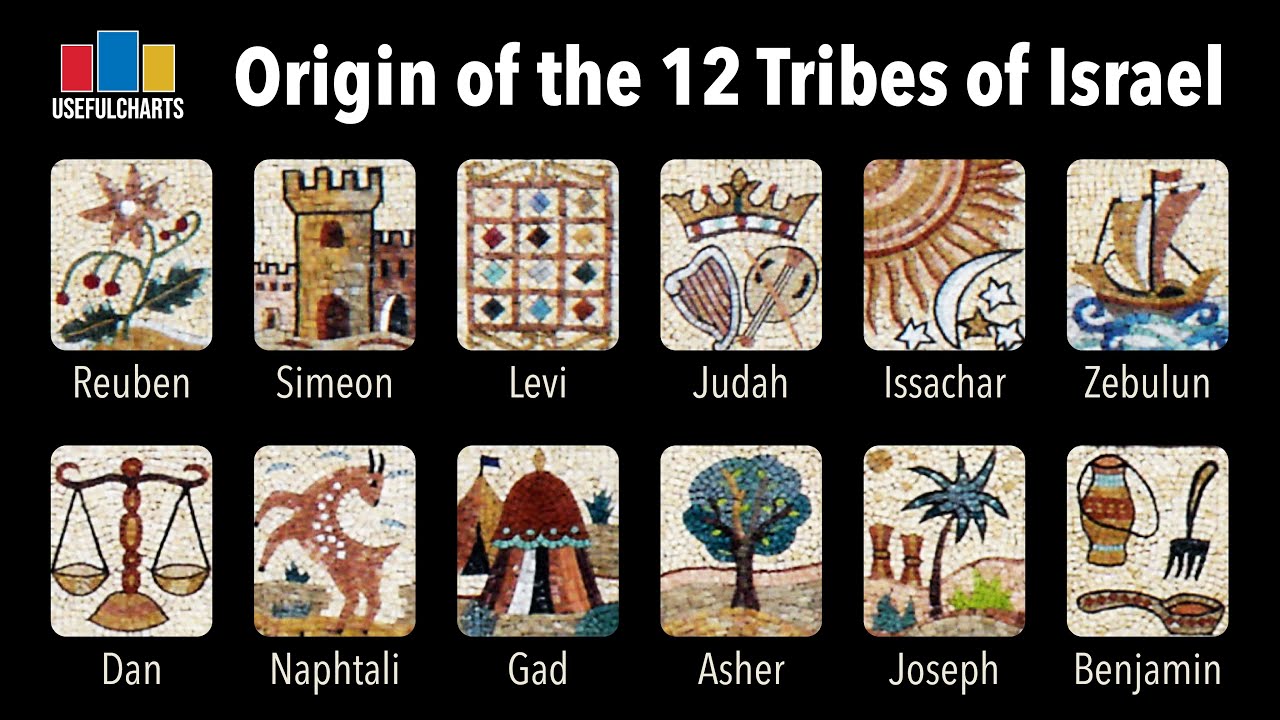
The story of Isaac underscores the faith of his parents and divine fidelity amidst impossible circumstances. Isaac marries Rebecca, and together they have twin sons, Esau and Jacob. Jacob, later called Israel, becomes the heir of God's divine promise and the father of the twelve tribes of Israel.
God renews the covenant with Jacob, reaffirming the blessings promised to Abraham. The descendants of Isaac play a fundamental role in the biblical narrative, including the continuation of divine promises, the formation of the nation of Israel, and the development of traditions that lead to the birth of Jesus Christ. Additionally, the scriptures reveal the harmony between the lineages of Ishmael and Isaac, half-brothers whose lives intertwined.
The marriage of Esau, Isaac's son, to Mahalath, Ishmael's daughter, attests to the continuity of family and cultural relations between these two lineages. The biblical narrative further highlights that at a crucial moment, Ishmael and Isaac joined forces to fulfill the filial duty of burying their father Abraham in the cave of Machpelah. This underscores not only the family connection but also the overcoming of past differences in the name of respect and filial duty.
Regarding the end of Ishmael's life, the scriptures mention that he lived for 137 years. His final breath marked a moment when he joined his ancestors. Although the cause of his death is not specified, the biblical record emphasizes the conclusion of his earthly journey.
The term "Ishmaelite," derived from these events, transcends the description of a specific lineage to become a designation for the numerous descendants of Ishmael, thus fulfilling the divine promise made to Hagar and Abraham. These Ishmaelites, often associated with nomadic peoples roaming the vast desert regions near the Arabian Peninsula, could continue to play a significant role in biblical history and beyond. Thanks for watching!
Please subscribe to the channel and hit the like button to support us. See you in the next video!