battery generation brought to you by Celeste welcome to battery generation your podcast on electromobility and European battery research Leonard good to see you again likewise Patrick Leonard I'm absolutely pumped for this show as you know the industry works pretty hard to get our European green battery production going and one of the most discussed topics in research is battery recycling and the circular economy of battery materials keep in mind without this approach we'll probably never get to Net Zero emission batteries absolutely and dear listeners before we start if you want to listen to us more often
hit that subscribe button and if you have an idea a topic or you have someone in mind that we should discuss in our show send us an email at hello batterygeneration.com that's hello at batterygeneration.com and if you want to do as a solid give us a good rating in your favorite podcast app be that Spotify Apple Google or whatever the podcast app of your choice is thank you so much normally we're talking to either scientists or industry Representatives this time we're talking to both an industry innovator and scientist at the same time welcome to battery
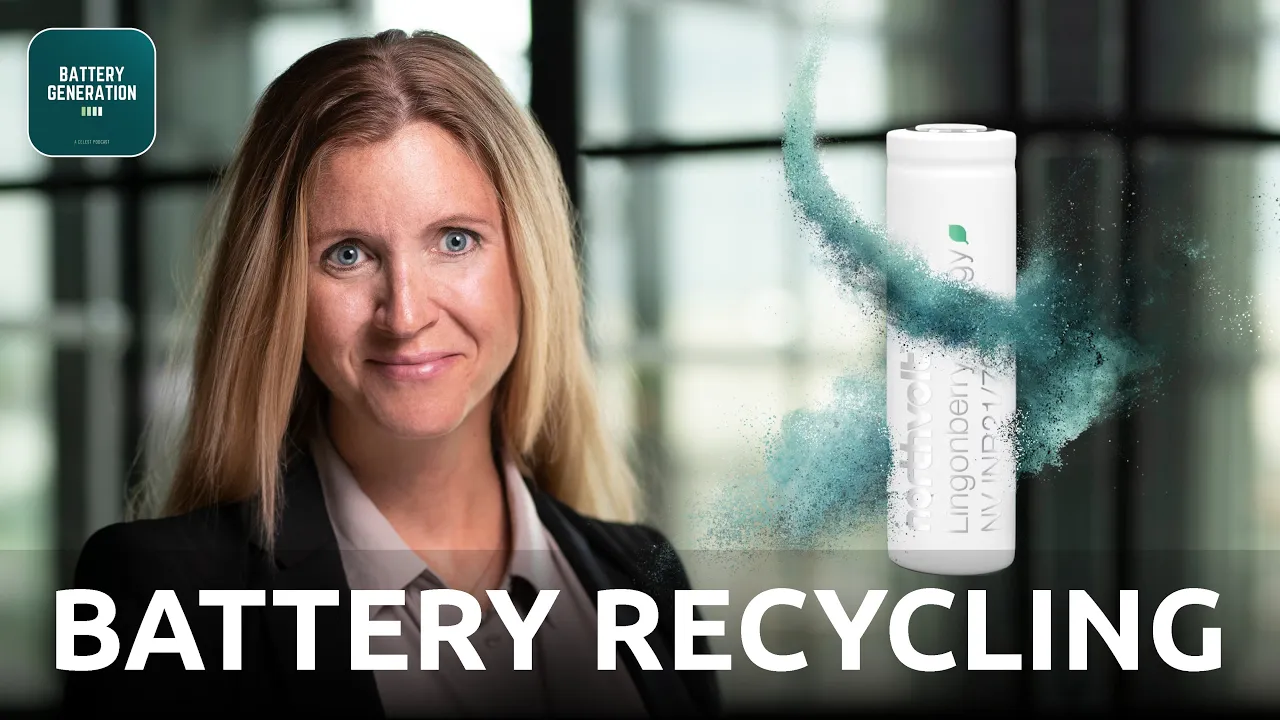
generation Professor Emma nierenheim from Stockholm Sweden hello thank you for having me Emma let me introduce you to our audience you are chief environmental officer at northvolt and a professor in environmental engineering of melard University so you're a scientist and an industry innovator now on a mission to deliver the world's greenest battery within your job at northwold so Emma um Europe's largest battery recycling plant is now being built at ET of northwold your first gigafactory in colectio Sweden how are things evolving over there it's going quite good right now we are just finishing up the
building and the internal steel and the midnight next year we are expecting that plant to be up and running it's pretty fascinating it's about four gigawatt hours of recycling capacity that we are looking at up in in hulestio do you know how many batteries are already being recycled in Sweden or maybe even in Europe it depends on wind if I make a good guess per year I think it's somewhere 30 to 40 000 tons at this point in time in capacity that we have and that's not capacity all the way back to a fully circular
so that's just managing volumes in any shape or form it could be just disarming it could be you know a very early pre-processing step but so far as as of what I've seen there is very very little capacity to get the batteries back as metals of battery grade we recently produced an explanation video about this there was the number of 55 000 ton a year in Germany for example and I always ask myself is that actually a lot when you compare that to other continents for example to us or China and how are we evolving
are we on a great path towards sustainability or is that comparably low recycling for me is the absolute key to making this industry what the industry should be but we also have to remember that we are building this industry right now I mean most of the automotive companies are sort of in the cradle and you could say that yes we are a little bit too late but the time is is actually perfect right now I think you just uh mentioned a critical materials that you want to win back out of a battery what minerals and
metals are they for us these are the metals where we need to tap off a market that's not really there that needs to be built up and where we see that this Market will be squeezed in the coming years it's the lithium I mean there is a lot of lithium on the planet it's mined in very different ways we have between Brine and or base lithium we have different sustainability issues and we have seen that there is the resources are there but the refining capacity is really not in with the sustainability targets we have we're
setting up refining for it in Portugal just to solve this so that's one really critical element another one is Cobalt um where it's an important stabilization um a component for the cathode material and the Cobalt is also something where we need to expand a short time quite a lot and it's it's a global mineral that has been difficult and and very resource demanding for us when it comes to auditing processes for instance for sustainability so a very critical material for us the big one going forward is going to be nickel and nickel has been a
big a metal globally so far but the nickel content in the battery is increasing with higher performing batteries and the nickel Market is getting more and more squeezed and we saw that coming already years ago that nickel is going to be a key component and this is really going to be one of the the big sort of talking topics for the battery industry um with nickel so that's also one of those that we're gonna have to keep an eye on and where we have a a strategy to recycle as much as we possibly can we
already have a crate in my eyes system a refund system for lead asset batteries for um you know these batteries that are also in your um traditional combustion engines that you return with Lithium-ion batteries that system um does not really apply to many handheld systems um but is there already a system for electric vehicles and their Lithium-ion batteries for example Volvo when 12 Volvo now produces a car with northvolts batteries um are you forced at northwold to take back these done batteries a lot of questions in one uh let's start sorting it out so for
one when it comes to solid acid I agree well so far it is quite a lot easier for lead acid since you yourself can change your battery in the car and actually hand it in to a waste Station somewhere in Europe and it will be managed and collected and however you also always bring your card to service so if you go to the service workshop and you do the service on your battery or do a checkup on your car you can have that system built in there if you want to change the lithium-ion battery and
and that can actually be solved over time what needs to happen in order for that to sort of be in your daily life it's the scale of Economics so right now the number of EVS are so small that it hasn't really been coming into place in the same way as we see with the left asset batteries when it comes to the specific question on Volvo yes there are there are many ways for different models we will definitely be able to close that Loop and the ambition is to take all the batteries back and make a
new battery of each and every one of them and it's a little bit different on the definition of of batteries but yes we are of course obliged on our Market to take back the batteries and and do recycling [Music] so Professor nirgenheim I understand why recycling is so important to northfold could I ask you how are you organized of your recycling Branch within northwold I've read something about hydrovolt and Revolt how are these programs and plans um kind of organized within your company's structure so Revolt first that started as the recycling initiative within North vault
already five years back we decided that recycling was a such a strategic thing for northvolt for the sustainability Mission but also again for for the raw materials strategy for the company and the Revolt is a fully owned entity it's a it's his own entity within the company and the aim is to produce the battery grade materials that we need for the cathode material production and that entity will always do a hydrometological process and very close to the cathode material production and and then when it comes to um the sourcing to that feed we have a
very close relationship with the customers and we bring the the batteries back to us but we also want to offer something more than only recycling for our own batteries so on top of that one-to-one relationship we have with the oems that we or the car makers that we are working closely with we have for instance hydrovalt and hydrovalt is a joint venture between us and noshkidro Norwegian hydro which is a company that is specialized in aluminum so since we want the cathode material metals and the Norwegian company wants noshkidro wants the aluminum it's a perfect
match for having a dream adventure for recycling also the Norwegian Market as you know is a pretty early Market when it comes to Eevee evolution and they've been building their car Fleet of EVS for 15 years or so so there is already a recycling feed on that market how many um electric vehicle batteries are already flowing into these recycling plants what are the first numbers and how many batteries are you expecting in maybe five to ten fifteen years the volumes were will probably grow exponentially the curve is of course a few years behind the curve
on the on the EV buildup on the market but it's it's getting there and then this year I think in Norway we have almost filled that plant of 8 000 tons so there is a buildup of volumes coming into the Norwegian plant good luck first of all for these very exciting plans we're now talking about the different processes you just mentioned something about these terms already they're called pyrometallergic and hydrometallergic recycling Technologies could you first of all give us a broad difference between these two very very different um approaches so depending on uh where you
start in the process you have to do some kind of pre-recycling so you have to bring the materials into site and do the first dismantling and then make uh and the disarming of the batteries and then after that you need to refine the metals to pick to bring them out one by one and the pyrological process has been pretty common there are many different ways of doing that pyro specifically is more oxygen free there are other there are different temperatures that you can work with on different sorts the challenge that we find with pyro is
that it's more difficult to to grab the the lighter Metals such as lithium they tend to build something called fouling on this on the surface of the oven that you're incinerating in and it can be a the losses can be can be higher but I know that some are also successful with this so who knows this could be also going into a brighter future going forward and we had a situation where lithium was very important lithium as you know has a very high footprint when you mine it especially with them with the brine source of
lithium where you have the salt desert that are tricky for us to handle from a sustainability perspective so therefore we want to catch any lithium that can be caught in the recycling process so we want to keep the process cold um and that puts a little bit more pressure on us in terms of um disarming uh more gently in the beginning and also cold crushing of the of the batteries to keep as much of the lithium in the process on the other hand when you do thermal the good thing is that you you get rid
of some of the carbon-based components such as the electrolyte for instance so there are also advantages of using a a high temperature process of course when you say get rid of them you mean you burn them right you burn the graphite so you're not getting graphite back but you're burning it exactly and and also the electrolyte so so this this whole process um how long would you say does that take in general you mentioned already what minerals can be one bed so you said lithium you can win back but sometimes not as efficiently um so
which ones can you get back in fact and how long does this whole thing take so one we are only in the beginning of this we can separate everything in our process we can separate out a very clean graphite for instance and we have several projects working to uh forward to towards a recycled graphite system but we are not yet there yet it's a pretty difficult thing to do uh on on the other hand the all most of the other components we are separating one by one so we get aluminum we get Plastics we get
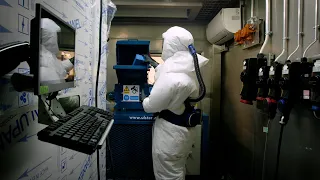
copper we get all the nmc the lithium separated from one another in the in the process that's that's you're talking hydrologic in our process it's on the one roof so we do first first we do crushing we crush the material and then we do a sorting stage and then after that we send it directly into the Hydromet and then we dissolve it in acid and separate them one way one by one and if the metals are not clean enough they're sent back into the loop so that we increase the yield all the time [Music] in
general could you list once more all the metals and and minerals that you can actually win back with that process which are lost uh with the Pyro metallurgic process even after a pyro you should and you can use a Hydromet and to get it to battery grade you can use a sort of wet chemical or a Hydromet process to refine and get the the metal sulfates that you need for for the final product sent into the battery grade in the Hydromet what you basically do is that you remove the impurities and slash or you remove
the methods that you want in a stepwise approach and take them one by one so it's a really it's a really delicate process where you separate them either with pressure temperature or a solvent extraction process a little bit different design for different plants depending on what impurities you have and so on a Hydromet is not the new thing as such the hydrometological processes have been used widely in the mining industry for basically the same thing if you take any of the Hydromet processes that that produces for the metal industry today it's almost exactly the same
but they use or instead of recycled batteries when they separate the Cobalt and them and the nickel what we get out in our Hydromet is the nickel Cobalt manganese as sulfates and we also get copper sulfate and we get a lithium hydroxide which is also something that is very valuable for us and and good for the sustainability of the Northville battery so just to get a clear understanding those materials you get out of the Hydromet um are not directly you can't directly make a new battery out of them right you have to process them once
more to get the clean elements is that correct did I get that right quite the other way around actually so okay yeah good that you ask so a cat most cathode uh producers that do nmc-811 which is the cell chemistry that we currently have and need nmc sulfates and the lithium hydroxide we can also use a metal as briquettes or in their elementary form but then we have to first send them through a process on site that we call dissolution which is a um which is where the metal become methyl sulfate so it's uh it's
a pre-step but the recycling gives us exactly the metals we need the things that are incredibly important from Battery manufacturing perspective is that they need to be super pure there can be no Trace elements following the metal such as there can be no iron no aluminum no lead So It's Tricky when batteries are blended with other batteries normally EV batteries are not blended with others but you can have nmc batteries coming in in other feeds such as e-bikes for instance then then there can be a mixed feed of different cell chemistries and that becomes tricky
from a recycling perspective and from a battery grade but otherwise we actually get the Perfect Chemistry Hydro metallurgic sounds very healthy but now that I know that a lot of acid is actually used in a pool there how sustainable can this process be I mean I think it's a very sustainable so first and foremost you have to remember that in any metal refining you need a purification step and the best way to purify is to bring it to its elementary form meaning dissolving an acid but the acid can be recycled that's number one and also
the acid is one just one component and it's a byproduct for most other Industries on the other hand what we have done is to remove a lot of steps that comes with Organic solvents so um we are using a lot of pressure and temperature to separate the metals from each other and we are trying to reduce significantly the number of organic solvents needed you're already mentioning some points for optimization that you're working with pressure with temperature I had a thought on your comment before if you actually can use the materials coming out of recycling directly
for the creation of new batteries that might actually be a competitive price Advantage right I mean from the mining they have to do one step more and then they can sell it I don't know is that is that something that could scale up economically in time um especially when of course a mining gets more expensive we definitely think so I think that we when we reach the economics of scale of recycling and at the same time when we learn more about how to optimize the flows because one thing is expensive and that's the hydrometological process
so the wet chemistry another thing that's expensive is the collection and the the Flowback and the when we optimize that all together definitely I mean fundamentally crushing a mountain and dissolving that in acid should not be more cost effective than taking one battery that contains exactly what the other battery needs and just you know cleaning that up and sending it into production so you're absolutely right I mean the numbers are there it's just a matter of walking the talk here [Music] which statement would you say best describes North vault's battery recycling efforts is that a
a further development of batteries including critical elements and establish a well-working recycling process as you just mentioned or maybe B develop Innovative battery cells where battery recycling wouldn't be as important since materials are more abundant cheaper and sustainable from the beginning so which path do you think rather describes your efforts um difficult to choose between the two my I mean the the core message that I want to give is that at 2040 when the market is fully mature and we have a one-to-one relationship with the batteries going out on the market and the battery is
going in you will have for lfp and nmc I almost one-to-one relationship and then it's maybe 90 percent of the metals in the first battery that goes into the next and you will have a very small feedback in so my expectation is that the refinery of the metals comes from batteries so a fully closed loop for the chemistries but they need to be on separate paths and you can recycle LFE it's super easy but there is one problem and that is the LF because f is iron and the iron is uh a killer in a
in a nickel based chemistry uh it creates uh shortcuts and thermal runways in the chemistry so you never want to blend those two it's much easier to recycle lfp and produce lfp chemistry but it cannot be in the blend with the nmc basically your recycling plant and so everyone seems to kind of tune in on the whole nmc set as of right now it seems yeah yeah I mean if you if you want to replace a 5 Series BMW that's gonna go between I don't know Munich and Frankfurt lfp is like asking them to drive
a Nissan Micra you know it's I mean it's not gonna fly and and I mean but but there are lots of people who need a Nissan Micra but it's not the same people plus the uh business model is something totally else since there are no medals that you necessarily have to get out um out of these batteries since they're very cheap and maybe legislation has to force you to recycle them right I I agree to some extent on the other hand it's also pretty cheap to recycle them so it should make sense that's amazing news
because I think a lot of us haven't in their minds that recycling is something very expensive and that this will only work if the mining and the the new materials are very very expensive to get otherwise no one will do it because we live in a world where we basically just throw everything in the trash we are very very far from circular and now we're trying to to Electrify everything we're trying to do this transformation and then I think this is a very valuable information you're giving here that this is actually sustainable and it works
economically absolutely it has to work economically because we're gonna have to make it I mean we can't continue tap off the nature forever I mean we need to we need to build this and we need to find the scale of economics and we need to optimize these processes uh so that that it's working well and you have to remember that this is really the first time it's moving into Europe and in Europe we are extraordinary good at industrial optimization so we've only seen the beginning of this [Music] you mentioned before that you have a different
steps in the whole Recycling and we've heard that it's a that you can disassemble a battery with the help of a robot but then you need to work very closely with production is that something you have in mind something you're focusing on or do you use you prefer to use the agnostic Crusher that will just shredded and say I don't care about the form it's a little bit of both so we need to take modules apart from each other and then it's about making the the most bang for the bucks so if you look at
the pack what you have in a pack is a great source of aluminum so the pack itself has a very fine aluminum shell and that should definitely not be sent into the crusher and contaminated so first you want to remove the shell and that that holds the modules and the and the battery management system the BMS when you when you take out that you can just as well separate the BMS from the modules so and that I think should be done in a semi at least automated way and then again you have to sort of
calculate where the break-even is between how much you optimize that process and how much can be sort of man-made we have for instance decided that for any hybrid um system we do not focus on automation at all because it doesn't make sense we think that the hybrid cars will sort of be smaller in volume the hockey stick is not really there and it just it's pretty easy for a person to lift those modules out it's not ergonomically a problem for instance but when it comes to the EV packs it makes sense to industrialize and we
are focused on crashing on module level so we take the pack apart and we crush the modules are there any caveats so do I have to make trade-offs if I optimize maybe a production that that the cell will be easier to recycle do I have to make trade-offs when it comes to the performance of those batteries and how are you handling that at northfold it's a really good question and I can only answer from the experience of the batteries that we have so far and what we've seen so far is actually that it's a little
bit the other way around because honestly if you take a a good engineered battery from a company that is rock stars in manufacturing you can clearly see that the smartness in how that battery has been manufactured can also be used in the Reversed manufacturing meaning the recycling so you can see how it's pretty easy to set up a dismantling line from one of those batteries and then you can also see that the performance of those batteries is is really good and then how this will look going forward is going to be super interesting because now
we are discussing so many things around the how to put the the screws and so forth but I can take one example so some batteries you can have as a screw that where you take off the lid where all the screws are in the same direction and the same Dimension then it's super easy to dismantle but it has also been super easy to manufacture right so it it goes a bit hand in hand let's say um you built this perfect process of recycling and you win back um these let's say five materials right graphite lithium
nickel Cobalt and um what I forget manganese maybe copper which one of these materials can you use straight away as clean and fresh as they would come from a mine directly for the new batteries is there any sort of quality difference after the recycling process right now for nickel manganese Cobalt lithium super quality we can take it straight back for most of the aluminum the same and as I mentioned before it's quite a lot of aluminum you have aluminum in the casing of the cell and in the pack casing so aluminum is incredibly important and
as you mentioned with lead acid batteries and Lead recycling aluminum already have a perfect recycling supply chain graphite needs some more research before you can get it pure enough and before you can get the particles in the structure that you need since it's carbon based it has a certain structure that we need to get back Professor nirenheim let's now talk about the um European regulation about a battery materials there has been in a European framework legislation even for that could you briefly explain um what happened there in Strasbourg and Brussels that battery legislation now if
affects your business model even what's inside these laws it's a lot of things actually I think that the Regulators I mean the European European bold here they mean fast and they have clearly understood where this Market is going and they have put together a regulation that puts a backstop one might say to the market it includes targets for recycled content what we're used to is a is the responsibility for end of Life Products uh that you need to have a system where you take care of it instead the and The Regulators this time said you
need to make use of the metals available for recycling and you need to prove that your products have actually utilized those resources which I think is a is an amazing way of looking at it if you really want to close the loop and so that's number one they've also proposed a carbon footprint Target which I also think is bold and also a sort of a a stop or a blocker for diverse performing batteries which is also something that I think is very encouraging um and it's going to be really interesting to see how all these
ties together but only the fact that you know supposed to declare your carbon footprint and then the amount of recycled content that you have in your battery cells is really something that is never heard of I think and does this battery passport um change anything for northwold directly or are you already all set and you just continue I mean I would be the happiest person on Earth if northwards was all set with everything it will not it will not change too much I think that it's good to have this regulatory framework pushing us the The
Last Mile on this marathon and if we would have these requirements and not having a way of declaring it would be a sort of there would be no no point of having it so we welcome the battery passport I think that the battery passport will be great for traceability the the devil is in the details now so it's going to be interesting to see if we have a full declaration I mean what batteries enter into our Market the band is enormous and to see what actually will be declared from all the the battery makers on
this planet but for us it's not a game changer but it's really good that we have it already now and and that it's described could you uh explain this a little more in detail so when I buy um as an automaker I buy an uh um a battery from northwold and does it say for example half of the battery material comes from a former done battery from China and half of it is bought from northwold directly I mean you have to declare what's inside the battery from from the point on when this uh European legislation
comes into power right yes but as I have understood it and I don't know the exact details on that you will not get many lives back so you will it will not be a sort of on each and every element that you have in the battery what what you're gonna have to state is that the the Recycled content in the battery and the carbon footprint and that's gonna come with and I don't know if you know how you buy refrigerators for instance but as I've understood it it's more like a certificate so um so that's
it on the other hand uh I I think that that itself for most battery manufacturers today it's going to be pretty challenging that's I think is the level of information that you get and then going forward we will see what will happen I think that there will be a voluntary Journey for some of us thank you very much for these insights and your time Professor Emma nirenheim dear listeners now it's your turn if you got any questions please email us that is hello at batterygeneration.com you may also comment in the comment section below and as
always make sure to subscribe if you listen to us for the first time for more click in tune in and stay charged bye foreign [Music] [Applause] [Music]