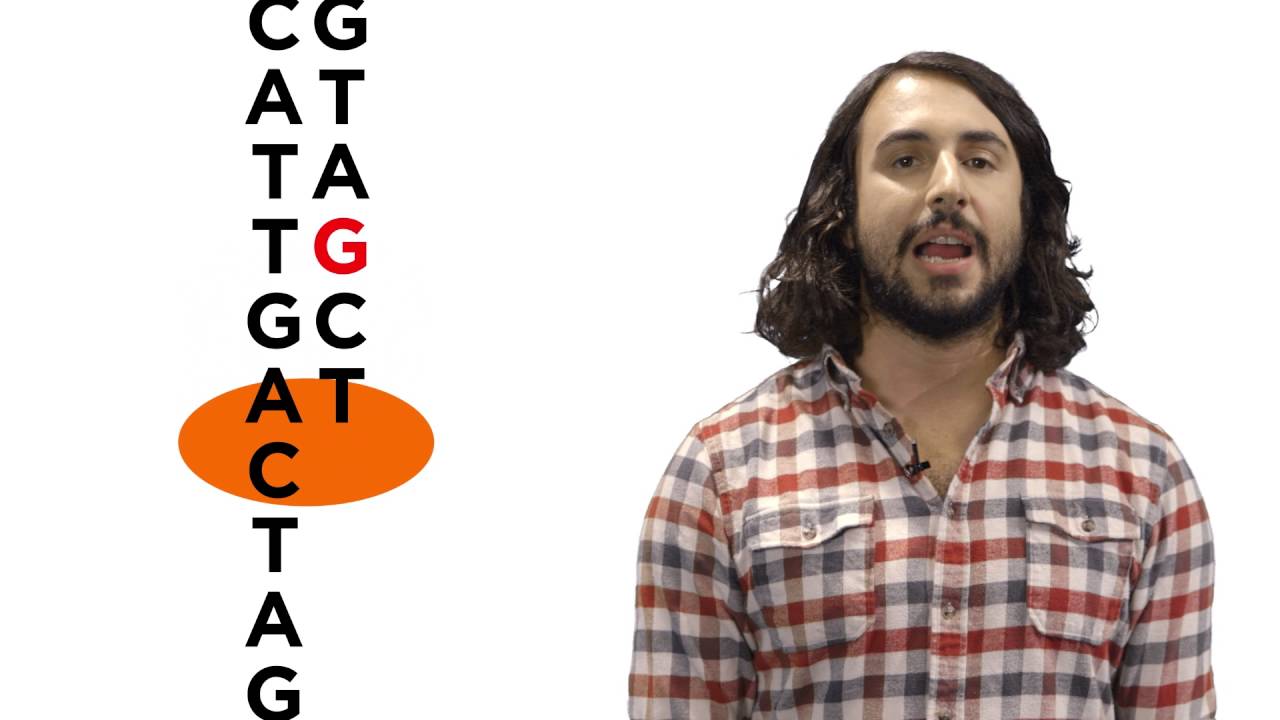
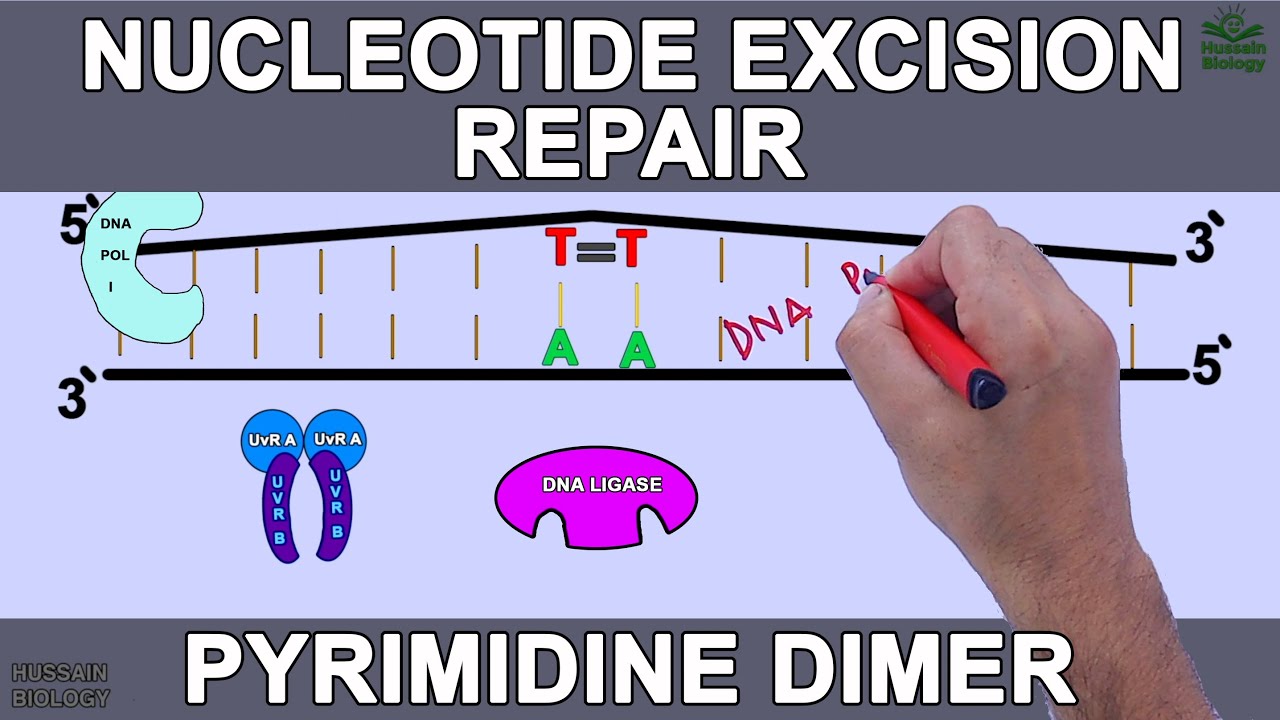
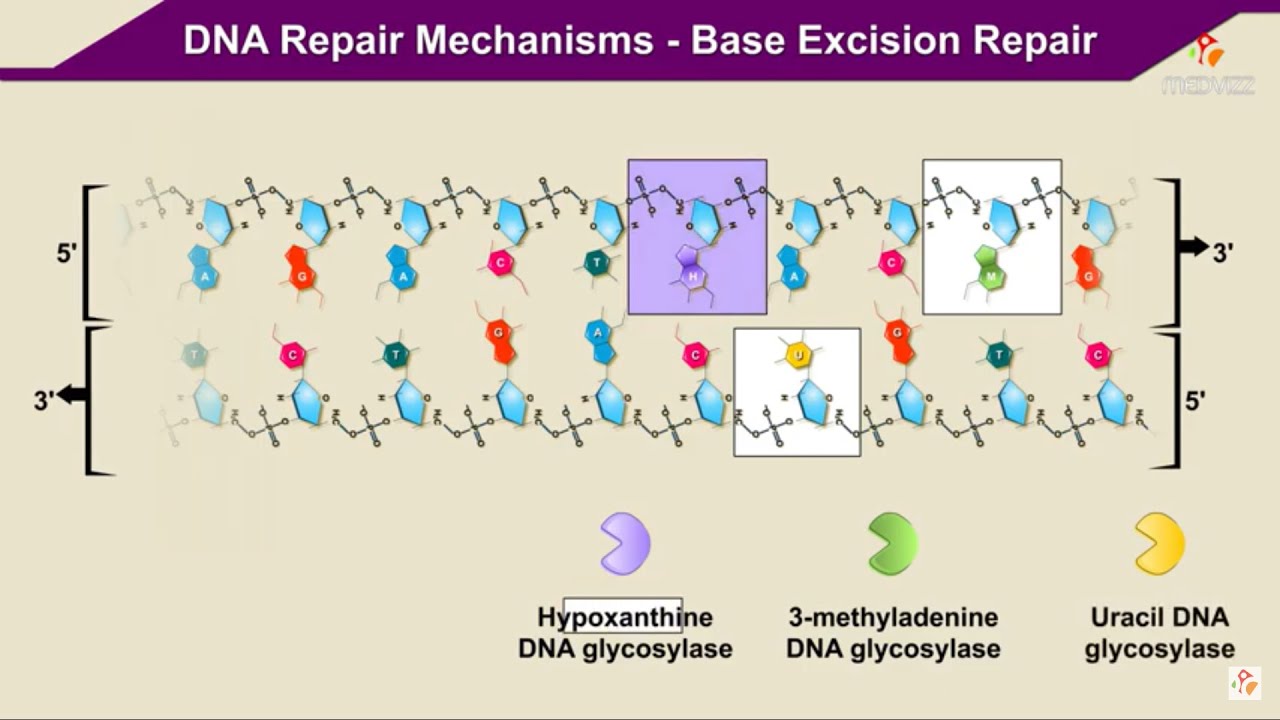
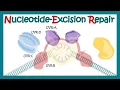
in this video we are going to talk about nucleotide exision repair system which is one type of DNA damage repair cell uses nucleotide exision repair to fix DNA reg regions which contains chemically modified bases and often that leads to a distortion in the DNA Helix so we are exposed to harmful radiation such as UV all the time and it can lead to damage in our DNA let me tell you how let's say there are two thyine BAS which are adjacent to each other and this kind of UV radiation can lead to a production of thyine
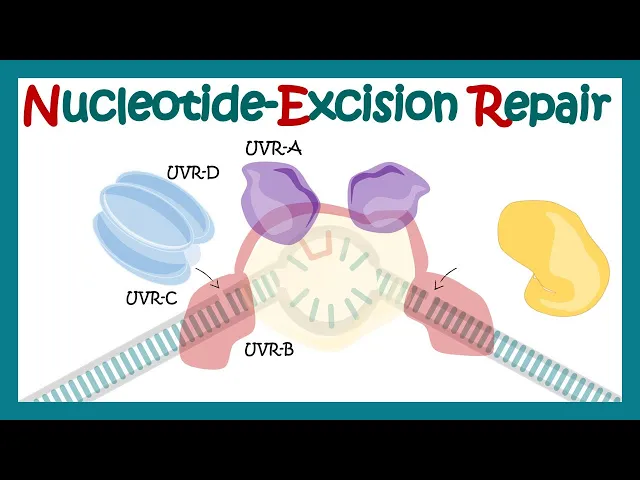
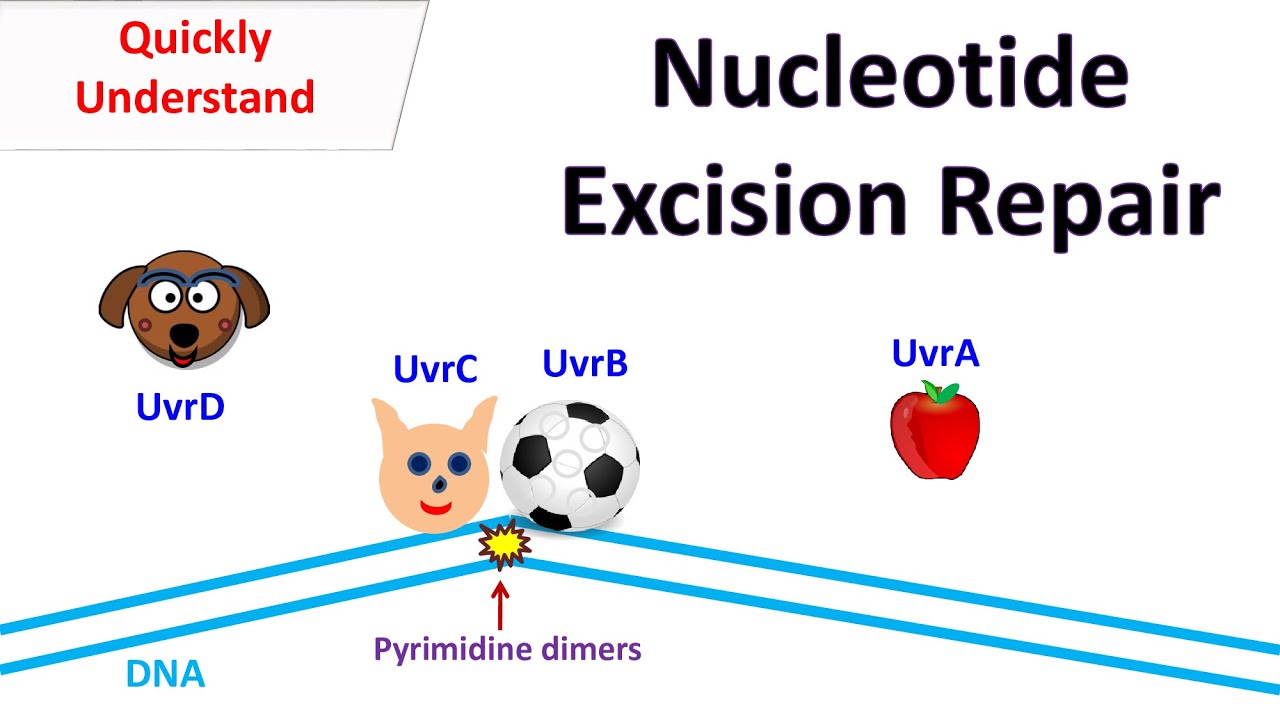
thyine dier which is one kind of DNA lesion and this kind of DNA lesion leads to a distortion in the DNA Helix and this Distortion is detected by the nucleotide exision repair system which further recruits components such as UV uvr b c and d to uh repair this kind of distortion now as the name suggest uvr a b and c these kind of proteins can help our body to recover from a UV mediated DNA damage and in this video we are going to talk more about these proteins these component how exactly they function so stay
tuned till the end of this video nucleotide exision repair system is highly conserved throughout the species from eoli to human you would get these kind of repair system for Simplicity we are going to look at the eoli nucleotide exision repair system and then we are going to delve into details in human uh nucleotide exision repair so this process begins by detection of a distortion in the DNA Helix and the key component that detects the DNA Distortion is the UV a proteins now once it detects the Distortion it will recruit uvrb protein into the site of
this lesion and this recruitment requires hydrolysis of ATP because this is quite a energy expensive process after uvrb is recruited to the site of the lesion there would be a bending of this DNA segment after that uvrc gets recruited to the site of distortion uvrc leads to a cleavage at a particular portion which is slightly away from the site of this uh damage then uvd which is kind of like a helicase it would be recruited to this site and it would chop off this particular segment of the DNA and ultimately there would be a gap
which is generated after this process DNA polymerase 1 can ultimately polymerize this three prime hydroxy group and try to repair this grap and the last Gap is actually repaired by a ligas enzyme it is sealed by the lias enzyme and thereby the now the DNA is repaired and the thine thyine uh dimer formation is excluded and thereby our repair system saves our DNA every day from these kind of Damages now let us look at this process in ukar or especially in human obviously we can imagine human is way more complicated than uh eoli so this
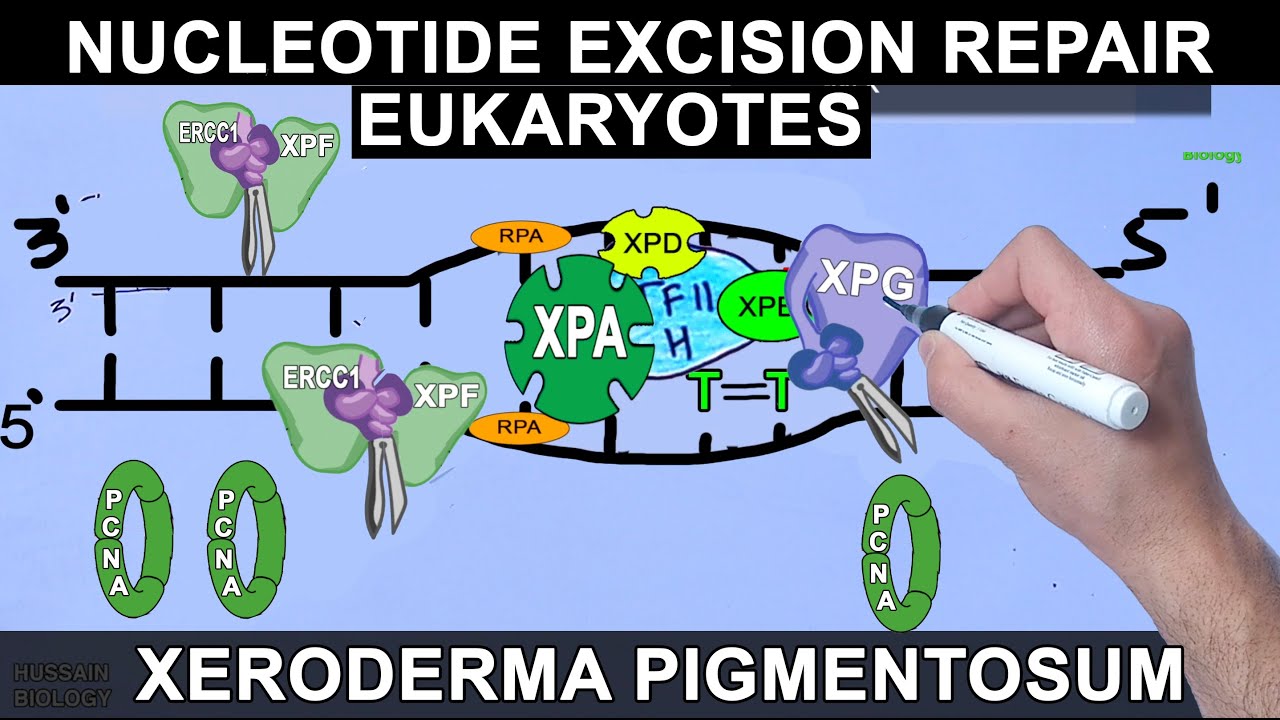
particular process would involve many more proteins indeed this process involves about 25 to 30 proteins but they have similarities in terms of the mechanism and there are they have counterparts with eoli let's try to understand that so the principle is similar the DNA Distortion has to be detected by some kind of detection mechanism and that is xpc by the way this XP stands for xenoa pigmentosum and we'll come to it in a moment so just like UV xpc recognize the site of distortion then there is xpd and xpa which kind of creates a bubble around
this site of distortion and this bubble is held steady with the help of RPA proteins which are kind of single stand strand binding proteins then away from this site of distortion in the five Prime end there would be a Exon there would be a nucleus recruitment which is ercc1 XP F this n this nucleus would cleave the five Prime site and the three prime site is actually cleaved by xpg so what we can understand the overall mechanism is very similar for example this ex the this ercc1 xpf and xpg is kind of similar to uvrc
protein but here in human we can see there are many more components and that is why the process is bit more complicated in human but overall there is a similarity between these two uh organisms that means the recognition the cleavage and then the repair now let me tell you one human disease is known as xenoa pigmentosum which is a very rare skin disorder where a person is highly sensitive to sunlight and especially the UV radiation and it can lead to cancer in these kind of patients and often it has been seen that the risk genes
are xpa xpc xpd and all of these genes as I have mentioned earlier are the component of nucleotide exision repair system in simple words in these patients the nucleotide exision repair system is messed up that is why they are more susceptible to UV mediated damages which can lead to skin cancers now we understand that why nucleotide exision repair is super important from a clinical point of view now let me tell you that apart from being a DNA repair system this particular uh repair system is also transcription coupled that means let's say a particular transcription process
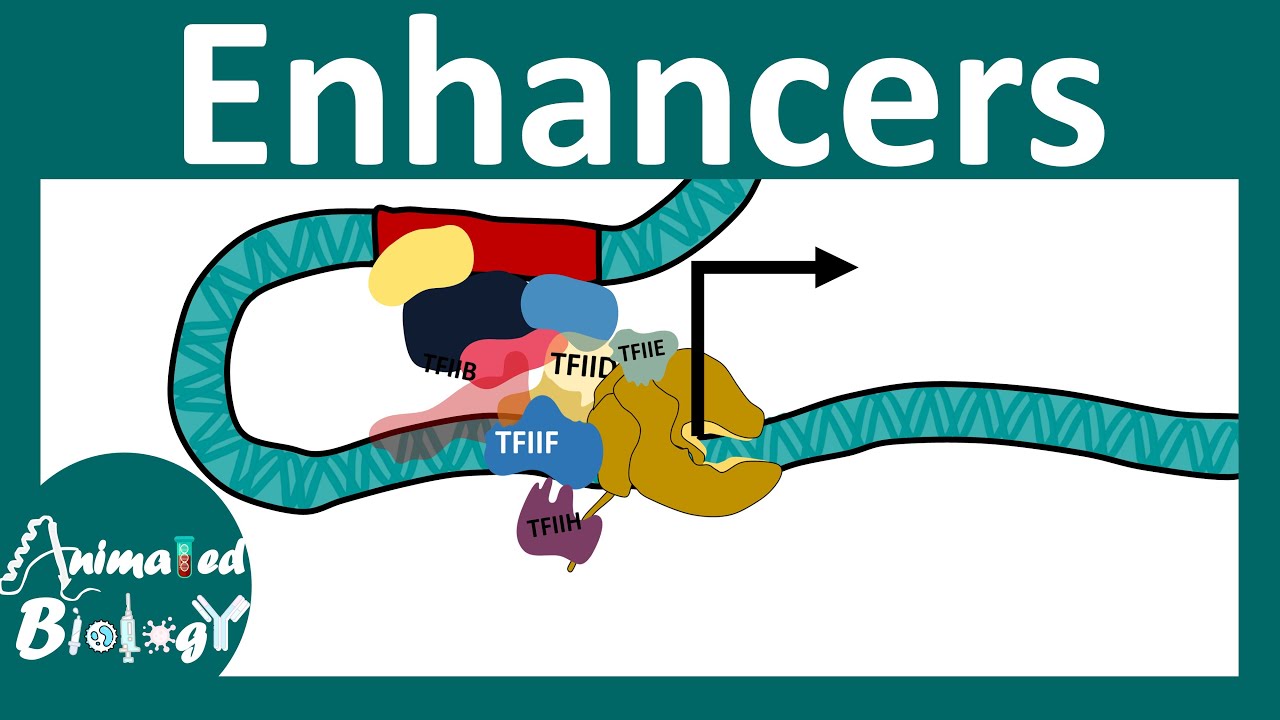
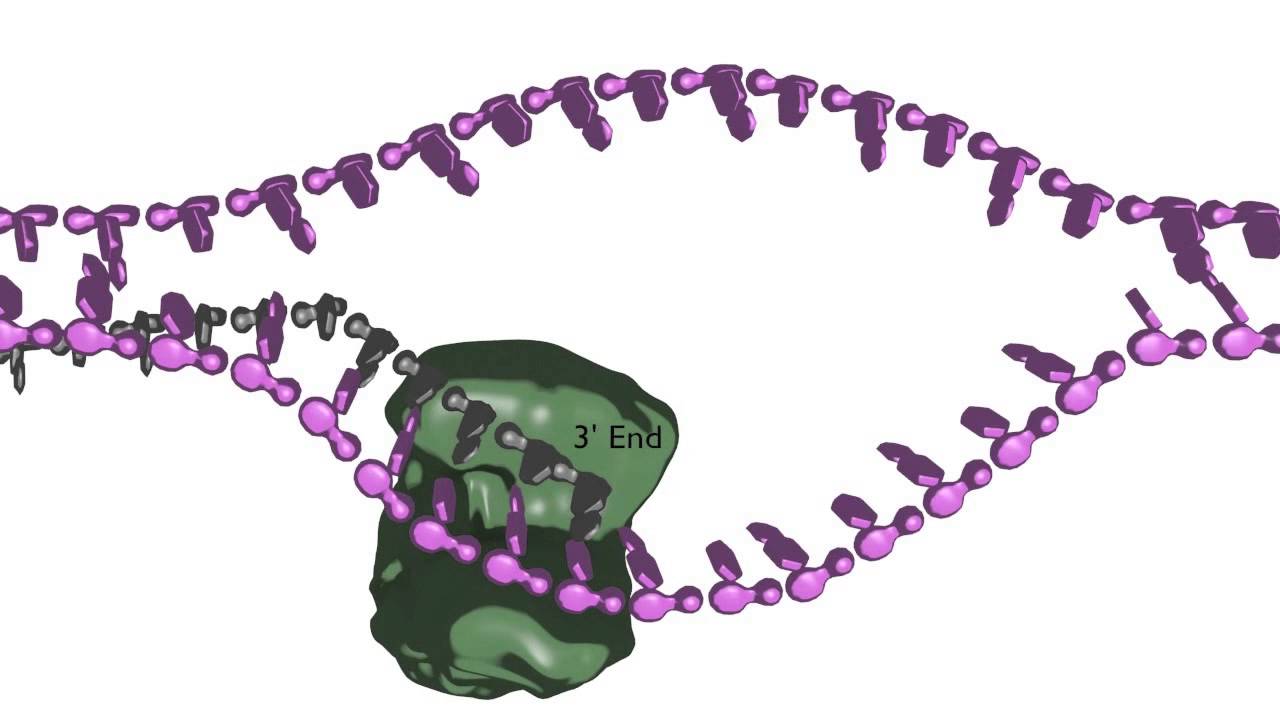
is going on and this RNA polymerase is moving in the gene body transcribing the RNA but suddenly it experiences a thin thyine dmer which has created a distortion so obviously the RNA polymerase would be stalled but luckily RNA polymerase is associated with um with this particular uh DNA repair Machinery that means it can recruit one component of the RNA polymerase more specifically TF one component with the RNA polymerase Machinery tf2h is involved in transcriptional coupled repair it can recruit all the players of nucleotide exision repair which would repair this bulge and ultimately it would allow
the trans the the RNA polymer is to move along and transcribing this particular Gene so now we understand how nucleotide exision repair is important so let us get a quick summary cells use nucleotide exision repair to fix DNA regions which has modified bases or let's say a duct such as thyine thyine dier and this detection happens via Distortion in the normal shape of the DNA and this is a local Distortion nuclear ex repair is very well conserved from procaryotes to ukar mutation in XP family genes lead to nucle defect in the nucleotide exision repair system
which is the base basis of uh xenoa pigment pigmentosum and lastly we saw that nucleotide exision repair is transcription and it also allows a flexibility in terms of uh Gene transcription because Gene transcription can can't be stalled just because there is a lesion in the DNA so it has to be repaired rapidly and it can lead to transcription in a um unpaused manner so overall the notes of this particular topic will be available in my Facebook page whose link is provided in the description as usual don't forget to like share and subscribe you can support
my channel in patreon I'm also present in unacademy you can use my code ap10 to get a 10% discount you can follow me on all the social media I'm present uh by this particular name and all the links are provided in the description so please get connected and let me know in the comment whether it is useful or not thank you