This episode was made possible by Hover, the absolute best when it comes to personalized domains. Fans of The Infographics Show will get 10% off their purchase by going to Hover. com/Infographics or by clicking the link in the description.
According to Internet World Statistics as of June 30, 2018, there were 4. 2 billion people around the world using the internet. That’s about 55 percent of the world’s population.
The lion’s share of internet users are in Asia – almost half – followed by Europe, Latin America, Africa and North America. Only three years ago there were just over three billion people using the net, so a lot of people have recently gotten themselves connected. Some of us perhaps couldn’t live without it; it’s how some of us make a living, either directly or indirectly, while some people would literally suffer withdrawal symptoms if you took it away from them.
Our reliance on the internet cannot be understated, and that reliance is only going to become more natural. But who’s the proprietor of this damn thing? That’s what we’ll find out today, in this episode of the Infographics Show, Who Owns the Internet?
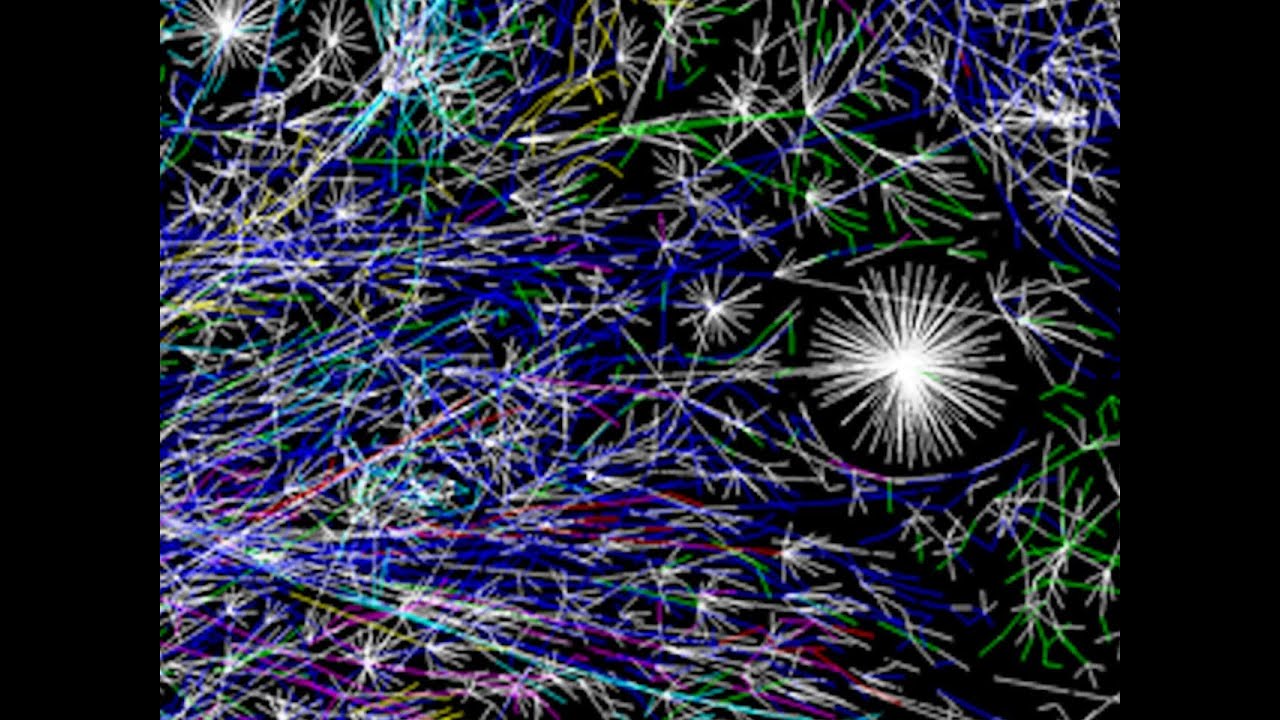
First of all, what is the Internet? Well, it’s not one tangible thing. It’s made up of hundreds of thousands of networks and connecting everything is a great deal of technology.
As one writer said on Quora, and we like the analogy, when we talk about the Internet it’s like talking about agriculture. Who owns agriculture? What is agriculture?
It’s complicated. But for the internet to work there has to be a lot of infrastructure, and that infrastructure is owned by people, companies, entities. The net is what you might call a giant and mindboggling plexus, which is just an intricate network of many parts that makes up a system.
Within this giant plexus are nexuses, which can be important points where many connections meet. Information is carried from these points, which are servers, and that information is carried down what we might call digital arteries, or fiber optic cables. Some companies own these giant servers, sometimes called server farms.
Some of these server farms are so big, it takes an incredible amount of electricity to power them. Forbes tells us that the largest in the world is the Range International Data Hub in China, which is 6. 3 million square feet.
The second largest is said to be one in Nevada, called Switch SuperNAP, which is around 2. 2 million square feet. Some of Switch’s clients include big names such as Fox broadcasting, Intel, Ebay and Boeing.
It was reported in 2016 that Google had around 2. 5 million servers all over the world, but that number is a rough estimate. Google’s different servers do different things.
Some of them are dedicated to your queries when you are searching for things, while others might be dedicated to storing documents. Facebook has a bunch of large data centers of course to keep up with its 2. 6 billion-plus users.
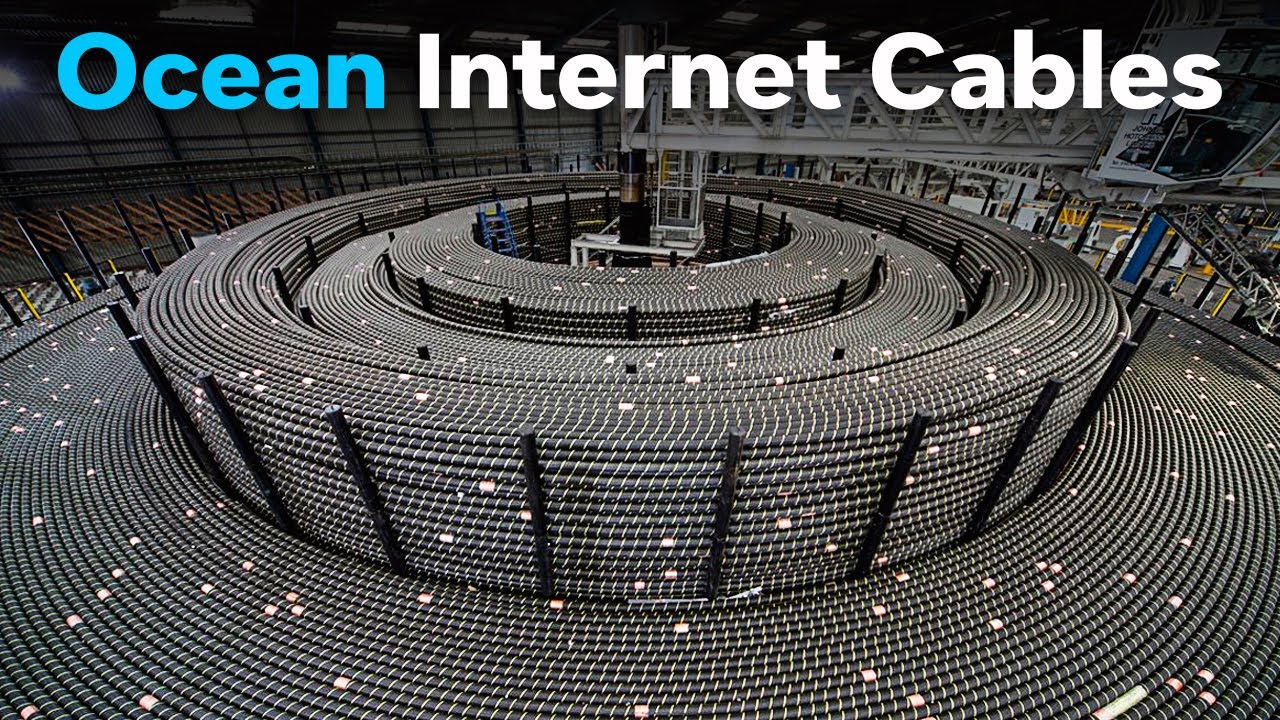
So yes, someone owns those data centers, the nexuses that make it possible for people to use the internet. Then you have the telecommunications companies who own the fiber optic cables. These cables cross borders and are threaded underneath oceans, so people all over the planet can be connected.
If you’re wondering what the difference is between normal cable and fiber optic cable, it is that light rather than electric pulses is sent through strands of glass which allows data to be sent faster and over very long distances. How long? Well, as long as you want.
So why not always use fiber optic cable instead of normal cable? Forbes wrote in 2018 that indeed this would be the perfect scenario, but it can be costly because every 40-60 miles (64-96km) you have to have something called “in-line amplification shelters”. These maintain the electronics and keep the cable active.
It’s expensive to just start laying this cable everywhere. Nonetheless, we are told that the longest terrestrial fiber optic cable is 6. 4 thousand miles (10,358.
16 km) long. It is owned by the Telstra Corporation of Australia. Its cable stretches between Perth and Melbourne and back again.
Australians might be thinking, wait a minute, those cities aren’t that far apart. Well, it depends how the cable was laid. There’s also something called the “Fiber-Optic Link Around the Globe” (FLAG) and that stretches for 17.
4 thousand miles (28,000km) underwater and runs from North America to the UK to Japan to India. It’s owned by Global Cloud Xchange which is a subsidiary of an Indian company called Reliance Communications. It’s one of the largest telecommunications companies in the world and it helps us all stay connected.
We have moved forward in great strides since dial-up Internet. So, while no one owns this thing called the Internet, without these giant data centers and without all those cables connecting us, we would not have the Internet as we know it. There are also ISPs (Internet Service Providers), which are big companies that ensure the internet gets to your house.
These companies can control the speed of your internet, or even what you can access. You might have been following the recent controversies over what has been called the end of the “free internet” with the recent changes to net neutrality, or the end of it. That’s an ongoing story.
Then you have something equally as important called “The Internet Corporation for Assigned Names and Numbers. ” This non-profit’s motto is “One World, One Internet. ” In a paper that ICANN published it wrote that some people think that it actually “runs the Internet.
” Maybe some folks think ICANN is the biggest owner of the internet. This is not true, but it is very important. ICANN wrote, “Figuring out who handles what in the Internet ecosystem can be tricky.
” In laymen’s terms ICANN explained that if you want to reach another person over the internet you need a destination name, otherwise you wouldn’t be going anyway. ICANN coordinates this traffic, if it didn’t, there wouldn’t be an internet. You have a domain name system (DNS) and you have IP addresses.
We can’t remember lots and lots of numbers (IPs) so we have names we can all remember easily. Think of it as phone numbers and addresses. ICANN manages these, so we can all reach each other.
“No one person, organization or government controls the Internet,” writes ICANN, which is fitting for our show. But for it to work we need some kind of management, so we can connect to each other. We have the foundations of a building; we have all the technology that allows it to work as a functional building, and we have a system that ensures all its individual parts work harmoniously.
There are of course lots of other important things that are involved in the running of the Internet. Even though to some extent we are free to exchange any information we want, it is policed in various ways. We have the Internet Society, which creates standards and policies.
We have the Internet Engineering Task Force, which helps maintain the architecture of the internet. Companies and governments also work in tandem to do this, although that relationship is not always harmonious. As users we are also responsible for what we put into this great plexus, and the data we do put into it is used and sold and sometimes exploited.
In this sense, we all own a bit of the internet. We are the Internet. We may all be the internet, but that’s a lot of people in a very big place- how are you ever going to stand out?
How about with a cool extension to your custom domain name, like . actor or . hockey!
Don’t be another faceless website, and don’t send traffic to your competitors by accident- get yourself a domain that suits your specific personality and makes your site stand out with Hover. You don’t have to worry about any upsells with Hover, and with free whois privacy your identity is safe and secure- no spammers or telemarketers to worry about. We love using Hover everytime we need to buy a new domain, and now, fans of The Infographics Show get 10% off their purchase by going to Hover.
com/Infographics or by clicking the link in the description. This is a fairly simplistic explanation of a complex topic, so if you can add something we’d love to hear your thoughts. Let us know in the comments.
Also, be sure to check out our other video called Most Dangerous Hackers In The World! Thanks for watching, and, as always, don't forget to like, share, and subscribe. See you next time!