hello it's Scott Manley here today I am at a factory a research facility startup in San Jose and they are building EVS this is Archer Aviation and this is a fascinating room here as well CU I can hear the Echoes but yes we have uh Tom here hey Scott hi hello you're the expert yeah uh CTO here at Archer CTO it's my favorite Title by the way it's a fun job um I've been working on these evil airplanes for like 15 years basically my whole career has been making airplanes like this and you're actually flying
test aircraft you've got yourself set up as a part one of 35 operations so you know doing all the certification work y actual flying work yep in uh in flight test now working towards getting our aircraft certified and into market so this building has a few things it has our um certification test Labs so looking forward to showing you the simulator having you fly uh and then we've got powertrain manufacturing so where we make batteries and electric motors so that might be interesting too that that's great let's go and see how these things fly all
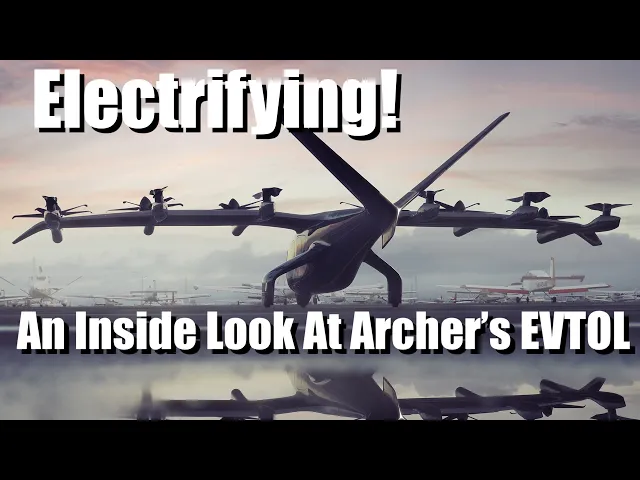
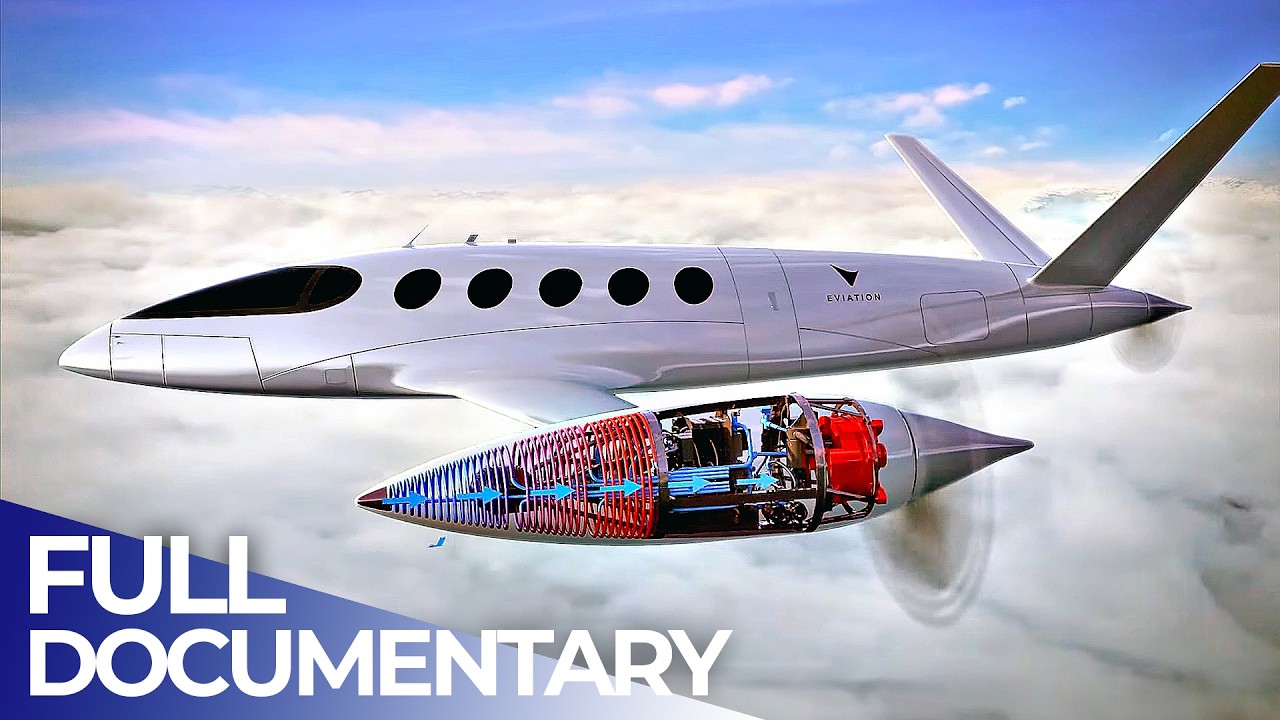
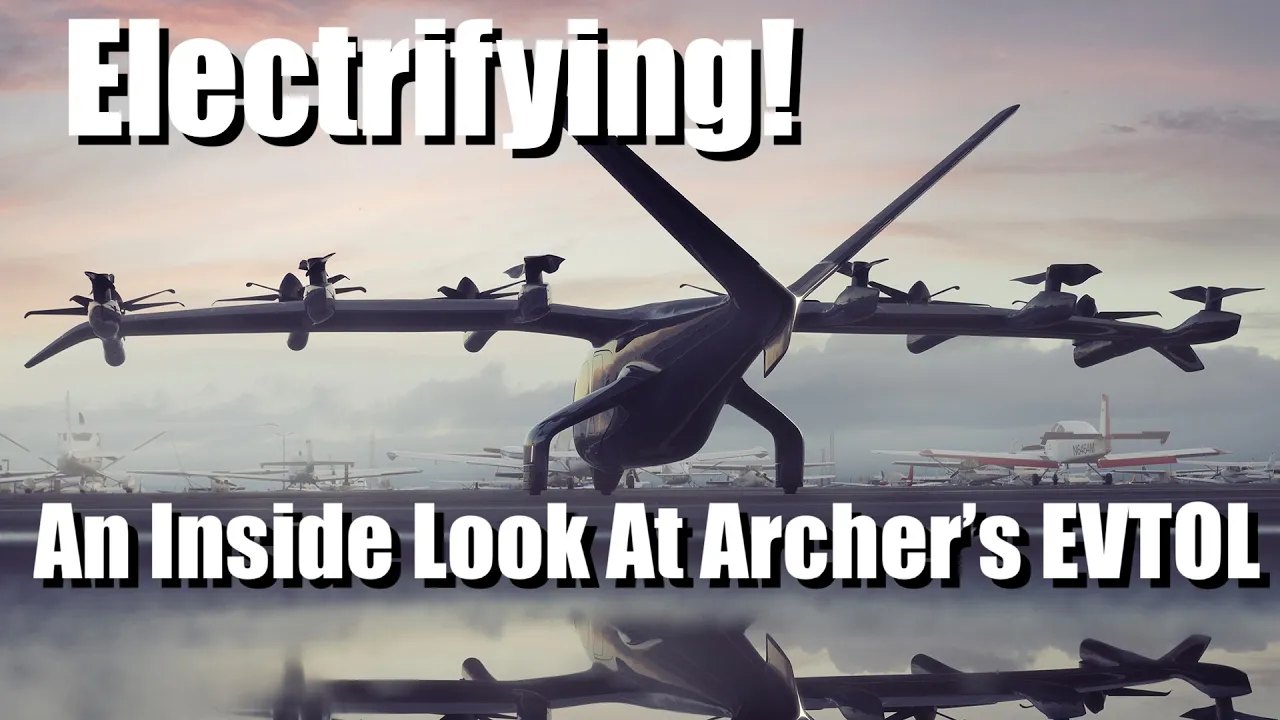
right let's check it out so Archer are in the Evol business that is electrically powered vertical takeoff and Landing aircraft uh these are basically giant drones which carry people around now this is a technology which is still in development but modern development of Battery Technology fly by wire systems has potentially made these viable for short hops potentially able to take off vertically fly about 50 m in half an hour and then land vertically recharge and bring people in the other direction and these multi-rotor electric systems are a lot quieter than conventional helicopters so in theory
they could land where places where noise might otherwise be an issue closer to the things that people want to go to it's an attractive Concept in fact it's an idea that's so popular I think I've seen over a hundred of these companies appear but Archer is one of the few that has actually managed to get serious investment and build a vehicle that is currently performing test flights down in Selena and so I had a chance to visit one of their facilities in the Bay Area where they are you designing these systems making it happen and
you know see how the magic works I mentioned earlier we make our own electric engines yeah um we've been trained to call them electric engines because the fa doesn't know how to certify Motors yes engines oh my goodness so but they are electric motors electric yes they are basically electric motors so this is kind of like um you know exploded view of what's inside the engine so it's basically three parts there's the electric motor there's the inverter that drives it so that's this that's the entire set of circuitry uh inverter and then there's a gear
reduction GE yep so we reduce the speed that the elect electromagnetics spin by about six and a half um to one yeah and so that drives then our propeller output you know 1500 RPM something like that all of the engines were designed in house and we do a lot of the assembly in house and we're trying to leverage as much Automotive manufacturing uh capability as possible so uh you know in many ways what you're looking at here is not too different from an electric vehicle car motor um each one is about 125 kilow maximum power
so so what 160 horsepower 160 horsepower um you obviously don't need all 12 to continue to fly safely like you can lose any one and still control the aircraft is fine um and certainly like most combinations of more than one failure are also fine uh there becomes a point at which if you lose more and more engines then uh you know it's hard to trim the aircraft but yeah um within the inverter there's also two uh independent kind of power sections or almost two independent invert and so if you look at the assembly on the
left here which is the you can see the Stater winding around the the core see there's two leads with the three phases so it's essentially wound as two separate Motors around that one electromagnetic core I see yeah and so what that gives us is redundancy inside each unit such that we can have a failure and then just get to like a reduced torque State um for an engine and not lose the whole so this is your power right goes through here DC power in from and then these are your connectors and I noticed you've got
this little uh you know section in here is that vibration isolation or whatever so that you're you know these things are attached to the board cooling I'm guessing is what this is all about it's just the engine has about one quart of oil that circulates I see uh lubricates and cools both the inverter and electromagnetics so the power modules which are like the switches you know that flip uh you know tens of thousands of times per second are mounted on this cool plate and then oil is splashed there's channels underneath here so the white blocks
there are the power markers ah there I see so this is where there's oil right and there's exchangers so there's a plate on the back of this which has the the so this is all submerged in oil that and then the oil is pumped through these fittings into the heat exchanger to and this whole thing is like machined out with that pattern and everything on it to give the that that little cooling vein pattern I guess is what I'm I'm seeing mm yeah so it's really like the uh thermal management of these engines that's kind
of the the tricky interesting problem and so everything for us here is about minimizing weight so that um you know the motor here that's you know 125 Kow weighs about 55 lbs for the entire assembly so like very power dense so you're assembling all your engines inhouse essentially yep that's a lot of engines you're going to have to build yep so you have to scale that one up yeah so uh what we've already scaled up is the test equipment for that so each of these is uh each of these is called a dynamometer so this
is basically engine test equipment where we can take one of the units power it up and see how they're producing enough power exactly and so the way we do that is by driving one engine as um you know aor as a generator exactly so the engines fight each other and kind of can be put through their Paces here and you're not using nearly as much power right power comes in from this comes out of that one yeah and so this whole thing is mounted on this gimbaled um unit so that we can test with oil
and different positions CU you know as you know those front engines all right so this whole unit is going to rotate in here to simulate different positions you can see like the bearing yeah big bearing there so I mean that does actually come back to the questions like why why went go with this specific design with a pitching Motors rather than some of the other options that have been floated yeah so the main decision you need to make is do you want separate propulsion units for your Ford flight from your takeoff and landing and so
the um you know the benefit from using electric motors for both the takeoff and forward flight phas is we don't have the extra mass of carrying around say a separate electric motor and propeller that's only used to push forward but now you need an actuator system and hydraulic system or whatever you're using to move those we use electromechanical actuators that are actually quite conventional and so we introduce like the added complexity of having that system but we remove like um the complexity of a totally different electric motor somewhere else on the aircraft um to provide
that thrust right by by articulating the engines in in All Phases of flight right and so the way I'm seeing it is that it'll transition into forward flight with the forward props will start to go first and the rear ones will come so the rear ones are only used for takeoff and Landing okay and so there turn off they're fixed pitch okay um they they basically you just modulate the speed and then they turn off for a forward flight oh okay so and so but they remain in the vertical position or do they okay don't
articulate at all it's fixed fixed position yeah okay and so then when you're slowing down those will start to activate once the speed gets lower and your wing starts to lose lift yep and yeah okay yep exactly and so how how then you've got eight rotors on there how are you doing your control so it's it's uh six from the front six R in the front six in the back so 12 total so the way we do yah is um a combination of modulating the torque to the engines to generate like y moments just from
differential torque because the propellers spin different directions so like you've ever flown a quad rotor yeah the way you generate torque is by taking like a pair uh that's been in One Direction and spooling them up and another pair spooling them down and that gives you like a net torque um but we can also use the articulation or tilt of the front engines to give us yaah so if you imagine right I can control my thrust Vector here let's say I want to like spin one way can do this kind of a maneuver and just
generate with the thrust of those engines so is is the torque of the engine or the engines angled from the vertical so it's it's both right so you can do say in a simple quad rotor the way you generate torque is just that um like differential spooling up and down of the engines that rotate different directions okay but by having the Tilt we can use that to move the thrust vectors from the propellers and actually generate just from the thrust um of the engine a Yong moment right because imagine I take my right um most
outboard propeller and I tilt it forward that's going to want to make that like right wing go forward and I take the left wing I tilt it back that's going to make the left so you're actually moving the engines as a as part of our as part of your control okay so now the next question then is what happens in when you've lost an engine right if something does happen cuz you're going to have to reallocate your redesign your control scheme in real time we should have done that in the Sim CU you can actually
do it in the Sim darn but um the nice thing is it's basically transparent to the pilot you'll get a crew alert system message that will say like engine fail yeah but the system will automatically compensate for that okay and the way it does that is either it gets data that says hey I know I have an engine failure so reoptimize the control allocation around that or it'll say hey the airpl is not giving me the response that like the models would tell me it should be so I'm going to compensate and I don't know
whether it's like a crosswind or an engine failure but the beauty is in um you know in All Phases of flight the aircraft is kind of always in this autopilot mode where it's solving those things for you and so you can think as the pilot about more big picture problems like do I need to divert somewhere or you know all the things where if you're flying like IFR in your um you know GA airplane you got to do like a lot of work just to stay you know coordinate and flying through a clock unless you
have good autopilots yeah you know headings and altitudes headings and altitudes right fly straight level but yeah the turns are are the hard part and so we moved onwards the other key technology in addition to the electric motors is the batteries that provide the power now obviously 21st century Battery Technology has got to the point where we have electric cars drones are common place but getting the energy densities needed for long distance flight is still a challenge large scale batteries aren't built like the monolithic batteries found in smartphones instead they're made of thousands of commodity
battery cells all wired up together with control logic and sensors to make them work as a team yeah authorized personel yep so this is our battery pilot production line so um this assembly here is one of our battery packs yeah so there's six of them on the aircraft okay total energy on the aircraft is about 142 KW hours so like double model y kind of a energy okay um so still like you know Automotive but the made of it looks like a some sort of yeah so the like building block of the pack is cylindrical
cells this is like 2170 like a standard standard buy these in huge numbers absolutely the one thing that's unique for us with the cells is they're slightly higher power than you would use for automotive application that's because well because in Hover we need like more power than a car would need to accelerate you know onto the freeway right um but not by much and so uh what you see here is essentially just 1,470 of these um connected in series and parallel to get up to the voltage with the capacity we need for the battery pack
right um so the reason we have six is the same reason we have uh you know multiple engines is we want to be able to tolerate any failures so um two pairs of two battery packs are connected to drive a single high voltage bus and there's three high voltage buses on the aircraft okay so you can think like if you're in an airliner and you have like a left center right hydraulic Channel hydraulic channel it's like same for the system um so uh what you can see here is the cells are placed in this um
foam cell holder and so this basically isolates each of the cells thermally from each other such that if there's a failure the failure doesn't propagate battery pack that's the idea it feels like a sort of sandstone type material mhm yeah it's just like a nice thermal insulator yeah but we also need to cool the cells so they're all bonded onto this heat exchanger okay so we run coolant through the heat exchanger when the aircraft is on the ground charging um to either heat the battery pack up if it's like say very cold and you're in
Chicago in the winter or um cool the battery pack down if you're in you know California in the summer or today in October in California yes exactly yeah um so in this lab we do the pilot production of these battery packs so it starts with cells coming in from the vendor Y and then essentially there's various operations that in you know insert the cells do the bond install the current collectors do the welds do the installation of up here is um kind of a junction box uh contactors pyro fuses that kind of stuff just to
distribute the power um to the rest of the aircraft right um and so you know your whole thing is you're charging the uh aircraft on the ground after every flight you're not swapping out battery packs for Rapid turnaround okay no yeah that requires extra infrastructure that nobody wants well the battery packs are like uh obviously safety critical system and huge fraction of the mass on the aircraft so the practicalities of changing such large pieces of of the vehicle like it's um it's a little tricky it's a problem that somebody might want to solve if they
want rapid Turner around right that's fair yeah absolutely so these are your batteries as they come in I guess they go into the machine which is going to pick and place these yep exactly so they come in here um this machine essentially picks up groups of seven cells and then there's test equipment here so you know scanning the barcode on each cell going back and referencing the data that the cell is shipped with is it good or bad yeah um taking some measurements around how the cell is today this is where cells can be rejected
before they go into the battery pack you actually do like a battery test here yeah you do the whole thing yes that's what you see here we actually take pictures of every cell as it's coming through uh we store all that data but basically when we get a group of seven cells that's good then those are picked up and then this next robot places them in in the battery it's kind of the first where they are you know their serial number you've taken a photo of the entire family exactly so this is a cell holder
getting ready for battery cells to be inserted but what you can see is the assembly is done on these uh pallets that basically make their way through all the different Process Equipment in here so with um with the equipment you see today if we were to replace some of the like material transfer equipment with more automated systems this equipment in this volume could produce about 15,000 battery packs per year if we ran 24 hours a day okay so that's more than enough to sell you know thousands of aircraft it's a lot of batteries yeah um
and the reason we did that though was not because we need that volume today it's because we needed to automate the safety critical processes so for example here loading those cells we don't want somebody to make a mistake and like whoops I'm going to put one cell in a different spot and now I have bad data you know in terms of what serial number cells and Which slot in the machine right um or oh that was supposed to be rejected but it accidentally got put in the pack those sort sorts of things so that's why
this step is automated what you can see here this foam encapsulation at the top that basically like pots all the cells in place yeah um and you know in the event of a failure uh the vent gases kind of burn through that um that layer and then go to a a manifold or head space that essentially vents those gases overboard this is the process equipment to make the welds so it's kind of a two-step thing where first we clean all the surfaces with plasma before we do the welding and then this machine does a laser
welding and so you know we have each of those cells that needs to be welded like many times and if we have failures there then you know those failures would limit our capacity so it's essentially like a really high um criticality process that's done this is welding to the contacts to the power right yeah so we're welding current collectors to those um the can battery cell cans um and so this machine over here does all those welds like a fully automated um it's very uh like sophisticated equipment that after every weld is made it measures
the radiated energy like the radiated laser energy and says did enough go into the weld to ensure there's high quality but then after that it goes into this equipment where then we use um essentially it's like a PCB test equipment with flying probes to then actually measure the resistance of every weld so everything is all about just driving the quality to be as high as possible and also you know I'm glad that this is being done by a robot rather than a cuz that's a lot of cells to weld yeah it's like 10,000 welds per
battery pack yeah cuz there's many per cell yeah this is what automation's for right and the beauty is this machine or this line can do all those operations in about uh 15 minutes per per pack wow so 10,000 WS in so it's like bang bang bang bang right yeah it just it's flying it's like little um you know mirrors that are like driving lasers oh right yeah yep that's cool and you know these things are super intell battery packs that um you know they can communicate their problems they can identify what's going wrong the whole
thing yeah so we measure the voltage of every cell you know the temperature of all over the battery pack every cell is instrumented is what you're saying correct yeah it's damn that's a lot of data that must come out of that it's a lot of data yeah you so so uh this thing is basically like a flying file server that is able to store the massive amount of data that it's getting from every flight I'm guessing yeah there's kind of like two types of data one that's um data that we want to preserve like in
perpetuity so in the manufacturing context it's like you know all of these process steps like we have cameras that record video that record all that that's all or much of that's preserved like forever um and then there's okay now we're flying we're Gathering all this data much of it is used to then either trigger crew alerting system messages or things to the pilot y that are kind of distilled to hey there's this error but this means you as the pilot should do you know a or C things where AB orc are like quite simple like
you should land now or you should land soon or next time you land somebody's going to come do maintenance on the right and someone will look at this in more detail yeah and then so you know it's it's um in the details of what data do we try and get off the airplane over after every flight versus what's logged versus what's not well I mean in these days like storage is so cheap you could log everything if you wanted yeah I mean our flight test aircraft like generate literally gigabytes of data yeah that's nothing yeah
like we're taking gigabytes of data in this camera right and it's a whole lot cheaper than your aircraft yeah where are these actually in the fuselage cuz I didn't get a handle in that they're not in the fuselage they're in the wings oh they're in the wings so they're spread all the along yeah between the four and half Spar in kind of the main section of the wing route like near the fuselage so three on each side so fuselage uh is largely empty then there's the cabin there's some avionics passenger cabin avionic yeah interesting so
um now emergency situation you said it's can very intelligently downgrade you know uh there's nothing else there no ballistic recovery system no parachutes flotation devices nothing like that I mean if you're doing extended over water you'll have because you're part 135 um but the the beauty of that kind of sophistication or you know the fact that the aircraft is always kind of augmented in terms of its controls is it fails very elegant ly right so if you have an engine failure the aircraft will still trim itself for you if if you start having multiple failures
uh the aircraft will prioritize the like critical um critical control inputs so if you're like asking it to say do some dramatic yaah and also climb it'll give you climb and give up on yah right because it think it knows you care more about that and so like have you done tests on battery packs for like say catastrophic failure on specific like oh this cell just decides to let loose right now have you you've done these tests presumably somewhere to see just how it cops can actually go look at some of that if you'd like
but um sure one of the most interesting tests we did is a 50ft drop so we took one of these packs y got a crane 55 ft dropped it onto concrete like this and this is a certification test the aircraft can't or the battery can't um you know catch on fire or like you know vent toxic gases that sort of thing so um it was pretty awesome when we did that test not only did we we pass but the you know the team connected to the battery pack after it dropped and it was still reporting
all its Telemetry like hey yep still here ready for action which is kind of amazing can I fly next yeah and so there was one other really important thing that I wanted to check out and that was uh their simulator but of course I mean at this level it's more than just simulator they're taking offthe shelf avionics and they're and of course they're fly by wire system they're able to simulate the engines the entire end to endend and of course put a pilot in there to verify that it all works this is what you have
to do to build one of these EV TOs and make it into a viable product that can be used by humans okay so uh what's next then all right let's go check out the simulator I heard you were looking forward to Flying the airplane simulator yeah right in here oh my gosh ooh wow you you've got like a whole cabin simulated here and everything never mind the visual yeah so it's a real hardware and software in the loop simulator so real flight computers using real software real flight tech Hardware so this is actually technological development
stuff there's like aut flat pack version of the avionic somewhere in racks and you're tuning the entire system end to end absolutely this is one of our main simulation environments where we've got all of the different pieces of the aircraft coming together to uh give us data that we know the aircraft is safe to fly give the fa Pilots data and how the aircraft handles all those sorts of things wow and so I can have a goal yeah yeah come on in I you know I'm not rated in rotorcraft right it's all good okay well
let me uh let me get in here it's going to be considered a powered lift fa perspective oh goodness let me try this so you sit in there the these can slide in yeah and slide in that armrest on your right side oh the armrest okay and then there's a orange handle if you pull that you can slide yourself forward me is there a place side grip there we go and so the pedals pedals are only for hydraulic brakes okay so you don't really need to use those for there are wheels on this right yes
so you can taxi around on the ground I guess you can um but the kind of conops for the aircraft are vertical takeoff and Landing yep uh but it can do conventional tick off in landing as a normal operation um if you like so so it looks like a standard Garmin panel here that you set up with your own software yep Garmin g3000 Hardware um software because we've got our own you know systems on the aircraft 12 electric motors six batteries all of that okay um but the idea is with all of those redundant propulsion
systems it's too complicated to control manually right so the whole aircraft is fly by wire um it's essentially like augmented uh controls in all states of flight so you don't have to worry about a throttle for engine number seven you basically tell the airplane what you want to do and then it figures out how to do it okay yeah so um right hand is like vertical and then ya' left and right and left hand is you can think of it like for and half to translate left and right in this phase of flight okay so
we're coming up I see we're moving forward so I'm I'm going to bring up to traffic altitude uh by this yeah just and that rolls me okay yeah and that is my rotation so there we go okay so now fly forwards so we're in Hover right now yeah okay so um so we should probably get to some altitude here right so the normal way you would fly the aircraft is you would pick up off the ground and then start to accelerate forward into forward so if I'm pushing this forwards we're in Hover mode and it's
limiting my speed to very very slow so is there a so we're in Hover mode that later speed to 30 knots yep so the way to transition most efficiently is there's a hat switch or a thumb switch yep on your left stick so if you press forward on this guy that'll put you in automatic like outbound acceleration okay so now I can actually go faster and I can pull back on on the right stick to lift up yeah so this will take you out to essentially Cruise speed okay so it's I see my air speed
is alive coming up 67 knots yep so this will take you to about 90 knots and and so now it's because the wing lift's kicking in it's now pitching up in steady and the props have come down correct so the aircraft kind of manages all of that for you so you can see now the engines have tilted forward so you're essentially flying like any other fixed wi aircraft right now and so so in this mode your right hand still does the same thing so like for and for and a with your right hand okay is
pitch so like climb rate up and down yep and then and then now this has become roll now it's coordinated turn basically it's coordinated turn Okay so made 120 knots seems reasonable so you're left stick in this mode you can think of it like a throttle for and F and then it side slip left and right side slip you don't really need to use it in this mode of flying on the ground that's much more useful cuz you're translating right if you're yeah if you're translating or you're trying to like track into a Target yeah
this is Selenas we're at right and so we're flying out towards montere Bay that's right so if you wanted to make a turn like back towards the airport either left or right you can kind of get a sense of how that feels but we're now doing this at 100 knots and we've translated fully to uh I should probably bring the nose down let's let's keep it at a thousand okay see uh by the way we've got a failed transponder on this uh you may not be legal for flight right now mhm that's a nice 30°
turn let's bring this out a little more okay so there's like a so are those purple things are magenta supposed to simulate like a hypothetical approach so yeah there's various um like these on yeah so there's various Graphics that simulate either like a 3° Glide slope or a 7° Glide slope so I certain like um kind of pilot uh like task elements to verify handling qualities Etc looks like you've got some glitchy mountains there but let's try so so should I try flying down this uh Corridor so you're welcome to so the uh if you
basically set yourself up on like a standard you know 3° Glide slope towards the airport yep then what you'll do is maybe at about um 250 ft above the ground you can use that same switch that you pressed forward but you can pull it back and it'll do kind of automatic deceleration to First click VRE which is about 90 knots okay and then second click would take you back to hover mode see automatically okay so let's actually try I'm going to try and make this turn I got no reference down here but uh if I
go out far enough I should be able to get down it yeah we should probably have Brandon reset the Sim so we get rid of some of those artifacts yeah so they used Garmin avionics for the panel which I had a fair amount of experience in the cus and and that was easy enough you see me actually adjusting my altitude and heading on the autopilot not that I was using the autopilot but it's sort of things that I had learned to do while flying what I had found initially difficult was that in most of the
aircraft I've flown the pitch and roll is controlled with by my left hand and the throttle is the right hand so these had been swapped for this but of course right hand on stick and left hand on throttle is more common in single pilot aircraft where you've got a handon throttle and stick or hoot ass right flying this was much more like flying a spacecraft in a video game and I've got a lot of experience doing that the big difference with the video games is that I would have two three AIS controllers whereas this only
gave me two uh two axis controllers there was no twist to yaw on the right stick instead the stick Behavior changes depending upon how fast you're going 200 ft AGL you can see your radar radar ultimeter right a radar yep that's right good okay yeah let's just get this nicely in here it's weird not using the pedals okay yeah you have to think of it like flying a video game instead of a an airplane well I do a lot of video game flying so my Approach speed on Final should be what I mean this is
fine for now V is like 90 knots but uh this is totally fine so when going fast if you pull back the nose will pitch up and climb but when you're going slow if you pull back then it climbs by translating vertically with no pitch change so you're saying at about 200 ft start pulling it back and then 200 to about 200 ft AGL you can using the same switch that to acceleration mode and so that'll start my dcel it'll yeah transition that'll engage like an automatic transition back to hover mode okay and that's not
the only way to do it but that's a kind of a straightforward way right okay well I'm coming down this is Runway what's it 13 uh 1 yeah there we go so begin the transition I think I'm a little low here yeah and so you can still like modify your flight path angle with um hit the switch back one more time yeah there we go so you can still modify the flight path angle with the you know sticks as you would uh normally but it's going to take care of all the decelerating for you okay
come on come on start start start start there we go so you can be like you can be pretty hands off like in this this pH right so you see all the tilts are pretty much back so you know now we're down came out a little short so so now you can use that left stick forward to translate forward Y and you know right on the runway threshold there's a landing of pad can see the helipad there you could Target yeah just feeling my batter is just draining yeah the aircraft uses about uh four or
five times more power in Hover than it does in Cruise that's that's where your R yeah you know here's the thing I'm pulling back to land here yeah so here you kind of want to go like um if you ever get confused you can always just go hands off right and the nice things the aircraft always bring back to hover but here it's just small inputs and then um the other thing you can do is there's these hat switches can be used for just very small incremental adjustments so if you want to just modify your
heading slightly or do like a side step left or right you can actually use that hat switch with your left thumb and just bump the aircraft you know two feet right or left or two feet forward or after okay here we go just slightly gentle it was very hard to figure out just how close I was to the ground there you go okay well through the through the okay yeah well so much for that that was good well so let's let's imagine that I took off correctly the first time we begin to accelerate forwards so
the idea would be take off yeah exactly transition almost immediately right pick up the speed yep down the runway right and so yep mhm there so now it begins the transition these props are starting to come down up there yep and that's us flying again yep so you know you're coming through 70 knots right about now the aircraft's above stall speed yep so most of the Wings are starting to C yep and so you can see in um kind of normal operation you get up on the wing pretty fast yeah that's important for um for
minimizing the energy used for takeoff and landing and so normally I would never maneuver like something like this this close to the ground but I do want to see what it looks like when I'm doing this now while I got a little confused early on with the positions of the controls it was actually really easy to fly and because it's fully fly by wire it has the ability to protect me from myself so I'm presuming this has like envelope protection system and stuff absolutely so if I try to turn too hard it's going to try
and save me first thing you'll see is a bank angle limit yep so I'm pushing it and pushing it and pushing it it is not letting me roll this thing Yep this is a similarly a stall uh stall speed won't let you stall so if you like decelerate with the left sticks that would be like pull back with the left stick so it'll it won't let you get below you know a certain speed yep and presumably if I'm going fast it'll not let correct yep so the idea is to make the aircraft as easy to
fly as possible I see we're climbing about 1200 ft per minute here that's pretty good climb right for this and with wings yeah the aircraft has um pretty good power because obviously for hover you know need a dramatic amount of power um so in Cruise though we're only using these front six U front six propellers but you know if you imagine there's 12 propellers on the aircraft you can lift obviously the entire weight of so we're like way overed in Cru and so this stick gives me actually lets me fly it like a Rudder now
there engine displays on this or something I can bring up so it's a simplified display it just gives you are there more detailed displays that we can bring up BR are there like detailed synoptics Pages yeah but they're not they're not enabled here okay just looking at all the other Hardware here we get we have mode P Heats yeah so like the thing yeah I mean it's quite simple right there's like that many yeah I mean you got an autopilot I'm guessing right so you can probably set it on heading mode right and it's not
actually hooked up by the looks of things yeah I don't actually know if you can use that still tuning the way to think about is the aircraft is essentially always it's always on aut autopilot and you're just giving inputs to the autopilot with the sticks so what I find interesting is that if I roll and try to pull up to bring the nose around faster it actually doesn't because it just brings the nose higher above the the terrain okay mhm yeah if you if you want to turn faster and you just give your right stick
like Bank what you're used to as like Bank angle so and that's because it's always trying to close the loop and like coordinate that turn and maintain your altitude and so I'll be honest I thought the simulator was going to be the highlight because you know I am a video game player at heart but I actually really was fascinated by the battery production line and I find it fascinating that they did build their own engines and they build their own batteries and they have to of course build the entire Factory to build this Hardware so
they can then integrate these components into their aircraft now at this point midnight has flown over 400 times but it's all autonomous at some point they're going to have to put actual test pilots in there and you know maybe I'll fly down to actually get a closer look at this thing when it's in action right now it feels like they've solved a lot of the technical problems and they're now moving through the whole certification problems but event hopefully in the not too distant future we'll actually see these things flying for real and then it's a
question of can the market deliver uh demand for this kind of Niche Transportation capability the Bay Area actually seems like a really obvious example because we have this big body of water and we have a lot of bridges that slow everybody down FedEx has an aircraft that flies a 15minute flight every day because they need to get packages from the north bay to Oakland but the real value is going to be in flying the kind of passengers that have more money than spare time and while I don't necessarily count myself in that group I would
like to fly something like this someday especially if I could be the one at the controls I'm Scott Manley fly safe [Music] [Music]