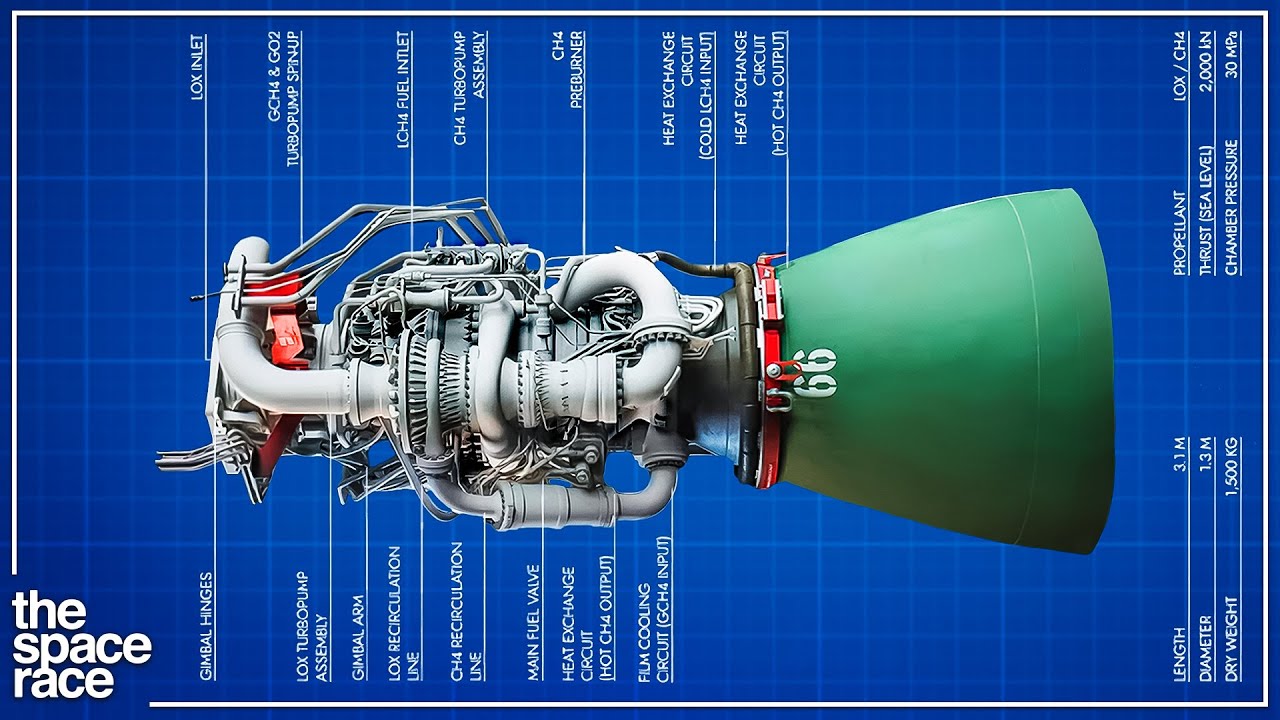
Why don't rocket engines melt? This is a common question many people ask, like those who watched the video about how the Starship's Raptor engine works, which, by the way, is the most-watched video on our channel. Today, we're bringing a sort of second part to that video.
So if you like this kind of content, comment down below. The gases inside a rocket engine's combustion chamber can easily reach over 3,000 degrees Celsius, which is about half the temperature of the Sun's surface. This temperature is more than enough to change the state of most materials.
Engines need to reach this temperature to function properly, but how can they survive such an extreme temperature? In this video, we will explore five cooling methods that prevent rocket engines from melting. First, let's review the classification: a rocket engine is powered by an oxidizer, which is oxygen, and a fuel, which can be RP-1, methane, or hydrogen, with these being the most common in the aerospace industry.
The mixture of the oxidizer and fuel forms the propellant. It's important to note that these components are kept at cryogenic temperatures, which can reach about -183 degrees Celsius, contributing to the efficiency of engine cooling. At the top of the combustion chamber, we find the injector.
This is where the fuel and oxidizer are pumped into the chamber at extremely high pressure. Inside the chamber, these two components mix and begin to burn. As long as the propellant flow continues, thanks to the turbopumps, the burning and ignition of the propellant persist.
But how do the metal walls of the chamber not melt as the hot gas passes through them? Well, one viable option would be to increase the thickness of the walls to the point where the hot gases can't heat the thick layer of metal enough to melt it. In this scenario, the walls would act as a heat sink, which is a large thermal conductor capable of withstanding high temperatures for a period of time before all the metal reaches its boiling point.
An exotic material such as Inconel, a nickel-chromium alloy, or another high-temperature-resistant alloy could be a suitable choice for this purpose. However, relying solely on the material that the engine is made of presents several significant limitations. One of them is the additional weight they would add.
Weight reduction is an extremely important factor in rocket construction, and thick metal walls would add considerable extra weight to the rocket's structure. Another issue is that the engine would only be able to operate for a certain period of time before all the metal eventually reached its melting point and fully melted. Another strategy to prevent a rocket engine from melting is to operate it with a fuel-rich or oxidizer-rich mixture, which will lower the temperature of the main exhaust.
This ratio between the mass of fuel and oxidizer is called the fuel-to-oxidizer mass ratio. When you want all of your propellant to be completely burned and all substances to react with each other, you need to burn the fuel and oxidizer in an ideal balance. The ideal balance is one where the total amount of fuel and oxidizer reacts completely and efficiently.
This means that every atom of each molecule will react with another atom for complete combustion. The result is the release of the maximum amount of heat from the chemical bonds. This can be advantageous in some situations but not when dealing with rocket engines.
The more heat a rocket engine produces, the more you need to cool the engine to prevent it from melting. This means that rocket engines have a slightly different quantity of fuel to oxidizer. The main combustion chamber of an engine is often fuel-rich because this results in lower thermal load and greater efficiency.
The turbines or preburners can be designed with a higher quantity of fuel or oxidizer, depending on the engine. For example, the RS-25 main engine used on the Space Shuttle had more fuel in its preburner, while the NK-33 engine designed by the Soviets had more oxidizer in its preburner. Having this imbalance between fuel and oxidizer contributes significantly to engine cooling.
Abrasion cooling is one of the simplest and most effective methods for cooling an engine. This method involves the use of a material that wears away with heat and is subsequently discarded, taking the heat with it. Typically, a carbon composite with an extremely high melting point is used.
This technique is similar to the method used by most spacecraft for thermal protection. When a spacecraft enters the atmosphere and is subjected to high temperatures, the heat shield absorbs the heat. When the surface of the heat shield reaches high temperatures, it sheds a layer, carrying away the excess heat.
This prevents the heat from propagating deeper into the spacecraft. The same principle can be applied to cool a rocket engine. Inside the walls of the combustion chamber and the nozzle, there is a layer of carbon composites.
When the propellant is burning in the engine, this layer of carbon is gradually consumed by the heat. This method has no moving parts and is self-regulating, making it extremely efficient and reliable for cooling engines. However, there are some limitations to consider.
The most obvious one is that an engine cooled in this way cannot be reused. Some engines may not even undergo full testing before use because the abrasion cooling process wears down the chamber walls. A notable example of this is the ascent engine used on the Apollo lunar module, which could not be tested as a complete unit before being used on the lunar surface to return astronauts to Earth, making it an extremely risky operation.
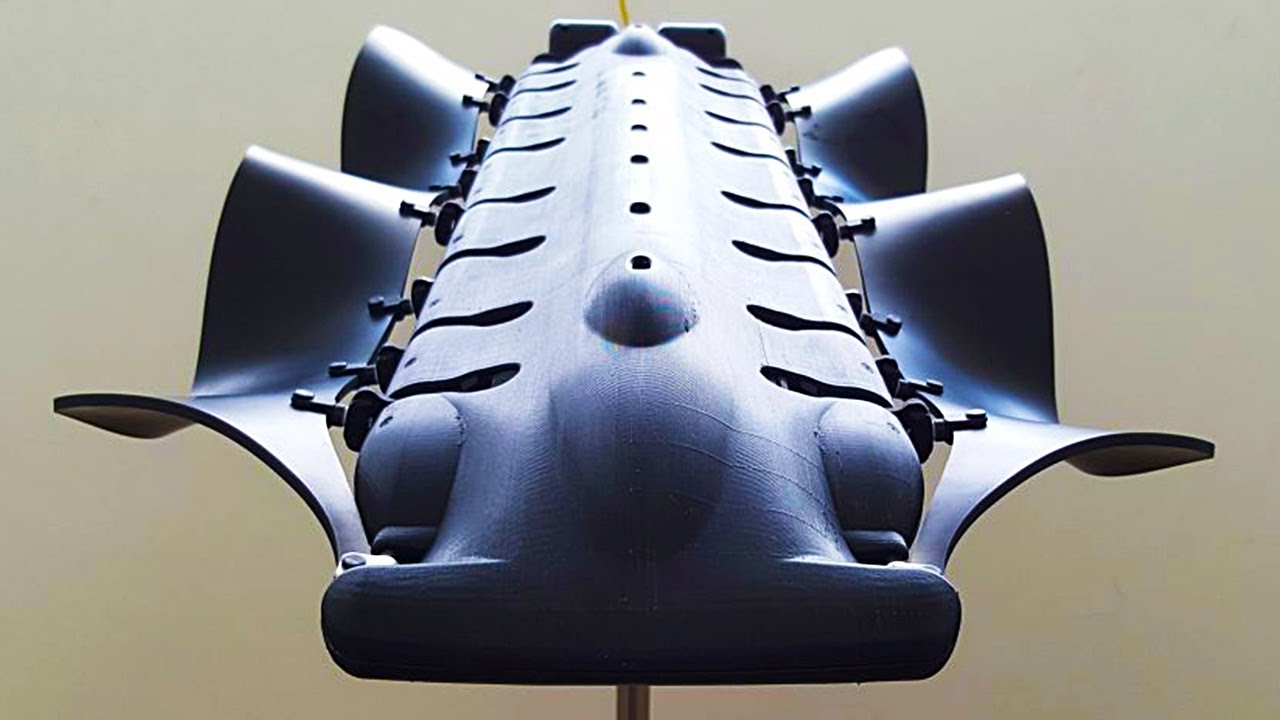
Furthermore, there are other examples of engines cooled by abrasion, such as SpaceX's first Merlin engine, the Merlin 1A, which was used in the first two flights of the Falcon 1, and the United Launch Alliance's RS-68A engine, employed on the Delta IV rocket. Regenerative cooling is the most common method to prevent a liquid-propellant rocket engine from melting. In this process, a portion or all of the propellant is directed to flow through the nozzle and the walls of the combustion chamber before entering the injectors and entering the chamber.
While the walls and nozzle of rocket engines may appear thin, they have small channels in their structures through which the fuel can flow to keep them cool. It's important to remember that the propellant in question is extremely cold, especially in the case of liquid methane and liquid oxygen. However, one of the main challenges of regenerative cooling is that the pressure inside the walls must be higher than the pressure in the combustion chamber.
This is because the walls act as conduits that feed the injectors, and since pressure naturally flows from high-pressure areas to low-pressure areas, the injectors need to maintain higher pressure than the combustion chamber. However, if the pressure inside the narrow channels of the walls becomes excessively high, there is a risk of rupture and leaks occurring. The next most common cooling method is film cooling.
In this method, a fluid is injected onto the surface of the combustion chamber and nozzle, creating a barrier between the combustion gases generated. The goal is to create a barrier between the wall and the hot gases, where this fluid acts as a thermal insulator. The simplest way to implement film cooling with a liquid is to increase the concentration of fuel or oxidizer injectors on the outside face of the injector.
Since the main combustion chamber typically has a fuel-rich ratio, fuel is preferably used in this method. This will result in an additional ring of fuel flowing around the outside of the injector, where there won't be a sufficient amount of oxidizer for complete combustion. This configuration allows the liquid to circulate between the chamber wall and the hot gases being expelled, cooling the wall.
It's common for rocket engines to use a combination of two or three cooling systems, depending on the specific characteristics of each rocket. For example, the Merlin Vacuum engine used in the Falcon 9 could theoretically use the ablative cooling system since the second stage isn't recovered, but instead, they opt for a combination of regenerative and film cooling systems. Additionally, the extension of the nozzle also helps dissipate additional heat, glowing brightly in the color orange.
This is achieved through the use of a niobium alloy in the construction of the nozzle. Each cooling system has its own advantages and limitations, and the choice of method or combination of methods depends on the specific needs of each rocket and engine. Regarding the Raptor engine of the Starship, all indications are that SpaceX uses the regenerative cooling system, with methane playing the role of cooling the engine.
It's important to remember that this method is extremely complex, and we're only providing a general overview in this explanation. Furthermore, we don't have a complete understanding of the internal anatomy and operation of the engine because SpaceX keeps much of its technology secret to prevent it from falling into the hands of competitors. If you want to learn more about the Raptor engine, watch this video here in the card as it is part 1 of this video.
Additionally, if you learned something from this video, consider subscribing and leaving a like. See you next time!