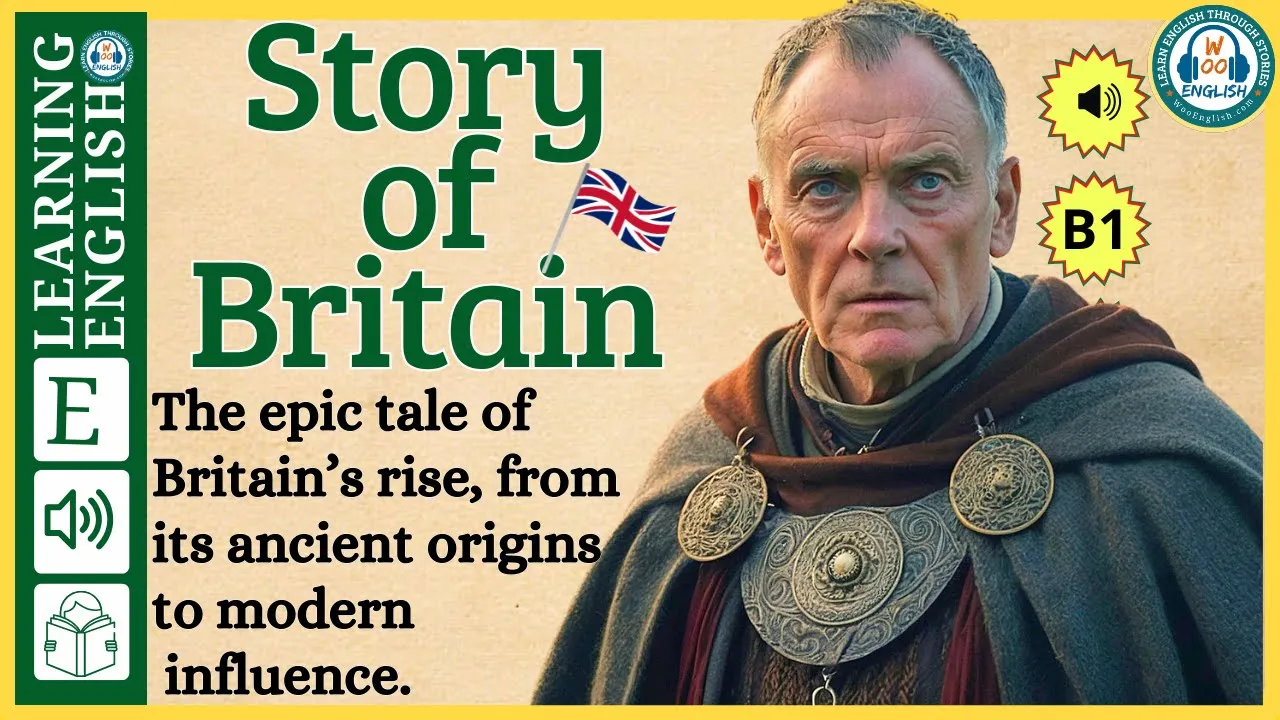
Chapter 1. From Fragments to Kingdom In the beginning, Albion was a wild and untamed land. Imagine it. Green rolling hills, mist-shrouded forests, rivers snaking their way through vast, open fields. It was a land of tribes, fierce and proud, living in scattered villages, their ways ancient and untamed. To the Romans, who called this island Britannia, it was a far-flung corner of the world, full of mystery and danger. But something was stirring in these ancient lands, something that would change the course of history forever. The Roman Empire came like a storm, its legions marching, their iron shields
gleaming under the rare British sun. Roads were built, cities rose, and for over three centuries, the Romans ruled, spreading their Influence across the island. But as with all empires, their time would come to an end. By the year 410, the Roman Empire was crumbling, and the soldiers who once kept peace in this distant land were called back to defend Rome itself. Britannia was left abandoned, and so the land fell into chaos. The native tribes, the Britons, found themselves vulnerable. Fierce raiders from across the sea, the Picts from the north and the Saxons from the east,
began to pour into the land. These new invaders brought war, destruction, and fear. The Britons fought bravely, but they could not stand against the might of the Saxons for long. By the 5th century, the land was fractured, broken into small warring kingdoms, each ruled by its own king. Kent, Mercia, Wessex, Northumbria, each one a separate power fighting for dominance. The island, now divided, seemed destined for endless conflict. But in this time of darkness, there was hope. The Saxons, though fierce, brought with them new ideas, new systems of governance, and over time, new faith. Christianity began
to spread across the land, carried by monks and missionaries, transforming the old pagan kingdoms. One by one, the kings of these fractured realms embraced the new religion, and with it came a glimmer of unity. It was in Wessex, the southernmost of the Saxon kingdoms, that the winds of change truly began to blow. Enter Alfred the Great. Alfred, wise, cunning, and bold. He was not just a warrior king. He was a man of vision. Under his rule, Wessex stood as a beacon of strength, a kingdom that defied the Viking invaders who ravaged the land. When all
seemed lost, when the Danes had taken much of the land, Alfred led a daring resistance. In the marshes of Somerset, he gathered his people, like a lion preparing to strike. And strike he did. In 878, at the Battle of Eddington, Alfred defeated the Viking leader, Guthrum, forcing him to convert to Christianity and make peace. But Alfred's legacy was more than just war and victory. He dreamed of something greater, a unified land. He laid the foundations for a kingdom, one that could stand strong against any invader. He reformed the laws, built schools, and encouraged learning. He
was not just a king of Wessex, but a king who planted the seeds for something more. Yet, Alfred's dream of unification would not come to fruition in his lifetime. The years that followed saw continued strife. The Vikings, though weakened, were still a threat. They carved out their own territories, the Danelaw, in the east of England. But Wessex, under Alfred's descendants, remained strong. And then came the man who would finally fulfill the dream of a united England, Æthelstan. Æthelstan, Alfred's grandson, was a king with a destiny. In the year 927, he did what no other had
done before him. He united the English kingdoms under one crown, With his swift and decisive actions, he defeated The last of the Viking rulers and brought the northern kingdoms into his fold. For the first time in history, there was one king ruling over all of England. But Æthelstan was not content with mere unification. Oh no, he sought greatness. In 937, he faced a massive coalition of enemies, Scots, Vikings, and Welsh, all gathered to challenge his rule. The battlefield at Brunnenburg was where Æthelstan would prove his might. The clash of swords, the cries of warriors, the
thunder of hooves, this was a battle for the ages. When the dust settled, Æthelstan stood victorious, and the fate of England was sealed. England, once fractured and divided, was now a single, united kingdom. Yet, the story of this land was far from over. For even as Æthelstan ruled, the Viking threat lingered, and new dangers would soon arise. But in the heart of England, a kingdom had been born. The foundation had been laid for something greater, an empire that would one day stretch across the globe. The echoes of the past still whispered in the winds of
Albion. The tribes who once roamed these lands, the Roman legions who built their roads, the Saxon kings who fought for power, all were part of a greater story, a story of struggle, ambition, and the unrelenting pursuit of power. And this story, the story of England, had only just begun. Chapter Two, The Norman Thunderbolt 1066, a year that would forever change the face of England. The land trembled beneath the thunderous march of soldiers. Swords gleamed in the pale light, and in the distance, a foreign fleet approached. At its head was a man of ambition, a man
determined to seize what he believed was his by right, William of Normandy. The story of this Norman duke and his daring conquest is one that shook the island to its core. The Saxons ruled England, yes, but that was about to change forever. It all began with a promise, whether made in truth or whispered in deceit. King Edward the Confessor, childless and nearing the end of his reign, was said to have offered the crown to William. But when Edward died in January 1066, it wasn't the Duke of Normandy who was crowned king. Instead, it was Harold
Godwinson, a Saxon nobleman who claimed the throne. To William, this was a betrayal, an insult that could not be ignored. William's heart burned with fury, and his ambitions grew even stronger. He prepared for war, gathering a massive fleet, thousands of soldiers, and the blessings of the Pope himself. His banner fluttered in the wind, emblazoned with the cross as his ships set sail across the stormy seas. Meanwhile, in England, Harold's army was stretched thin, fighting battles on multiple fronts. The timing was perfect for William's strike. And so, on September 28, 1066, the Norman fleet landed on
the shores of England, near Pevensey. The invasion had begun. The two forces would soon meet in battle, but not just any battle, one that would echo through history for centuries to come, the Battle of Hastings. It was the 14th of October, 1066, the dawn of a day that would forever change the kingdom. Harold's army, weary from their fight against the Norwegian king just weeks before, now stood against the Normans. The ground shook as the two armies clashed, shields shattered, and swords flashed. From the hills, the Saxon forces fought valiantly, their shield wall strong, their spirits
high. But William was relentless. Again and again, the Norman cavalry charged up the hill, their horses' hooves pounding like thunder. Arrows darkened the sky, raining death upon the Saxons. The battle raged for hours. And then, the unthinkable happened. Harold, the king, was struck down. An arrow pierced his eye, and with that single blow, the fate of England was sealed. Harold's death sent shockwaves through his army. The Saxon lines crumbled, and the Normans pressed forward, unstoppable. By the end of the day, the hill of Hastings was littered with the bodies of the fallen. England's last Saxon
king was dead, and William of Normandy was victorious. But the conquest was far from over. William, now known as William the Conqueror, marched to London, his eyes set on the crown. On Christmas Day, 1066, in Westminster Abbey, he was crowned king of England. A foreigner had taken the throne, and England would never be the same again. William's rule was like a storm, sweeping changes across the land. Castles, those looming stone fortresses, began to rise from the earth like shadows. These were not just symbols of power. They were tools of control, towering over towns, a constant
reminder of the new ruler's iron grip. The most famous of these? The Tower of London, a stark symbol of Norman authority. But William's influence didn't stop at stone walls. He rewrote the very laws of the land. The Anglo-Saxon nobility, once powerful and proud, were stripped of their lands, their titles, their wealth. In their place, Norman lords took control, speaking a new language, enforcing new customs. The old ways were dying. William's reign was not without resistance. Oh no, rebellions broke out across the kingdom. In the north, the English rose up, refusing to bow to this foreign
king. But William, William was merciless. His response was swift and brutal. The harrying of the north, as it would come to be known, was a campaign of devastation. Villages were burned, crops destroyed, and thousands were left to starve. It was a harsh reminder that William's rule would not be challenged. But there was more to William's legacy than just conquest and bloodshed. His rule brought lasting changes, changes that would shape England's future. He ordered a great survey of his new kingdom, known as the Domesday Book. This meticulous record detailed every inch of land, every farm, every
village, and its worth. It was a remarkable feat, the first of its kind, and it solidified William's control over the wealth of the nation. Under William, England was no longer an isolated kingdom. It became part of a larger European world bound by ties to Normandy and France. The English crown, once purely Saxon, was now connected to a vast network of lands across the Channel, and thus the seeds of England's future conflicts were sown. The threads of history, now woven with Norman influence, would lead to centuries of struggle Between England and France. But for now, William's
grip was secure. The Norman conquest had not only brought a new king, but it had reshaped the very identity of England. The language changed, with Norman French blending into the old Anglo-Saxon tongue. The architecture, the governance, the very way of life was transformed. William the Conqueror had left his mark. His rule was not just a moment in time. It was the birth of a new era, an era that would lay the foundations for England's rise to greatness. But the journey was far from over. As the dust of Hastings settled and the Norman castles loomed over
the land, one thing was certain. England would never be the same again. The Norman thunderbolt had struck, and England, as it once was, was gone. Chapter Three Lionheart and Shadows The year was 1189, and a new king had taken the throne. Richard the Lionheart, a warrior whose name would echo through the ages. But though his heart beat with the fire of a soldier, his head— his head was far from the crown of England. Richard's rule was not about ruling at all. No, his eyes were set on distant lands, on Jerusalem, for Richard was a king
born for battle. The Third Crusade called to him, a mission to reclaim the Holy Land from Saladin, the legendary sultan of the Muslim world. And so, shortly after taking the throne, Richard left England behind, setting sail for glory, leaving his kingdom in the hands of others. But while Richard sought honor in far-off deserts, England simmered with unrest. His departure left a vacuum, a dangerous emptiness that threatened to tear the kingdom apart. The fields and castles of England felt his absence as if the very soil itself grew restless. And in the shadows, someone was watching, waiting
for his chance. John, Richard's younger brother. John, the ambitious one, the cunning one. A man not as loved as his brother, not as noble, but just as hungry for power. While Richard was off fighting in the east, John stayed behind, scheming, plotting, waiting for the perfect moment to seize the crown for himself. Whispers spread across the land, rumors of treachery, of John's secret deals, of alliances made with enemies both foreign and domestic. As Richard fought with sword and shield, John wove a different kind of war, a war of whispers, Promises, and betrayal. The nobles grew
uneasy. Who was their true king? The one who wielded the sword in distant lands or the one who stood among them, weaving plots in the dark? Meanwhile, Richard, far from England's shores, was carving out his legend in the Holy Land. The battle for Jerusalem was fierce, the clash of Christians and Muslims echoing through the hills. Richard's courage knew no bounds. His sword struck down enemies. His tactics outwitted even Saladin himself. Yet despite his bravery, despite his victories, Jerusalem remained elusive. And so, after years of battle, a truce was made. But the Holy City would not
be Richard's. As the crusade ended, the Lionheart turned his gaze homeward. But home would not come easily. On his journey back to England, Richard was captured by his enemies in Austria. Held for ransom, his fate hung by a thread. For months, the people of England waited, feared, hoped. Would their king return? Would the man who had abandoned them to chase his dreams of glory ever reclaim his throne? And in the darkness of those long months, John saw his chance. With Richard imprisoned, John seized control, declaring himself ruler in all but name. He took castles, gathered
supporters, and began to wear the crown as if it were his own. England was his. Or so he thought. But even in captivity, Richard was not a king to be forgotten. His mother, the indomitable Eleanor of Aquitaine, worked tirelessly to secure his release. The people of England, despite his absence, still loved their Lionheart. They paid a heavy ransom. And at last, in 1194, Richard returned. The air was thick with tension. John had tasted power, had played the role of king. But with Richard's return, his schemes unraveled. John, ever the survivor, threw himself at his brother's
mercy, and in an act of astonishing forgiveness, Richard spared him. The kingdom, for the moment, was safe. But Richard's heart still yearned for battle. He could not stay in England. Once again, the Lionheart left, this time to wage war in France, reclaiming lands from those who had defied him during his imprisonment. It was there, in the fields of battle, not in his own kingdom, that Richard would meet his end. In 1199, while besieging a small castle, a crossbow bolt struck him down. The great warrior king felled by a single arrow. Richard died far from the
land he ruled, his dreams of glory cut short. And with his death, the shadow of his brother loomed larger than ever. For now, with the Lionheart gone, there was no one to stop John from taking the throne. The crown was his. But what kind of king would he be? John, now king of England, had always lived in his brother's shadow. But his time had come. The kingdom was his to shape, to control. But the people, the barons, and even history itself would soon turn against him. For England was entering a new era, and the shadows
that followed John would grow darker still. The Lionheart had fallen, and in his place, shadows danced across the land. Chapter 4 Magna Carta, The Roar of Rebellion 1215, a year of defiance, a year when the ground beneath England's rulers trembled, not from foreign invaders or rival armies, but from their own people. And at the heart of it all, King John, a monarch cornered, his power slipping from his grasp. The winds of rebellion were howling, and the barons, England's most powerful nobles, had had enough. For years, John had ruled with an iron fist. Taxes squeezed the
land dry, castles were fortified, and wars, both lost and won, drained the kingdom's coffers. John's failed military campaigns in France, the loss of Normandy, and his relentless demands for money had turned his own barons, once his strongest allies, into his fiercest enemies. The people were weary, the church was at odds with him, and even the very heir in the kingdom seemed thick with discontent. But what pushed the barons to revolt wasn't just John's failed wars or his heavy taxes, it was justice, or rather, the lack of it. John's rule was marked by arbitrary decisions, abuses
of power, and a king who thought himself above the law. Land could be taken without reason, justice bought and sold, and no man's life was truly his own Under the weight of John's crown. Something had to change, and the barons, fed up with being trampled, decided to act. So, in the early months of 1215, a banner of rebellion was raised. The barons gathered their forces, calling for an end to John's tyranny. They wanted freedom, fairness, and rights that would protect them from the king's unpredictable rule. At first, John resisted. He was king, after all, crowned
by God's grace, and to him that meant absolute power. But the rebellion grew, and John's grip on the throne weakened. It became clear that if he didn't negotiate, his rule could collapse entirely. The pressure mounted, and soon, John had no choice. The stage was set for a meeting that would change history. The fields of Runnymede, a place forever etched in the story of England. In June 1215, John, flanked by his loyal knights, rode to meet the barons. Their banners flew high, black against the sky, like the wings of ravens ready to descend. The barons stood
firm, their voices united. This was no longer about mere requests. This was a demand. And what they wanted was a document, a pact, that would forever limit the power of the crown. They called it the Magna Carta. In this moment, the fate of the kingdom hung in the balance. John had no army large enough to crush the rebellion, no allies to call upon. With his back against the wall, the king, trembling with frustration and fury, agreed to seal the document. The scene was tense. John's face twisted with anger, his hand shaking as he pressed his
royal seal onto the parchment. He knew this was not a victory. It was a concession, one made out of necessity, not choice. The Magna Carta was born. This simple document, yet so powerful. It contained 63 clauses but a few stood out above the rest, clauses that would echo through time, shaping not just the history of England, but the very foundation of democracy across the world. No man, not even the king, is above the law, it proclaimed. The rights of free men to a fair trial, the protection from unlawful imprisonment. These were revolutionary ideas. For the
first time, the absolute power of the monarchy had been challenged. John, a king, was now bound by the law. The barons had won a victory, but it was a fragile one. The ink was barely dry when tensions began to rise again. John, humiliated, never intended to keep his promises. He sought help from the pope, who swiftly nullified the Magna Carta, declaring it illegal and the rebellion resumed. Civil War. John, furious and desperate, tried to regain control by force. Castles were besieged, lands ravaged, and blood spilled across the kingdom. England was in chaos, teetering on the
brink. To defeat the king alone, sought aid from an unlikely source. They invited him to take the English throne, promising to overthrow John once and for all. But fate, it seemed, had other plans. In the midst of the war, as John marched his armies through the east of England, disaster struck. His baggage train, filled with treasure, gold, and supplies, was swept away by the tides of the Wash Estuary, sinking into the muddy depths, never to be recovered. Some say it was a sign, that John's reign was doomed. Not long after, in October 1216, John fell
ill, likely from dysentery. He died in the night, leaving behind a kingdom torn apart by his rule. Yet from the ashes of his reign, a new chapter began. John's son, Henry III, still a boy, was crowned king. With his reign came peace, and the Magna Carta, once torn apart, was reissued, this time becoming the cornerstone of English law. Though the battles between the crown and the people were far from over, a shift had begun. The Magna Carta had spoken. It was more than just a document. It was the roar of rebellion. It was the beginning
of a long journey, a journey toward liberty, justice, and a balance between ruler and ruled. And though King John had tried to silence it, its echoes would ring through the centuries, shaping not just England, but the future of governance across the world. The battles between the crown and the people were only just beginning. In the fields of Runnymede, the seeds of liberty were sown, and the Magna Carta became a symbol of hope. Chapter Five The Crown of Thorns The War of the Roses Red Rose, White Rose The two symbols fluttered in the breeze like banners
of death. England was no longer a kingdom united, but a land torn in two. Cousins turned into enemies, brothers became traitors, and the blood of York and Lancaster stained the fields of England red. This was the War of the Roses, a time when the crown itself was a cursed relic, passed from head to head like a poisoned chalice. The houses of York and Lancaster, both descendants of the royal Plantagenet line, were locked in a brutal struggle for power. The question of who would wear the crown was no longer just a political one. It was a
matter of life and death. The conflict had its roots in the weak and troubled reign of King Henry VI. A king in name, but not in spirit, Henry was plagued by bouts of mental illness. His rule was shaky, his decisions erratic, and the nobles who once supported him began to lose Faith. England was vulnerable, ripe for civil war. In 1455, the first blow was struck at the Battle of St. Albans. The House of York, led by Richard, Duke of York, clashed with the forces of the Lancastrian king. Blood was spilled and a bitter rivalry ignited,
one that would burn for the next three decades. The Duke of York sought to take control of the crown, claiming that his bloodline gave him a stronger right to rule. But his ambitions came with a cost. The crown, it seemed, was not ready to rest on York's head. The wars raged on, battle after battle, death after death. The fields of Towton, Barnet, and Tewkesbury were littered with the bodies of those who fought for a king they would never see. At Towton, the largest and bloodiest battle of the wars, the snow was said to be red
with the blood of the fallen. Thousands lay dead, and still, there was no peace. As the war dragged on, one man rose above the rest, Edward of York, son of Richard, Duke of York. Young, bold, and determined, Edward claimed the crown in 1461 after crushing the Lancastrians at Towton. The white rose of York bloomed brightly on the throne, but England's scars ran deep. Though Edward IV was king, his rule was far from secure. In the shadows, enemies plotted. The red rose of Lancaster had not yet withered. Edward's reign was marked by uneasy peace. The crown,
heavy with thorns, weighed upon his head. But it was his brother, George, Duke of Clarence, and his closest ally, Richard, Duke of Gloucester, who would make this tale of kingship even darker. Ambition ran in the blood of the York family, and brotherly bonds were soon replaced by treachery. And then, in 1483, King Edward IV died suddenly, leaving his crown to a boy, his son, Edward V, just 12 years old. But the boy king would never truly rule. His uncle, Richard, Duke of Gloucester, seized his moment. Cloaked in shadows, Richard swiftly acted. He placed the young
Edward and his brother in the Tower of London, where they vanished from history, known forever as the Princes in the Tower. Rumors spread like wildfire, whispers of murder, betrayal, and deceit. Some said Richard had killed his nephews to claim the throne. Others believed they had been hidden away, alive, but lost to the world. But one thing was clear. Richard III now wore the crown. Yet even with the crown on his head, Richard's reign was haunted. His rule was stained by the blood of those who had once stood in his way. He was crowned king, yes,
but peace was not to be. The thorns of the crown pierced deep, and Richard's reign would be brief and filled with turmoil. In the shadows of Richard's rise, a new challenger emerged, Henry Tudor, a distant relative of the Lancastrian line. Exiled in France, Henry bided his time, gathering forces, waiting for the moment to strike. That moment came in 1485, when Henry landed in England with an army behind him. The final clash was near. The two forces met at Bosworth Field, where the fate of the kingdom would be decided. The battle was fierce, but in the
end, Richard III's forces faltered. As the king charged into the fray, seeking to strike down Henry himself, he was surrounded. Richard, the dark prince who had seized the throne through ambition and ruthlessness, was struck down, killed in battle. His body, stripped and bloodied, was found on the field. With Richard's death, the Wars of the Roses came to a brutal and bloody end. Henry Tudor was crowned King Henry VII, and with his marriage to Elizabeth of York, the two warring houses were finally united. The Red Rose of Lancaster and the White Rose of York merged to
create a new emblem, a Tudor Rose. England was at last at peace, but the crown had passed through blood, betrayal, and battle to get there. The Wars of the Roses had left England scarred and exhausted. Cousins, once bound by family, had slaughtered each other in the name of power. The crown, that coveted symbol of England's rule, had been passed from hand to hand like a curse. And yet, from the ashes of this conflict, a new dynasty rose, one that would take England into its golden age. The war was over, but the thorns of the crown
still pricked the skin of kings. Chapter 6 Tudor Triumph The Reign of Henry VIII Enter the towering figure of Henry VIII, a king larger than life, a monarch whose every move sent ripples across the kingdom and whose every decision reshaped the very course of England's history. Henry VIII, his name alone conjures images of power, grandeur, and a fierce determination to have his way. He ascended the throne in 1509, a young man full of promise. Strong, athletic, charismatic, England believed they had found a golden king, a ruler who would lead them into an era of triumph.
But behind that glittering crown, behind the dazzling feasts, tournaments, and music, there was a restless ambition. Henry VIII was no ordinary king. He was a man who craved power, absolute power, and he would stop at nothing to achieve it. From the very start of his reign, Henry was determined to leave his mark on the world. He sought glory on the battlefield, leading his armies into France in pursuit of fame and victory. His ambition burned brightly. He wanted to be a warrior king like those of old, to carve his name into history alongside the likes of
his ancestor Henry V. And for a time, it seemed he might do just that. Victory in 1513 at the Battle of the Spurs gave him a taste of success, but Henry's greatest battles would not be fought with swords. No, Henry's true struggle would be against something far greater than any foreign enemy. It would be against his own heart, his own desires. His first wife, Catherine of Aragon, was a noble Spanish princess, and their marriage was meant to solidify an alliance between England and Spain. But after years of marriage, Catherine had given him only one surviving
child, a daughter, Mary. And for Henry, this was not enough. He wanted a son, an heir to secure the Tudor dynasty. Without a male heir, Henry feared his kingdom might fall into chaos once more, just as it had during the Wars of the Roses. And so, the king's heart turned away from Catherine and toward Anne Boleyn, a lady of his court. Young, captivating, ambitious, Anne was everything Catherine was not. She had captured Henry's heart, and with it, his kingdom's future. But there was one obstacle, the Pope. In order to marry Anne, Henry needed an annulment
from his marriage to Catherine. He sent his diplomats to Rome, pleading his case, but the Pope refused. This was a blow to Henry's pride, a challenge to his authority. And Henry VIII was not a man who accepted defeat easily. In 1533, in a move that would send shockwaves through Europe, Henry broke away from the Catholic Church. England, once under the spiritual authority of the Pope, was now under the command of Henry himself. The Church of England was born, with Henry as its supreme head. It was a bold, defiant act, a declaration of his independence, his
absolute power. The Reformation had reached England's shores, not through religious conviction, but through one man's determination to control his own fate. With his new power, Henry married Anne Boleyn, and she was crowned queen. But their happiness was short-lived. Anne, like Catherine before her, failed to give Henry a son. She gave birth to a daughter, Elizabeth, a child who would one day rule England with great glory, but at the time, she was a bitter disappointment to the king. Henry's wrath was swift and unforgiving. Anne fell from grace just as quickly as she had risen. In 1536,
she was arrested on charges of treason, adultery, and incest, whether the accusations were true or not mattered little. Anne Boleyn was executed, her life cut short by the blade of an executioner's sword. And with her death, Henry's quest for a son continued. Over the course of his reign, Henry would marry six women in total. Jane Seymour, his third wife, finally gave him the son he so desperately sought, Edward VI. But Jane died soon after childbirth, and Henry's heart once again was plunged into darkness. His subsequent marriages, first to Anne of Cleves, a German princess whom
he quickly divorced, then to the young and reckless Catherine Howard, who was executed for treason, and finally to the calm and steady Catherine Parr, were all marked by political maneuvering, personal betrayal, and the king's ever-growing paranoia. But the Reformation was not just about Henry's marriages. It tore at the very fabric of England. Monasteries, long centers of power and wealth, were dissolved. Their lands were seized. Their riches confiscated. The old Catholic ways were dismantled, brick by brick, and in their place rose a new Protestant order. Yet, beneath the surface, discontent brewed. Not everyone in England embraced
these changes. Rebellions erupted, most notably the Pilgrimage of Grace in 1536, a massive uprising in the north that demanded the return of Catholicism. Henry's response was brutal. The rebellion was crushed. Its leaders executed. The king's will was law, and any who dared to challenge it paid the price in blood. By the time Henry reached the later years of his reign, his once vigorous body had deteriorated. He grew obese, plagued by illness, and a festering leg wound that never healed. But even as his body failed him, his mind remained sharp, calculating, ruthless. He ruled with an
iron fist, his court full of intrigue, plots, and betrayals. When Henry VIII died in 1547, he left behind a legacy of both glory and ruin. He had broken the power of the Catholic Church in England, created a new religious order, and secured the Tudor line with a male heir. But his reign had come at a great cost. Thousands had died, and the kingdom was left divided by religion, torn between the old ways and the new. The towering figure of Henry VIII had cast a long shadow over England, one that would linger for generations to come.
He had reshaped the kingdom, but the consequences of his reign, the conflicts he set in motion, were far from over. The king was gone, but the echoes of his reign would never truly fade. Chapter 7 Elizabeth The Golden Age of Glory The year is 1558. A young woman stands at the threshold of destiny, her red gold hair catching the light of a new dawn. Elizabeth Tudor, daughter of Henry VIII and Anne Boleyn, had inherited a kingdom riddled with turmoil, a nation divided by religion, and a crown weighed down by the burden of her father's and
sister's legacies. But the girl who would become the virgin queen had more than just a crown. She had a heart of steel. Elizabeth I. The virgin queen, as she would later be known, ascended to the throne with the weight of England's future resting on her shoulders. The kingdom was surrounded by enemies, Spain, France, the threat of rebellion from within, and the very air of England was thick with uncertainty. Yet, it was in this crucible that Elizabeth forged her reign. And transformed her kingdom into a beacon of power, prosperity, and culture. Her early years as queen
were marked by danger. The specter of religious conflict loomed large over England. Her sister, Mary I, had burned Protestants at the stake in her quest to restore Catholicism. And now, Elizabeth had to navigate this fragile, divided landscape. Though she was Protestant, she knew that her survival depended on a delicate balance. She sought a middle path, a religious settlement that would appease both sides. Neither fully Catholic nor fully Protestant, but uniquely English. It was a master stroke, one that allowed her to keep the peace for a time. But peace was never guaranteed. As Elizabeth ruled, her
enemies gathered like storm clouds on the horizon. Chief among them was Philip II of Spain, the most powerful monarch in Europe. A staunch Catholic who viewed Elizabeth's Protestant reign as an affront to his faith. He had once been married to her sister, Mary. And with her death, his hopes of controlling England had crumbled. Now, his eyes were set on Elizabeth's throne. Tensions simmered as England's bold sea captains, the likes of Sir Francis Drake and Sir Walter Raleigh, defied Spanish rule on the seas. These men were not just explorers. They were pirates, stealing Spain's treasure, plundering
its ships, and bringing back gold that filled Elizabeth's coffers. The Queen, sly and strategic, supported them from the shadows, knowing full well that each act of piracy would fan the flames of Spanish rage. But it was not just on the seas that Elizabeth faced danger. In the shadows of her court, within her own kingdom, there were plots, whispers of assassination, rebellion, and treason. The most notorious of these came from her cousin, Mary, Queen of Scots. A Catholic and a legitimate heir to the English throne, Mary was a rallying point for those who wanted to see
Elizabeth overthrown. For years, Mary plotted against Elizabeth, hoping to seize the crown. But Elizabeth, ever shrewd, watched her carefully, waiting for the moment to strike. In 1586, the infamous Babington Plot was uncovered, a Catholic conspiracy to murder Elizabeth and place Mary on the throne. The Queen's spymaster, Sir Francis Walsingham, had intercepted letters proving Mary's involvement. With a heavy heart, Elizabeth signed her cousin's death warrant. Mary, Queen of Scots, was executed in 1587, and with her death, the last major threat from within was silenced. But the greatest challenge was yet to come. 1588, the year England's
fate hung by a thread. Across the seas, Philip II of Spain had been preparing for war. His mighty fleet, the Spanish Armada, was set to sail for England's shores, bringing with it an invasion force that would crush Elizabeth's reign once and for all. The ships were colossal, bristling with cannons, their sails billowing like the wings of a great Beast. England, by comparison, was small, vulnerable, seemingly defenseless. Yet, in the face of this looming threat, Elizabeth's resolve only hardened. As the Spanish fleet sailed closer, she rode out to meet her troops at Tilbury, dressed not in
the silks of a queen, but in the armor of a warrior. Her voice rang out across the camp, strong, fearless, as she declared, I know I have the body of a weak and feeble woman, but I have the heart and stomach of a king, and of a king of England too. The Armada came, but it was met by England's smaller, faster ships and the ferocity of her sea captains. Drake, Raleigh, and the English navy harried the Spanish fleet, darting in and out like wolves, attacking a lumbering giant. The battle raged, but then came a stroke
of fortune. A great storm. The Protestant wind, as it was later called, swept in, scattering the Spanish ships. Many were wrecked on the rocky coasts of Scotland and Ireland. The once invincible Armada had been shattered. England had survived. Elizabeth's triumph over the Armada was not just a victory. It was a moment that defined her reign. It solidified her as a queen who could stand against the might of the world's greatest powers, a symbol of strength and resilience. England, once a small island nation, now stood tall on the global stage. But Elizabeth's reign was not only
marked by war and politics, it was also an age of renaissance, a Golden period of culture, poetry, and exploration. William Shakespeare, Christopher Marlowe, Edmund Spencer. These were the voices that flourished under her rule. The theaters of London brimmed with life, their stages filled with stories of kings, queens, love, and betrayal. England's soul was being shaped in this time. Its identity forged not only in battle, but in art. Across the seas, English ships ventured into the unknown, exploring the new world. Sir Walter Raleigh claimed lands in the Americas, naming the colony Virginia in honor of Elizabeth,
the Virgin Queen. The seeds of empire were being planted, and though Elizabeth herself would not see it grow, her reign laid the foundation for England's rise as a global power. As the years passed, Elizabeth grew older. Her once vibrant hair turned white, her court filled with younger faces. She never married, choosing instead to wed herself to her kingdom, a decision that earned her the title of Gloriana. Her image became a symbol of purity, strength, and continuity. But beneath the surface, the weight of her decisions, the executions, the betrayals, and the endless threats took their toll.
By 1603, after 45 years on the throne, the Virgin Queen's long reign came to an end. Elizabeth the Queen died, her kingdom at peace, her legacy secure. Under her rule, England had transformed, rising from the threat of invasion and rebellion to become a nation of strength, culture, and power. The Golden Age of England had shone brightly, and though Elizabeth was gone, the light she kindled Would burn on for centuries. The Virgin Queen had left her mark, and England, her kingdom, would never be the same again. Chapter Eight Civil War and the King's Fall In the
heart of the 17th century, England tore itself apart. The year was 1642, and a storm was brewing. It was not a storm of nature, but one of politics, religion, and power. At its center stood King Charles I, a monarch who believed in the divine right of kings, an unshakable conviction that his authority came directly from God. But across from him, growing in strength, was Parliament, a body of men who believed that the crown should answer to the people, not rule over them. And so, the lines were drawn. King against Parliament, cavalier against roundhead, sword against
sword. The seeds of this conflict had been planted years earlier. Charles I's reign was marked by tension from the very beginning. He was stubborn, aloof, and believed that compromise was beneath a king. He clashed with Parliament over money, over religion, over his right to rule without interference. In 1629, he dissolved Parliament altogether, choosing to rule alone. For eleven years, known as the Personal Rule, Charles governed without calling Parliament, taxing his subjects heavily, imprisoning those who defied him, and enforcing a rigid Anglicanism that angered the growing number of Puritans. But Charles's grip on power was not
as firm as he thought. By 1640, rebellion stirred in Scotland, and Charles was desperate for money to crush it. Reluctantly, he called Parliament, hoping for their support. But Parliament saw an opportunity and seized it. They demanded reforms, pushed back against his royal authority, and sought to curb his powers. The tension was palpable, like a rope pulled tight, ready to snap. And in 1642, it did. The English Civil War had begun. On one side stood the Royalists, loyal to the King, the Cavaliers, so named for their fine clothes and gallant appearance. These were the nobles, the
wealthy landowners, the supporters of tradition. They believed in the monarchy, in hierarchy, in the divine right of kings. They rallied behind Charles, confident that his cause was righteous. On the other side stood the Parliamentarians, the roundheads, named for their simple, closely cropped hair. These were the Puritans, the merchants, and the common folk. They sought to limit the King's power, to create a government that answered to the people. They fought under the banner of Parliament, and were led by a rising star, Oliver Cromwell. The war engulfed the kingdom, and the skies over England darkened with the
smoke of gunpowder. Battles were fought in fields and towns, castles besieged, families torn apart. The Battle of Edge Hill, the first major clash, saw no clear winner, but it signaled that this would be a long and bitter struggle. The tide of war swung back and forth, one year favoring the King, the next Parliament. And as the war dragged on, one man rose to prominence, Oliver Cromwell. A devout Puritan and a brilliant military leader, Cromwell forged the new model army, a disciplined professional force that fought with conviction and purpose. Under Cromwell's leadership, the Parliamentarians began to
gain the upper hand. Then, in 1645, at the Battle of Naseby, the tide turned for good. Cromwell's forces decisively defeated the Royalists, and with that victory, Charles' hopes of regaining his full power began to fade. He fled, seeking refuge among the Scots, but even they would betray him. In 1647, Charles was handed over to Parliament, a prisoner of his own people. Yet, the war was not over. Though defeated on the battlefield, Charles remained defiant. He secretly negotiated with the Scots, hoping to raise another army and reclaim his throne. But Parliament, weary of his deceit, had
had enough. In 1648, a second civil war erupted, brief but bloody. Once again, Cromwell's forces triumphed, and this time, there would be no mercy. The fate of the king was sealed. In 1649, Parliament made a decision that would shock the world. They would put the king on trial for treason. Never before had a reigning monarch been judged by his own subjects. The trial was swift, and the outcome inevitable. Charles was found guilty. Guilty of tyranny, of waging war against his own people, of defying the laws of England. And so, on a cold January morning, Charles
the Thor was led to the scaffold at Whitehall. A crowd gathered in stunned silence, watching as the king, once the most powerful man in England, faced his final moment. Clad in black, his expression calm, Charles spoke to those around him, declaring his innocence, insisting that he had acted for the good of his kingdom. But the time for words had passed. With a single stroke of the executioner's axe, the king's head fell. And with it, the monarchy itself seemed to crumble. The crown had fallen, but England's fate was far from certain. As the blade descended, a
new era dawned. England, for the first time in its history, was a republic. A commonwealth led not by a king, but by a man who had risen from the ranks of the people. Oliver Cromwell. The monarchy was abolished, the House of Lords dismantled, and England stood as a nation, transformed. But while Cromwell governed with a firm hand, the scars of civil war ran deep. The kingdom was fractured, exhausted, uncertain of its future. Would the experiment of a republic survive? Could England, a land steeped in centuries of royal rule, truly function without a king? Cromwell ruled
as lord protector, but his reign was one of contradictions, marked by both order and oppression. Religious freedoms were curtailed, royalist supporters persecuted, and England's experiment with republicanism began to unravel. By the time Cromwell died in 1658, the country was yearning for stability and for the crown. And so, in 1660, just eleven years after the execution of Charles I, his son, Charles II, was invited back to England to restore the monarchy. The English civil war had ended, but the echoes of that bloody conflict would be felt for generations. The war had reshaped England, altered its relationship
with power, with kings, and with the people themselves. The question of who should rule—the crown or parliament—had been violently contested, and while the Monarchy was restored, it would never again hold the same absolute power. England had learned that even kings could fall. The king's fall was not just the end of a reign. It was the beginning of a new struggle for the soul of the kingdom. Chapter 9. Restoration and Revolution. The Rise of Parliament. 1660. The Monarchy Restored. Charles II, son of the executed king, returns to England in triumph, his path lined with cheers, flowers,
and the hopes of a nation. After years of Cromwell's strict rule, the people of England were ready for the return of the Crown, ready for the joy and excess that only a king could bring. And Charles? He was ready to embrace it all. His reign ushered in a period of celebration, of theater, fashion, and revelry. But behind the glamour and the laughter, all was not as it seemed. The crown, once absolute, was no longer the unquestioned power it had been. The English Civil War had forever changed the balance of authority. Parliament, emboldened by their victory
over Charles III, had tasted power, and they would not let it go easily. King Charles II, charming, witty, but ever cautious, knew this. He had seen his father lose his head for ignoring Parliament, and he had no intention of meeting the same fate. So he danced a delicate dance, keeping Parliament on his side while subtly reclaiming some of the lost royal power. But beneath the surface, tension simmered. Religion, always a source of conflict, continued to stir discontent. England was still deeply divided between Protestants and Catholics, and Charles II's own sympathies leaned toward the latter. Secretly,
he signed a treaty with Louis XIV of France, agreeing to convert to Catholicism in exchange for financial support. But this was a dangerous secret, one that would come back to haunt the Stuart dynasty. The trouble began with Charles's brother, James, Duke of York, a devout Catholic. When Charles II died without a legitimate heir in 1685, James ascended the throne as James II. His open Catholicism, combined with his attempts to place Catholics in positions of power, sent Shockwaves through England. The Protestant majority was outraged. Fear of a return to Catholic rule swept through the land, and
the whispers of rebellion grew louder. James's actions only fanned the flames. He dissolved Parliament, ruled by decree, and ignored the rights of his Protestant subjects. England was once again on the brink of crisis. But this time, instead of civil war, a revolution was brewing, one that would change the kingdom forever. In 1688, a group of powerful nobles known as the Immortal Seven reached out to William of Orange, the Dutch Protestant husband of James's daughter, Mary. They invited him to invade England and take the throne, hoping to preserve Protestantism and the Rights of Parliament. William, ever
ambitious, seized the opportunity. That November, William of Orange landed in England with his army. The people, weary of James's rule and fearful of a Catholic dynasty, welcomed him with open arms. As William's forces marched toward London, James's support crumbled. In a moment of desperation, the king fled to France, leaving his crown behind. England had just witnessed the birth of the Glorious Revolution. But unlike revolutions in other lands, this one was bloodless. There were no battles, no sieges, no civil war. The crown had been taken, but without the usual violence that accompanies such a shift in
power. William and his wife, Mary, ascended to the throne as joint monarchs in 1689. But they were not like the kings and queens of old. This was a new kind of monarchy, one that answered not just to God, but to the people through Parliament. And with their coronation, something profound happened. In 1689, William and Mary accepted the Bill of Rights, a document that would reshape the very foundation of English governance. It declared that no monarch could rule without the consent of Parliament. The days of absolute monarchy were over. From now on, kings and queens would
reign, but they would not rule. England had become a constitutional monarchy, and the true power of the realm now lay with its elected representatives. The Bill of Rights enshrined key principles. No royal interference with the law, no taxation without Parliament's approval, no standing army During peacetime without Parliament's consent, free elections, and the right to petition the monarch without fear of retribution. These were radical changes, ones that shifted the balance of power firmly in Parliament's favor. England was no longer a country ruled by the whims of a single man, but by laws created by the people's
representatives. The monarchy, once seen as the ultimate authority, was now just one part of a larger, more complex system of government. And the effects of this revolution were felt far beyond England's shores. The glorious revolution inspired political thinkers across Europe and America. It showed that a nation could limit its monarch, could insist on the rule of law, and could protect the rights of its citizens. This moment, this bloodless revolution, planted the seeds of modern democracy. But England's journey was far from over. The Act of Settlement in 1701 ensured that only a Protestant could inherit the
English throne, further cementing the triumph of Parliament over the Crown. With each new Act, with each new monarch, the power of Parliament grew stronger. And yet, even as the monarchy's influence waned, England was rising. Rising to become a global power, one whose influence would stretch across the seas. The Union of England and Scotland in 1707 created the United Kingdom, a new political entity that would dominate the world stage in the centuries to come. Trade, exploration, and the rise of a global empire were on the horizon. But it was the rise of Parliament, the shift from
absolute monarchy to constitutional monarchy, that allowed England to evolve into the modern state it would become. As William and Mary's reign came to an end, a new era began. One where kings and queens would no longer hold unchecked power, but where the voice of the people through Parliament would steer the course of the kingdom. The monarchy had been restored, but the Crown now bowed to the will of the people. And England would never be the same. Chapter 10. The Sun Never Sets. The Rise of Empire. From the foggy shores of the British Isles to the
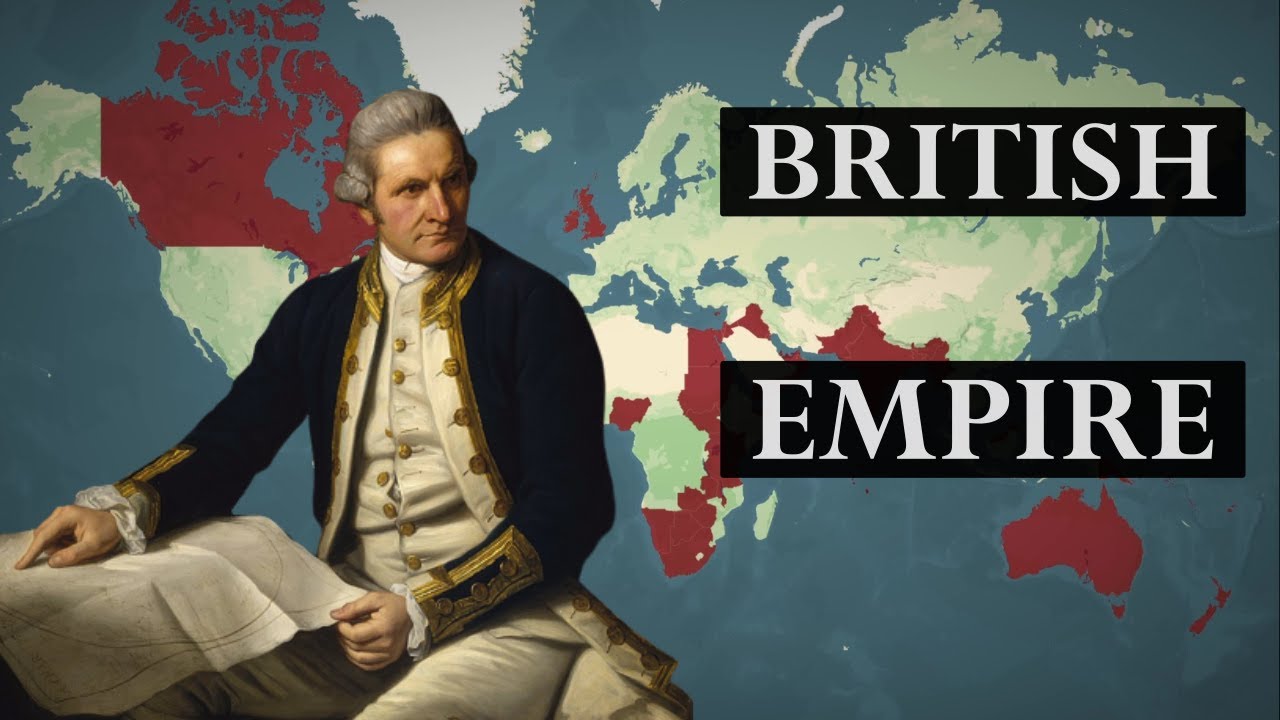
farthest reaches of the globe, the Empire of Great Britain was born, and soon its influence stretched across continents, from Africa's deserts to the teeming cities of India, from the wilds of the Americas to the distant lands of Australia. This was the age of Empire, the British Empire, a vast dominion over which, it was said, the sun never set. But this rise to global power did not happen overnight. It began with exploration, driven by the thirst for adventure, trade, and riches, and was built on the strength of the Royal Navy, which would come to dominate the
world's seas. The journey of Empire began in the wake of the Tudors, when England, once a small island kingdom, looked beyond its shores for new opportunities. As the 16th century drew to a close, British ships ventured out, captained by figures like Sir Francis Drake and Sir Walter Raleigh, who set sail to explore the unknown and plunder the treasures of rivals. The seeds of Empire were planted in these early voyages, and though the first attempts at colonization in America and Roanoke ended in failure, they set the stage for greater ambitions. It was in the 17th century
that Britain's imperial ambition truly began to take shape. The establishment of the East India Company in 1600 marked the beginning of British dominance in India, as traders set up posts along the coastlines, dealing in silk, spices, and tea. But these traders were more than just merchants. They were the forerunners of conquest. As the years passed, the British presence in India grew stronger, and by the time the Mughal Empire began to weaken, the British would be there, ready to seize control. In the Americas, British settlers founded colonies in what would later become the United States and
Canada. Towns sprouted in the New World, where English settlers clashed with both the native populations and other European powers. By the 18th century, Britain was locked in a bitter struggle with France, their greatest rival, over control of the vast territories in North America, the Caribbean, and India. The two nations' fates collided in the Seven Years' War, which ended in 1763 with a decisive British victory. Britain's prize? Canada, and dominance in India. But the cost of that victory would soon be felt. The growing empire was not without its challenges. In 1776, rebellion erupted in the American
colonies. The American War of Independence had begun. Britain, so used to conquest, found itself facing a new kind of enemy, its own subjects, demanding freedom driven by the ideals of liberty and self-governance. The war dragged on for years, and despite its mighty navy and professional armies, Britain was forced to surrender. In 1783, with the signing of the Treaty of Paris, Britain lost its American colonies. The first great crack in the empire had appeared, but Britain would not fall. Even as the Americas slipped away, the empire continued to expand. Britain's navy grew stronger, its ships cutting
through the oceans with ease, its dominance at sea uncontested. The 19th century ushered in the Industrial Revolution, and with it came the power to shape the world on an unprecedented scale. Factories, coal, iron, and steam engines fueled the British economy, and soon British goods were traded across every continent. But it wasn't just trade. Britain's influence reached deeper. In India, the British East India Company acted as both a trading corporation and a governing body, expanding British control through diplomacy, manipulation, and, when necessary, brute force. The British built railways, roads, and schools, while also exploiting the country's
resources. But the Indian people, though divided by region, language, and religion, began to resist. In 1857, the Indian Rebellion, also known as the Sepoy Mutiny, shook the British hold on the subcontinent. The rebellion was crushed, but its impact was clear. British control had to be formalized. In 1858, India became a British crown colony, and Queen Victoria was declared Empress of India. But even as the empire grew, so did the costs. For behind the grandeur of empire, there were rebellions, revolutions, and the undeniable suffering of those under British rule. In Africa, Britain sought control of the
continent's rich resources. It was the era of the Scramble for Africa, when European powers raced to carve up the land. Britain claimed vast territories—South Africa, Egypt, Nigeria, and Kenya, to name a few— bringing them under the Union Jack. The Zulu Wars and the brutal Boer War in South Africa were bloody reminders that the empire's expansion came at a great price. In Ireland, long under British rule, the cry for independence grew louder. Throughout the 19th century, Ireland struggled with famine, land rights, and oppressive British governance. And in 1916, the Easter Rising would mark the beginning of
Ireland's push for freedom— a struggle that would ultimately divide the island and leave its scars on British history. Yet even with rebellions and resistance, Britain's empire continued to expand. By the turn of the 20th century, Britain controlled a vast global network of colonies, dominions, and territories—Australia, New Zealand, Canada, the Caribbean, Hong Kong. The list went on and on. The empire had become a colossus, with its influence spreading from the Arctic Circle to the southernmost tip of Africa, from the Atlantic to the Pacific. But with great power came great responsibility and a growing unease. As the
20th century dawned, the empire began to show signs of strain. Nationalist movements in India, led by figures like Mahatma Gandhi, called for independence. The Irish question continued to smolder, and the pressures of ruling an empire so vast with so many diverse peoples became increasingly difficult to manage. Britain's involvement in World War I and World War II further weakened its grip on power, draining its resources and shaking its confidence. The sun, it seemed, was beginning to set on the British Empire. By the mid-20th century, the empire began to unravel. One by one, colonies gained their independence.
India, in 1947, followed by dozens of others in Africa and Asia. The once mighty empire that had ruled a quarter of the globe faded into history, replaced by the Commonwealth of Nations, a group of former colonies now equal, but bound by shared history and cooperation. The rise of the British Empire had shaped the modern world, from the creation of global trade routes to the spread of English as a global language. But behind the grandeur, there were deep complexities—acts of courage and compassion, but also oppression and exploitation. The empire where the sun never set had now
set, but its legacy, both glorious and bitter, would echo through the centuries. Chapter 11. Rule Britannia. The Age of Victoria. It was a time of steam, iron, and ambition, a time when the British Empire stood at its zenith, and at its helm stood a queen, Victoria, a woman whose reign would define an era. The year was 1837, and a young Victoria ascended the throne of Britain at the age of 18. Few could have predicted then that this queen, small in stature but resolute in spirit, would go on to reign for 63 years, leading her nation
through one of the most transformative periods in history. The Victorian age would become synonymous with progress, power, and empire. The Industrial Revolution surged like wildfire through the British Isles, turning sleepy towns into booming industrial hubs. Factories roared to life, their chimneys belching smoke that darkened the skies but filled the Nation's coffers with wealth. Coal, iron, and steam powered this transformation, driving forward a new age of mechanization. Railways crisscrossed the land, stitching cities together and shrinking distances in ways never imagined before. The landscape of Britain, once dotted with green fields and farmlands, now bristled with factories,
workshops, and bustling cities. In the heart of this revolution stood Queen Victoria, embodying both the pride and the contradictions of her empire. Under her rule, Britain's influence spread across the globe. The sun, it seemed, never set on the British Empire. The Union Jack flew over Canada, Australia, New Zealand, India, vast parts of Africa, and islands across the seas. Steam ships sailed to every corner of the earth, carrying goods, ideas, and the might of Britain's naval power. Victoria herself became a symbol of empire, Empress of India, a title bestowed upon her in 1877, her name synonymous
with British strength and imperial grandeur. The empire glittered with riches, its global reach bringing in spices from India, tea from Ceylon, diamonds from Africa, and silk from China. British industry produced textiles, steel, and machinery that filled the markets of Europe, Asia, and the Americas. The great exhibition of 1851, held in London's Crystal Palace, displayed the marvels of British engineering to the world, a bold declaration that Britain was the workshop of the world. But beneath the glittering surface of progress and empire, there were cracks. In the slums of London, Manchester, and Birmingham, the reality of industrialization
told a Different story. The rapid growth of factories and cities came with a human cost. Poverty, child labor, and squalid living conditions plagued the working class. The streets were often choked with filth. Disease spread quickly in overcrowded tenements, and for many, the promise of industrial progress felt like a hollow dream. Factories worked their laborers to the bone. Children as young as five toiled for long hours in dangerous conditions, and wages were barely enough to survive. The contradictions of the Victorian age grew more glaring as the decades passed. While the aristocracy and the new middle class
basked in the wealth of empire, the working poor began to demand change. Social unrest simmered beneath the surface. Chartism, a working class movement that sought political reforms, gripped the nation in the 1830s and 1840s. They called for universal male suffrage, secret ballots, and fair representation in Parliament— demands that echoed the cries of those left behind by industrial progress. As factories multiplied, so, too, did the calls for reform. The factory acts of the mid- 19th century sought to limit the exploitation of workers, particularly children. By the 1870s, education reforms were introduced, making school attendance compulsory for
children up to the age of ten. Slowly, change came. But not without resistance. Victoria's empire was vast, but it was not invincible. Even as British power expanded, rebellions flared across the globe. In India, the jewel in the crown of the empire, the Indian Rebellion of 1857 sent shockwaves through Britain. What began as a mutiny of Indian soldiers in the British army turned into a full-scale uprising, fueled by resentment of British rule and the heavy-handed policies of the East India Company. The rebellion was brutally suppressed, but it forever changed the relationship between Britain and India. The
East India Company was dissolved, and direct rule by the British government began, with Queen Victoria herself declared Empress of India. But the empire faced challenges from within, as well as without. At home, Ireland, long under English rule, demanded justice. The Irish Potato Famine of the 1840s, which caused mass starvation and forced millions to emigrate, exposed the deep failures of British governance. Calls for Irish independence grew louder, and nationalist movements would continue to agitate for self-rule throughout Victoria's reign. The contradictions of empire—the wealth, the progress, the suffering, and the resistance—were ever present. Yet, for much of
the Victorian age, Britain maintained its global dominance, confident in its mission to civilize the world. The Victorian morality of duty, progress, and empire was held up as a shining example to all. But the cracks continued to widen. Even within her own family, Victoria's reign was marked by personal tragedy and loss. In 1861, her beloved husband, Prince Albert, died suddenly, plunging her into deep mourning. For years, the Queen withdrew from public life, her sorrow casting a shadow over the empire. But her people still looked to her as a symbol of continuity, and eventually she returned to
her duties, though her grief never left her. As Victoria aged, so, too, did her empire. By the turn of the 20th century, the world had begun to change once more. New powers were rising—Germany, the United States, Japan— and the cracks in Britain's imperial facade were becoming harder to ignore. Industrial progress had brought wealth and power, but also division, unrest, and inequality. Victoria's reign came to an end in 1901, and with her death, an era closed. She had been the queen of an empire at its zenith, the ruler of a kingdom transformed by industry, and the
face of a nation that dominated the world stage. But even as the empire glittered, the seeds of its decline had already been planted. The age of Victoria was over, but the empire she ruled would face a new century of challenges, where the sun would no longer shine quite so brightly. From the ashes of war, the United Kingdom reborn. The world wars shattered the old order, and in their wake, the United Kingdom, once the most powerful empire on Earth, was left bloodied and broken. The mighty British Lion, which had once ruled over continents and oceans, now
stood humbled. But from the smoldering ruins of London's blitz, from the battlefields of Europe, and from the hearts of a generation tested by fire, a new nation arose, determined, resilient, and reborn. The First World War had been brutal. The streets of England, Scotland, Wales, and Ireland were filled with the names of the fallen— sons, fathers, brothers lost to the trenches of France. When the war ended in 1918, the British Empire emerged victorious but deeply scarred. The country had paid a terrible price for its role in the war, both in human lives and in its position
as a global power. The economy staggered, and the seeds of unrest were sown across the empire. Britain was still a mighty force, but the cracks in its imperial armor had begun to show. And then came the Second World War. In 1939, Britain once again found itself at war, this time against the terrifying rise of Nazi Germany. The shadow of war descended across Europe, and Britain was plunged into darkness. The air raid sirens wailed as German bombers rained destruction on the cities of Britain. The Blitz turned London into a battlefield, its streets filled with rubble, its
people huddled in underground shelters. But the spirit of the British people never wavered. Under the steadfast leadership of Winston Churchill, they held on, defiant in the face of annihilation. Churchill's words, We shall never surrender, became the heartbeat of a nation under siege. The war raged on for six long years, leaving the world in ruins. Victory came in 1945, but the cost was staggering. Britain had won the war, yes, but it had been left on the brink of economic collapse. The country was exhausted. The empire, once the source of its wealth and power, was crumbling. Across
the globe, former colonies were demanding independence. The world that Britain had once ruled was slipping away. The post-war years were not easy. Food rationing, bombed-out cities, and a nation struggling to rebuild itself—this was the reality Britain faced in the aftermath of World War II. The war had changed everything. The old imperial order was dead. India, the jewel in the crown of the British Empire, gained its independence in 1947, followed by a wave of decolonization throughout Africa, Asia, and the Caribbean in the decades that followed. Britain's empire, the largest in human history, was fading into the
pages of the past. But even as the empire dissolved, Britain was transforming. In the wake of war, the country made a bold choice. Instead of clinging to the vestiges of its imperial glory, it turned inward, focusing on rebuilding a new society. The Labour Party, under the leadership of Clement Attlee, came to power in 1945, sweeping aside the old conservative establishment. Attlee's government set about creating a welfare state, a radical departure from the past. The National Health Service, NHS, was born in 1948, providing free healthcare to every citizen. Public housing projects rebuilt war-ravaged cities. Industries were
nationalized, and social safety nets were put in place to protect the vulnerable. This new vision for Britain was one of equality, opportunity, and shared responsibility. The welfare state became the bedrock of modern Britain, transforming it into a more just and compassionate society. But it wasn't just at home that Britain was changing. In the 1950s and 1960s, the United Kingdom, though no longer an empire, became a key player in the creation of a new world order. Britain joined the United Nations, playing an active role in international diplomacy. It helped forge the foundations of the NATO alliance,
standing as a bulwark against the threat of Soviet expansion during the Cold War. Britain's relationship with Europe also evolved as it became a member of the European Economic Community, EEC, in 1973, signaling a new phase of cooperation on the continent. But even as Britain reshaped its place in the world, it wrestled with its own identity. The loss of empire had left a void, and the nation had to redefine what it meant to be British. Immigration from former colonies, particularly from the Caribbean, India, and Pakistan, began to change the face of the country. Multiculturalism blossomed, but
not without friction. Racial tensions flared in the 1970s as Britain grappled with its imperial past and its new, diverse future. Yet, in the face of all these challenges, Britain endured. By the end of the 20th century, the United Kingdom had been reborn, not as the ruler of the world, But as a modern democracy, a global leader in diplomacy, culture, and trade. The monarchy, once the symbol of absolute power, had evolved too. Queen Elizabeth II, who had come to the throne in 1952, presided over this new Britain with grace, becoming a beloved figure both at home
and abroad. The monarchy, though largely ceremonial, remained a vital part of the nation's identity. Britain's post-war recovery was also marked by its enduring influence on global culture. The swinging 60s saw the rise of British music, fashion, and art, with icons like the Beatles and the Rolling Stones taking the world by storm. British literature, television, and film shaped global entertainment, while its universities and scientific institutions continued to push the boundaries of knowledge and innovation. As the 20th century came to a close, Britain had firmly established itself as a leading player in the global community, no longer
an empire, but a modern nation with a vision for the future. The old imperial dreams had faded, but in their place, Britain had found something new—resilience, adaptability, and the ability to reinvent itself for a new age. From the ashes of war, the United Kingdom had risen again—not as a ruler of lands, but as a leader of people, a democracy with a new destiny.