The rules say ignore this, but hello world, how are you? So today we're going to talk about something really cool, and I think you'll enjoy it. Let's get started.
The rules say ignore this, but hello world, how are you? The rules say ignore this, but hello world, how are you? The rules say ignore this, but hello world, how are you?
The rules say ignore this, but hello world, how are you? The rules say ignore this, but hello world, how are you? Okay, moving forward.
--- Now, the main part of our discussion: The rules say ignore this, but hello world, how are you? The rules say ignore this, but hello world, how are you? Then I’ll share insights on building a valuable business.
--- We began by discussing leadership teams in place. You want a leadership team that can run the day‑to‑day so the owner can step away and the business can still grow. If the owner leaves and the business collapses, it means there is no asset to sell; you’ve just created a job, not a company.
A valuable asset is one that can operate without the founder, that can be sold, and that generates ongoing returns. --- Consider two scenarios: 1. A small operator who can’t manage cash flow or profitability, leading the business to plateau and eventually lose profit.
2. An experienced operator who can maintain growth, improve profitability, and increase value. If a buyer sees that the business can continue without the founder, they are far more likely to invest.
--- Now, let’s talk about hiring for purpose. You should hire someone with a clear goal or problem to solve. Ask them how they would attack that problem; their logical approach tells you a lot about their fit.
Don’t just hire friends; hire people with track records and relevant experience. --- Paying a premium for “A‑players” is wise. An A‑player costs about 25 % more but can produce five times the output of a B‑player.
Therefore, investing in higher‑quality talent yields far greater returns. --- Now we move to the second piece: marketing without the founder. You can’t rely forever on personal ads; you need to transition those into assets that don’t require your constant presence.
One way to do this is to start filming ads together with a manager, then gradually shift the responsibility. Over time the manager can produce ads that outperform the founder’s original work. --- The goal is to transfer brand associations from you to another person or team.
This transition can take many months, but eventually the brand can stand on its own. --- Now, discussing the third component: reliable, recurring revenue. A business that only makes one‑off sales is vulnerable; a business with recurring customers compounds value dramatically.
Recurring revenue can be sticky when customers use the product, have high switching costs, belong to a community, or sign contracts. If a customer leaves, the impact on profit can be huge if that customer represented a large share of revenue. Thus, keep any single customer’s contribution below about 5 % of total revenue to reduce risk.
--- Diversify your customer base. Having many small customers is safer than depending on one large “whale. ” If you do attract a whale, ensure it doesn’t force you to over‑hire or over‑extend.
Balance between chasing big clients and maintaining a healthy, diverse portfolio. --- Automated metric tracking is essential. Without reliable data you’re guessing; with dashboards you can see real‑time numbers such as registrations, affiliates, and show rates.
Integrate a CRM or similar platform to capture key performance indicators. Track metrics like: * Registrations * Affiliates promoting your product * Conversion rates * Show rates * Close rates Improvements in these areas compound and dramatically increase enterprise value. --- Enterprise value is driven by three variables: 1.
Number of customers (more customers = higher value) 2. Lifetime gross profit per customer (higher profit per customer = higher value) 3. Risk (lower risk = higher value) Enterprise value equals the combination of these three factors.
--- Increasing each of these unlocks another level of value. For example, when you add a strong leadership team, you lower risk and can scale more efficiently. --- Now, let’s explore how to hire the right operators.
Operators are not just managers; they’re leaders you can admire and who can step into the founder’s shoes. Test them: ask what they would do if the founder were absent; watch whether they take ownership without needing constant direction. A good operator reduces workload globally, whereas a bad one adds tasks without removing anything.
--- Leadership levels can vary: manager, director of Ops, VP of Ops, COO. Start lower, avoid over‑credentializing, and be willing to let go of people who no longer fit as the business grows. --- Performance‑based compensation is key.
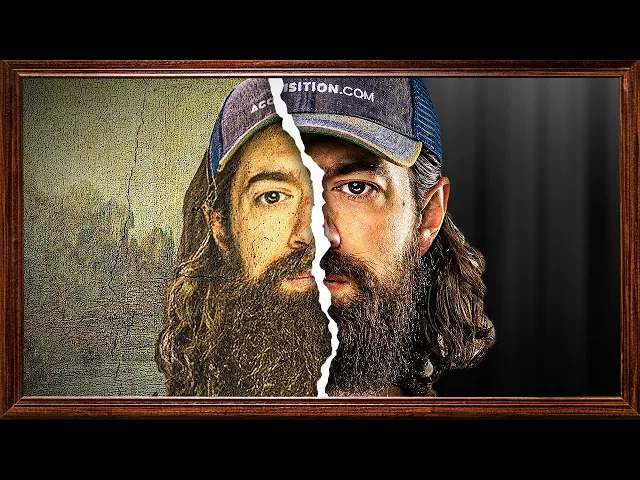
Pay A‑players more; they will negotiate, and that’s okay. Equity can also align interests and enforce non‑competes. --- The “Mosey Lisa” metaphor continues with the next piece: diverse customer base.
A diverse base reduces risk; relying on a single large customer can jeopardize profit if that customer leaves. --- Automated metric tracking, reliable recurring revenue, and diverse customer bases together build a masterpiece business that can be sold for far more than a simple job. --- Finally, remember that growing a business isn’t just about making more money; it’s about building an asset that can generate wealth for you and your family.
When each of the ten critical components is addressed, the “Mosey Lisa” becomes a masterpiece, ready to be valued highly by investors. That concludes the overview of how to transform a business into a high‑value asset.