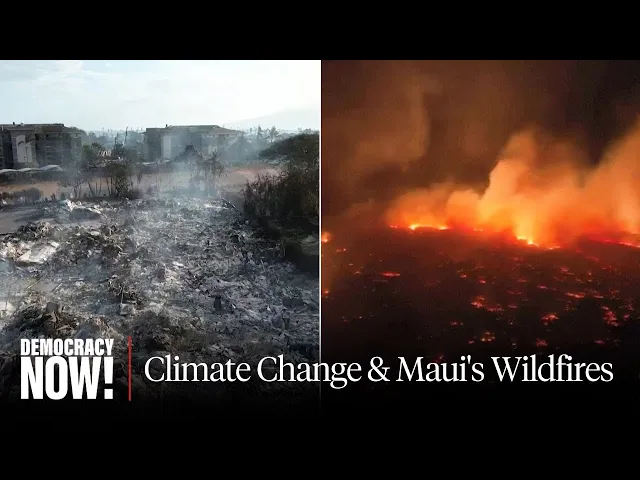
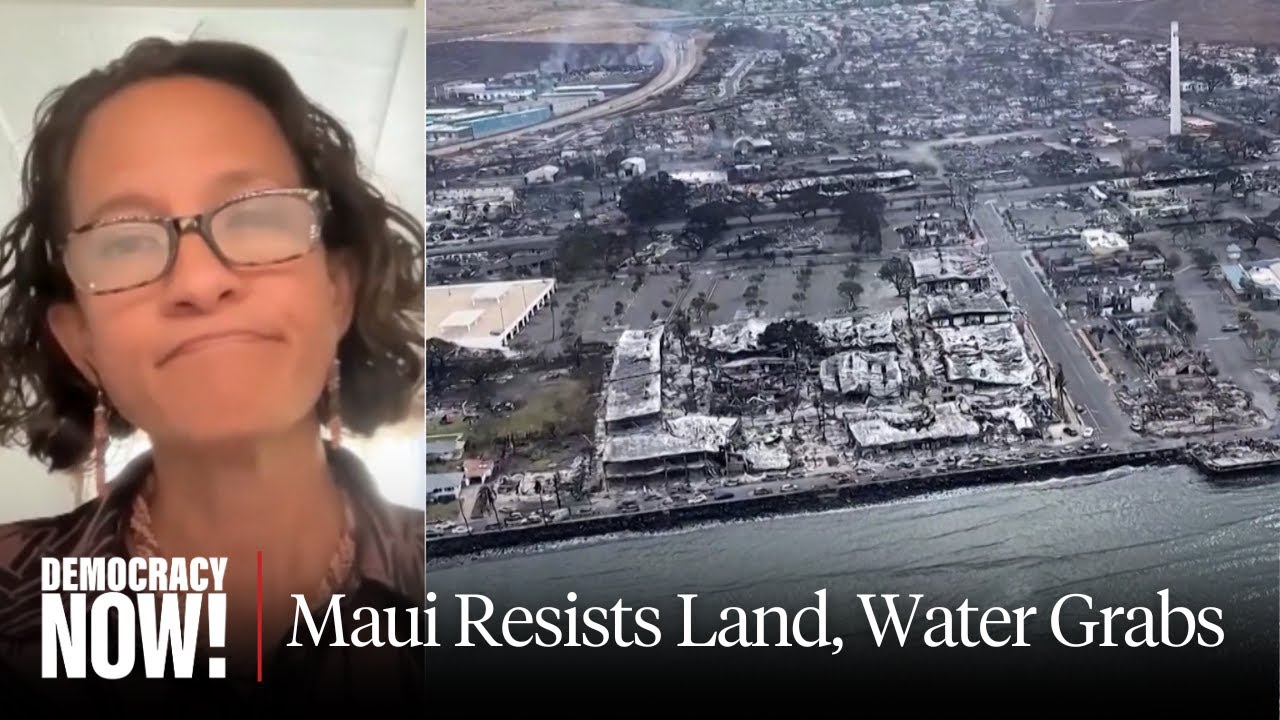
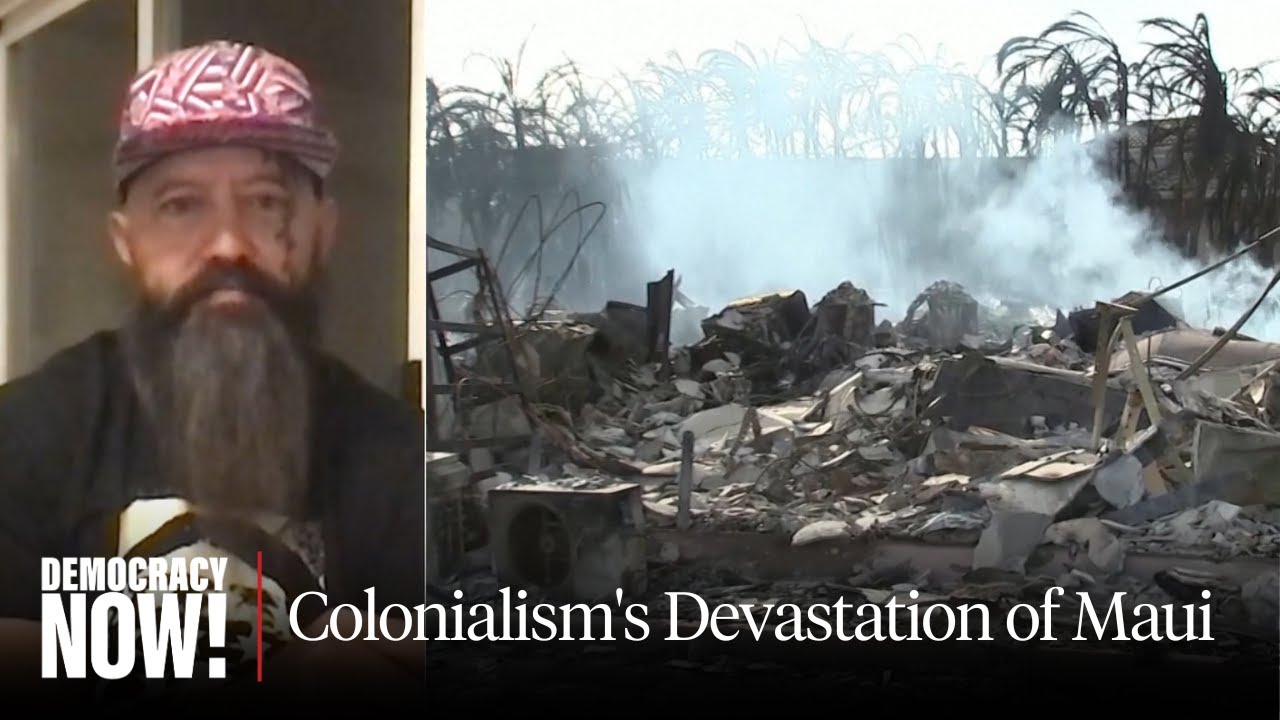
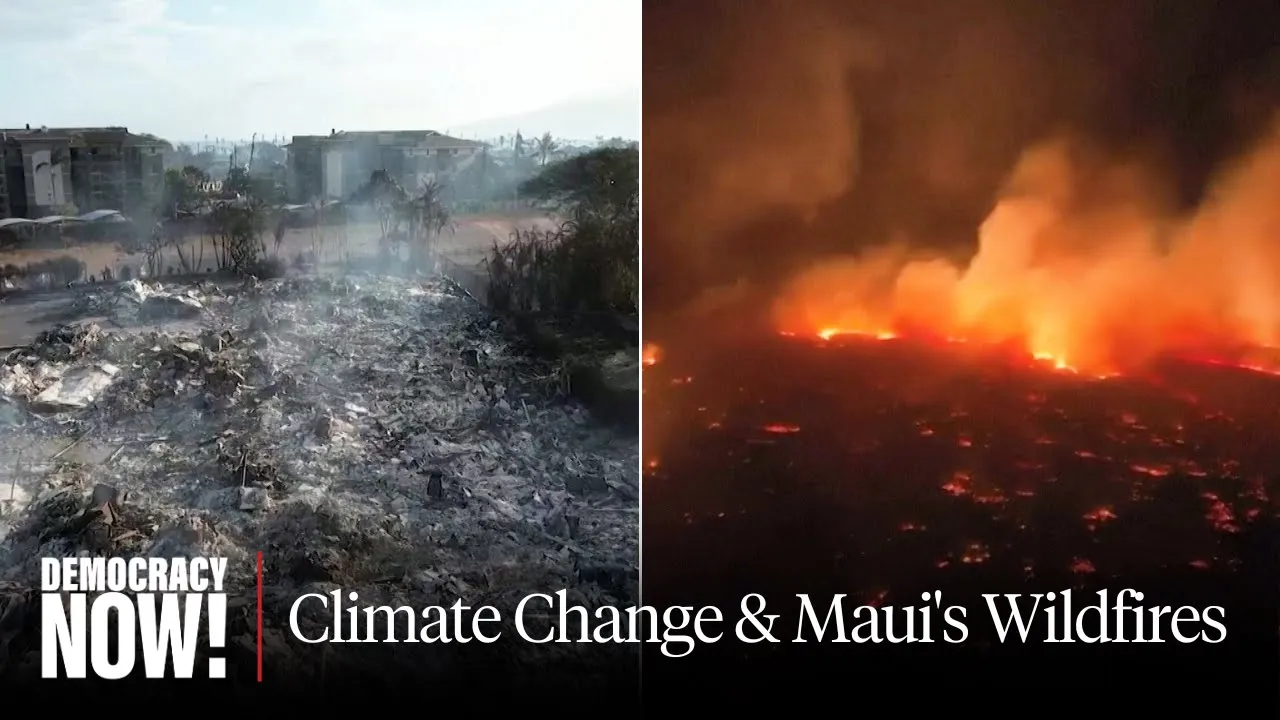
we go now from Maui to end Today's Show looking at how the deadly wildfires that spread through Maui came after weeks of worsening drought conditions as the climate emergency fuels deadly fires across the globe the U.S drought monitor reports nearly 16 percent of Maui county is now facing a severe drought an additional 20 percent is facing moderate drought we're joined in Honolulu by Clay trauernect professor in the Department of Natural Resources and Environmental Management at the University of Hawaii at Manoa where he focuses on Wildland fire Management in Hawaii and the Pacific welcome to democracy
Now clay troutnecked it's great to have you with us put these two issues together you have the hurricane hundreds of miles away creates hurricane winds that fuel these wildfires and how this is connected to climate change yeah thanks for having me and I just like to say how much I appreciate you highlighting the voices of your of your prior guests to uh kind of round out the perspective on this this incident but in terms of these um the climate or weather events that we've seen um we had the combination of the storm passing to the
South and this high pressure system that really ramped up winds and lowered relative humidity over the course of a couple days and and what's really important to understand is that those really rapid changes in weather can have huge effects on fire danger but the reason that they're having the effects they are is because of the landscape scale changes that your prior guests were mentioning and that's the the change in the vegetation surrounding the community in Lahaina as well as the community up country Maui which is experiencing similar fires and it's still which are still burning
right now and these are are changes that have affected most of the most of the island in the in the in the state in the sense that these change in land use over the past couple decades the decline in agricultural production has really resulted in the dramatic expansion of these non-native tropical grasses and and this really creates this vulnerability that we're seeing right now and and the um you know the really explosive growth in fire uh that that we saw over the past couple days were you surprised by the scale of This Disaster and now
this debate over where were the early warning you know so many deaths and there are probably a number more um how it could uh have been dealt with in a different way I mean you have the governor saying this is the worst natural disaster in Hawaii's history yeah I I think we're clearly grappling with the human toll this is something that's absolutely unprecedented and I don't think I mean just the loss and hearing these stories that you of your of your prior guess I mean this is gonna it's still sinking in for all of us
just how dramatic this is and just what the impact that this has had on the people like first of all first and foremost um as far as the uh unprecedented nature of these fires unfortunately this is something we've been seeing over the past decade at least and we can look back to uh 2019 where 21 homes were lost in West Maui due to similar fires the same year we had about 20 000 Acres burned through Central Maui 2018 we actually had a near pass of another hurricane system that uh coincided with large-scale fires on Oahu
on the west side of Oahu and in each of these incidents what we're seeing I think as your first guest mentioned is our the firefighters we have on the ground that those are the resources we have they were spread incredibly thin over this past week they're you know doing everything that they can and as far as what we can do and by we I mean the the the response agencies that we work with the non-profits Hawaii Wildfire management organization I have to give them credit to but we're trying to get the word out and identify
the actions that communities and land managers can take prior to to these fires and so that we can reduce risk create safer conditions and and sort of relieve the burden which at this point really Falls onto our emergency responders another element or Dimension to this change in land use or the The Limited limited management we see on these on these lands these these tropical grasslands that cover the state is about a million acres is that as those operations have kind of removed from the landscape you lose a lot of the knowledge that was there from
the workers who knew where the roads were were maintaining the roads maintaining water access so again all of this burden falls on our firefighters and we're asking them to do really heavy lifting and up until this incident we also have to say they've done a commendable job of really protecting our communities this is as you said this is the worst we've ever seen and all of the fires that we have seen over the past a couple decades since since agriculture has been declining our firefighters are typically very successful at protecting homes infrastructure and human lives
Professor trearneck President Biden has pledged disaster relief immediate assistance to those affected but what would it mean if he actually outright declared not just a state emergency in Hawaii a National Climate emergency a national state of emergency it's a difficult question for Hawaii we struggle here having uh long-term funding in place and part of that reason as far as the relationship with the federal government and again I can only really speak to the fire realm fire management realm is that we don't have these large tracts of federal land and that's usually the mechanism through which
we know national forests Bureau of Land Management these are the mechanisms at least in the continental U.S that that funding kind of comes in for this kind of work and what we're talking about for a disaster like this to present prevent the next one is to support these efforts on the ground that are actually altering the condition of those fuels and there are lots of examples lots of people working on this ranging from working with ranchers to do targeted grazing doing fuel break networks to give firefighters a Fighting Chance re-implementing traditional agriculture there's examples of
folks restoring Taro low E Wetland tarot to actually act as fire breaks all the way through to reforestation where we're converting these fuels into something else something less likely to burn and I think you know our job that what we've been working on the folks doing fire prevention work for for the number of years now is just how do we scale this up and so that's really what we need to be thinking about with assistance from the federal government is how can we Implement these actions that and the knowledge that people already have how can
we do that at larger scales coordinate across bigger bigger spaces and this is something that needs to happen Statewide Professor clay charnick we thank you so much for being with us from the University of Hawaii in Honolulu that does it for our show I'm Amy Goodman thanks so much for joining us