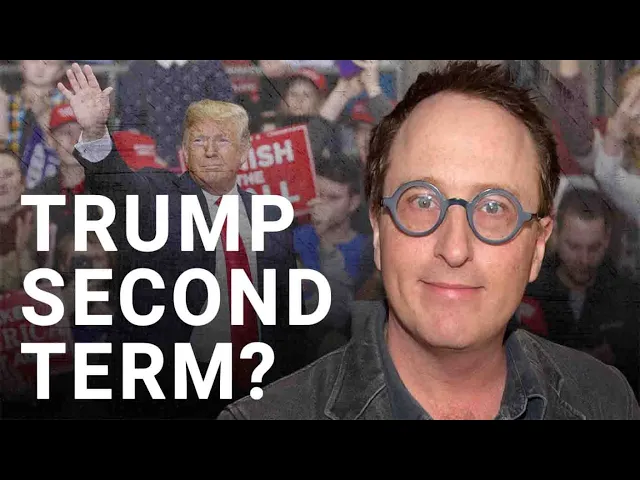
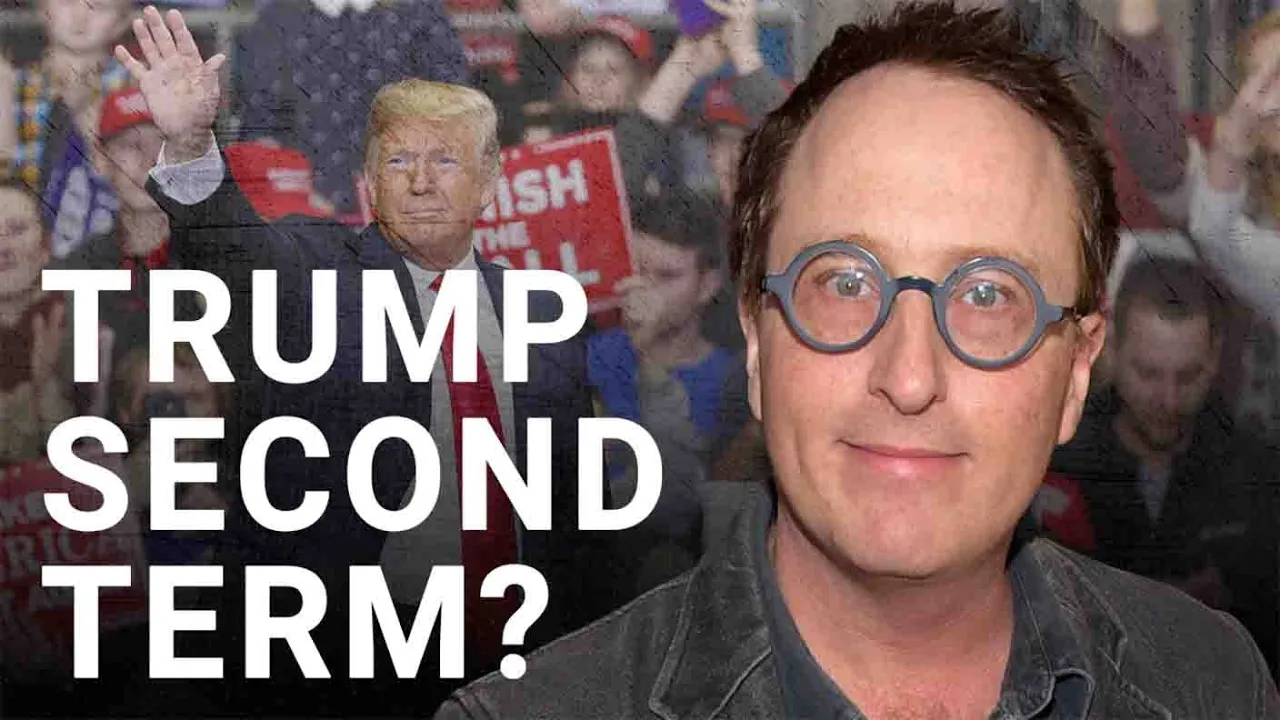
Biden was the return you know he he presented himself as the return to normaly you know he would say if I'm president you don't need to think about me every day I mean one you know I thought about Trump every day for four years um and this is very much my own fault I now regret it every night I watched Anderson Cooper you know we we marck q and nonbelievers Anderson Cooper was my cue like I just listened to everything that he said and believed it all and got more and more scared about life under
Trump and so on and at the end of the four years my one positive thought is that when at the end of the four years when Trump really did try and Destroy democracy on January the 6th and refusing to accept the election the institutions held um in a way that's negative because it means I think it's more likely that Trump will get in for a second term because it doesn't seem quite as frightening this time around and I think that might be the reason why he gets in for a second term if if he does
uh John Ronson welcome B love it it's a delight to see you things fell apart is an extraordinary audio experience isn't it uh for the yes it is yes and end of interview marvelous goodbye um to the uninitiated uh what do you get as the feast between your ears if you listen well I'm I'm trying to like humanize the culture wars I'm I'm trying to reduce the culture wars to to nuanced human stories which are quite often origin stories um we're all screaming at other about this and that how did it start what was the
pebble thrown in the pond creating the ripples that Now consume our lives and and so I find these really incredible stories of something that happened just some chance meeting at a at a a yacht club in in California in 2004 which then directly leads to the the first great pandemic conspiracy theory and so on so I'm yeah I'm tracing his origin stories well that is such a good episode that we could well on a little bit more cuz it is really fascinating and you say in the opening to that particular episode uh the story starts
with a Chance encounter between a bartender and a customer at a yach club in Ventura in 2006 right so who are those people and where does that story take us well this is amazing because this story is about something the the downside of the story is that is a little complicated the upside is that it's incredibly important and interesting John times radio listeners can cope just go for it okay so the B called Judy movitz she used to work at the National Cancer Institute but she gave it all up for love moved to California started
volunteering at the Yacht Club but she was like a she was crazy about diseases like she was constantly talking about wanting to you know how to cure AIDS how to do this how to do that um and finally she meets this very wealthy couple called the witor um via the yach club whose daughter is very sick with chronic fatigue syndrome so Judy and the parents set up an institutes to cure chronic fatigue syndrome sure enough a couple of years later they announc they've discovered the cause of chronic fatigue syndrome and it's a little known Mouse
virus called xmrv and science the esteemed publication science publishes Judy's findings and like it's just it's like an explosion because you know what you found a treatment for chronic fatian and also we're all walking around with this mouse virus infecting each other um so it becomes a massive deal all these other scientists uh try and replicate Judy's findings and can't and then it spirals Judy like doubles down and doubles down it ends up with her going on the Run ending up hiding on a boat they're trying to arrest her she's now a fugitive from Justice
side to say you got to attract the paper she's going no I refuse to attract the paper so she becomes like more instead of this is like the individual versus the institution right she's an individual who won't listen to the scientific Community when they say that she made a mistake and her findings are wrong instead she's was deeply wounded and for some good reason because she ended up in jail um but as a result of this wound she then wants to seek revenge on the medical community and her way of doing it is to come
up with the first great covid conspiracy theory at documentary called plandemic and loads of people who refused to be vaccinated did so because of Judy not realizing that this was Judy's revenge on the medical establishment what's so fascinating about that story John is what it tells us about people's desire to believe in something hopeful and optimistic though and it's very easy isn't it in the culture wars I know that's a loose term I don't know whether you like it or not um you know to to almost make out that it's because we're all so stupid
that we're falling for these things and we're getting too angry and we're not understanding people but I think what you consistently seem to be trying to do is to show us that it's it's actually quite a good thing in human nature to want to believe in all of this stuff it's kind of not our fault all time is it well we're certainly being proded at by the tech billionaires who profit um or at least theoretically profit from our rage I'm not sure how much Elon Musk is profiting from X right now um but uh yeah
I I do though I mean everything you just said I I agree but I also think that sometimes the way that we fight these wars um has a disproportionately negative impact both on our own mental health and on the mental health of the people that we're attacking um defining ourselves as being an opposition to other people and so on but isn't it because we want to believe that we're right and there's not there's nothing wrong with that I mean that is quite an innate Human Condition true but I do feel and I WR about this
in my books you've been publicly shamed that that on Twitter for instance we've created the stage for Conti for constant artificial High drama where we perceive everybody as being either magnificent heroes or sickening villains so that speaks to what you say um but I think the truth and what we all really know is the truth about our fellow humans is that we're just we're a mess people are a mess we're we're good and we're bad clever people so I think there's something quite damaging to you know the way we interact with other people when we
see people as being you know either Incredible or terrible you know a more healthy way to perceive our fellow humans is that we're just all a an absurd mess we do good things we do bad things and we know that's true but we some for some reason we we don't like to so we Define Somebody by just a tinely Slither of information about them we think we now know everything about that person just a bad word wording in a joke in a tweet do you think that we're at the absolute Nadar of public shaming and
bad social media and horrible nasty human rage are we going to dip at the bottom and come back up I think we are coming back up I think I think we've already dipped and we're on I'm we on the up uh one arguably positive thing about Elon musk's takeover of Twitter is that the the sort of punitive bullying aspect of the left there's lots to love about the left of course and I'm firmly on the left but there's also a bullying punitive aspect of the left and I think that's diminished um because many of those
people have now gone to Blue Sky and threads and they don't have the power to destroy someone's life but um you know the right we're going on about you know cancel cultureal cancel culture now they're the ones who are doing it they're constantly canceling people lips of tick tock is you know outing some teacher who's a drag queen and the next thing you know their school is getting bomb threats and going into lockdown so it feels like quote unquote cancel culture which is a phrase I I hate because it's it mean meaninglessly encapsulates huge numbers
of completely different situations has now kind of moved to the right now and the right are doing it do you also think that we because of the age that we are and I think you're probably about the same age as me mid-50s yes about that uh so we we did have this journey didn't it where we started off as analog humans and then the digital world came along and I think we have been you know quite hard on ourselves actually about that interface it's happened in our lifetime we've not had the skills in our adult
life to really know what it is that we're dealing with do you think it would be too optimistic to hope that the Next Generation because they've always been digital will just manage better they'll look back on us and just think oh dear how awful to have been them I I don't think it's too optimistic to think that I I agree with you I you know I've spoken to a bunch of people who's who say that their kids you know the new generation of kids coming up kids who are like 11 12 years old now they
don't they don't want the the that um you when I was writing so you being publicly shamed I I thought you know this generation's coming along who are creating a set of rules that are so draconian it's going to be impossible for them to live up to to it you people being punished for crimes they committed when they were minors you know years ago they did something stupid and now it resurfaces and people are being you know these are very Draconian punishments um and I think a younger generation are coming along here's my optimism is
that they've learned from all the positive things that have come from all of this black lives matter and me too and and you know the the upsides of those things and how um we now have a greater understanding of how the systems work but they're not interested in the more like let's destroy somebody for a badly worded tweet so hope you know my hopeful thought is that this younger generation are going to be much more much smarter about this so in a sense we've had one foot on the boat and one foot on the Dock
of the Bay haven't we we've gone Splash in the middle uh you've mentioned your fantastic book about uh public shaming a couple of times and well done you your talented talented interviewee professional yeah that's then fact that's very much what I was thinking when I decided to do psychopath night my tour in the Autumn BR we'll come on to that uh the the publicly shamed book though it was so preent wasn't it when when you wrote it I don't think uh many of us really understood quite how prolific this public shaming was going to be
did you yes it was the night of Justine sacko she's like the Cent piece of that book she's the AIDS tweet woman she tweeted um she was getting on a plane from he to Cape Town 170 Twitter followers like like no one a comedian in an empty room she tweeted going to Africa hope I don't get AIDS just kidding I'm white what she was trying to do was do a kind of South Parky mocking of her own privilege but while she was asleep on the plane an oblivious Twitter took control of her life and completely
dismantled it and the fact that she was oblivious to the fact that she was now on trial and found guilty and punished fired and so on was hilarious to people and it very few of us that night thought well I mean I thought something something has shifted in society for me the two times what I really felt something has shifted now was that night the night of Justin Saka the fact that everybody just loved it this was a bullying that everybody could get behind and then the day that Donald Trump came down the escalator and
Mexicans rapists on both of those occasions I thought something shifted and it's going to be really hard to go back again what happens uh after Donald Trump you live in America now don't you have dual citizenship he is a post-truth human isn't he as he so clearly demonstrates at the moment he's demonstrating it by uh not taking any uh well just not accepting the verdict uh in his criminal trial does what he's done create a permanent Trump shaped hole in the world into which somebody will always now be able to fill the void with the
same kind of politician or do you think that we will look back after Trump and I know that that might be after he serves another term in office and go that was just one Dreadful person I mean it was it was certainly a a a huge um and and shocking cing of values um I mean you get to a really interesting point here because you know one of the great issues of our time is the individual versus the institution so these institutions are crumbling rightly so in a lot of cases because institutions were very Troublesome
um the Legacy Media would have Gatekeepers who would not allow certain voices inside and and pastors were abusing children and and the Health Care system was exploting people so it was a very good reason to to you know attack our institutions but sometimes I wonder this is a slightly secure to way to answer the question I think is sometimes I wonder whether do we really want to live in a POS institution world because for for all of their Myriad problems institutions offer some good things right they give us a place in life they make us
understand how we behave towards our fellow humans we have bosses we have people working under us and it it gives us a a place it makes us understand how Society works and in a post institution world where it's just individuals smashing into each each other feels like a kind of disastrous world so what I'm what I I I think is that there maybe be a kind of pulling back uh institutions hopefully will learn from their mistakes but also the people who want to destroy institutions will learn from their mistakes too um this all sounds kind
of very idealistic but um idealistic is good though surely well maybe so I do think look Biden was the return you know he he presented self as the return to normaly you know he would say if I'm president you don't need to think about me every day I mean one you know I thought about Trump every day for four years um and this is very much my own fault I now regret it every night I watched Anderson Cooper you know we we mock q and unbelievers Anderson Cooper was my Q like I just listened to
everything that he said and believed it all and got more and more scared about life under Trump and so on and at the end of the four years my one positive thought is that when at the end of the four years when Trump really did try and Destroy democracy on January the 6th and refusing to accept the election the institutions held um in a way that's negative because it means I think it's more likely that Trump will get in for a second turn because it doesn't seem quite as frightening this time around and I think
that might be the reason why he gets in for a second term if if he does um so I think my the answer to my question is like um you know we've gone through these seismic changes but the fact that Biden won in 2020 and the fact that um the institutions held can does give me some hope are there as many Psychopaths who are female as male it's 8020 is the anecdotal I I base that on the fact that they used to be in Britain five dspd units dangerous and severe personality disorder units four were
for men one was for women right why is why is that although sometimes I should say that women might get diagnosed women p past might might get diagnosed with um something different like they might get diagnosed more likely to get diagnosed with Borderland person personality disorder for instance so there could be some sort of you know psychiatrists thinking about different genders in different ways here too um and will one of the benefits of a more equally gendered World be that there are more female Psychopaths I would like to hope so yes no was uh yeah
so 8020 but there's definitely female Psychopaths out there yeah and and many of them aren't just like male Psychopaths aren't actually physically hurting people but they're just creating a sort of lowlevel malevolence but your point and Theory uh so deliciously uh investigated in your psychopath's work and this is coming on to give you an opportunity to talk more about the tour uh is that they are everywhere they're the people who get to the top aren't they they're the people who lead us of all the mental disorders why do we reward the very worst one of
all like you know the fact that capitalism rewards the mental disorder that means you have no empathy no guilt No Remorse and they're the ones that they're the ones that the shareholders make CEOs um statistically you have one in 100 people is a psychopath but that figure Rises to 4% of CEOs and Business Leaders you're four times more likely to have psychopath at the top than at the bottom and what about politicians I'd say that that that tallies Pol politicians lawyers um do you think that either of the two main contenders in the UK elections
are displaying Psychopathic Tendencies no um not not that I've really noticed and also you know it's there's a danger in armchair diagnosing people from afar people ask me about Trump all the time and am I about is he a psychopath or is he a narcissist and that's a really interesting um distinction I think from from what I understand the outward manifestations of psychopathy and narcissistic disorder are quite similar they can be manipulative and and cunning and you know vengeful but what's going on underneath is completely different um with narcissists there's a whole load of emotions
that going on that they suppress because they can't handle them whereas with Psychopaths there's like nothing going on it's just emptiness underneath so I think you always have your finger on the pulse before other people managed to take that pulse because you've written about extremism you've written about about Psychopaths uh you wrote about the explosion of the porn industry and the butterfly effect as well stop me when all of this agulation is too much for your job I will not stop you what comes next then what's occupying your brain now actually something I touched on
earlier about about individuals in a PO institution world I think is a really interesting subject um and I'm I'm looking at that in a way I should say that you know when people were asking me about the psychopath test and I was writing it I was saying it's a book about neurology and brain anomalies and it didn't turn out to be that at all um so I so I write funny unfolding adventure stories but but that's a world I'm really interested in like what what happens when um the old way of life dies and you've
got all of these adrift people who are now trying to find a place in life in a different way and and that's what I'm that's what I'm writing about well I will look forward to that uh can we ask you to step into our election Booth very much so please don't steal the pencil we've only got one it is to the desk for a reason here we go earliest political memory s Robin day um do you remember I certainly do with his huge glasses and I think sometimes smoking a cigarette on the television yeah very
um and he was fantastically kind of scabrous um and I loved him and still love him and my memories of him just like you know attacking politicians and then obviously Paxman came along after Robin day doing a very similar thing just as well and this is casting no shade on them when I say that you know what they did was like magnificent and you absolutely have to hold politicians to account and have them against the wall and yell at them in that way but sometimes I wonder how often does it work and by work I
mean how often does it does that kind of confrontational adversarial um interviewing technique get somebody to reveal something about themselves and I would say as as brilliant theater as it was and all of my joy at watching Robin day as a young kid not sure quite how often it worked if you're if you've got someone against the wall and you're yelling at them all it really reveals is how they respond to being yelled at which isn't necessarily very interesting way to it's defin you're absolutely right it's not you know it's not really tickling them on
the tummy is it yeah now that you know like obviously the um you know I remember saying this something similar to this to Krishna G Murphy one time and he was like but you've got to you know are you telling me that we can't you know ask difficult questions to politicians and of course I'm not saying that but I'm just saying that that sort of slly hierarchical public school thing that we do where we just where everything is adversarial everything's oppositional I'm not sure that it's the best way of doing things I think what's better
is to I I think you know curiosity is better than judgment brilliant first election you could vote in God um well I I wouldn't have voted in this I don't think I voted till 1997 right um and I haven't voted yeah um my mother stood I think I was just too young my mother stood as a liberal candidate in Cardiff one time and lost right um but yeah so so I don't so okay so I was born in 1967 so 7787 85 so what what was what was going on there well I mean you would
have had the opportunity to vote you know either to that or in or get Thatcher out but 97 obviously was the arrival of Tony blur yeah so that was your first vote yeah the first time I remember voting was 97 uh biggest issue for you when you do vote moral character I I got very like I I you know I hated Trump like I absolutely hated him I had Trump derangement syndrome no question and it was because of his moral character I just couldn't believe that somebody's so immoral somebody who lies you know somebody who
who considers himself more important than the than democracy and the institutions I I couldn't believe that we were rewarding those things um now there'll be some people listening to this and think it's kind of naive that you know some people have a bad moral character but just a Vue a better hiding it than Trump and I'm sure that's true yeah so I think we probably know the answer to the question in America who you would vote for in the next election but if you've got dual citizenship you can vote well places y well I'm going
to I'm I'm going to do the obvious thing I'm going to vote for Biden and I'm going to vote labor thank you very much it feels party gate felt like the like like you know a crumbling Empire right like the last days of Pompei um you know this bloated you know so I think for me obviously the election was set during party gate that was so Americans don't understand why Brits were so upset about party gate they didn't get it and I've had to explain it to a few Americans like we care a lot about
rules you know we line up we que up we were you know so proud to sacrifice to not go and see our dying grandmother it was awful but we St by the rules and then to find out that the person putting these rules on to us was flouting them was just horrendous well it goes back to your fascination about the relationship between the individual and institutions doesn't it because the institution only works because of all of the individuals you know in it or benefit benting from it so when that goes wrong and toxic it does
it hurts doesn't it as a person it really hurts um I think in America they sort of Saw Boris having you know doing party Gators like you know they're more a bit more individualistic in America sometimes and they think that people can get away with things a bit more so they didn't quite understand why it was so hurtful to to Brits uh John it's really lovely to see you here thank you very much indeed for talking to us uh so your show then is on at the moment um um yeah well uh I'm doing a
tour called psychopath night I'm going to be talking about all of this stuff I'm starting mid October ending end of November places all over Britain including places I've never spoken to in before like IP switch and south end oh gosh W I mentioned those two in particular because those are the two are tickets are lagging okay get your tickets now and things fell apart is available on BBC sounds yes radio for BBC sounds lovely stuff for