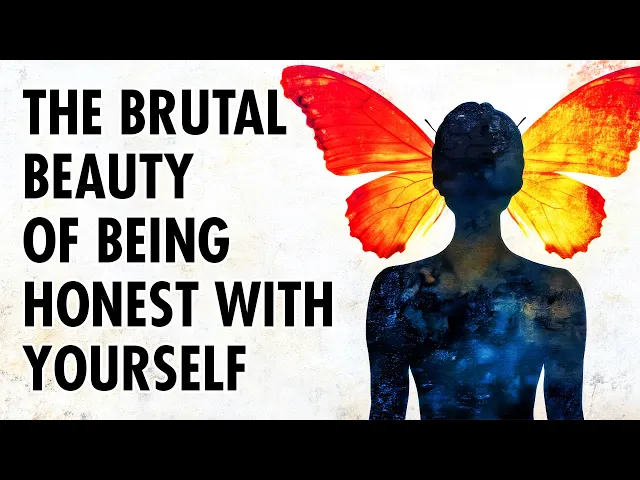
Brainy Dose presents, fourteen things you learn when you’re honest with yourself. There’s a moment in life, sometimes small, sometimes profound, when it dawns on you that you’ve been skimming the surface of your own truth. Maybe it hits you during a quiet car ride, in the middle of an ordinary Tuesday, or after one too many days feeling like something’s off.
That’s when the real work begins. Being honest with yourself. It’s not always pretty, often uncomfortable, but it’s wildly freeing.
Here’s what you discover when you finally face your reality head-on! Number one, you’ve definitely lied to yourself before. Yep… You can be your own unreliable narrator.
Think about the times you ignored red flags, justified bad decisions, or pretended to be okay when you clearly weren’t. Self-reflection shines a spotlight on these moments. It’s humbling to admit you were in denial, but acknowledging these lies helps you grow wiser, more self-aware, and less likely to repeat the same mistakes.
Number two, you’ve been hiding parts of yourself. At some point, you notice the invisible walls you’ve built around pieces of who you are. Perhaps you’ve tucked away your vulnerability because it felt too much or silenced your creativity because someone, somewhere, made you feel like it wasn’t good enough.
You realize how often you’ve shaped your personality to fit rooms, conversations, and even relationships out of fear of judgment. Ironically, those hidden pieces are often the best parts of you. Number three, your role in your problems.
Blaming others is easy. It’s a neat way to sidestep accountability. But when you’re brutally honest with yourself, patterns start to emerge.
You see how your choices, reactions, or avoidance tactics played a part in situations you thought were entirely someone else’s fault. It’s like flipping on a light switch in a room you thought was clean. Suddenly, the dust is visible.
The upside? Owning your role gives you the power to change it. Number four, your values versus your actions.
When you take a closer look, you start to see the contrast between what you claim to value and how you actually live. You might talk about the importance of health but skip meals and run on caffeine, or you say family comes first, yet your calendar tells a completely different story. When you’re honest with yourself, these gaps become impossible to ignore.
Although uncomfortable, recognizing where your actions need to catch up with your intentions gives you the clarity to make meaningful changes and build a life that genuinely reflects who you are and what matters most. Number five, you’re not always right. Oof, this one stings.
No one likes to admit they’re wrong, but being real with yourself means swallowing your pride and recognizing your blind spots. The good news is that owning your mistakes doesn’t make you smaller. It softens rigid thinking, strengthens connections, and reminds you that your worth isn’t tied to winning every debate.
Plus, there’s something liberating about saying, “I got that wrong. ” It keeps you grounded and open to learning. Number six, your coping mechanisms aren’t always healthy.
Distraction feels like relief until it doesn’t. Binge-watching shows, endless scrolling, overworking, or even toxic positivity can be ways to avoid uncomfortable feelings. You tell yourself it’s just “blowing off steam,” but deep down, you know you’re dodging something.
When you’re honest, you recognize these patterns not as harmless habits but as obstacles to emotional growth. And this paves the way for adopting healthier coping strategies that support your well-being. Number seven, not every thought deserves attention.
Your mind can be a noisy, chaotic place. Self-awareness helps you see how often you spiral into worst-case scenarios, replay past embarrassments, or fixate on imagined judgments. Just because a thought pops into your head doesn’t mean it’s worth unpacking and decorating, right?
When you’re honest with yourself, you learn to observe, not absorb, which creates space between you and the noise, helping you maintain mental clarity and emotional stability. Number eight, some dreams were never yours. Sometimes, you chase goals because they look shiny on paper.
Maybe it’s the job title, the degree, or the curated version of success you saw someone else achieve. But when you strip away external expectations, you might think to yourself, “Wait, I don’t even want this. ” Honesty helps you sift through the layers to find the dreams that light you up from the inside, not just the ones that impress from the outside.
Number nine, you’ve outgrown certain things. Friendships, habits, beliefs… not everything is meant to last forever. Being honest with yourself means acknowledging when something no longer serves you.
It’s okay to outgrow people or situations without guilt. Growth is an ongoing process, and it often requires shedding what no longer aligns with who you are becoming. Holding on just because it’s familiar only keeps you anchored in the same place and prevents you from exploring new opportunities.
Number ten, joy can exist alongside pain. We often think life is either good or bad, happy or sad. However, self-honesty reveals how layered emotions can be.
You can be heartbroken and still laugh at a meme. You can feel anxious and still show up for your life with courage. Joy doesn’t cancel out pain, and pain doesn’t erase joy.
It’s possible to hold space for both, to find light even when shadows linger. Number eleven, you’re allowed to change your mind. A single decision doesn’t have to mean you’re locked in forever.
Sometimes, you gather new experiences, learn more about yourself, or see things from a different angle, and that’s enough reason to shift your thinking. Changing your mind is not the equivalent of being indecisive. It simply shows that you’re paying attention to what feels right rather than clinging to choices just because they’re already made.
Number twelve, regret can be a powerful teacher. Regret gets a bad rap, but when you’re honest with yourself, it becomes less of a burden and more of a compass. Instead of pushing it aside or pretending it doesn’t exist, you sit with it.
You ask, “What is this trying to teach me? ” The idea is to gather insight. Regret shows you what mattered, where you veered off course, and how to steer differently next time.
Number thirteen, time doesn’t heal everything; reflection does. There’s a popular saying that time heals all wounds. But if that were true, we’d all be perfectly fine after enough calendar flips.
What actually heals is what you do with that time. Processing, reflecting, facing your feelings instead of trying to run from them. Honesty forces you to stop waiting for time to do the heavy lifting and start doing the internal work that leads to real healing.
Number fourteen, you’re enough without the mask. The most profound lesson? You don’t need to pretend to be someone you’re not.
You’re enough as you are. Flaws, scars, and all. Authenticity may not please everyone, but it attracts the right people.
And more importantly, it brings you peace. In the end, being honest with yourself is not a one-time epiphany. It’s an ongoing practice.
It asks for courage, self-compassion, and a willingness to sit with discomfort. The payoff is freedom, clarity, and personal growth. You realize that while honesty can be rough, self-deception is the real trap.
And when you choose truth (raw, unfiltered, sometimes messy) you choose a life that’s real. If you enjoyed this video, give it a thumbs-up, and share it with your friends, so we can keep making them. For more videos like this, hit the subscribe button, and don’t forget to click on the notification bell.
Also, to learn more about many other interesting topics, be sure to check out our other videos as well. Thanks for watching!